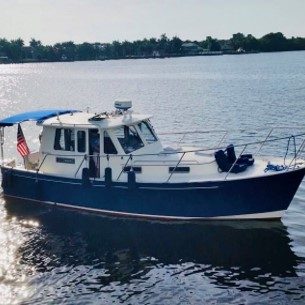
Wednesday, November 8, 2023
Two Days of River Locks
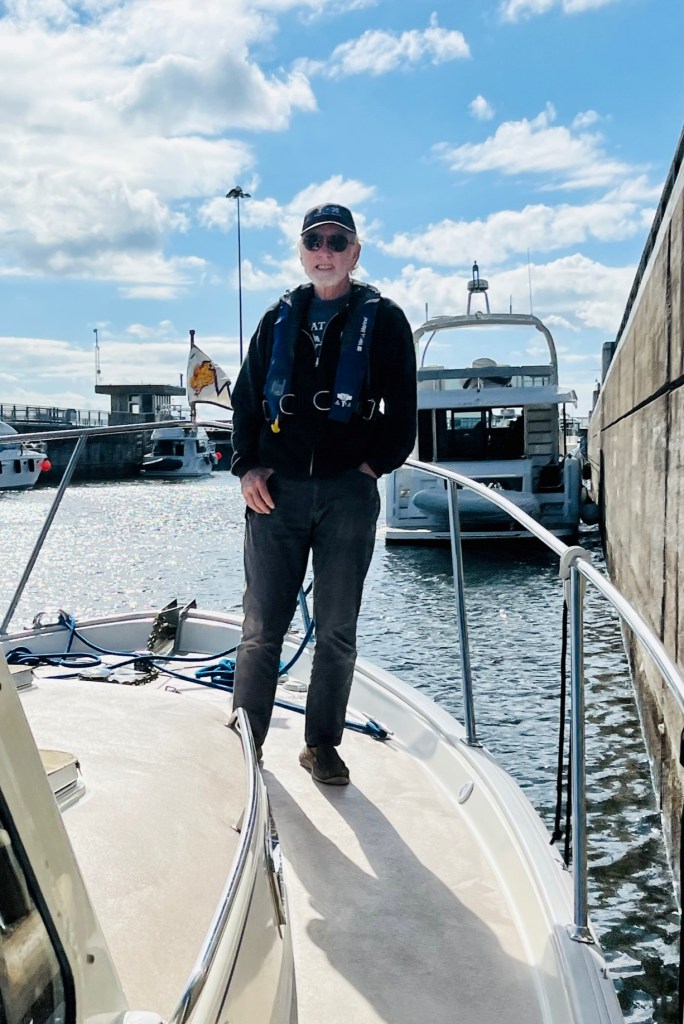
The Admiral is anxious about the upcoming two days. The Captain not so much. We have three locks to go through today, four tomorrow. It can take an hour to go through a lock; it can take three hours. It depends on barge and boat traffic and the lockmasters.
Traveling through the locks with other Looper boats – I think – has more advantages than disadvantages. The advantage is there is safety and power in numbers. The disadvantage is you lose autonomy, as you are at the mercy of the collective process. That can present frustrations.
We leave Grand Harbor just at sunup – 6 a.m. It’s dark but we manage. We have about 12 boats with us.
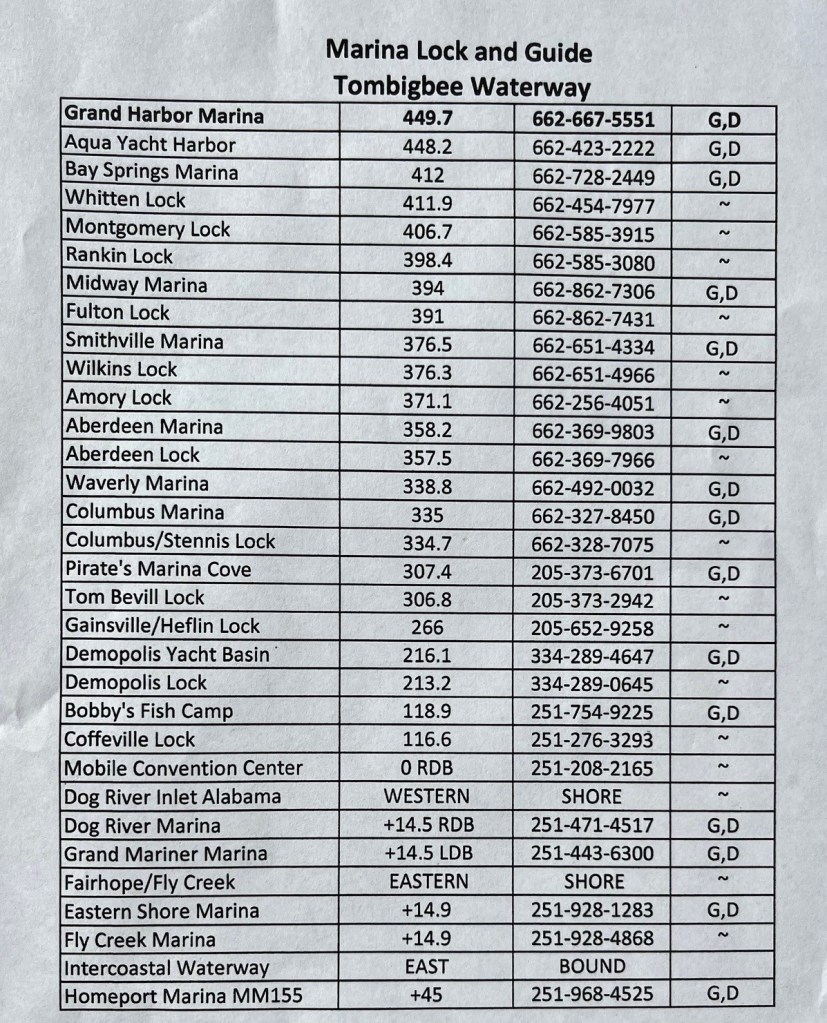
Grand Harbor is at Mile Marker 449.7. Our first lock – Whitten – is at Mile Marker 411.9. We have a total of three locks today before we reach our destination of Midway Marina.
The Leaders of the Pack
The boats from the nearby marina, Safe Harbor Aqua Yacht, soon join us, making a total of twelve boats in our flotilla. We are fortunate to have Todd of Sea No Evil leading the group, co-led by Tom on Beachside.
It may not seem much to be leading the pack. But there is a lot to it. First, there is monitoring the locks – contacting the lockmaster, informing them of the number of boats, finding out how many and the locations of bollards (to determine if each boat takes a bollard, or do we raft boats), asking about barge traffic and are any waits anticipated.
This information is then relayed to the other captains in the twelve-boat flotilla via radio – which sometimes isn’t audible and has to be repeated.
Then there is barge and towboat traffic, and the notification to the other boats about logs and debris in the water.
Towboat and Barge Traffic
On the rivers you encounter several towboats pushing barges. They can push from one to two barges, to forty. You can see the towboats (hopefully) on your AIS and get the name of the tugboat so you can radio them. Before attempting to pass or overtake a towboat, you contact the towboat captain on the radio and ask for directions as to which side he prefers you to pass on.
The following taken from our Looper Guidebook:
“To remember what side to pass on, consider the alphabet. “P” comes before “S” and we read left to right; so, Port is on your left, Starboard on your right. Likewise, “1” comes before “2” so 1 is on your left.
When the towboat captain responds “see you on the one” or “see you on the one whistle” he is telling you to pass on your port side. “See you on the two” means pass on the starboard.”
The book says years ago before radios were used the towboat captain would blow a whistle to indicate what side to pass on. One whistle blow meant port, two whistle blows meant starboard. So now you will hear the towboat captain sometimes say, “On the one whistle” or “on the two whistle.”
Communicating by Radio
Per Captain Pat – you need two radios on at all times – the portable VHF one and the fixed mounted one, on the helm dash.
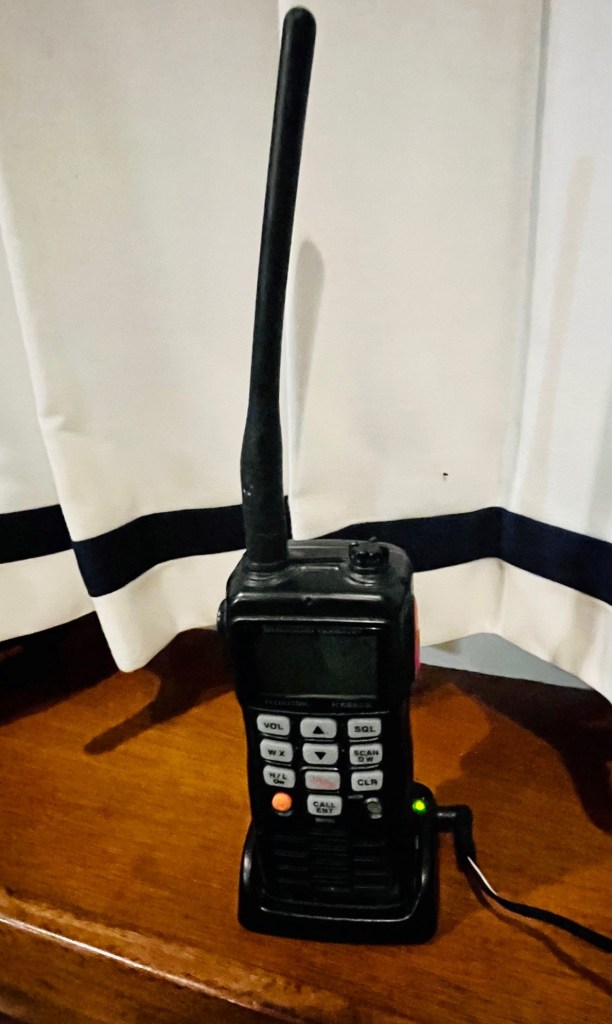
On the mobile radio you talk to the tug captains (the tugs or towboats that push the barges), bridge operators, and lockmasters.
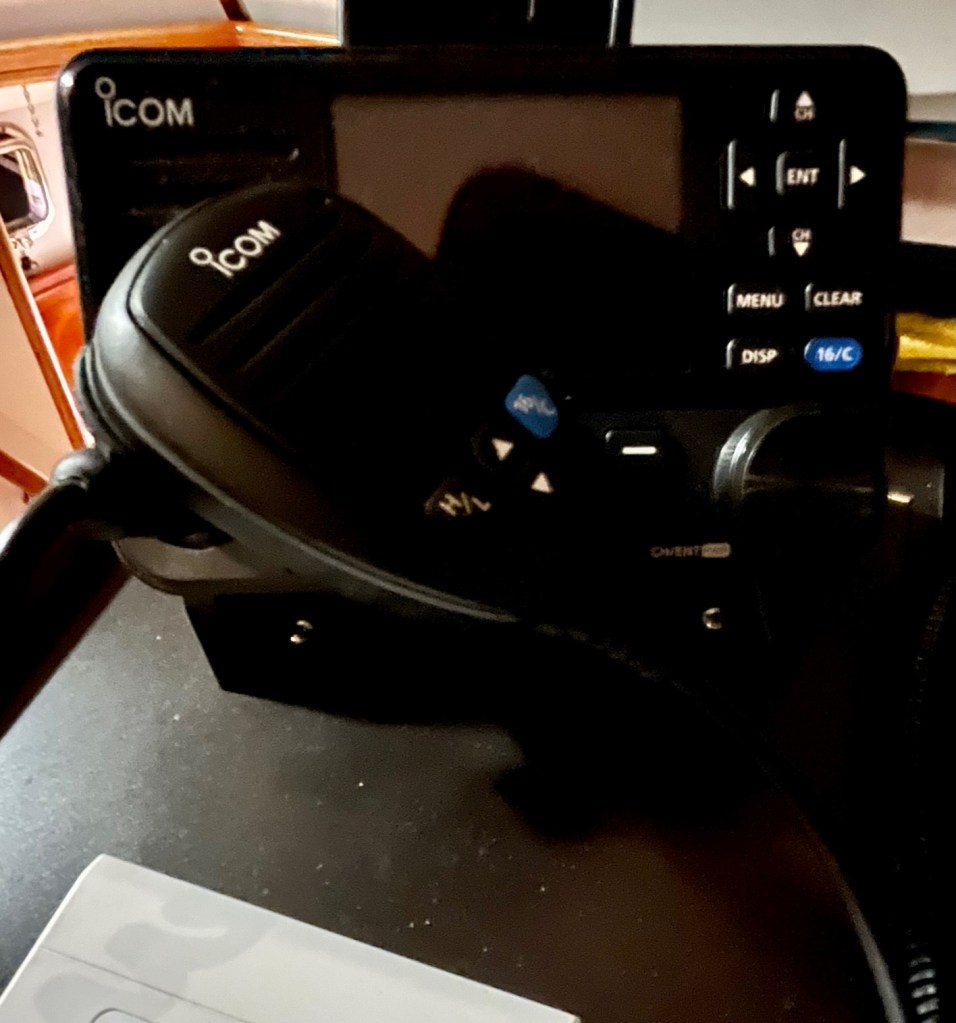
The helm radio is reserved for emergencies and talking to other Looper boats.
You can use the main or the portable to talk to the marinas when coming into their ports.
Channel 16 is the main communication channel for emergencies, marinas, and coast guard.
Once you establish contact, you will be instructed as to what channel to go on to continue your conversation. This is to obviate jamming up the emergency channel of 16.
Pass on the One or the Two?
It gets harry when you hear the barge radio instructions but can’t denote, is it on the one or the two? Or someone hears the wrong instructions and relays to the group, and then has to be corrected. Hopefully you hear the correction before you’re already proceeding to the other side!
Sometimes it is difficult to garner a response from the captain. You don’t know if your radio isn’t working, you are on the wrong channel, or the towboat captain just doesn’t want to respond.
The towboat captains are monitoring many channels and are working hard, so you have to give them a break. For the most part they are easy to work with.
Clarification – Tugboat, Towboat or Barge?
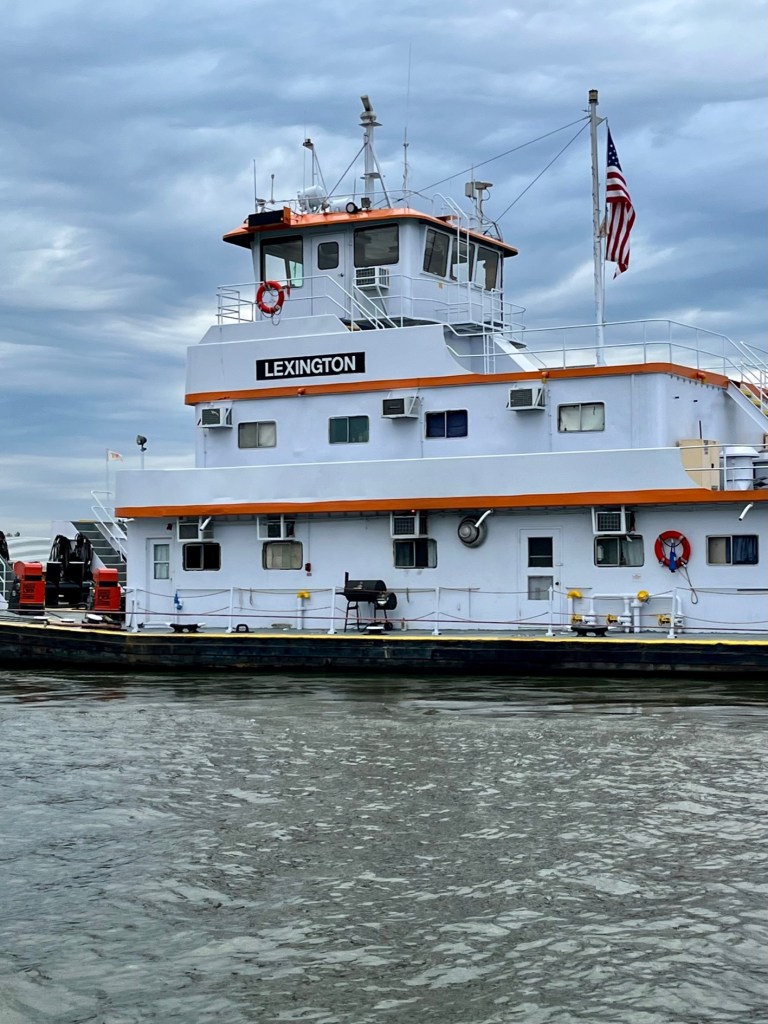
I use the terms interchangeably. To clarify:
Barges are flat-bottomed boats for carrying freight, typically on canals and rivers, either under its own power or towed by another boat.
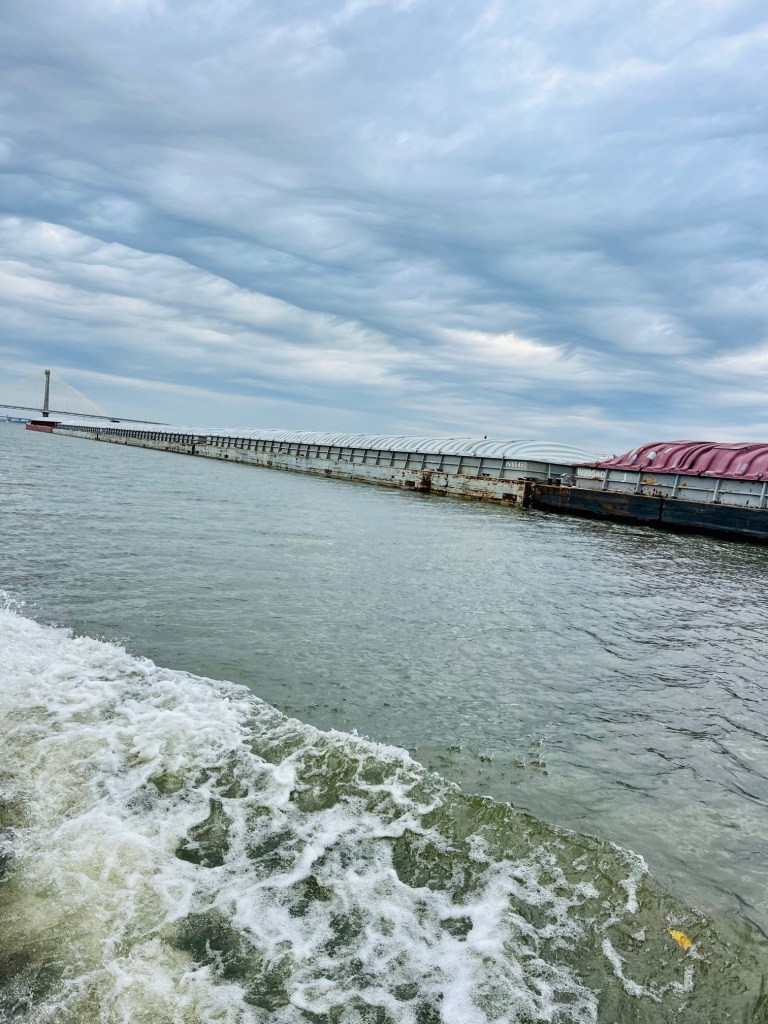
Tugboats are one-deck boats with a wheelhouse on top.
Towboats are one-, two-, three-, or even four-deck boats with the wheelhouse topping it off.
Visually, the tugboat has deep water propellers, a pointy bow and a deep hull. A towboat has a confusing name. It pushes boats rather than pulling them.
River Debris and Logs
A big concern when travelling the rivers is to stay clear of logs and debris. These can really do damage to your boat.
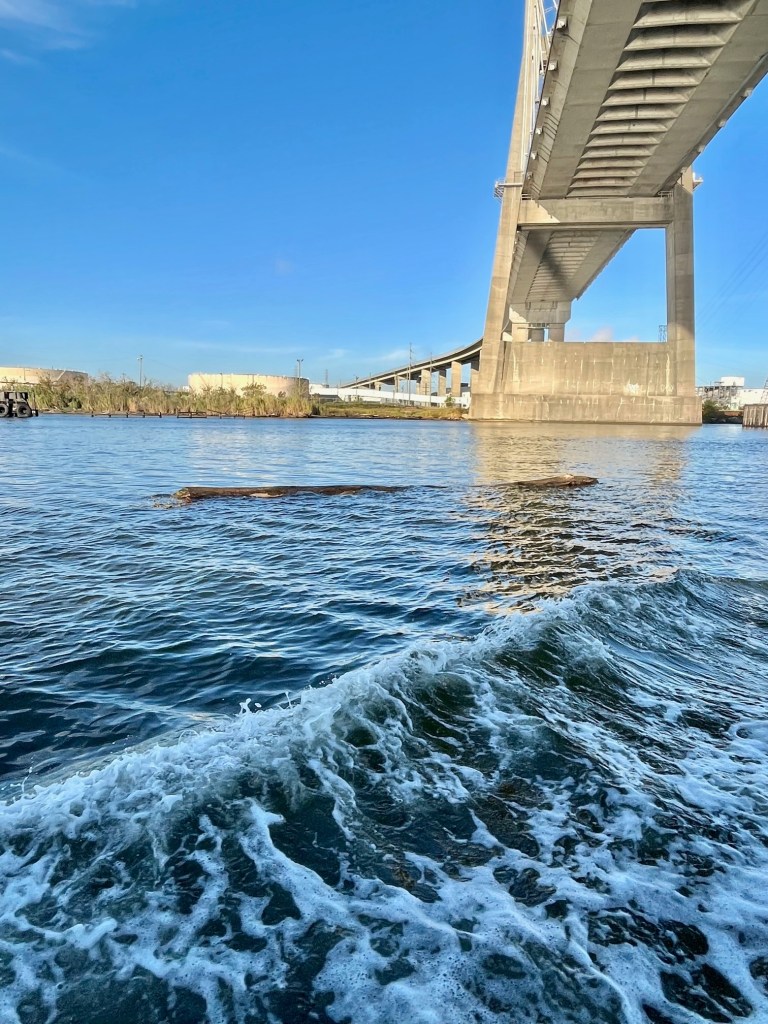
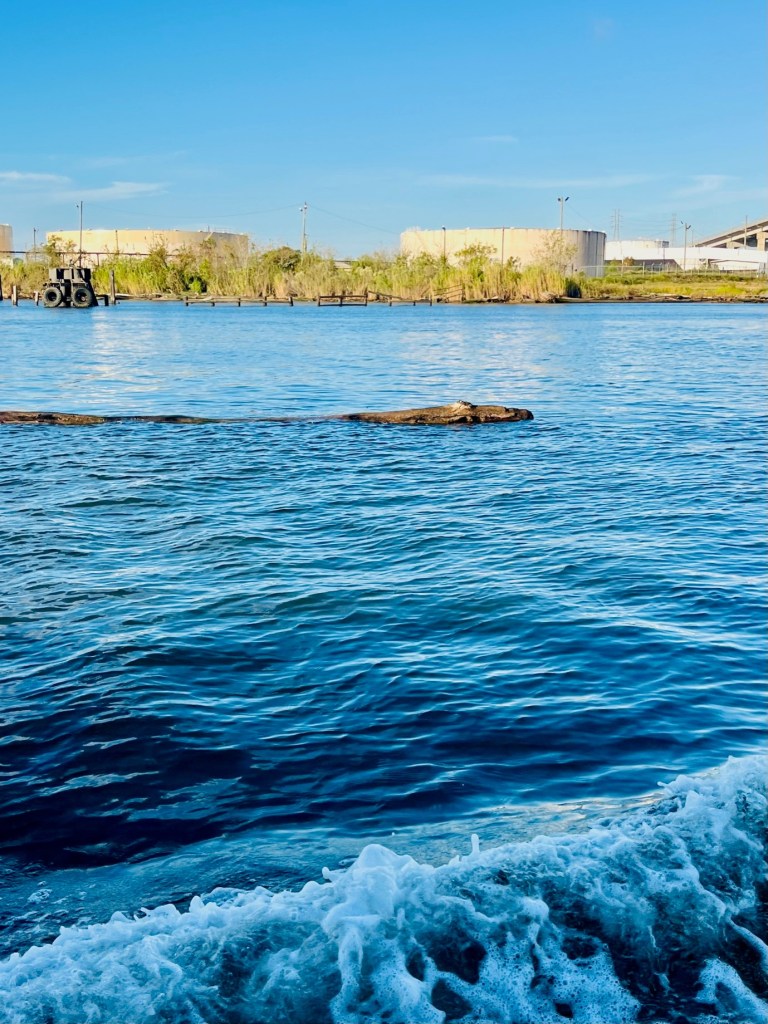
The boat in the lead is the first one to see a log in the river, or debris. You will hear on the radio “Big branch on my port side.” This alerts the other boats to be on the lookout. This is so helpful and much appreciated!
The Whitten Lock
Our first lock is the Jamie Whitten Lock.There is a whopping 72-foot drop in this lock!
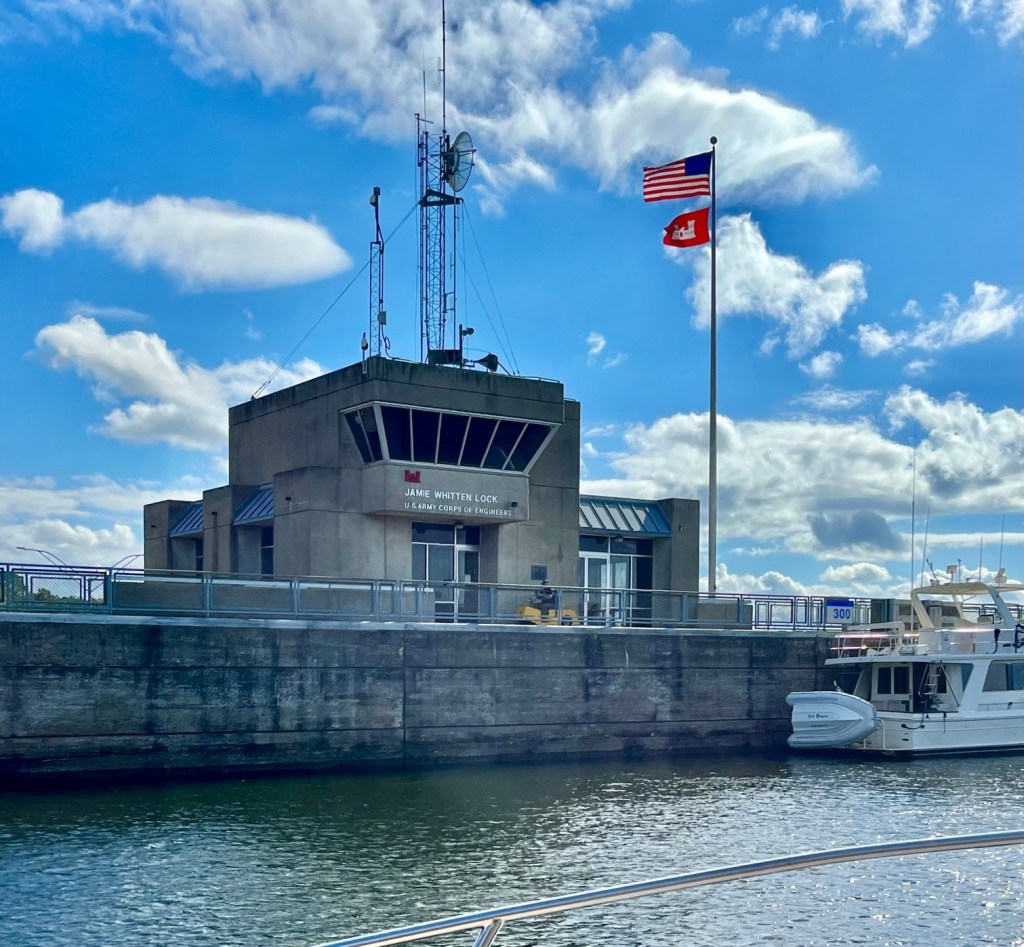
Maria from Sea No Evil texts me telling me to wear raingear – water comes from the walls onto the boats at this lock! She knows this because her friend Sara on Coconuts went through this lock yesterday. I relay the information to Tracy on Done Saving and Donna on Hattitude. Often word of mouth – or text – is best communication.
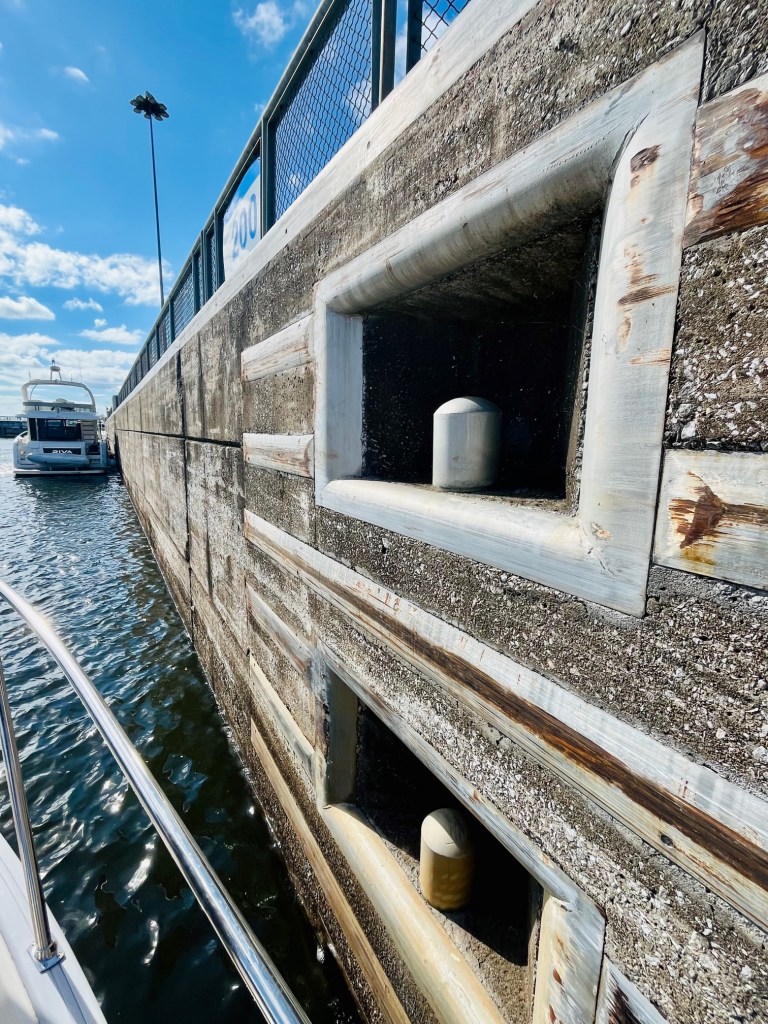
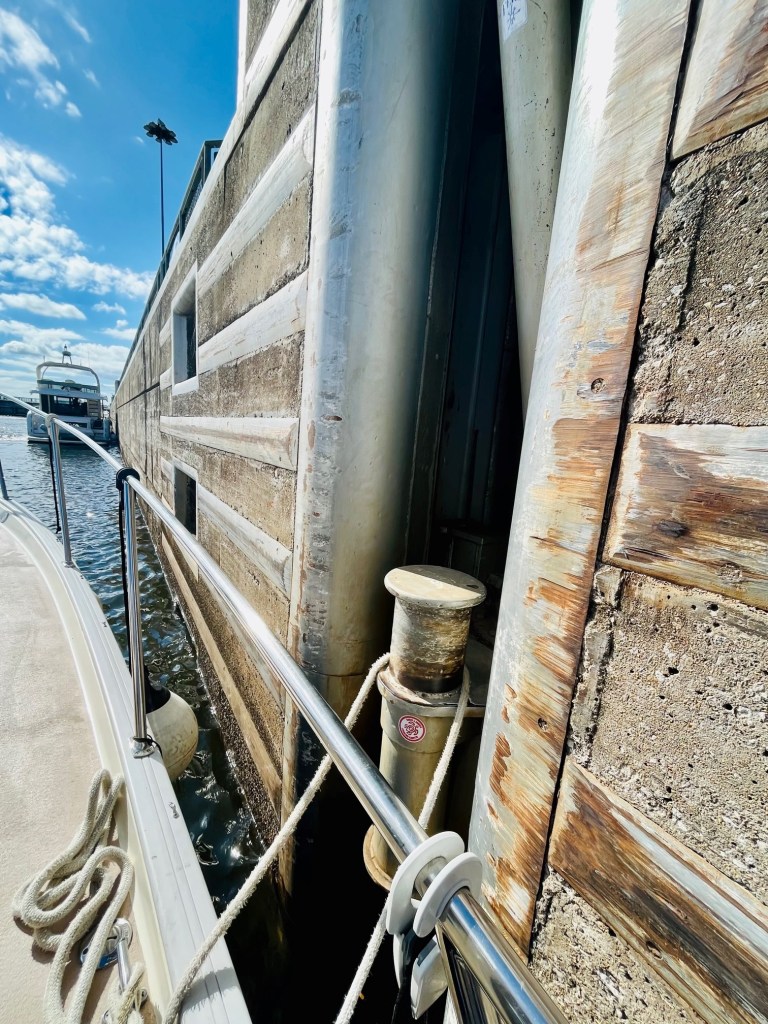
As we approach the Whitten Lock, the boats start jockeying over the radio for the starboard or port side for locking. You have to secure your fenders and lines on the side of the boat that will be hitting the wall. Most boats have lines and fenders on both sides of the boat, just in case.
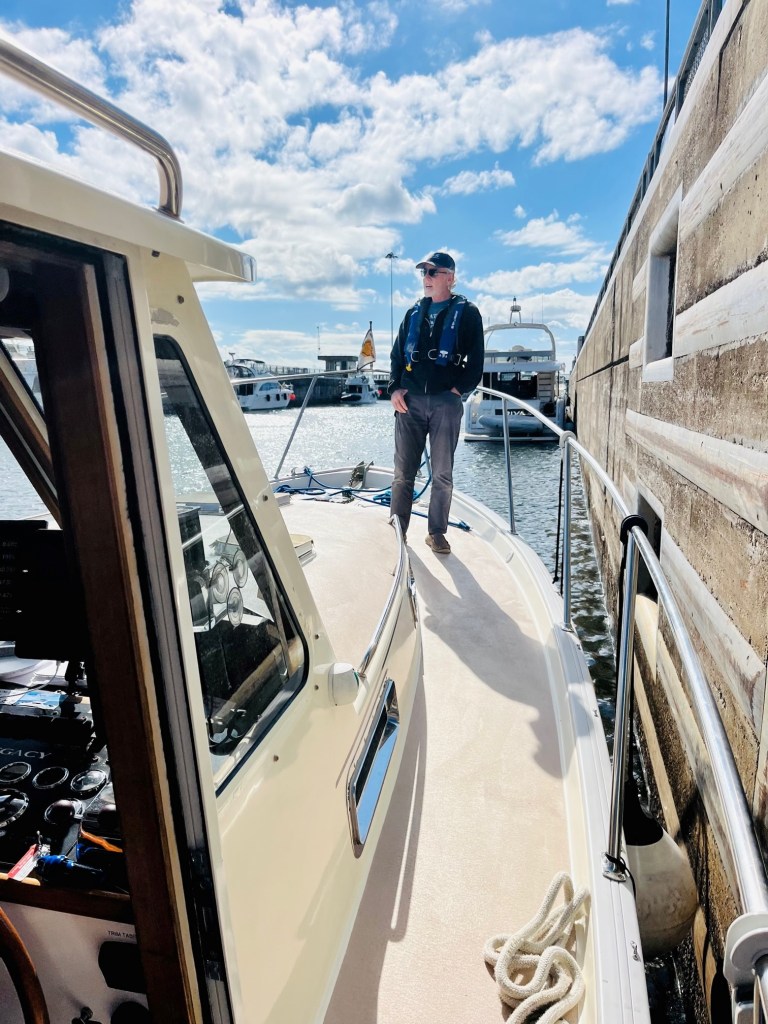
We prefer a starboard lock and grab the third floating bollard, just in front of Hattitude, the 53-foot Hatteras, that has a dinghy trailing them. Hattitude needs the final two bollards because of its size, and that dinghy.
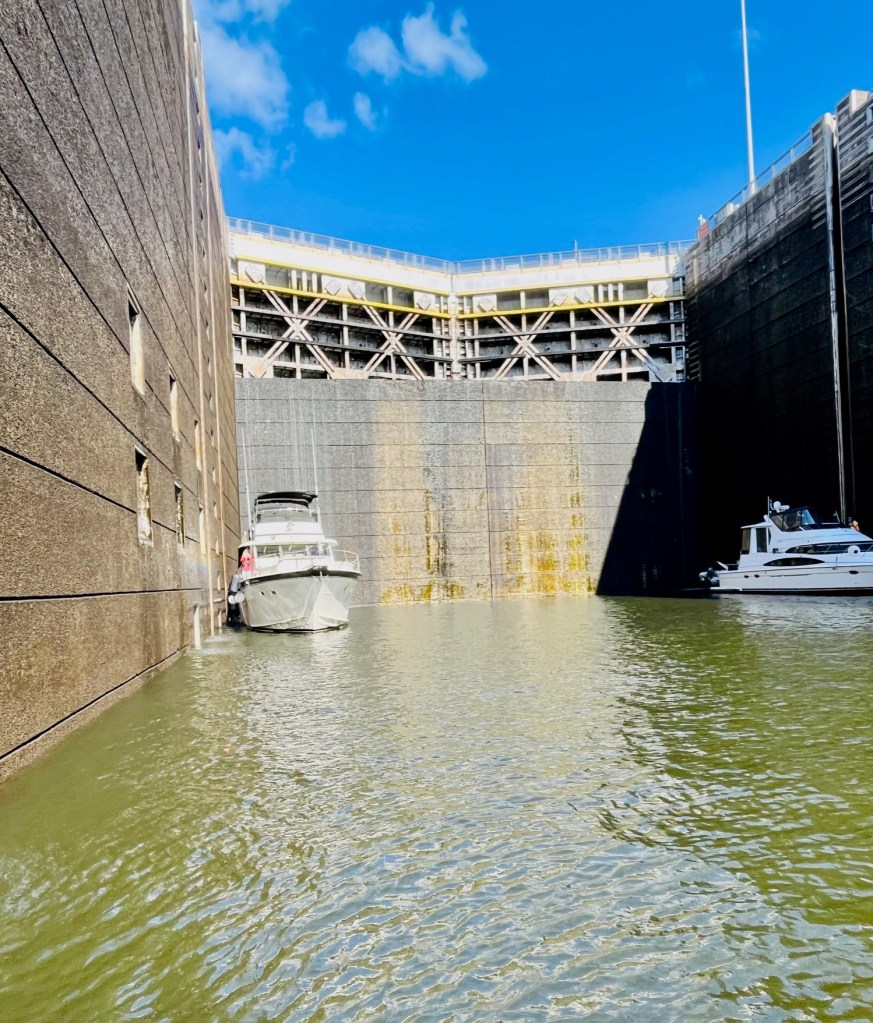
Sure enough – soon we feel the water pouring from the walls. Only on the starboard side – which is why the guidebook says best to tie up on East side!

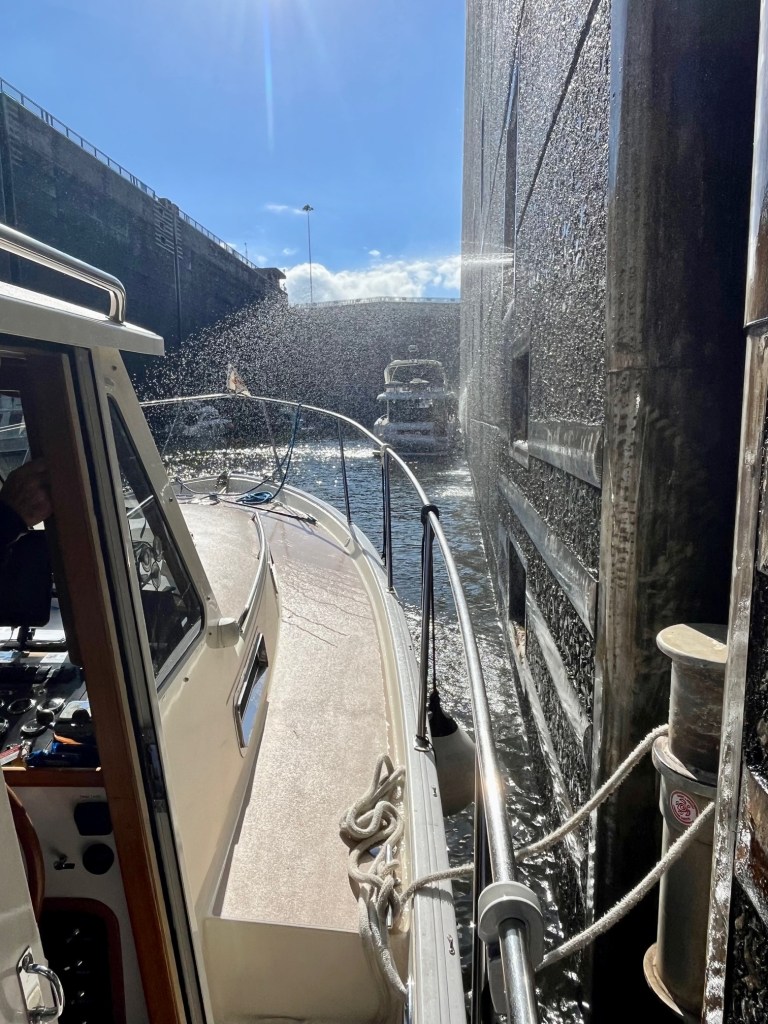
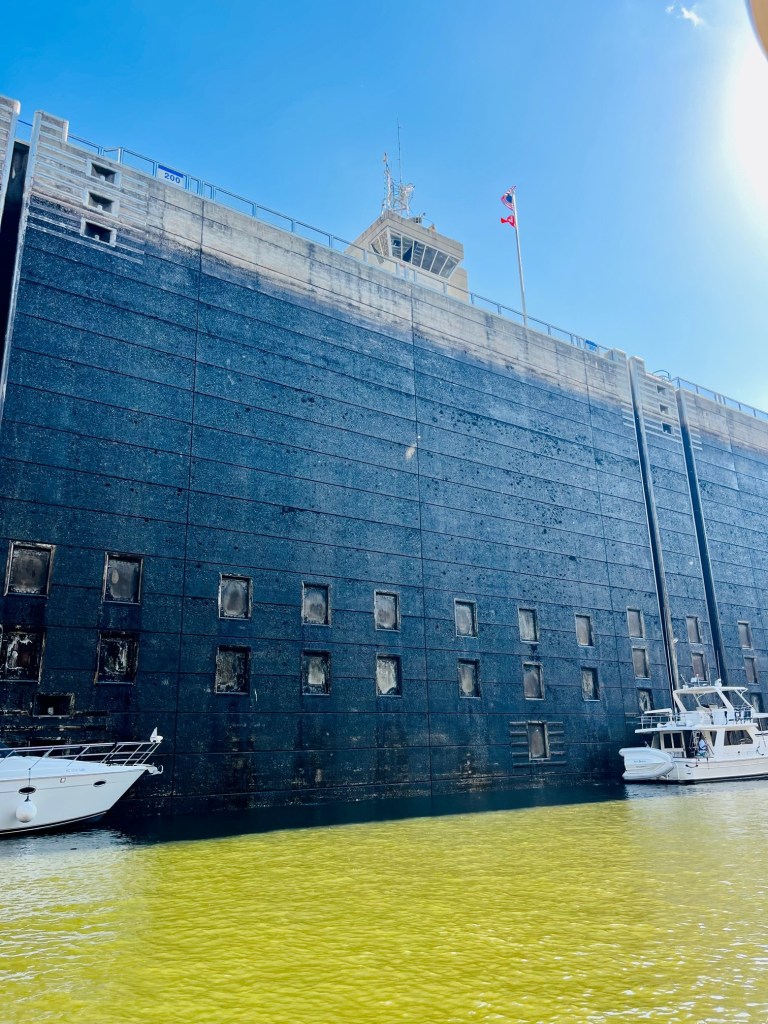
We make it through the first lock!
The Montgomery and Rankin Locks
Next is the Montgomery Lock, at Mile Marker406.7, just five miles away.
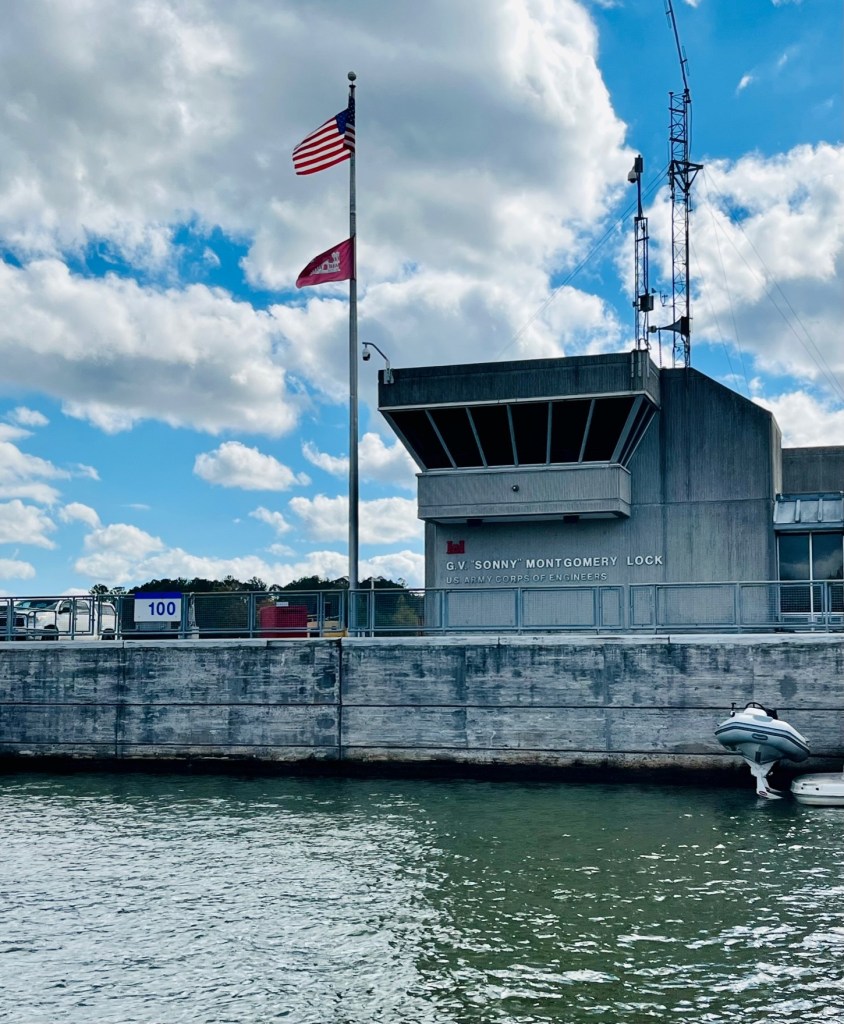
There appears to be more boats than bollards. Captain Pat comments “now I feel wanted!” when Beachside asks us to raft up beside them.
Rick on True Horizon pipes up on the radio:
“Is that like ‘Sunshine on your shoulder?’ “
“Makes you happy,” someone responds.
A little John Denver humor. It is fun when the Captains banter with each other over the radios.
We will continue this locking setup for the next two days.

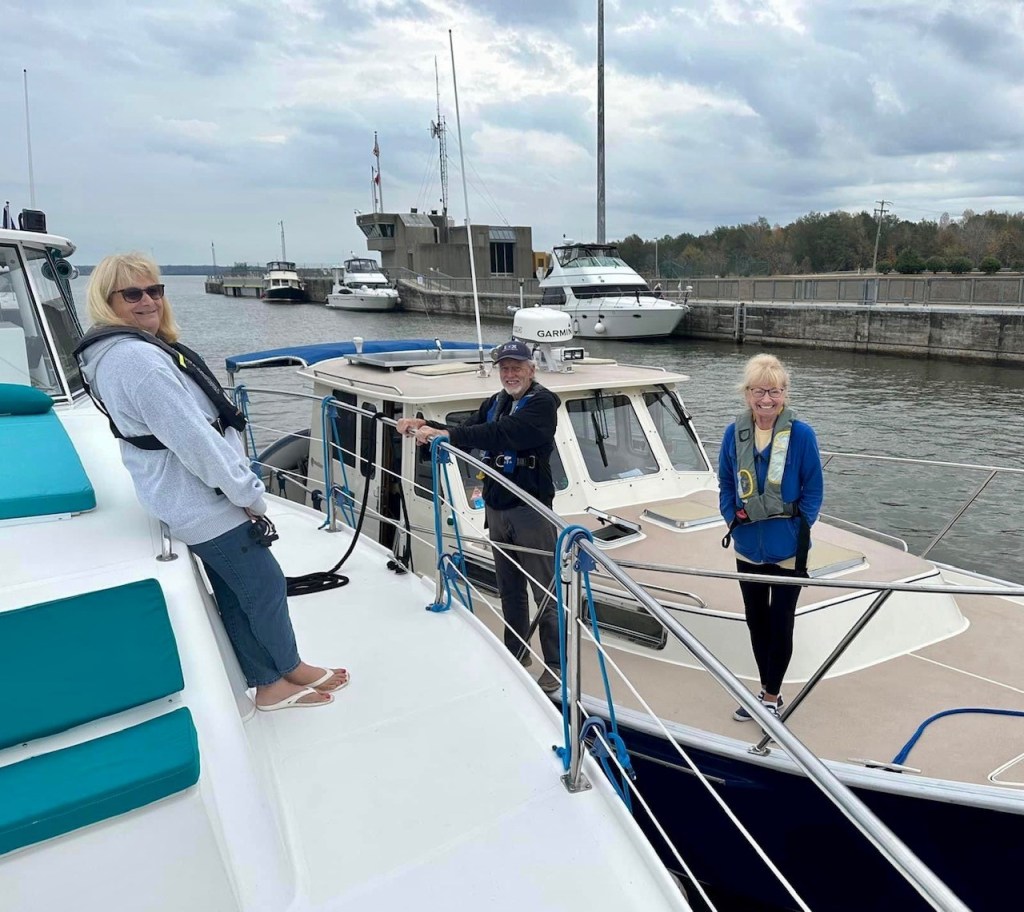
It’s nice to meet new people. We have seen Beachside and passed owners Diane and Tom in the laundry or on the docks, but never really talked. We discover they are from Massachusetts – Diane recognized Pat’s accent. Tom had a career with the Armed Forces in the space arena, which eventually landed them in Satellite Beach, Florida.
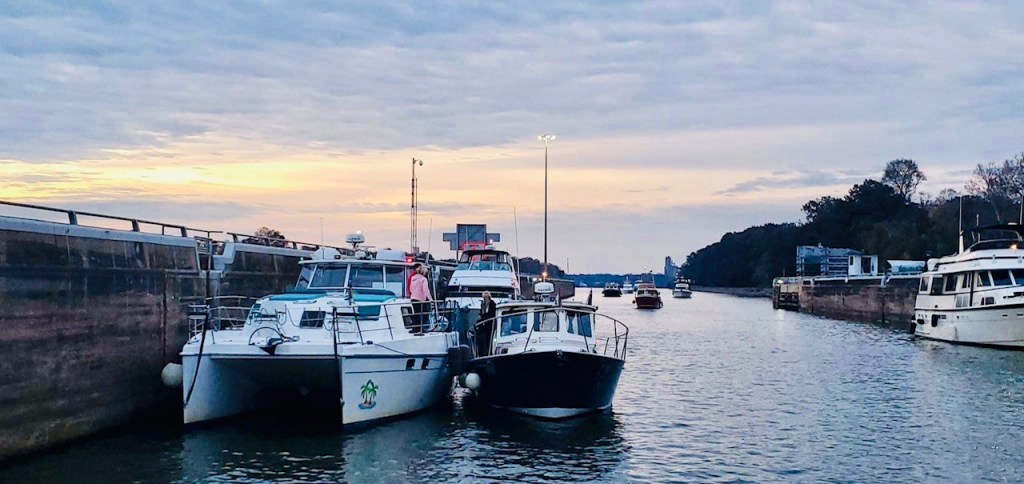
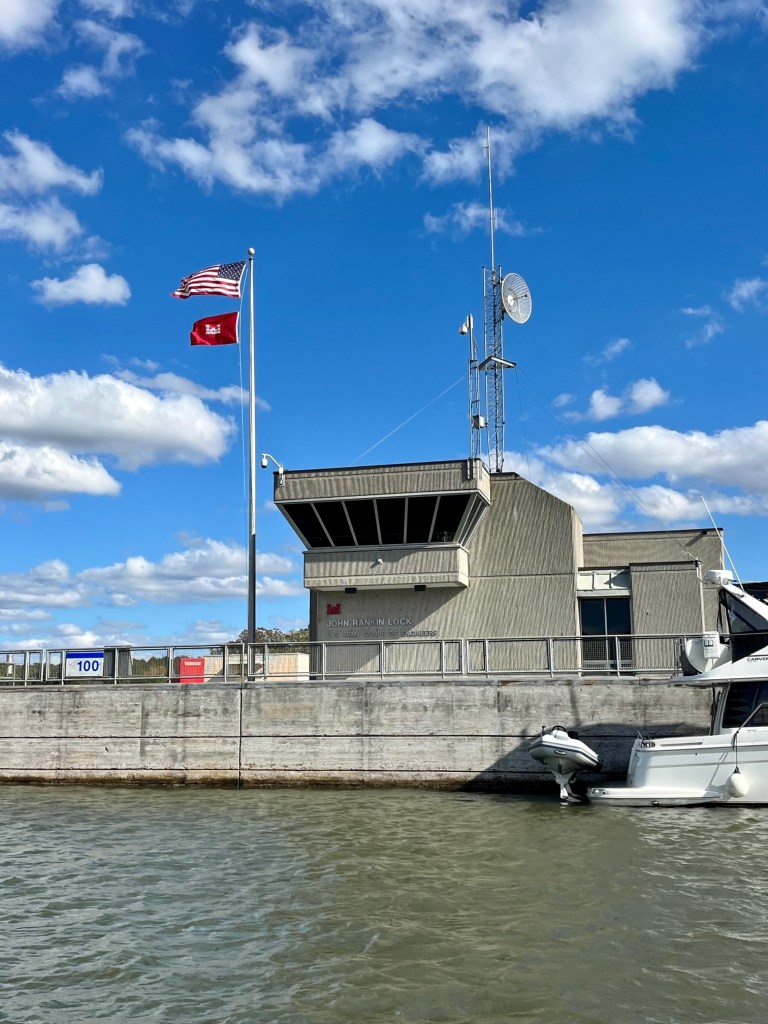
Last lock of the day is the Rankin Lock – Mile Marker 398.4 – just a few miles from Midway Marina.
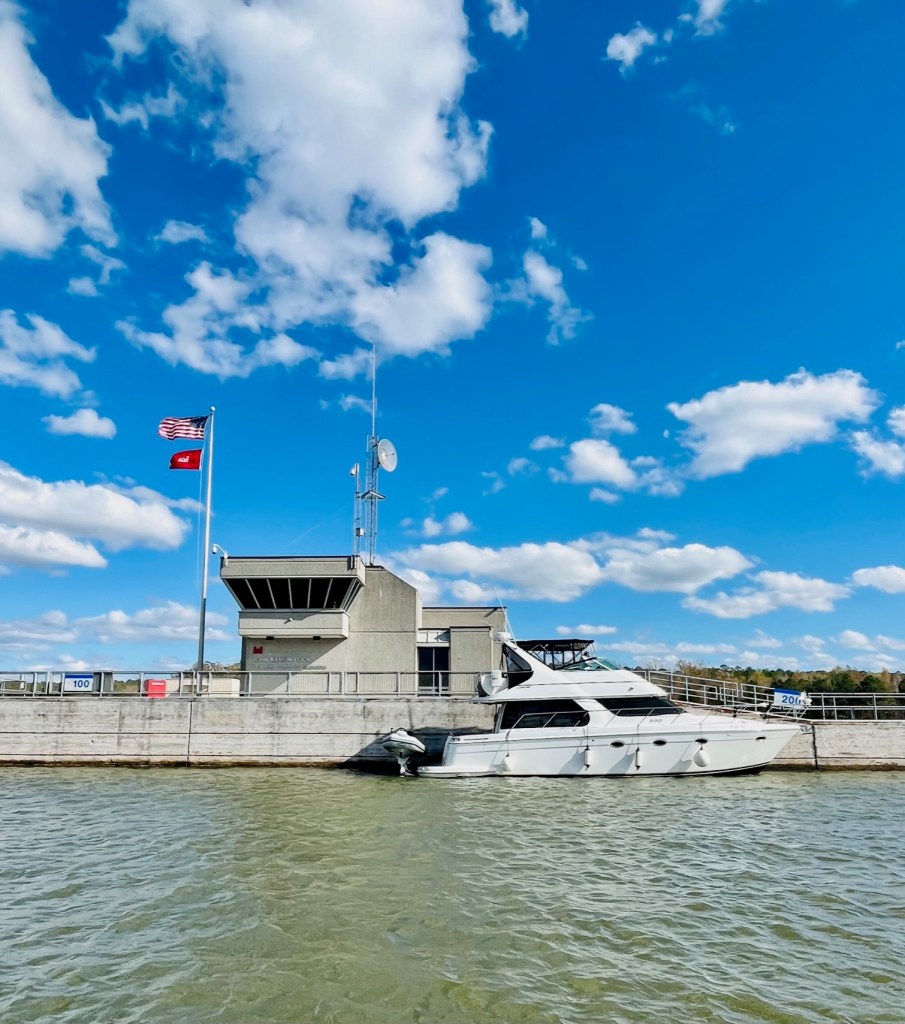
Arrival at Midway Marina – Fulton, Mississippi
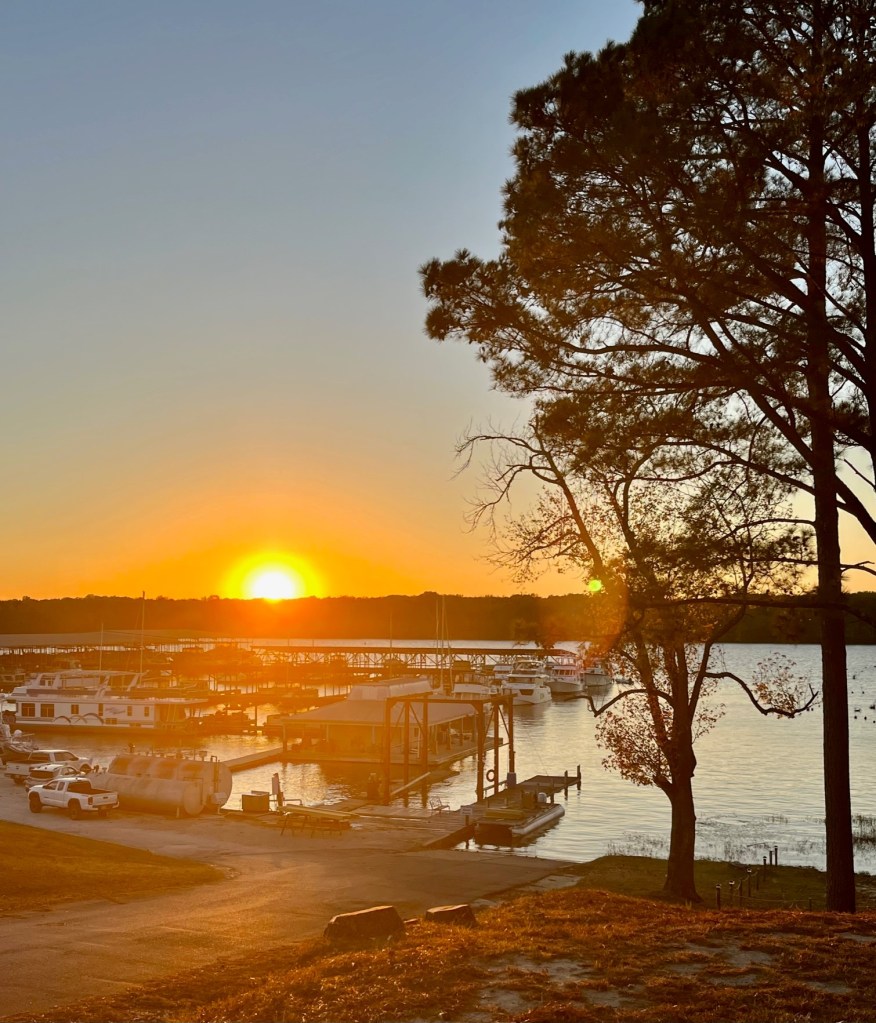
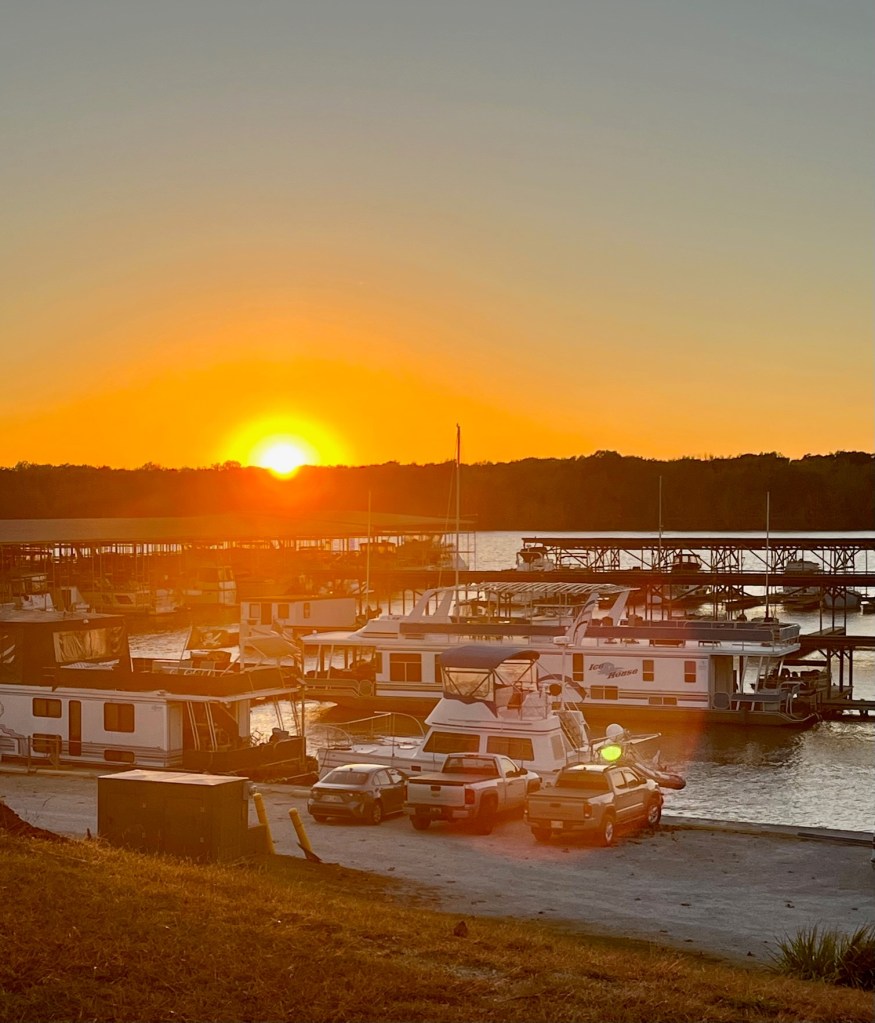
Finally, we pull into Midway Marina. With so many boats arriving at the same time, the dockmaster asks us to come in sequence. One by one she gives instructions over the radio as to your slip number and location. You must be patient with this many boats. And of course, Sunshine is at the back of the pack.
The dockhands are scrambling to offer assistance and get the boats tied securely. We are not in a slip, but rather tied up to a long dock. Even with the strong winds we make it in fine.
Captain Pat is exhausted. Long day of travel. We decline dinner invites to the restaurant at the top of the hill as we already have dinner prepared on our boat. After dinner we do join George and Tracy (Done Saving) and Doug and Donna (Hattitude) to discuss anchorage and marina stops for the next few days.
At the restaurant we meet Brad and Mandy from Tenacity who join us. There’s a lot of drinks and chatter so we don’t get much planning done. Brad strikes up a conversation with a local customer:
“Just where are we?”
“What? You don’t know where you are?” she replies with a thick Mississippi accent.
He’s trying to joke with her about our Southern remote location.
“Where are you from?” she asks.
“Michigan.” Brad replies.
She’s not sure where that is, but her boyfriend says he was there once.
This goes on for a while and garners some laughs. She asks how did Brad get here all the way from Michigan? He replies by boat and that really confuses her. (Although we are in a marina – so go figure.)
We don’t get much trip planning done – but we do have some fun after a long day of travel.
We close our eyes for sleep – tomorrow morning is another 6 a.m. departure!
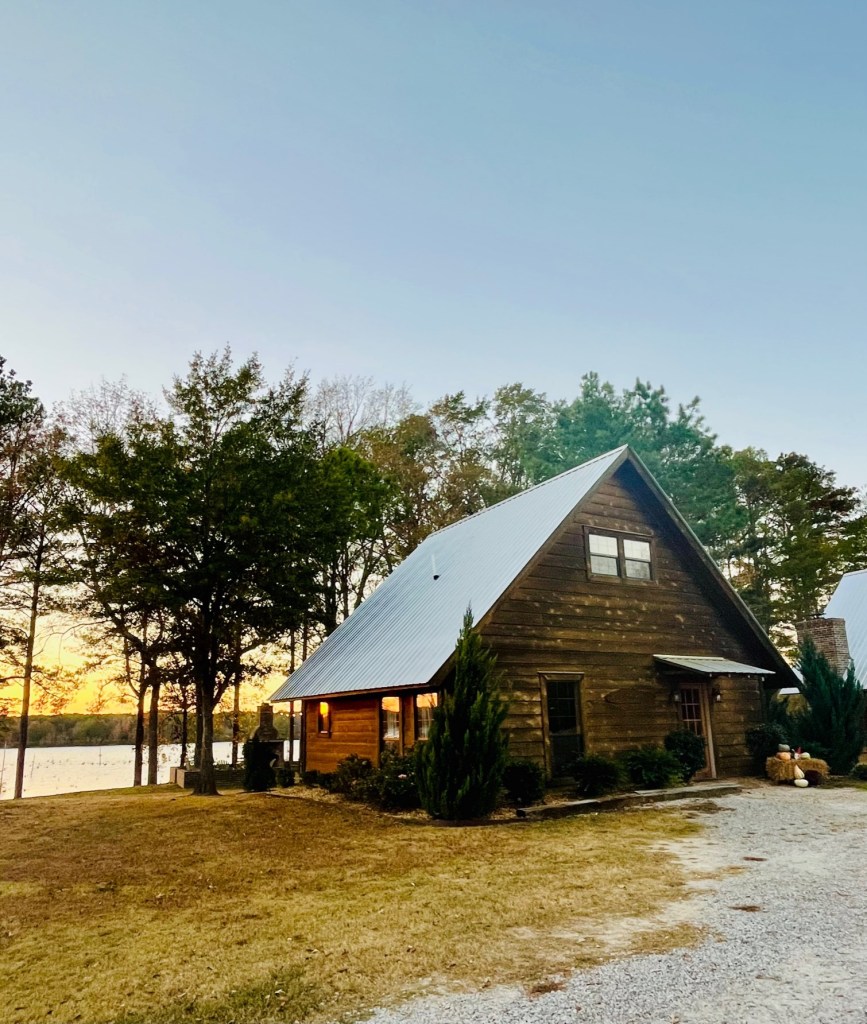
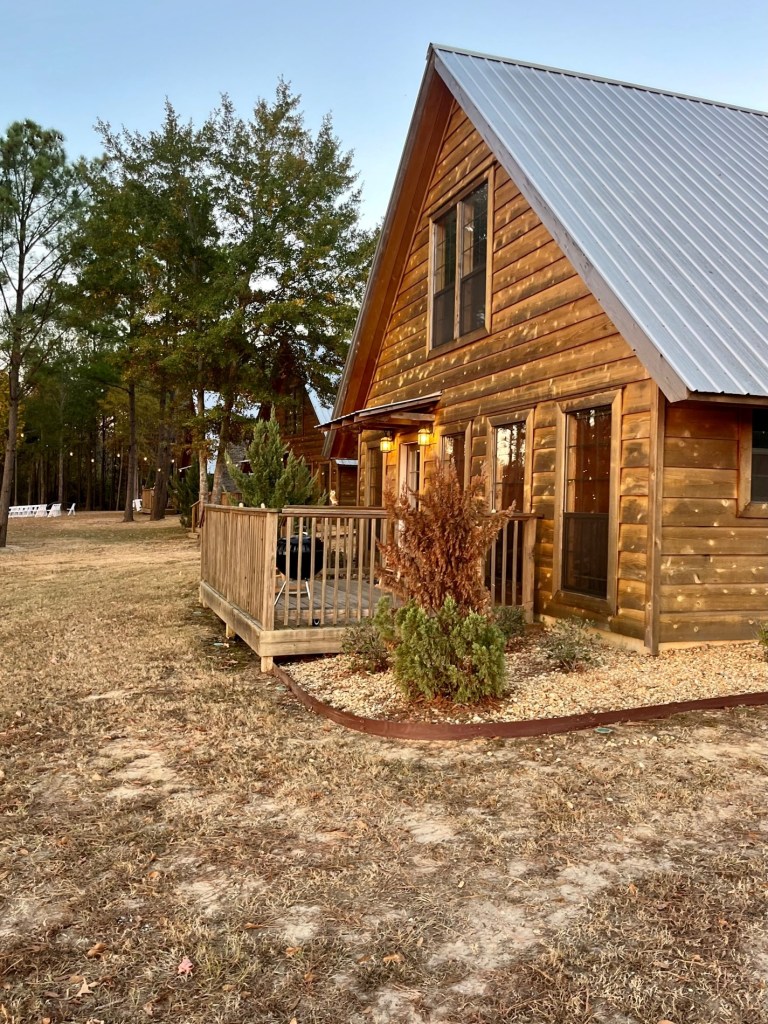
Fulton, Mississippi Overview:
Fulton, population of 3,900, was established in 1837 and named for Robert Fulton, the inventor of the steamboat. As it is located on the Tennessee-Tombigbee Waterway it hosts waterway sports such as boating, skiing, canoeing, and fishing.
The name Mississippi comes from Ojibwa misi-ipi meaning simply “big river.” In 1666 French explorers in the Great Lakes region encountered the Ojibwa name and rendered the river Messipi. The Ojibwa lived in Minnesota where the river originated. The state of Mississippi is named after the river.
Although hunting and gathering plants for food was important, the Mississippians were mainly farmers. They grew corn, beans, and squash, called the “three sisters” by historic Ojibwa and Southeastern Indians.
Here are photos of the fall foliage we viewed on our journey today:
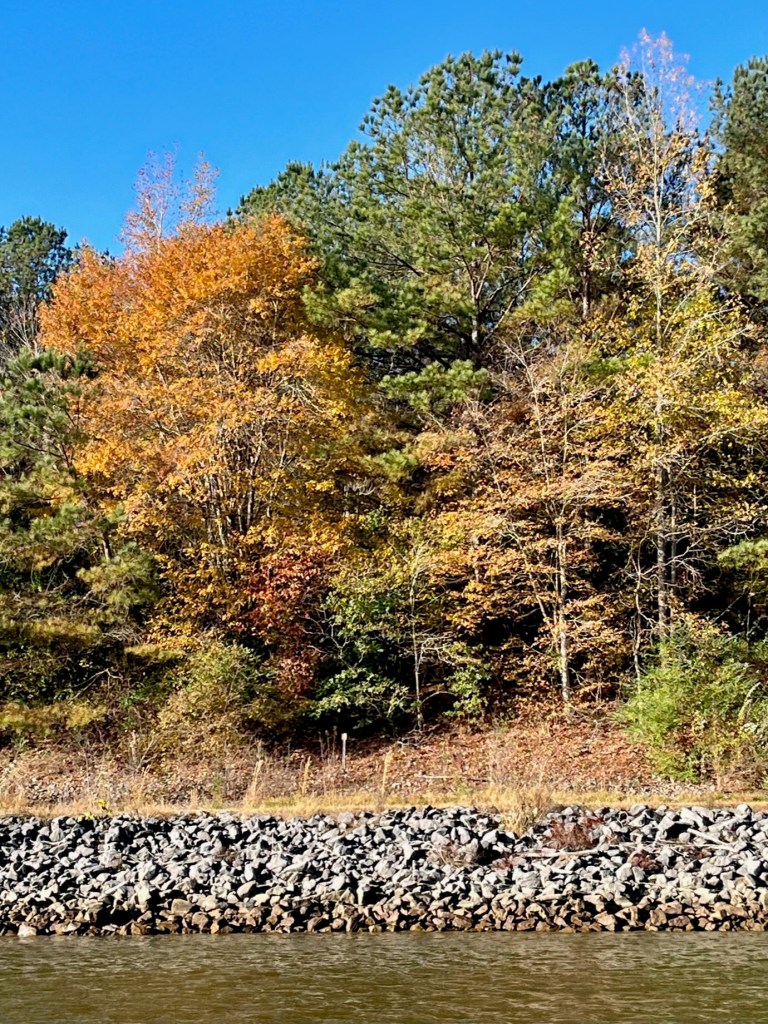

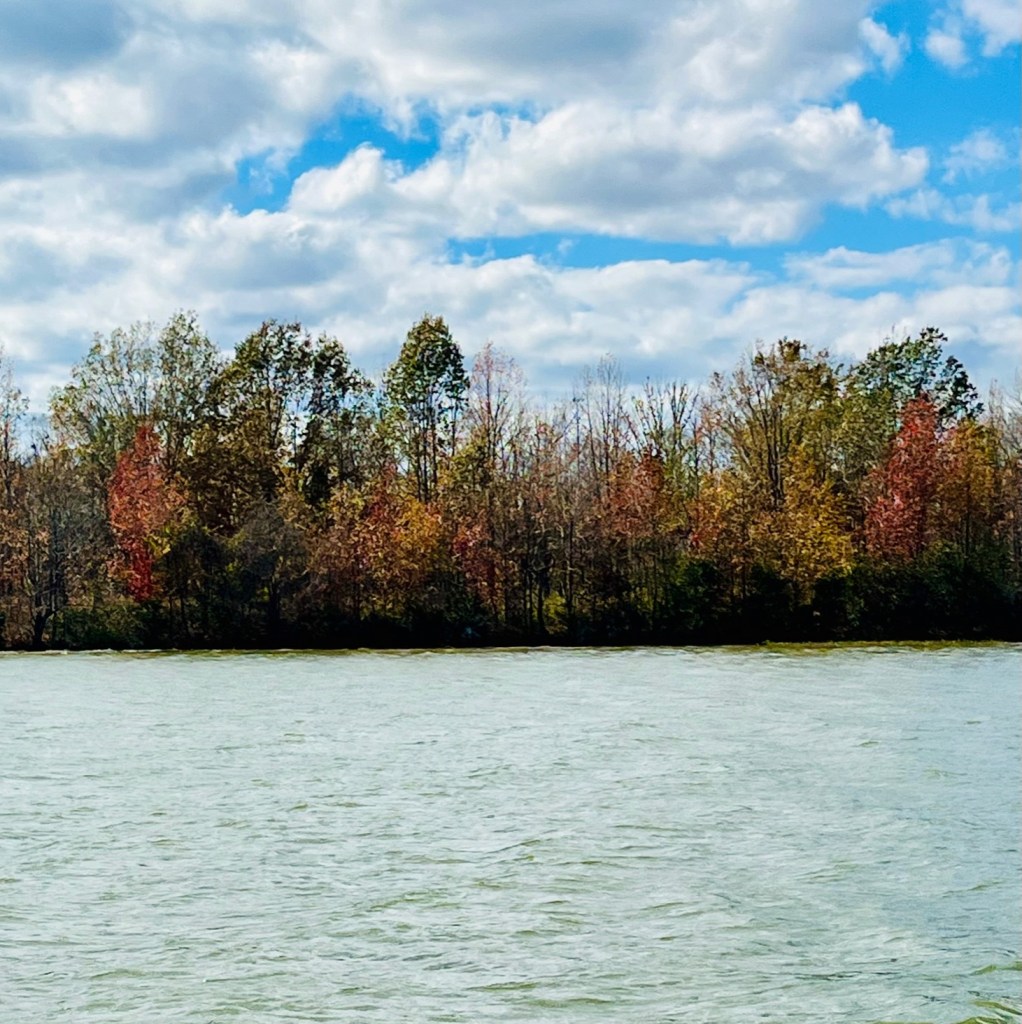
The weather may not be the best, but you do have to marvel at the colorful trees.
 Pat and Cindy's Great Loop Adventure
4 responses to “To Midway Marina – Fulton, Mississippi”
As usual…….great pictures. The Locks are amazing. If you remember, we went through the Panama Canal Locks this past year.
LikeLiked by 1 person
Thank you , Elliott. I bet that was a great adventure, going through the Panama Canal.
LikeLike
Looks like a crazy busy day and lots of work ! No wonder you guys are tired.
LikeLiked by 1 person
Ha! Yes we are tired and ready to get home.
LikeLike