
Wrigley Field – Go Cubs!
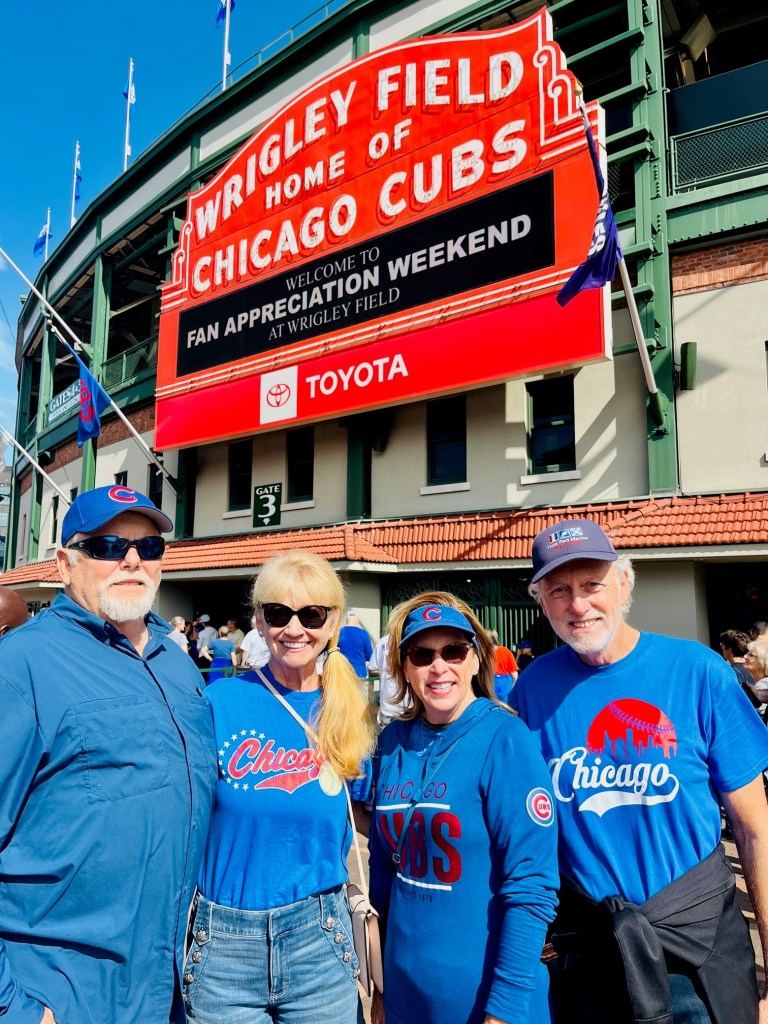
Can’t believe I’ve been to two MLB games this year. The first was in Phoenix to see the Diamondbacks play (compliments of son-in-law Jeff) and next in Chicago to see the Cubs. Captain Pat is excited for his first visit to Wrigley Field, after growing up in Boston watching the Red Sox at Fenway Park.
Our Chicago Looper friends, Polly and Bruce, join us and lead the way to the Chicago “L” Red Line and to Wrigleyville.
Wrigleyville
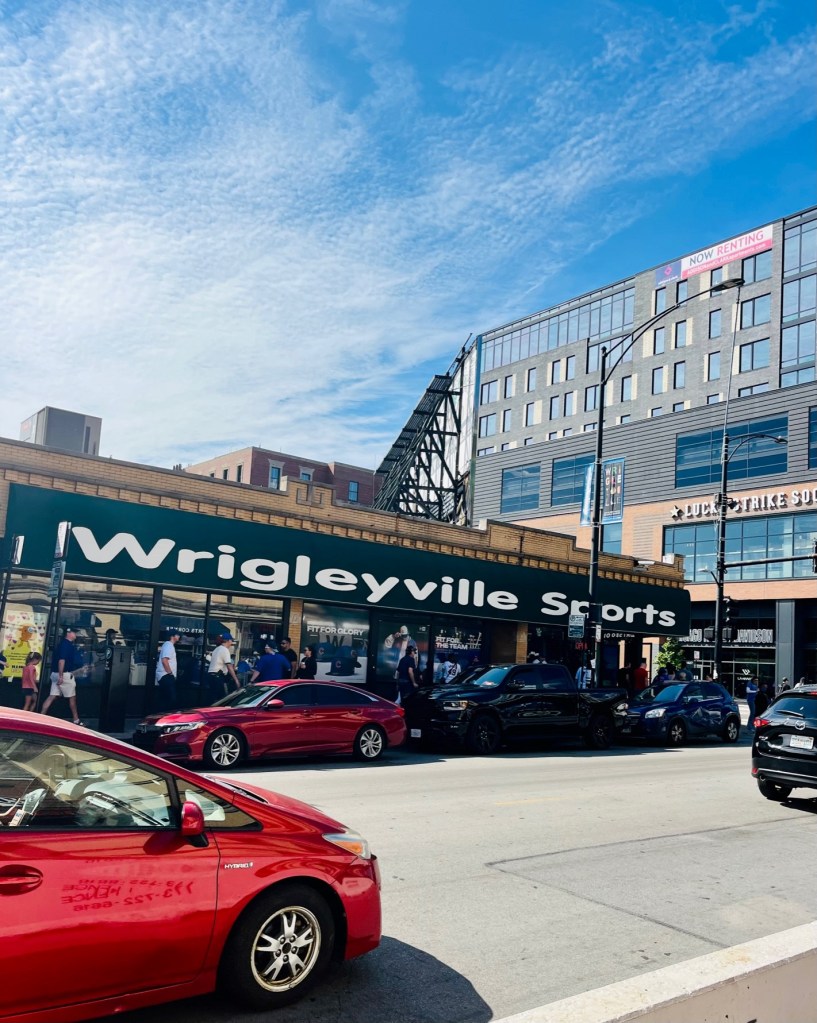
Established in 1914, Wrigley Field is the centerpiece and namesake of the former working-class neighborhood of Wrigleyville. The area is now a tourist hub that swells with activity during Chicago Cubs home games. It’s densely packed with lively sports bars and cool pubs, as well as baseball-themed gift shops that line Sheffield, Addison, and Clark streets.

Although not a baseball fan, experiencing an MLB game is exciting – an American pastime. It’s a shame the price of admission to ballparks – Fenway comes to mind – prohibits the average American family from enjoying this experience. Hint from Captain Pat: don’t buy from the ticketing agency; go directly to the team site. He did and we got great seats for half the price.
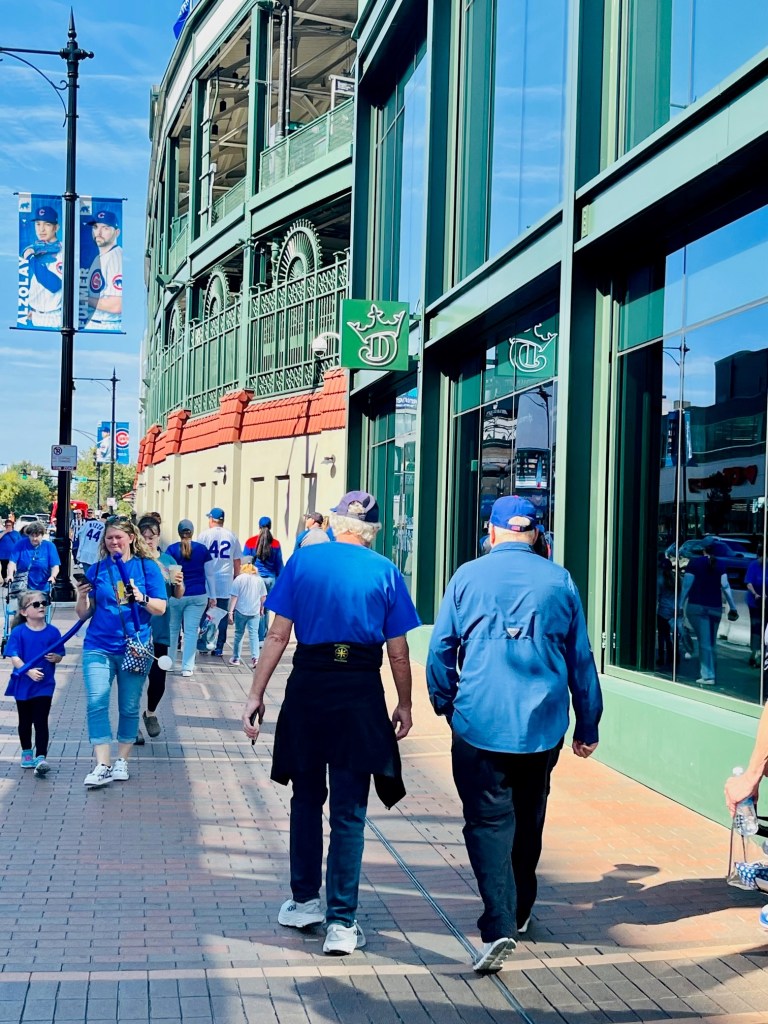
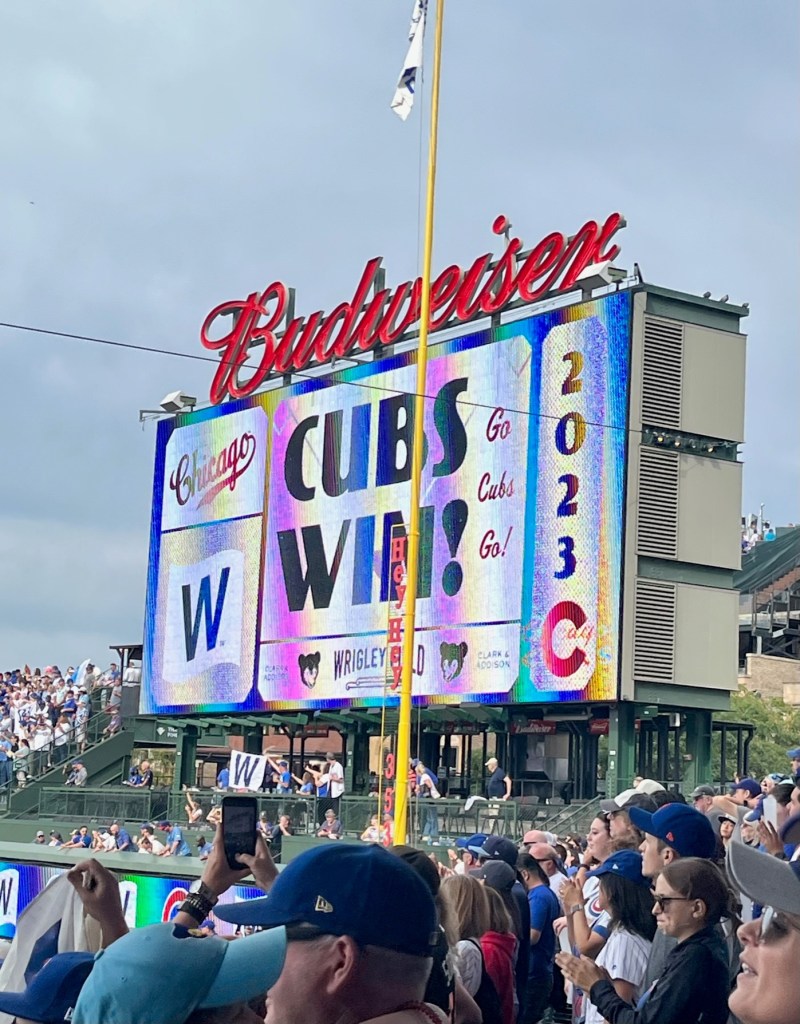
This is the last home game for the Cubs and the fans are rallying for a win. Polly reiterates there are no more loyal fans than Cubs fans – whether they are winning or losing.
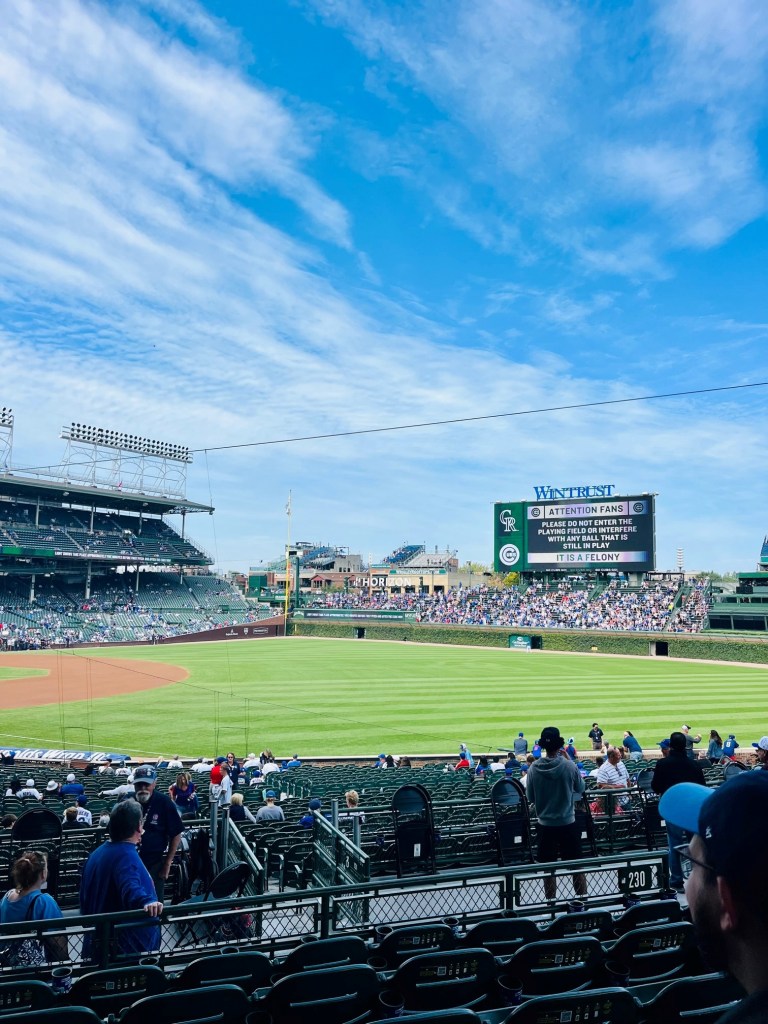
After peanuts and popcorn and the seventh inning stretch, we venture up the rafters to see our other Looper friends, Tracy and George, and Donna and Doug. We return to our seats to continue watching the game. A batter named Patrick Wisdom approaches the plate.
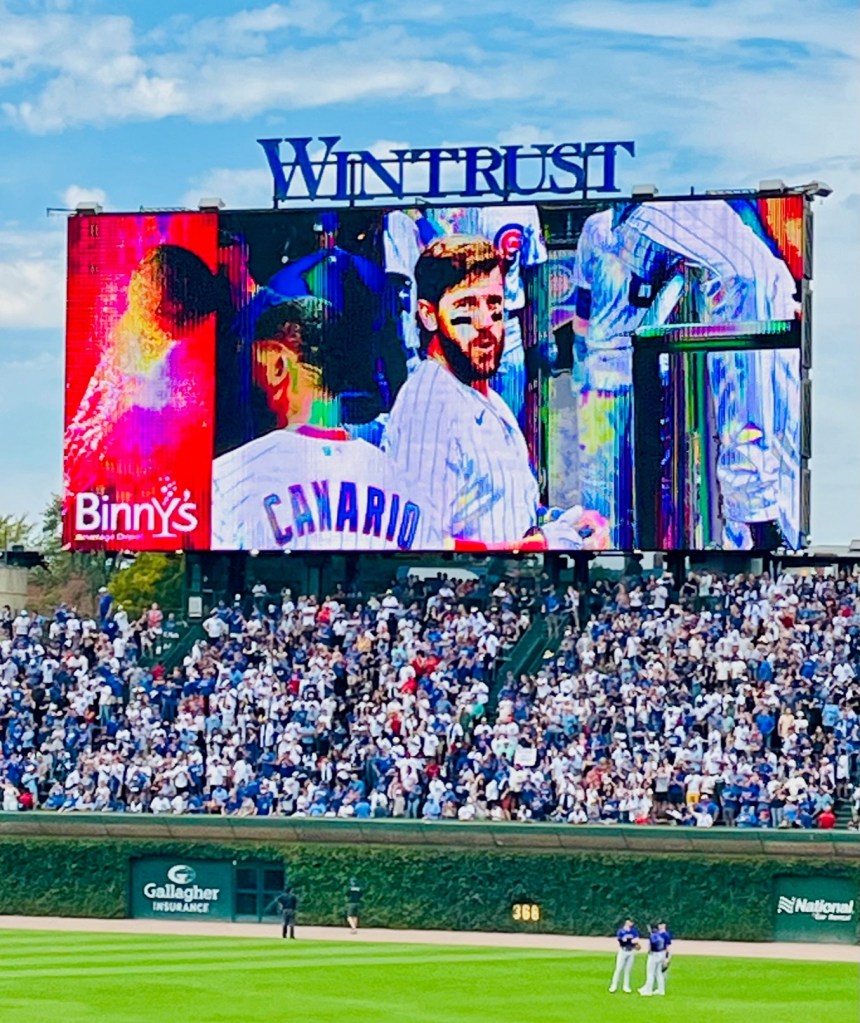
Captain Pat proclaims, “he is going to hit a home run.” (He liked his name.) Sure enough, Patrick Wisdom did hit a home run, the play of the game. After more exciting plays, the Cubs bring home a win. The crowd erupts, the music plays, and before the exit frenzy begins, we decide to head to the subway for home.
Following the game, we stop at Harry Caray’s for dinner.
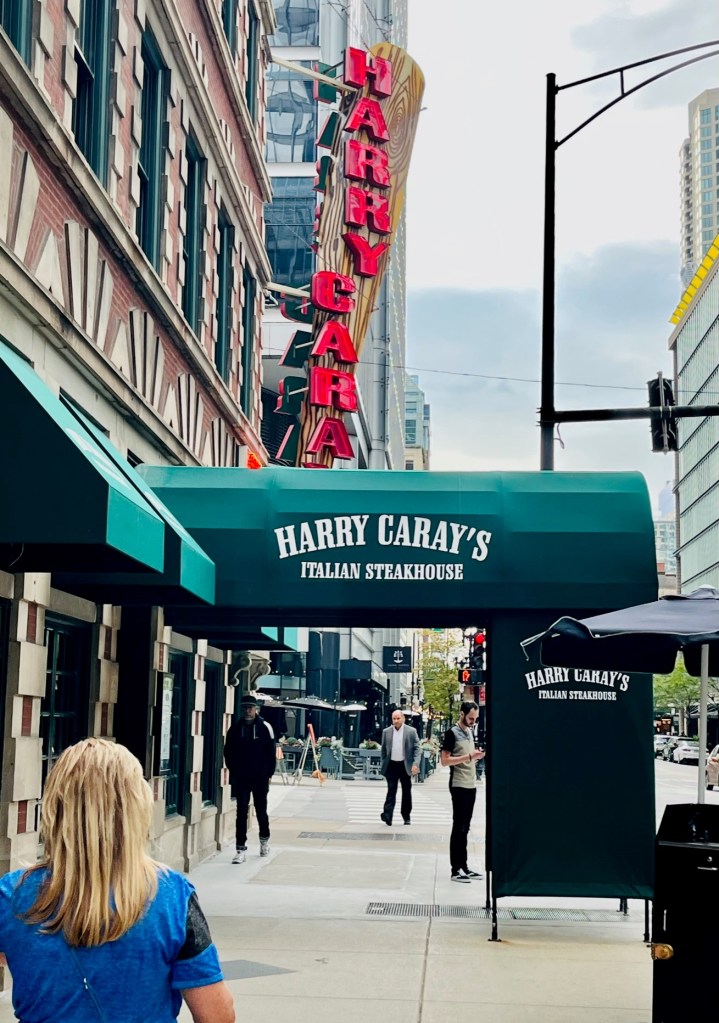
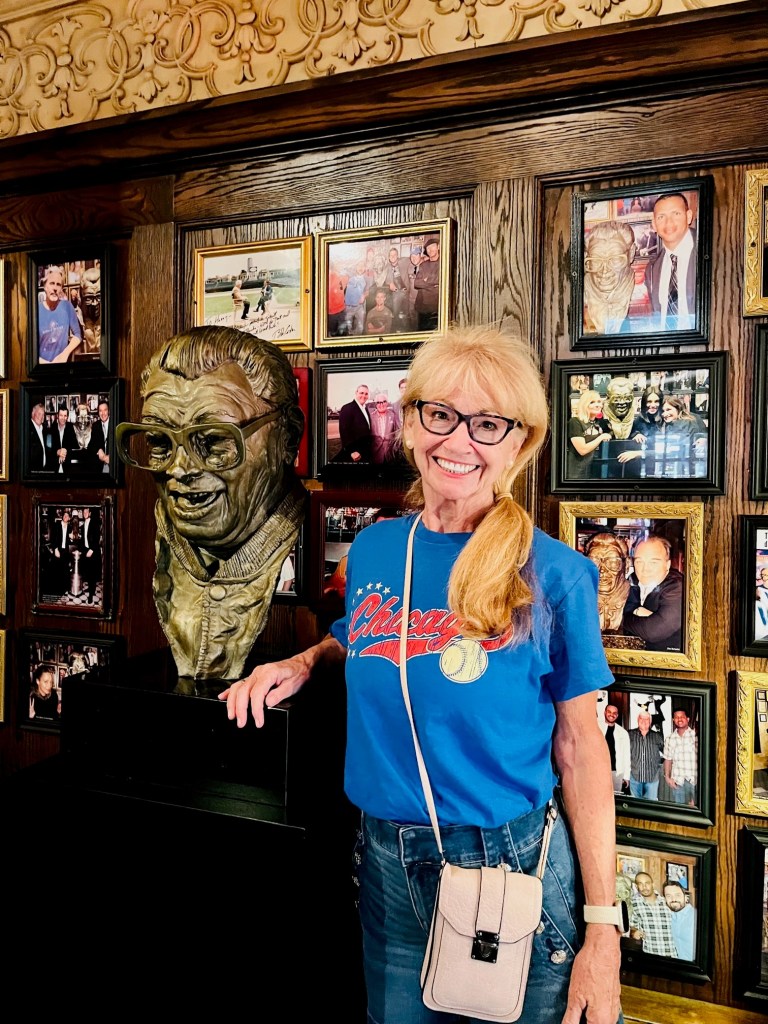
We sit at the bar so Polly can watch the Cubs football game. Unfortunately, Kansas City is clobbering them. The food is delicious and Harry Caray’s is amusing with its thousands of celebrity photos and a vault belonging to Al Capone. (We visit this later on our Gangster Food Tour!)
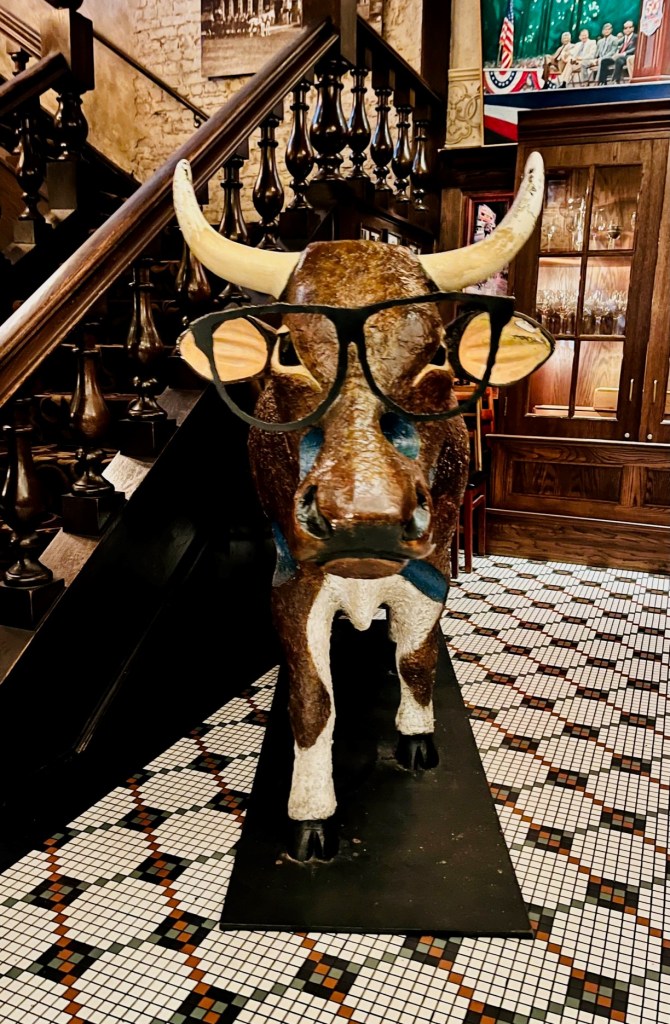
What a fun day! Here’s more information about Wrigley Field:
“The Friendly Confines”
Wrigley Field opened as Weeghman Park and was named Cubs Park from 1920 to 1926 before being renamed Wrigley Field in 1927. Chewing gum magnate William Wrigley, Jr. acquired the Cubs in 1921. The stadium currently seats 41,649 people and is the second stadium named Wrigley Field, as a Los Angelese ballpark with same name opened in 1925.
Wrigley Field is nicknamed “The Friendly Confines,”, a phrase popularized by Hall of Fame shortstop and first baseman Ernie Banks. The oldest park in the National League, it is the second-oldest in the majors after Fenway Park (1912) and the only remaining Federal League park. The park was designated a National Historic Landmark in 2020.
Wrigley Field’s features include its ivy-covered brick outfield wall, distinctive wind patterns off Lake Michigan, the red marquee over the main entrance, and the hand-turned scoreboard.
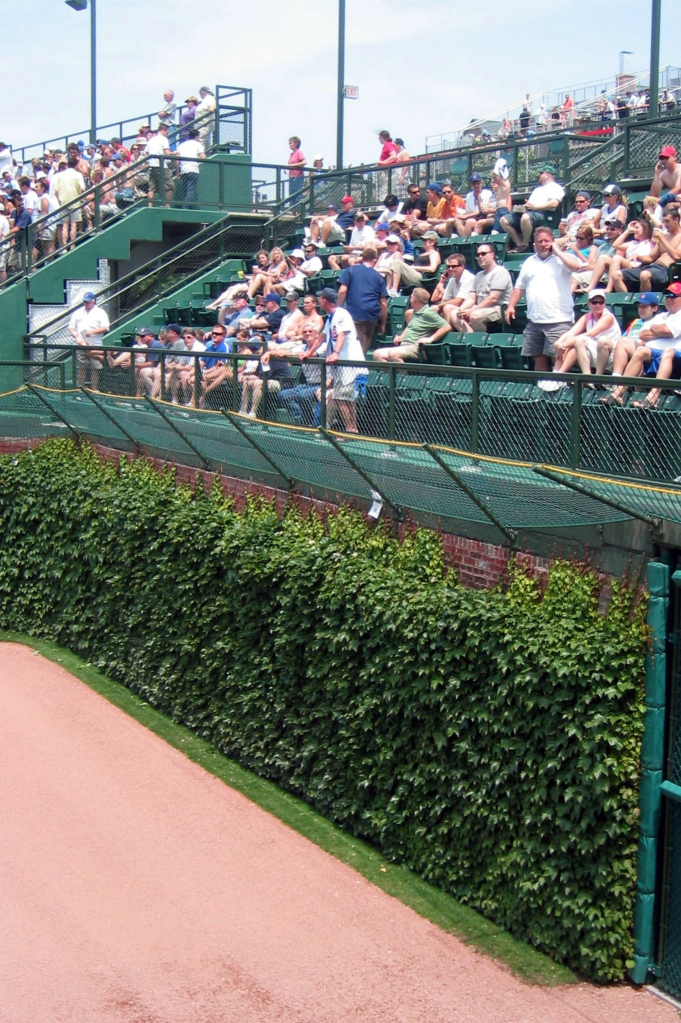
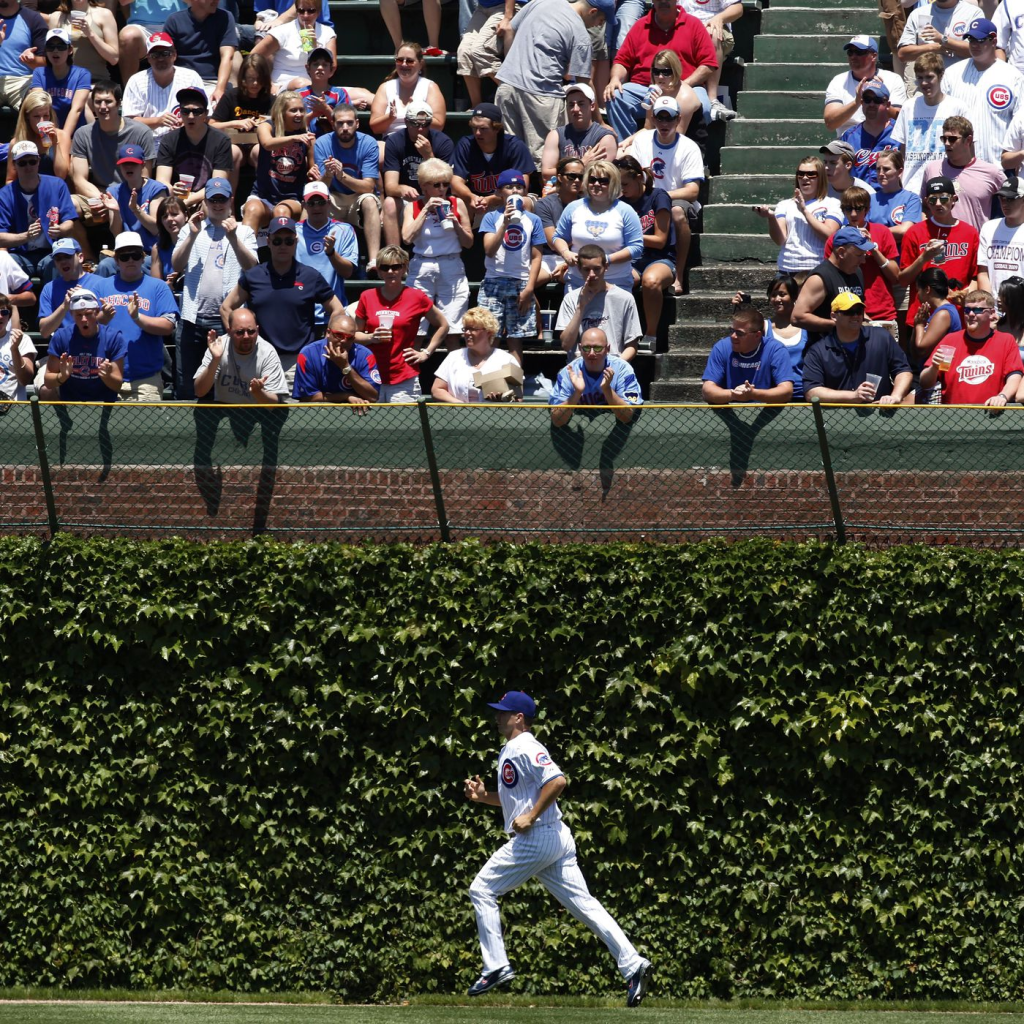
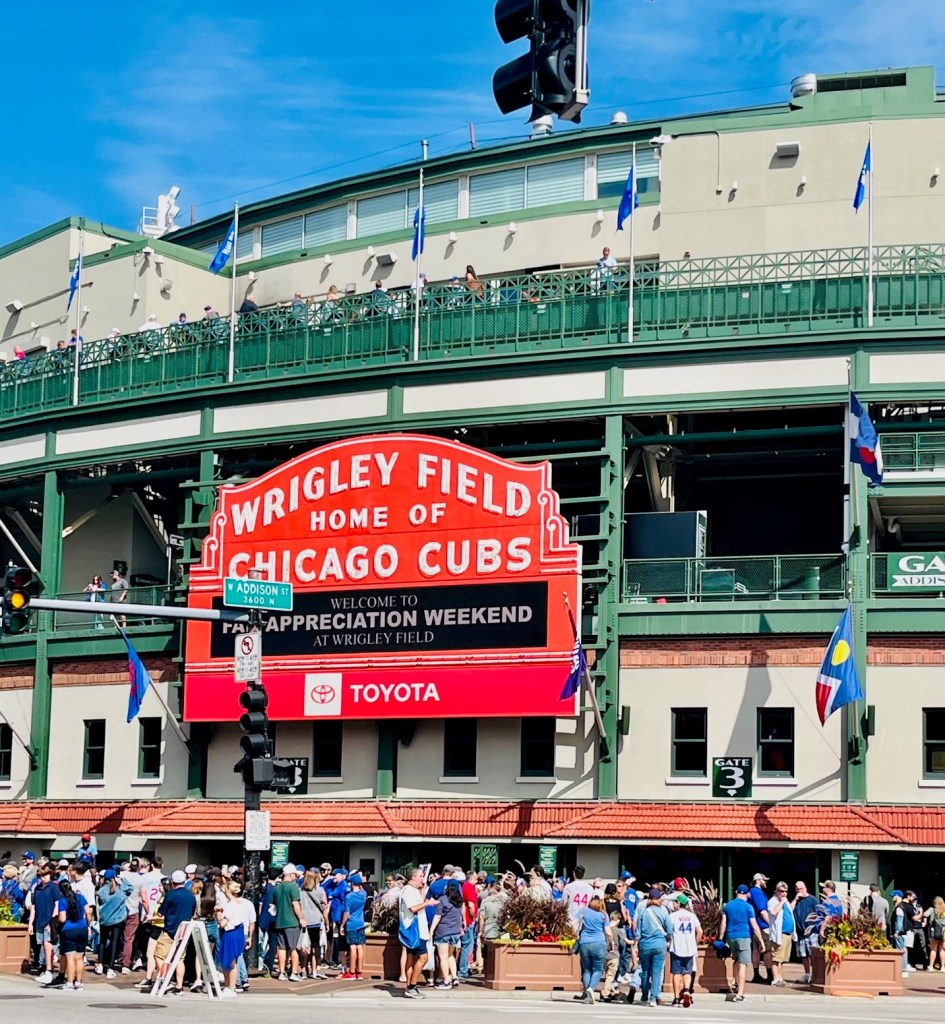
The stadium is situated in a primarily residential neighborhood without parking lots, and spectators have views from the rooftops behind the outfield. It is the last Major League Park to have lights installed for night games, in 1988. The elevation of its playing field is 600 feet (180 m.) above sea level.
Hand-Turned Scoreboard
Along with Fenway Park’s scoreboard and Minute Maid Park, Oakland-Alameda County Coliseum and Oracle Park’s out of town scoreboards, Wrigley is one of the last parks to maintain a hand-turned scoreboard.
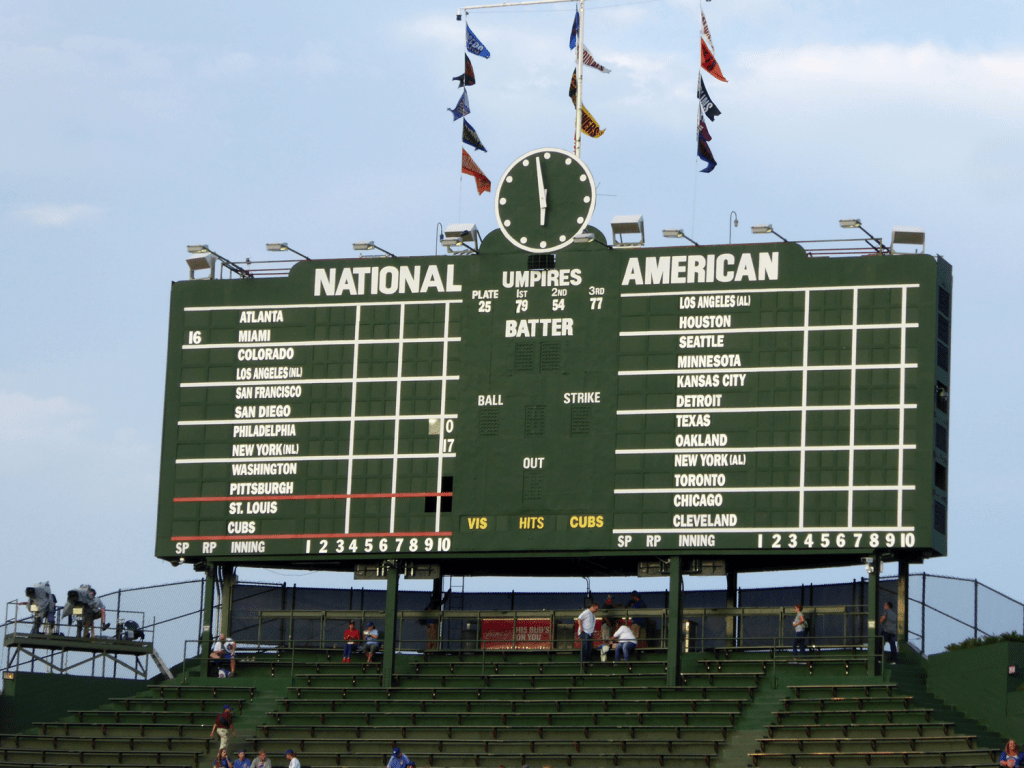
A number turner watches the score changes on a computer (a ticker tape machine was used in the past) and updates the scoreboard by manually replacing the numbers from within the scoreboard. The scoreboard is made of sheet steel. The numbers that are placed into the inning windows are also steel, painted forest green, and numbered with white numerals. The box for the game playing at Wrigley uses yellow numerals for the current inning. The clock, which sits at the top center of the scoreboard, has never lost time in its 82-year existence!
Stadium Lights
The Cubs were a holdout against night games for decades, not installing lights at Wrigley until 1988, after baseball officials announced that the park would be prohibited from hosting any future postseason games without lights. Before then, all games at Wrigley were played during the day. Night games are still limited in number by agreement with the city council.
On November 7, 2022, Wrigley Field upgraded to LED field lights.
“Take Me Out to the Ball Game”
The tradition of singing “Take Me Out to the Ball Game” at Cubs home games began when Hall of Fame announcer Harry Caray arrived in 1982 (he had sung it the preceding seven years as a broadcaster for the White Sox) and has remained a Wrigley Field staple. After Caray’s death, the tradition of a guest conductor began, with former baseball players, other sports stars, actors, and other celebrities invited to sing during the Seventh Inning Stretch. Among the best-known guests have been actor Bill Murray, former Bears coach Mike Ditka, comedian Jay Leno, NASCAR driver Jeff Gordon, singers Ozzy Osbourne and Eddie Vedder, former Chicago lead singer Peter Cetera, boxer and actor Mr. T, actor and lifelong Cub fan Gary Sinise, actors Tom Arnold, James Belushi, Vince Vaughn, Melissa McCarthy, and Illinois-native country music singer Brett Eldredge.
Organ Music
Wrigley Field was the first Major League ballpark to introduce live organ music on April 26, 1941. The stadium’s first organist was Ray Nelson. As of July 2019, organist Gary Pressy holds the record for 2,653 consecutive games played, never having missed a day’s work in 33 years! Today, most major league ballparks have replaced the traditional live organist with canned music programmed by a DJ. Pressy says: “I don’t think it’s a dying art, especially at Wrigley Field … The team respects tradition.”
He retired after the 2019 season. John Benedeck is the current organist.

 Pat and Cindy's Great Loop Adventure
10 responses to “Wrigley Field – Go Cubs!”
As usual, great photos! Looks like you are having a great time1
Elliott Bronfman 789 W Yamato Road Apt.118 Boca Raton, FL 33431 Cell: (561)271-9393 E-Mail: eb9@comcast.net
>
LikeLiked by 1 person
Hello Elliott! Hope you enjoyed your birthday. We are ready to bet back to Florida. It is cold here in Chicago!
LikeLike
TRY TO KEEP WARM!!
Elliott Bronfman 789 W Yamato Road Apt.118 Boca Raton, FL 33431 Cell: (561)271-9393 E-Mail: eb9@comcast.net
>
LikeLiked by 1 person
We are trying! Need to get further south.
LikeLike
I agree on the city but not on the team or the ballpark when you have a much better team and ballpark on the other side of town…
Charles Comiskey would let me shag flyballs before a game with the likes of Joe and Dominic Dimaggio, Ted Williams, Vern Stephens, Phil Rizzuto and friends. Our enemies and crosstown rivals were the Cubbies. You can’t like them both so please pick the best…….White Sox.
Comiskey Park and home of the White Sox was completed in the summer of 1910 and nicknamed “Baseball Palace of the World”. And for many years welcomed most of baseball’s greats. I spent many days in the outfield, the dugout and locker rooms with those that made it all possible…….the players
Bill Comiskey
LikeLiked by 1 person
Hello Bill, we have met some other White Sox fans who agree with your comments. Sounds like you have some wonderful memories of the White Sox and of course Comiskey Park – aptly named! Hope you and family are well.
LikeLike
What a life-affirming post! Love, love, love the info about Wrigley Field, with a little touch of Fenway. I can smell the popcorn from faraway SoFlo! You two (and all your friends) never fail to amaze. Sad to hear of the exorbitant ticket prices, but still. reminded me of days gone by, when my Grandpa used to take me to AAA Rochester Red Wings games. Cheering galore!
Anxious to see and hear you in person. I miss you!
LikeLiked by 1 person
Hello Marleen, thank you for your comments and for following us. I can’t wait to see you in person too! By the way – I bought and am reading your book. So good! YOU are the writer. Miss you.
LikeLike
Loved the baseball- themed post! Go Cubbies!
LikeLiked by 1 person
Hi Alyson, the game was fun – and I am not even a fan of baseball! -:) Miss you.
LikeLike