August 24, 2023
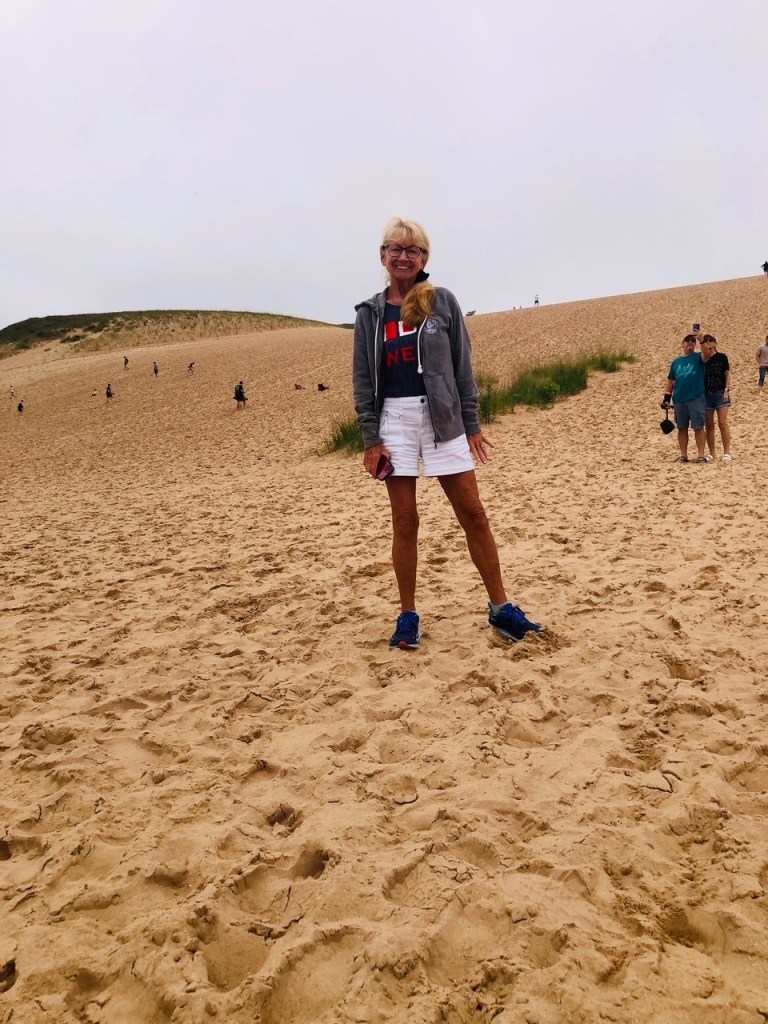
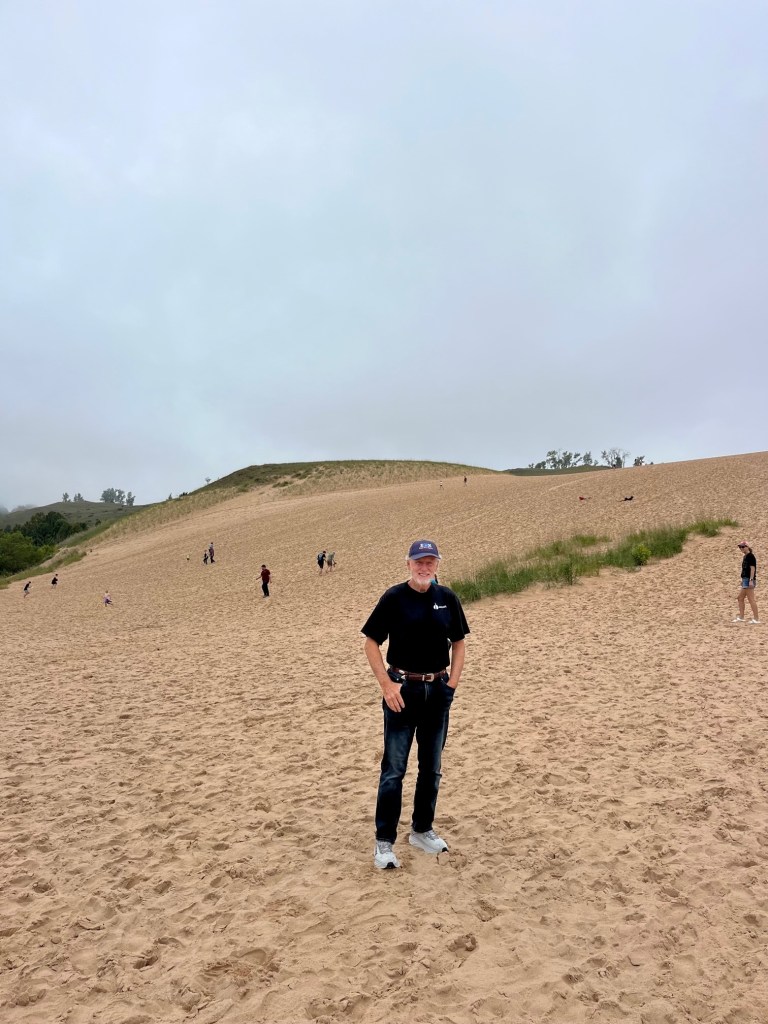
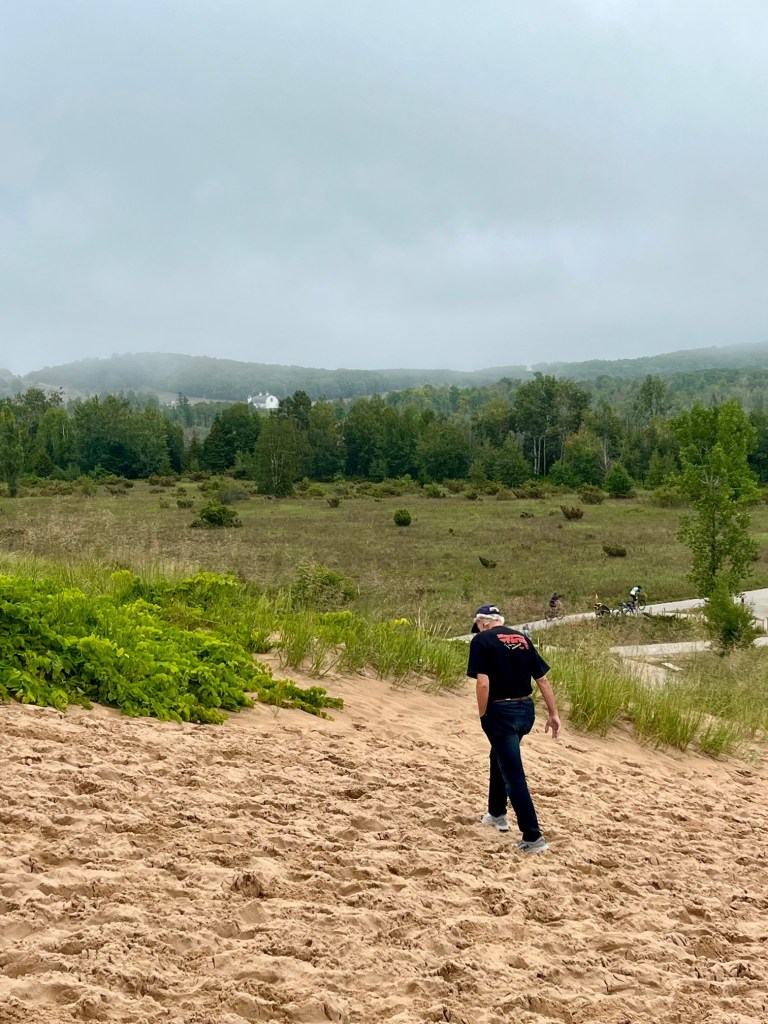
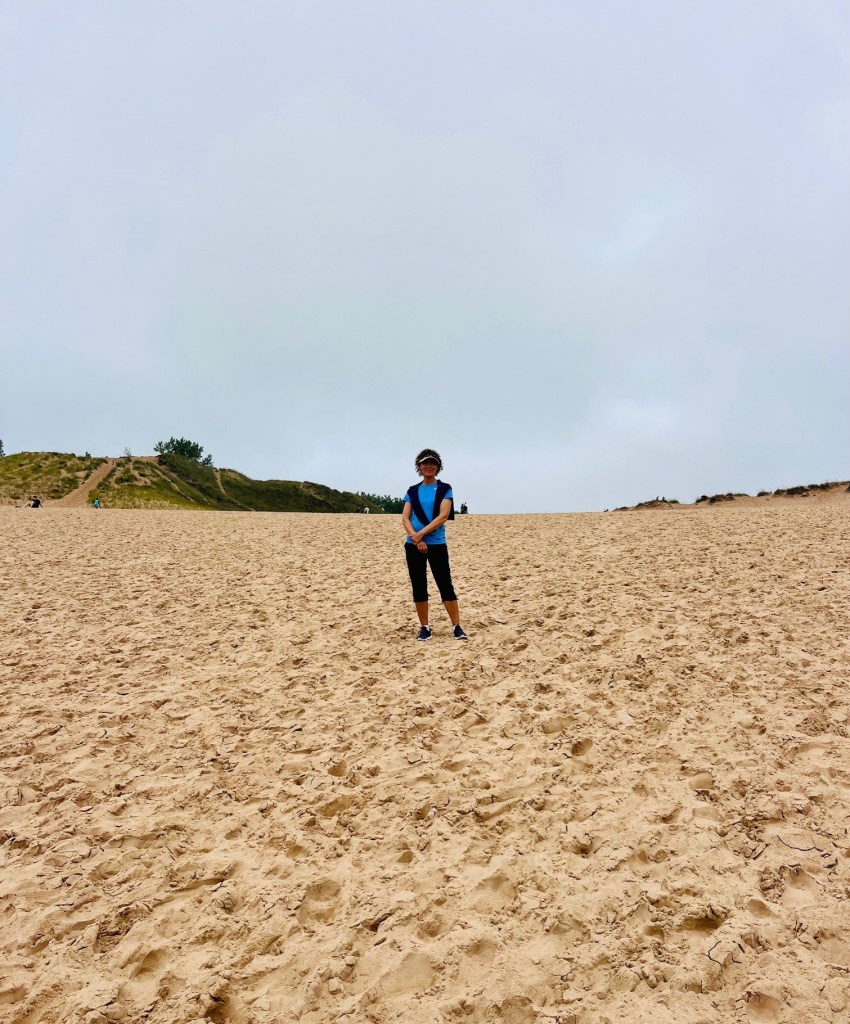
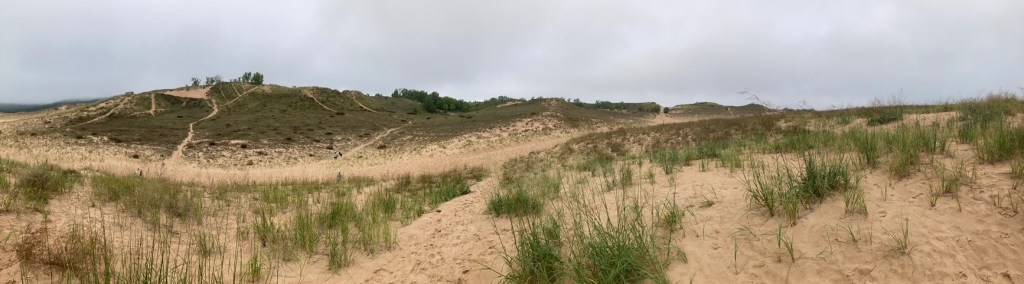
Fellow Loopers Bill and Margie invite us to join them to visit the Sleeping Bear Sand Dunes. The dunes are south of Leland, Michigan as you head toward Frankfort.

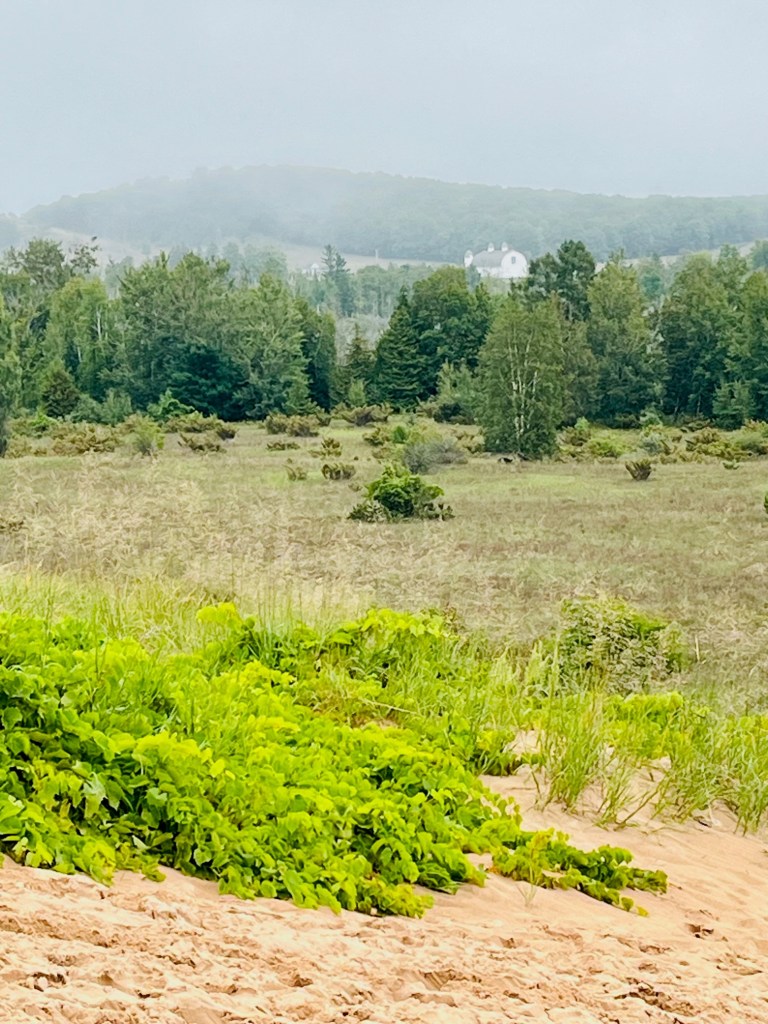
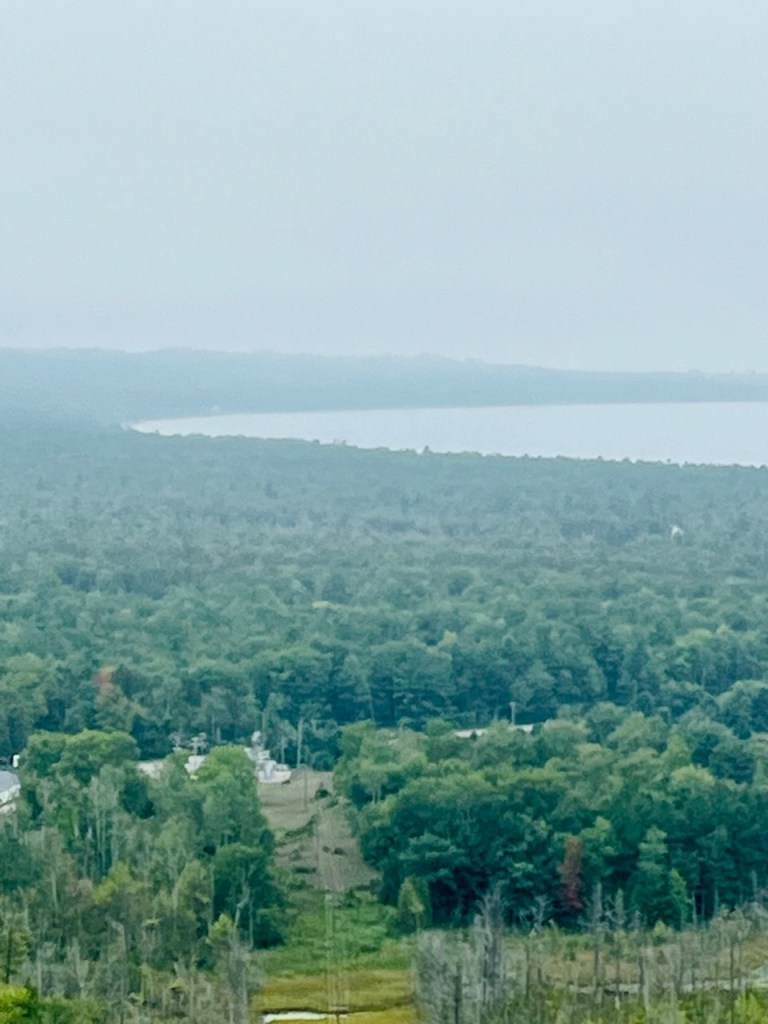
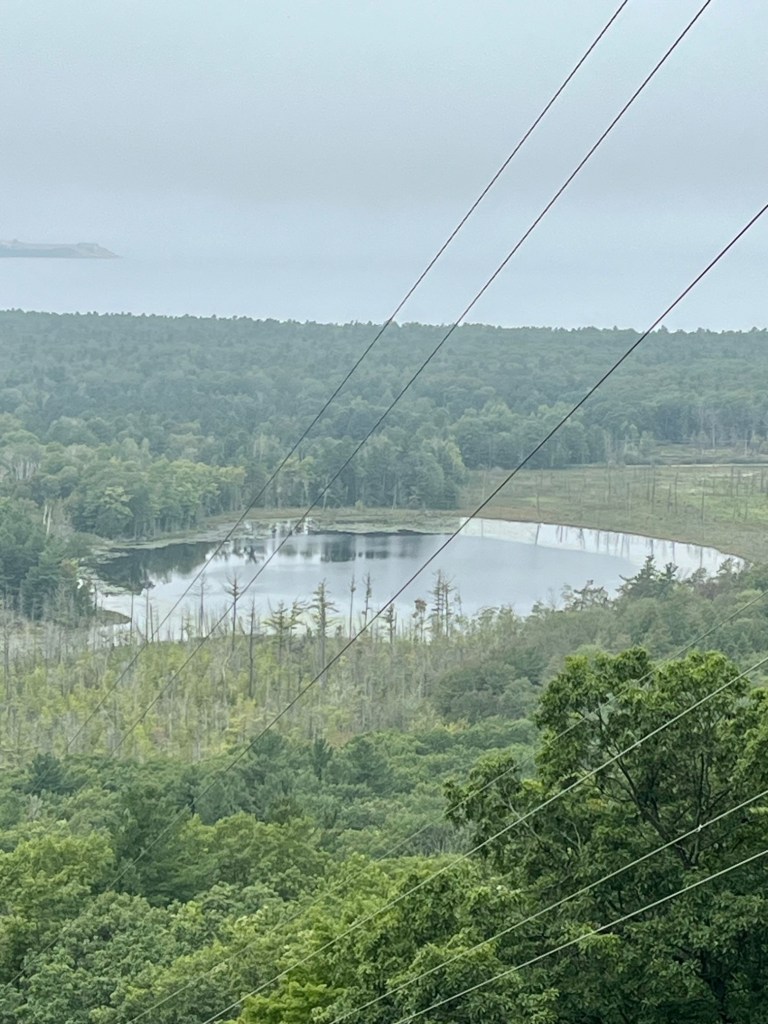
Bill and Margie arrange for a driver to pick us up at the marina and take us to the Dunes. Our driver, Rick, a lifelong resident of the area, is both entertaining and knowledgeable. Despite foggy skies we see some spectacular views.
I have never heard of the Dunes. According to our tour guide the locals were a bit unnerved when CBS Good Morning America did a segment on the dunes a few years ago, increasing the number of annual summer tourists. The dunes were voted the “Most Beautiful Place in America.”
https://www.google.com/search?q=sleeping+bear+dunes+cbs+morning&oq=sleeping+&gs_lcrp=EgZjaHJvbWUqBggAEEUYOzIGCAAQRRg7MgYIARBFGDsyBggCEEUYOzIHCAMQABiABDIKCAQQABixAxiABDIGCAUQRRhAMgYIBhBFGDkyBggHEEUYPdIBCDQyOTZqMGo3qAIAsAIA&sourceid=chrome&ie=UTF-8
Sleeping Bear Dunes voted “Most Beautiful Place in America”
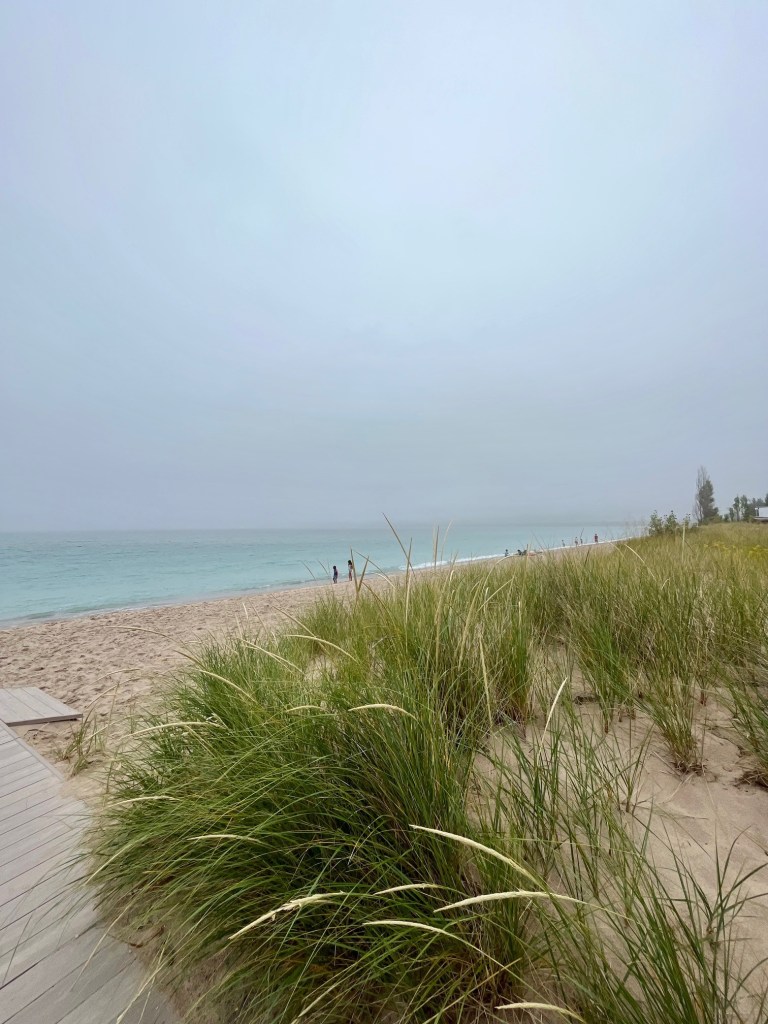
Miles of sand beach, bluffs that tower 450 feet above Lake Michigan, lush forests, clear inland lakes, unique flora and fauna make up this natural world of Sleeping Bear Dunes. The high dunes afford stunning views across the lake. An island lighthouse, U.S. Life-Saving Service stations, coastal villages, and picturesque farmsteads reflect the park’s rich maritime, agricultural, and recreational history.
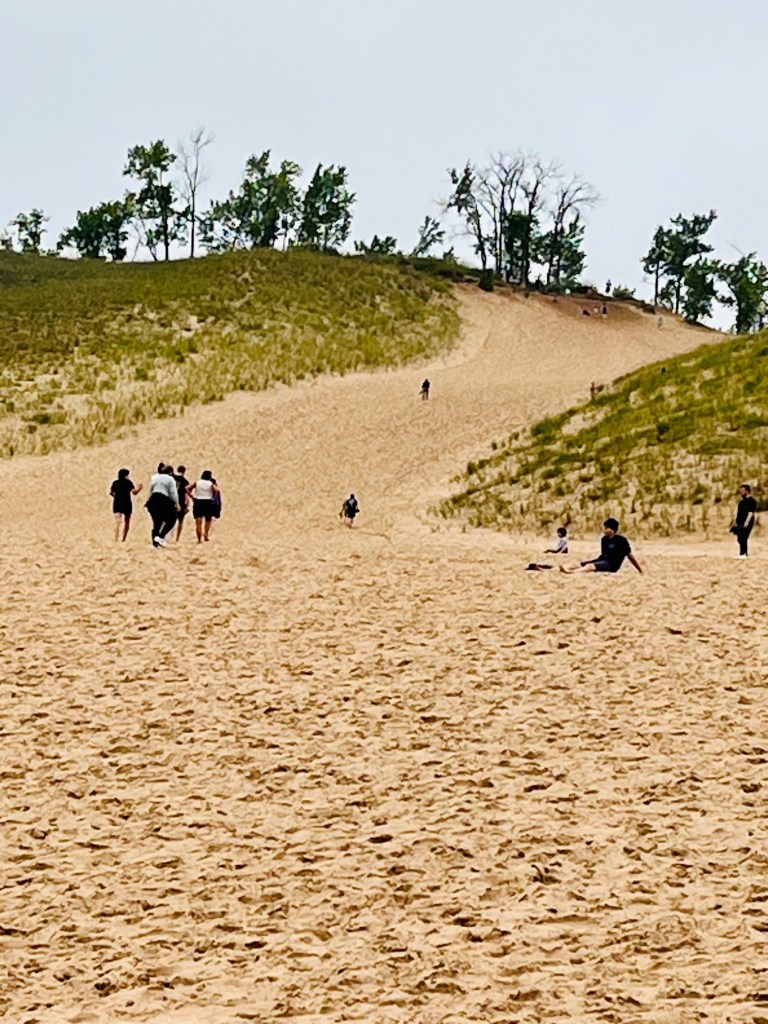
Legend of the “Sleeping Bear”
The park is named after an Ojibwe legend of the sleeping bear. According to the legend, an enormous forest fire on the western shore of Lake Michigan drove a mother bear and her two cubs into the lake for shelter, determined to reach the opposite shore. After many miles of swimming, the two cubs lagged. When the mother bear reached the shore, she waited on the top of a high bluff.
The exhausted cubs drowned in the lake, but the mother bear stayed and waited, hoping that her cubs would finally appear. Impressed by the mother bear’s determination and faith, the Great Spirit created two islands (North and South Manitou islands) to commemorate the cubs, and the winds buried the sleeping bear under the sands of the dunes where she waits to this day.
The “bear” was a small tree-covered knoll at the top edge of the bluff that appeared like a sleeping bear from the water. Wind and erosion have caused the “bear” to be greatly reduced in size over the years.
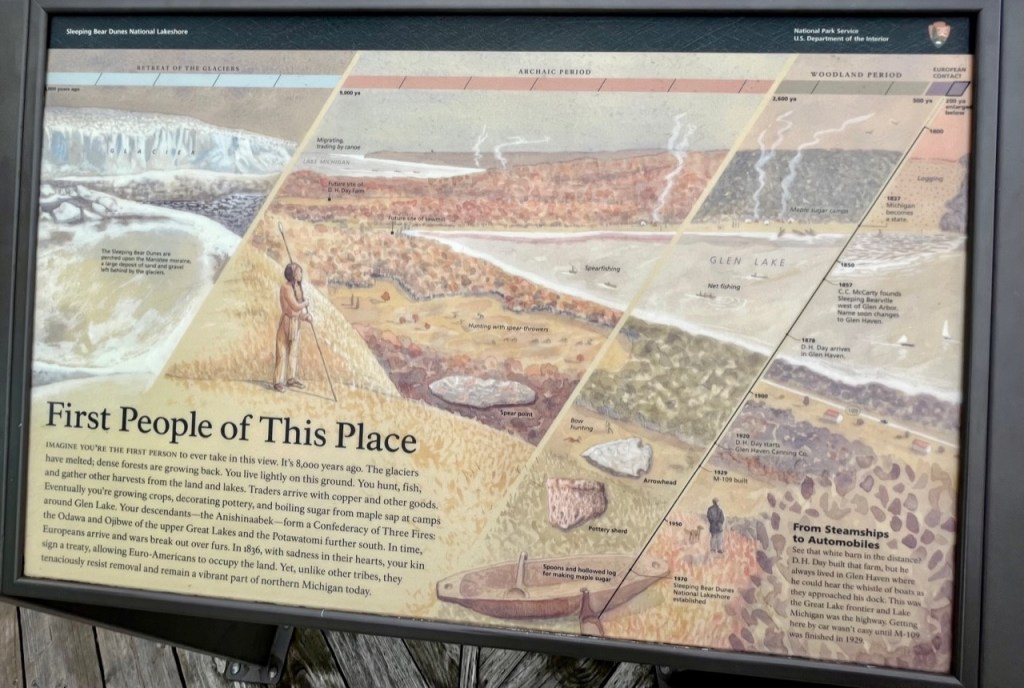
The Town of Glen Haven
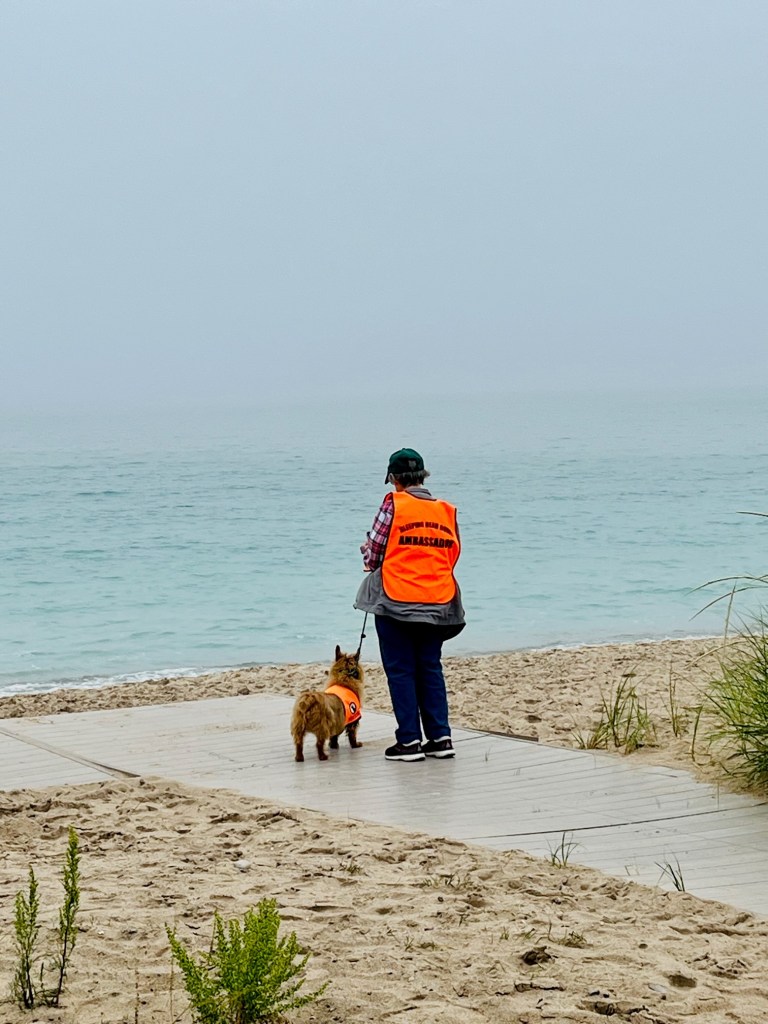
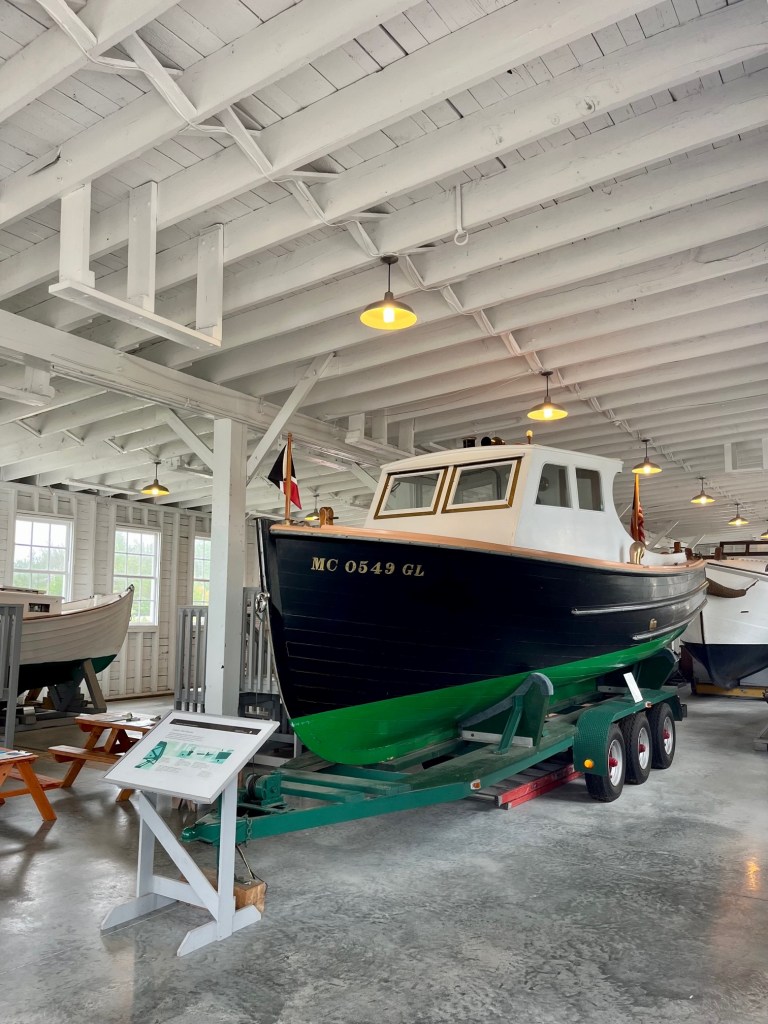
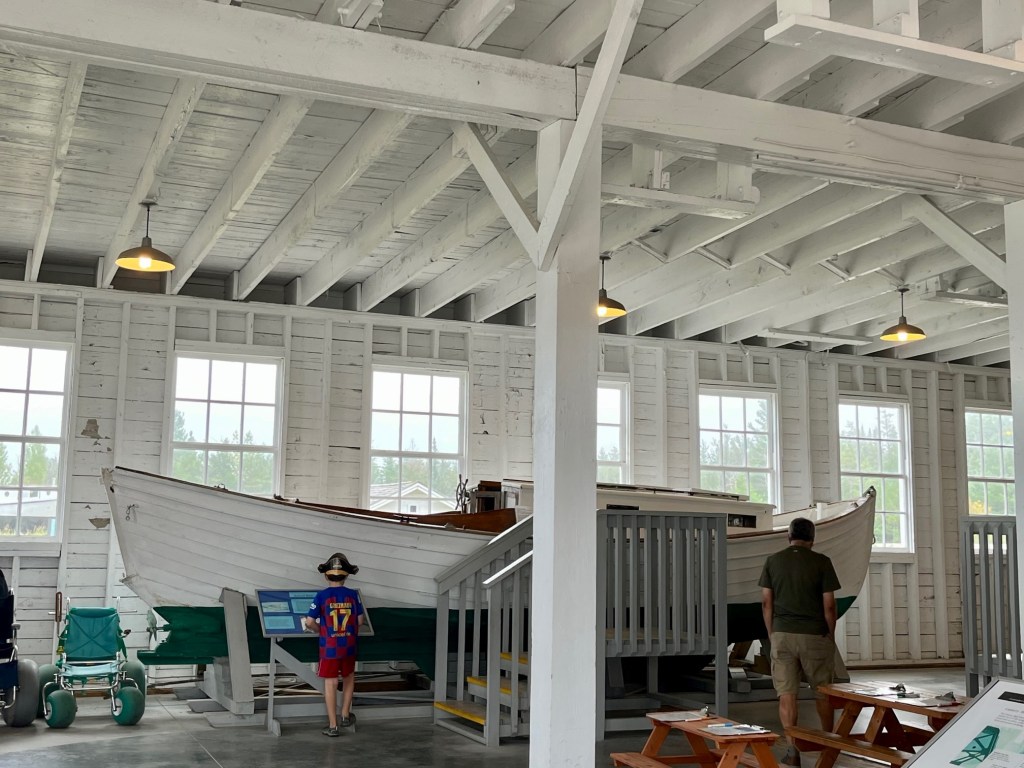
We stop at Glen Haven and walk to the beach overlooking Lake Michigan.
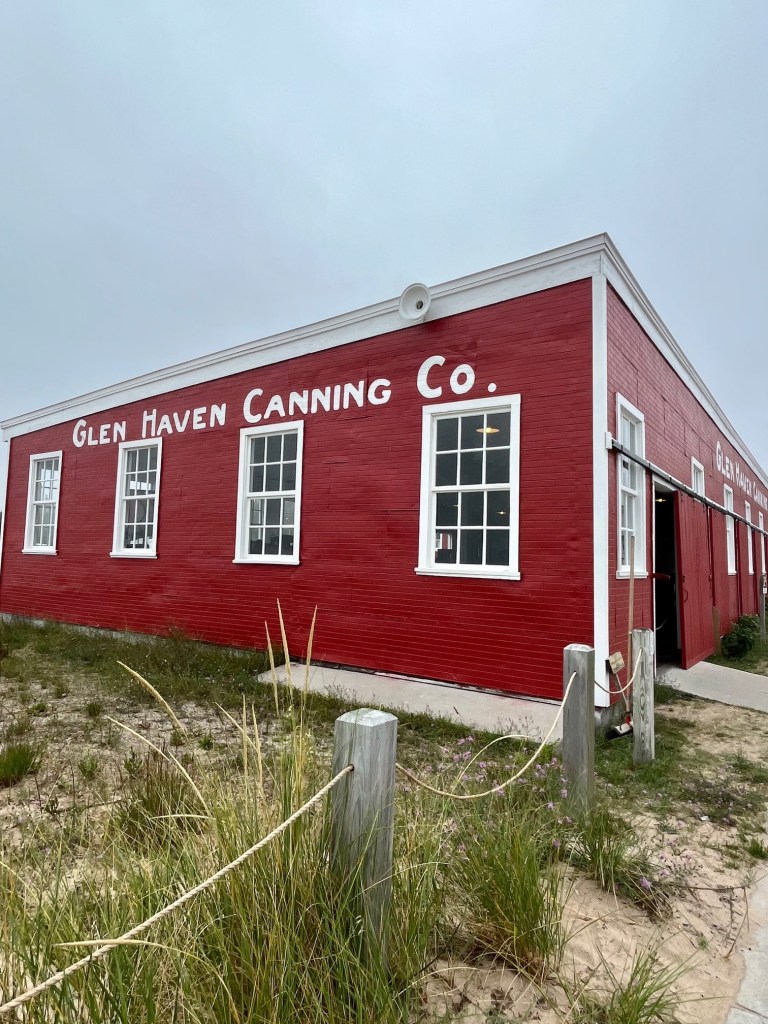
Glen Haven existed as a ‘company town’ from 1865 to 1931. Like most company towns, the workers were paid in company coupons, redeemable only at the company store. Originally a dock for Glen Arbor (1855-date), the site soon became a fuel supply point for ships traveling up and down the lake.
Here, Charles McCarty decided to open his own business and built a dock to supply the ships with wood. In 1863, McCarty built the Sleeping Bear House. It was expanded a few years later to accommodate travelers. In 1928, it was remodeled into an inn for summer vacationers.
The General Store was established to supply the workers. The Blacksmith Shop is where tools were repaired. In 1878, David Henry Day arrived in the community. By this time, coal from the Appalachian coal fields was replacing wood on the steamships. Day was looking for another future for this small community.
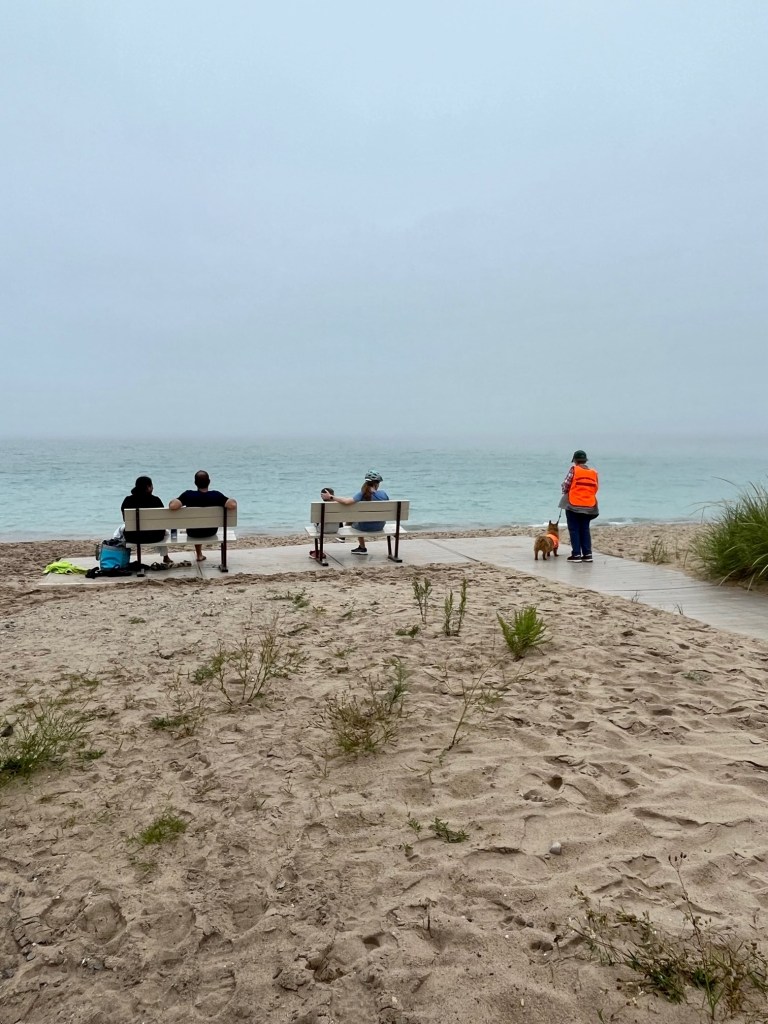
D. H. Day built a farm, but he always lived in Glen Haven where he could hear the whistle of boats as hey approached his dock. This was the Great Lake frontier and Lake Michigan was the highway. Getting here by car wasn’t easy until M-109 was finished in 1929.
D. H. Day Campground
A campground was named after Day – the D.H. Day Campground – and is part of Sleeping Bear Dunes National Lakeshore. The site offers a moderate level of privacy and a beach on Lake Michigan. Campsites are rustic, wooded, and farther apart than campsites at most campgrounds. Nearby points of interest include Empire Bluffs, the “dune climb”, and North Bar Lake.
The Story of Pierce Stocking
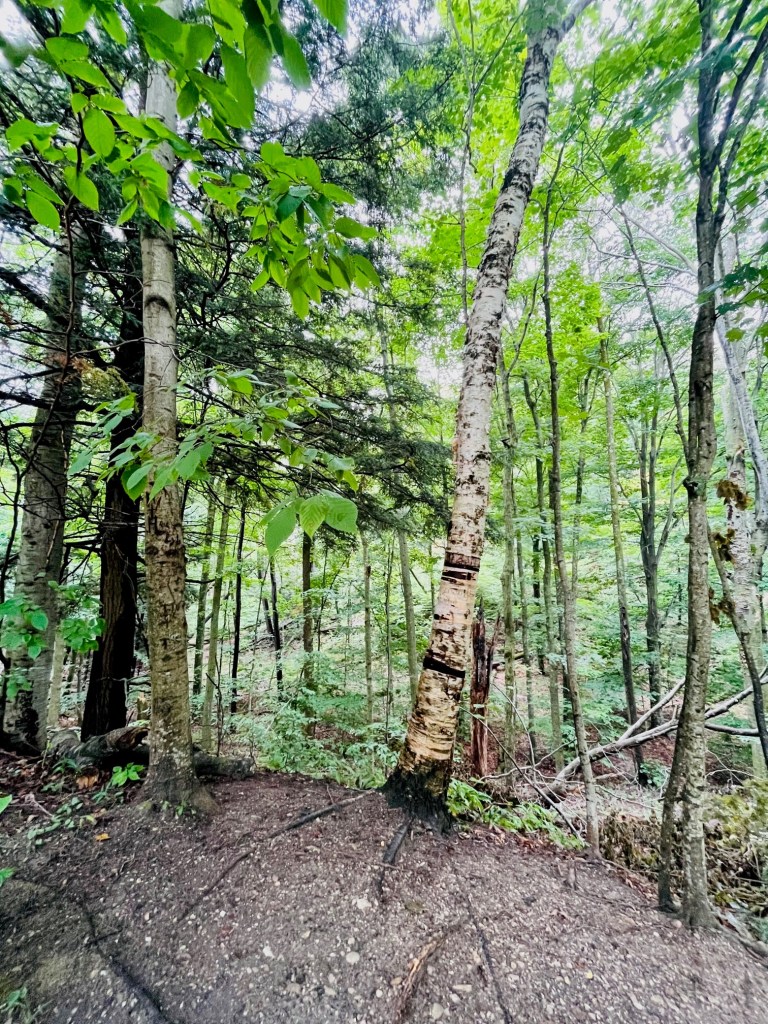
Rick drives us along Pierce Stocking Scenic Drive, where we stop to take photos of the covered bridge, forest trees and Lake Michigan, viewed from lookout stations.
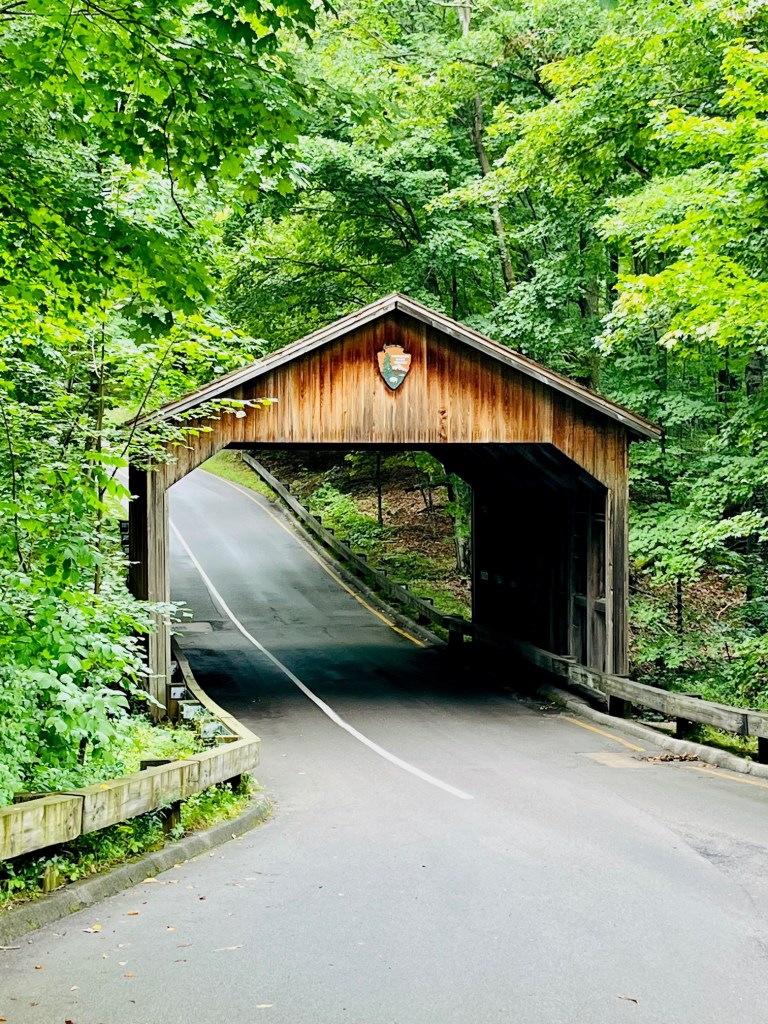
Pierce Stocking (1908 – 1976) wanted to preserve this area’s natural beauty. In the early 1960s, the local lumberman began envisioning “a haven of rest” called Sleeping Bear Dunes Park. It opened to the public in 1967. For just $2.75 per vehicle, visitors could drive a fourteen-mile scenic roadway, relax at picnic areas, and delight in spectacular views of Lake Michigan, Glen Lake, and the sand dunes.
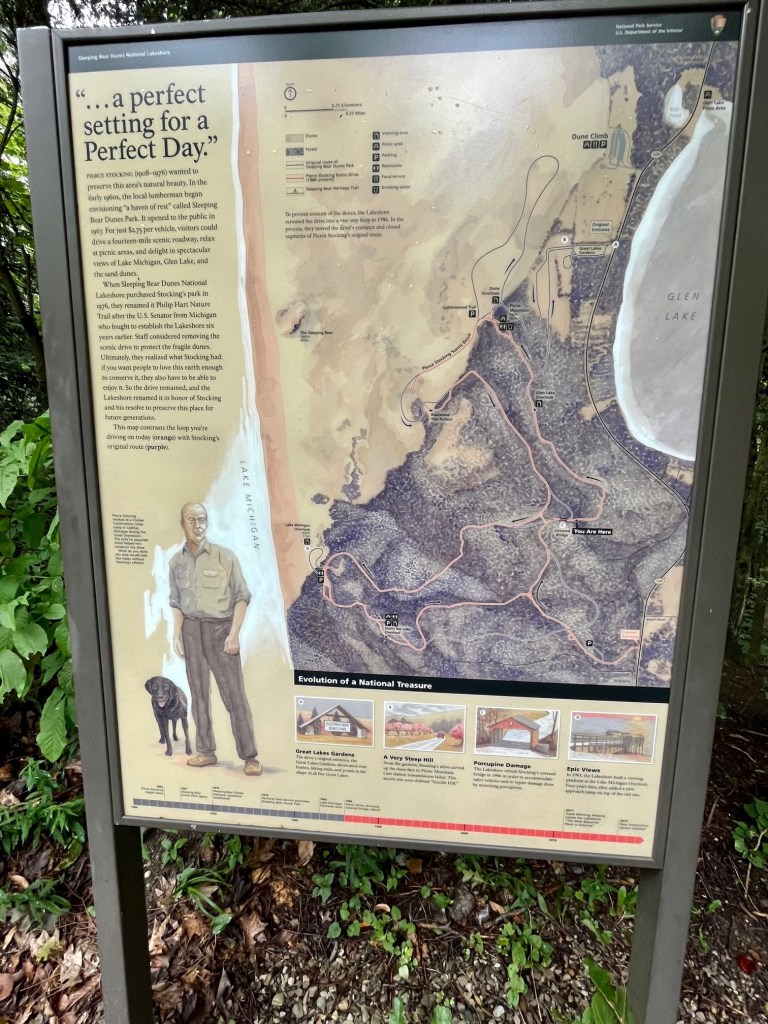
When Sleeping Bear Dunes National Lakeshore purchased Stocking’s park in 1976, they renamed it Philip Hart Nature Trail after the U.S. Senator from Michigan who fought to establish the Lakeshore six years earlier. Staff considered removing the scenic drive to protect the fragile dunes.
Ultimately, they realized what Socking had: if you want people to love this earth enough to conserve it, they also have to be able to enjoy it.
So the drive remained, and the Lakeshore renamed it in honor of Stocking and his resolve to preserve this place for future generations.
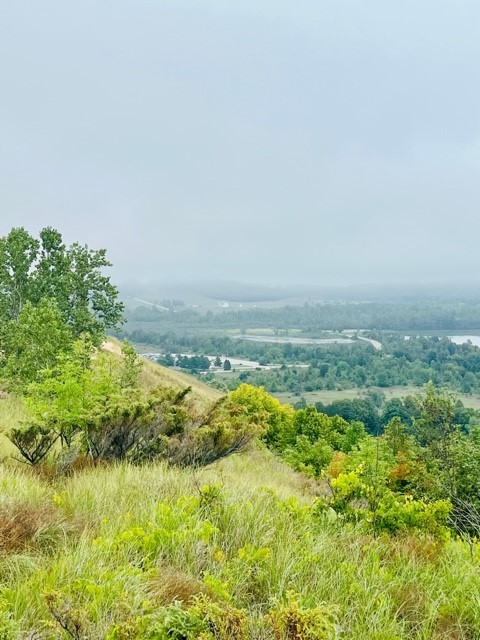
Views of Glen Lake and Lake Michigan
More than 10,000 years ago, enormous rivers of ice covered this land. They gouged the earth like plows and left piles of sand and gravel called moraines in their wake. The Sleeping Bear Dunes are perched upon the Manistee moraine, a large deposit of sand and gravel left by the glaciers.
Eventually the glaciers thawed, turning their deep tracks into large lakes of meltwater. One of these, LKW Nipissing, gradually became Lake Michigan as its water level fell.
Meanwhile, waves were eroding beaches and bluffs. Currents carried sediment along the shore to form sandbars. By about 2,000 years ago, those currents had deposited enough on either side of an island (that we now know as Alligator Hill) to landlock Glen Lake. Over time, grasses and trees took root. Today, this forested sandbar is where you will find the town of Glen Arbor – and a beach of ancient sand.
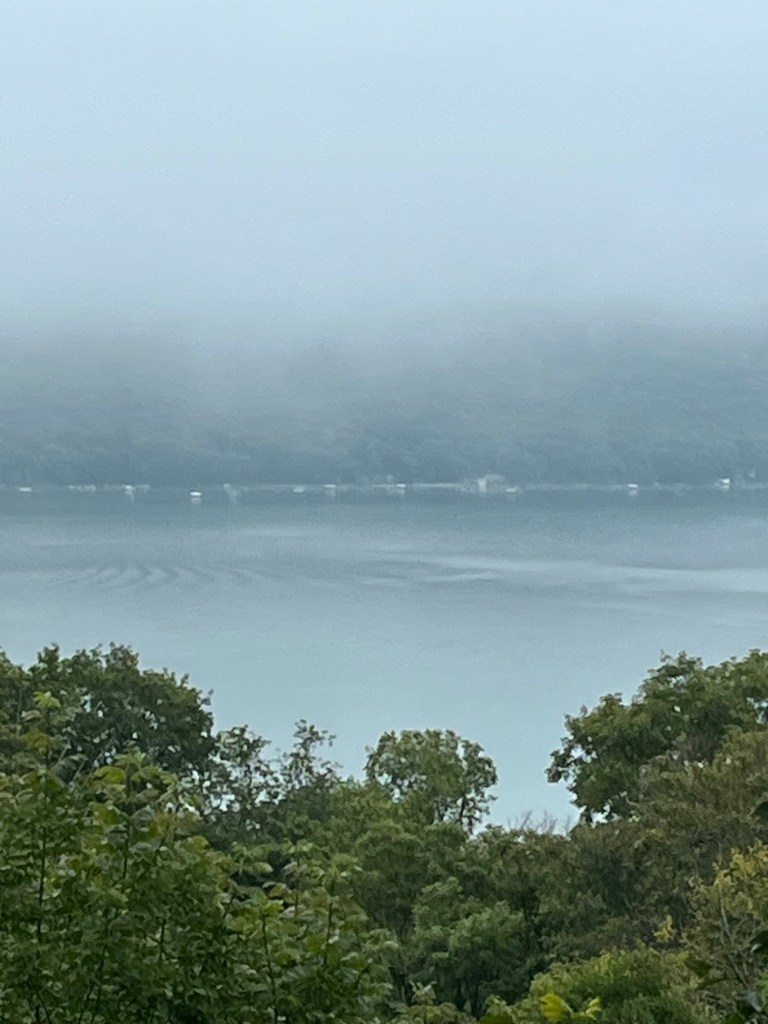
The Anishinaabek – first inhabitants of Sleeping Bear Dunes and surrounding area – form a confederacy of Three Fires: the Odawa and Ojibwe of the upper Great Lakes and the Potawatomi further south. In time, Europeans arrive and wars break out over the furs. In 1836, with sadness in their hearts, they sign a treaty, allowing Euro-Americans to occupy the land. Yet, unlike other tribes, they tenaciously resist removal and remain a vibrant part of norther Michigan today.
Here are more photos from our visit to the Sleeping Bear Sand Dunes:
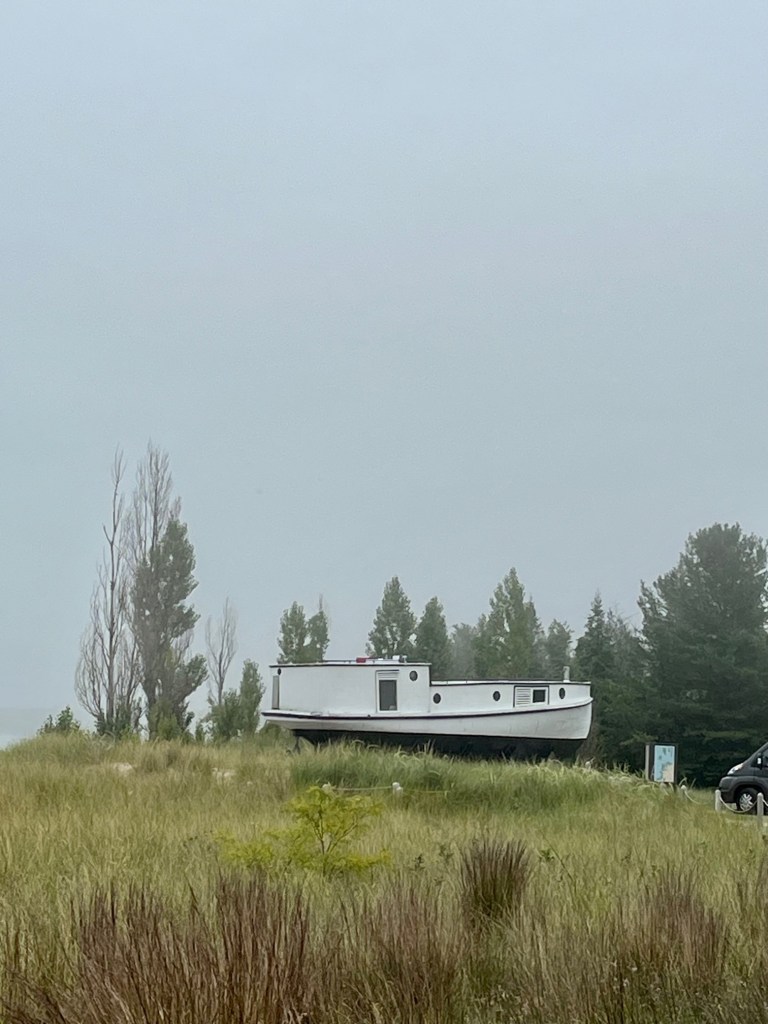




to help Bill with some repairs.
They are two peas in a pod. Or two Captains who love boats.
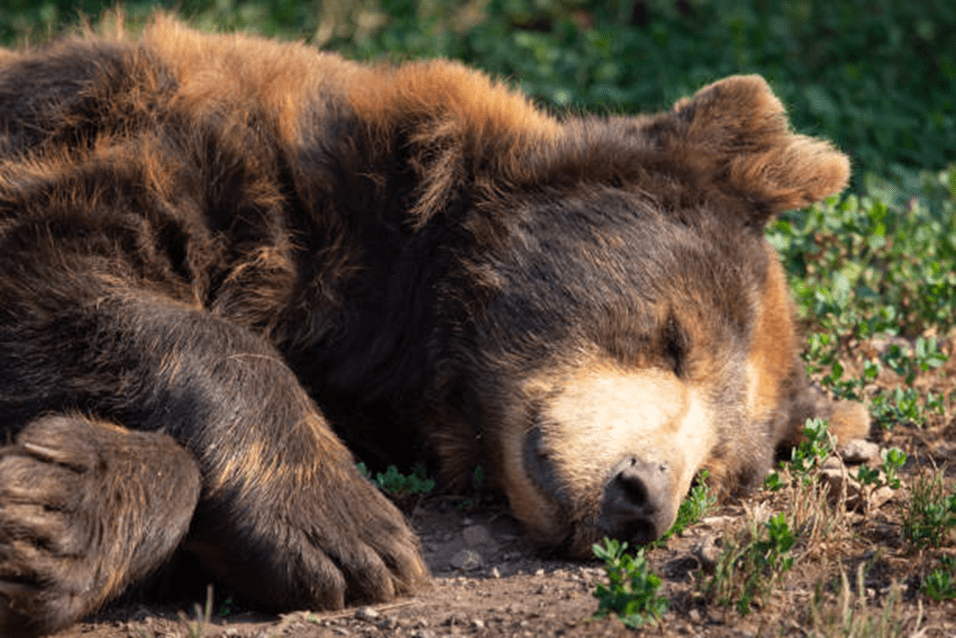
Good bye, Sleeping Bear Dunes!
 Pat and Cindy's Great Loop Adventure
2 responses to “Sleeping Bear Sand Dunes”
Sleeping Bear 🐻 so sad she lost her cubs but a beautiful story. Thanks for sharing. Safe Journey !!!!
LikeLiked by 1 person
Thank you, Doreen! thinking of our little cubs.
LikeLike