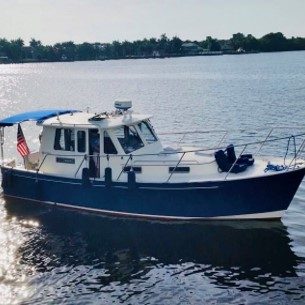
August 8 – 10, 2023

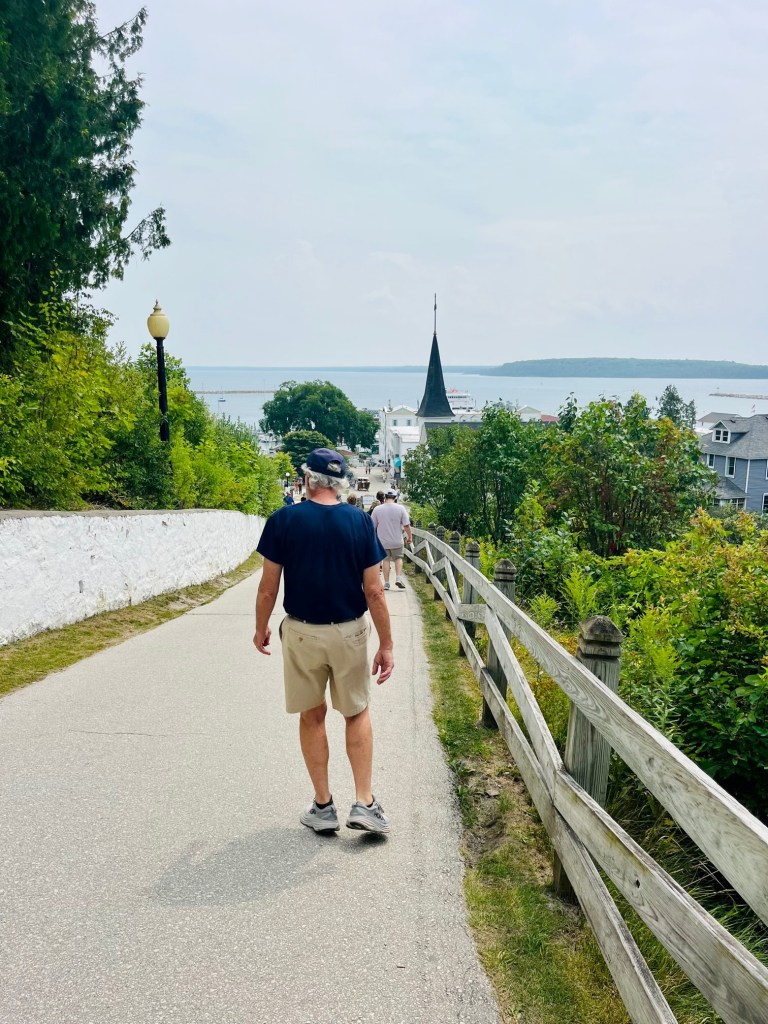
Our friend, Tracy, tells me there are two distinct smells on Mackinac Island – homemade fudge, and horse manure. She is right!
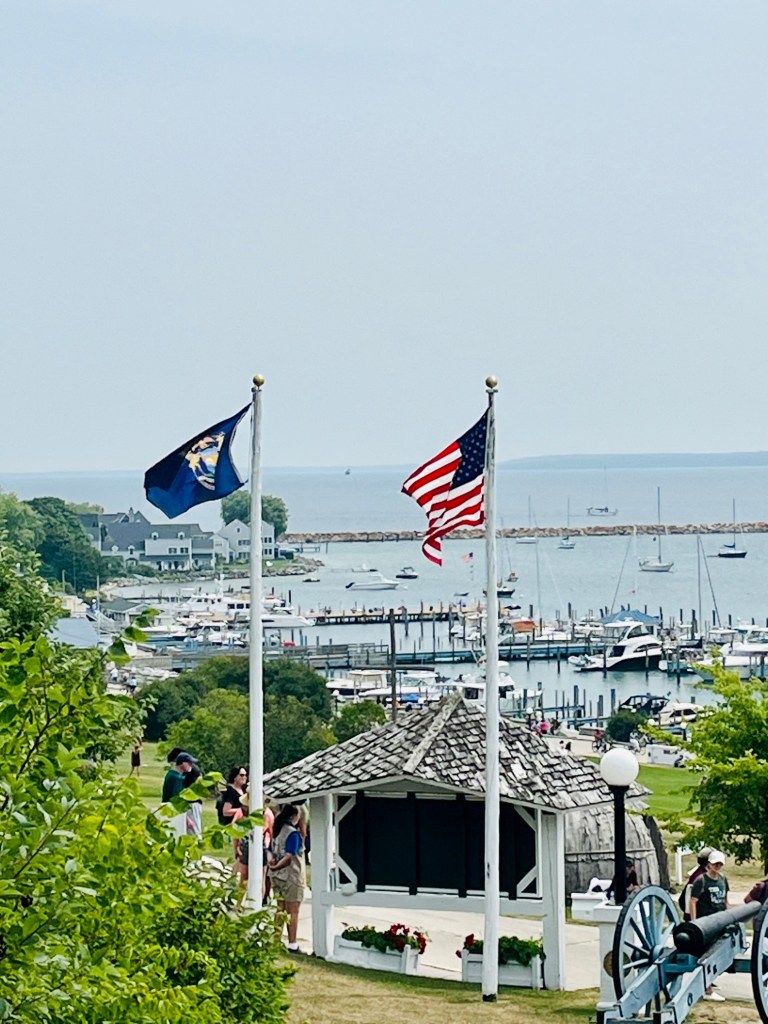
August 8 we travel from Drummond Island to Mackinac (pronounced “ma-kuh-naa”) Island. Marina slips at Mackinac are hard to come by, so we feel fortunate to have secured one for one night. The marina tells us we can probably extend our stay for one more night but may have to move to a different slip. We are to check in with the dock master at 9 a.m.
The good news is we do secure a reservation for one more night. The bad news is we must move to a new slip. Captain Pat is not happy at all. This requires undoing the lines (tightly secured because of the wind and waves), unhooking the water and electricity, and moving the boat – for just one night. We do manage with the transition, and the new slip is in a better location.
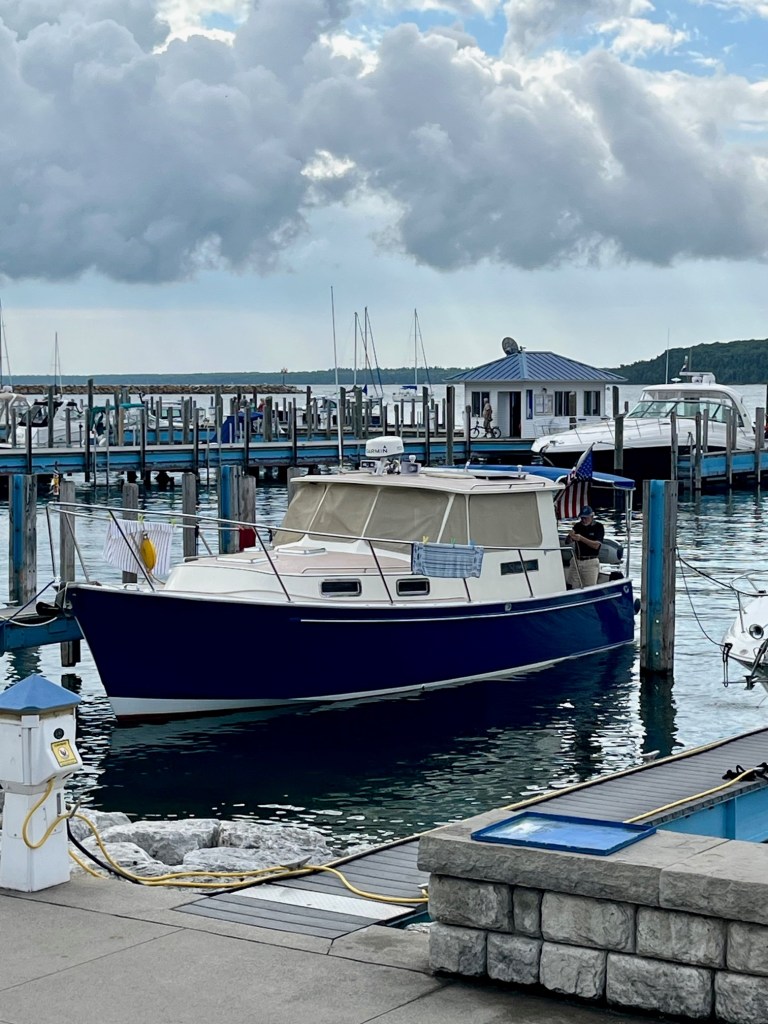
It is disappointing, though, that later we realize no one came into our original slip. In fact, there are many vacant slips; yet boaters complain it is difficult to secure a reservation here. That is because boaters make reservations way in advance, and then cancel at the last minute. If you cancel within 24 hours you receive your money back; you only lose the $10 registration fee.
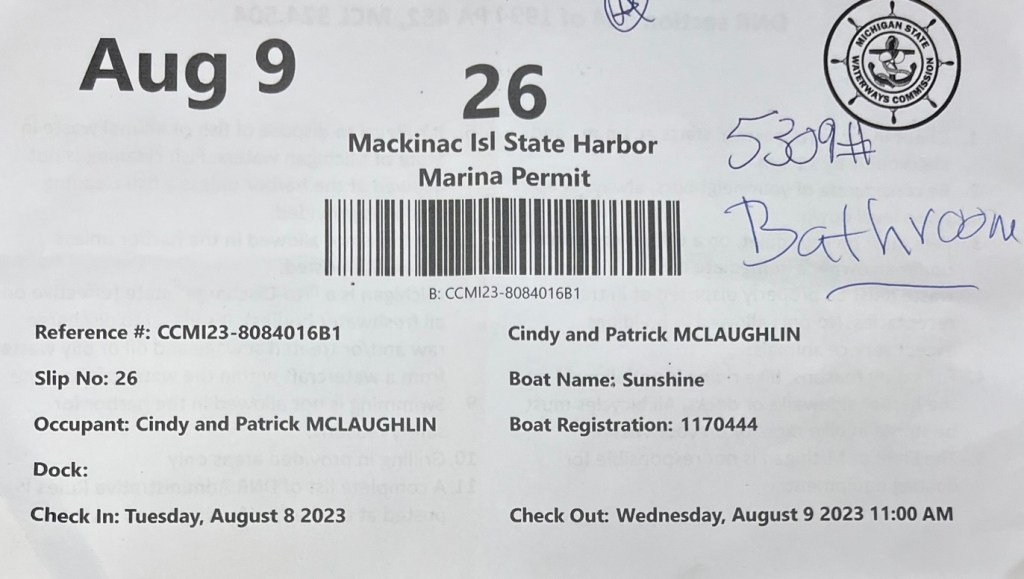
We are surprised at the low cost of the slip at Mackinac. It was only $54 a night ($1.90/foot), plus a $10 registration fee. A few years ago, Michigan implemented an online registration process for all the campgrounds and marinas in its state parks. This allows for standardized pricing among all state marinas. The price per foot is reasonable – usually around $2 a foot.
You can check out the registration site here:
https://midnrreservations.com/
Horses are King on Mackinac Island
Early morning it is so pleasant to hear the clip-clop, clip-clop of the horse hooves on the pavement. It is quickly interrupted with the “BANG!” of cannons being fired from the fort. It is loud! That is followed by the loveliest of sounds – the military bugler’s call of taps. This is heard throughout the day.

That is Fort Mackinac in the background.
Horses are king here, as no cars are allowed on the island. Transportation to the island is by ferry or boat. Transportation on the island is by foot, horse, or bicycle. Electric bikes are only allowed for those who are immobile.
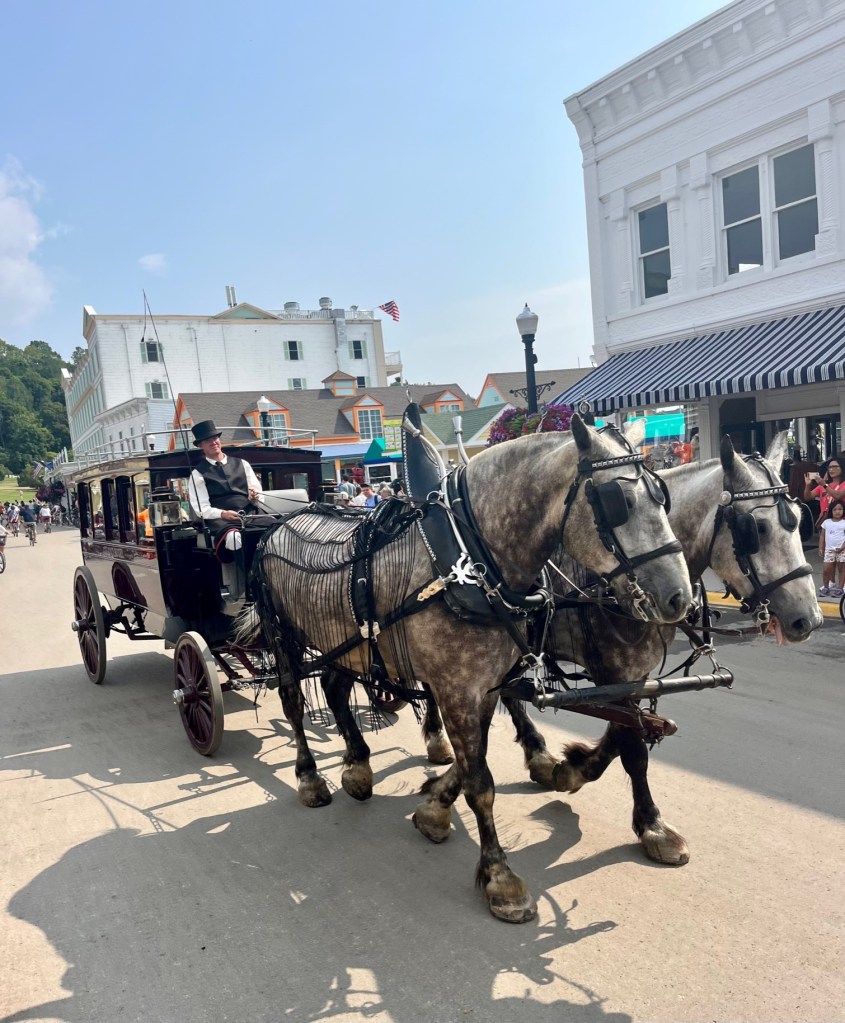
From a horse-drawn taxi to a lively carriage ride to trail riding on horseback, horses are a way of life here. More than 600 horses (400 for the Grand Hotel) call Mackinac Island home for the summer.
In the 1890s, tourists attempted to bring the new horseless carriage to Mackinac Island, immediately alienating the residents with their noise, spooking the horses, and disrupting the island’s quiet environment. It rapidly became a safety issue as well as a lifestyle one. The year-round residents wanted nothing to do with them, so in 1898, the town banned cars and motorized vehicles.
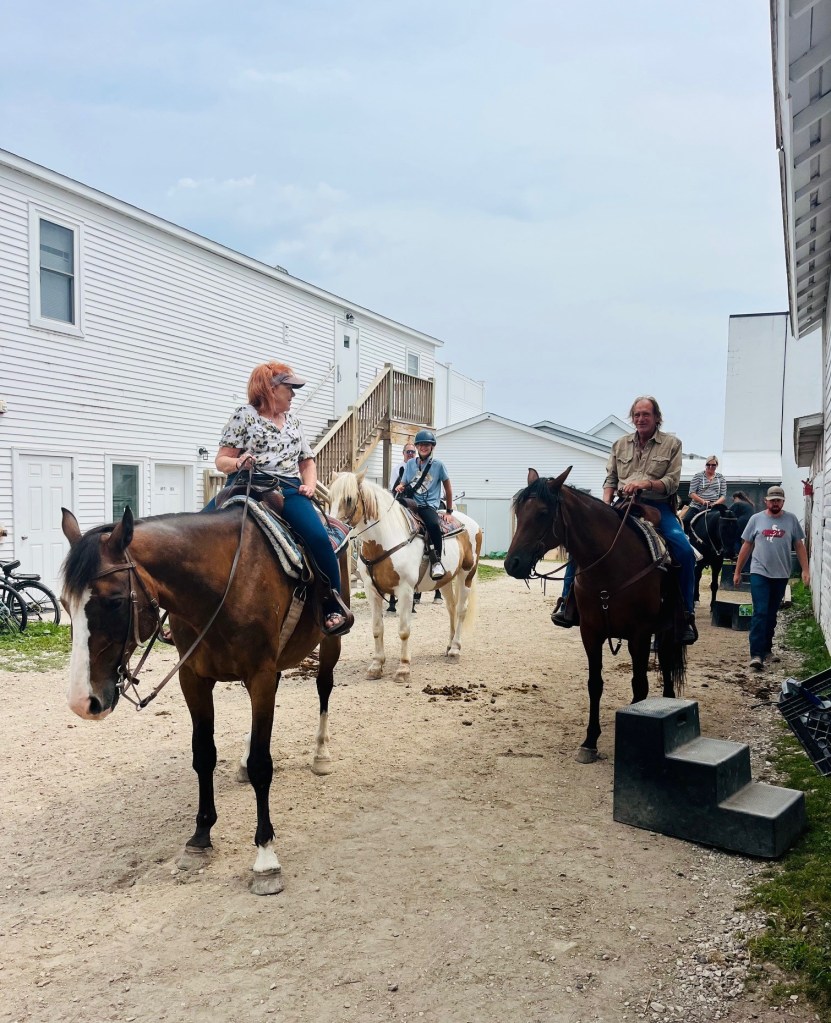
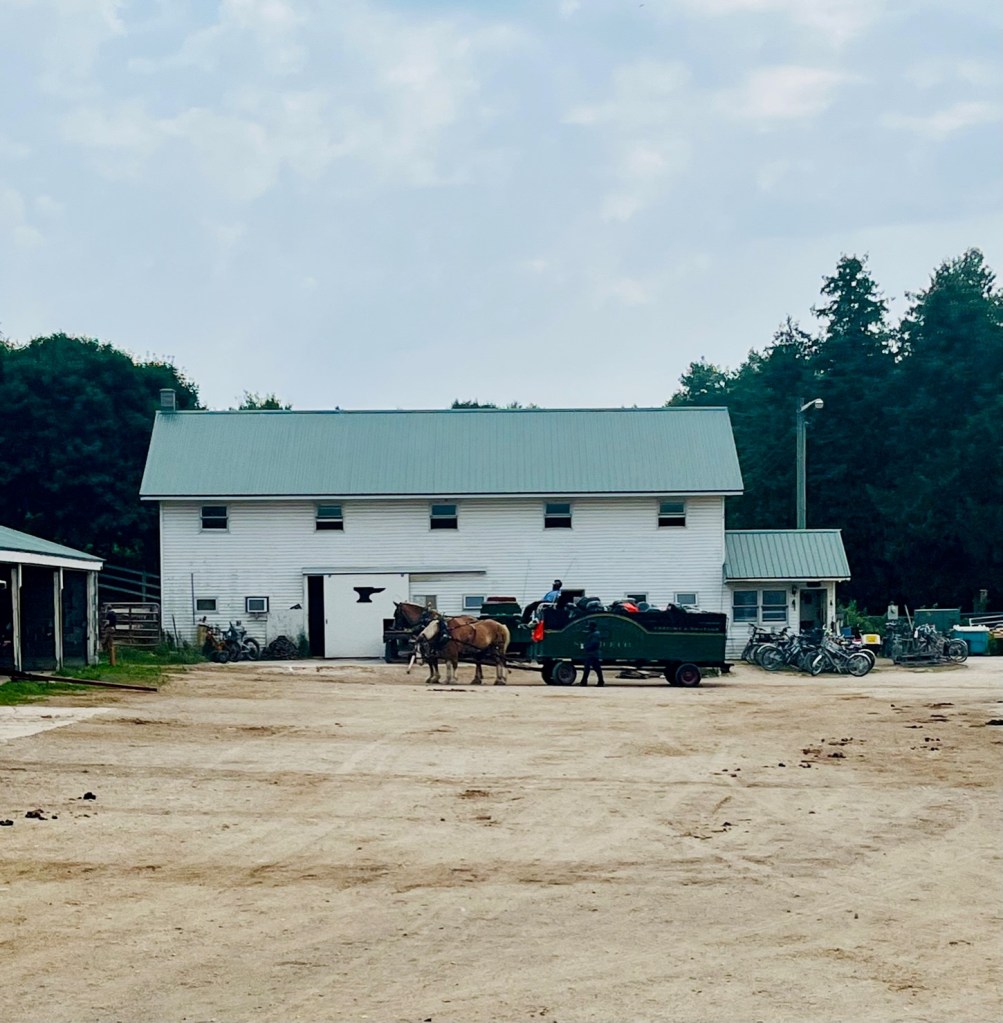
There are several ways horsepower is used on the island: carriage tours, horseback riding, equestrian center tours, horse-drawn taxis, “drive your own” carriage, private livery carriage tours, and dray service – moving food, freight, lumber, furniture, etc. No UPS drivers here! We saw a lot of Amazon packages on horse-driven flatbed wagons.
All horses have the right-of-way over pedestrians and bicycles!
We take a horse-drawn carriage tour of the island. Our driver is Natalia, from Romania. We appreciate her knowledge of the island and her humor. It makes for an enjoyable experience.
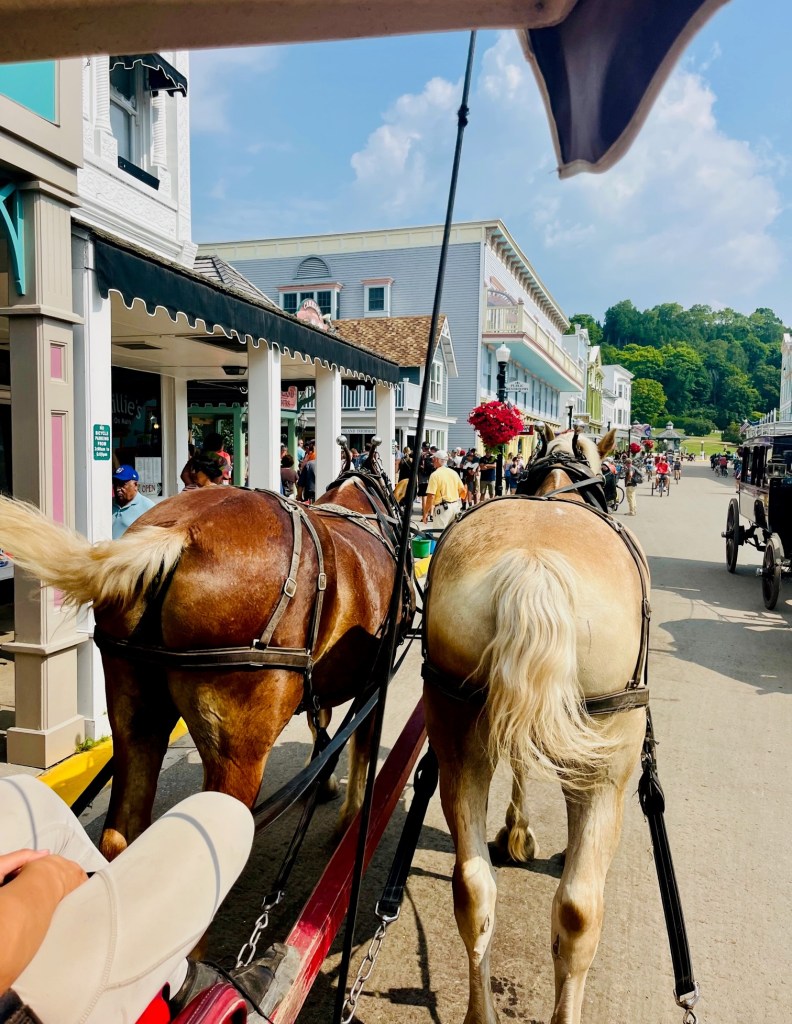
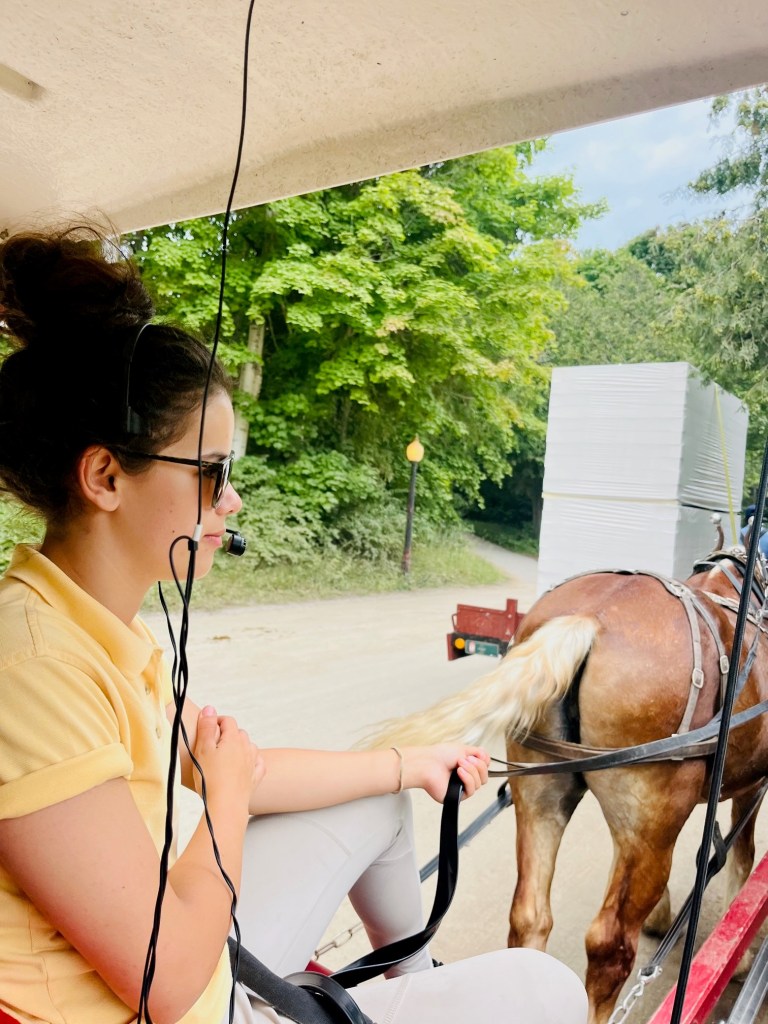
Natalia made a point of telling us what special care the horses receive. “There is one medical care facility in town; but there are four veterinary offices!” The horses only work four to six hours a day. Each morning and evening the carriage tour driver brushes and cleans their horses, creating a special bond with horse and driver.

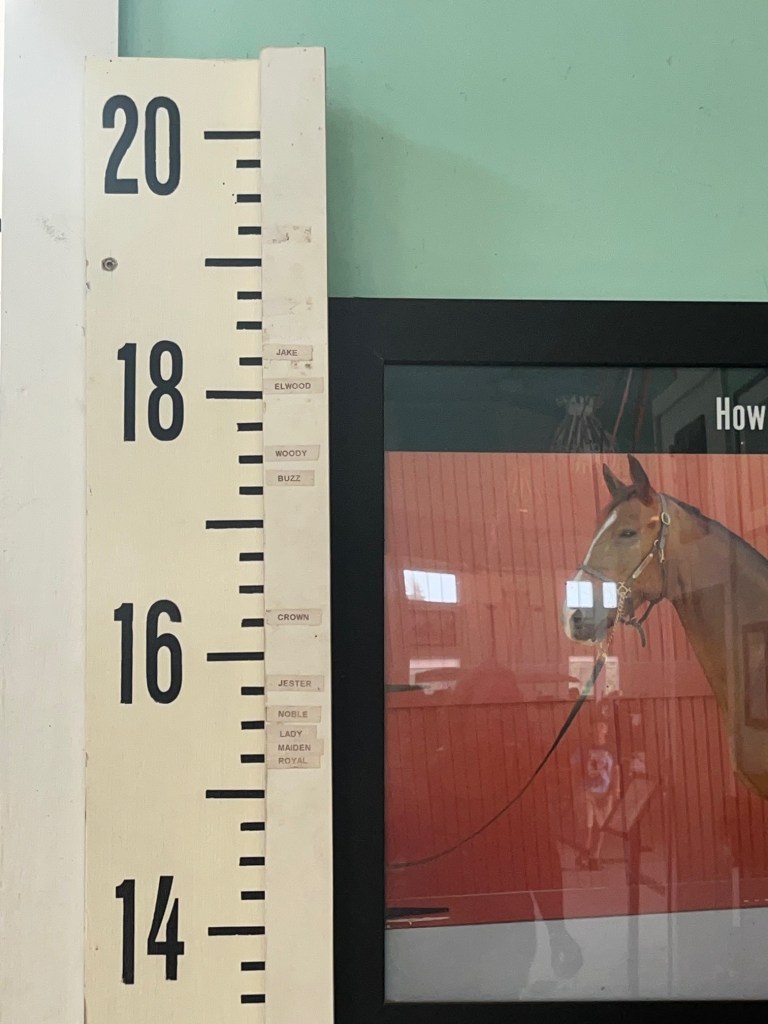
Here you can see Noble is 15 1/2 – fourth from the bottom on this chart – one of the smaller horses.
The “hand” measurement is now standardized at 4 inches (10.16 cm) and used today for measuring the height of horses from the ground to the withers (top of the shoulders.)
The unit was originally defined as the breadth of the palm including the thumb.
The Grand Hotel
The Grand Hotel has been hosting Kings, Queens, Presidents and celebrities since 1887. It has 388 guest rooms of which no two are alike. Per our Looper guide “this is the place for an afternoon beverage in the Parlor, a coat and tie for dinner, nightly dancing to the sounds of the Grand Hotel Orchestra and sitting in a rocking chair on the world’s longest porch with views of the Straits of Mackinac.”
We did none of those things – but you could!
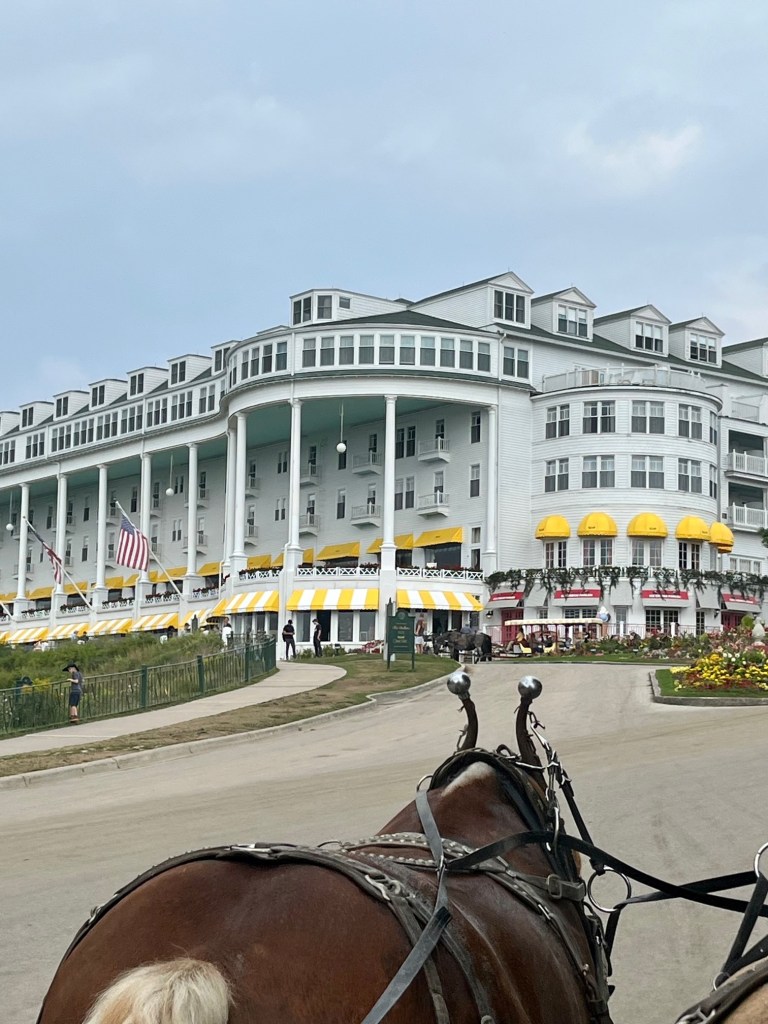
The book also states “yes, the Grand Hotel is expensive, rooms range from $1,000 to $3000 a night. If there is one place on this planet where you might splurge for a night – this should be it!”
We won’t be doing that either. -😊
FYI – if you are interested – there are “late season” special packages that run for half price. The Grand Hotel normally closes by November 1.
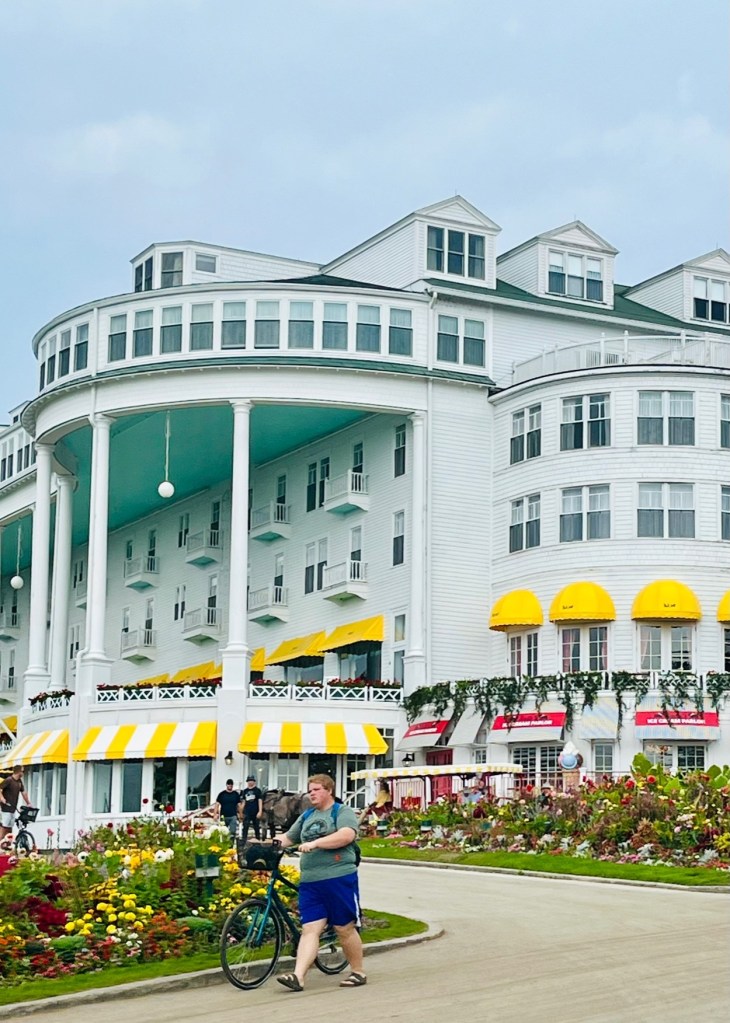
America’s Fudge Capital
Mackinac Island doesn’t claim to have invented or created fudge. It does claim to sell more of it than anyone else in the world. I can see why! You walk the streets and that sweet smell is everywhere.
Thank goodness I did the fudge shopping. Captain Patrick with his analytical mind would have never been able to select just one store to buy from. There are 13 fudge shops! The island imports ten tons of sugar per week. I choose to buy from Murdick’s. I love their backstory.
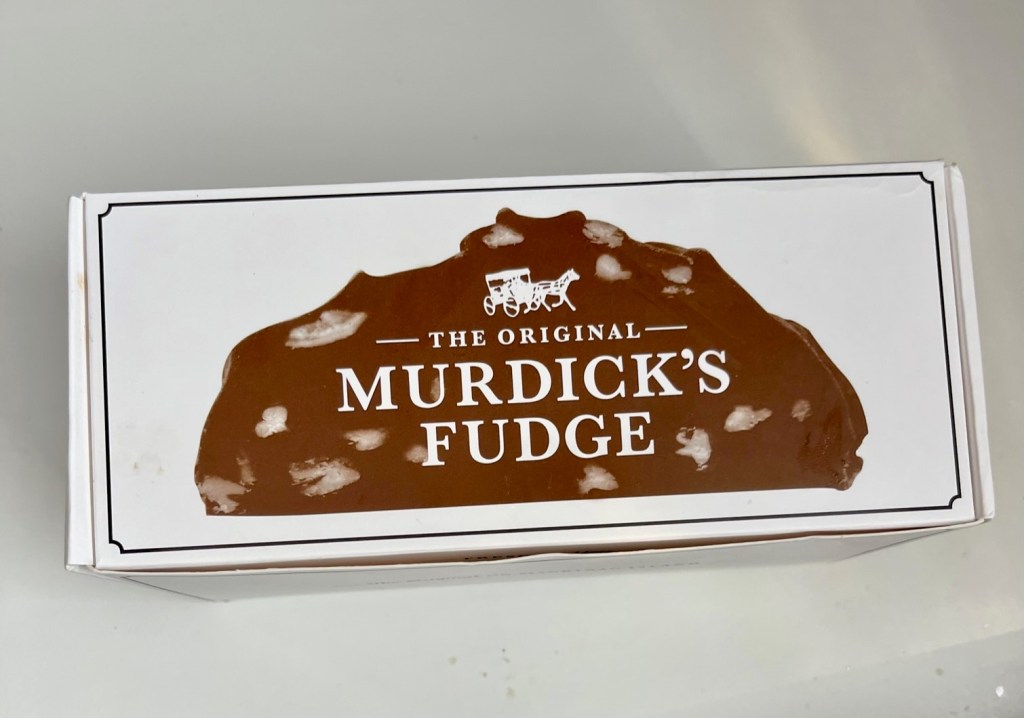
There are three “slabs” of fudge in the box – Chocolate Walnut, Turtle and Maple Walnut.
Hey, they offer a special – buy two, get one free!
In 1887, father-and-son sail makers Henry and Jerome “Rome” Murdick, were commissioned to create canvas awnings for the new Grand Hotel. With the Murdicks’ arrival came Mrs. Henry Murdick and her exquisite confectionery skills and recipes.
In 1887, Mackinac Island’s first candy shop opened as Murdick’s Candy Kitchen. Rome crafted the fudge on a renowned marble table, giving the fudge a unique texture and a veritable “stage” to show visitors how fudge is made. This is still done today – with free samples for visitors.
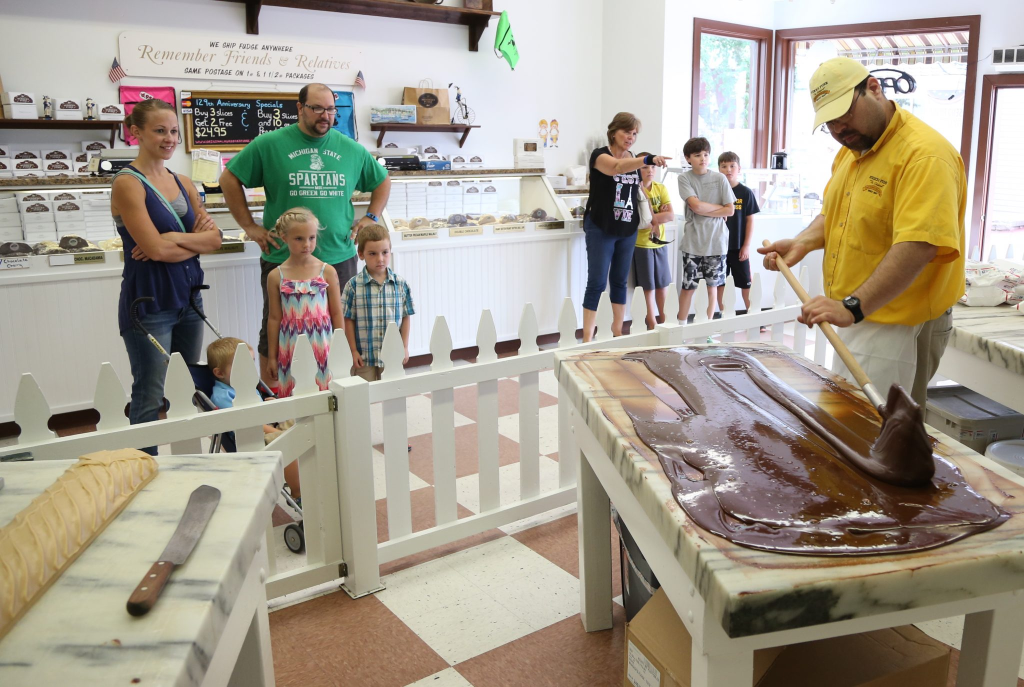
The business weathered many setbacks – sugar rationing during World War I and the Great Depression in 1929. They were forced to sell the business in 1940. After the ten-year non-compete clause ran out, the Murdick family opened a luncheonette and soon were selling fudge again on Mackinac Island. The company has expanded to other locations and have three stores and a bakery in Martha’s Vineyard, Massachusetts.
Unique Rock Formations – The Arch Rock
Mackinac Island was created 18,000 years ago as a result of a massive two-mile thick icy glacier covering most of North America. As the glacier moved, it’s weight crushed the mountains and carved deep gouges into the earth. It took 7,000 years for the earth to warm and melt the glaciers, filling basins and valleys that formed the Great Lakes.
Mackinac possessed higher elevation and therefore became a distinctive island because of its high bluffs and deep waters. Numerous rock formations were created as receding water washed away the softer breccia rock from the harder limestone.
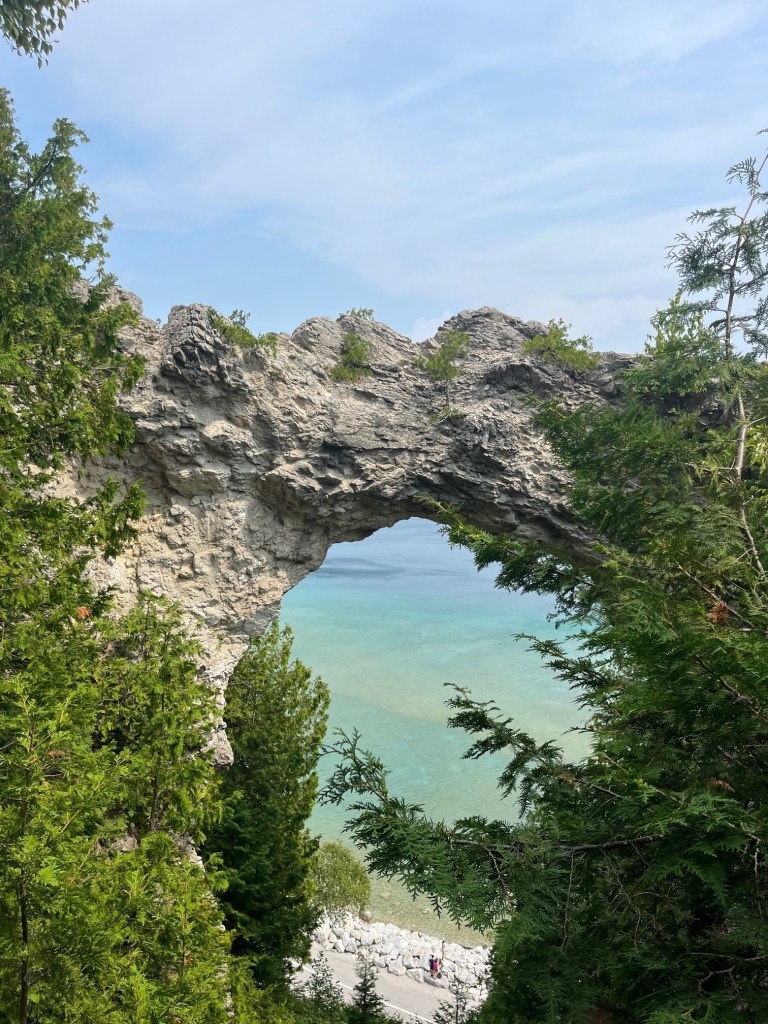

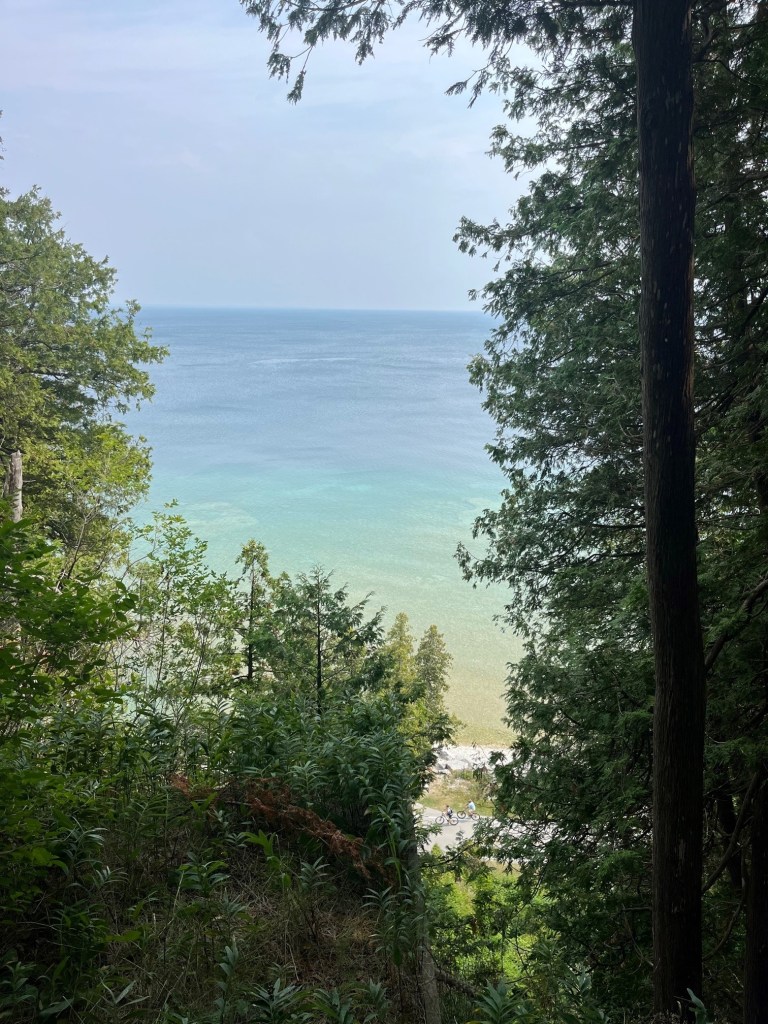
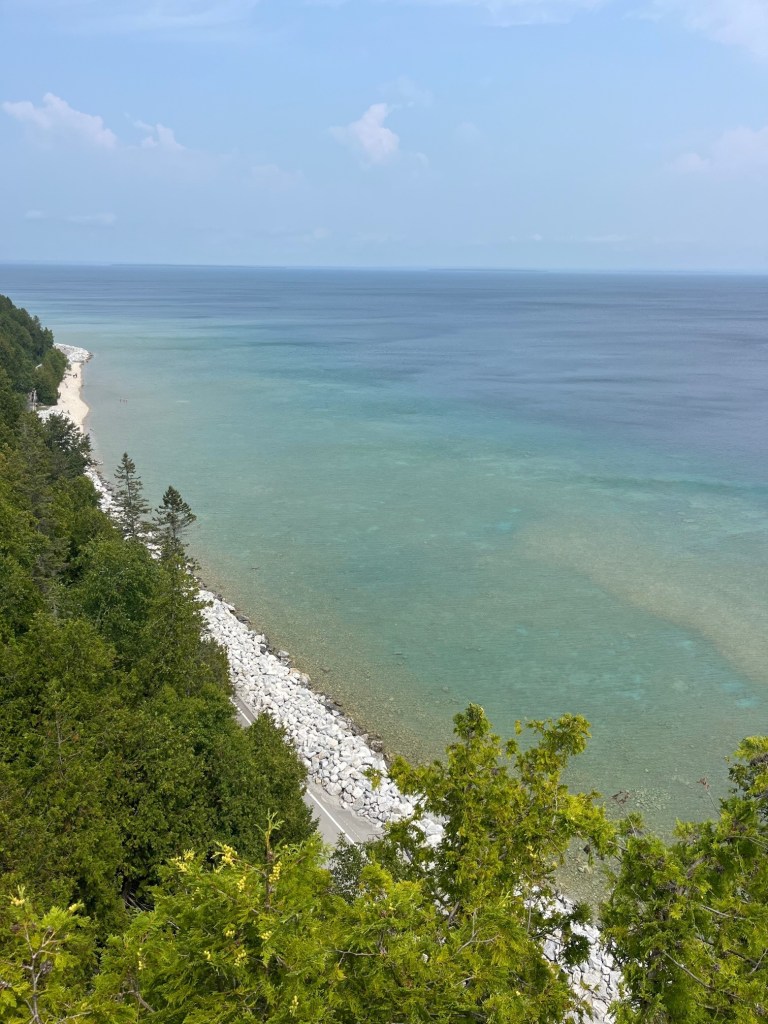
Arch Rock, Sugarloaf, Robinsons Folly, Devil’s Kitchen, Skull Cave, and Sunset Rock are what make Mackinac so geologically unique and beautiful. One stop on our carriage tour was Arch Rock. We had 15 minutes to browse around the pathways and take photos from atop Arch Rock.
Cultural History
Native Americans were the first to occupy Mackinac Island, followed in the 1600s by early French missionaries. For the next several centuries, French and American fur trappers came to trade their wares, making the island a major business center. This helped connect the Midwest and Canada to the rest of the country.
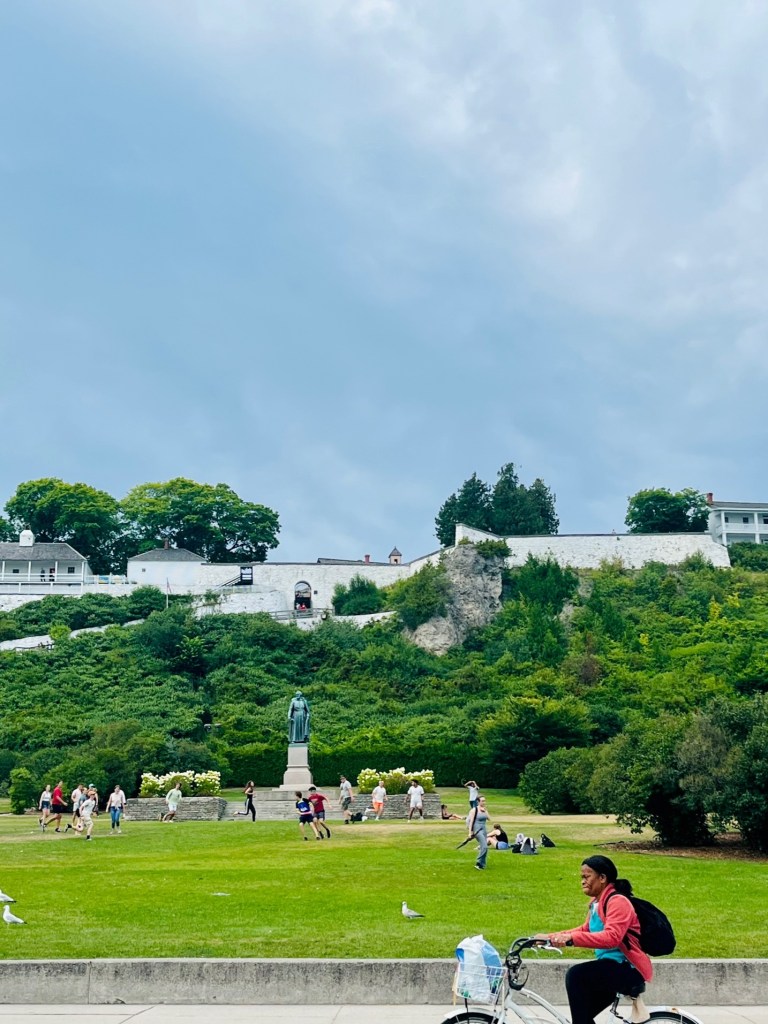
There is a statue of French Missionary Jacques Marquette in the center of the park.
To protect this thriving commerce, at differing times French, British and American military forces all occupied the island using the high bluff as a strategic location for a military outpost. As the fur trade dwindled and the need for active military diminished, tourism became Mackinac’s primary appeal.
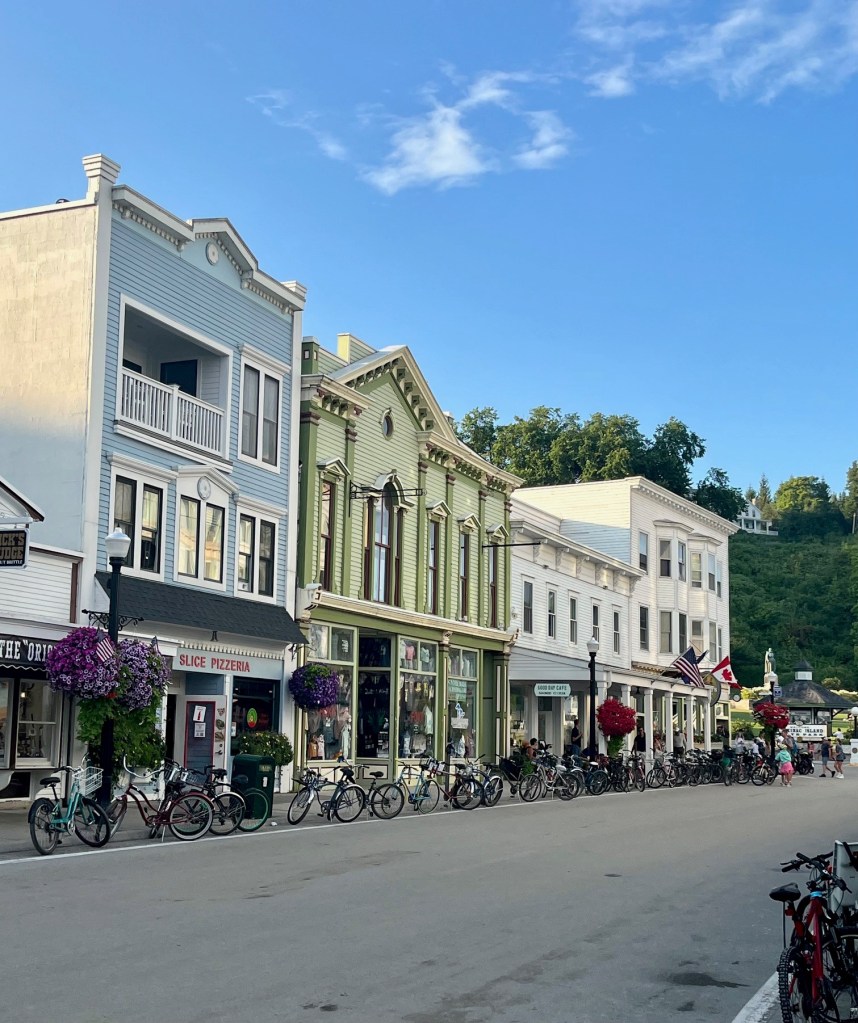
The 1890s was a decade of dramatic change on Mackinac Island. The tourism economy was booming, led by the Grand Hotel. New businesses opened, others expanded, and summer residents constructed palatial mansions on the island’s scenic bluffs.
Wealthy summer vacationers, most travelling by steam ship, came to enjoy the cool clean air and to escape the smog and heavy industrial climate of Detroit and Chicago. Victorian summer homes, expanding hotel options, fine dining and shopping geared towards growing tourism became the new focus of Mackinac Island.
Fort Mackinac
Great fear seized the community when the federal government announced plans to close Fort Mackinac and sell the national park lands in 1894. Established in 1875 as the country’s second national park – Yellowstone was the first – Mackinac National Park helped promote the popularity of the island to the travelling public. Similarly, the fort, with its daily bugle calls, morning and evening cannon salutes, and garrison of blue-coated soldiers, was a living reminder of the island’s rich military history.
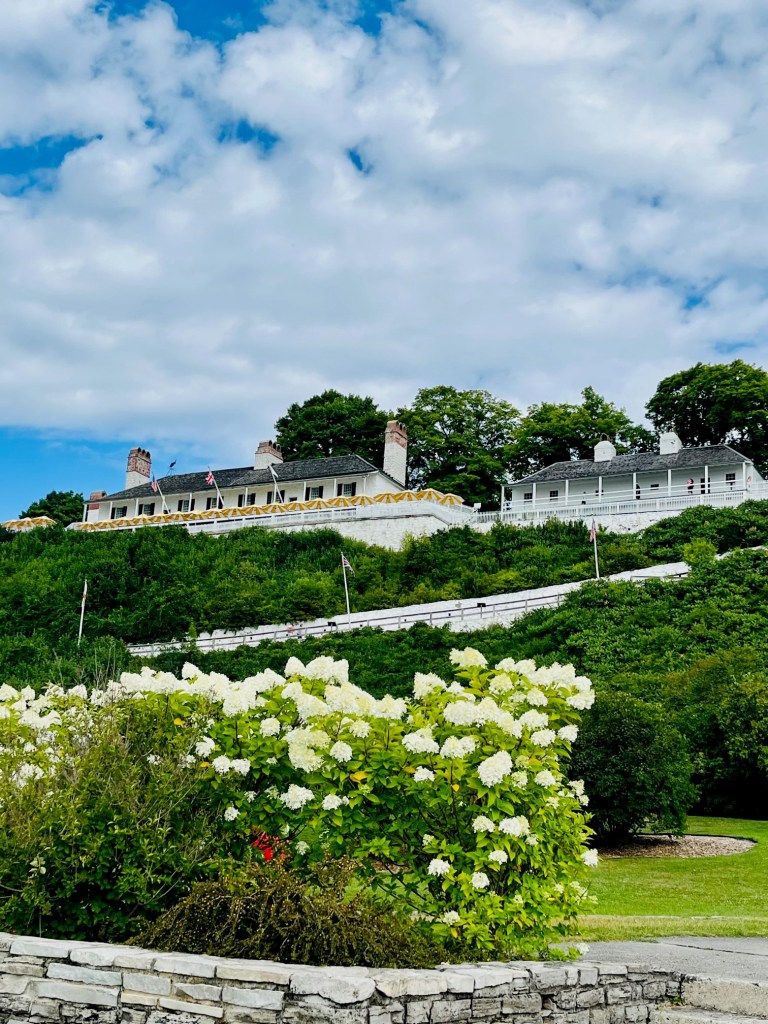
Local businessmen warned that the loss of the park and its historic fort would cause irreparable damage to the character of their community and success of the tourism industry. Residents and visitors alike breathed a sigh of relief when state officials agreed to assume responsibility for the federal lands and fort and create Michigan’s first state park in 1895.
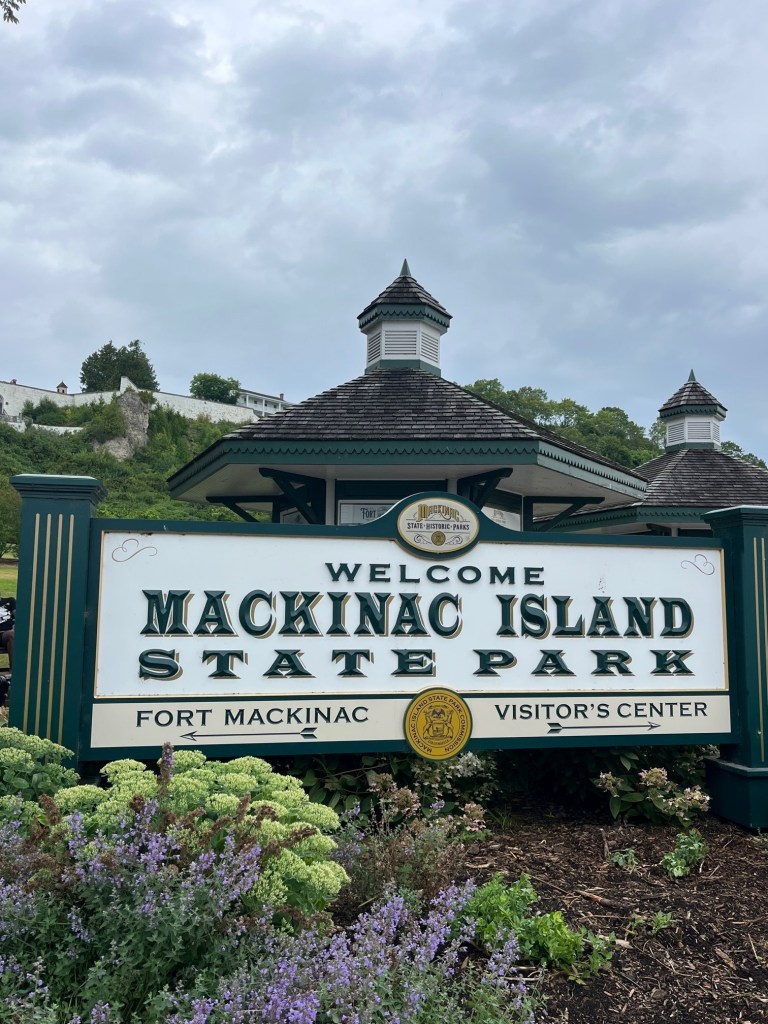
While the restored fort no longer defends the Straits of Mackinac, its exciting exhibits and lively interpretive programs capture Mackinac’s rich history. All of the buildings are original, constructed by soldiers who lived and worked here. The Officers’ Stone Quarters was built more than 200 years ago, during the American Revolution, and is one of Michigan’s oldest buildings.
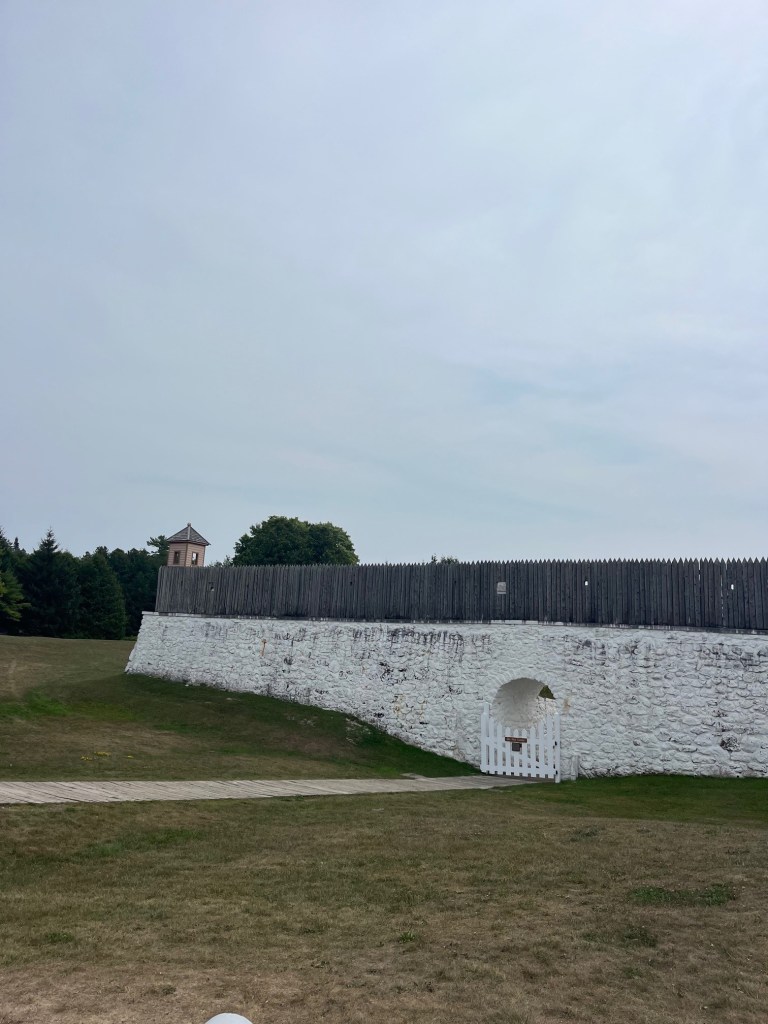
Costumed interpreters guide visitors through realistic demonstrations and reenactments, such as rifle and canon firings. Daily programs highlight the changing face of Mackinac Island, the role women played at the fort, and a look at who exactly made up the army of the 1880s.
We did not visit the inside of the Fort. I wish we had. So many of our destinations feature a fort. Its presence does make you appreciate our military and the people who have fought for our freedom. I loved hearing the bugle taps played from the fort during the day.
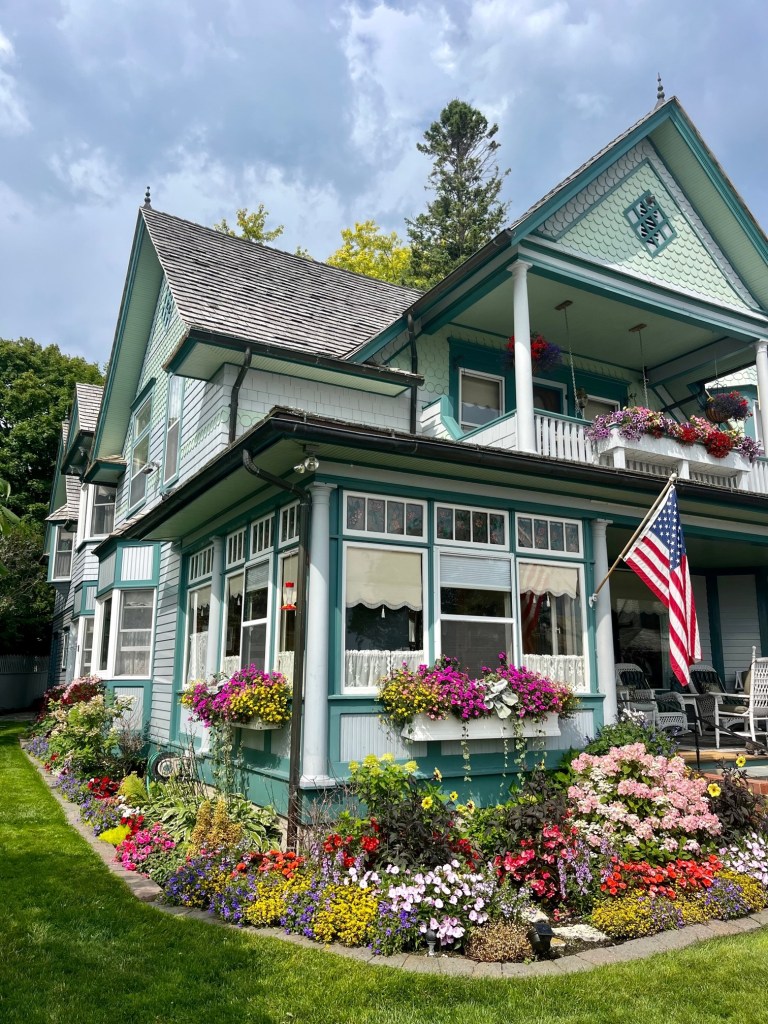
Victorian Homes Now Hotels
Mackinac Island boasts more than 1600 guest rooms and suites, from economical to extravagant, and nearly 30 dining options. Every guest room has a unique appeal all its own.
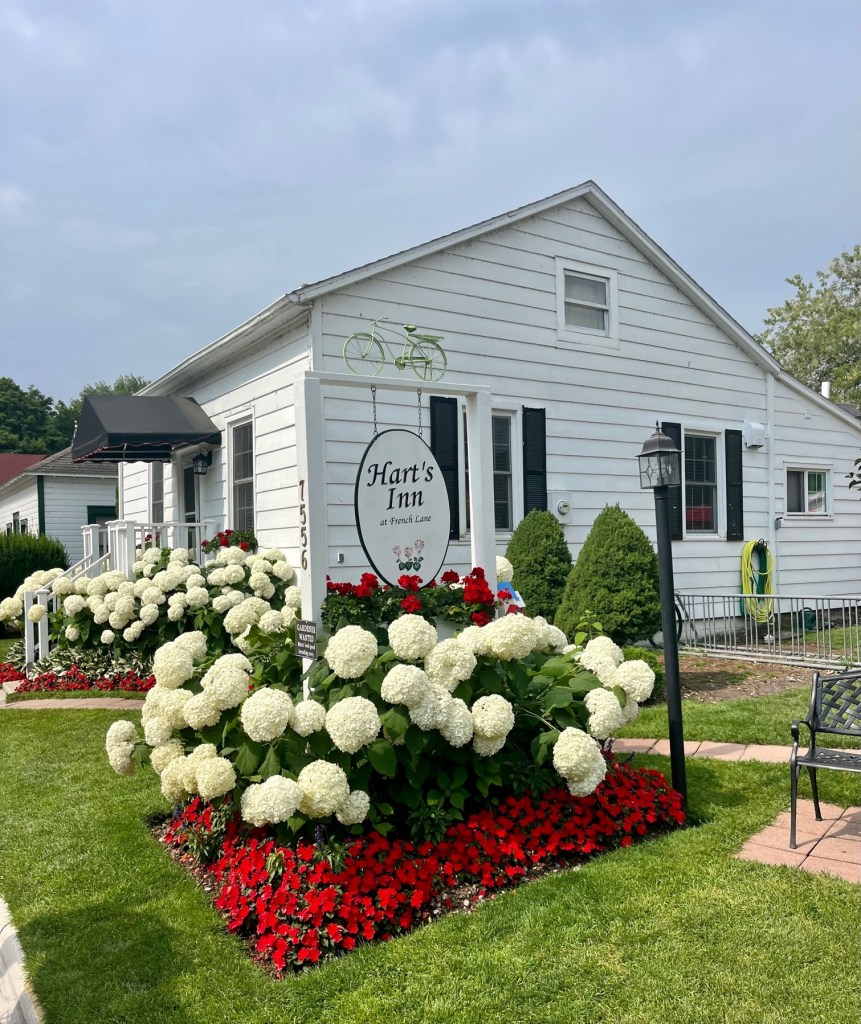
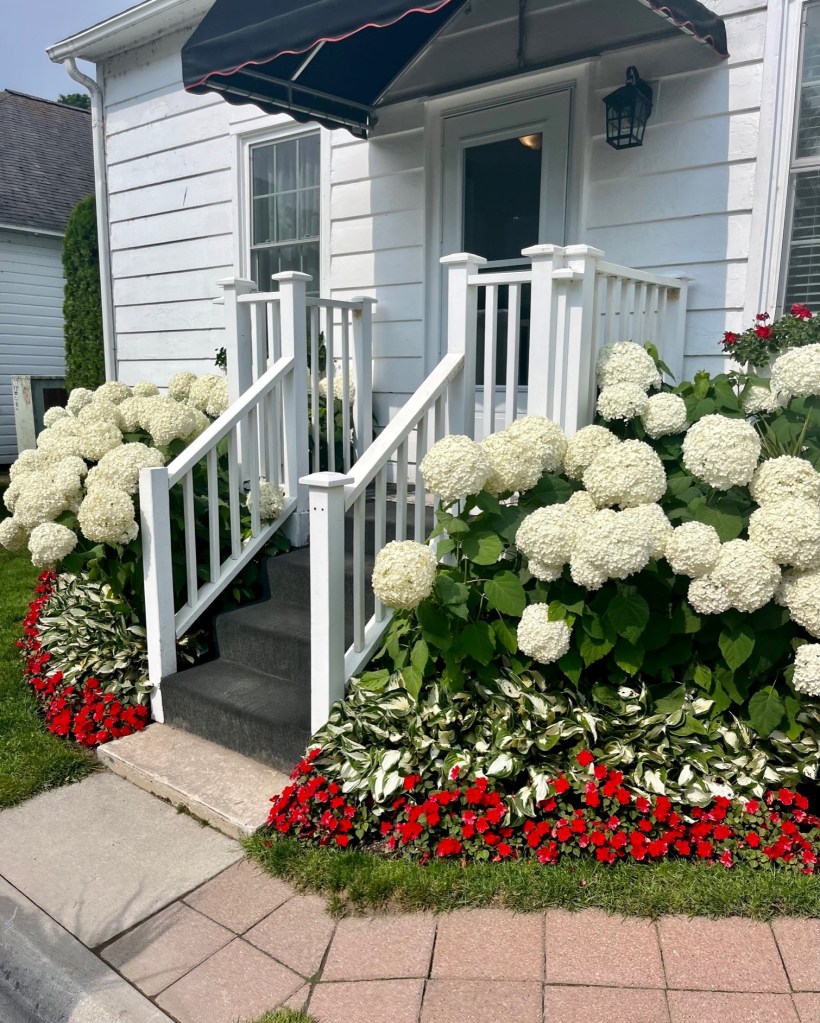
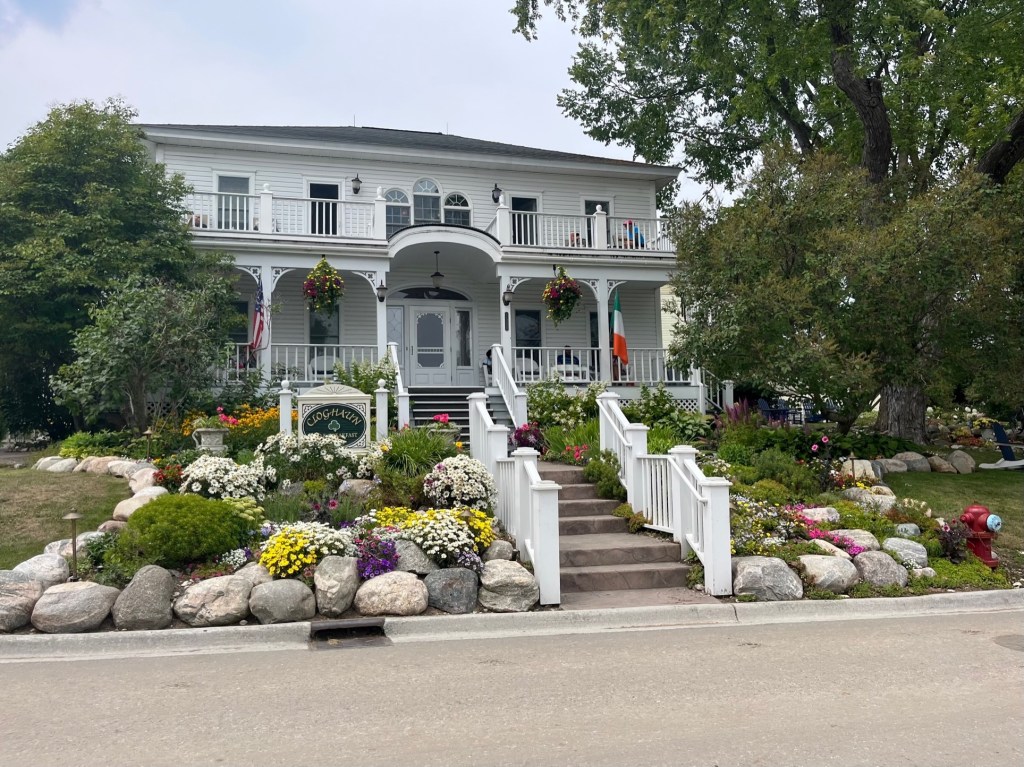
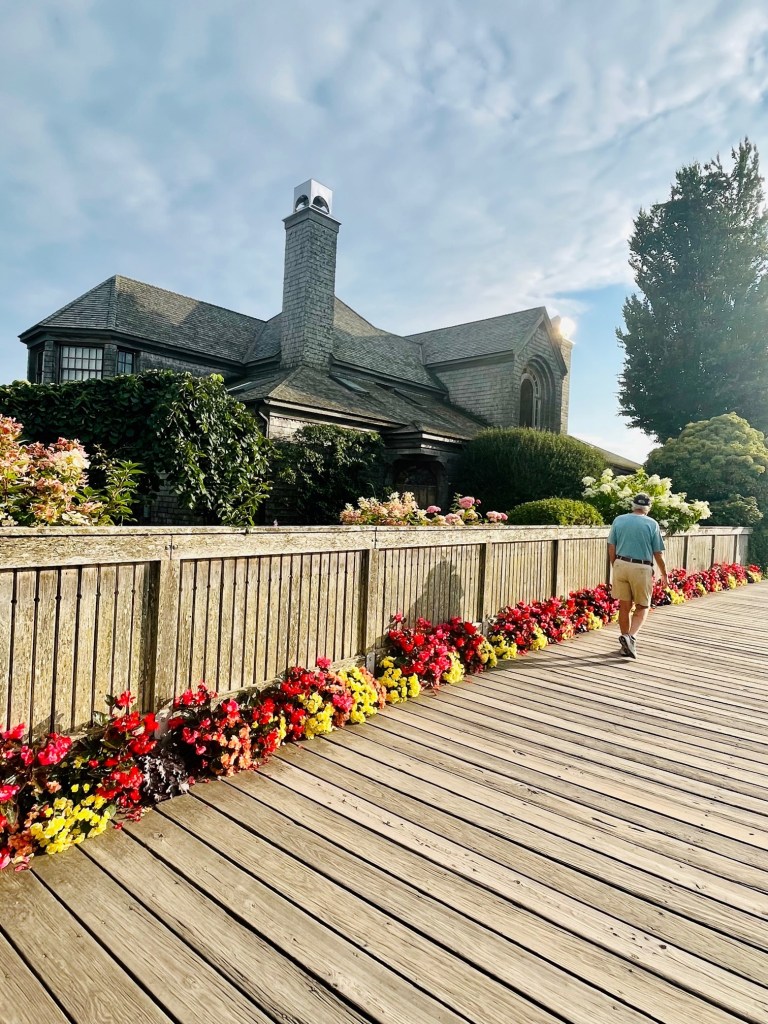
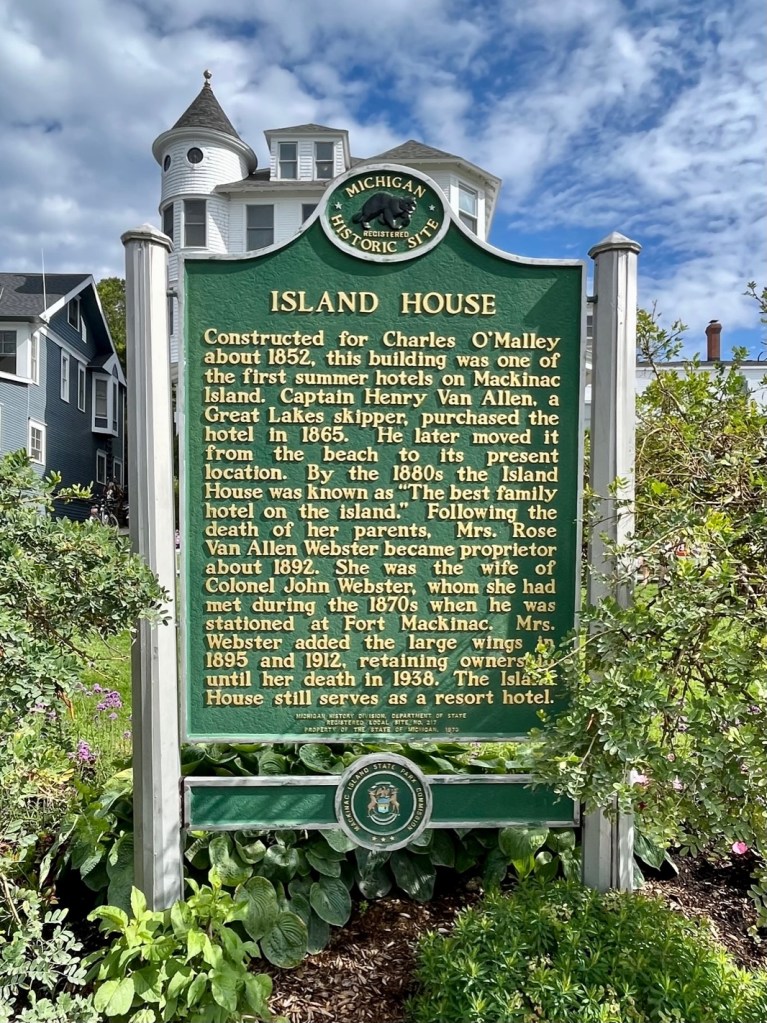
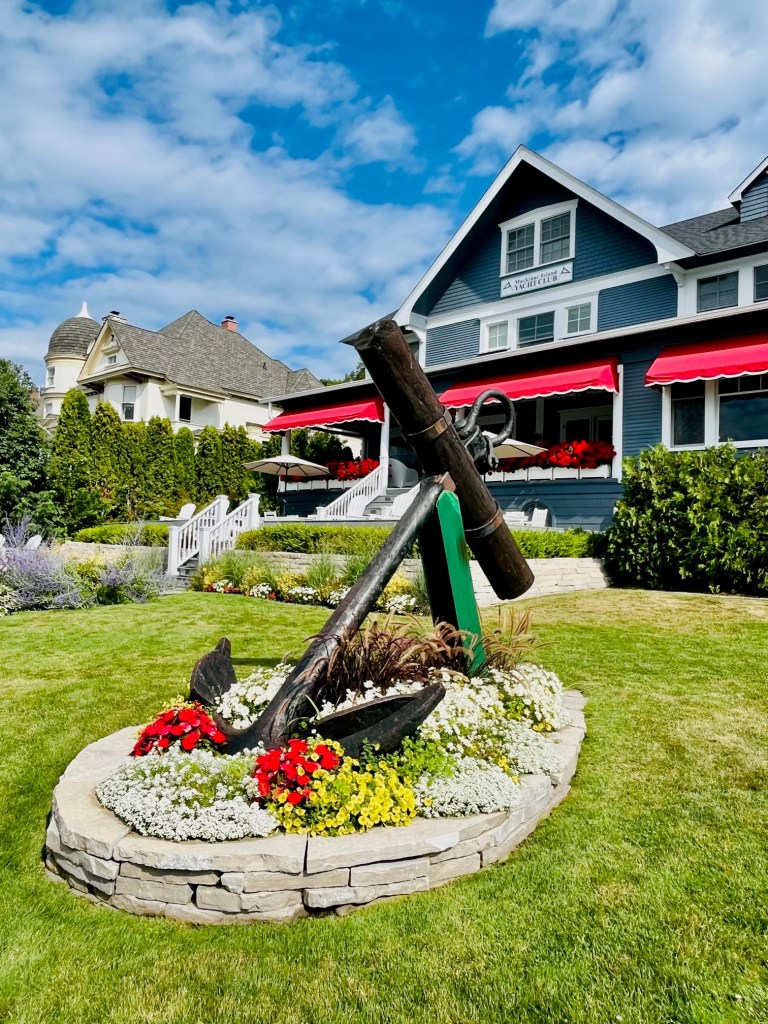
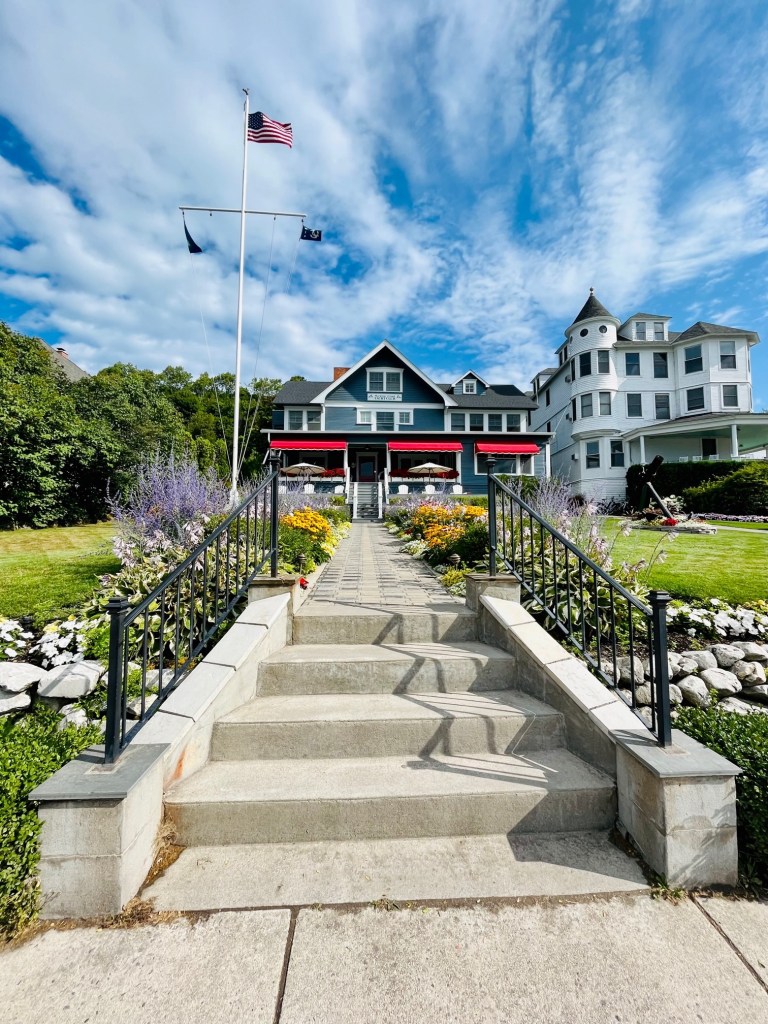
On our tour and as we walk the town, I photograph many Victorian homes. I’m impressed by their upkeep and landscaping. Later while reading the Visitors Guide, I realize many are hotels.
Here are some of the homes I photographed:
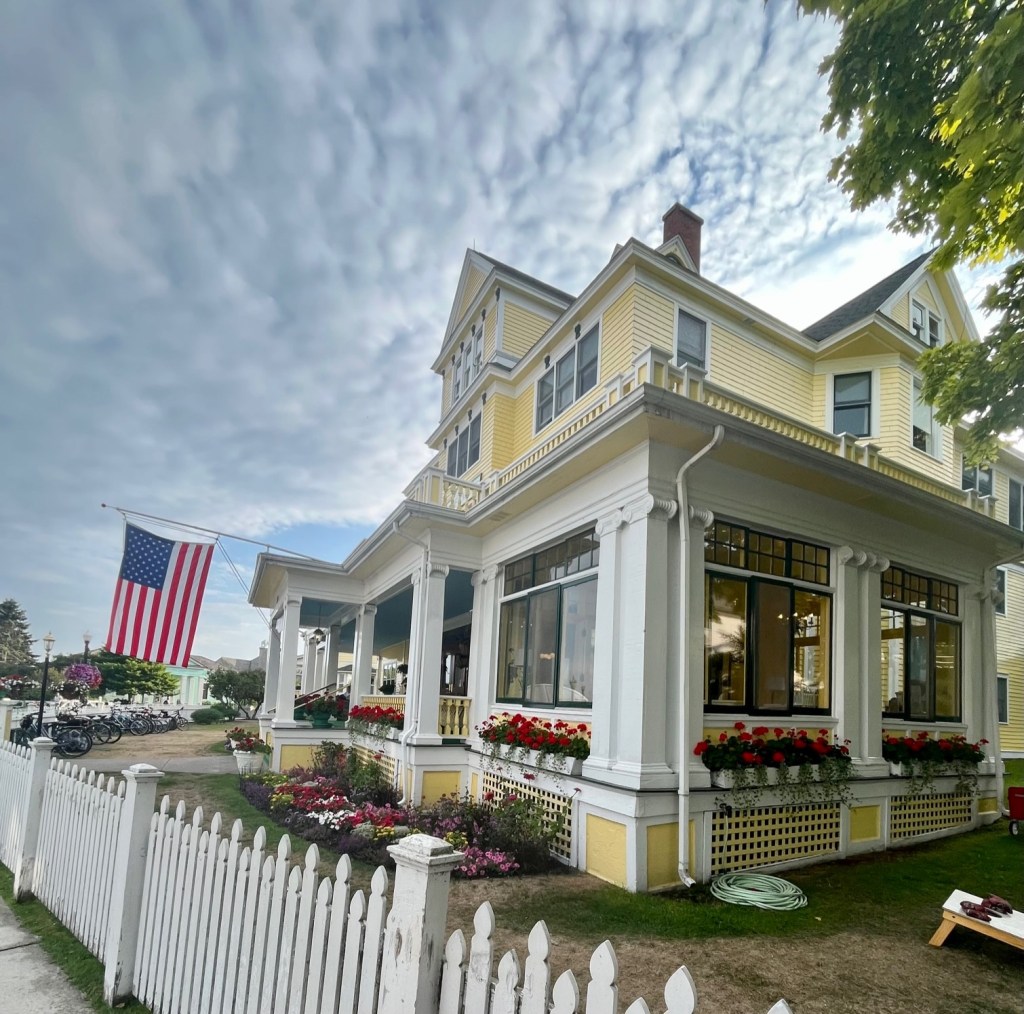
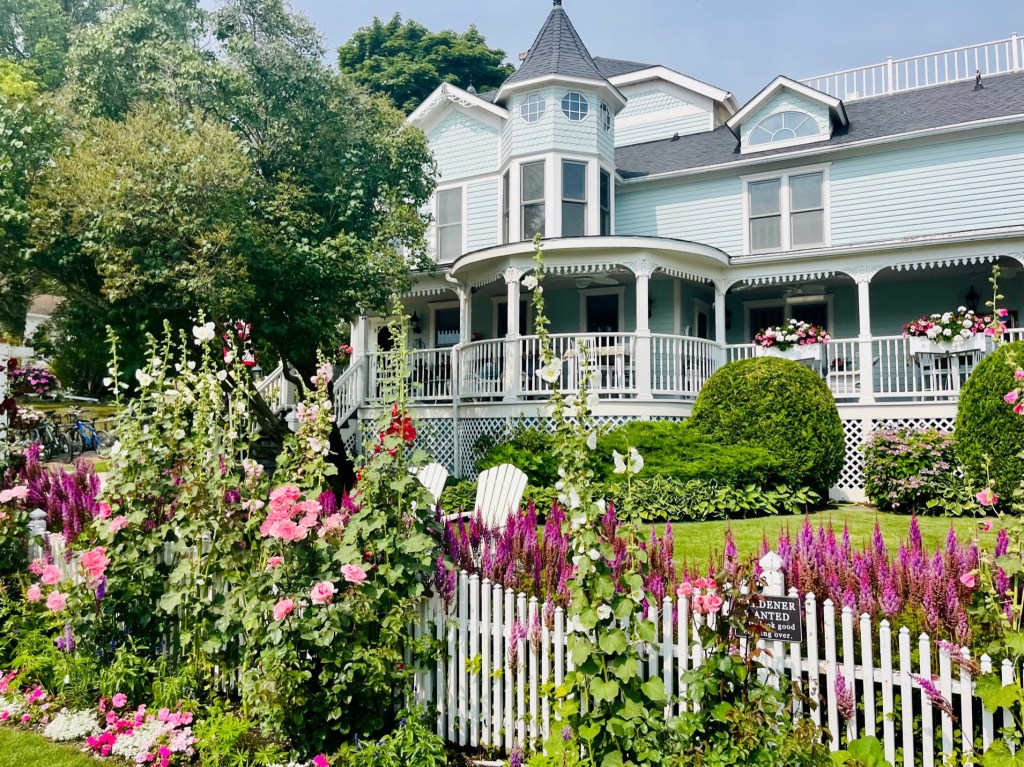
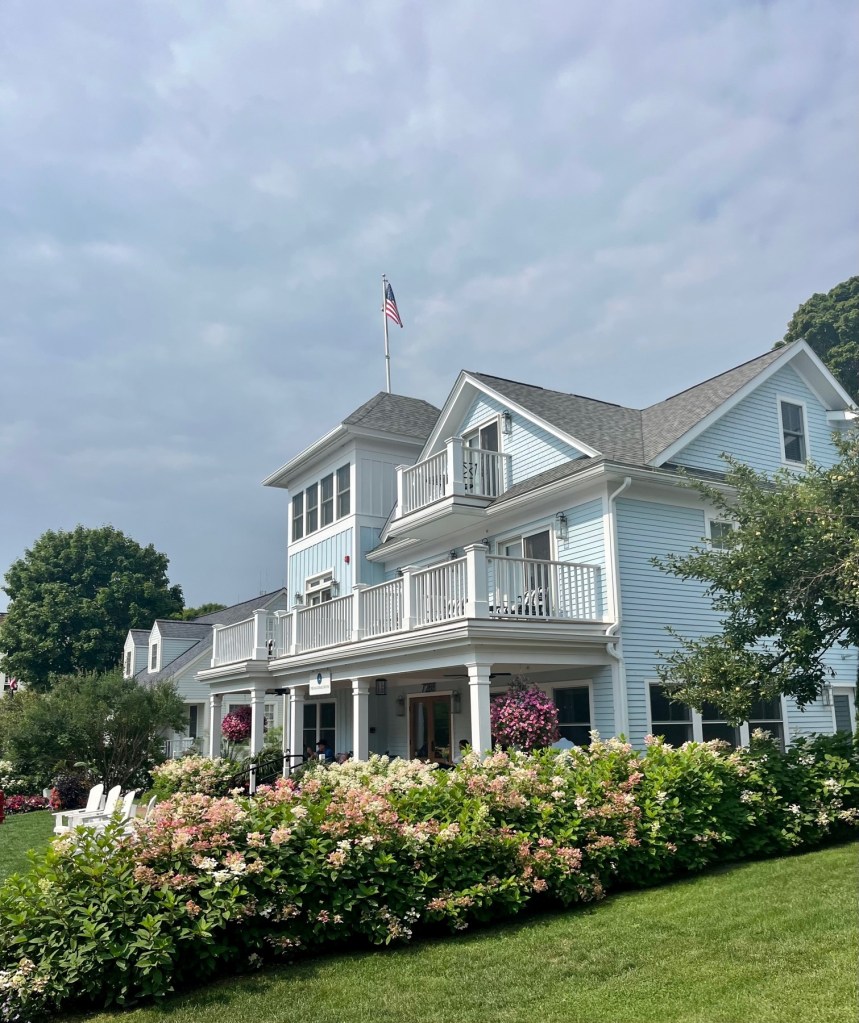
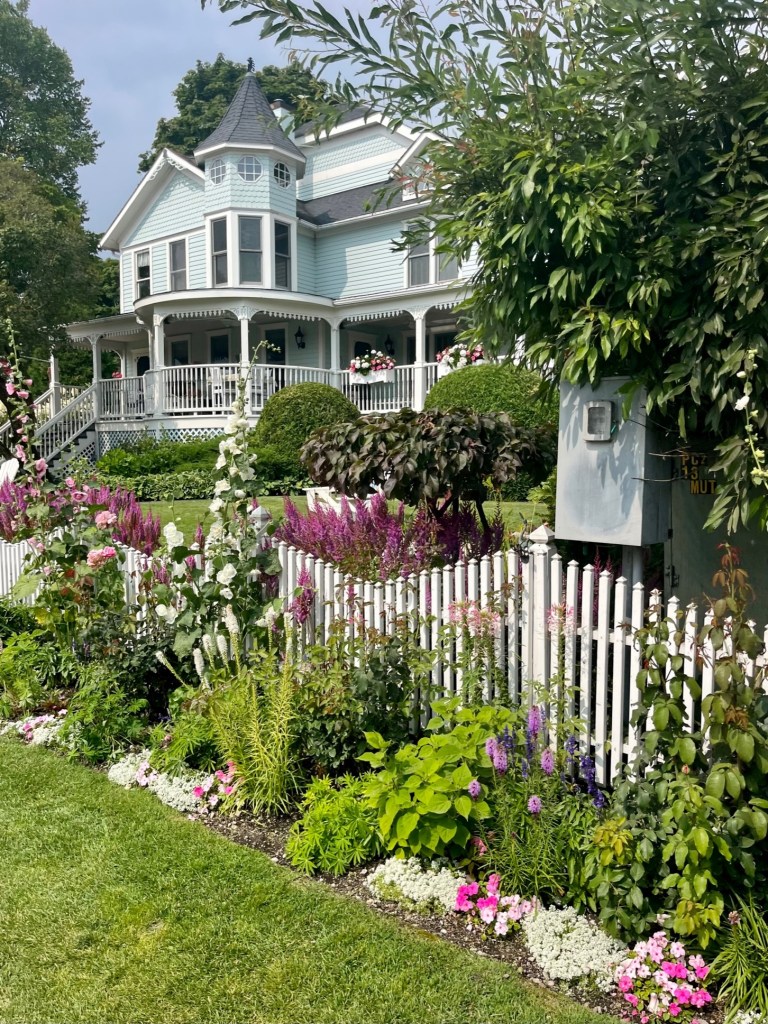
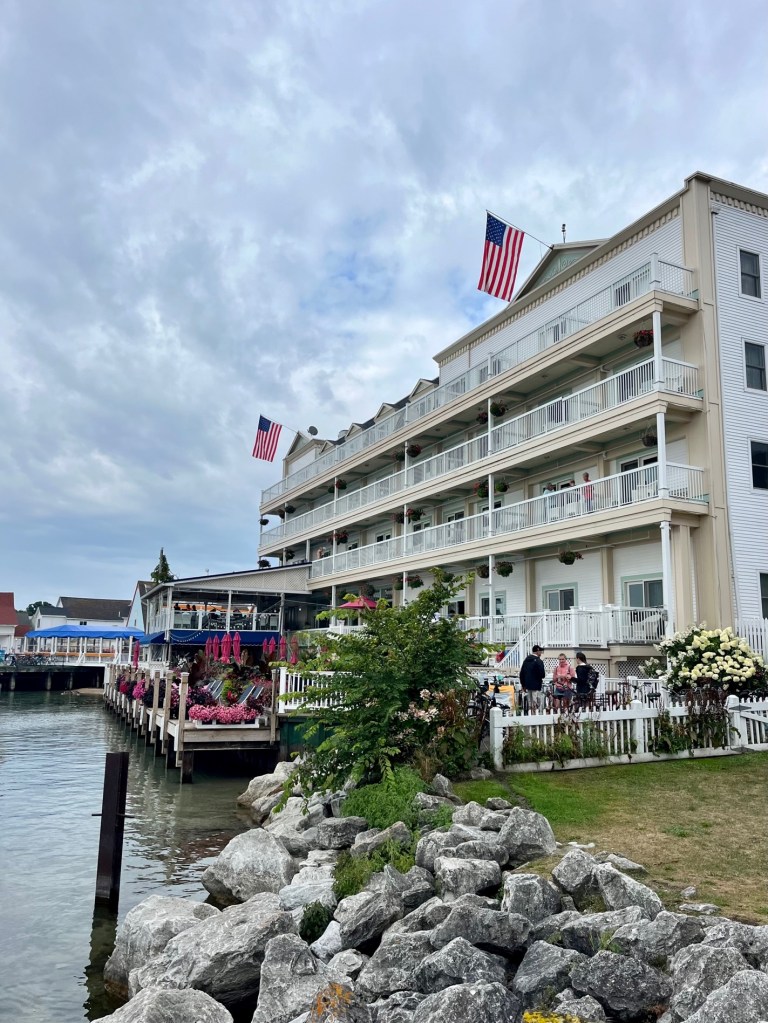
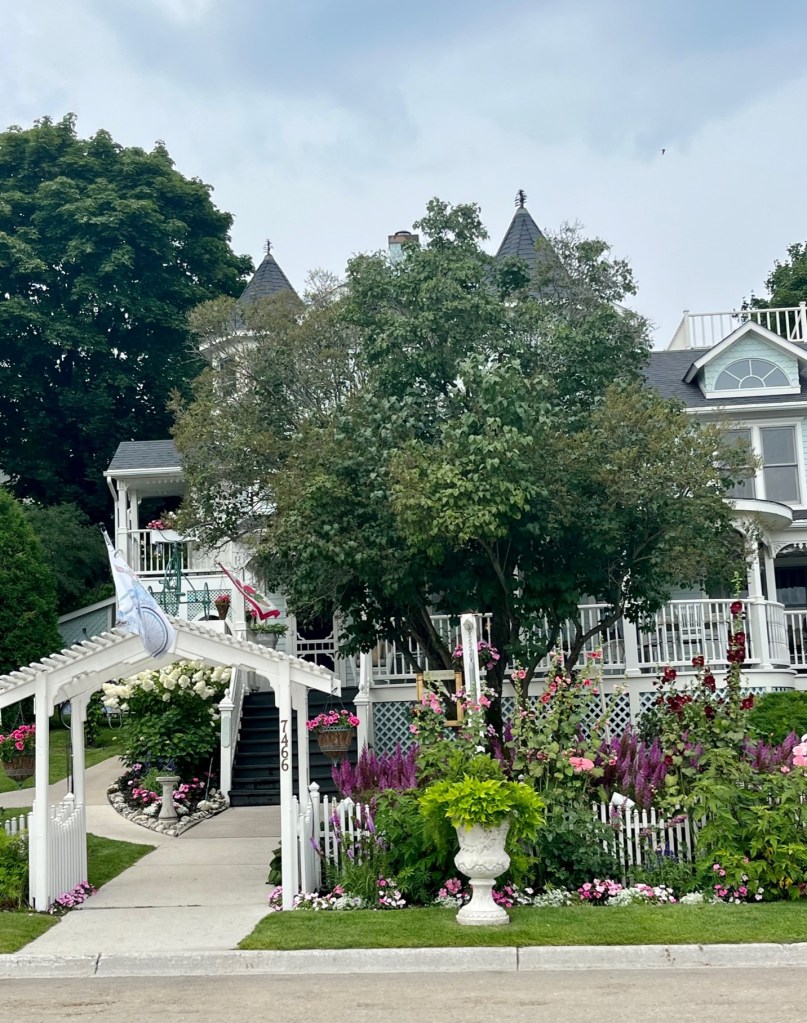
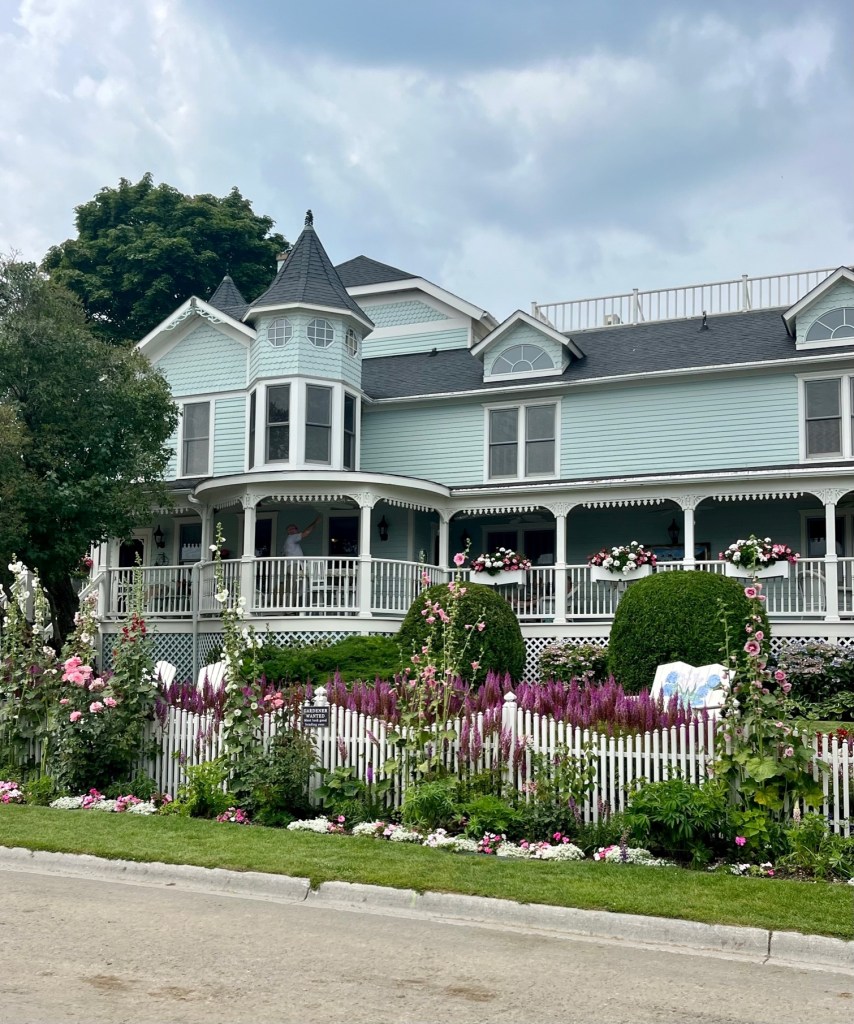
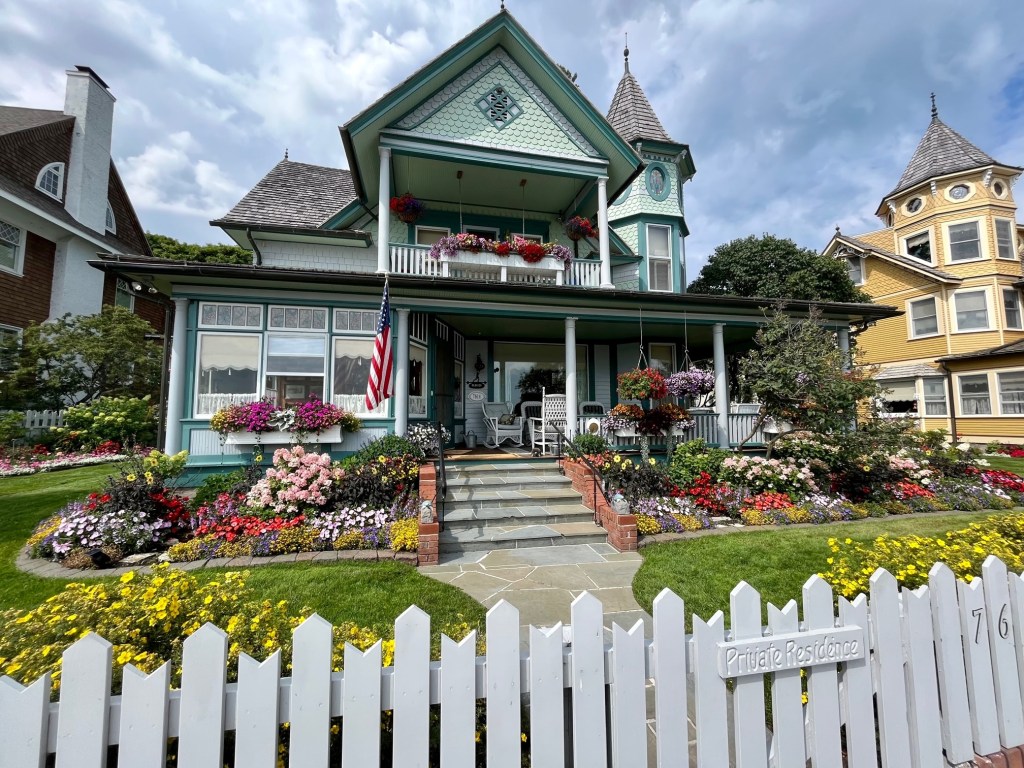
Built in 1884, one of the oldest Victorian homes on the island.
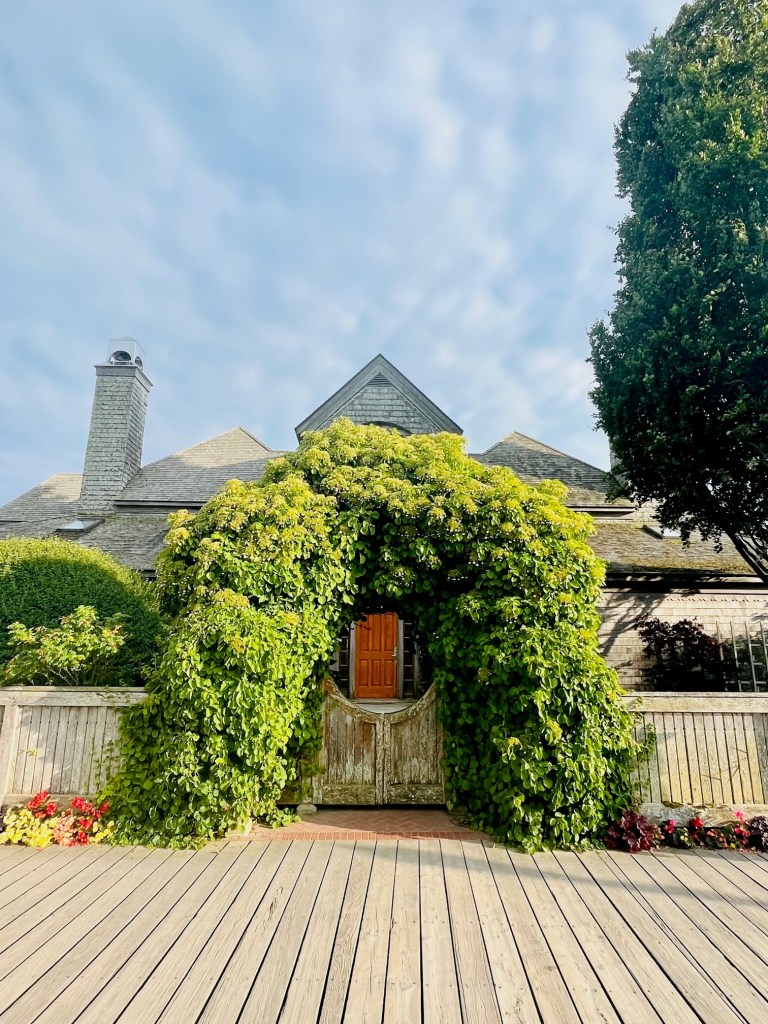
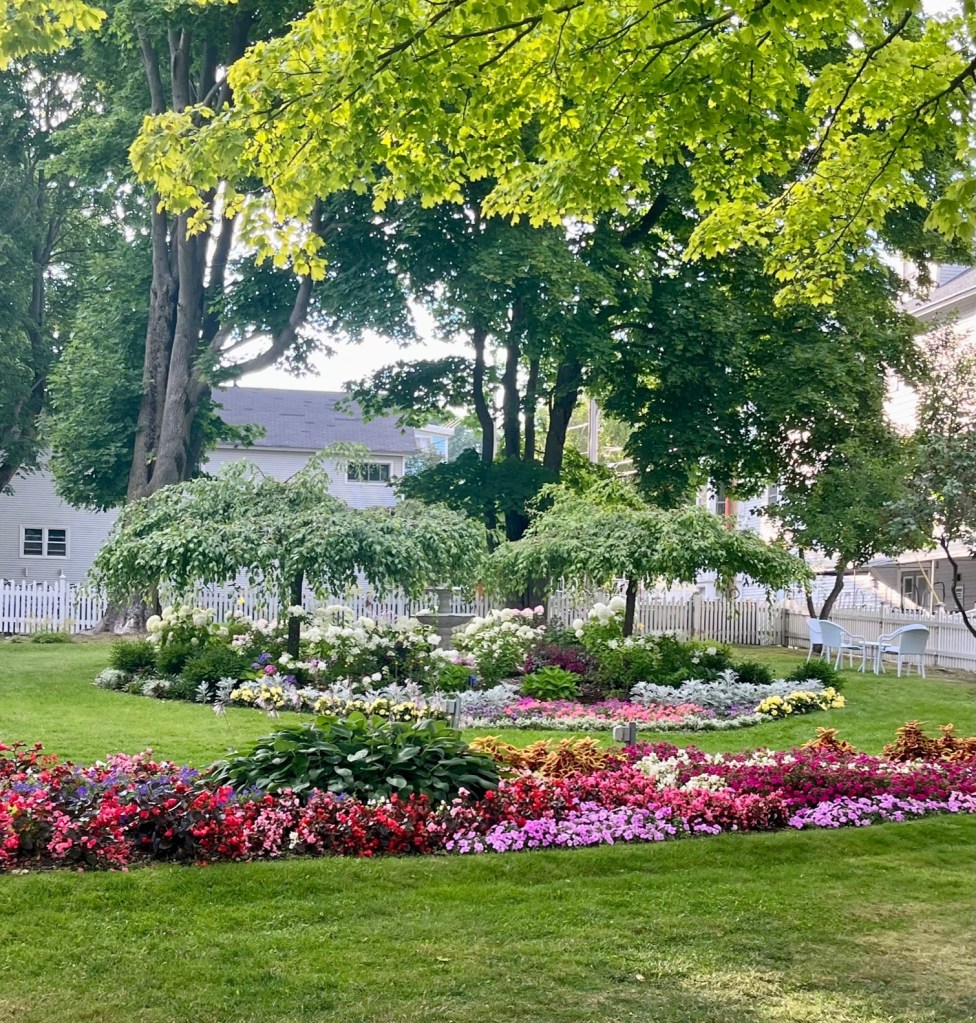
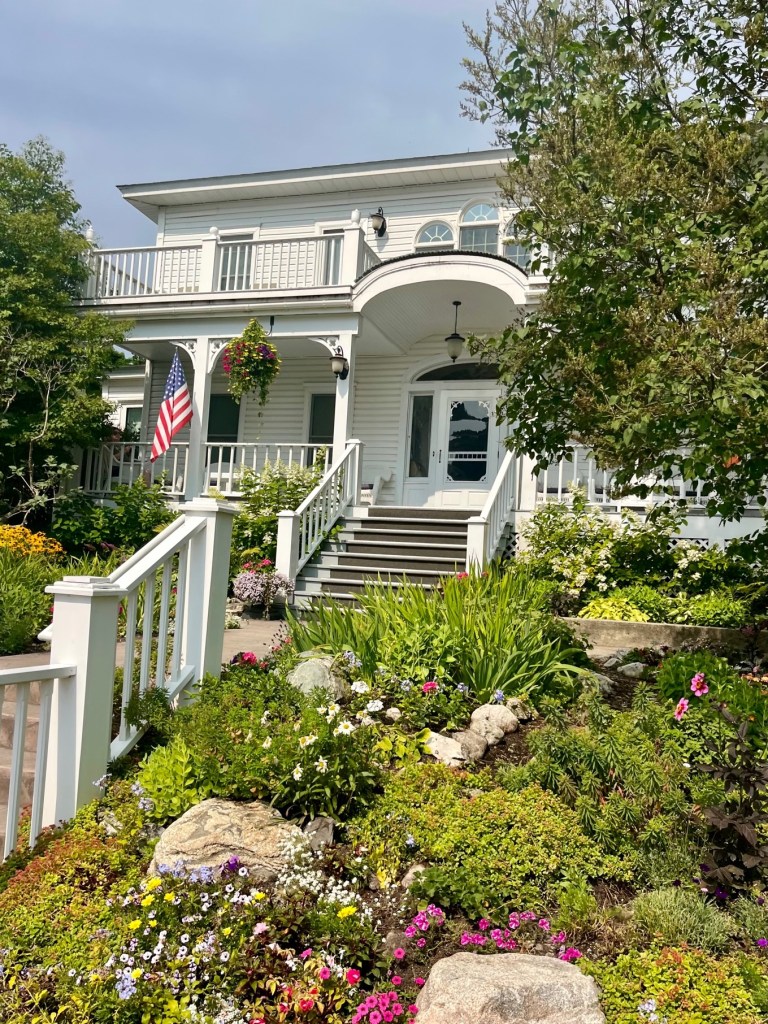
There is a sign at the picket fence “Don’t pet the dog!”
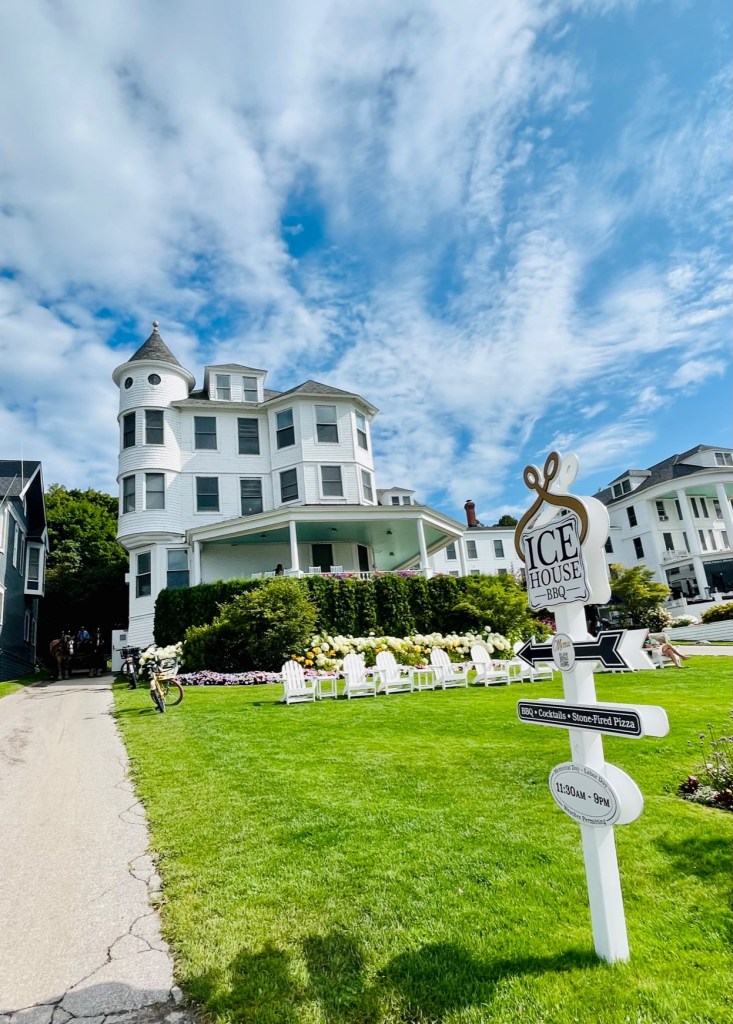
A great restaurant – “Ice House” – is in the back.
Horse Drawn Carriages
The Grand Hotel Carriage Tour building showcases horse drawn carriages and the history of transitioning to motorized carriages. One story that caught our attention was the story of William “Billy” Durant, who formed General Motors Company in 1909. Who knew a McLaughlin was his partner? Maybe a long-lost relative?
Below is the story of Billy Durant, followed by photos of the horse drawn carriages.
Story of Billy Durant
Billy Durant was born in Boston, Massachusetts in 1861. His family relocated to Flint, Michigan where Billy worked as a laborer in his father’s lumber yard, and later as a cigar salesman. In 1866 he entered the carriage building business with Josiah D. Dort. With two thousand dollars they founded the Flint Road Cart Company. By 1903 it was valued at over two million dollars.
Durant purchased a struggling local automobile manufacturer, Buick Motor Cars. Applying what he had learned in the carriage business, Durant grew Buick to one of America’s best-selling automobiles.

Durant then partnered with R. S. McLaughlin to form General Motors Holding Company. Together they acquired other automobile companies – Cadillac, Oldsmobile, Oakland, Pontiac, and others. The Board eventually thought Billy had overextended the company and forced him to resign in 1909.
Undaunted, he partnered with race car driver Louis Chevrolet and together they built a reliable, low-priced car to compete with the Fords famous Model T. Surpassing model T sales in 1916, Chevrolet got the attention of General Motors, who needed a well-built entry level car in their line-up.
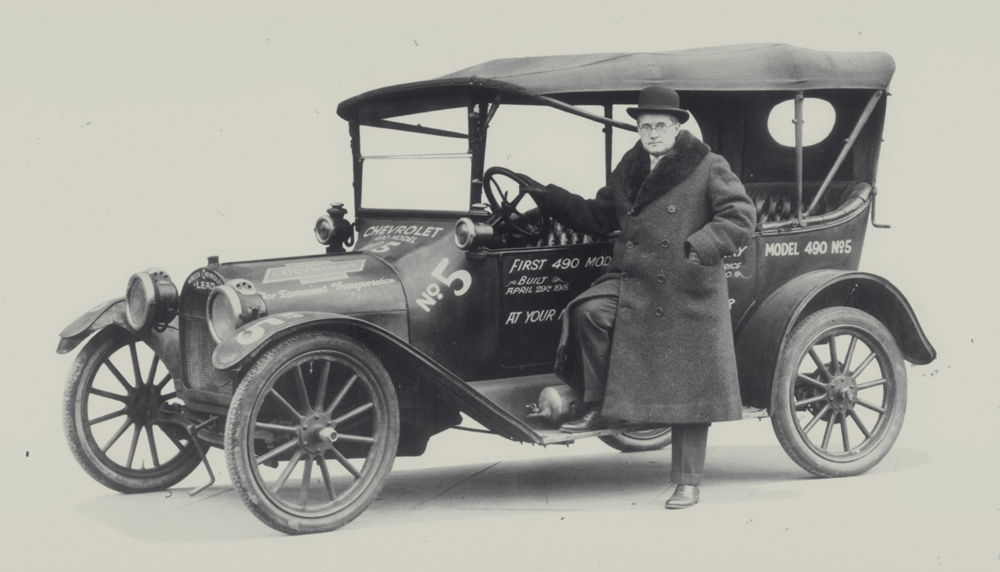
General Motors purchased Chevrolet and with it came Billy Durant, who leveraged again to gain control of General Motors!
Durant led the company until 1920. After leaving GM, he saw the demise of the ice box in American kitchens and founded Frigidaire. This guy never gives up!
Many carriage companies tried to make the transition into automobile manufacturing, but few were as successful as Billy Durant.
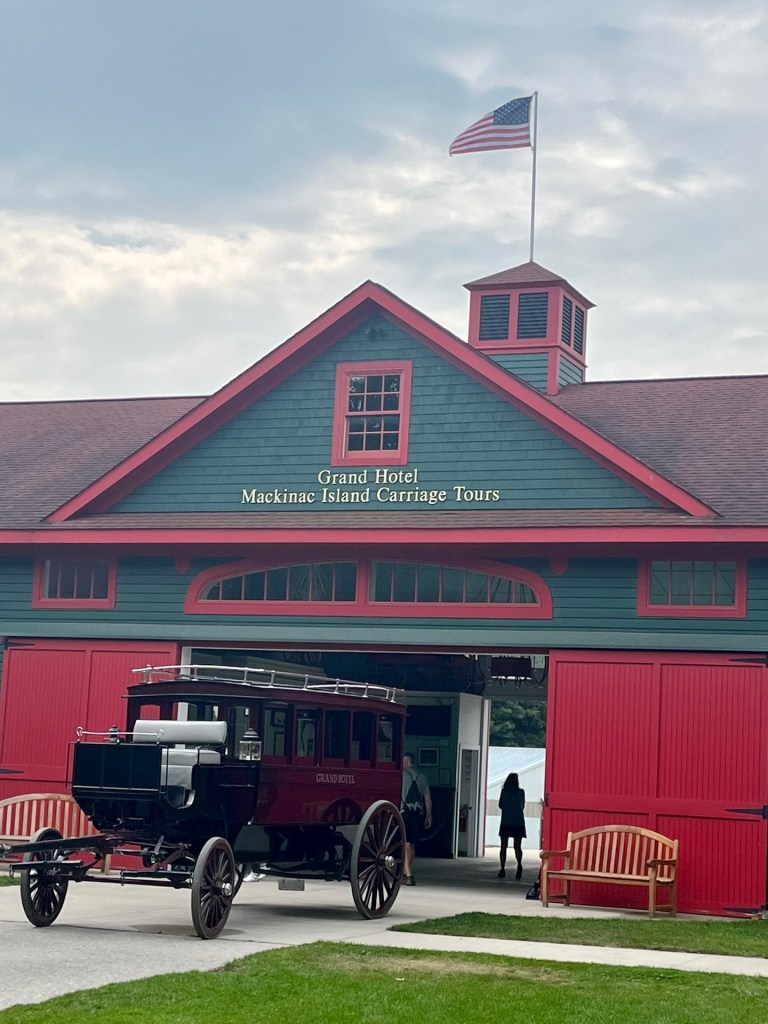
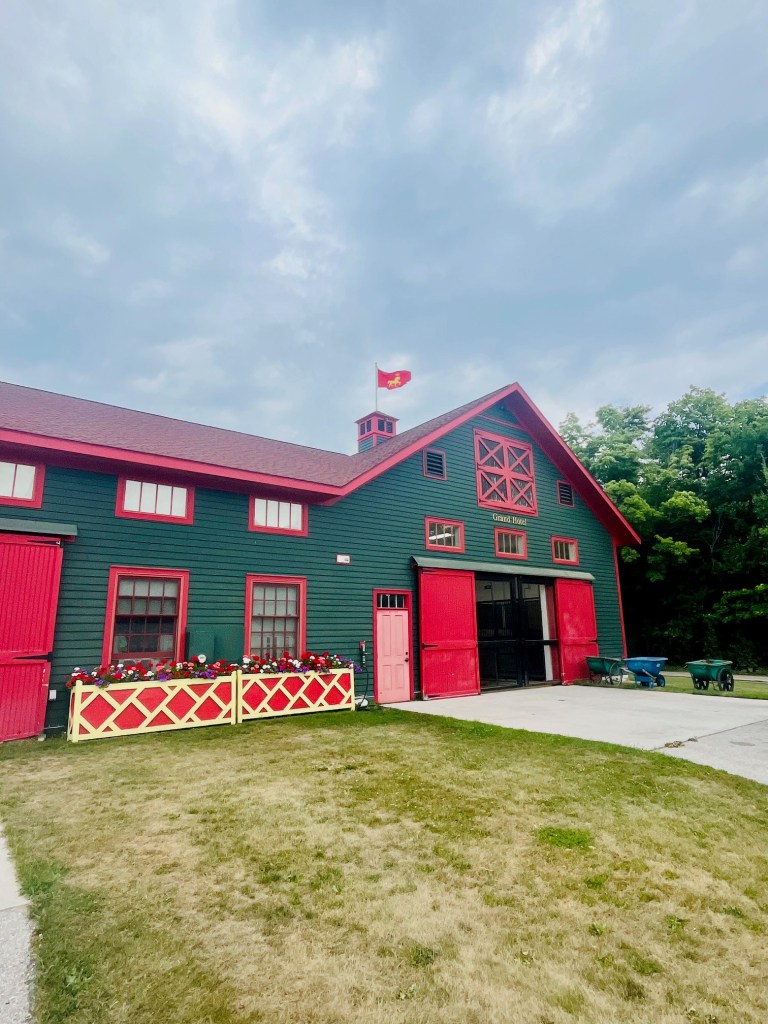
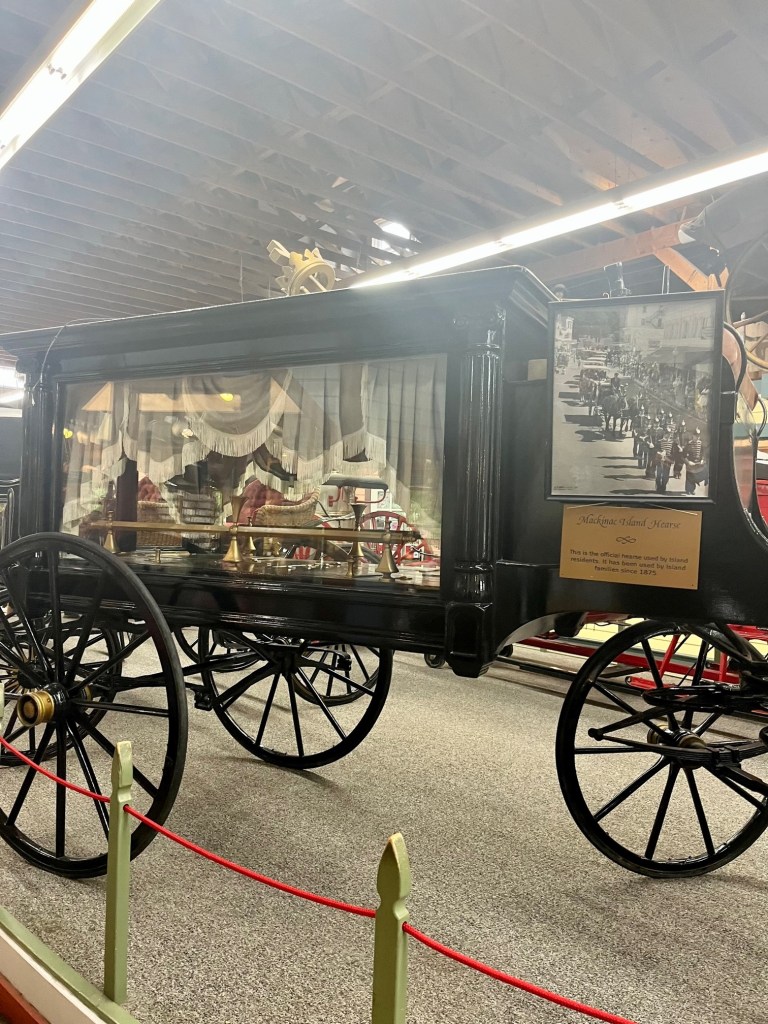
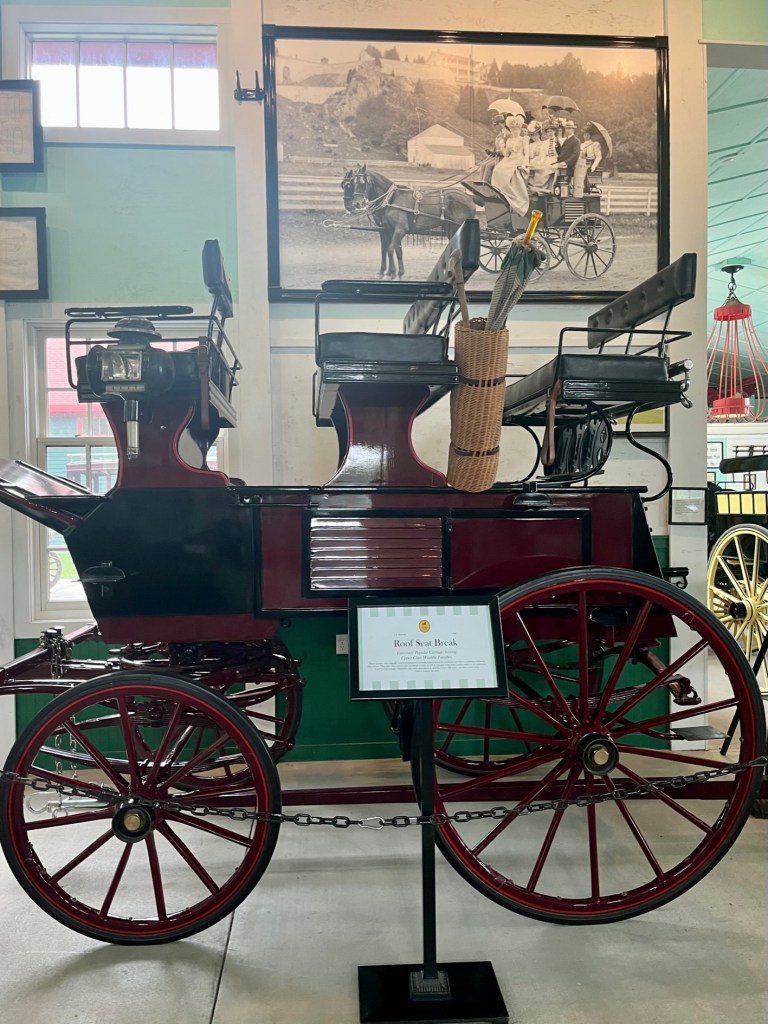

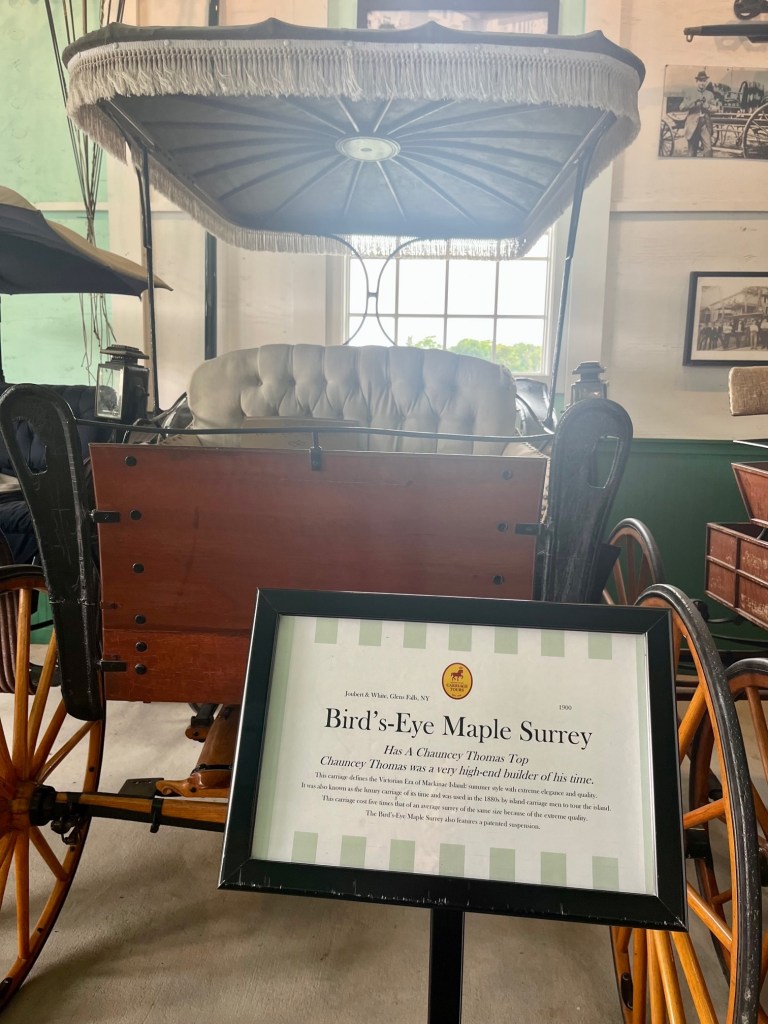

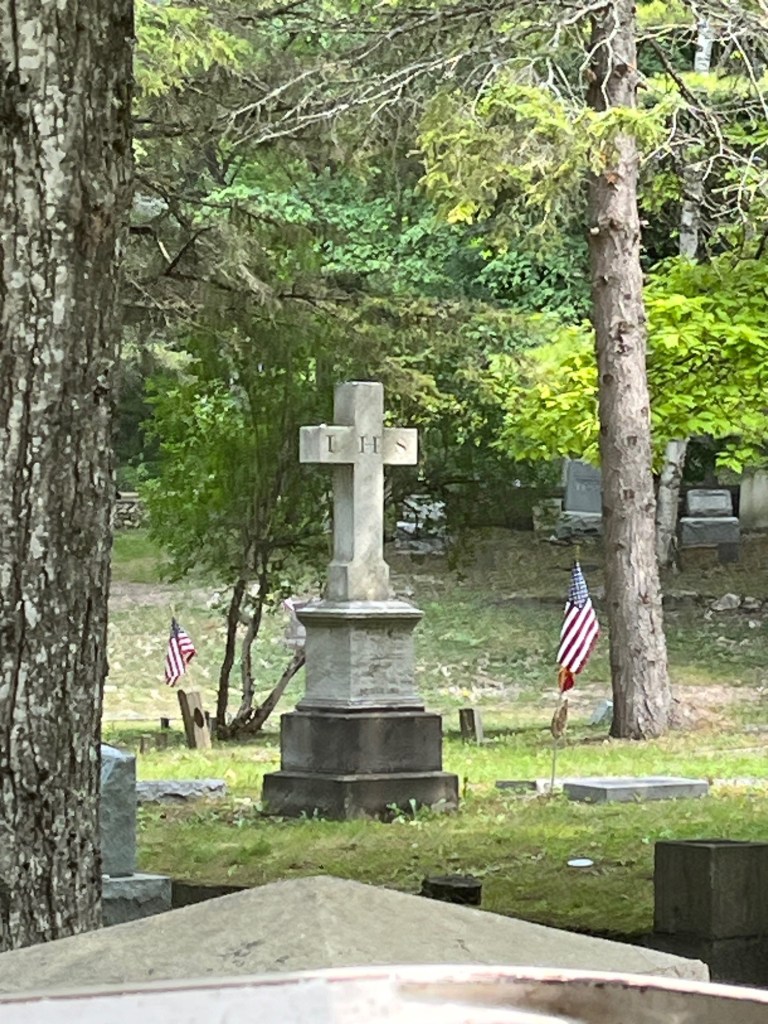
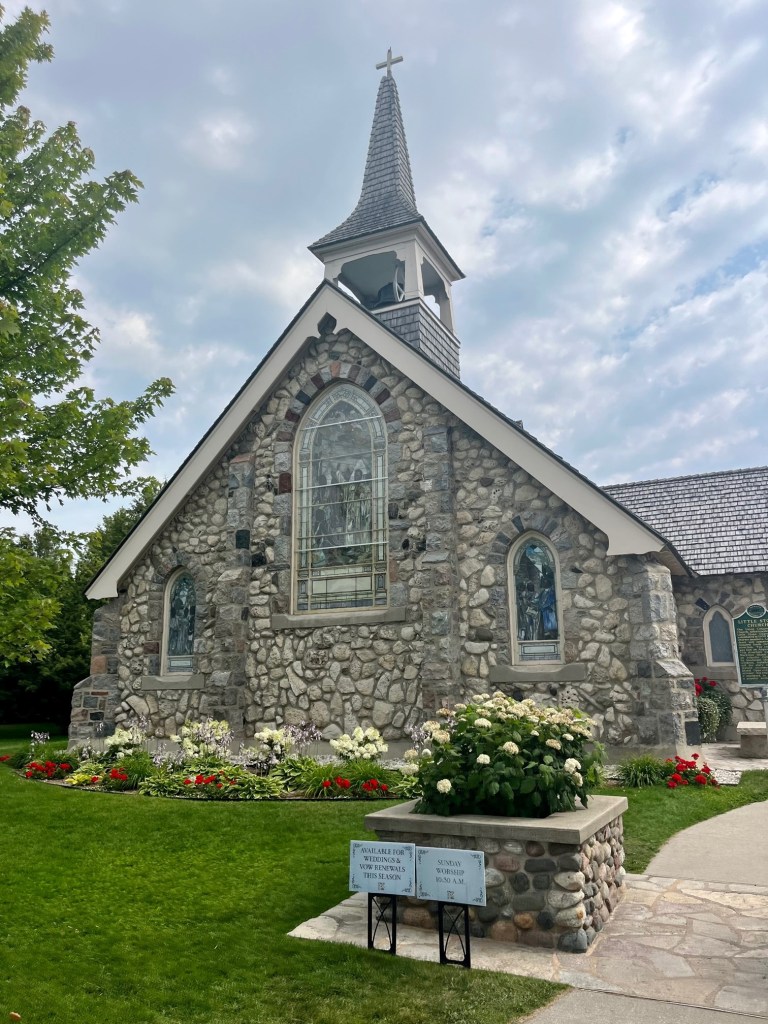
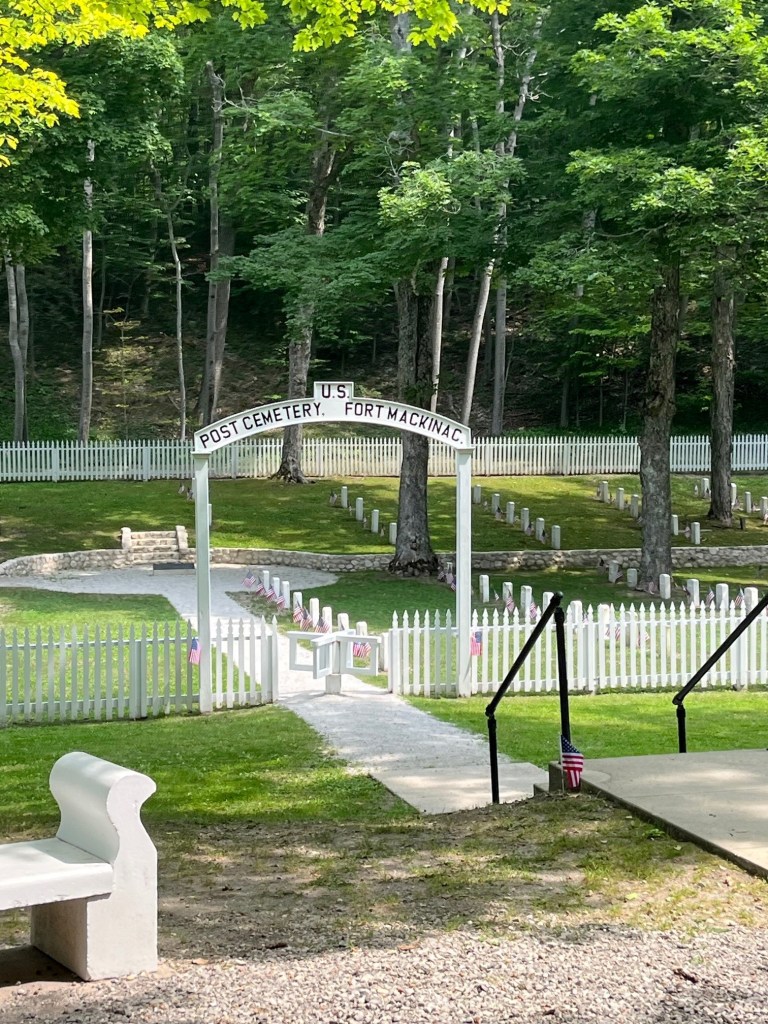
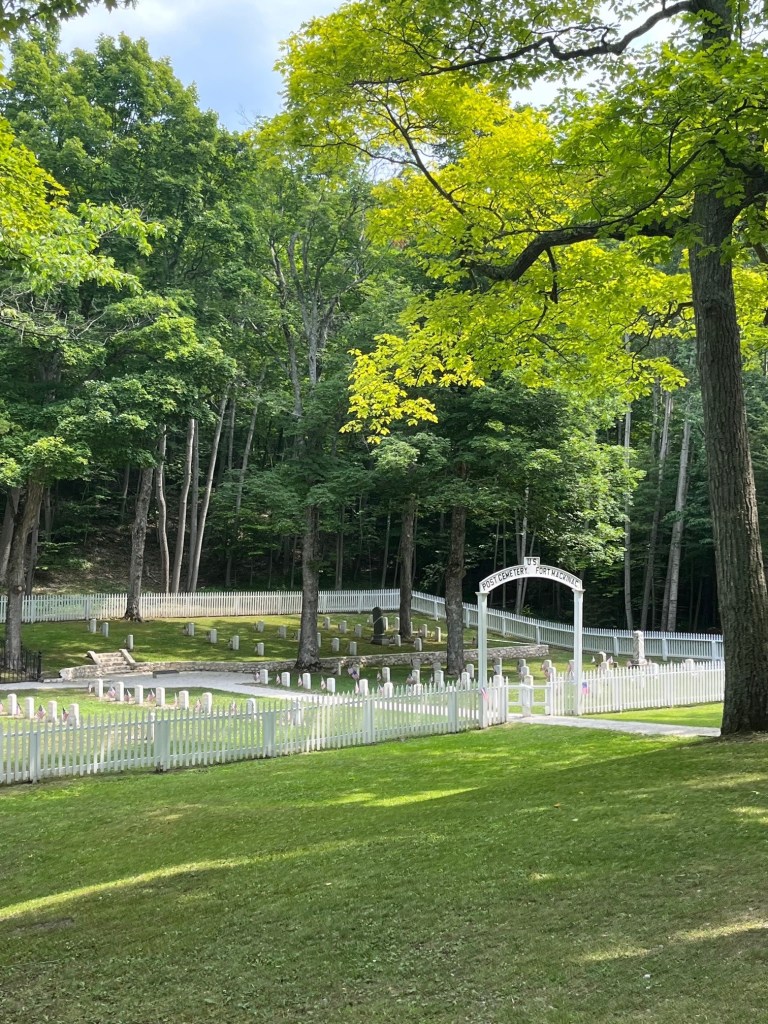
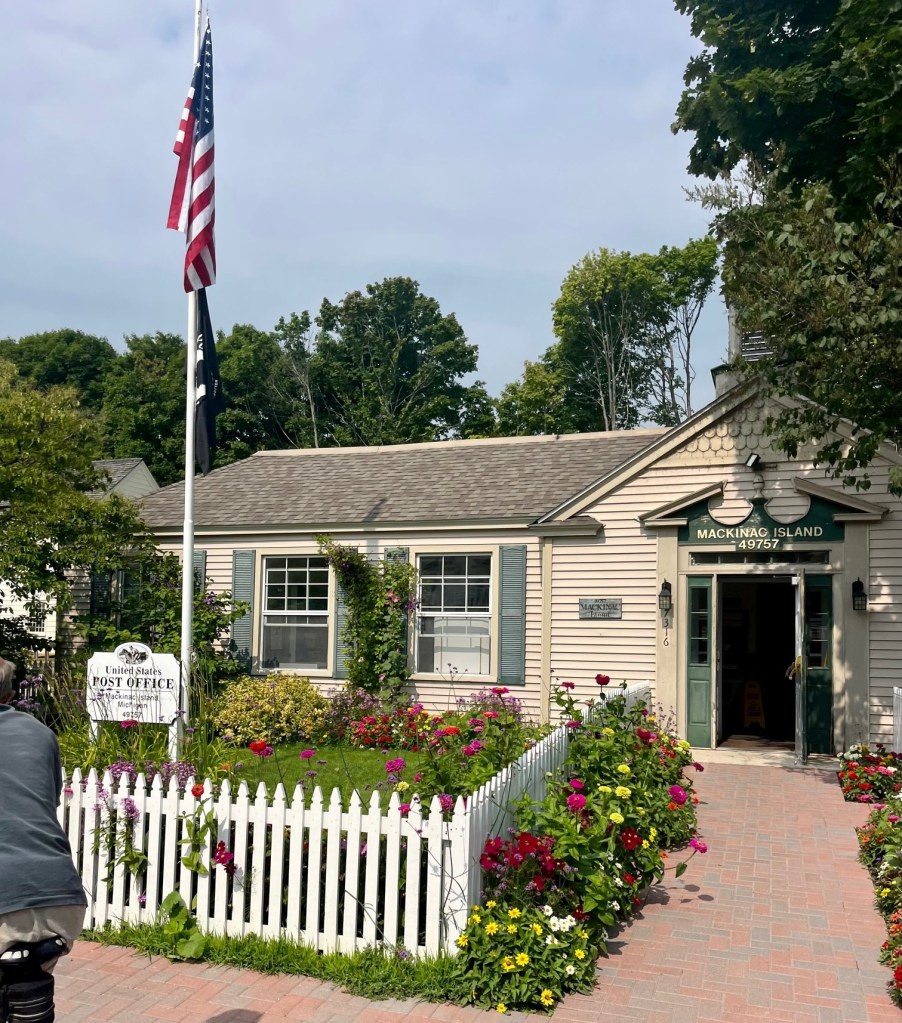
Here are miscellaneous photos from our visit to Mackinac Island. I can see why people make return visits.


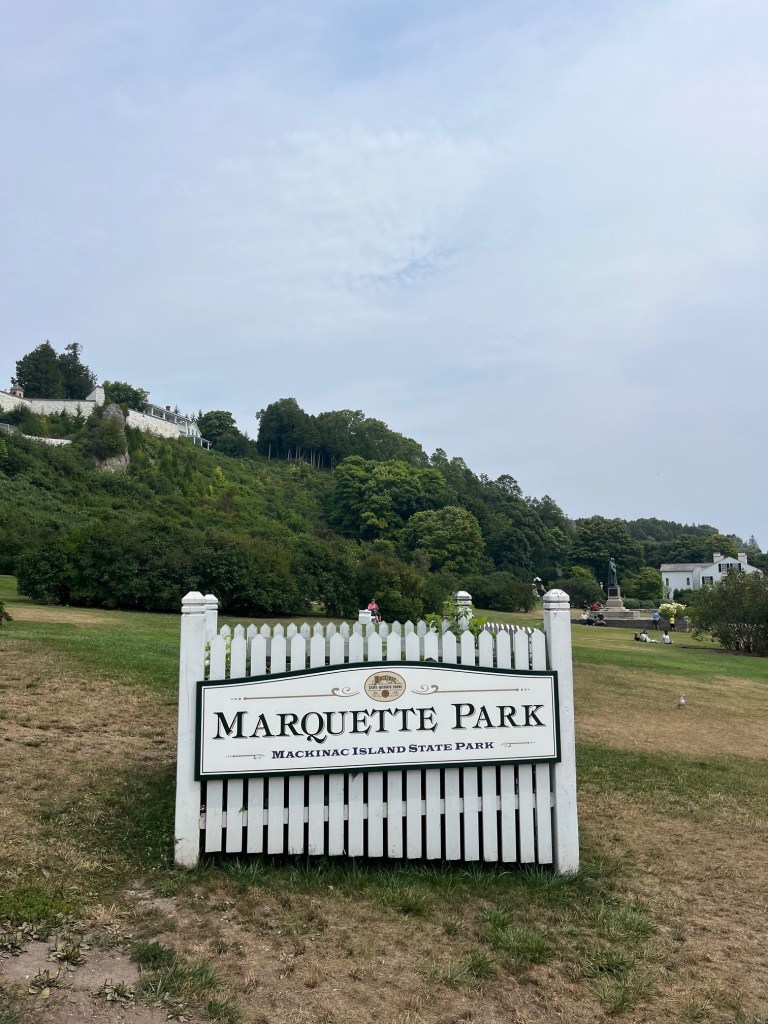
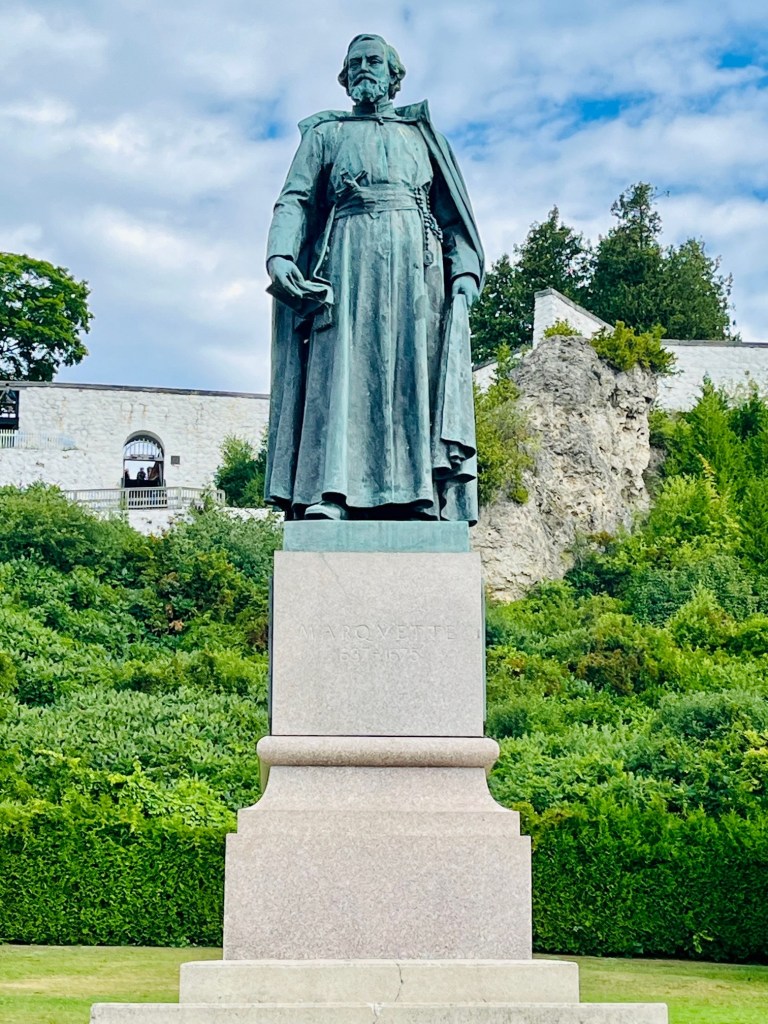
all created by Italian designer Gaetano Trentanove.
One resides in Marquette, Michigan, and one in Washington, D.C. at the National Statuary Hall Collection.
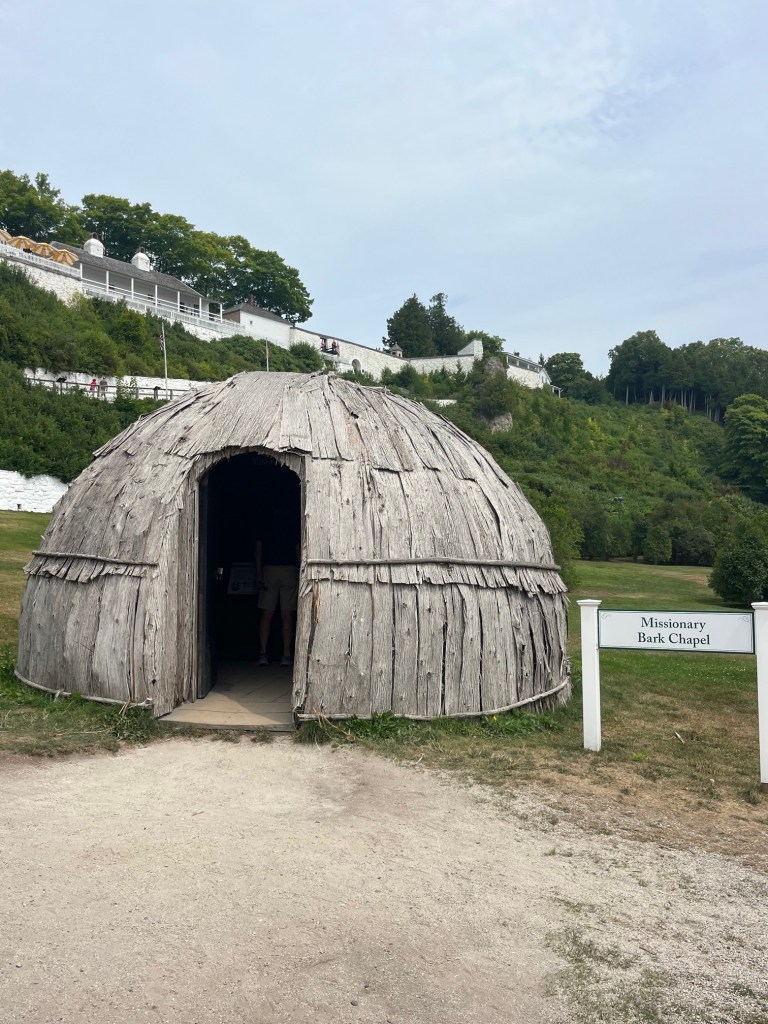
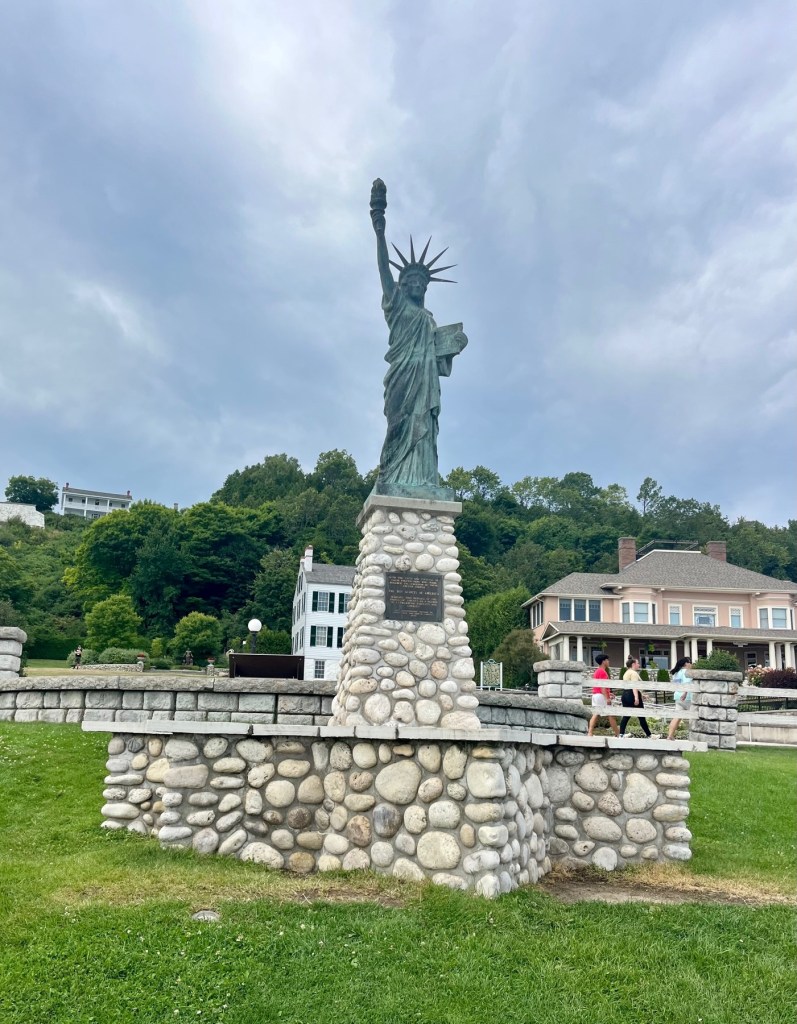

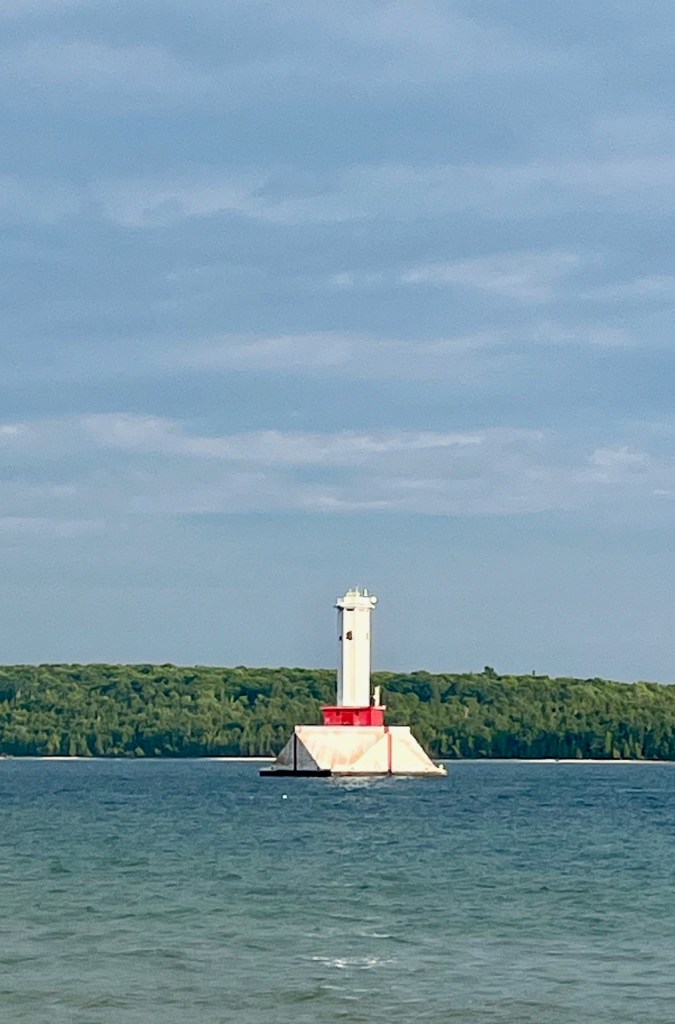
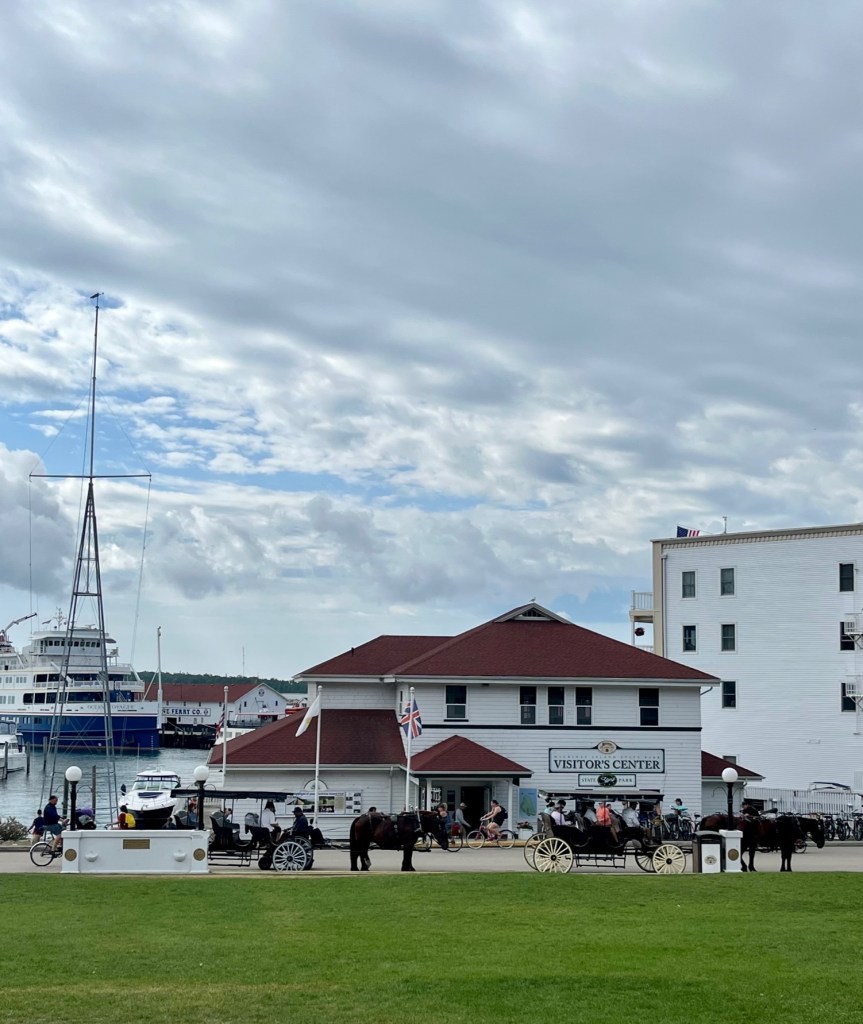
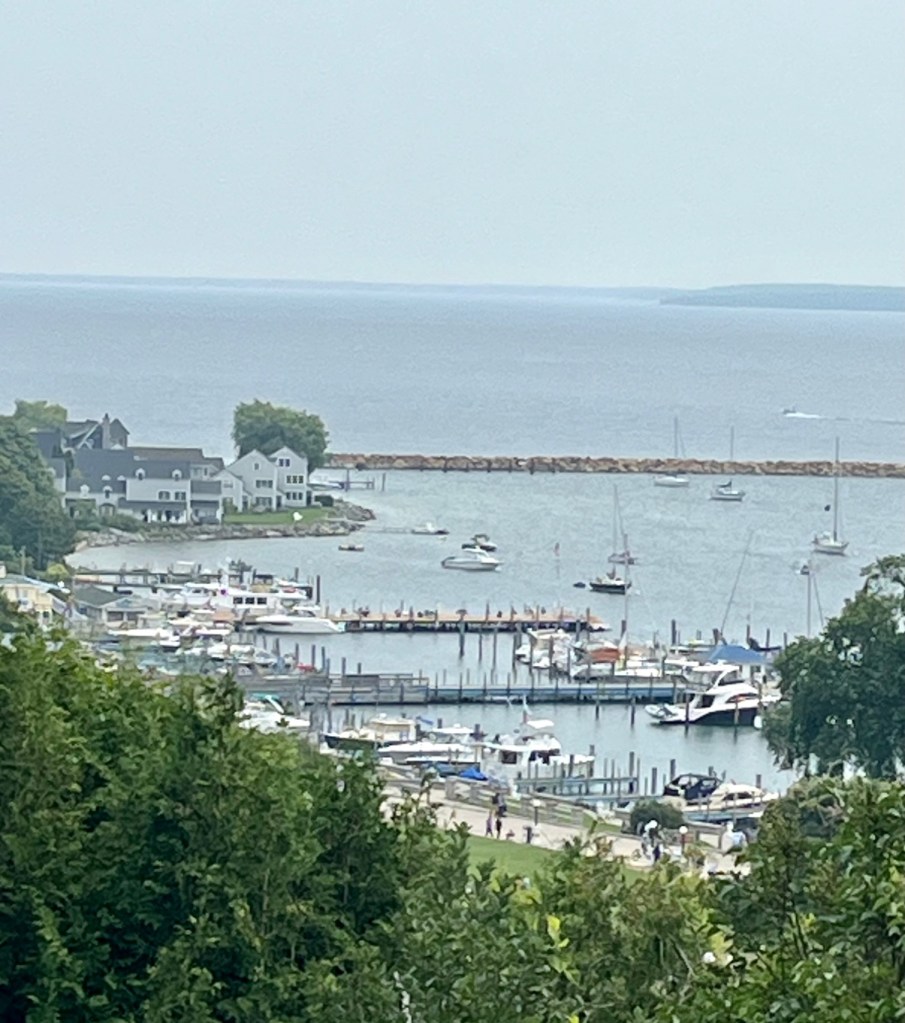
Look hard – you will see Sunshine.
Front row, about fourth boat from the right, blue hull.


8 responses to “Mackinac Island, Michigan”
What an awesome post. Thanks Cindy. What are you two going to do with yourselves after you get home ( yes of course after the 2 month nap )I’m so grateful to see your journey going well. God Bless Gary
Sent from Yahoo Mail for iPhone
LikeLiked by 1 person
Always great to hear from you, Gary. Miss you!
LikeLike
Wow, once again, words can not describe… thank you the pictures
LikeLiked by 1 person
Thank you for following, Tevie! Give our love to Iris.
LikeLike
We loved Mackinac. Such a beautiful place. I’m always amazed when we’ve gone at the beautiful landscape. So lush and bright.
LikeLiked by 1 person
Great to hear from you, Theresa! Yes, we loved Mackinac too. Hope all is well with you and Doug.
LikeLike
We are good. You are doing an awesome job on your blog. All the pictures you post are beautiful
LikeLiked by 1 person
Thank you Theresa! Doug is my inspiration. I still for the life of me can’t imagine how he did a blog and captained a boat! Amazing.
LikeLike