July 22 – July 23
We have two stops enroute to Drummond Island – an anchorage at East Grant Island and a marina at Blind River.
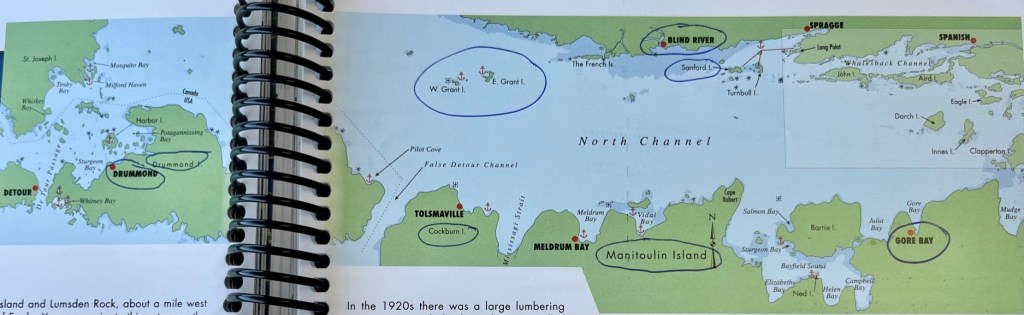
East and West Grant Islands lie in the middle of the western end of the North Channel. The Grants are open, rocky islands some distance from more hospitable spots. Although they don’t provide much shelter, cruisers appreciate the privacy found here.
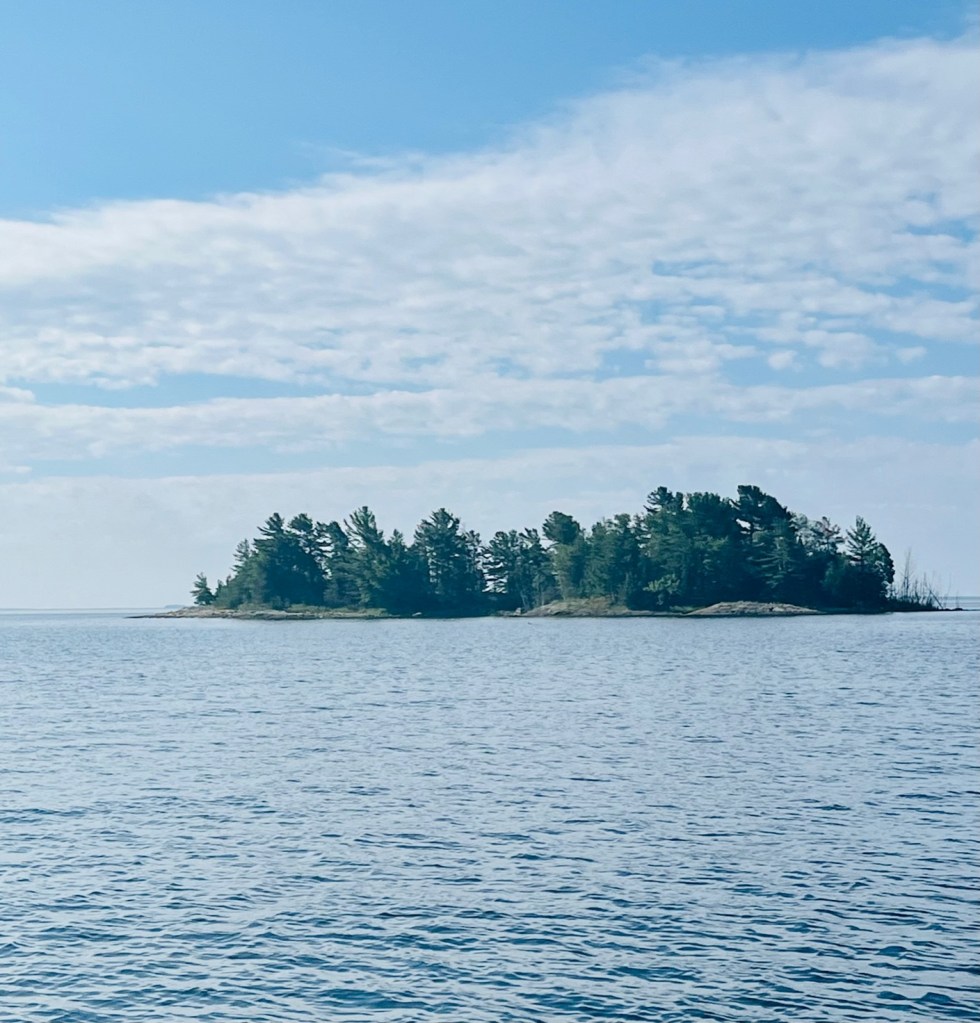
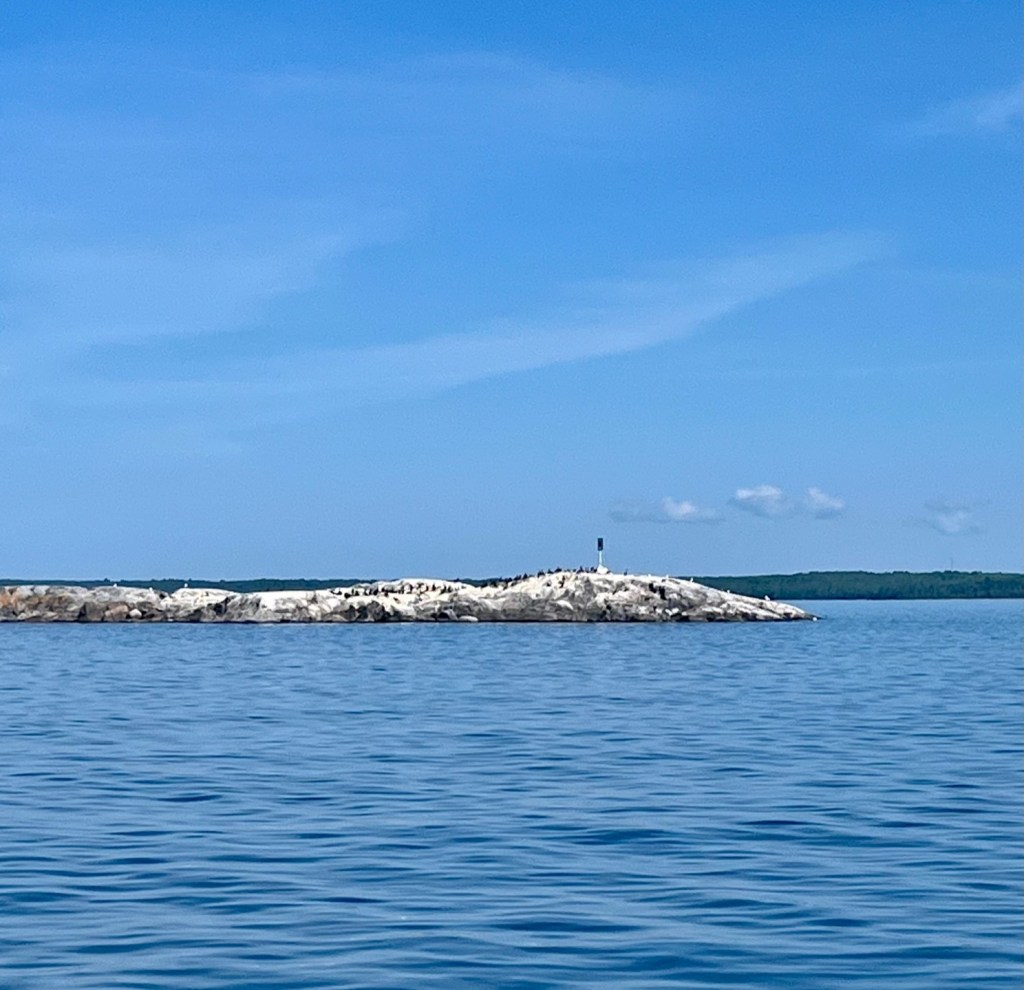
One advantage of this pair of islands is that there is clear water all around – except for a rock about ¼ mile west of Fishery Island – so you are never trapped. You can always move to safety, even if you must do so at night. If seeking shelter in this part of the North Channel, look to the villages on the mainland or on the large islands – Manitoulin, Cockburn, Drummond or St. Joseph.

Blind River, known as the “Heart of the North Channel,” is on the north shore and at the western end of the North Channel. French explorers named the area Blind River because the mouth of the river was difficult to see from offshore. With modern landmarks and navigation aids, this is no longer the case. Blind River (population 3,900) is a popular destination for boaters entering the North Channel from the west.
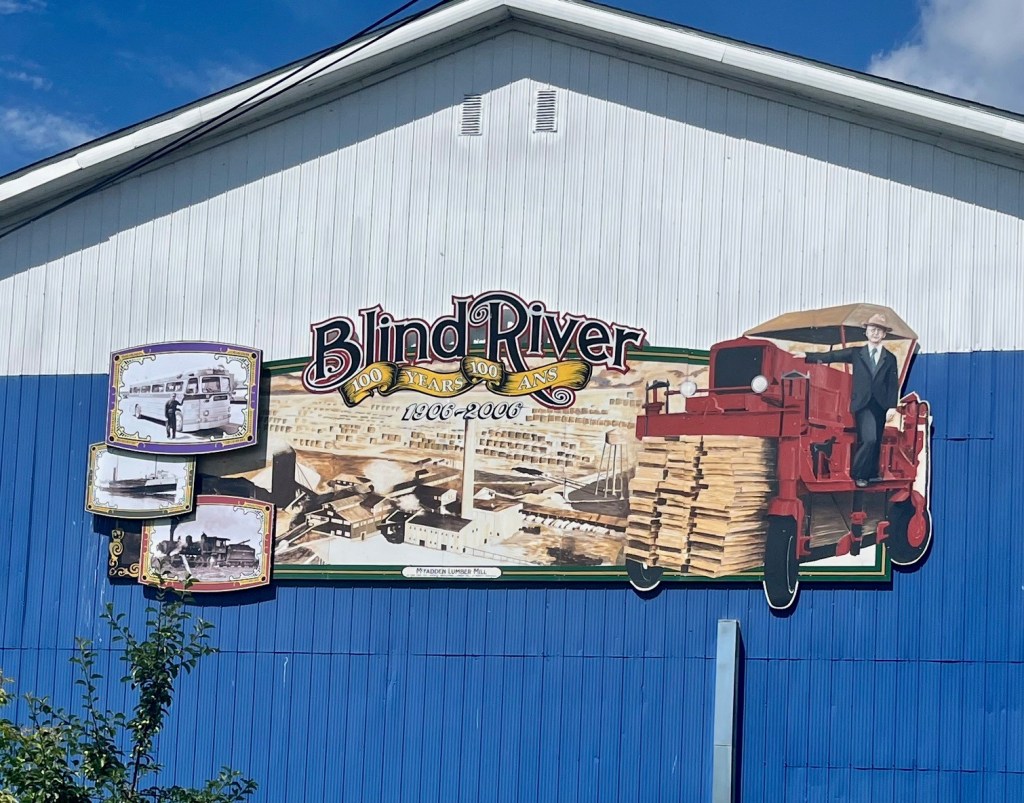
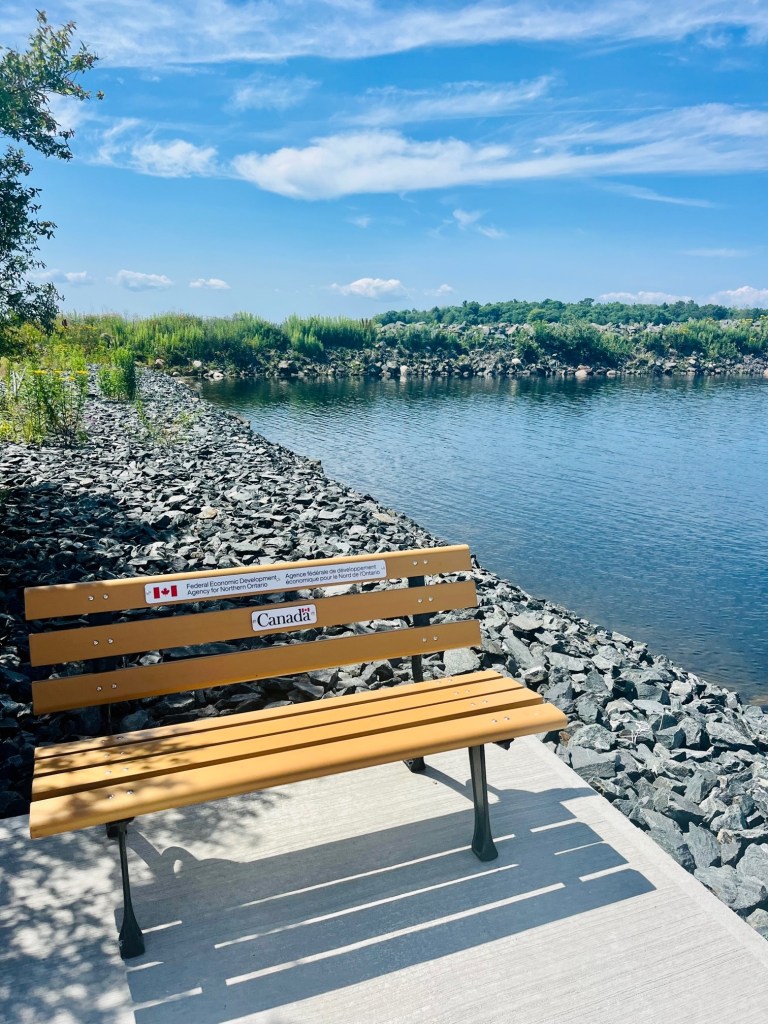
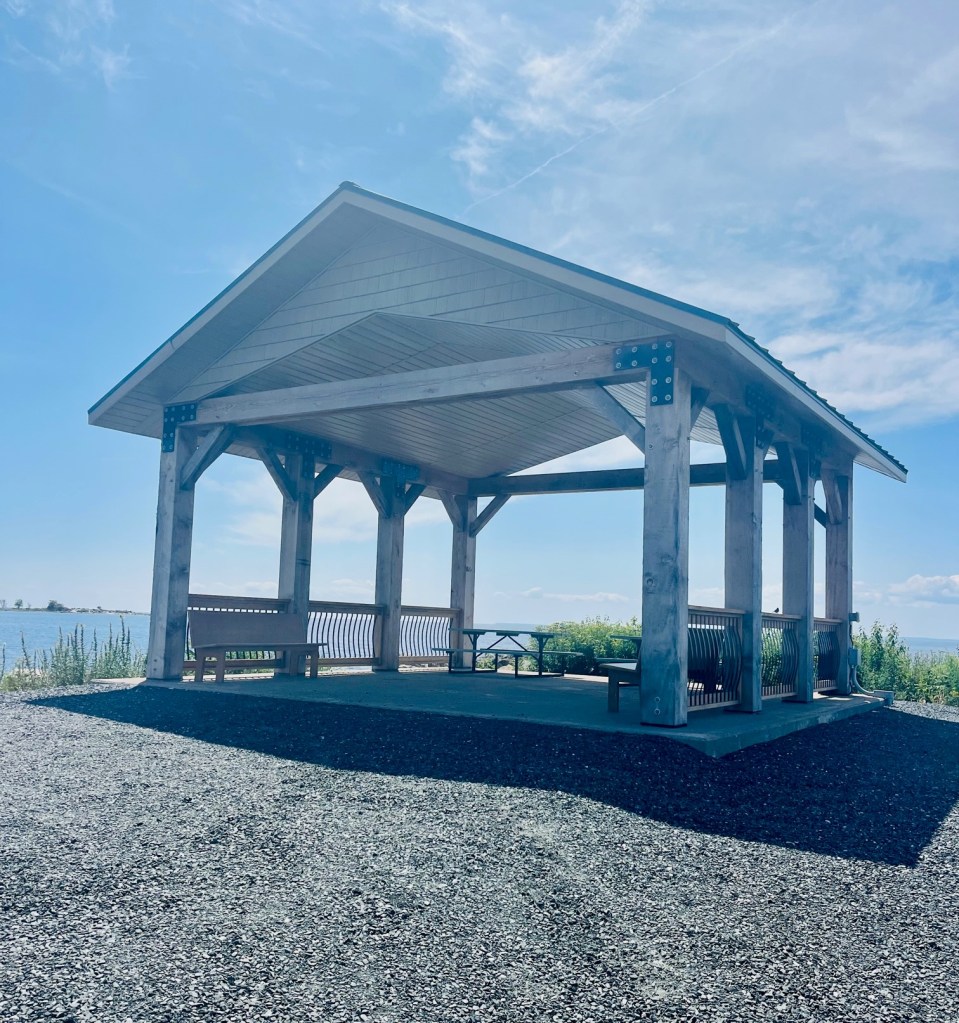
The marina accommodates 25 seasonal boats and 85 transients on floating finger docks 30 to 40 feet in length. We are surprised at the marina upgrades – new docks, a pavilion overlooking the water, benches and picnic tables, an art gallery, and a gift store.
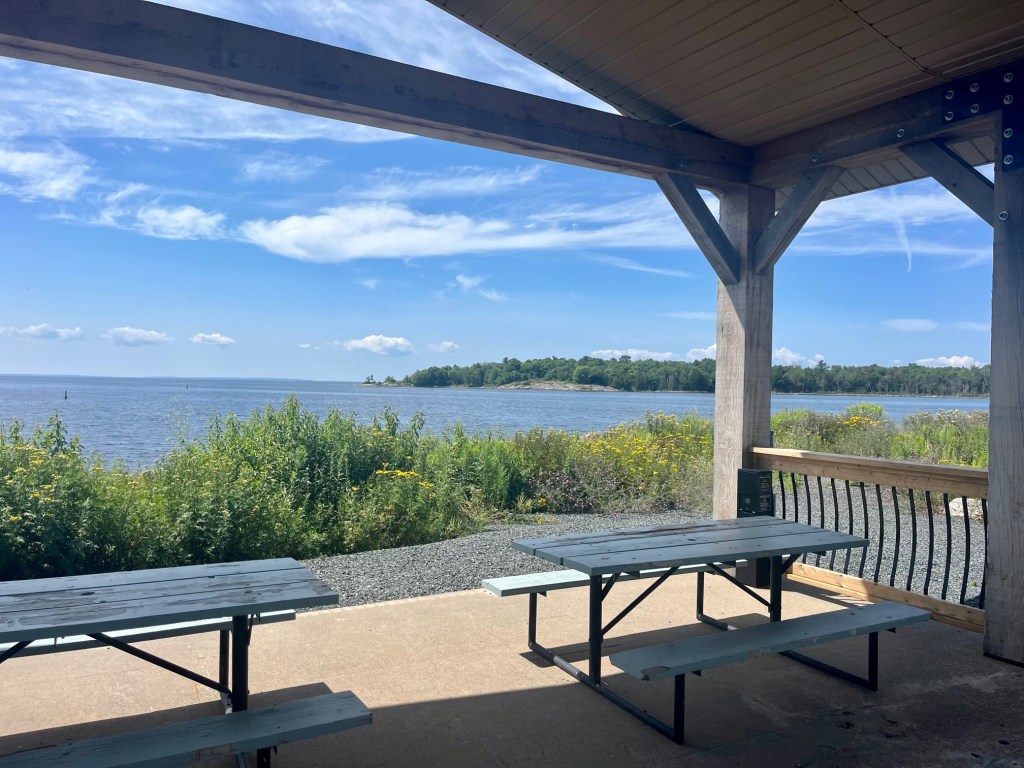
We are disappointed that the Marina Café has closed and there are no restaurants near the marina. Restaurants are in the small downtown area, a 20-minute walk away.
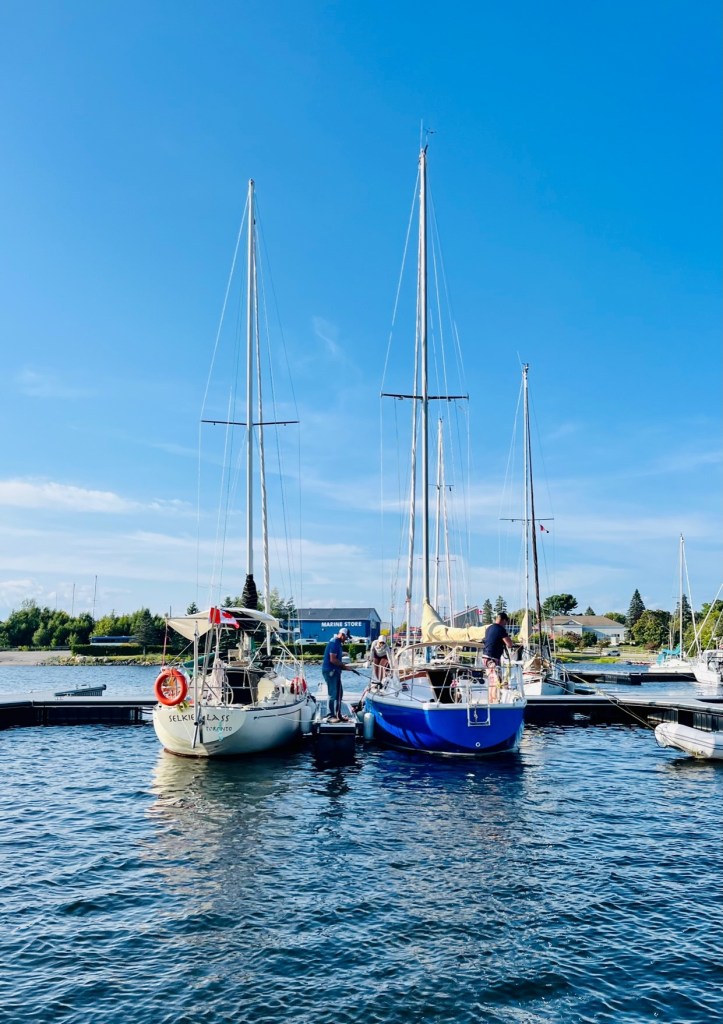
Boat Talk
It’s the usual marina stay, with friendly transients always eager to swap boating stories. We meet some Loopers and again exchange information regarding the North Channel and beyond. Everyone expresses concern over the Chicago locks – will they be open in September? Some Loopers don’t want to be in the flotilla heading south, with too many boats jammed up waiting to enter the locks. Others plan to avoid the crowds all together. They will store their boats, return home, and resume the Loop after the crowds die down. Captain Pat plans to keep cruising, and weather the crowds. It is what it is. That is why he is in no hurry to make it to Chicago.
Captain Pat is the conversationalist on the docks. Here’s a typical conversation a boat owner would have with Patrick:
“Where are you from?”
“Boca Raton, Florida. We are doing the Loop.”
“Oh – we are too. When did you start the Loop?”
“Last year. We left our boat in Penetanguishene, Ontario. We came back to resume the Loop in July.”
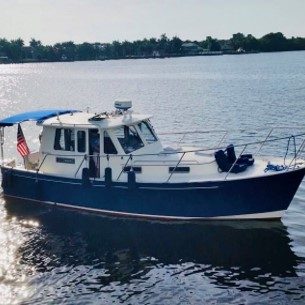
“Oh. Nice boat. What kind is that? A Sabre?”
“No. It’s a Legacy. They are made in Rhode Island.”
“It looks like it will do well on the water.”
“Yes, she’s very stable.”
“How fast do you cruise?”
“Usually 7 knots. She goes faster, but this speed is optimum for efficiency.”
“Nice! I didn’t think it would go that fast. Single engine?”
“No twin diesels – Cummings.”
Captain Pat continues the conversation, asking about their boat and destination.

I meet women at the laundry, as we load washers and dryers and fold clothes. Two women ask about the Loop, saying they think that would be a lot of time on a boat. It is! And not for everyone.
Walk Downtown
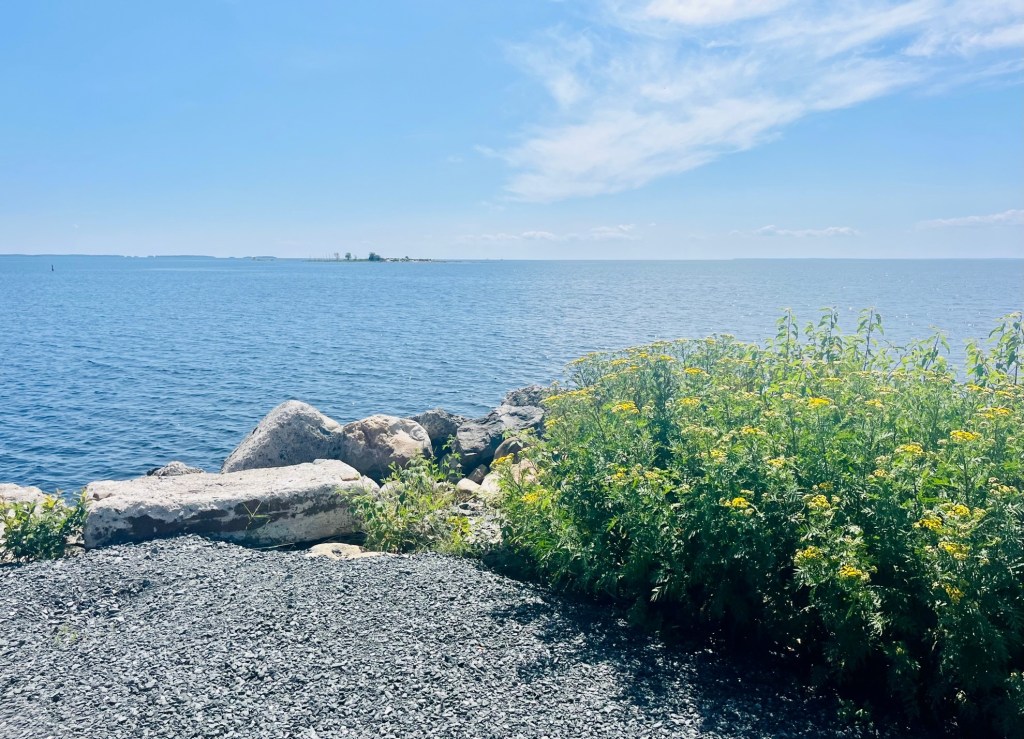
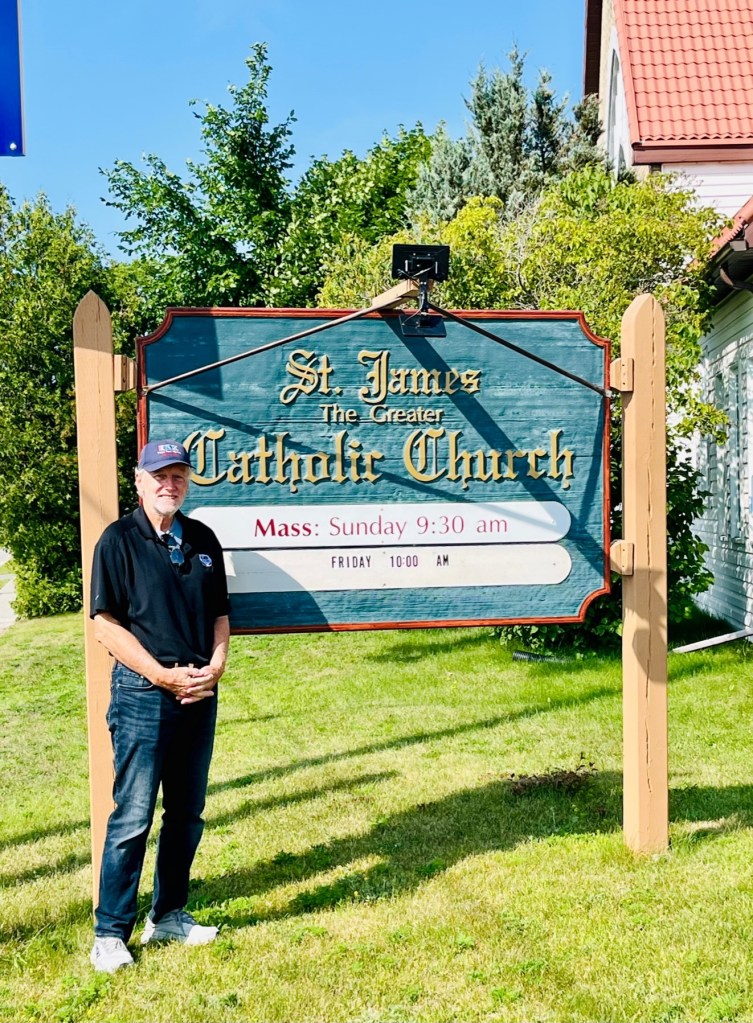
It’s Saturday evening and we decide to take a walk downtown. The Catholic church – St. James the Greater – is on the way and we want to see if it’s doable to attend morning Mass Sunday. It’s a leisurely 20-minute walk past well-kept older homes and a beach area.
There is one stoplight in town – at the intersection of Lakeview Drive and the Trans-Canada Highway This highway travels through all ten provinces of Canada, from the Pacific Ocean to the Atlantic Ocean. The main route spans 4,645 miles (7,476 km), one of the longest routes of its type in the world. The highway is recognizable by its white-on-green maple leaf route markers, although there are small variations in the markers in some provinces.
Patrick needs a snack and a drink. We are in luck! I spot a familiar red and white circular logo – Tim Horton’s, the Dunkin’ Donuts equivalent in the states. After iced coffees and Boston Cream donuts we resume our walk to the downtown area. It’s all of two blocks. There are restaurants, a library, some shops – not much. We make our way back to the marina.
Sunday the electricity at the marina and in the entire town is out for a pre-planned shutdown. It is scheduled to resume around noon. We walk to St. James the Greater church to attend 9:30 a.m. Mass.
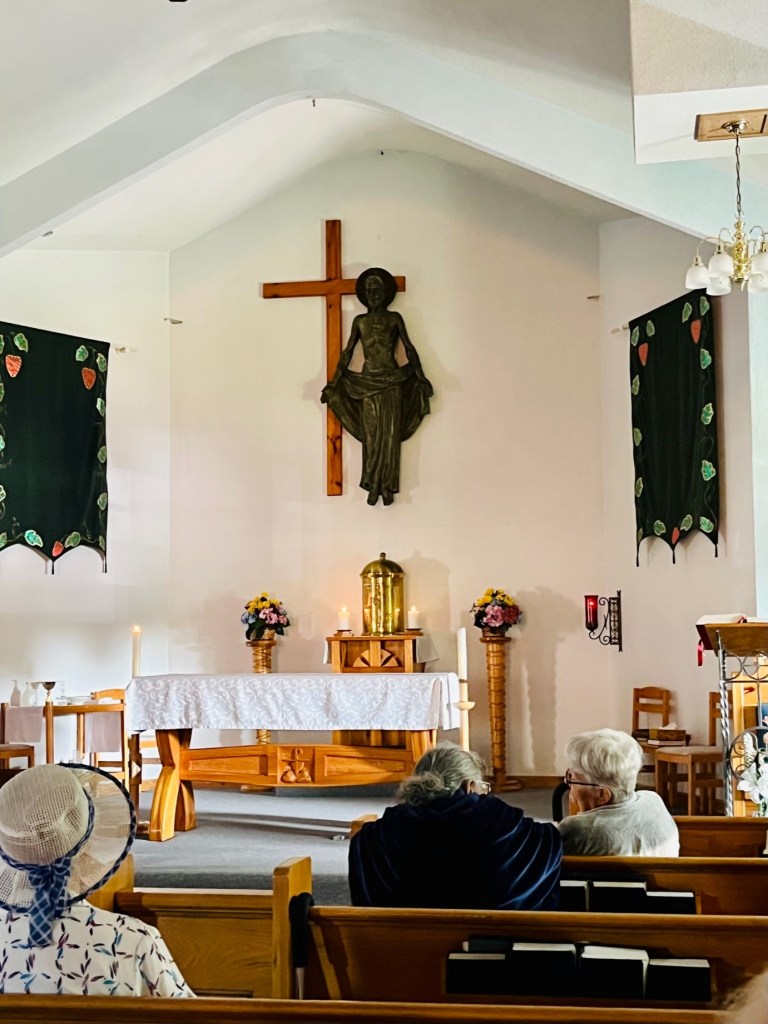

It is a simple church with an inspirational service. Following Mass, we intend to get coffee and donuts at Tim Horton’s. But with no electricity, we discover it is closed! We save some calories instead and head back to the marina.
Metis Nation of Ontario (MNO)
On our walk downtown, we pass a building with the words “Metis – First Nations.” I later learn this is the headquarters for the Metis Nation of Ontario (MNO) – Blind River. Pat and I discuss at Mass that there aren’t many Catholic services in these waterside towns. The Catholic influence seems to have dwindled since the Jesuit priests first converted the Metis many years ago.
The Metis lived in Canada first. They were the “First Nation.” This was their land and they had their own culture. Canadian national parks and sites emphasize the cultures coming together.
Here’s information about the MNO from a Global News -Canada article:
“Metis are an indigenous (and Aboriginal) group in Canada with a specific social history. Until recently, they have not been regarded as ‘Indians’ under Canadian law and are not considered First Nations. Canada’s 1982 Constitution recognizes three distinct indigenous groups: First Nations, Inuit, and Metis with rights under Canadian law.
In 1983, the Metis Nation split from the Native Council of Canada (NCC) to form the Metis National Council, which represents Metis communities from Ontario, Manitoba, Saskatchewan, Alberta, and British Columbia.
The 1996 Report of the Royal Commission on Aboriginal Peoples states:
‘Many Canadians have mixed Aboriginal/non-Aboriginal ancestry, but that does not make them Metis or even Aboriginal. Some of them identify themselves as First Nations persons or Inuit, some as Metis and some as non-Aboriginal. What distinguishes Metis people from everyone else is that they associate themselves with a culture that is distinctly Metis.’
How many Metis are there?
Over the last decade, the number of people identifying as Metis has skyrocketed. In the 2016 Census, 587,545 people identified as Metis across Canada. That number represents a 51.2 percent growth since 2006. Over the same period, the First Nations population grew by 39.3 percent and Inuit by 29.1 percent.
As of 2021, the Metis population is 624,220.”
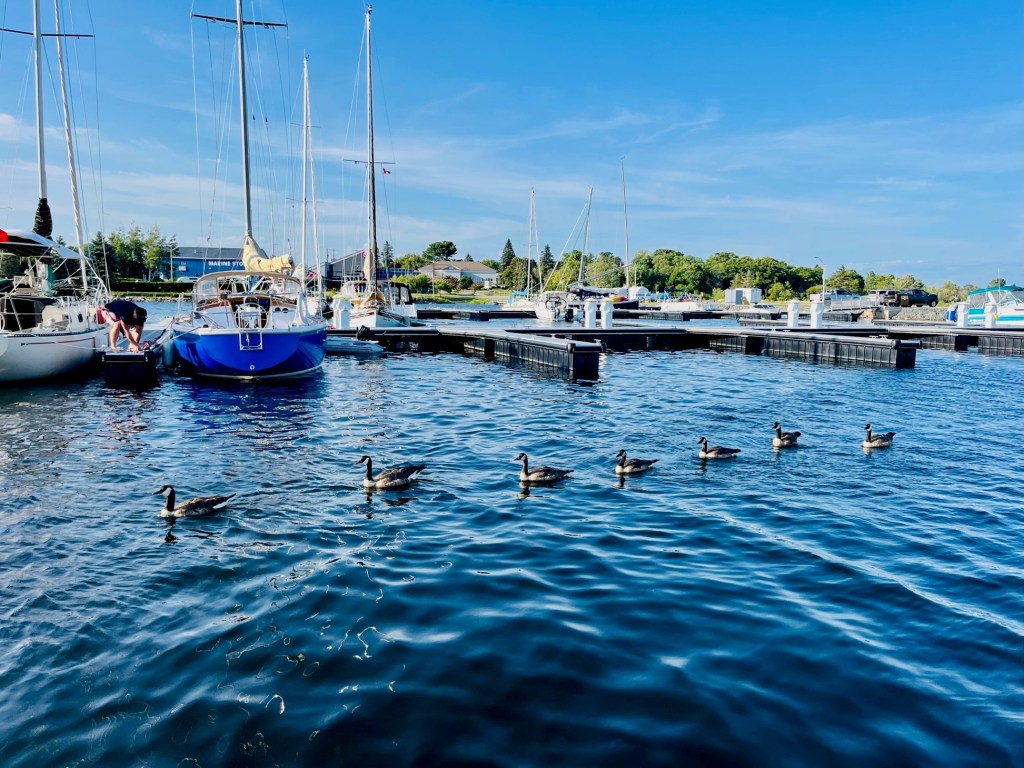
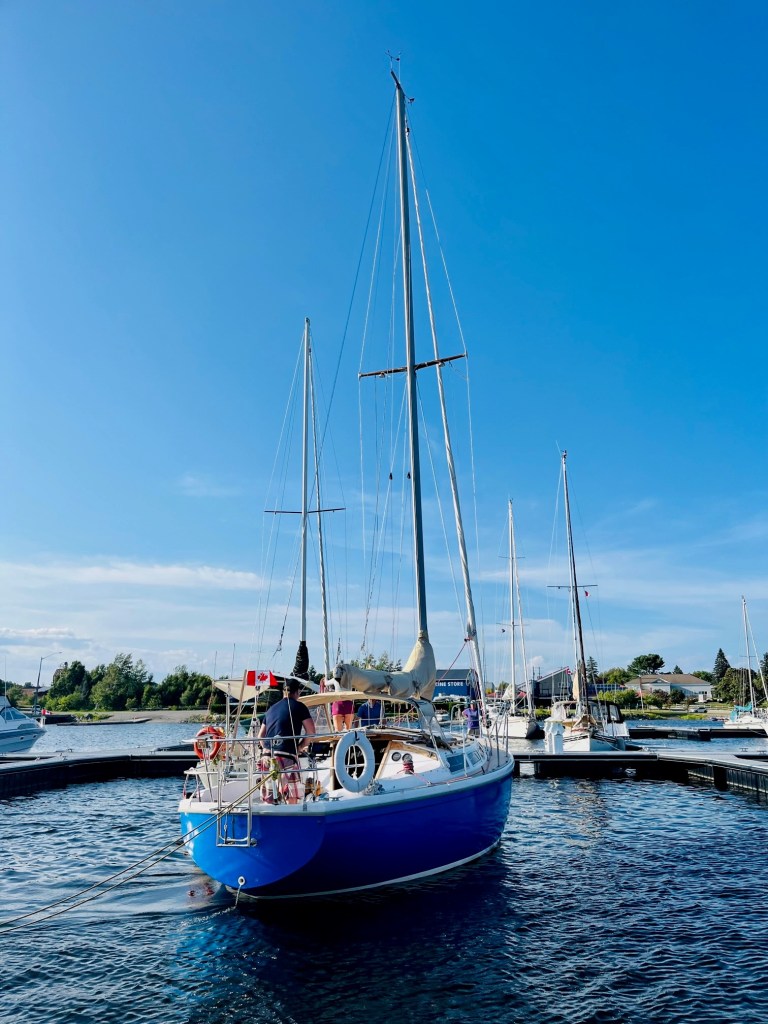
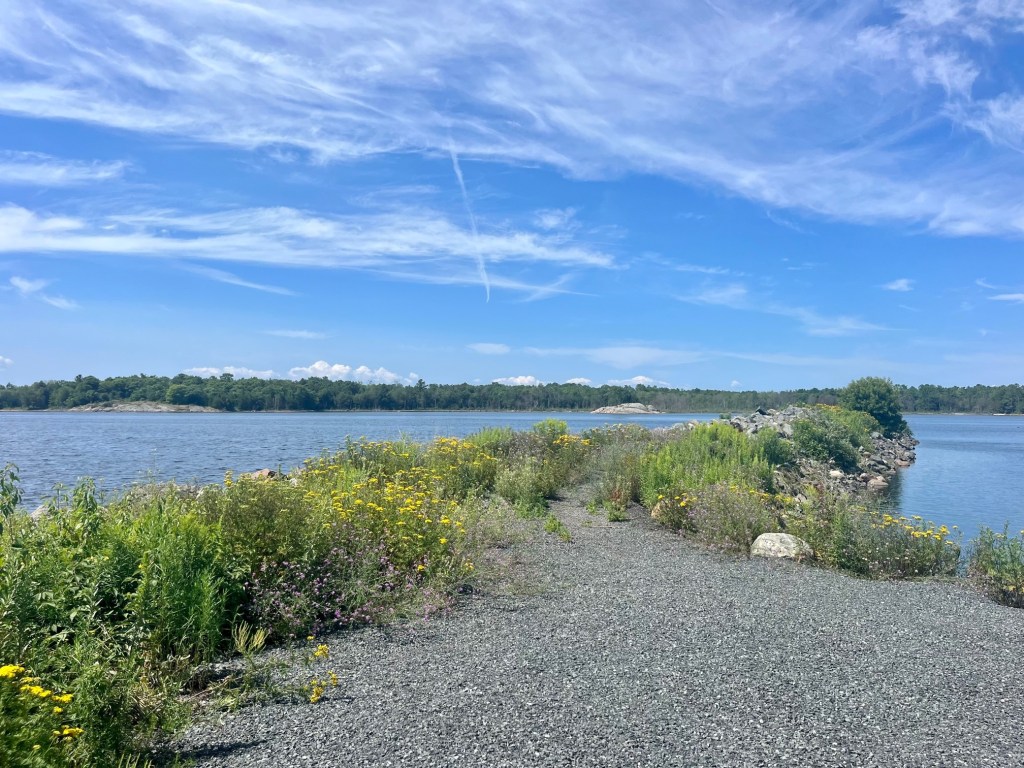
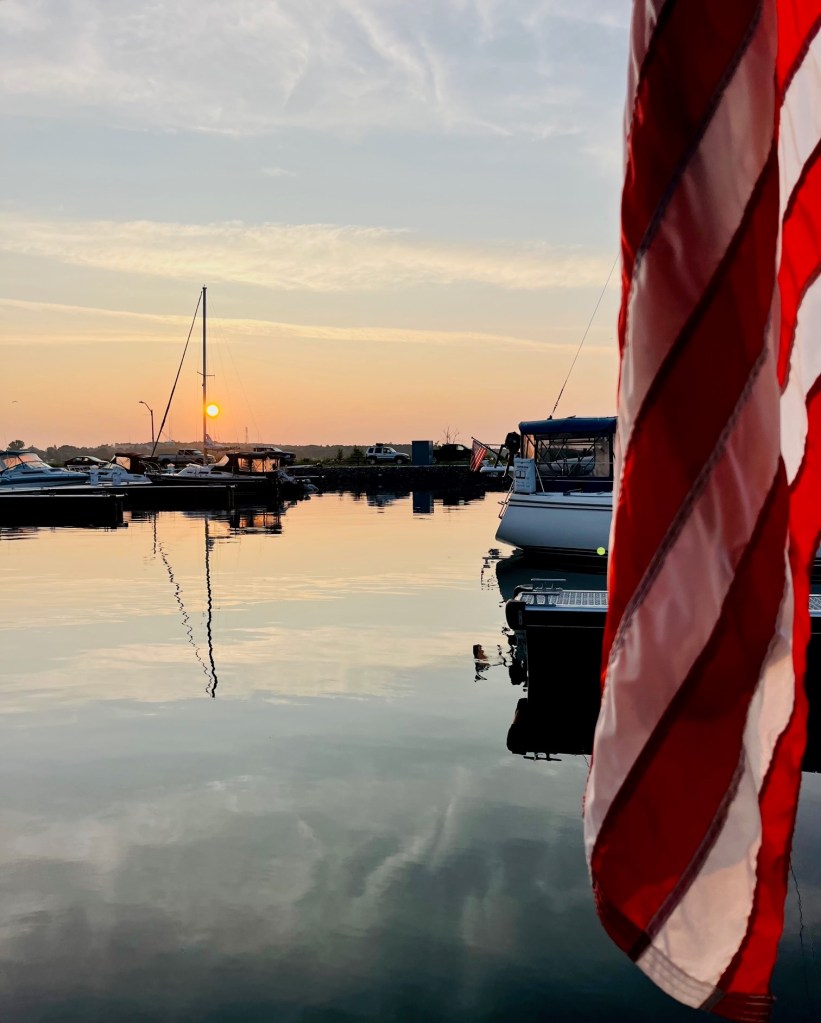
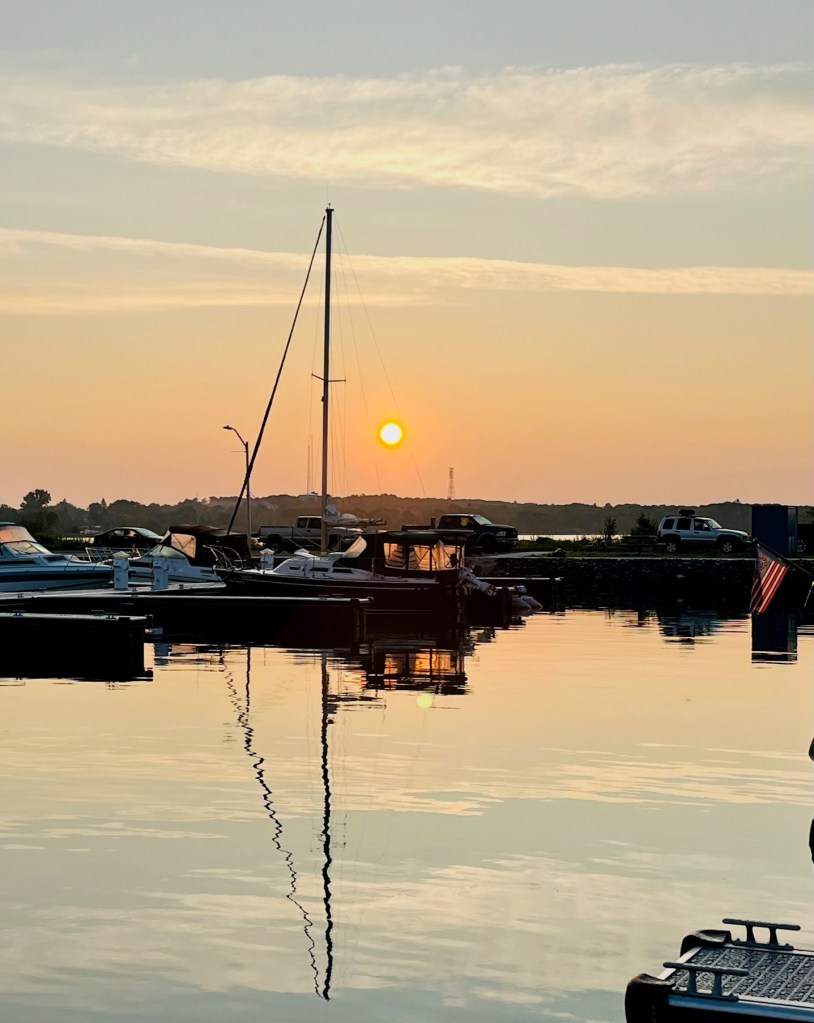
Here are more photos of our stay at Blind River:


11 responses to “Grant Islands and Blind River Marina”
Thanks so much for keeping the story going, and the photos just complete the tale. Safe travels!
LikeLiked by 1 person
Rhonda! Hello. Thank you so much for following. We have to touch base soon. Miss you.
LikeLike
I love the geese picture!
LikeLiked by 1 person
Some more excellent photography with perfectly phrased narratives by her highness with the great and very colorful pajamas. .
We sent our Chicago based aerial drone camera to check out the Chicago Locks and you’ll be fine. The river barge that had blocked the entrance to the locks has been explosively removed along with it’s cargo of 15 Ferrari Portofino coupes. The floating tires were picked up by a scrap dealer.
Your Metis adventure was also very interesting. We had always believed that Patrick had a little Metis in his bloodline and we are certain all those big hugs he received from those you met offered more proof.
Well, you continue to introduce some very interesting places on our own continent. You have filled a void that we had no idea existed and we really enjoy your presentation.
Muchisimo Gracias!!
La Familia Comiskey
LikeLiked by 1 person
Hello Bill! thanks for following. Your comments are always interesting. Miss you and Captain Pat says hi.
LikeLike
Hi Cindy! Where did you see “Captain” Patrick?? Did he visit you in person or via tele-phone. He must be very happy with the sales success of Macin’s Apple-walnut and Veggie Cider. I must admit it surprised quite a few of us.
I stopped over to see him and even though both of Macin’s delivery trucks were in the drive, just the three Jamaicans who manage the cider vats were there. Ron Sheldon had the same experience. Possibly he was on his way to visit you……..
Also, a lot of noise coming from the house where the other Jamaican families spend their time. Probably because Pat is gone……let him know if you see him…..
LikeLike
Love you Katherine! Hugs to you and Jeff and McKenzie and Violet. Miss you so much.
LikeLike
Loving your adventure
LikeLiked by 1 person
Hello! Thanks so much for following, Joan! Miss you.
LikeLike
Beautiful!! Ditto Bill.
LikeLiked by 1 person
Thank you Kevin! Bill has quite the comments. -:) Miss you and Claire. Hope all is well.
LikeLike