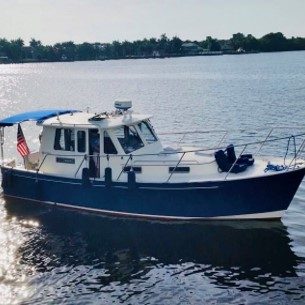
Abound with Indian and French culture and history

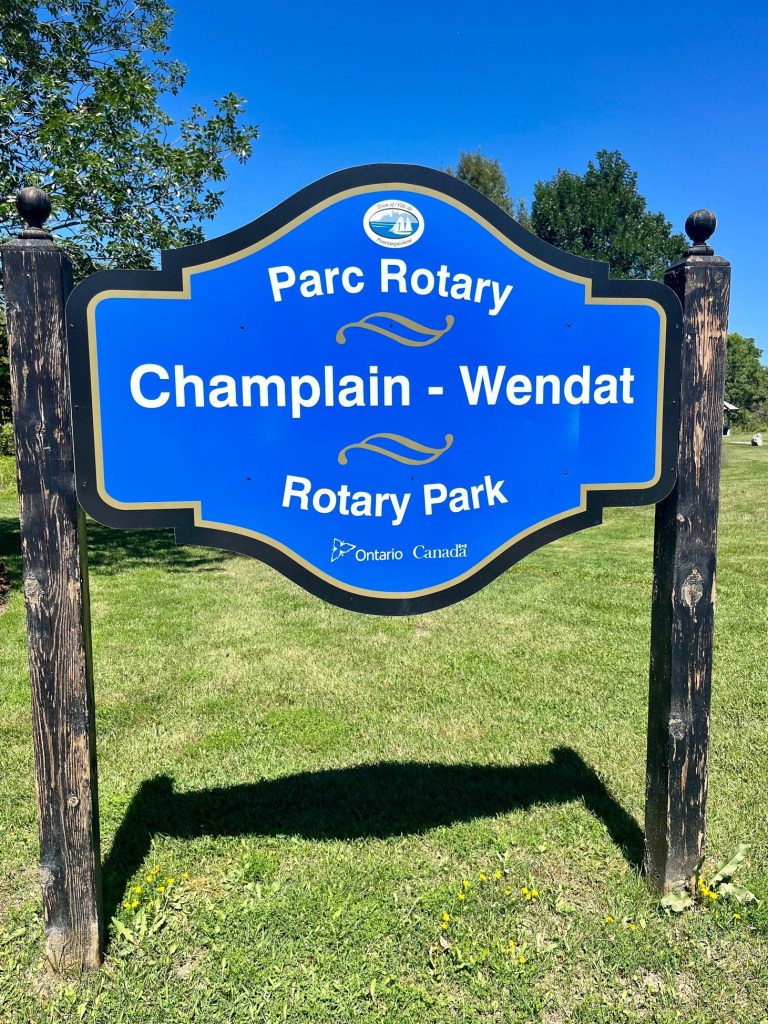

Many have asked, how do you pronounce “Penetanguishene?” It is “pen e TANG wish een.” Big name for a little city! It’s often simply referred to as Penetang.
A favorite of our visit to Penetang was this walking/bike trail just steps from the downtown dock – the Champlain-Wendat Rotary Park. As you wind your way through the park, you pass many statues and monuments with explanations of the history and culture of Penetang. Here are some highlights, with explanations taken from the Rotary’s explanations.
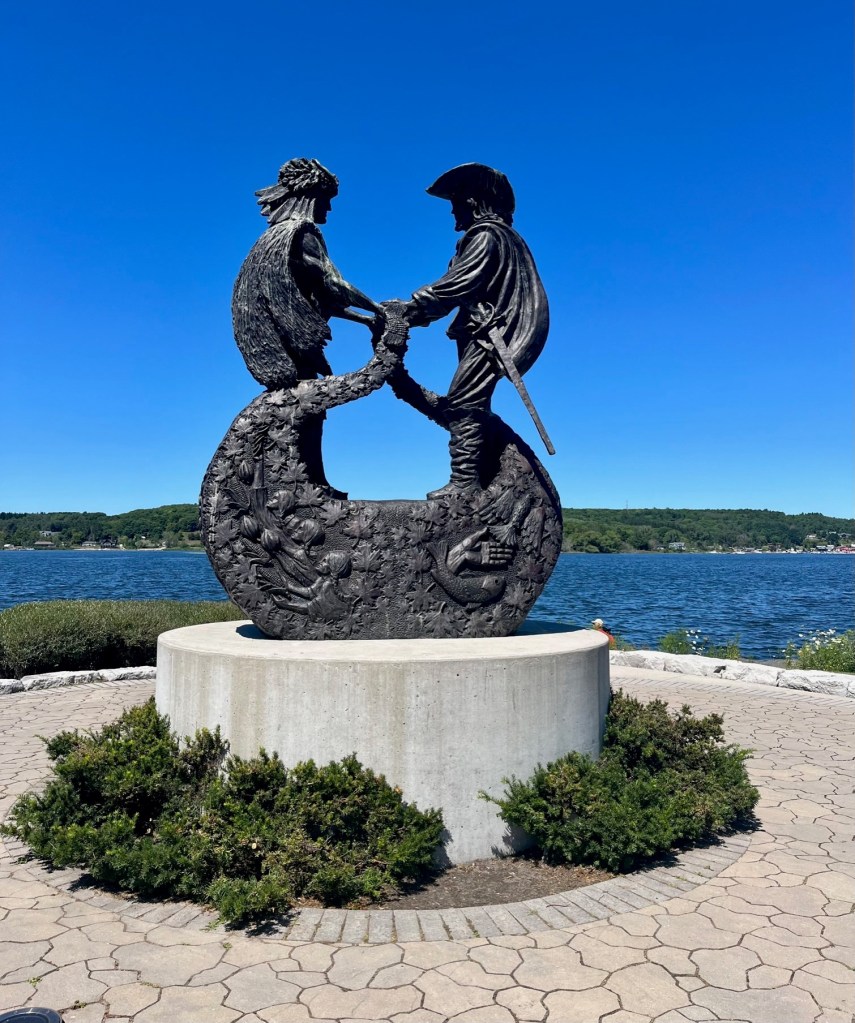
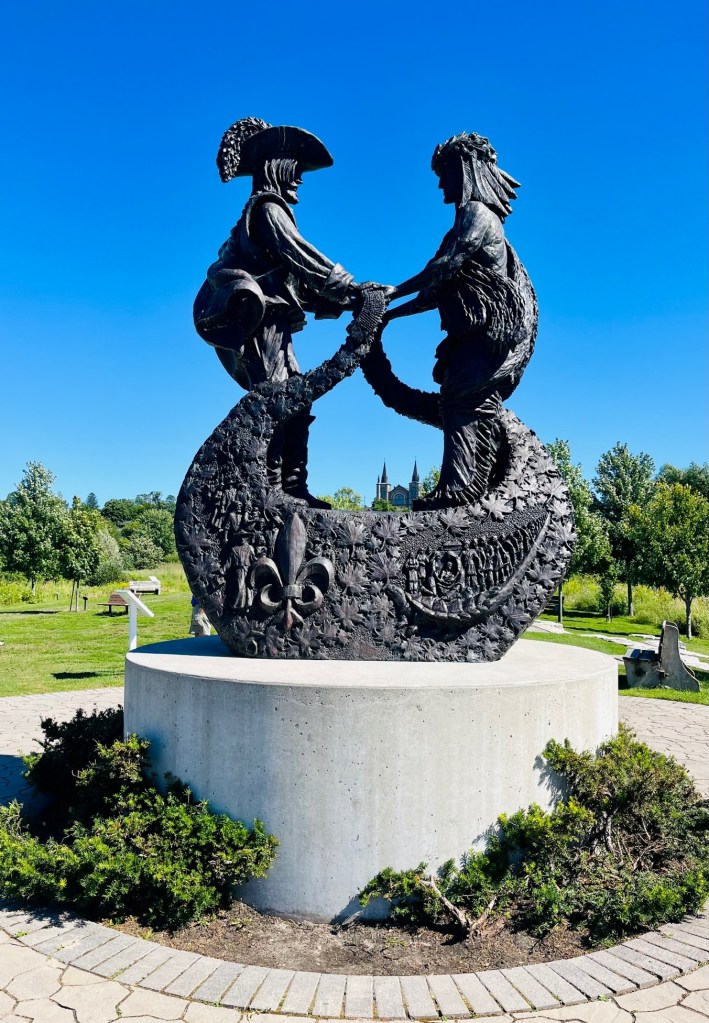
‘The Meeting’ Statue
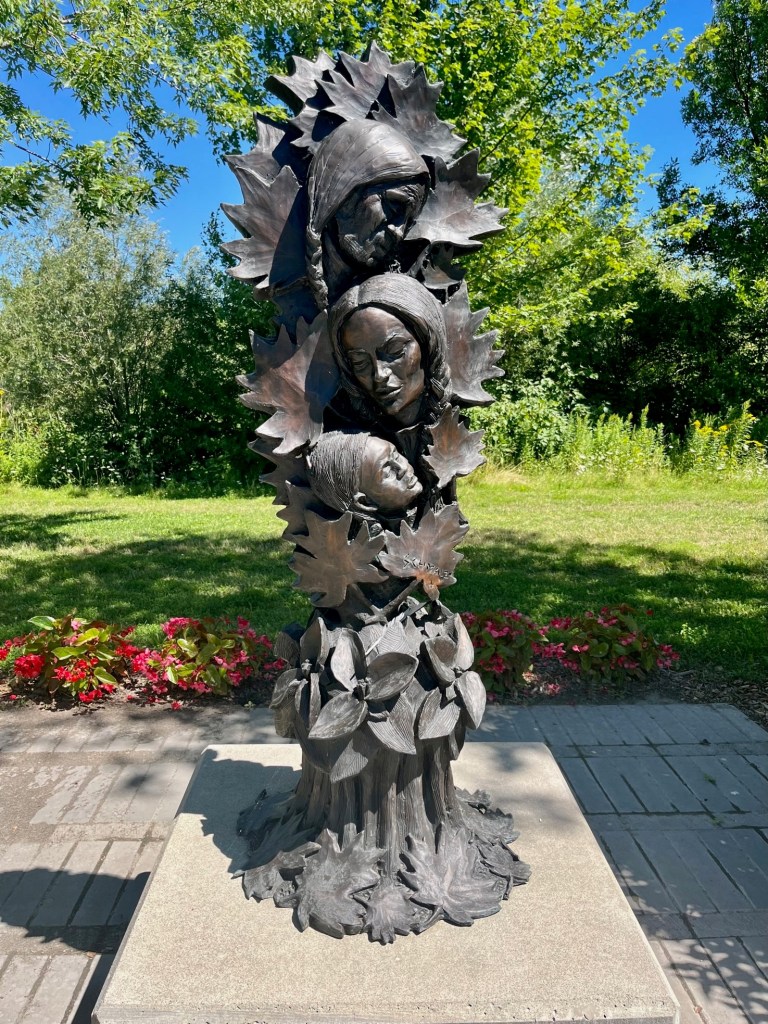
At the end of the path, by the shores of the water, is an exquisite statue, The Meeting, by artist Tim Schmalz. It is amazing, the French and Indian symbolism portrayed by the artist. The Meeting is a celebration of two people, two faiths, and two distinct cultures coming together 400 years ago.
In 1615, Chief Aenon of the Huron Wendat presents the Wampum belt, a symbolic gesture of friendship and alliance to welcome Samuel de Champlain and the French people to their land. On the statue, beneath the two figures, are sculpted symbols from both cultures.
Under the Chief, the artist highlights the belief held by the Huron Wendat that the world is a large turtle. On the turtle live their people.
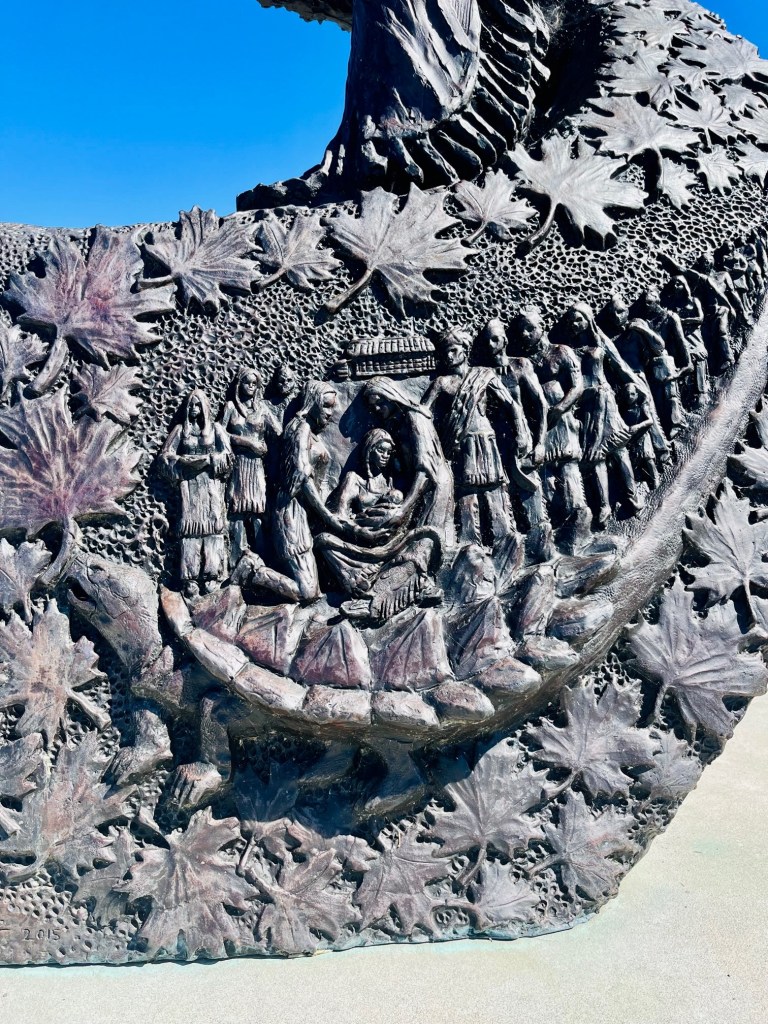
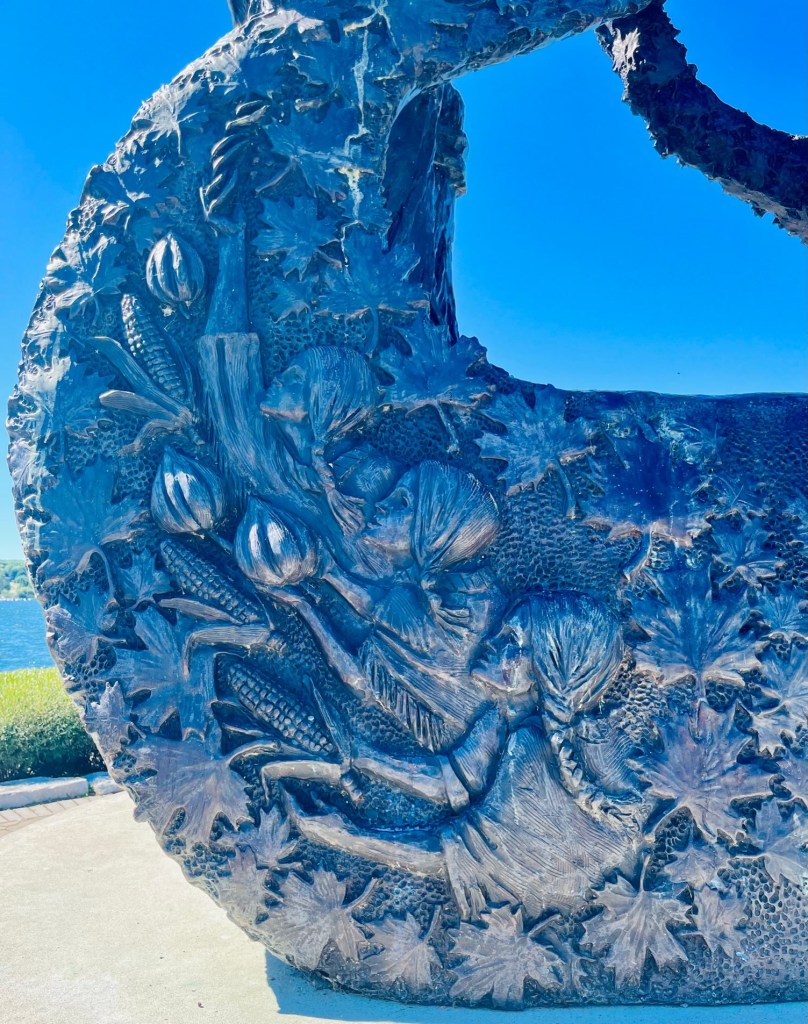
Also represented are the Three Sisters, the spiritual providers of what sustains their people – sister corn, sister bean and sister squash.
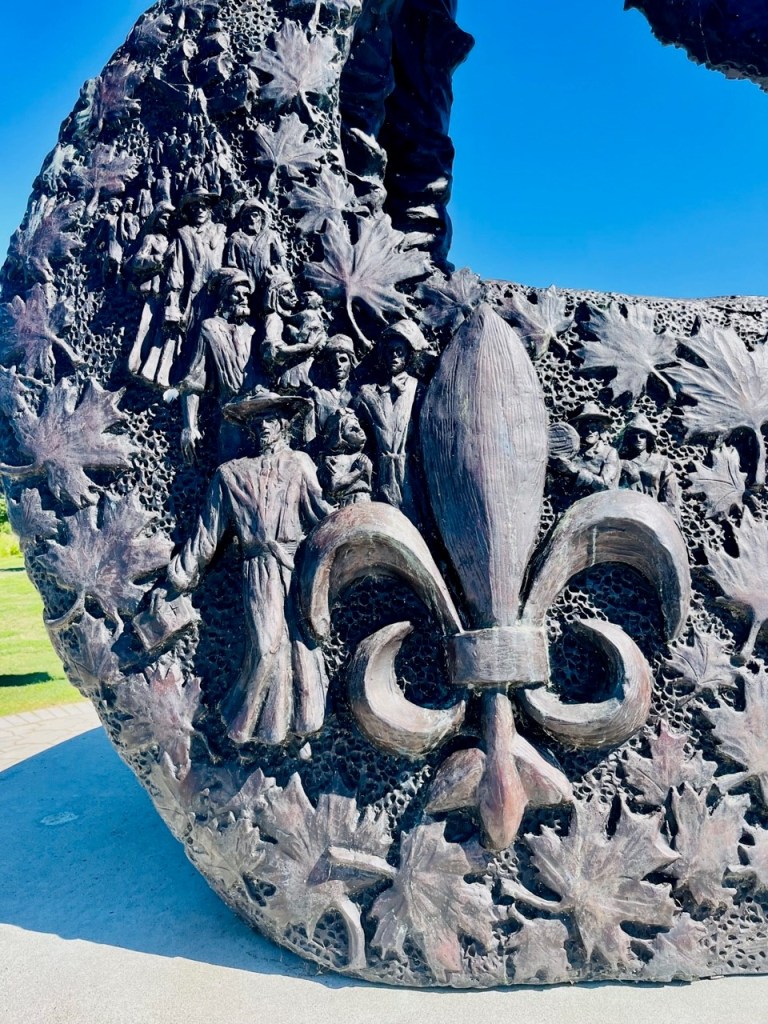
Beneath Champlain is the symbol of the French, emerging from their ship, the ancient symbol of the fleur de lys.
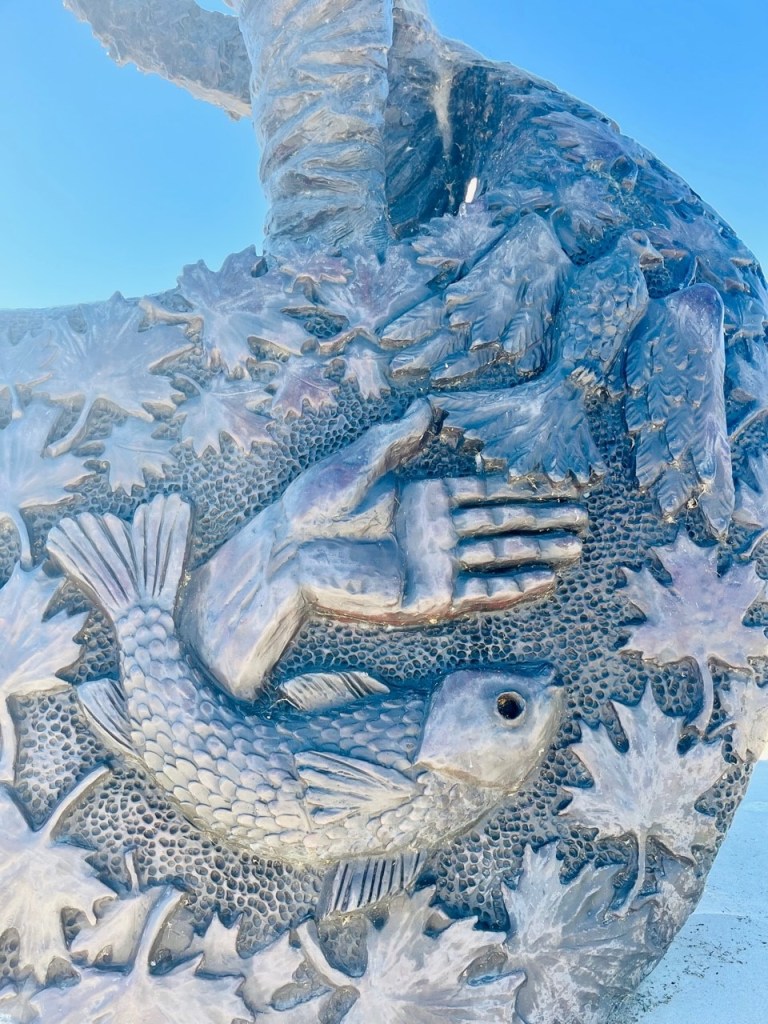
Also you see the Christian symbols of God, represented in three parts – the Father by the hand, the son Jesus by the fish, and the Holy Spirit, the dove.
A ribbon of maple leaves continually flows throughout the sculpture, symbol of our shared nation and the Huron Wendat belief that all meetings never end.
‘The Meeting’ statue is symbolic in itself of the two cultures embracing on the shores of Georgian Bay and their woven history to the area. The artist captured 400 years of history by using 400 leaves throughout the piece.
The Huron-Wendat
In the early 1600’s, the shores of Penetanguishene were the land of the Huron-Wendat Confederacy. The Huron-Wendat were a nation of farmers, hunters, and traders who lived in large communal groups of up to two thousand people in several long houses.
They were a matrilineal society who traced their descent and inheritance through the female line. Girls do rule!
The women were responsible for the majority of the farming which sustained the people as they grew three-quarters of their food. By 1615, the Huron-Wendat had forged a formal trade alliance with the French and befriended Champlain. The Huron-Wendat society would undergo profound change as a result of this relationship. Today the Huron Wendat live in Wendlake near Quebec City.
“Bound Together” – Huron-Wendat Canoe
During the time of Champlain’s arrival in this area, a prevalent means of transportation was the birch-bark canoe. These vessels were elegantly suited to their task, easy to repair, and could be adapted to a variety of needs. This led Champlain and other European explorers to adopt the canoe for their own travel.
Design of the canoes varied greatly depending on the local materials, purpose of the boat, and skill of the builders. Due to their organic components, no physical examples have survived from that time so exact shapes are not known.
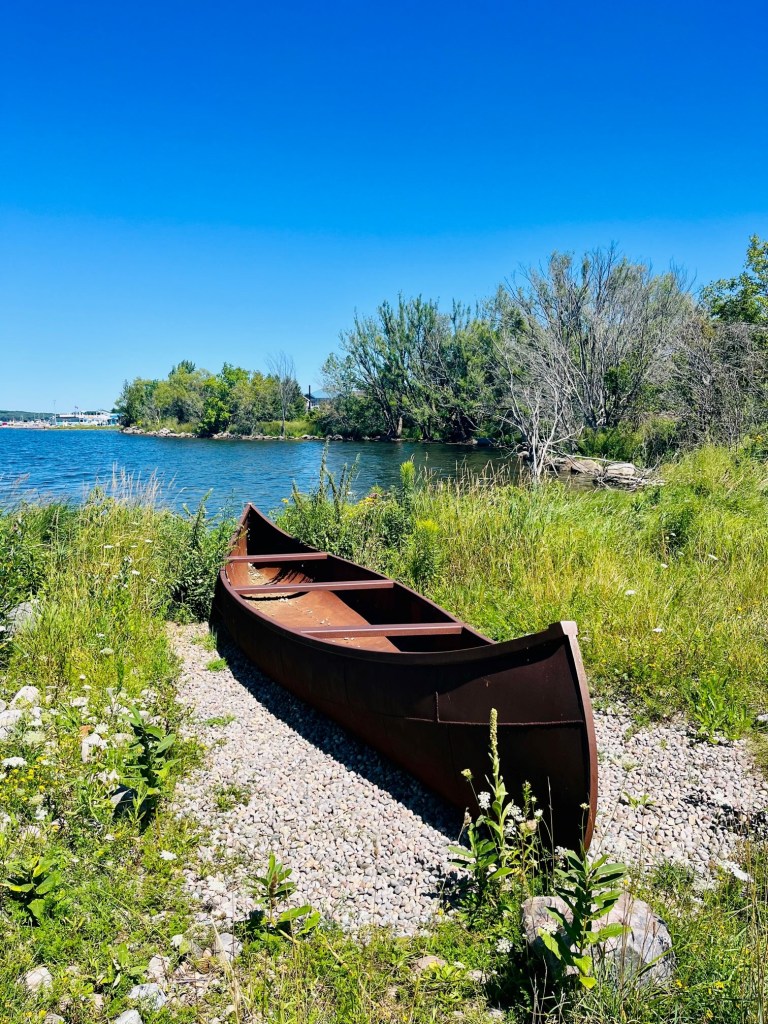
However, based on sketches and descriptions, this sculpture shows a typical Wendat craft at twice-life-size.
The Metis Nation
Prior to Canada becoming a nation, a new Aboriginal people emerged out of the relations of Native women and European men. The initial offspring of these unions were individuals of mixed ancestry who resulted in the beginning of a new Aboriginal people with a distinct identity and culture in west Central North America – the Metis Nation.

These Metis people were connected through the fur trade network, extensive kinship and a collective identity. In Ontario, historic Metis settlements emerged along the rivers and watersheds of the province, surrounding the Great Lakes and throughout to the northwest o the province.
One of these settlements was a vibrant community in Hurogia. In fact, Metis were among the region’s earliest settlers to Penetanguishene with the Drummond Island Migration of 1828 – 1829.
Father Athol Murray
Father Athol Murray, future member of the Order of Canada and Hockey Hall of Fame, came to St. Ann’s Catholic Church in Penetanguishene in 1918, shortly after his ordination.

Father Murray was instrumental in the 300 Year Celebrations of the arrival of Samuel de Champlain that took place in 1921 known as the Old Home Week Celebrations, including a massive re-enactment and the erection of the Angels of Good Intentions at the entrance of town.
Father Joseph Le Caron – 1586 – 1632

Joseph Le Caron is one of four pioneer missionaries of Canada and the second European to land in Huronia. Born in 1586, Le Caron was a Catholic priest who arrived in Huronia in 1615, shortly before Samuel de Champlain, establishing a relationship with the native Huron-Wendat. On August 12,1615, he held the first Catholic mass in Ontario at Carhagouha, located near the village of Lafontaine in Penetanguishene area.
Father Theophilus Francois Laboureau – 1837-1904
Father Laboureau was born in 1837 in France and was appointed to St. Ann’s Catholic Church in Penetanguishene in 1873. He felt that his small church should be replaced with a fitting memorial church to commemorate the deeds of Canada’s heroic missionaries and deep history of Penetanguishene. For the next few years, Father Laboureau travelled throughout Europe securing funds to build St. Ann’s Church. In 1886, the cornerstone was laid, and the “Cathedral of the North” was completed in 1902.
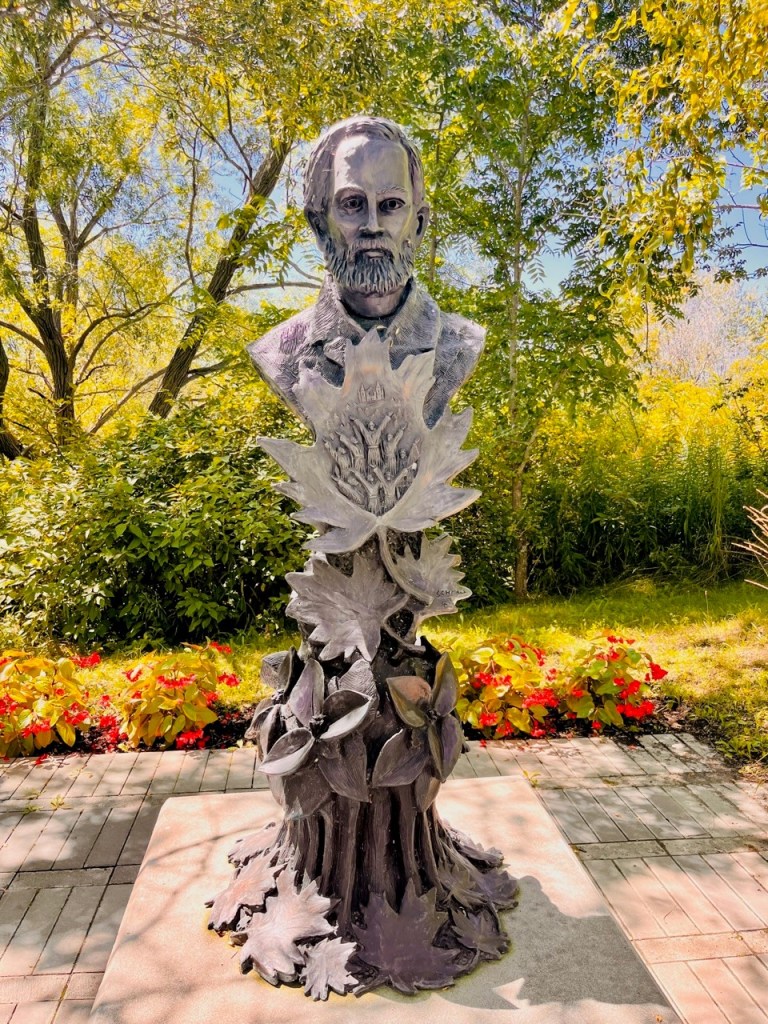
John Graves Simco (1752 – 1806)

With vision and enthusiasm, Simco set about developing the new world wilderness London sent him to oversee. Simco established York (Toronto) as the capital of Upper Canada, and deeply influenced the early society, roads, laws and governance of Ontario.
In 1793, he foresaw Penetanguishene’s strategic value as a naval base. In fact, the Penetanguishene Naval Establishment later proved to be a key development in the Town’s history.
Sculpted in clay and cast in bronze, this monument was created by Canadian sculptor Tyler Fauvelle, an artist inspired by Canada’s natural and cultural heritage. He invites you to look through the telescope! (There is a kaleidoscope there.)
“You Are Here” – Champlain’s Astrolabe
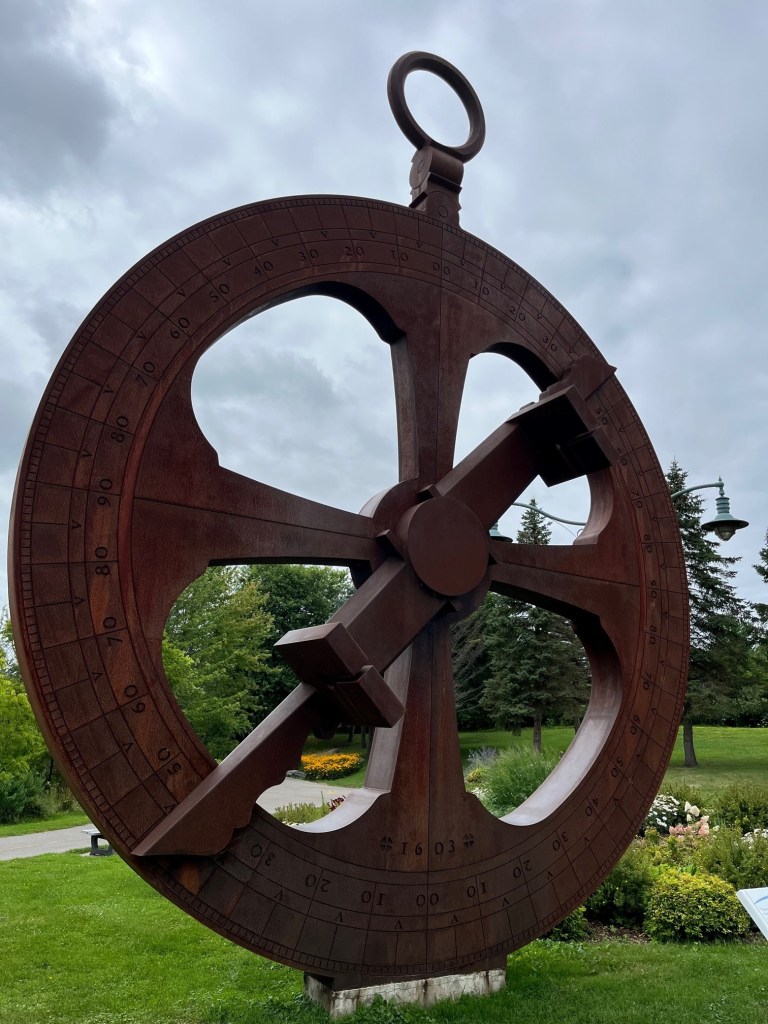
A mariner’s astrolabe was a navigation tool used by explorers to determine latitude. The device was held by the top ring and known celestial objects were sighted through the openings on the arm. Longitude was more complicated to compute and often was based only on estimates of speed and time travelled.
This sculpture is a representation of a mariner’s astrolabe found in 1867 near Cobden, Ontario. The sights on the arm are aligned with Polaris, the “North Star,” which means the latitude can be read directly by the angle of the arm. This is the tool that Champlain used on his voyages to navigate his travels.
This statue is symbol of Champlain’s exploration and discovery of Georgian Bay and Penetanguishene Bay in 1615.

Huron-Wendat – Circle of Nations – by Artist Tyler Fauvelle
The core members of the Huron-Wendat confederacy were: Attignawantan (people of the bear), Attigneenongnahac (people of the cord), Arendahronon (people of the rock), and Tahontaenrat (people of the deer.) The Bear and the Cord nations were the largest and oldest of the confederacy, forming their alliance in the 15th century. An Iroquoian-speaking people, the Huron-Wendat farmed the land, growing mainly corn, beans, and squash. They fished using nets and weirs, and their most important game was deer. In the mid-17th century, with their population decimated by epidemics and war, they were dispersed by the Haudenosaunee (Iroquois), and most merged with other nations. In Canada, members of the Huron-Wendat First Nation live in Quebec. Others, who became the Wyandot, live in the United States.
Sculpted in clay, cast in bronze, and mounted on local granite, the Bear, Cord, Deer and Rock reliefs were created by Tyler Fauvelle, a Canadian sculptor inspired by Canada’s natural and cultural heritage. The reliefs are arranged in a circle, an important cultural symbol. The circle resembles the shape of the earth, the sun and the moon, and many cycles in the natural world. The number four appears in many aboriginal spiritual traditions, and the artist expresses the four elements in the reliefs – wind, water, earth and fire. Elements of the artwork embrace symbols from the Huron-Wendat creation stories – the full moon, the Great Turtle.
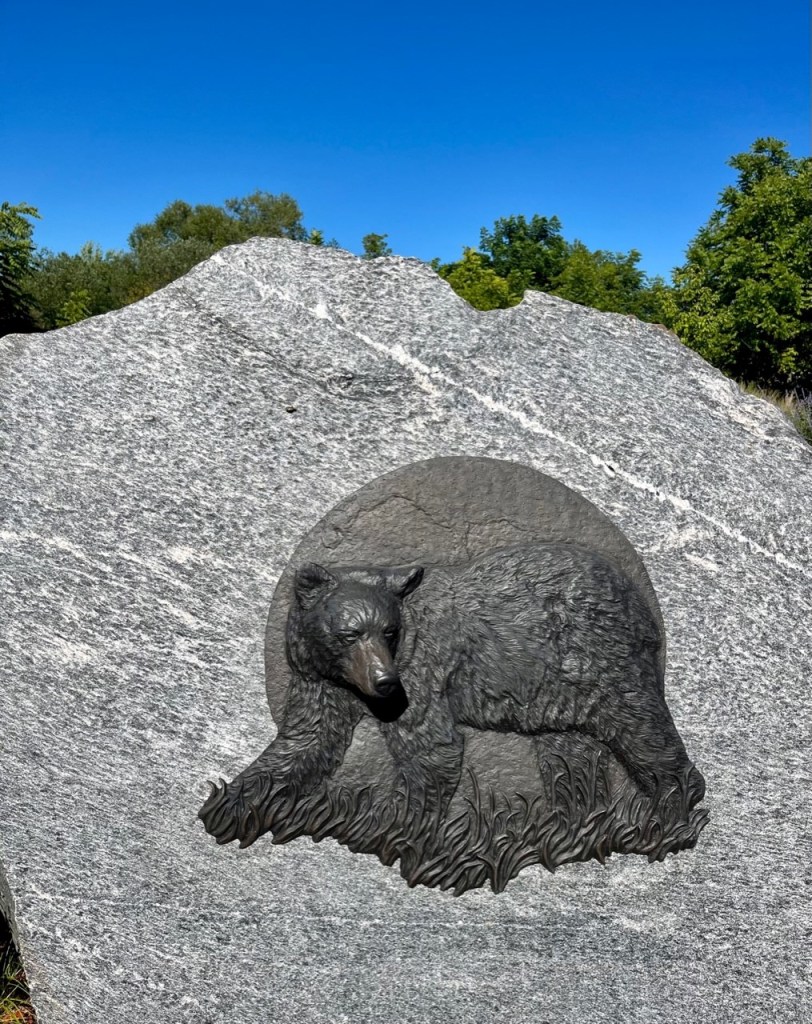
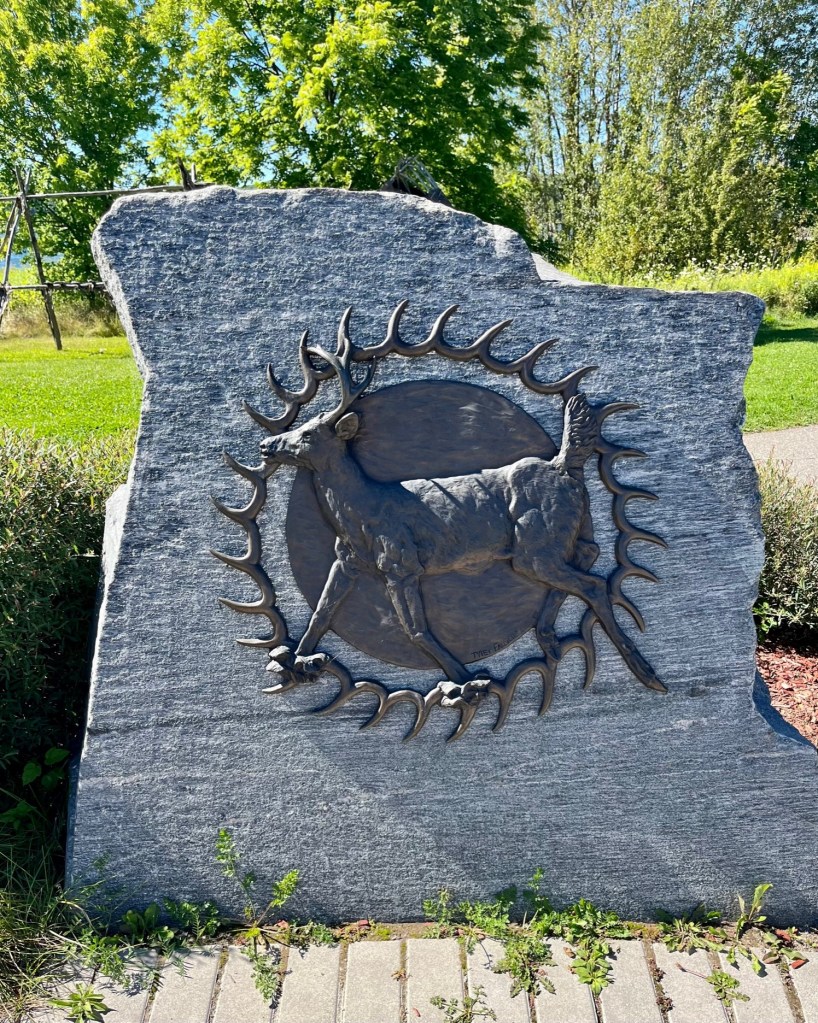

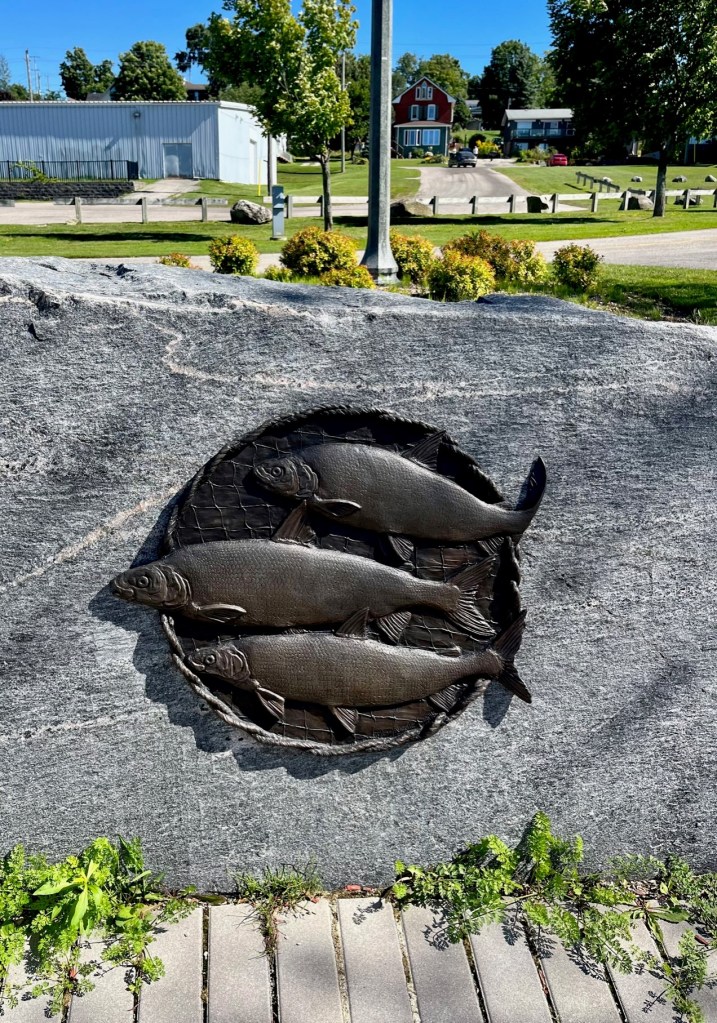
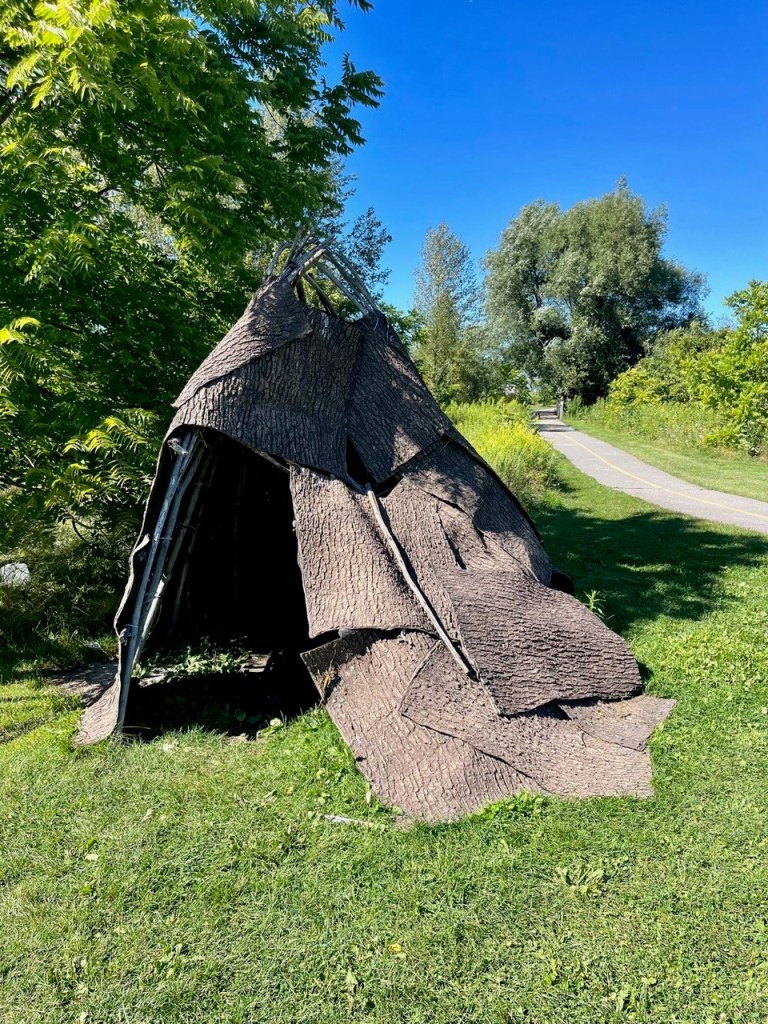
Also at the Circle of Nations were replicas of tents and tent set-ups.

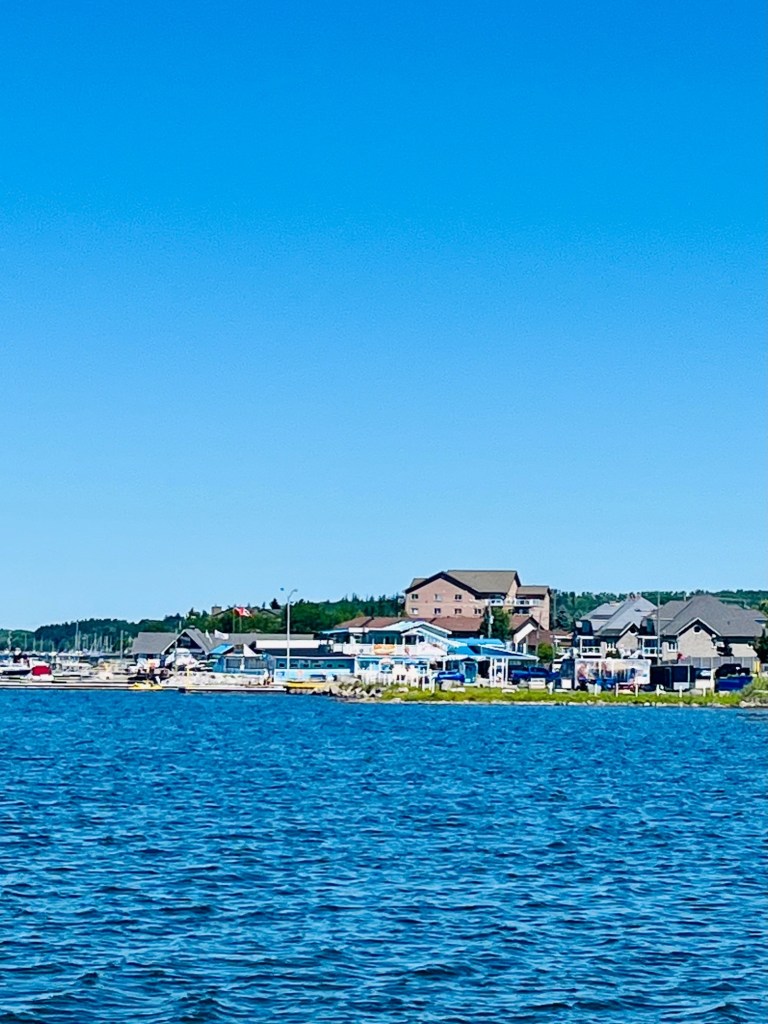
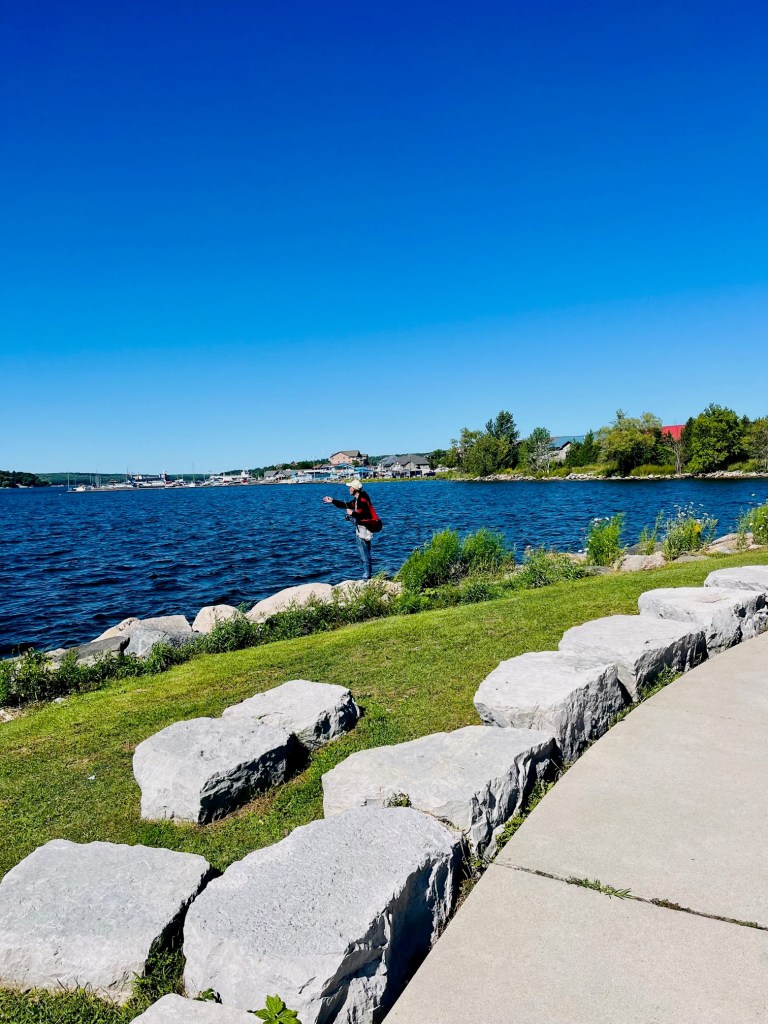
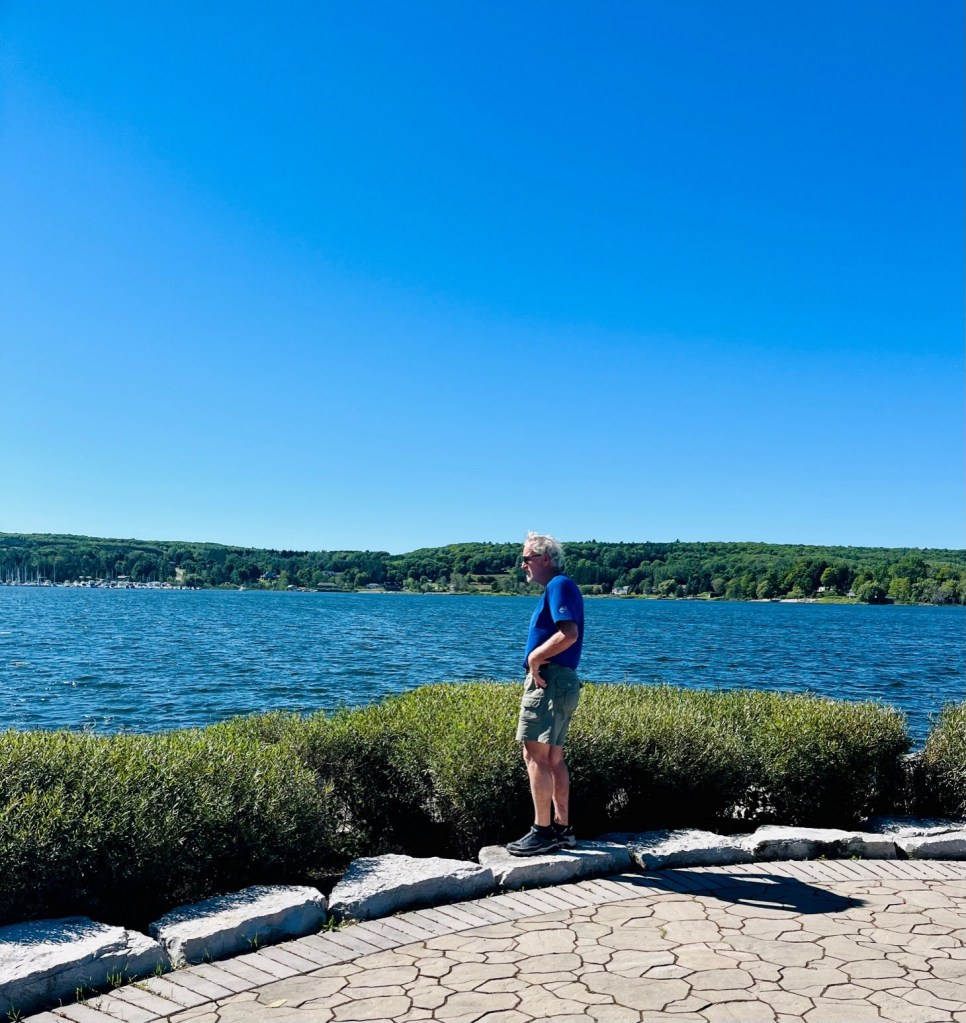
Here are other highlights from the park:


 Pat and Cindy's Great Loop Adventure
9 responses to “Penetanguishene – Big name for a little city”
Penetang is close to Midland ON where there is the Martyrs’ Shrine. Many churches across the US and Canada are dedicated to their memory. This site comemorates Fr Brebeof and the other Jesiut priests who were killed by the Iriquois. History says that the Iriquois were so impressed with the brvery of the priests that they ate their hearts.
LikeLike
Thank you Cam. I was surprised at the many tributes to catholic priests. That’s amazing about the Iroquois and bravery. We will have to stop in Midland when we return to Penetang. I have to say I am loving Canada. The landscape is beautiful and the people so welcoming. Georgian Bay is wonderful. Hope all is well with you and Stephanie.
LikeLike
Finally, you have reappeared out of the Canadian wilderness. I notice when you asked Pat to pull up a chair and let’s visit, he says “No, I’ll just sit on this pointed rock”.
Cindy, that’s a very comprehensive study of a very unique civilization. You do so well. Some of that sculpting is absolutely spectacular with its intricacy and subject matter. Do they sell replicas?
Anyway, never heard of this town and now we’ll never forget it.
Gracias!!
Bill and Margarita ………and Kiera.
LikeLike
Hi Bill. I don’t know about replicas of the statues. I agree – they are amazing. Miss you !
LikeLike
Great little post and an incredibly fascinating story Mclaughlin, thanks for sharing this with us!
Reminds me of wonderful time I had with my wife in a teeny tiny South Asian hidden gem of a country, Sri Lanka.
It was an incredible experience from people to places to architecture to all the experiences that we’ve gathered, such a magnificent place to be and it was an one for the memory vaults.
You can read the full story here,
LikeLike
Very interesting history. How pretty the sky looks! Love u guys!
LikeLike
Hi Tom! Miss you and Tess.
LikeLike
This is an educational and romantic post!
Thank You.
LikeLike
Thank you Renee! We are having fun.
LikeLike