
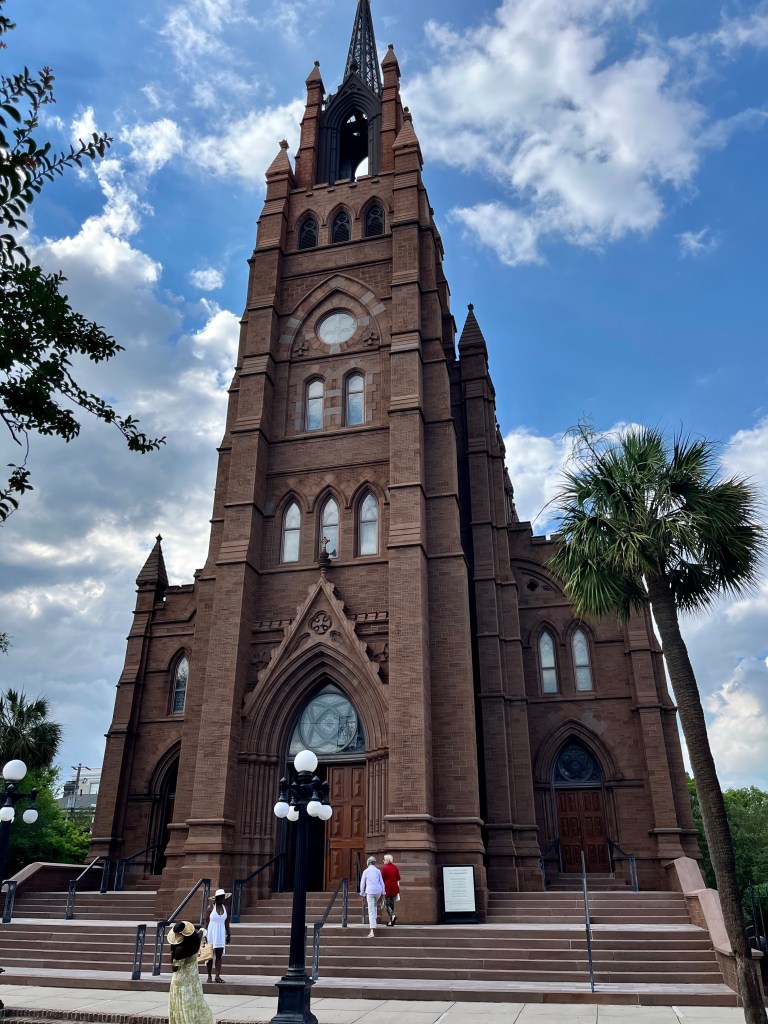
Charleston was a delight to visit. City leaders long ago implemented preservation efforts to ensure Charleston’s history and southern charm remains intact. There are no skyscrapers. Church steeples peek out along the skyline as they are the highest structures here.
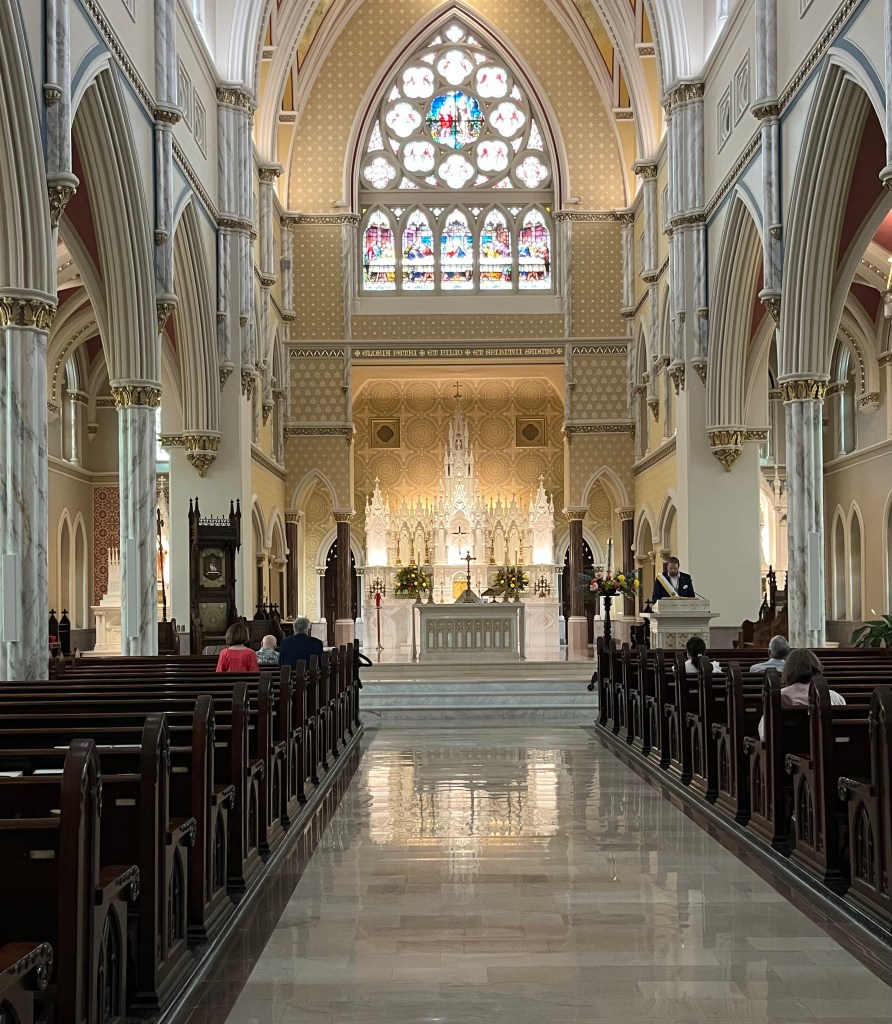
Charleston – nicknamed “the Holy City” – has been known for its religious tolerance since the 1700s. People from all over the world flocked to Charleston for religious freedom, so you’ll find several different Protestant denominations in addition to historic synagogues and Roman Catholic churches.
St. Michael’s is the oldest surviving religious building. The current church was build in the 1750s. It sits on the corners of Meeting and Broad Street. This intersection is often referred to as the “Four Corners of Law” as on each corner there is a building that represents federal, state, local and religious law: the U.S. Post office, the Federal Courthouse, the Charleston County Courthouse, Charleston City Hall and St. Michael’s.
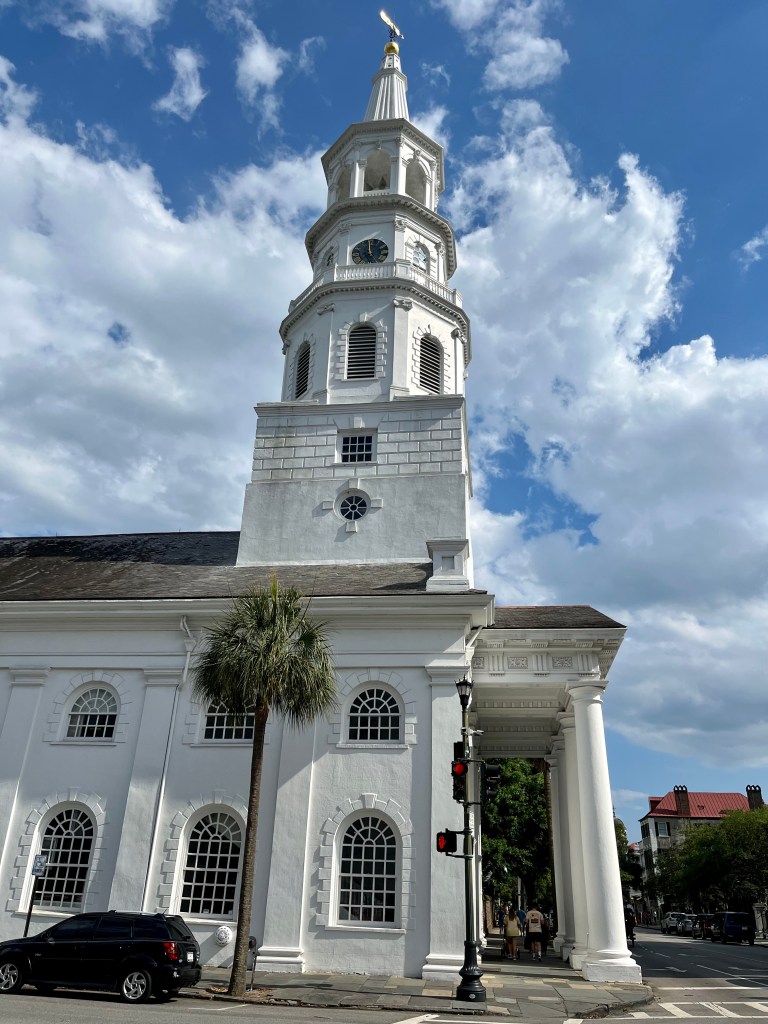
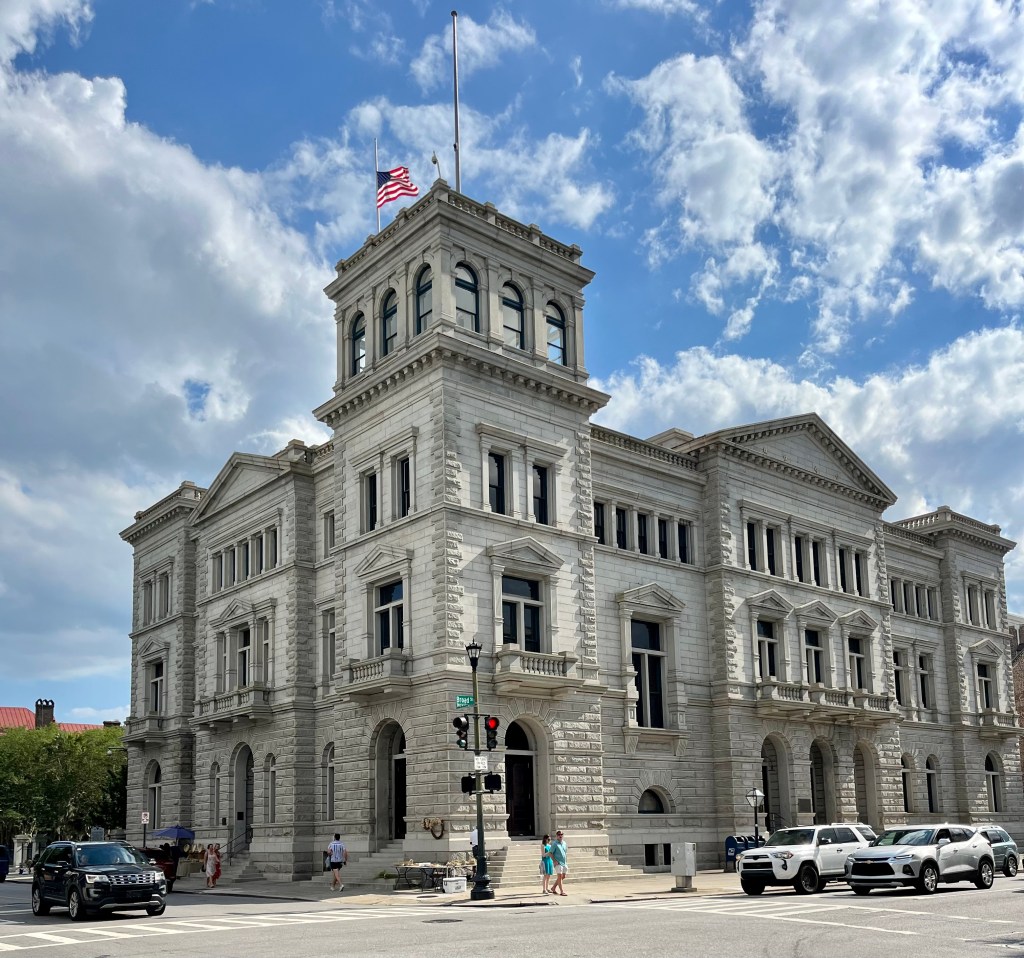
We chartered a tour bus on Saturday, May 28, and learned so much about this historical city. Here are some highlights:
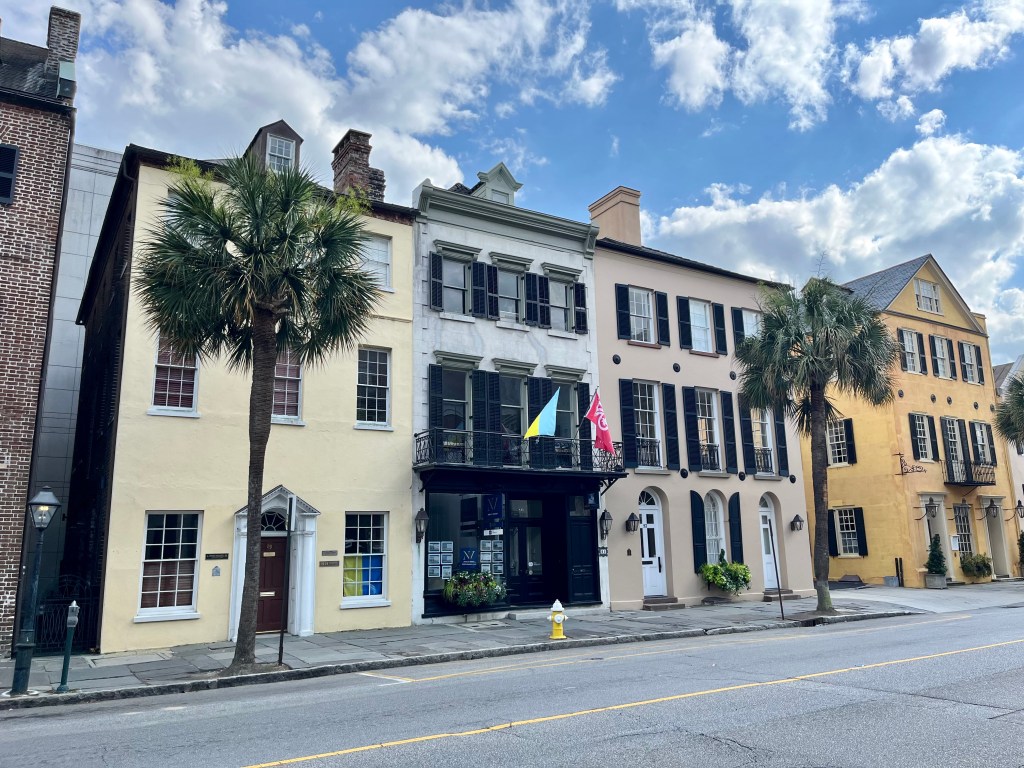
Charleston “Single” Homes
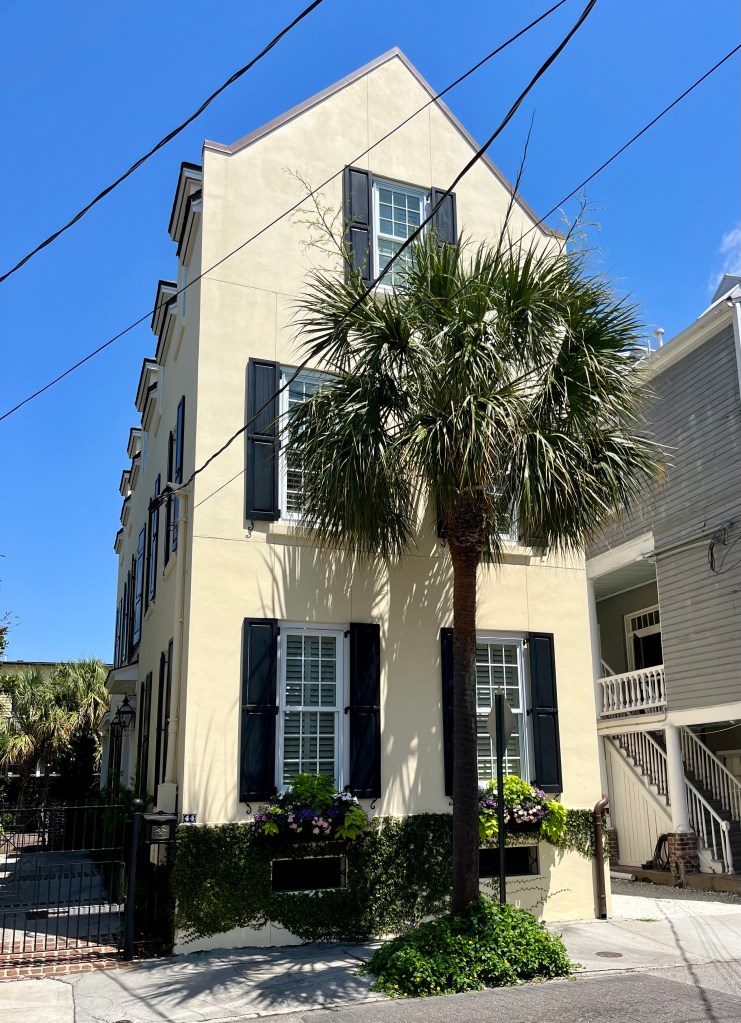
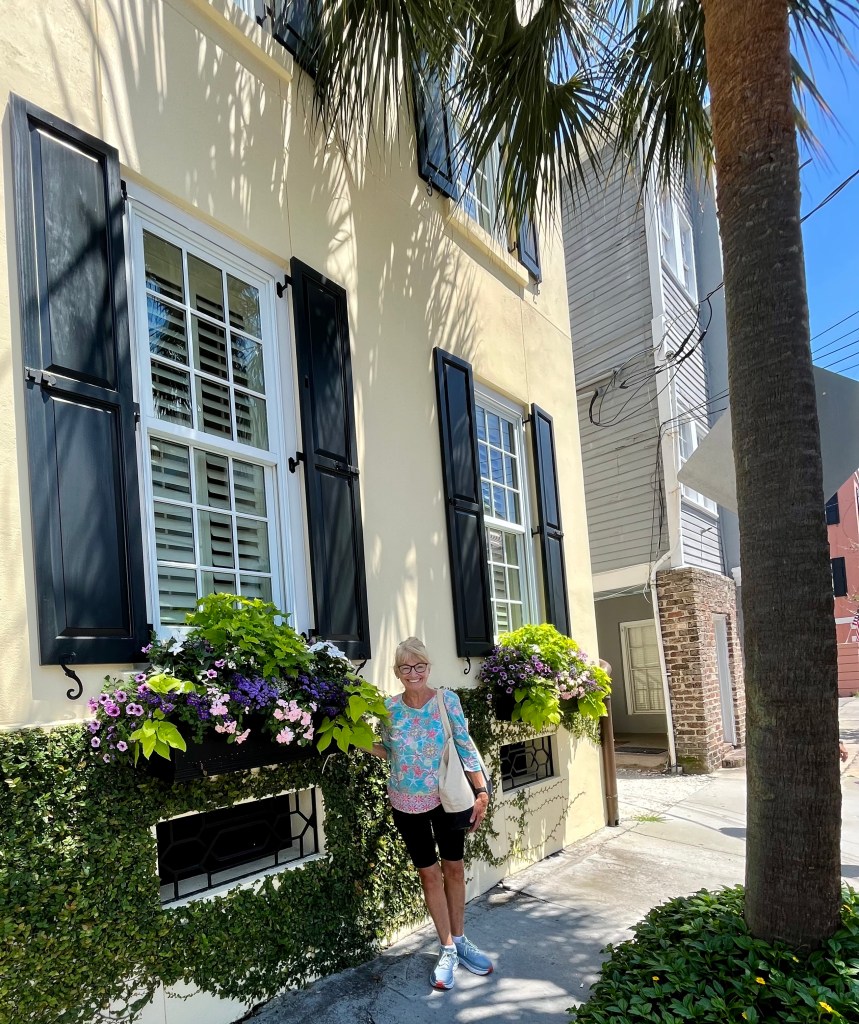
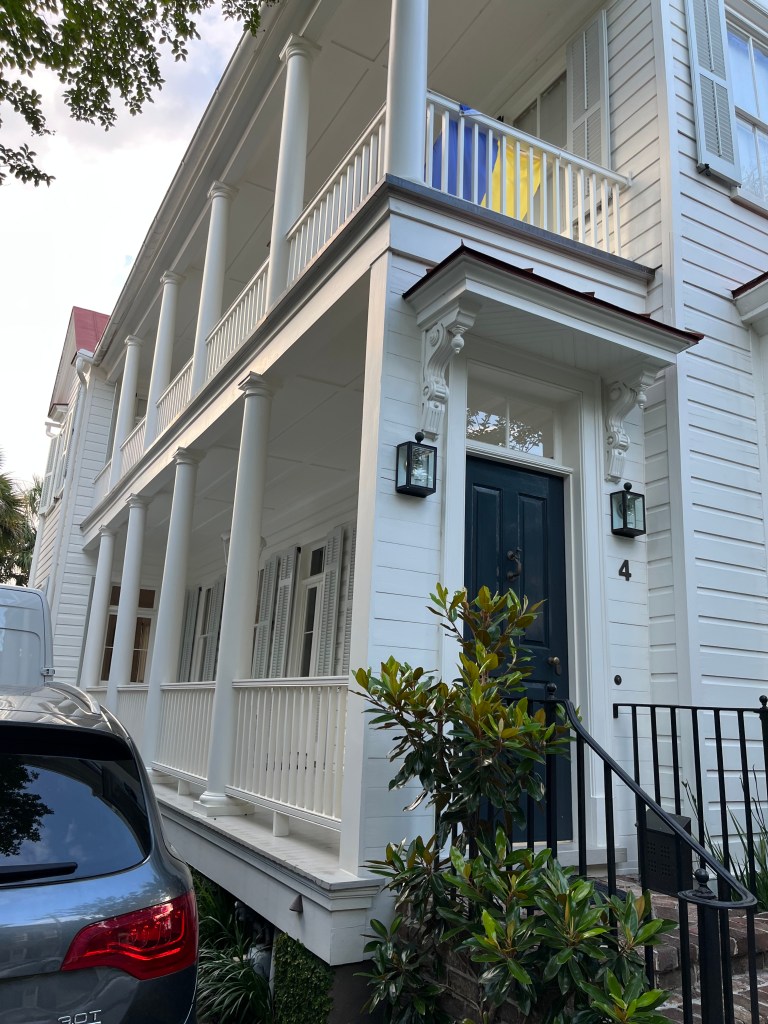
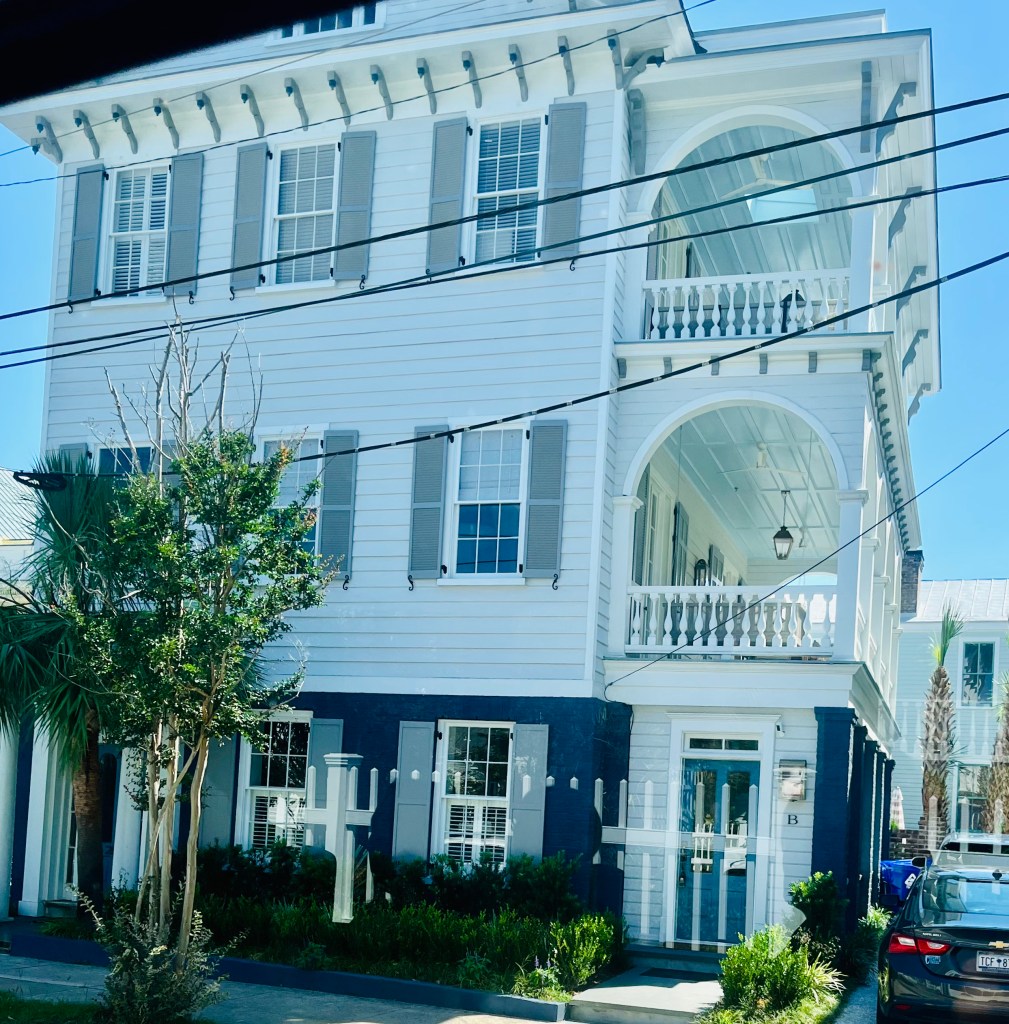
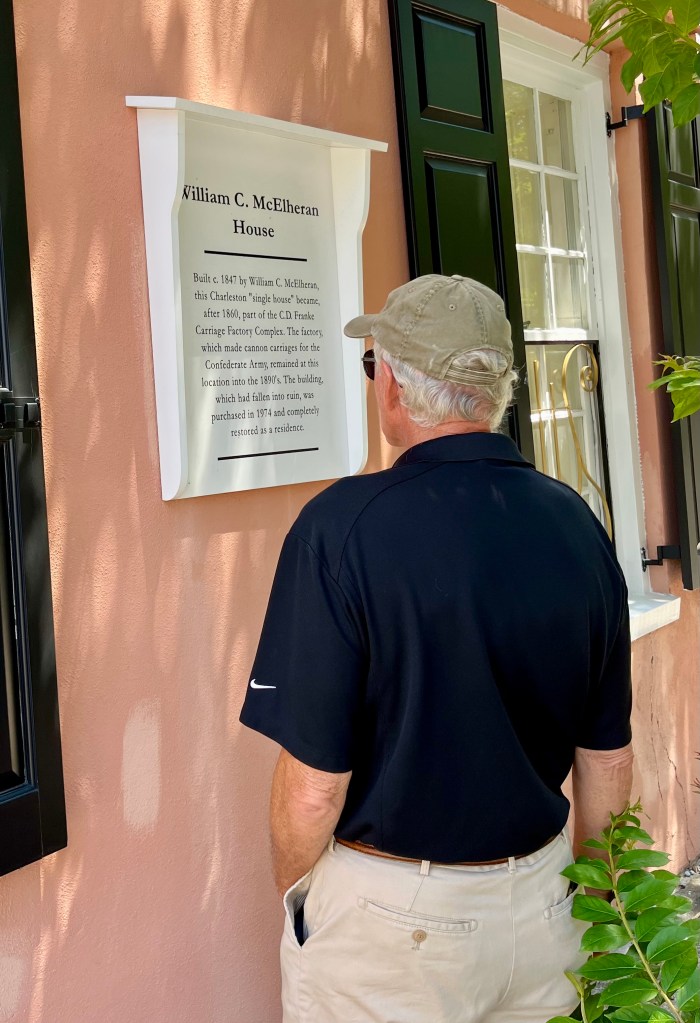
The “single” house is an architectural style exclusive to Charleston. This home plan gives the city much of its unique charm. The layout of a single house is ideally suited to the narrow street-facing lots originally laid out in the late 17th and 18th centuries. The homes are only one room wide and two rooms deep on each level with a central hall in between.

Typically a porch, known as a piazza, runs the length of the house with a public door facing the street. Visitors must enter the home through this entrance and traverse the porch before entering the central private door into the home.
To take best advantage of prevailing breezes, piazzas always face south or west.
Carolopolis Awards
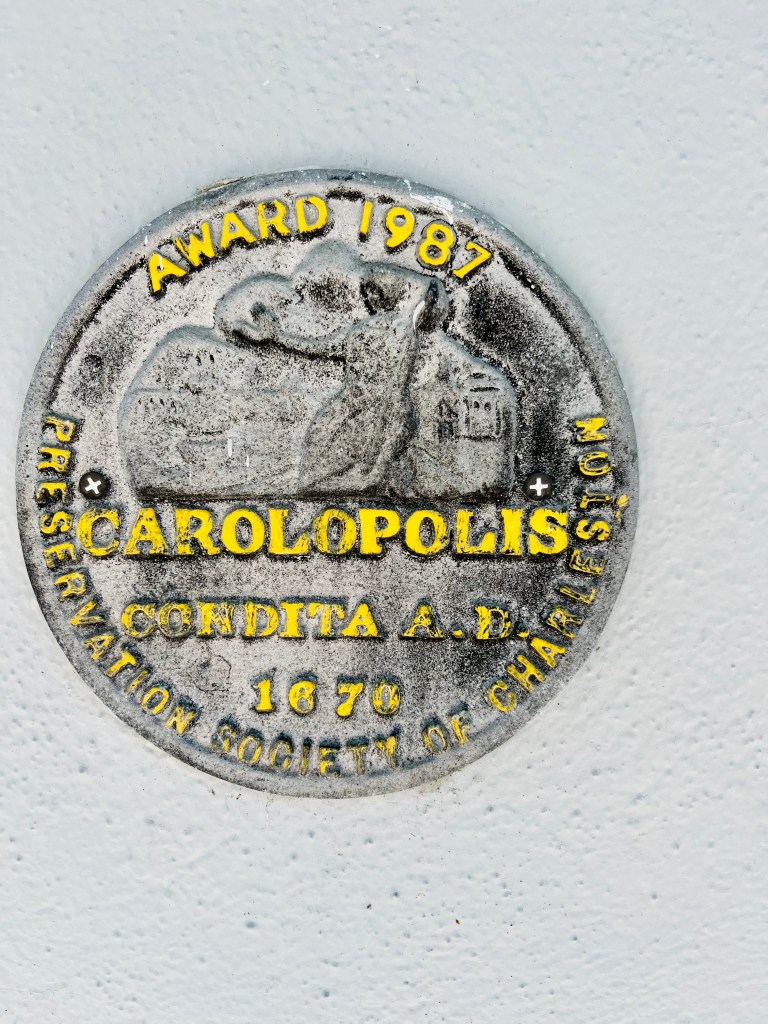
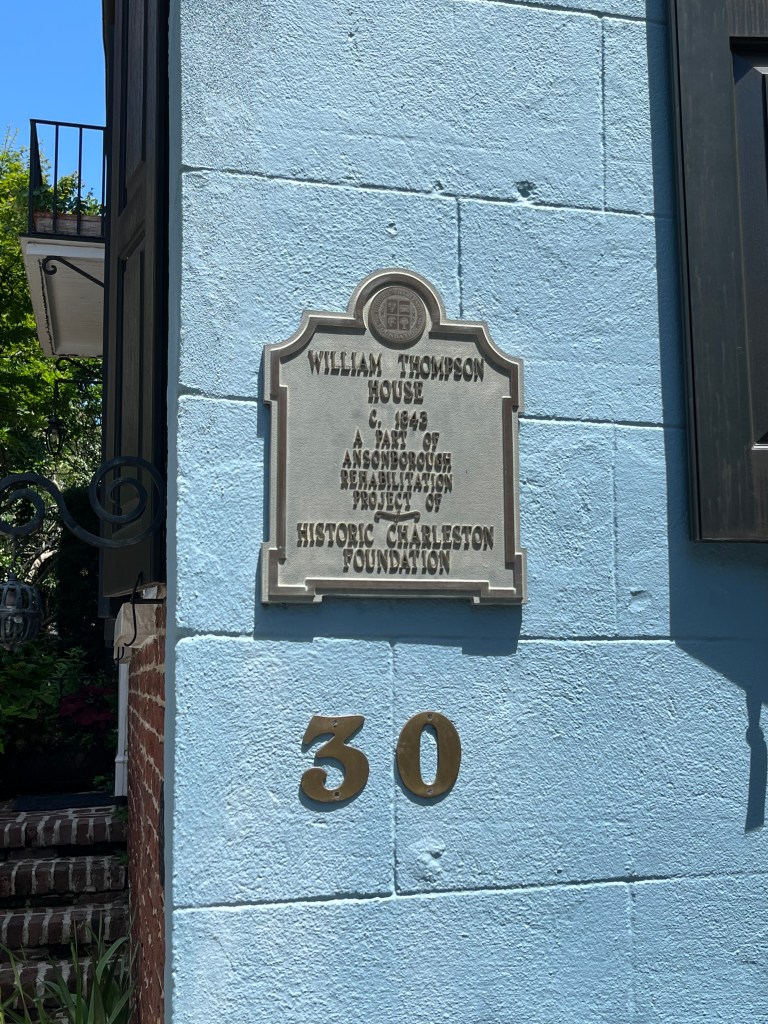
One way to promote the historical integrity of the buildings and homes in Charleston is the awarding of Carolopolis Awards. Building owners are recognized for restoring old structures while maintaining their original foundations.
You will see the award affixed to structures throughout the Historic District, the French Quarter, and beyond. It is a circular plaque mingling English and Latin around an engraving resembling the City of Charleston seal. The image reflects the city’s motto: Aedes mores juraque curat which means “She guards her buildings, customs, and laws.” This comes form the Latin Carolus for “Charles” – that’s King Charles, for whom Carolina is named, and the Greek polis meaning city.
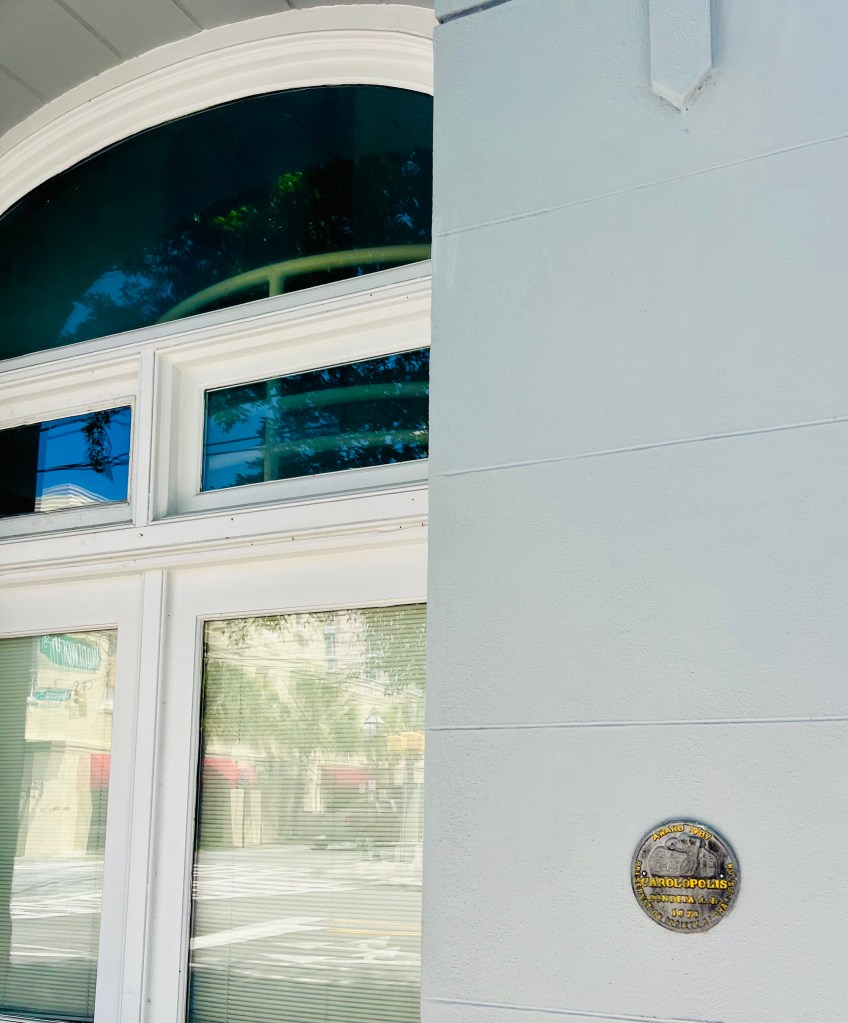
After nearly 70 years and more than 1400 awards given, this award is a major part of the fabric of the city and the buildings and structures it honors.
Earthquake Bolts
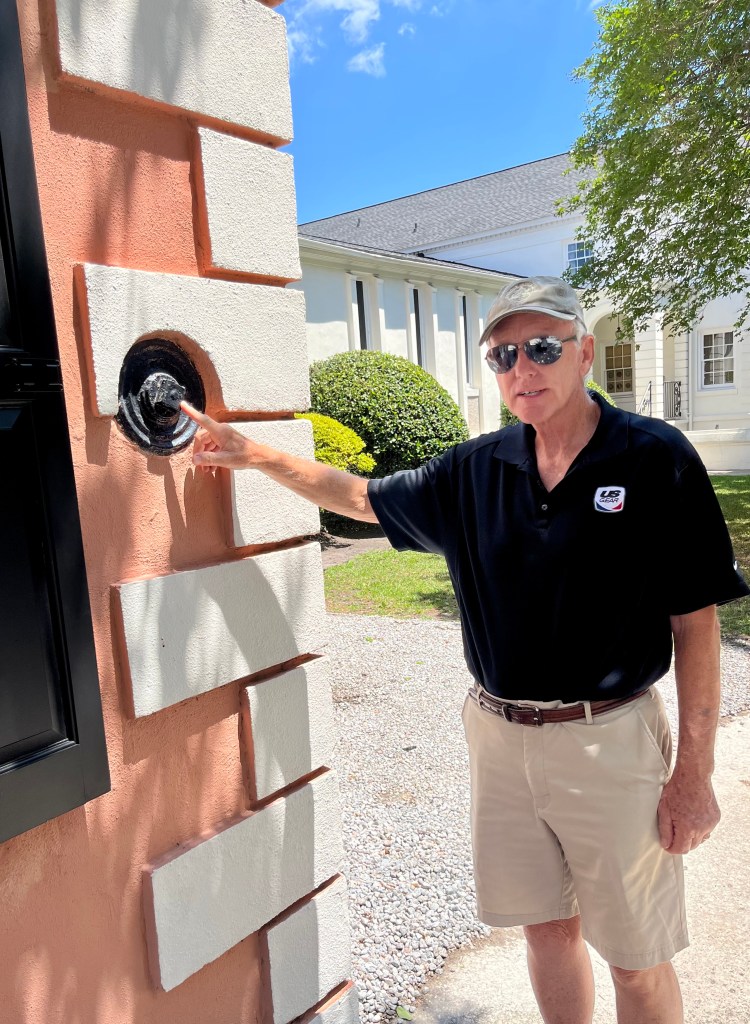
Charleston has endured many storms and earthquakes. “Earthquake bolts” were added to many buildings that survived or were built after the devastating quake that shook Charleston August 31, 1886. This was one of the largest earthquakes ever recorded on the Eastern seaboard, with at least 60 fatalities.
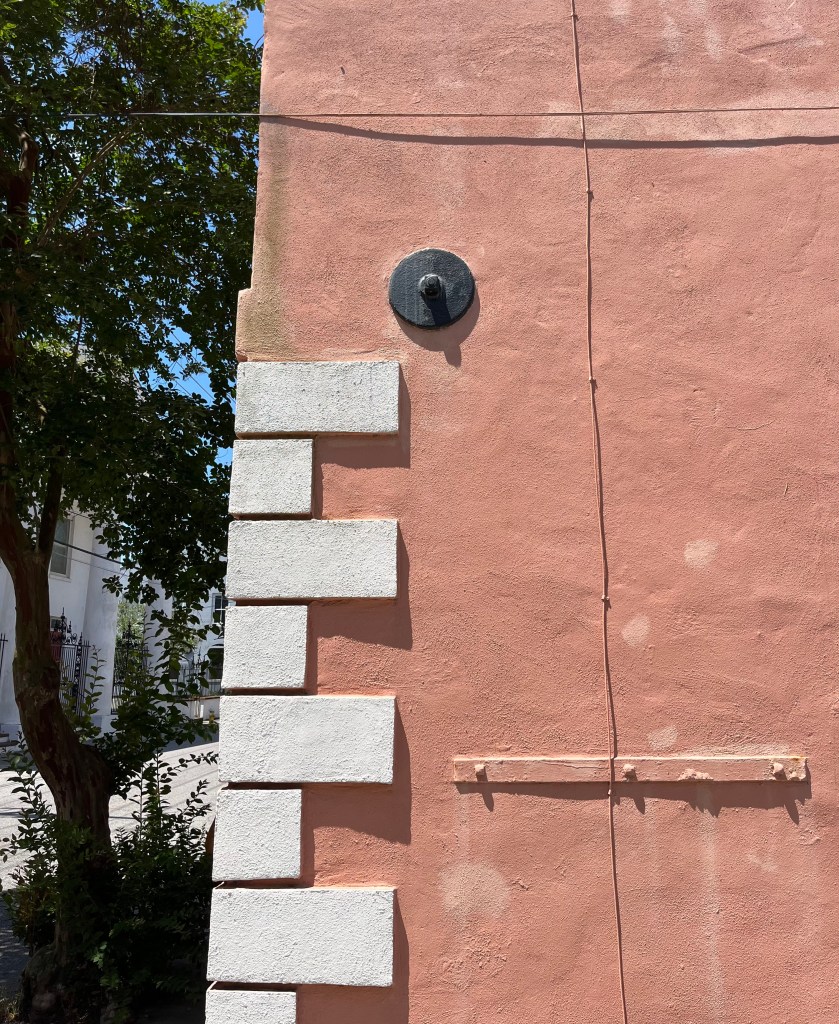
Builders then began installing reinforcement bolts to strengthen buildings. Earthquake bolts have two parts – a plate and an iron rod. The plate on the outside of the building connects to the rod that passes through the building and then bolts to the timber frame on the interior.
The plates are visible on the outside wall. Some are crafted as decorative elements, such as crosses, circular scrolls or stars.
The Gullah Culture
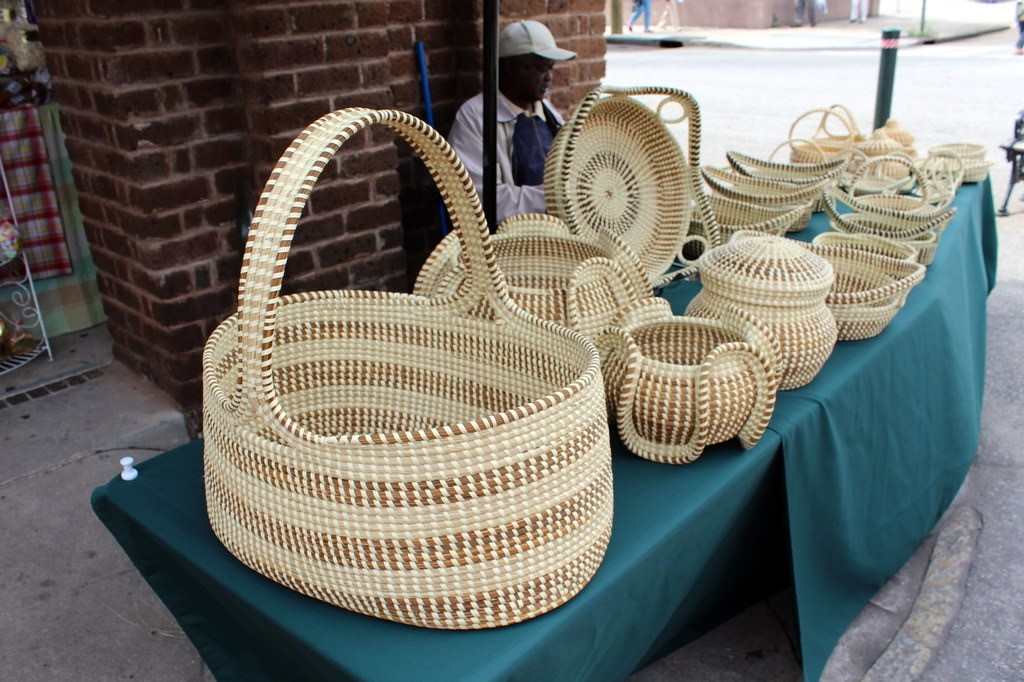
The Gullah are African Americans who live in the Lowcountry region of the U.S. They developed a creole language, also called Gullah, and a culture with significant African influence.
They are known for creating the sweetgrass baskets – all different kinds – and selling them around Charleston.
Historically the Gullah region extended from the Cape Fear area on the North Carolina coast, south to Jacksonville, Florida.
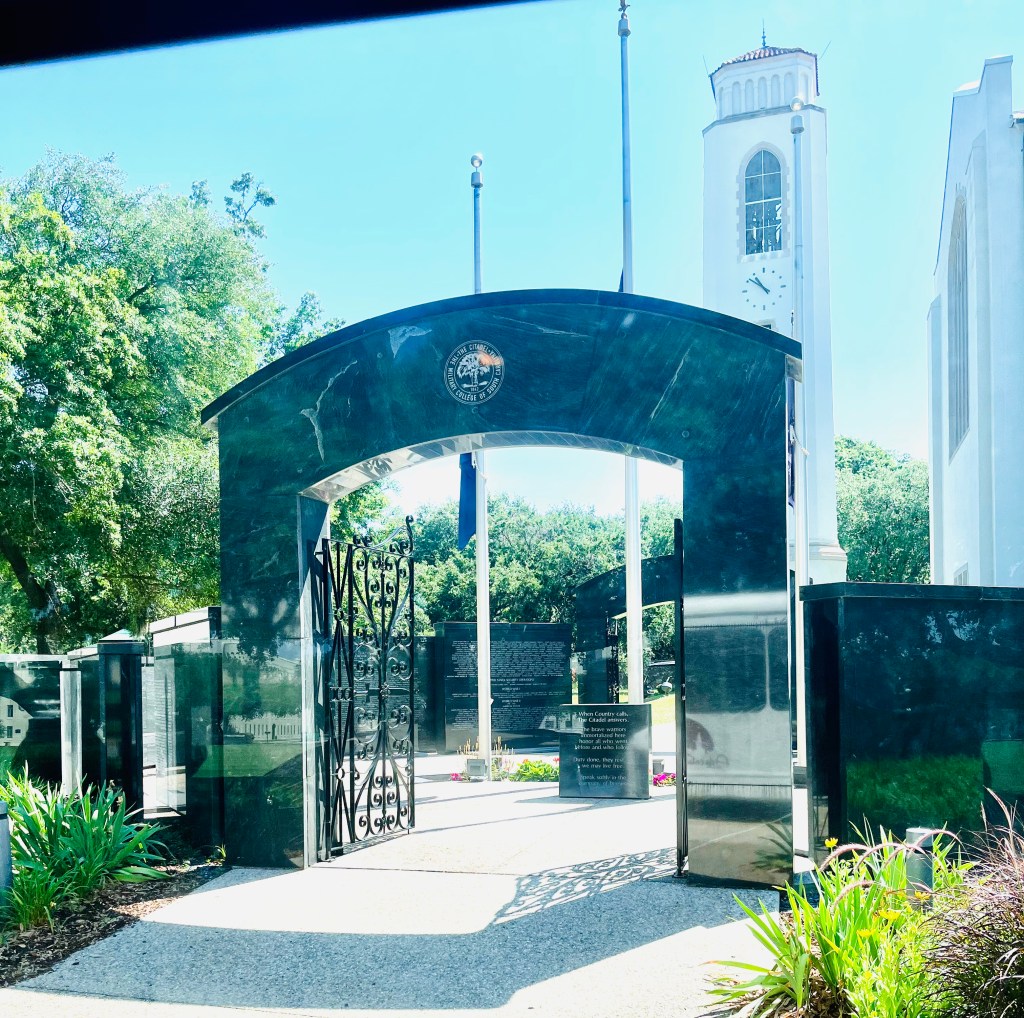
The Citadel – The Military College of South Carolina
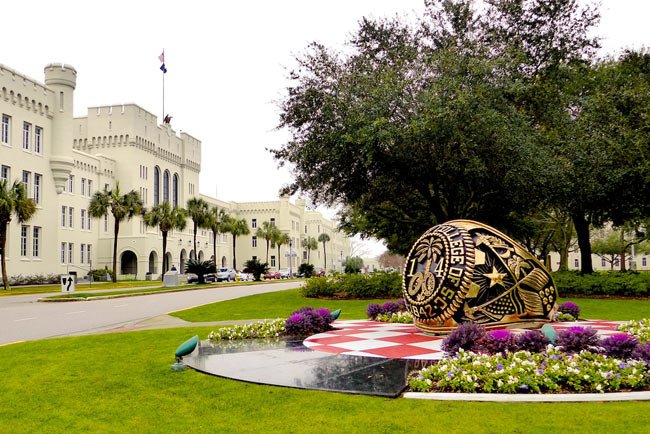
Known simply as “the Citadel,” this institution was established in 1842 and is one of six senior military colleges in the U.S. It has 18 academic departments, divided into five schools offering 31 majors and 57 minors.
The South Carolina Corps of Cadets number 2,300 and is one of the largest uniformed bodies in the U.S. Approximately 1,350 non-cadet students are enrolled in Citadel Graduate College. Women comprise 9% of the Corps and 22% of the overall enrollment.
The sprawling campus is most impressive. Statues, memorials, and planes, helicopters, tanks and other artifacts representing all branches of the Armed Services adorn the well manicured grounds. Next time I’m in Charleston I want to take a tour of this college.
Wentworth Mansion
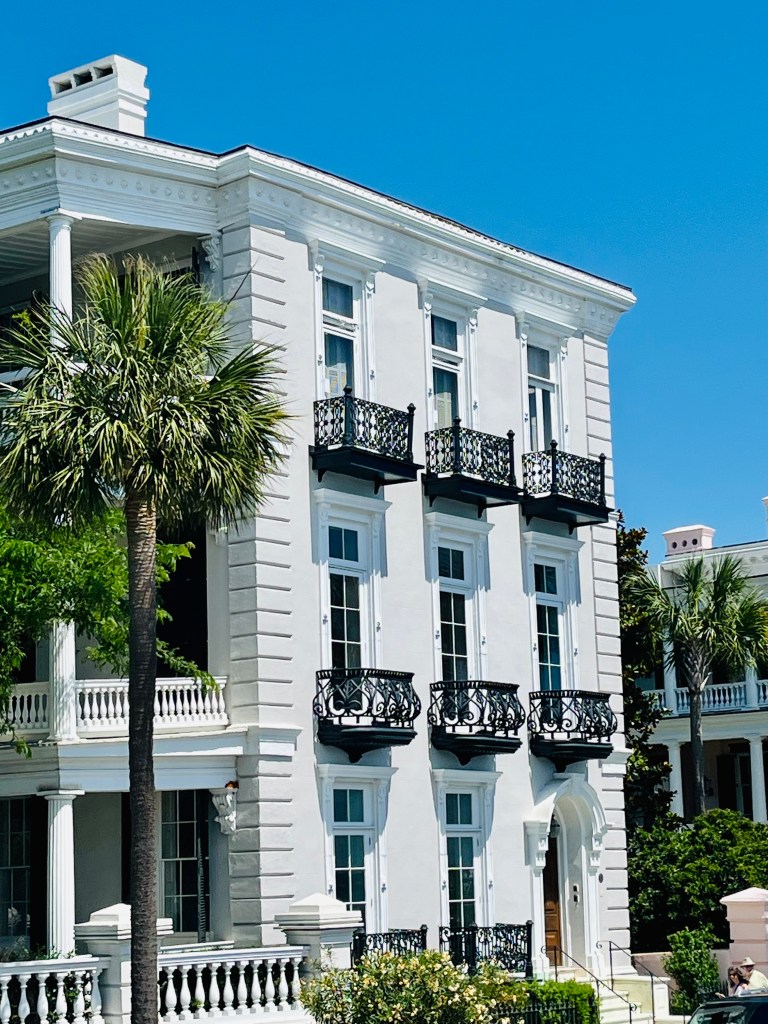
Built in 1886 as a private residence for wealthy cotton merchant Francis Silas Rodgers, it is now a popular National Historic landmark. Rodgers had a family of 13 children and he desired to create a stunning estate in the heart of Charleston. The structure is massive – four stories tall and 24,000 square feet. It sits at the intersection of Wentworth and Smith Streets.
Awe-inspiring details include Philadelphia pressed brick, Tiffany stained-glass windows and a bas-relief cornice above the dining room window depicting a cotton plant, emblematic of Rodgers’ business.
The iconic mansard roof features a large cupola that afforded unrivaled views of Charleston’s neighborhoods.
The house eventually changed hands as the family could no longer afford the upkeep. In 1997 Richard Widman – President of Charming Inns – acquired the site. It is now a posh boutique hotel.

French Quarter District
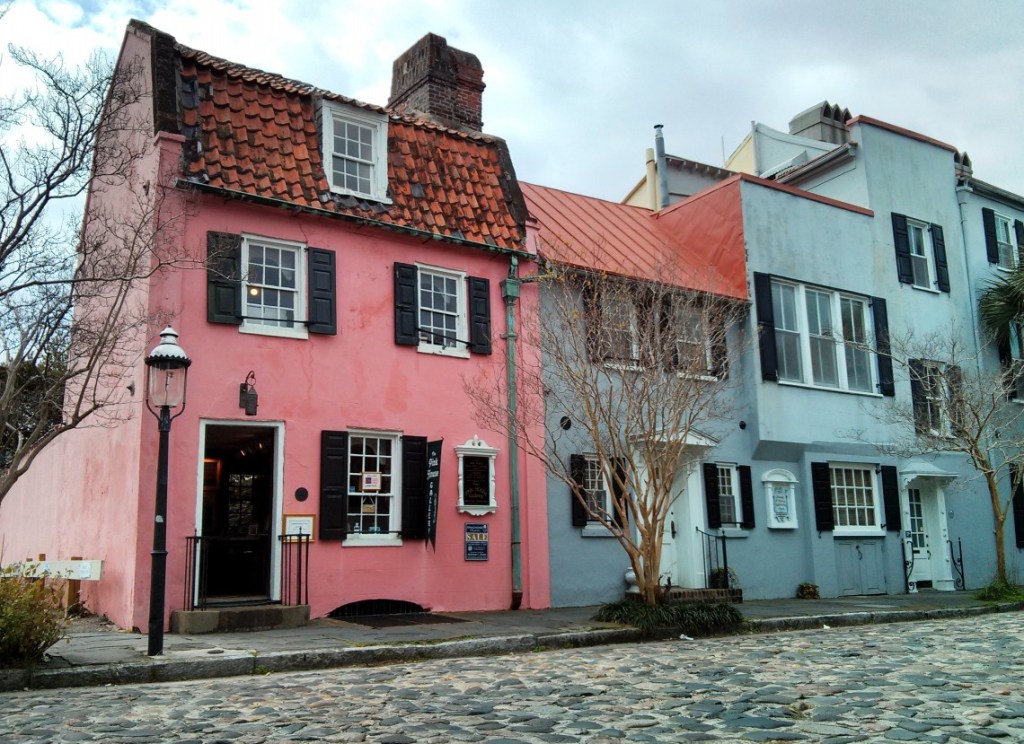
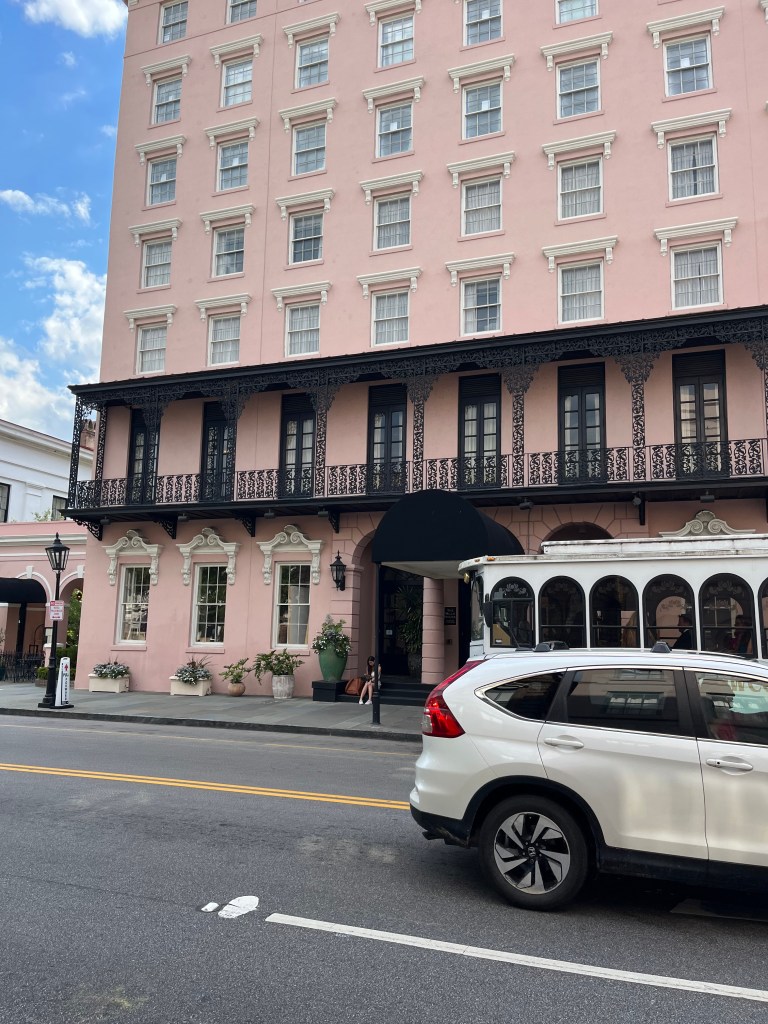
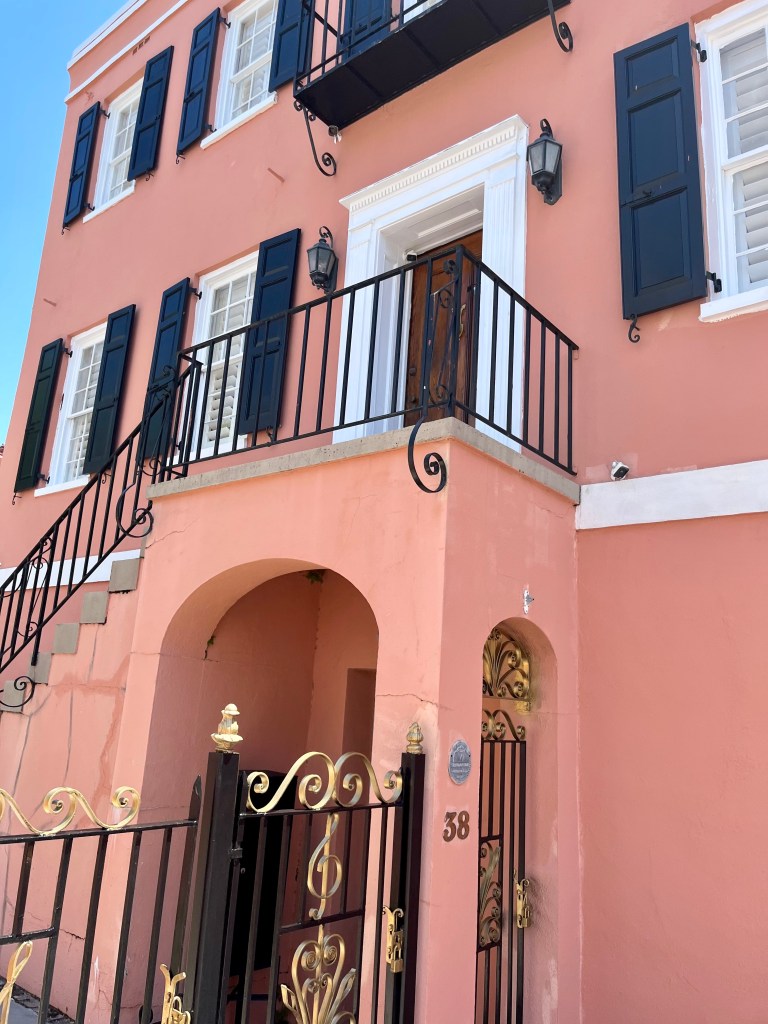
An icon located in the French Quarter District is the Pink House at 17 Chalmers Street. Some claim this is the oldest masonry residence in Charleston. It has been a tavern + brothel, a law office, a private residence, an art gallery, and most recently a place for swooning Instagrammers to capture that perfect picturesque shot.
The structure’s pink exterior, original gambrel tiled roof and cobblestone road capture several iconic staples of Charleston.
Haint Blue
I love the color blue – U.K. Blue, robin egg blue, ocean blue – and it was fun to learn there is a special blue associated with Charleston. It’s called Haint blue.
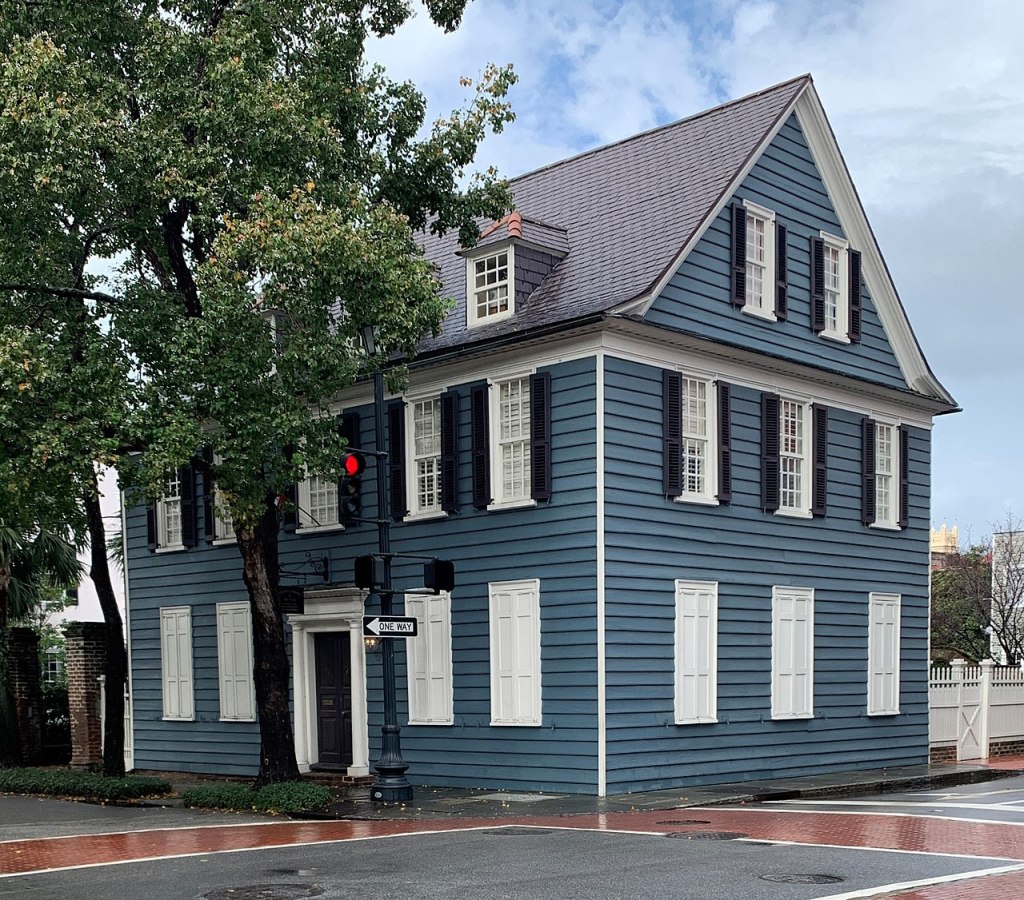
Haint blue is a collection of pale shades of blue-green that are traditionally used to paint porch ceilings in the U.S. It is also used to paint homes. The tradition originated with the Gullah. This haint blue was believed to ward off haints or ghosts, and keep them away from the home.
The tactic was to mimic the sky, tricking the ghosts to pass through, or to mimic water, which ghosts cannot cross.
The Gullah would paint not only the porch but also the doors, window frames and shutters.
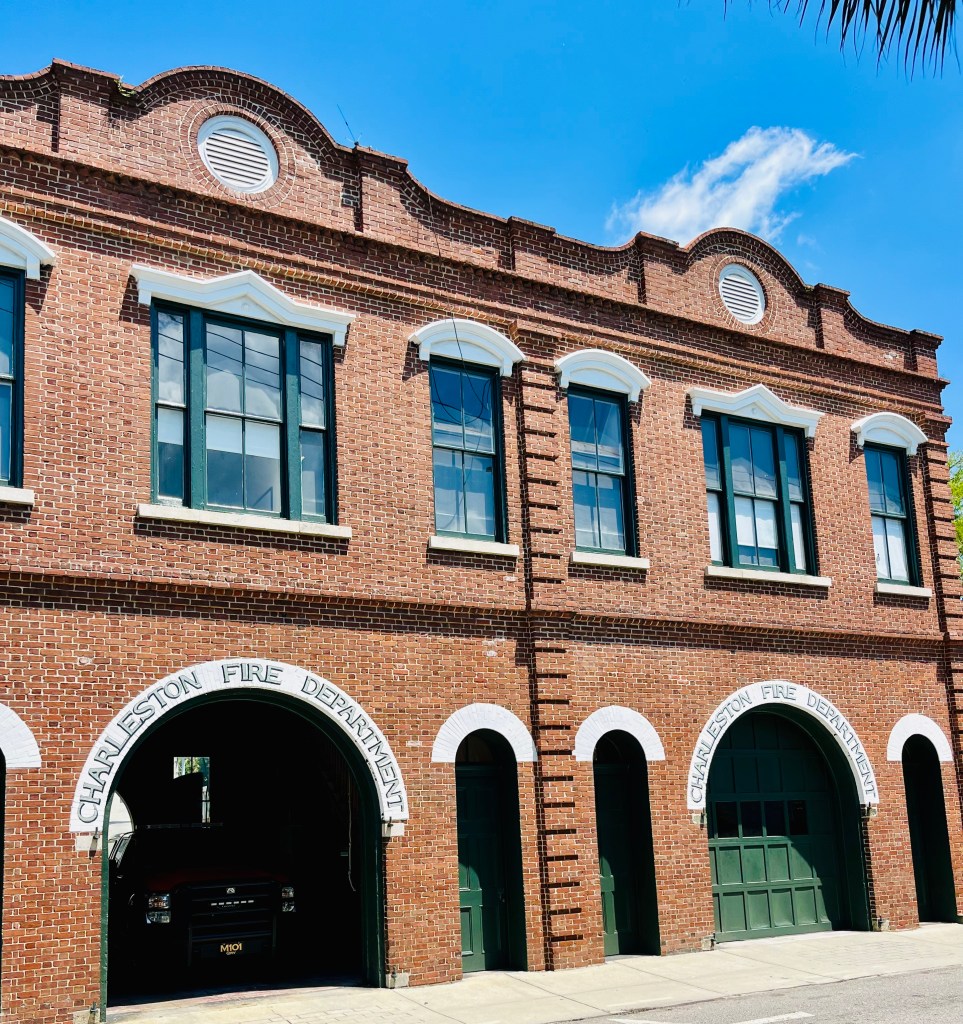
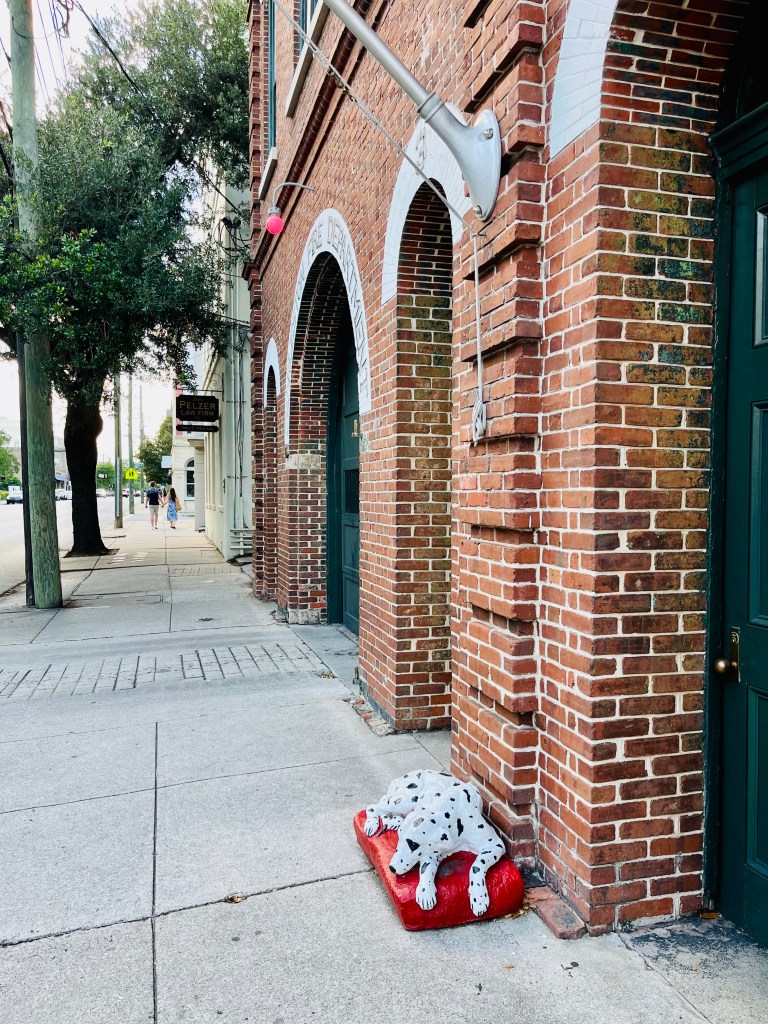
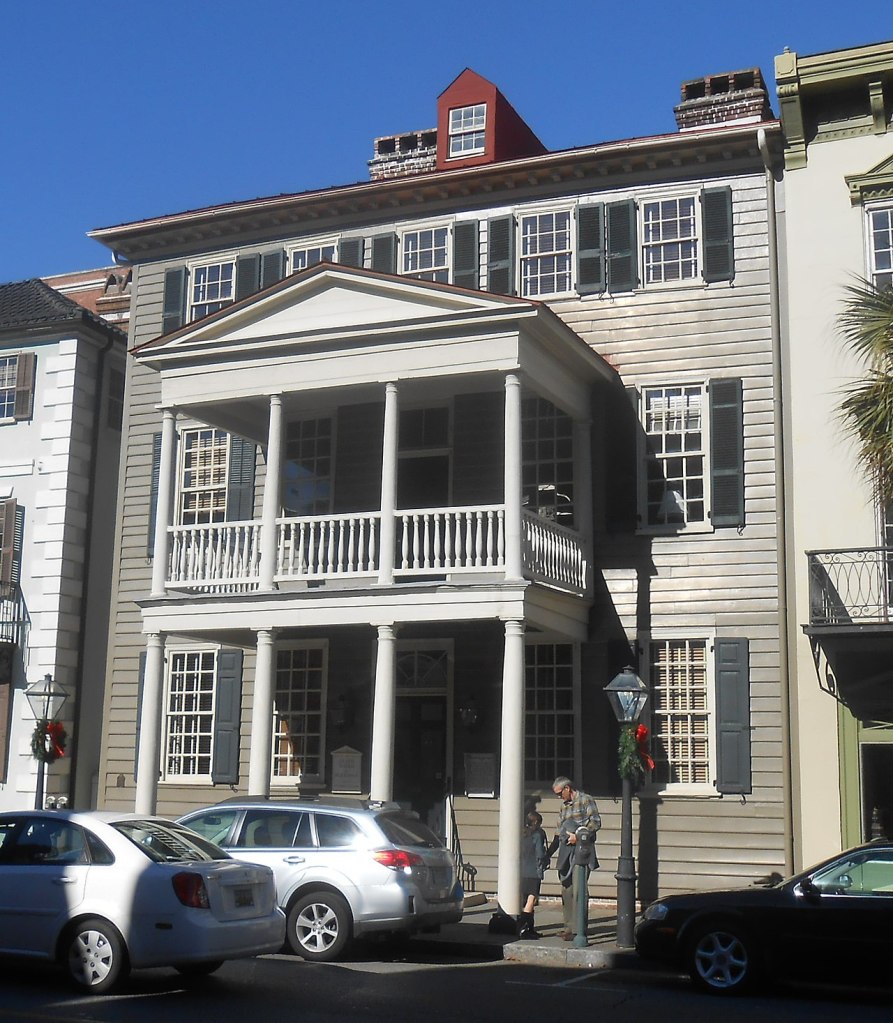
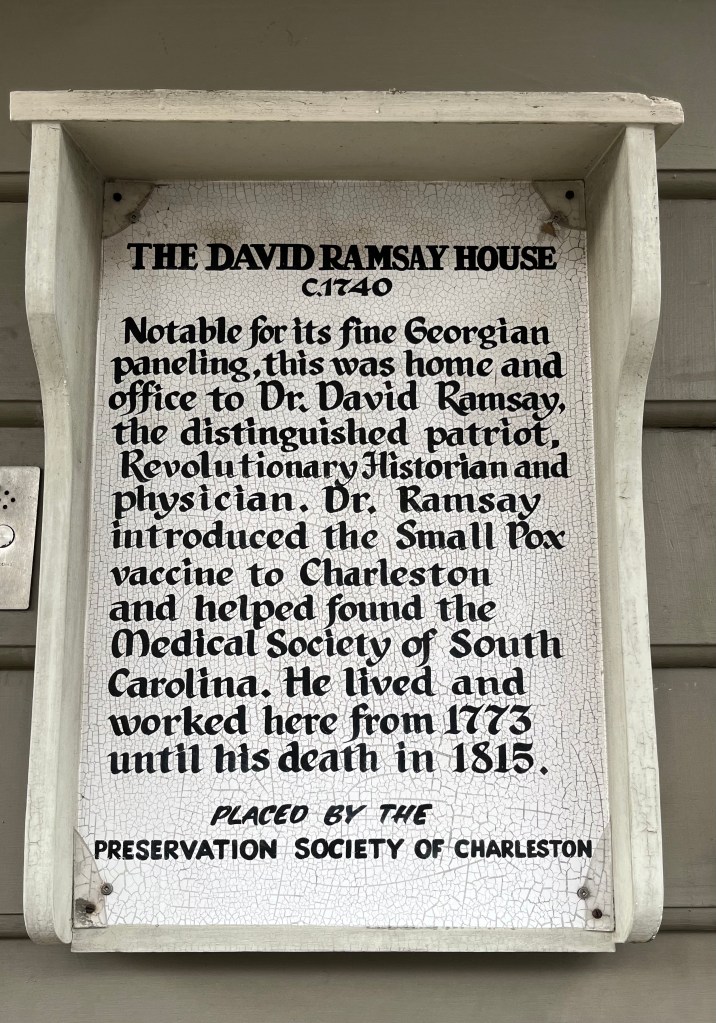
Here are some other sites from our day in Charleston:
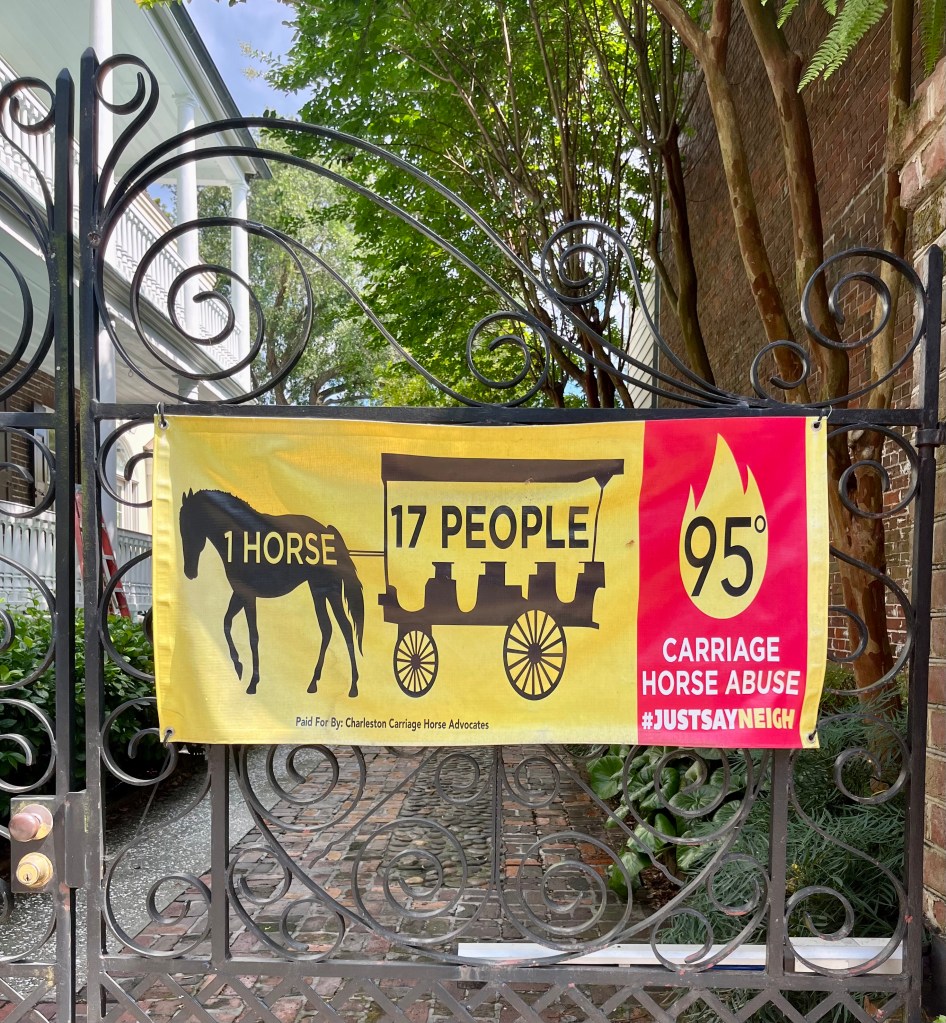
Animal lovers have begun a campaign for the care of the horses.







 Pat and Cindy's Great Loop Adventure
7 responses to “Tour of Charleston”
Hi Cindy and Pat!!
Wow! OMG! Trouble is brewing in our household. For 16 years, we drove to our summer home in Bar Harbor, Maine and never once did we stop in Charleston. It’s only about 10-15 miles off I-95. That’s 32 times we drove by without stopping……….
However, we did get the next best with your travelogue……..better than very good…….Excellent!. Including the descriptions coupled with some very tasteful and interesting history. .
I remember my brother, Jim, an anthropologist, telling me about the African Gullahs being specifically captured/kidnapped due to their ability to work in the conditions needed in the Charleston area….extremely hot, humid, wet, mosquito infested agricultural land.
Anyway……,after your short visit back to Boca to shave, shower and brush your teeth………….you’re back and hopefully pointed in the right direction. Please, please more photos and travelogues. You do it very well!
Oh yea……, that hobo family went back into your house the moment you left. I think they were staying in that old. vacant and sometimes haunted house in your cul de sac with the Edsel convertible in the driveway. We’ll keep an eye on them…..
Vaya con Dios!
Bill and Margarita.
. .. ..
LikeLike
Great review of Charleston! My dad lived there when he was five, so he’s taken us back to visit a couple of times through the years. Always a charming city! Sounds like you’re having an amazing boat trip. Enjoy!
LikeLike
Thanks for checking in, Bradley. It is an adventure for sure. Wish us luck!
LikeLike
Excellent descriptions of Charleston! You have convinced me to plan a trip there. Happy travels!
LikeLike
Charleston is in your future! Miss you.
LikeLike
This is the greatest post!! Now I must make a trip to Charleston.
It sure beats New Orleans which can be seedy.
The cobble stone streets remind me of my visit to Nantucket. I was ready to leave by the third day. I kept tripping on the stones. The college look beautiful, not to mention all the buildings. AND I had no idea of earthquakes in that area. I learned quite a few things. Thank You.
LikeLike
Charleston is in your future!
LikeLike