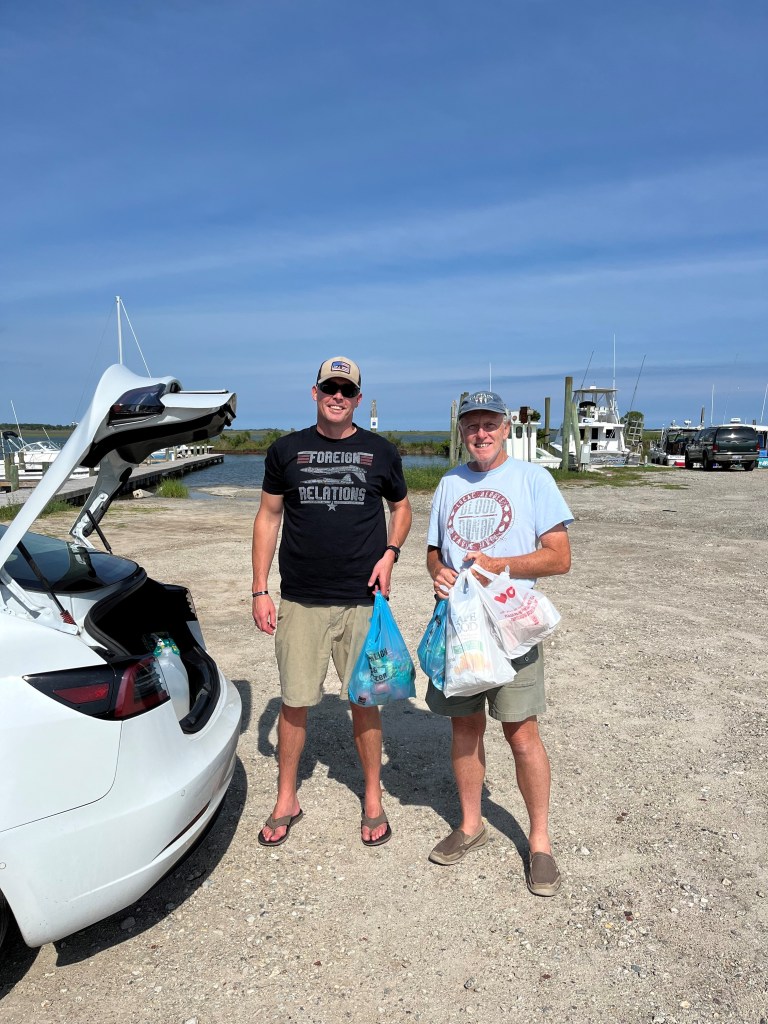
Our nephew, Major Patrick Maguire, with Captain Patrick. And, yes, Major outranks Captain!
Monday, June 6, we flew back to our boat at Osprey Marina in Myrtle Beach. It was good to be back “home” aboard Sunshine.
Tuesday we had intentions of travelling to Sneads Ferry to visit our nephew, Patrick Maguire, and his family – Simone, Jamison and Lochlan. Unfortunately we came down with a flu and hung out at the marina to recuperate.
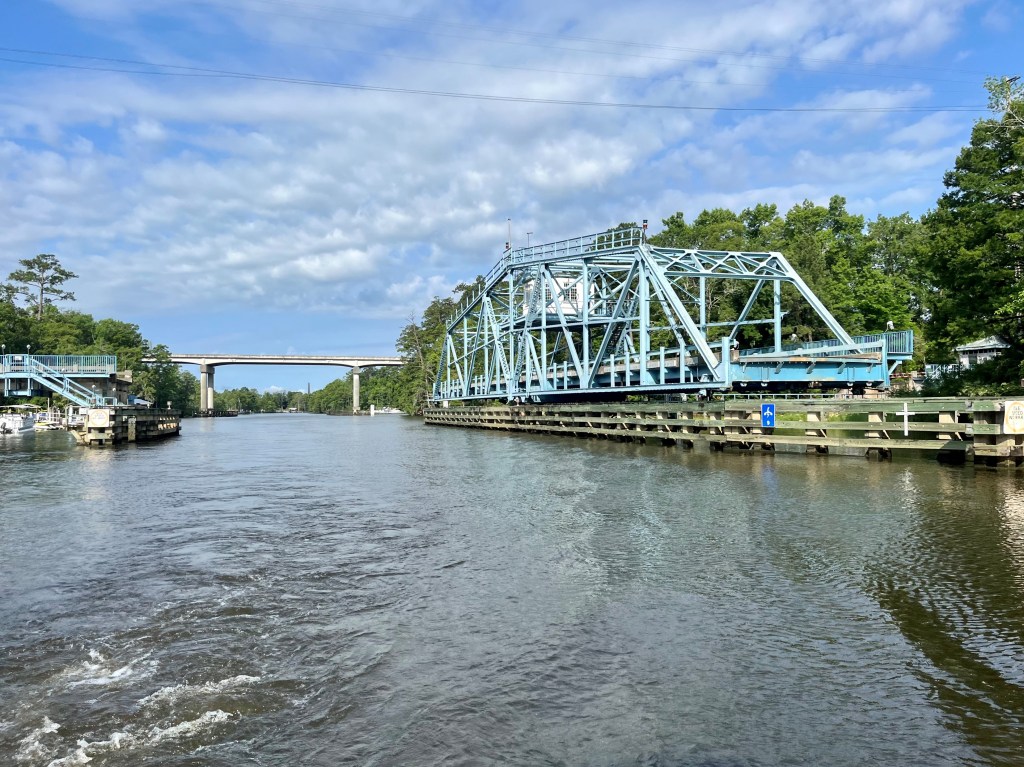
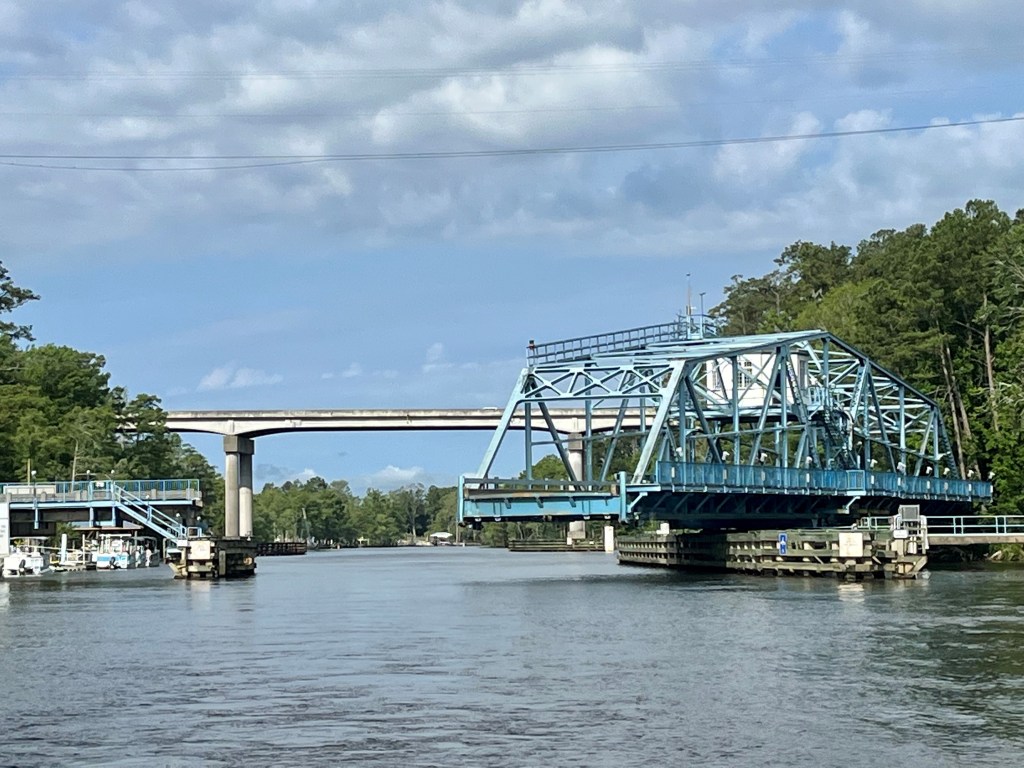
Wednesday, still not quite feeling well, we did leave Osprey and anchored out that evening in Southport. We experienced some “swing” bridges along the way. A swing bridge opens horizontally, not vertically. Instead of the bridge going “up” it swings around.
We finally made it to Sneads Ferry Thursday evening, June 9 and stayed until Saturday, June 11. Unfortunately we didn’t make it to see the Maguires as we were still under the weather.
Major Patrick was our hero! He came through with groceries and pharmacy deliveries. You are the best, Patrick! We couldn’t have done it without you.
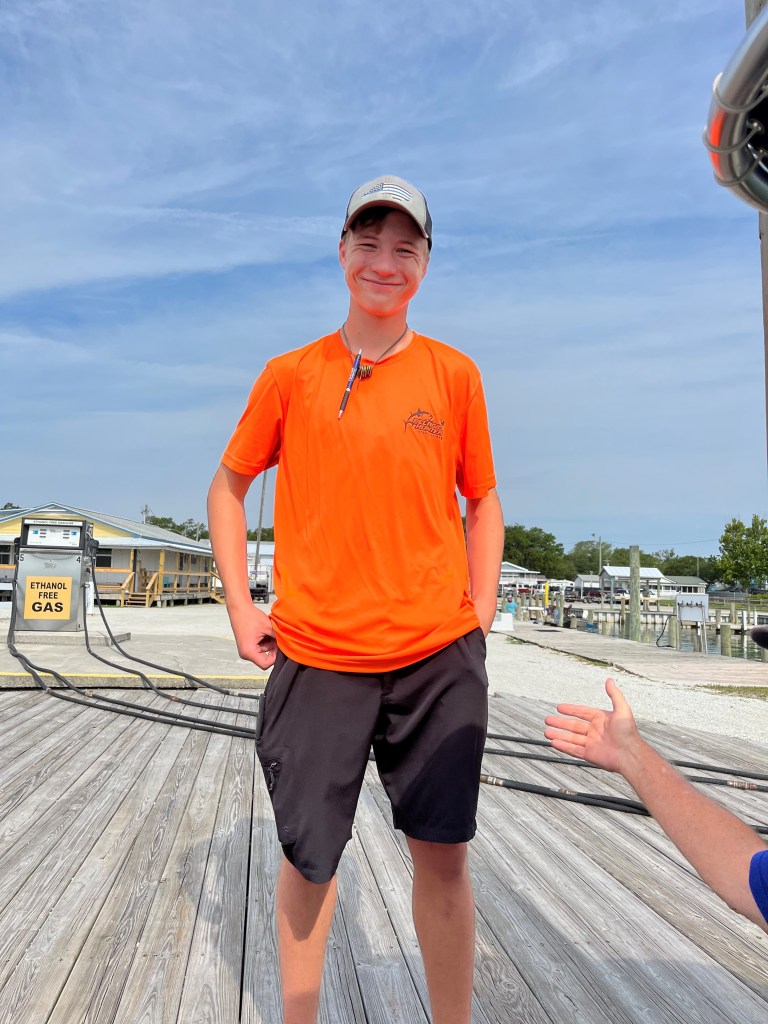
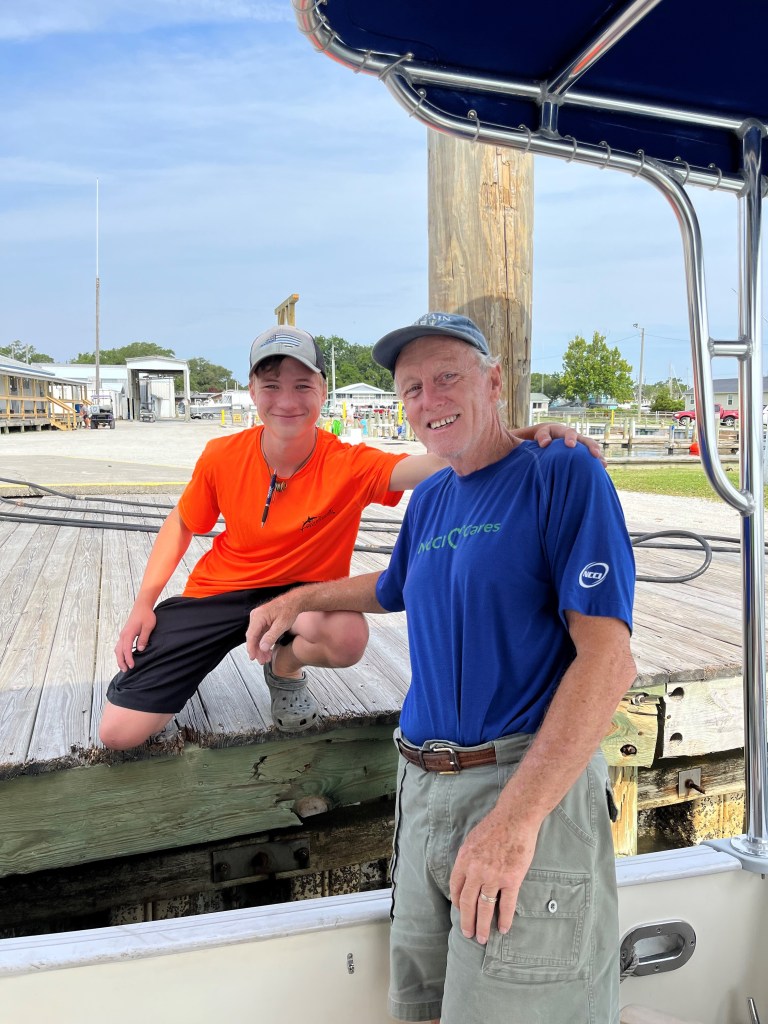
Another bright spot at Sneads Ferry was the dockhand at the marina where upon leaving we picked up fuel. His name was Nathan. We inquired about the dog tags around his neck. Turns out he is named after his Dad’s best friend, Nathan, who died serving our country in Volusia, Afghanistan. Thank you to Nathan, for living up to the legend of his Dad’s fallen friend and hero.
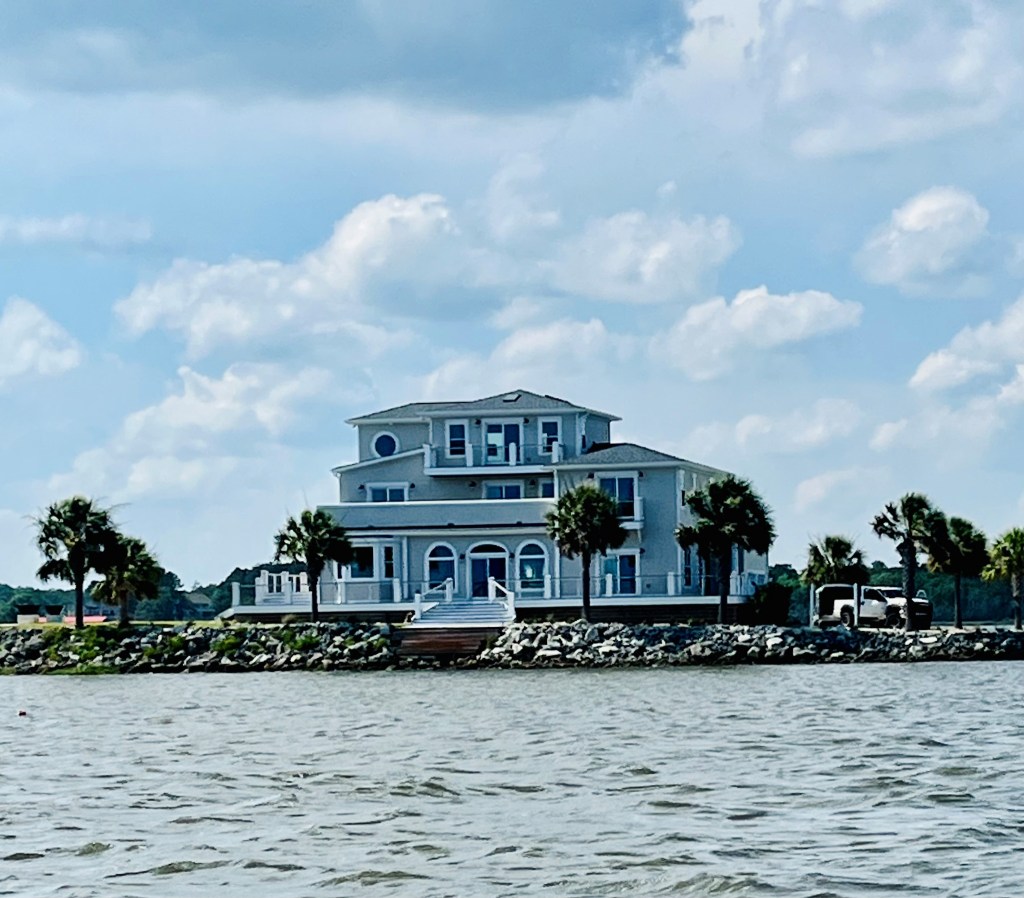
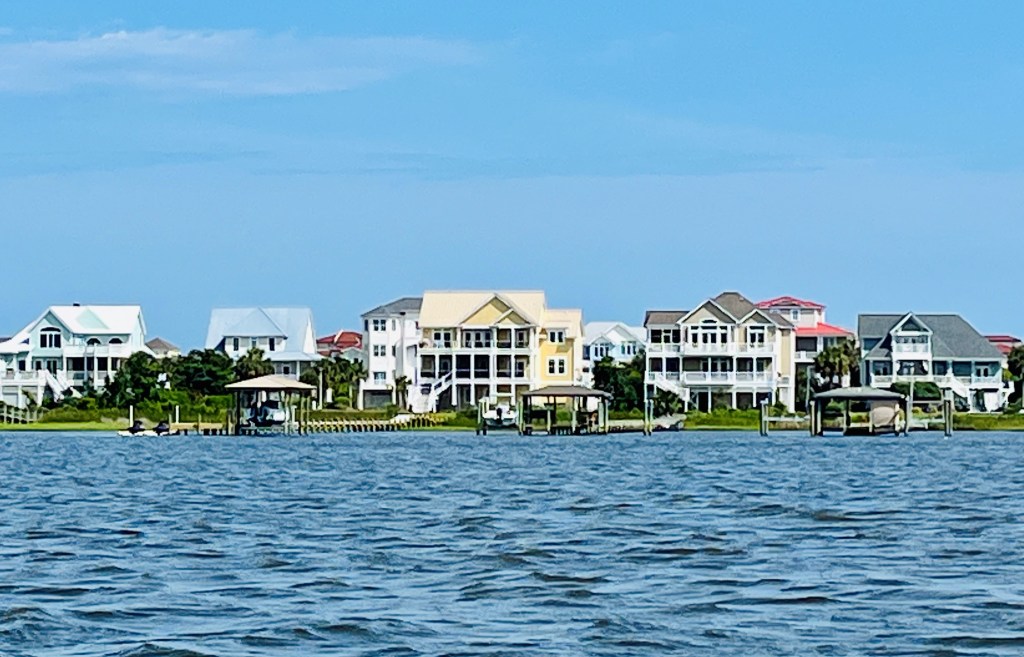
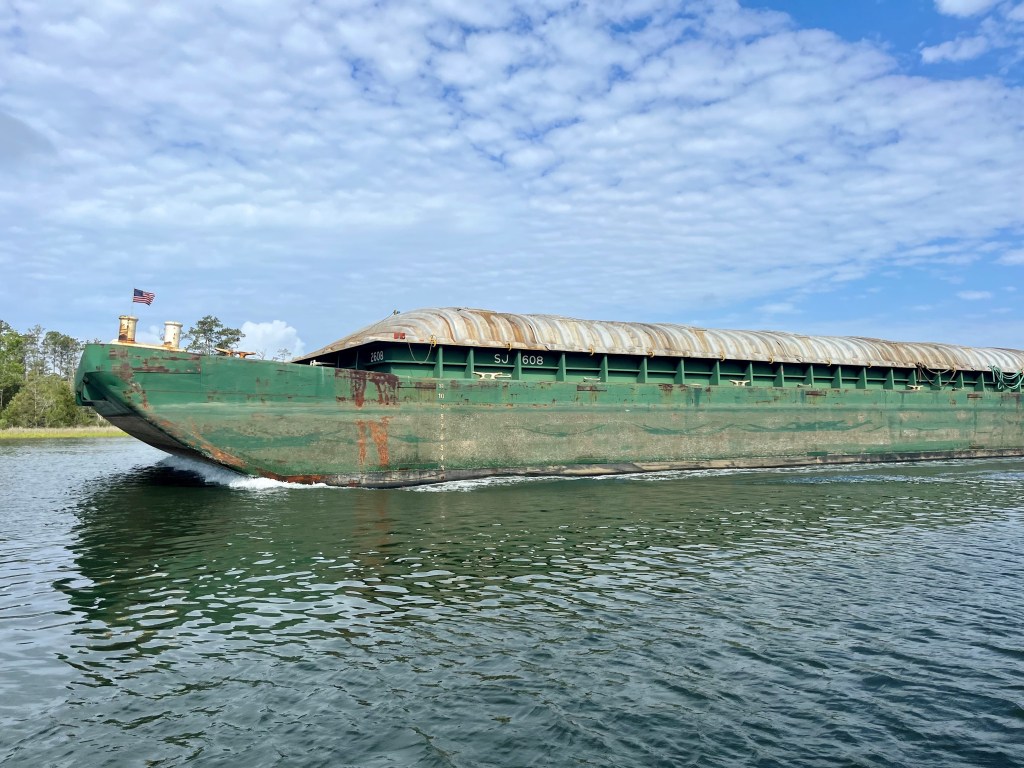
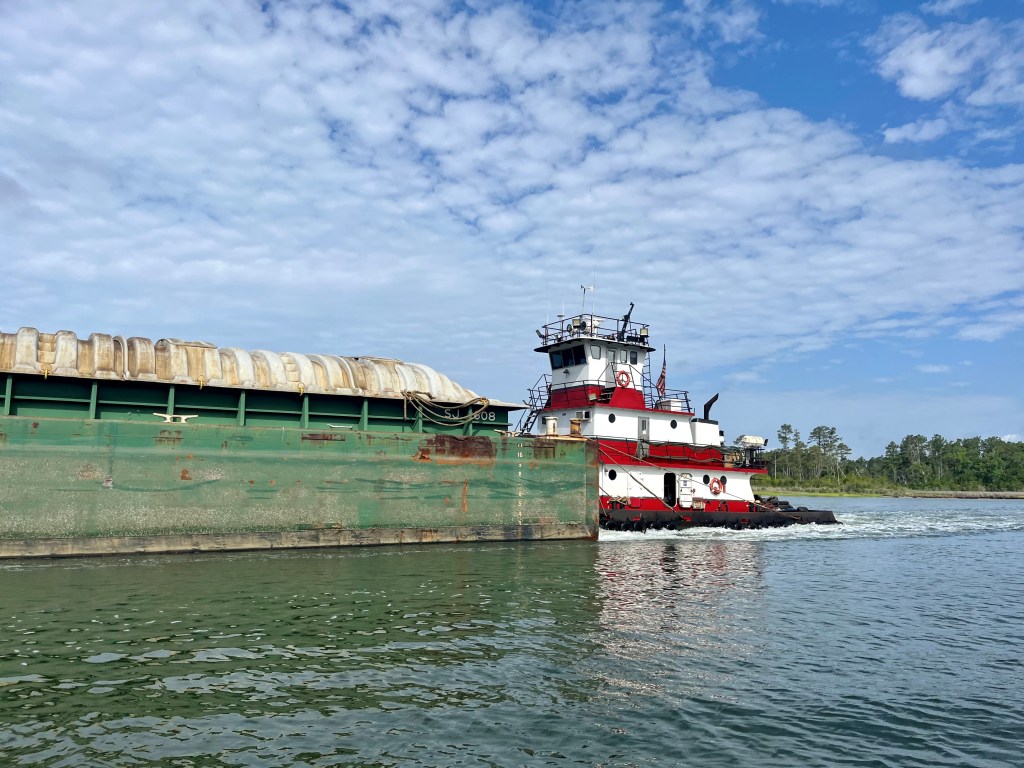
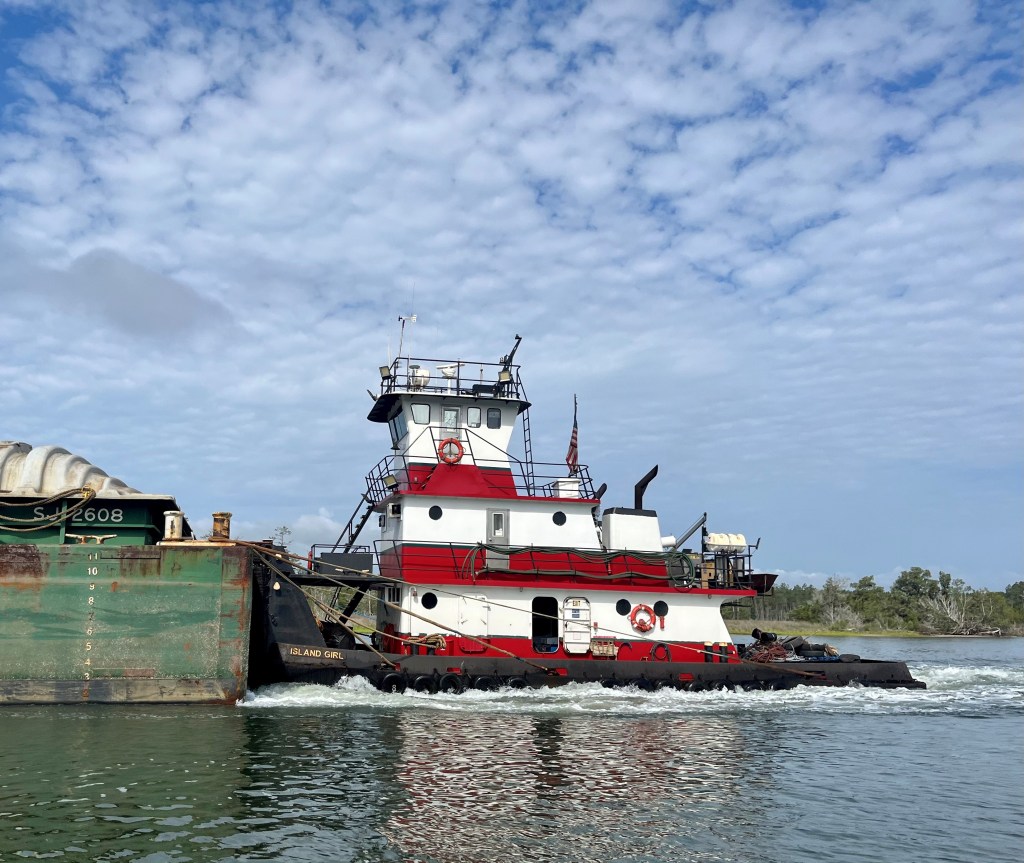
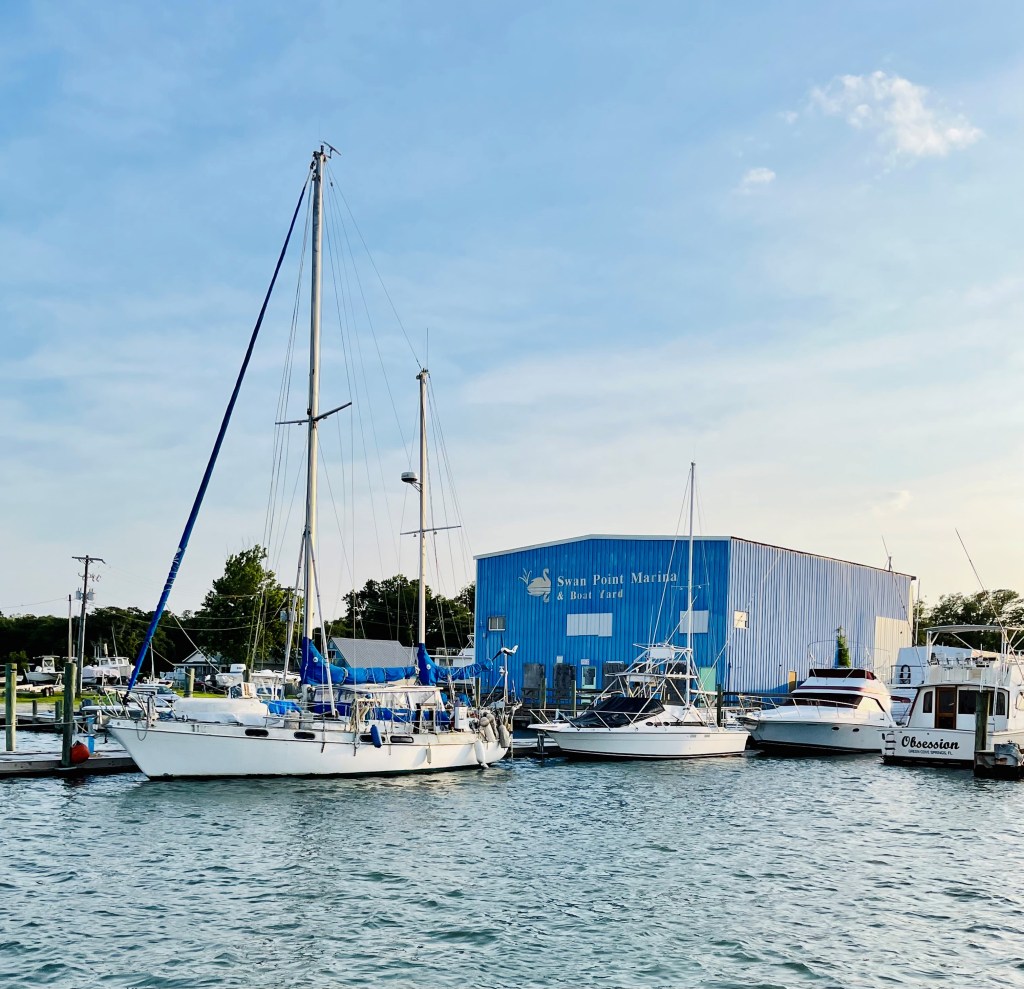
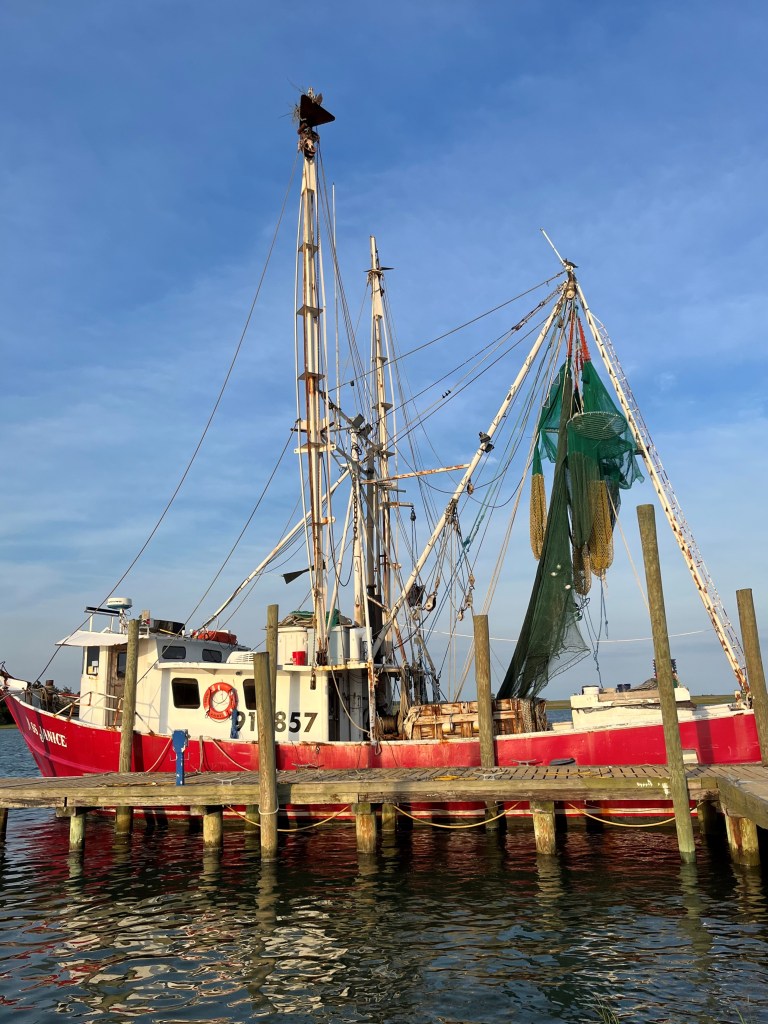
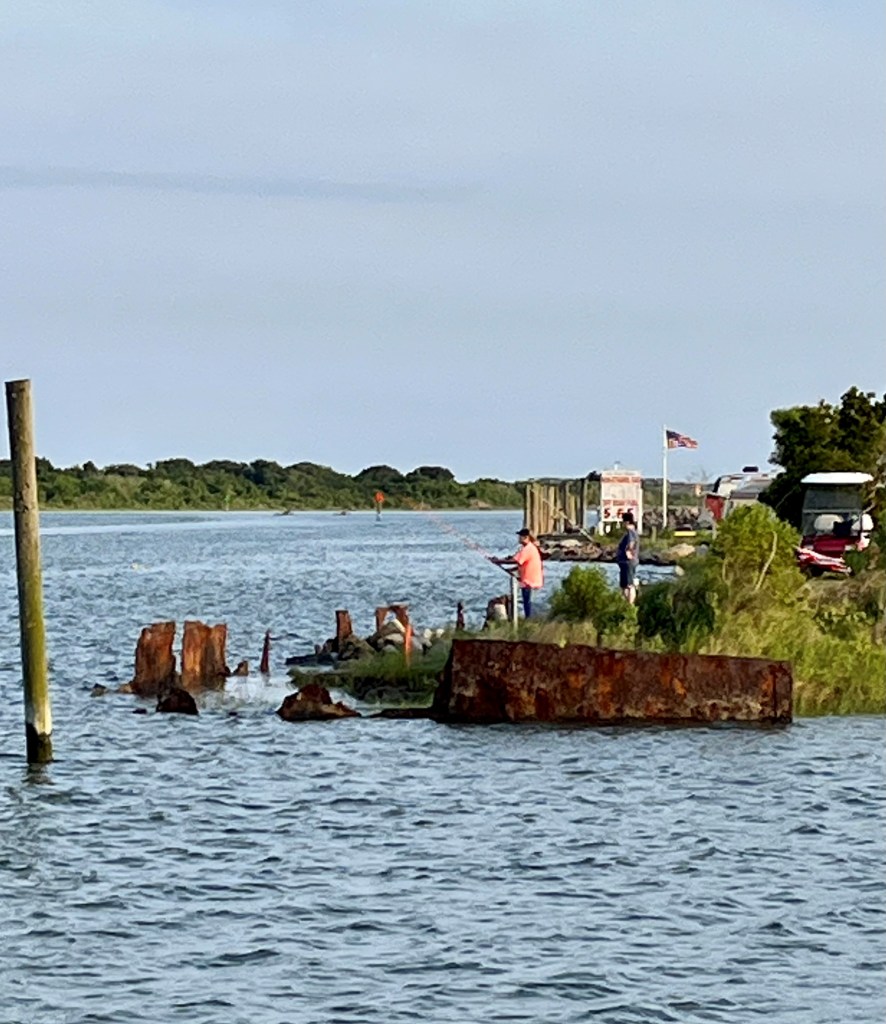
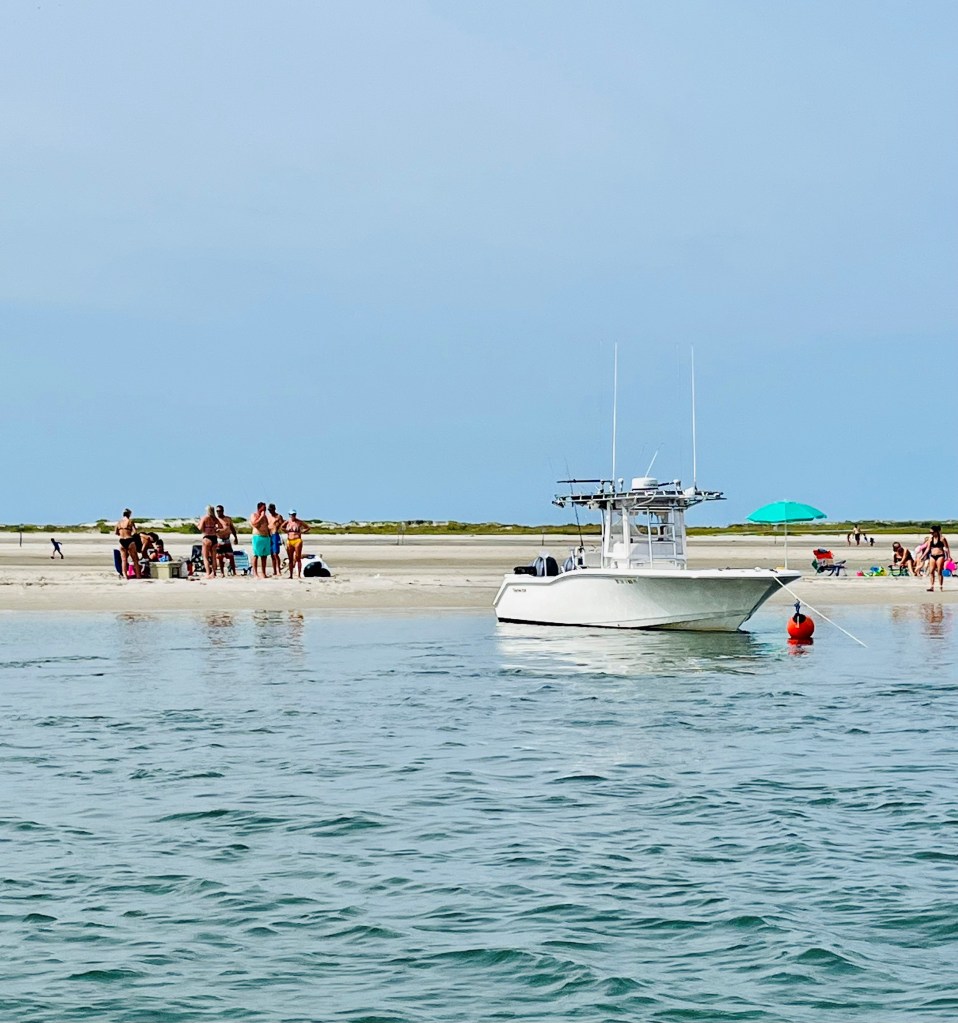
Nathan – best dock hand – quite a personalitySocastee Swing Bridge The Little River swing bridge was renamed in 2018 to Captain Archie Neil “Poo” McLauchlin (a different spelling from our name) Bridge. Captain Poo, 86, is a lifelong resident of the North Strand, known by many in the North Myrtle area. “He’s soft spoken with blue eyes, white hair and a beard, and a certified Coast Guard captain who owns Captain Archie’s tavern and restaurant.” We passed some beautiful homes as we departed Myrtle Beach.Approaching Sneads FerryHuge barge on Adams Creek CanalTugboat bringing up the rearThe tug is named “Island Girl” !A sail boat yard – on Adam’s Creek CanalIn Sneads Ferry we stayed at Swan Point Marina and Boat Yard. The operative word here is “boat yard.” Lots of people working on their boats. We met some characters.Sunshine docked at Swan PointShrimp boat docked at Swan PointFishing off the pierHubert Beach – leaving Sneads Ferry toward Morehead CitySaturday at the beach
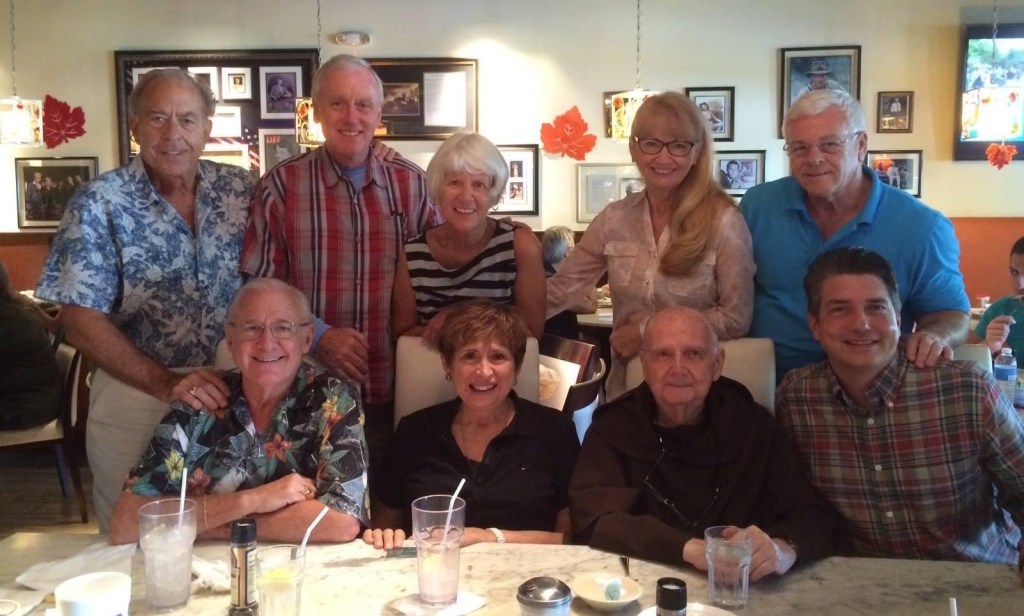
Back Row: Ben Troxell, Patrick, Kathy Troxell, Cindy, Greg Dorsey Front Row: Pete and Beverly Whitney; Father Timothy Johnson, Glenn Mueller
We flew home to Boca Raton from Myrtle Beach on Thursday, June 2, and stayed there until Monday, June 6. We came home to celebrate the life of our good friend, Ben Troxell. Ben touched so many lives and made such a difference in the community. He was a beloved member of St. Joan of Arc parish and was a true example of service.
This photo features two other beautiful souls who have left us – Greg Dorsey and Father Timothy Johnson. We love you all and miss you so.
We are praying for Kathy and her entire family, and all the friends who dearly miss Ben. May you rest in peace, Benjamin F. Troxell III.
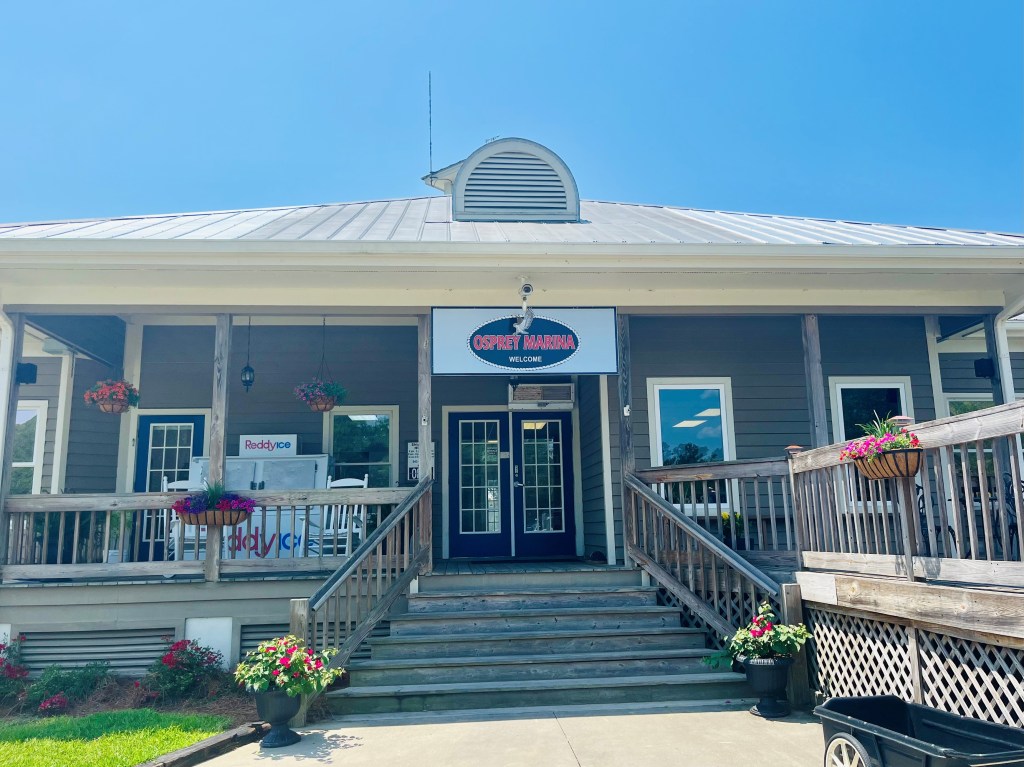
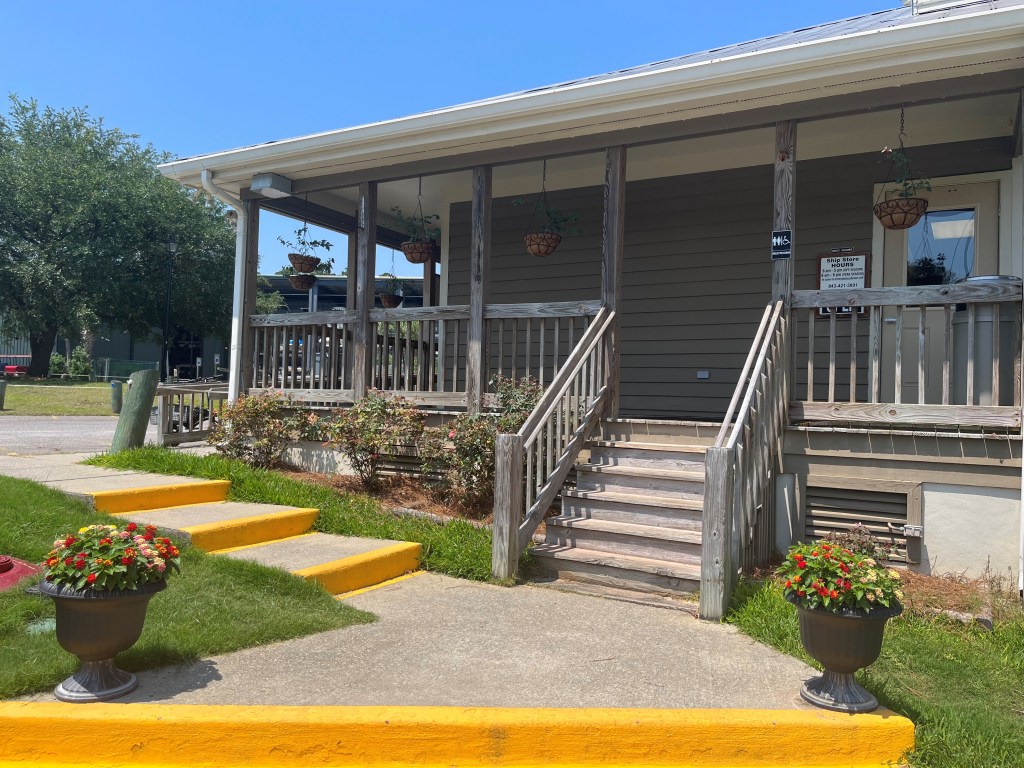
Tuesday, May 31, and Wednesday, June 1, we made Osprey Marina in Myrtle Beach our home base. This marina reminded me of Kentucky. It’s tucked away in a country setting with flowers, pine trees, and rocking chairs on the porch. And supposedly alligators, although we never saw one. Just some hungry turtles. One evening we fed one turtle who stuck his head up by the boat, looking up at us. The next morning we had three turtles!
Anne and Mitch docked beside us, and invited us over for Italian dinner takeout on their boat. Really was fun – a great couple, so glad we met them.
There’s a lot of activity at this marina. Patrick met several fellow boaters – the guys are always on the dock exchanging stories about what else – boats.
Patrick was able to secure mechanics to work on the synchronizers. The hard part was finding a guy small enough to fit in the engine room. We miss Frank! It all worked out though. (Although Andrew says we got hosed on the price. What are you going to do.)
The reason we stumbled upon this marina – we needed to fly home, and this marina is ten minutes from the Myrtle Beach airport.
Here are some pics from Osprey Marina:
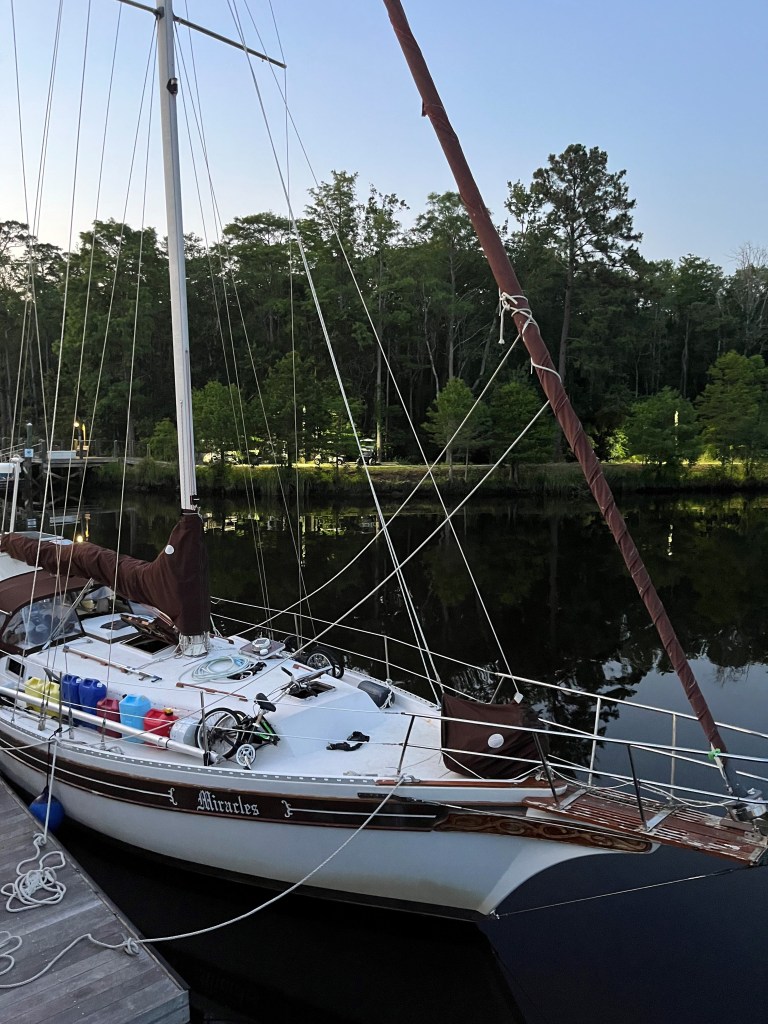
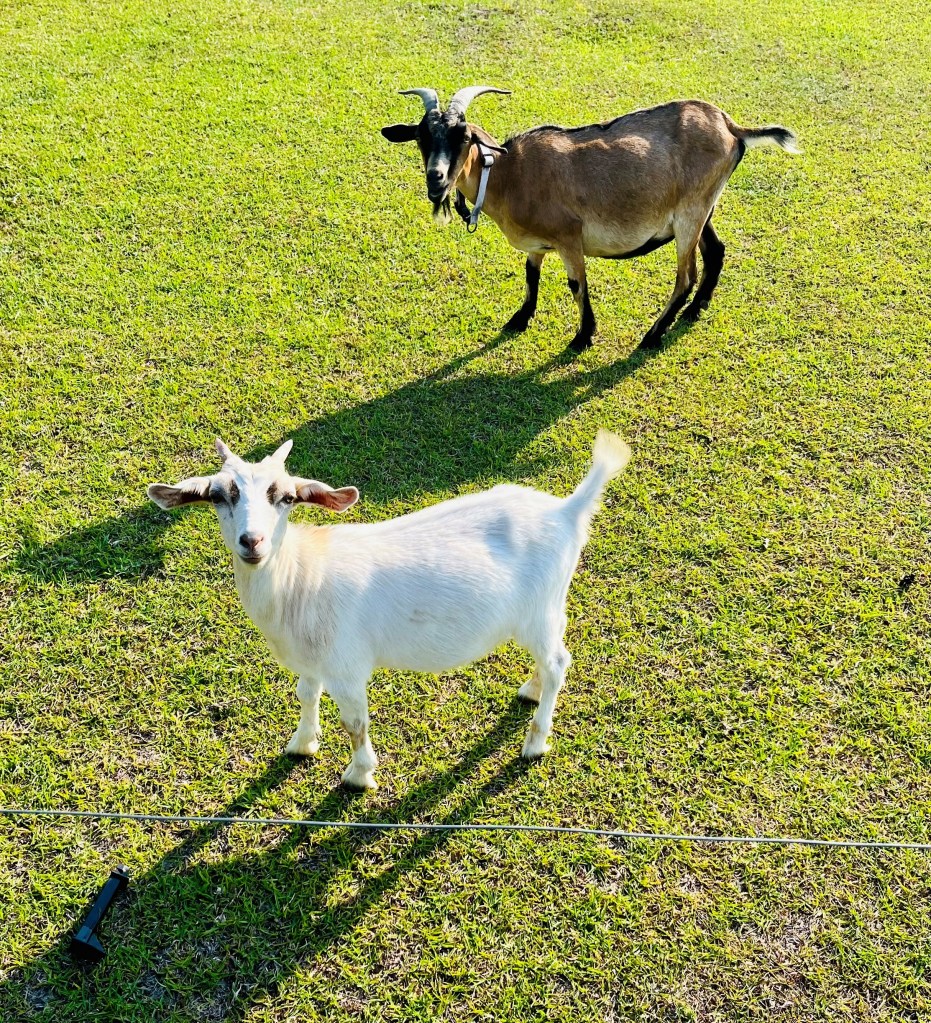
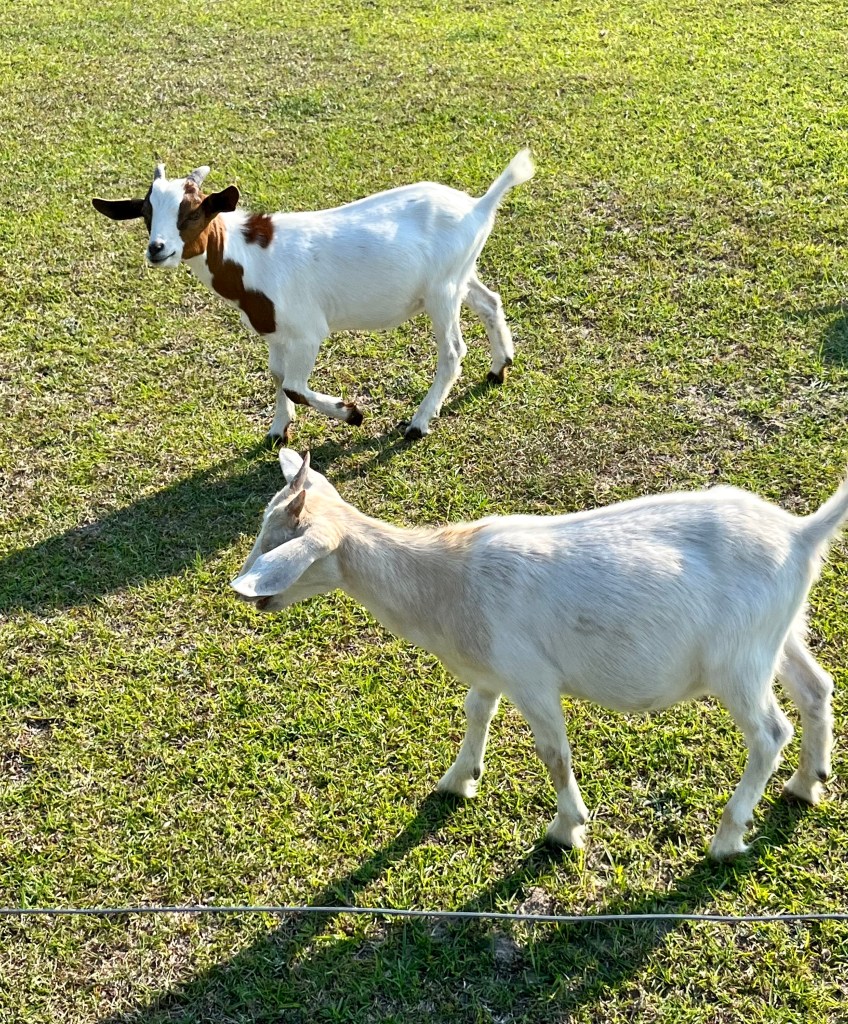
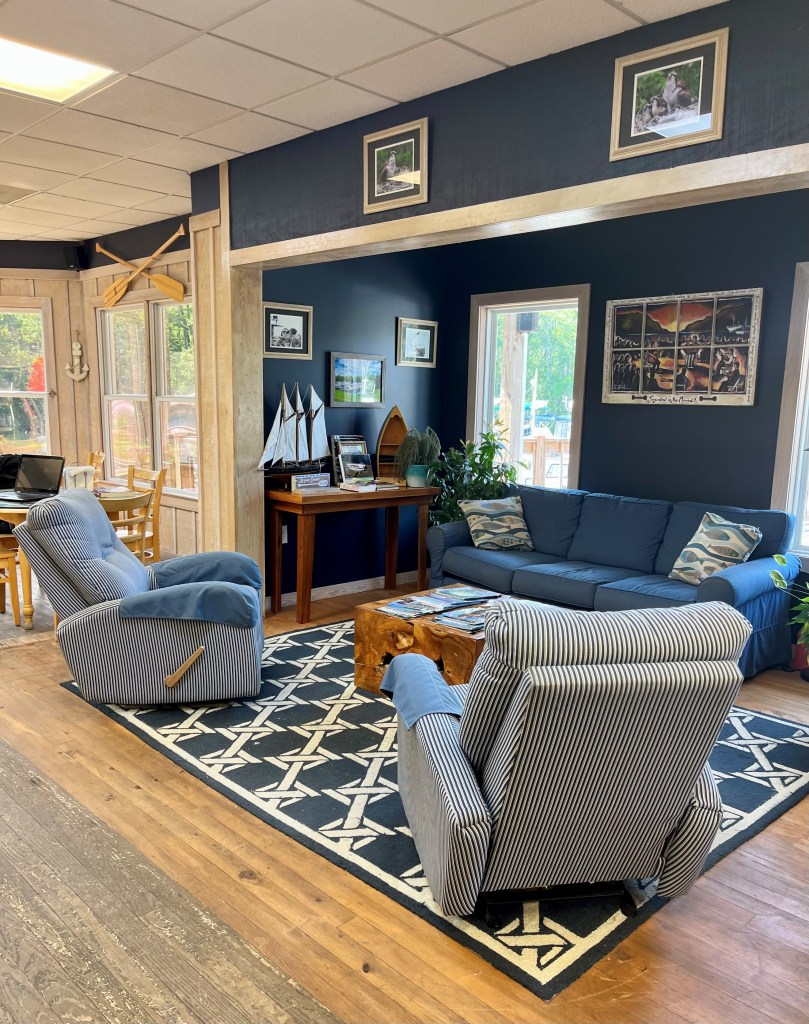
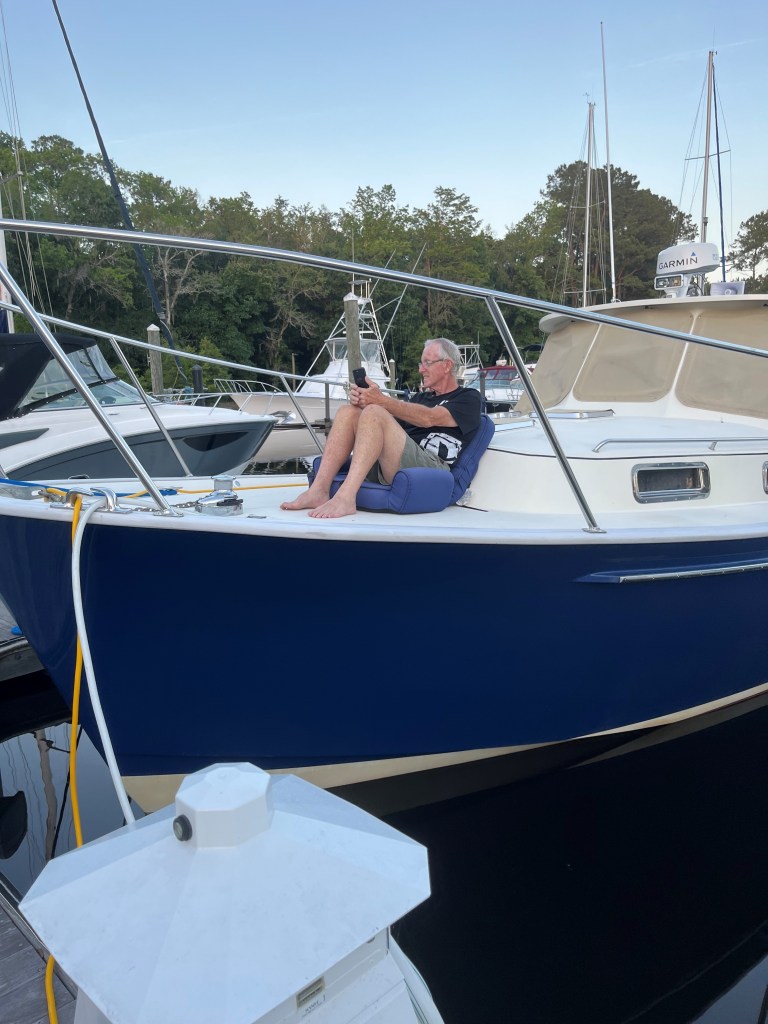
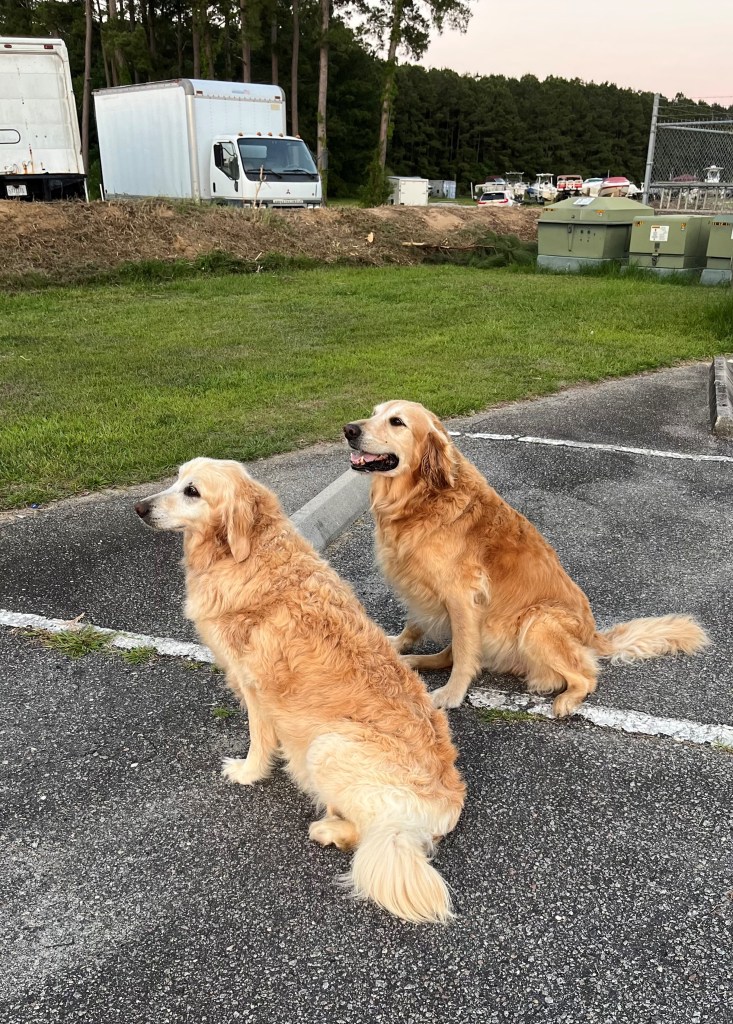
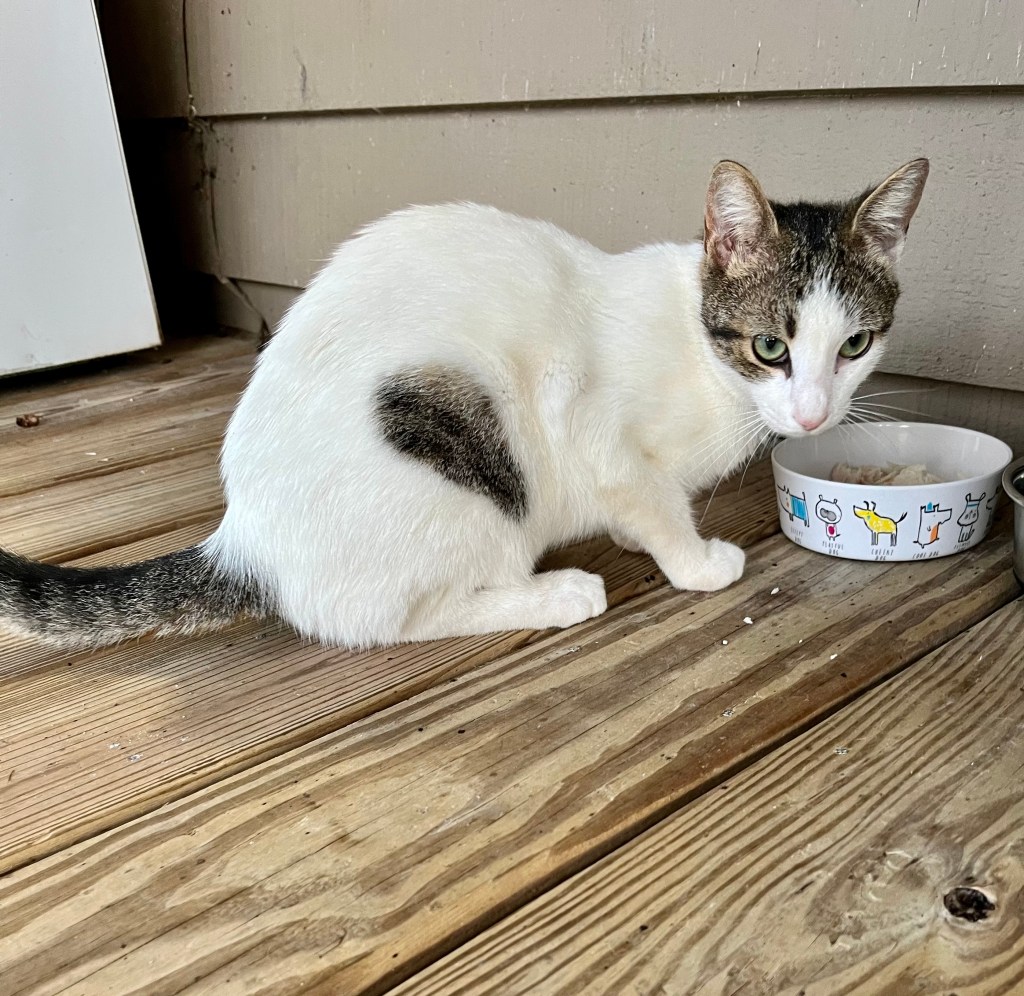
Do not feed the alligators!Osprey Marina Office and LoungeLots of live aboard sailboats here. A young couple with their pup lived on this one – Miracles.Our little buddy – Mr. Turtle – who brought along friends the next morningOut on my walk I discovered a field of goats!Comfortable loungeThe resident Uber driver, Bill, a retired marine, lives aboard this boatPatrick taking a break after cleaning the boatGot my dog fix! They remind me of Nica and Buddy.And of course I fed the marina kitty!
Monday, May 30 we departed Charleston and headed toward Georgetown, South Carolina, about 60 miles north. Georgetown is the third oldest town in South Carolina and the county seat of Georgetown County, in the Lowcountry. Located on Winyah Bay at the confluence of the Black, Great Pee Dee, Waccamaw, and Sampit rivers, Georgetown is the second largest seaport in South Carolina, handling over 960,000 tons of materials a year, while Charleston is the largest.
This was a long day for Captain Pat. We followed a buddy boat – fellow loopers we met at the marina in Charleston. Mitch and Anne are sailing the Loop in their Camano Trawler – “No Rush” – something we need to abide by! We both anchored out for the evening and agreed to meet for breakfast the next morning and take a quick look around Georgetown.
Nebo Stats for May 30: traveled 8.5 hours; 56.5 kmiles; averaged 6.6 knots
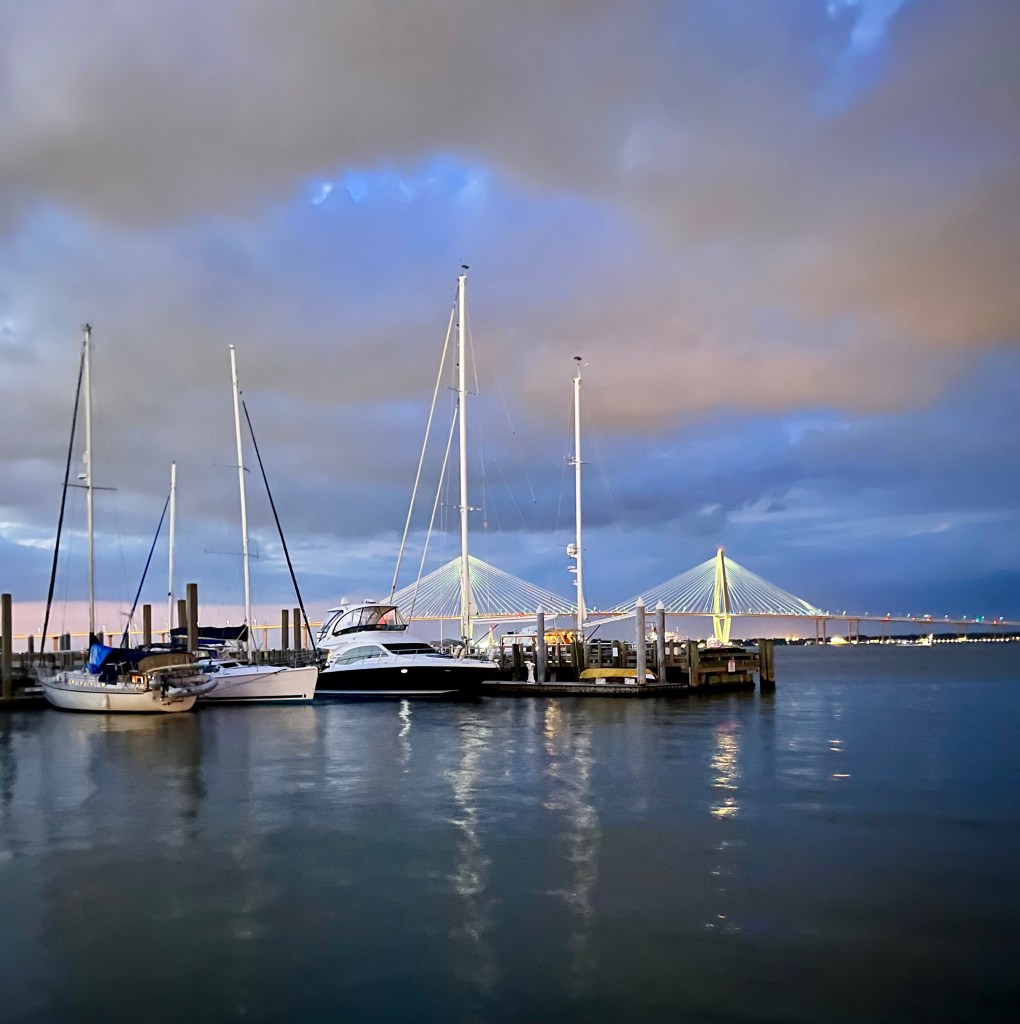
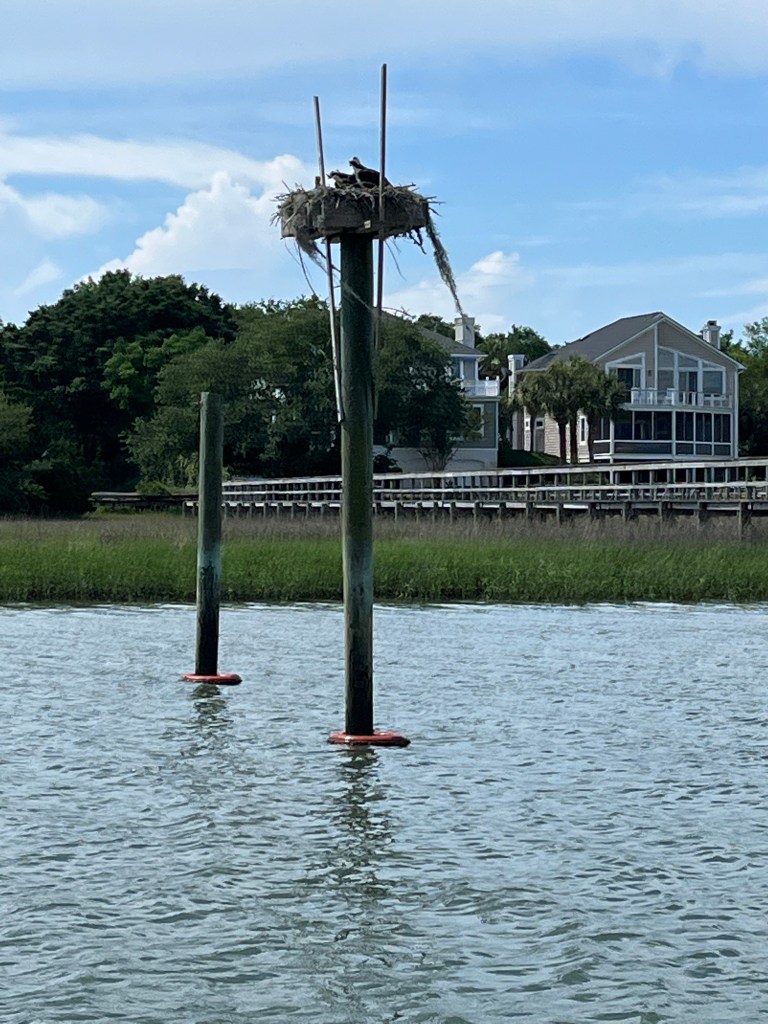
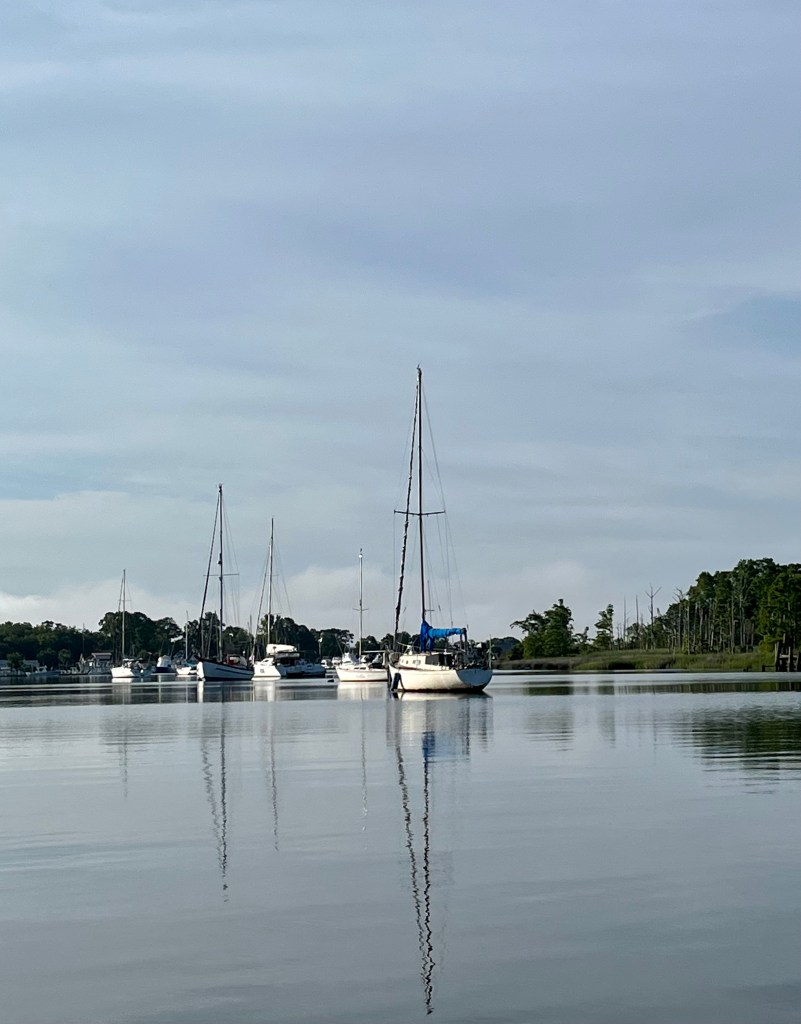
Last night in CharlestonOsprey nest – Isle of Palm. In an earlier post I claimed these were eagles. I was mistaken. They are osprey. They nest all along the ICW. “No Rush” – Anne and Mitch’s boatWe anchored by these sailboats
Tuesday, May 31, we got in our dinghy and met Anne and Mitch at the Georgetown docks. I love eating breakfast out so this was a treat. And this was a Southern restaurant – Aunny’s – that served grits!
Such a small world – over breakfast we learned Anne summer camped as a kid in Wolfeboro, New Hampshire, and she and Mitch are very familiar with Lake Winnipesaukee.
Georgetown is a charming town with waterfront shopping, fresh shrimp and historic tours. We departed about 10 a.m. en route to Myrtle Beach, where we had reservations at Osprey Marina. This turned out to be one of our favorite spots.
Nebo Stats for May 31: traveled 4.5 hours; 28.1 kmiles; averaged 6 knots
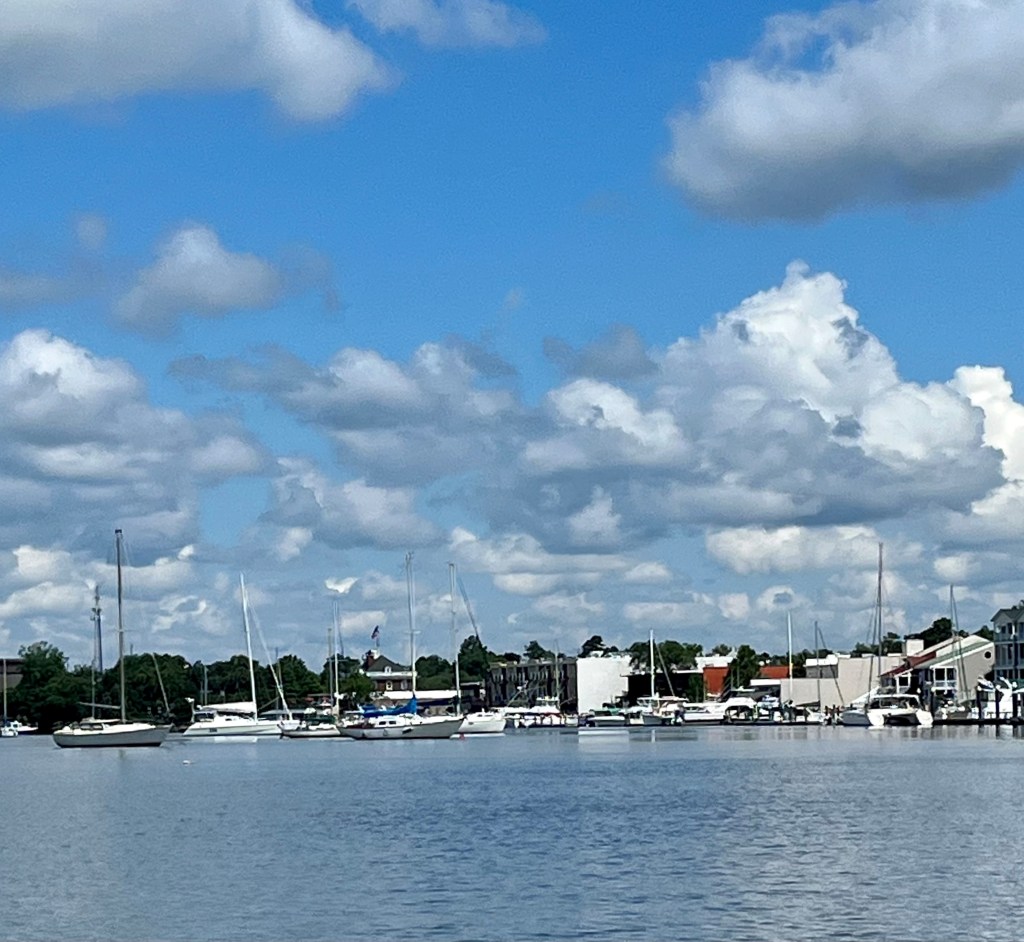
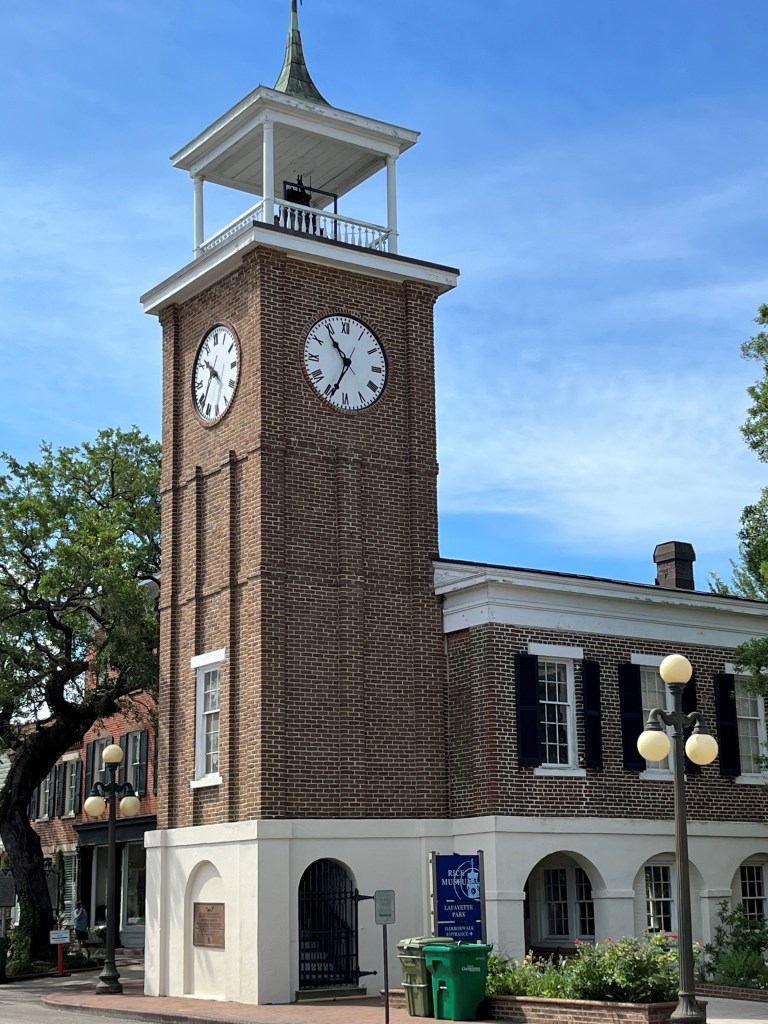
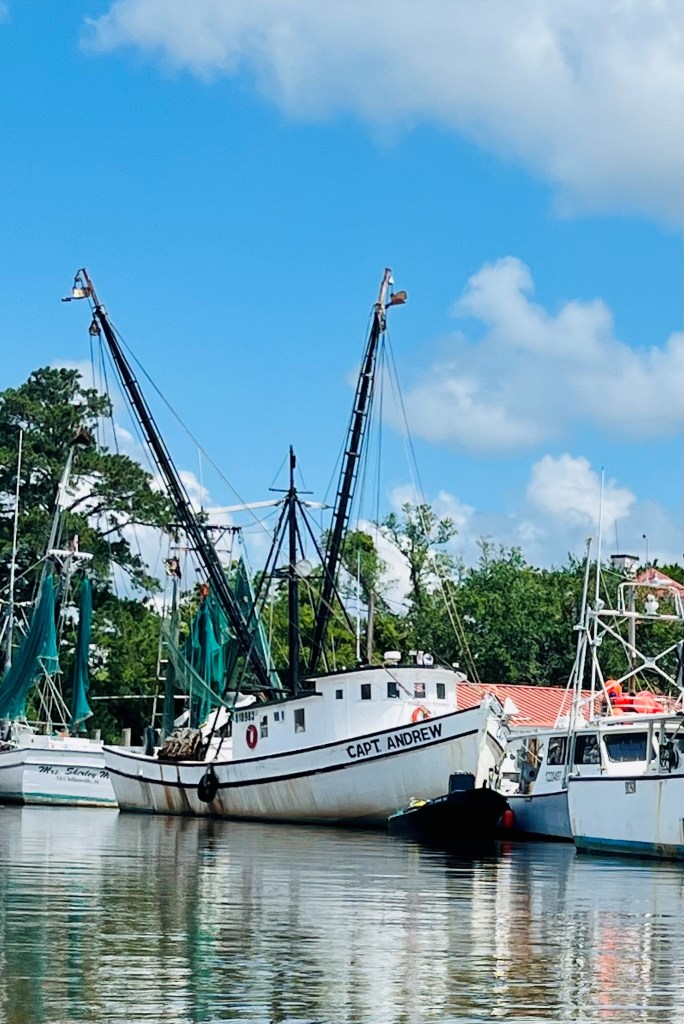
Georgetown waterfrontQuaint downtown shopsHistorical downtownCool boat on Sampit RiverCaptain Andrew shrimp boat
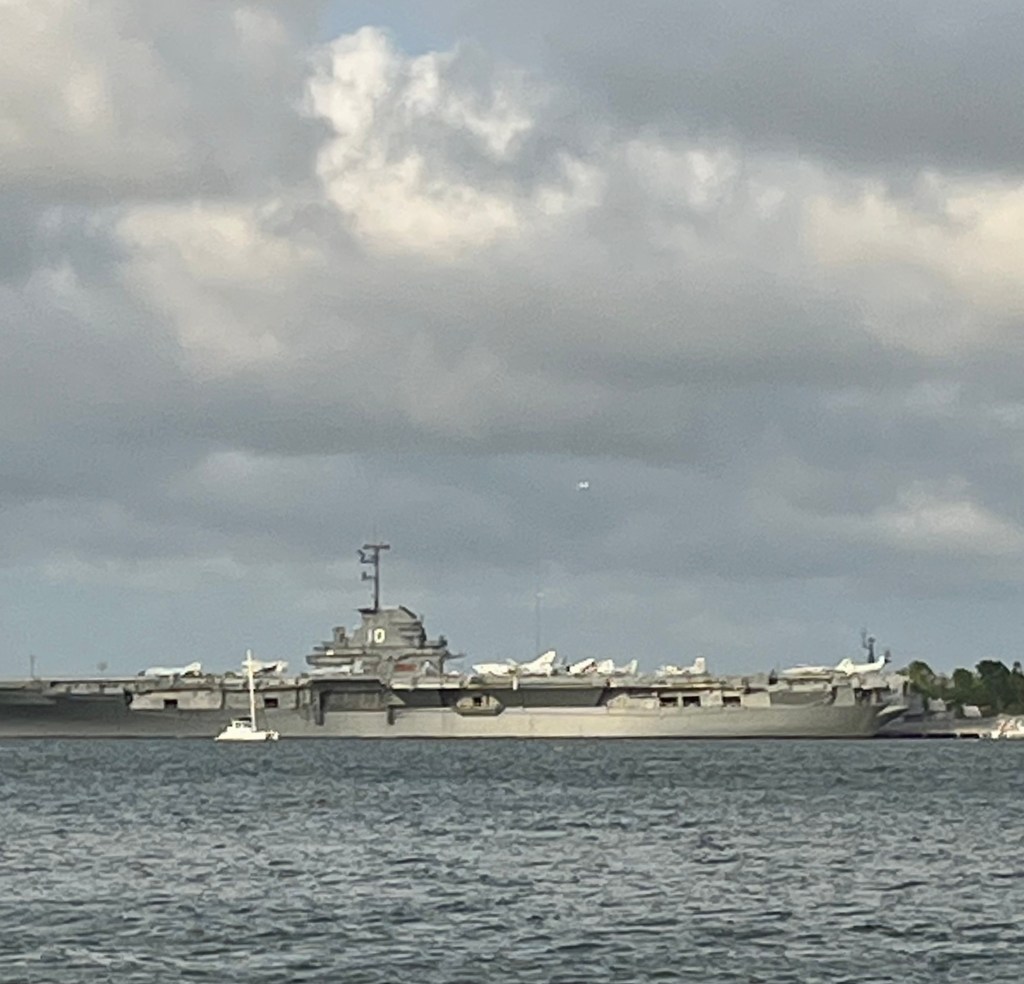
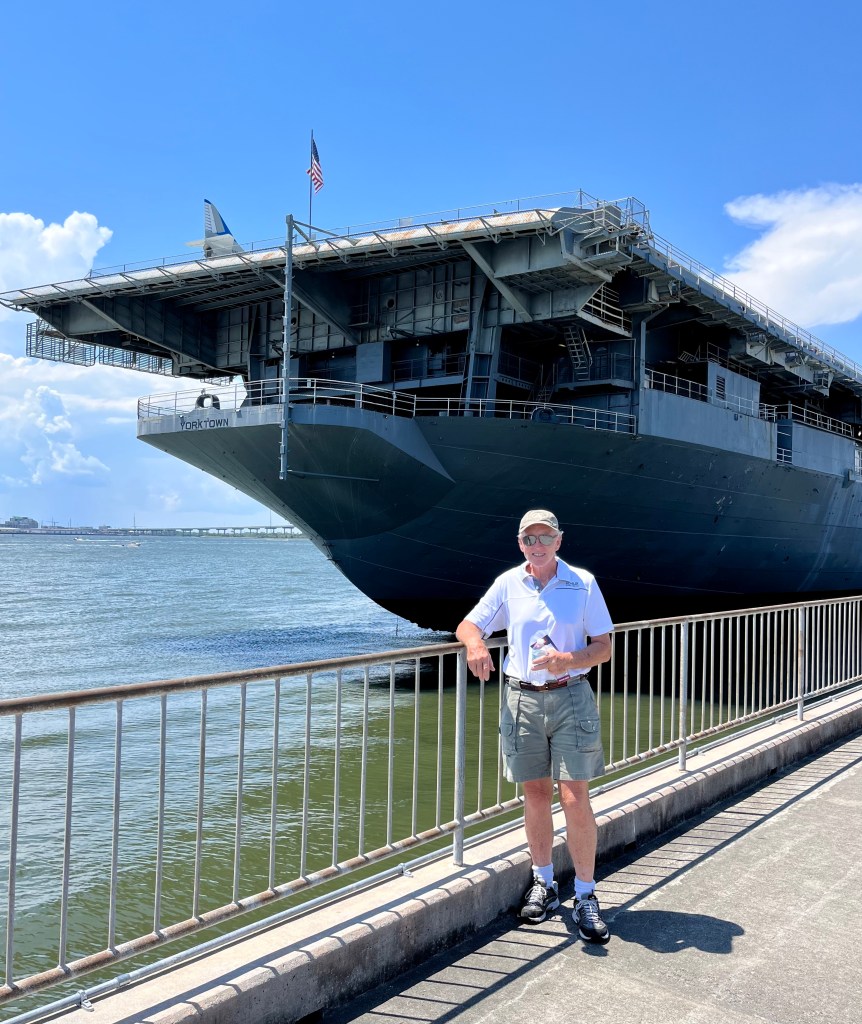
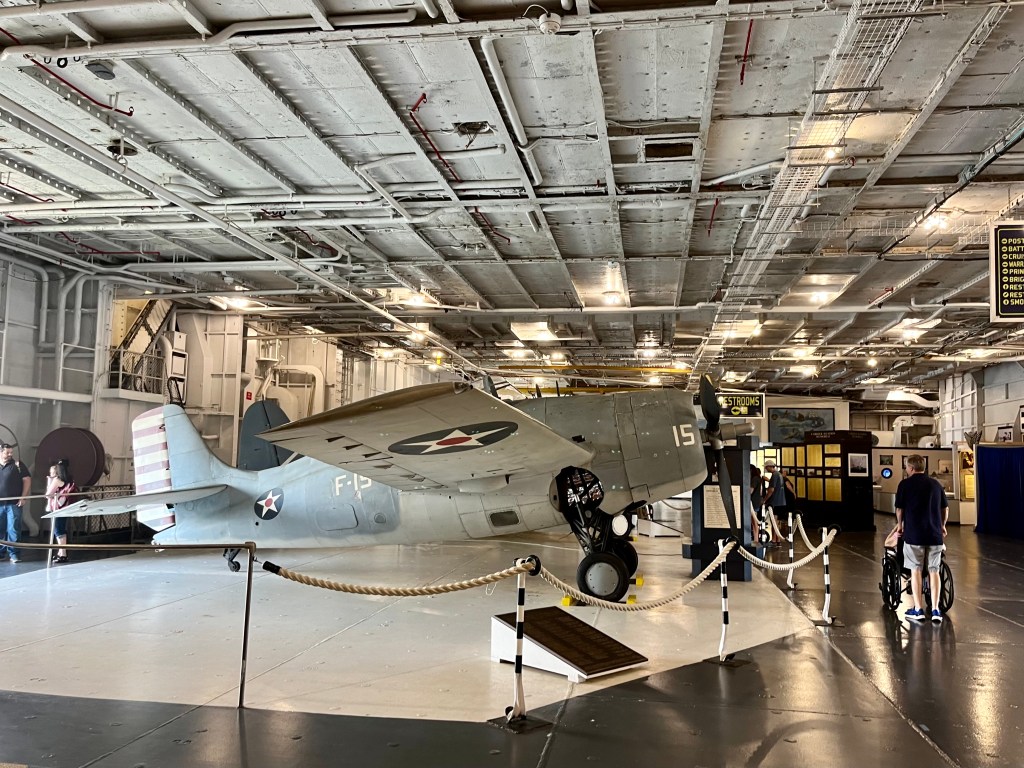
When docked in Charleston we looked across the harbor and could see “The Fighting Lady” – the USS Yorktown Aircraft Carrier. Sunday, May 29, we took a water taxi over to the ship to tour her.
Crossing the harbor in the water taxi was itself an adventure. The captain maneuvering the boat has to know what he’s doing – the waters are so choppy, it’s like being on the ocean. His dock hand was adept too, grabbing the lines and securing the taxi as we stopped. She hurt her hand at one point. Patrick pointed out on the trip over the front line was frayed, about to break. Sure enough it did break later but she was quick to replace it.
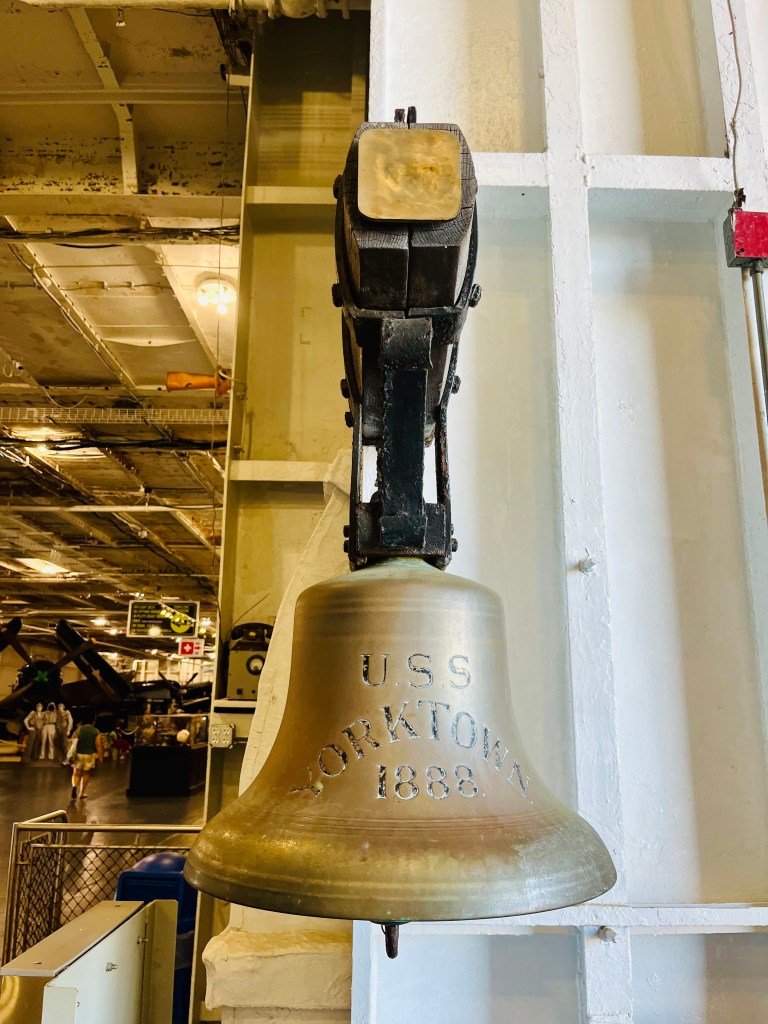
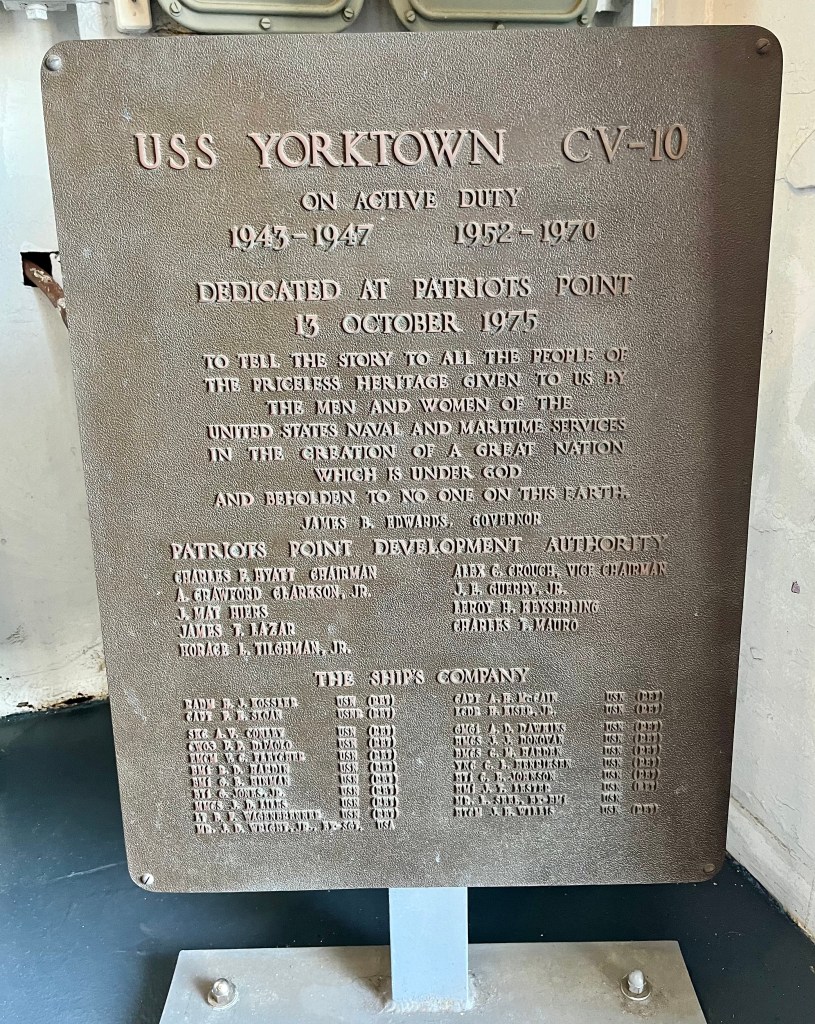
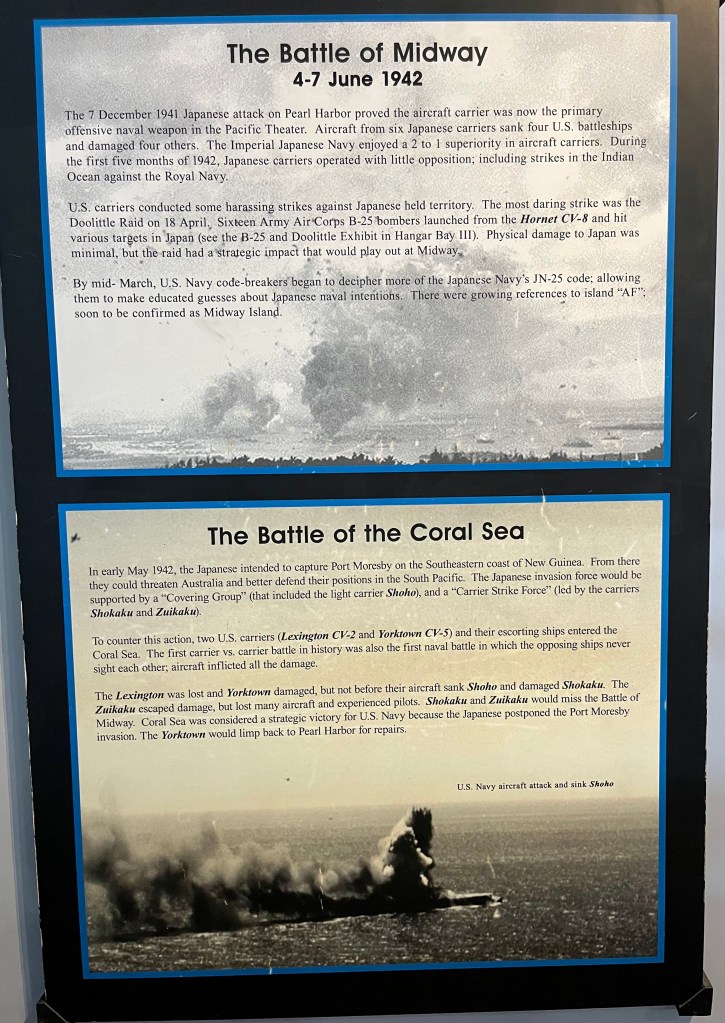
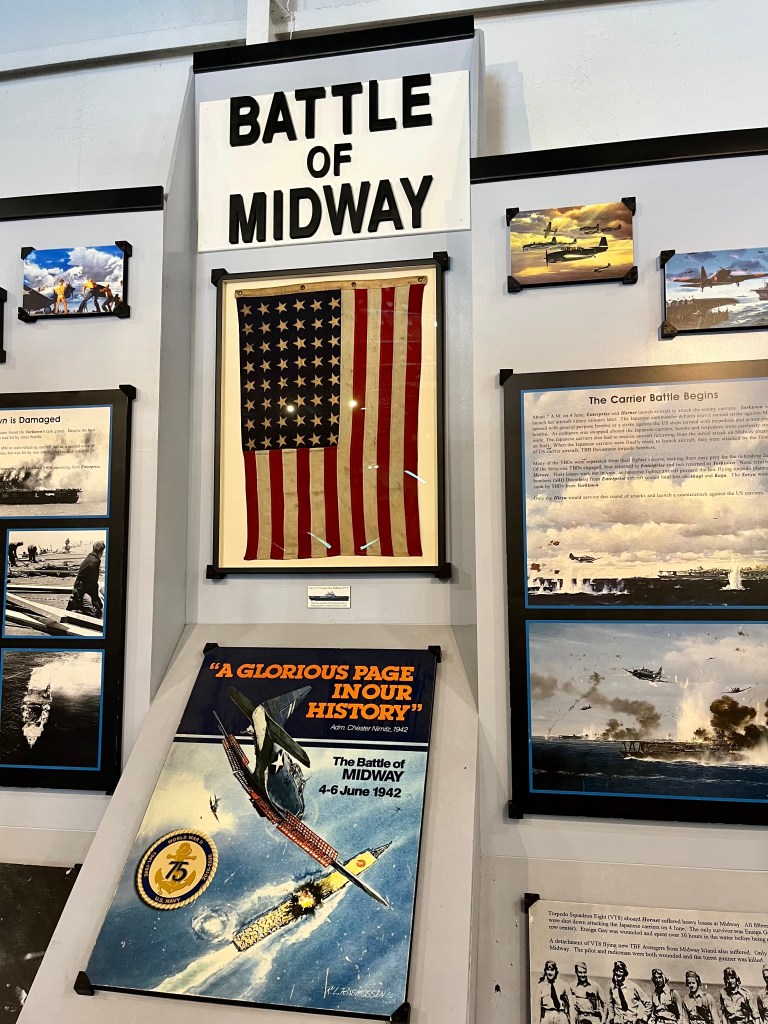
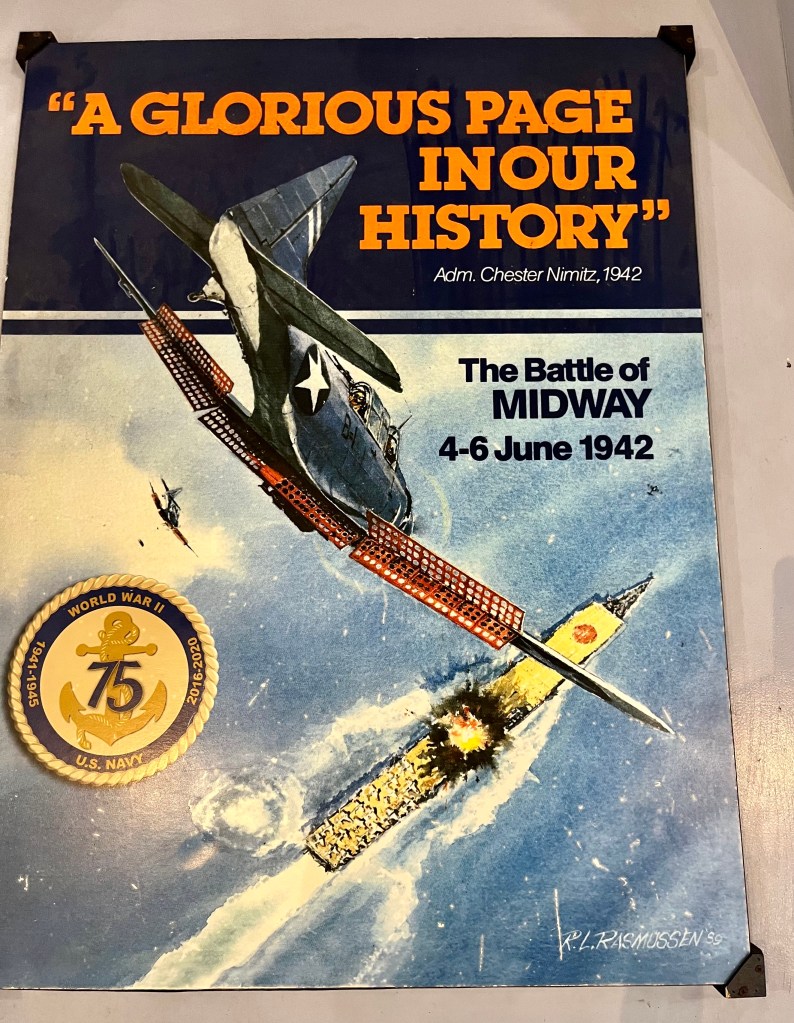
The USS Yorktown is one of 24 Essex-class aircraft carriers built during World War II for the United States Navy. Initially to have been named Bonhomme Richard, she was renamed Yorktown while still under construction, after the Yorktown-class aircraft carrier USS Yorktown (CV-5), which was sunk at the Battle of Midway. (My father served in the Navy at the Battle of Midway.) She is the fourth U.S. Navy ship to bear the name, though the previous ships were named for 1781 Battle of Yorktown.
Yorktown was commissioned in April 1943, and participated in several campaigns in the Pacific Theater of Operations, earning 11 battle stars and the Presidential Unit Citation.
To give you an idea of her size – when we reserve a slip at a marina, we first say name of motor vessel – Sunshine – then they ask for length, beam and draft of the vessel. For Sunshine, length is 34 feet; beam 12.5 feet; draft 3.5 feet. For Yorktown, the length is 820 feet; beam 93 feet; draft 34 feet!
The tour was beyond our expectations. You can see in the photos below. What impressed me most was how the sailors, marines, air crew, and soldiers fought with little technology. And how young and innocent they were! We saw a video of life on the ship. The planes would come crashing on the aircraft carrier, some on fire, some missing parts. Smoke was everywhere, men running rampant to rescue plane and pilot. And the pilot would miraculously climb out of the top of the plane. Or not.
It really gives new meaning to the words we utter to service men and women – “Thank you for your service.” There just are no words to express the gratitude warranted. To all of you we send much respect and admiration.
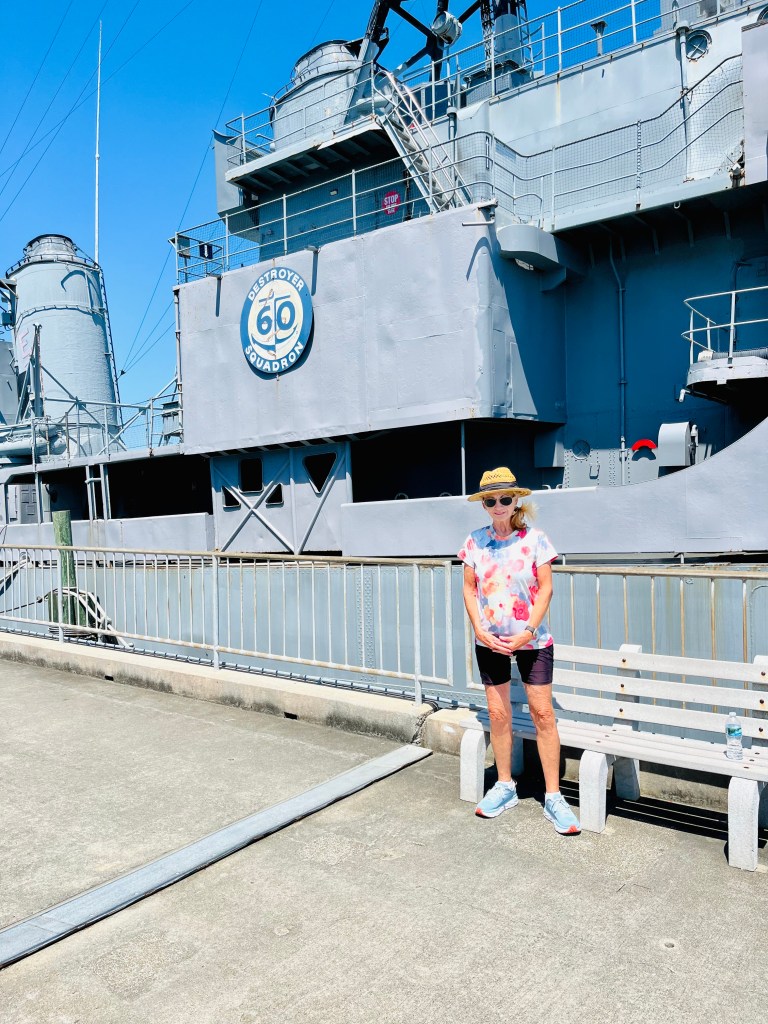
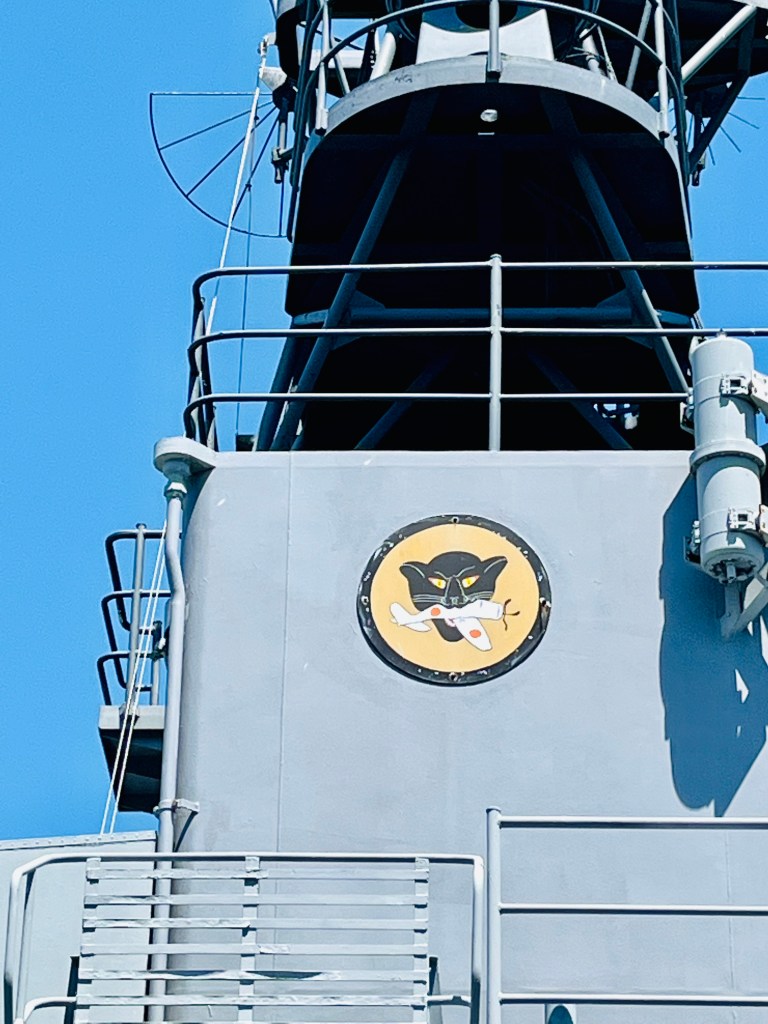
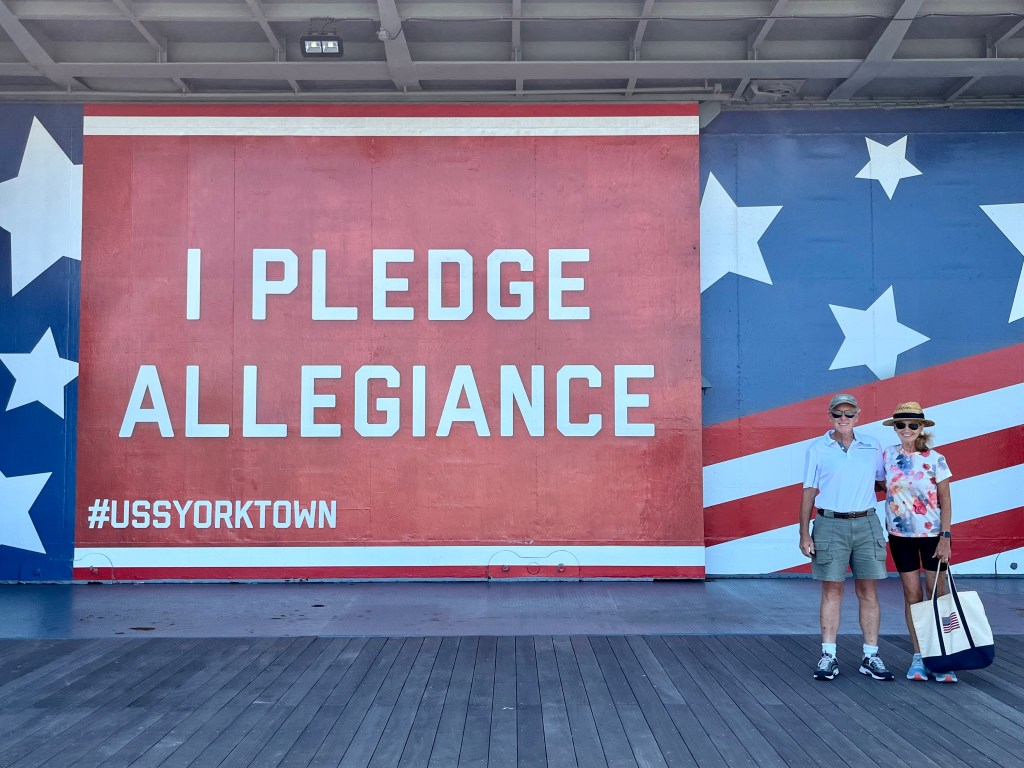
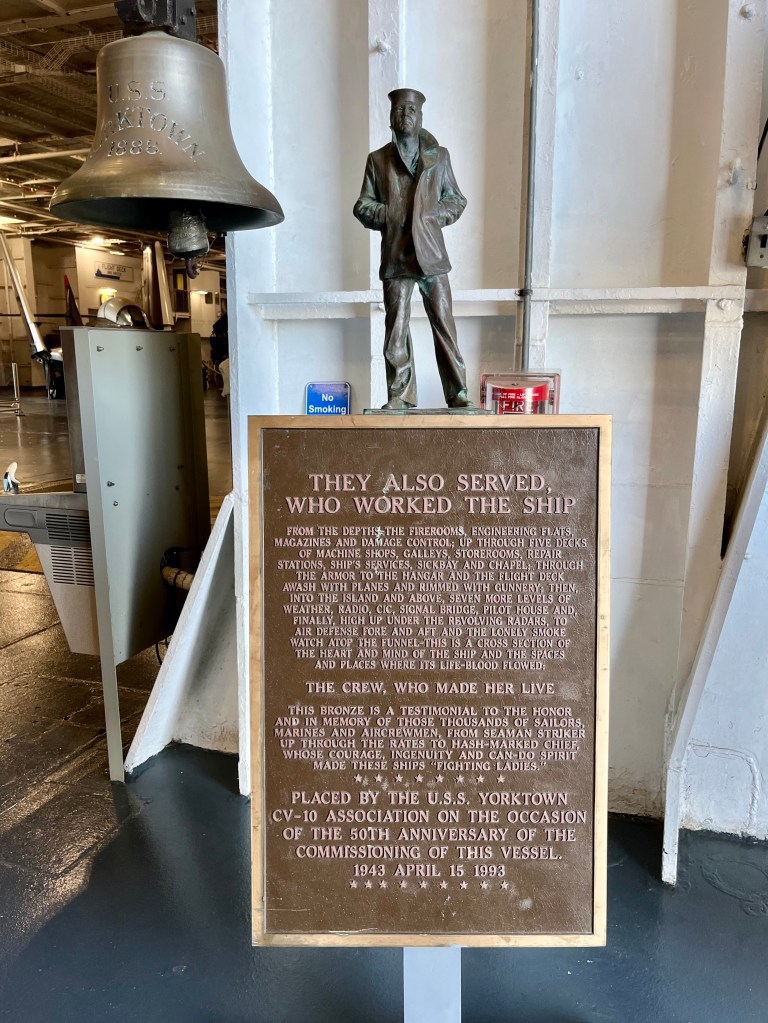
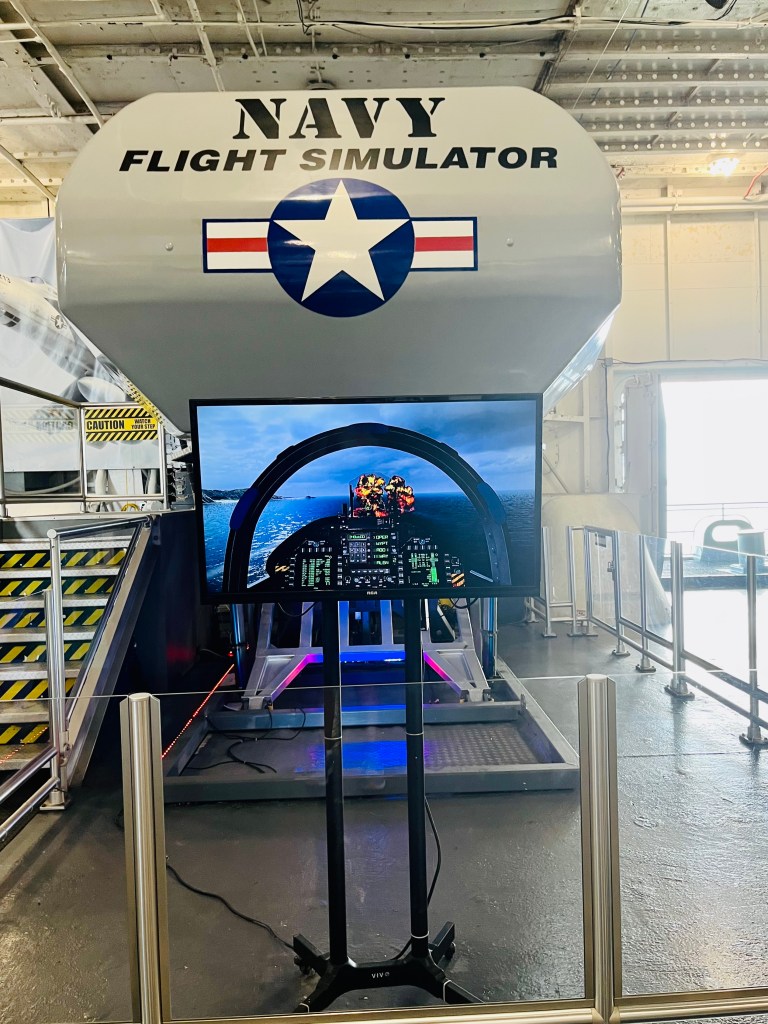
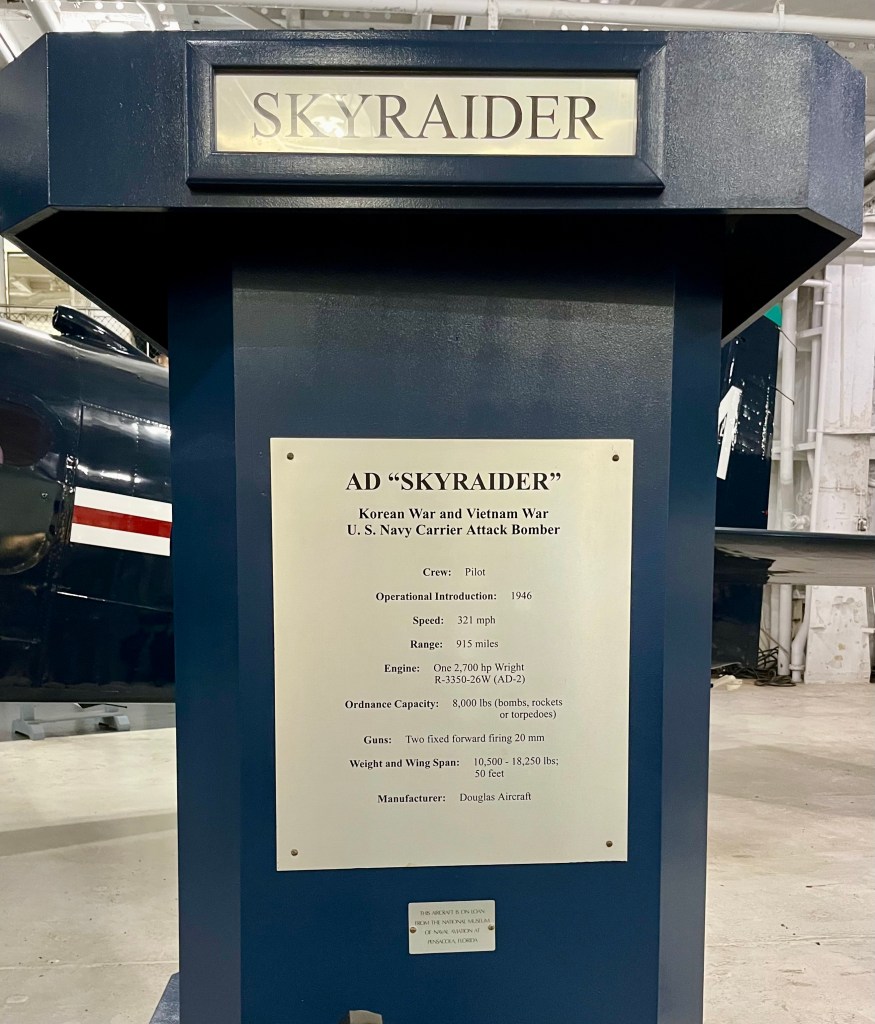
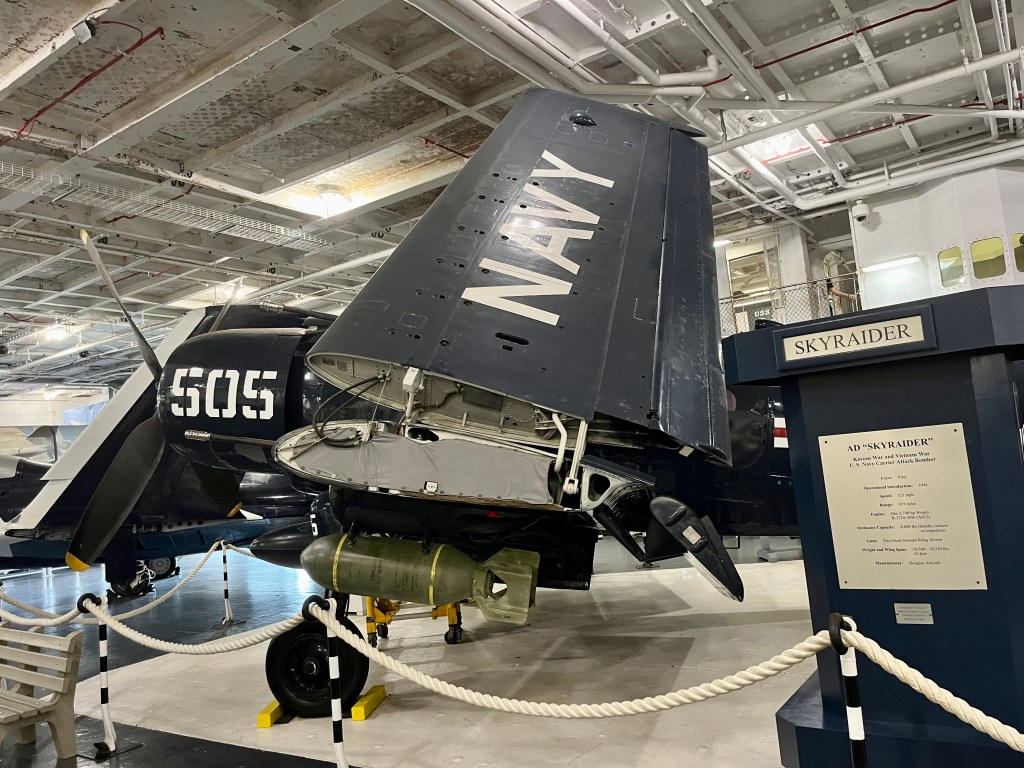
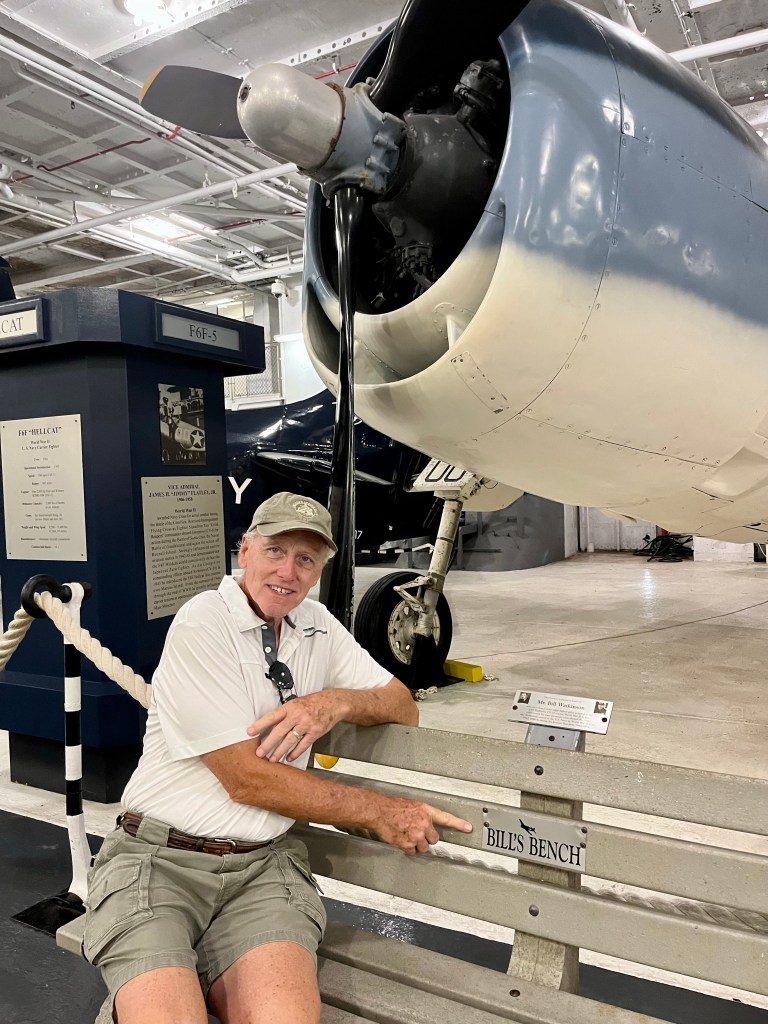
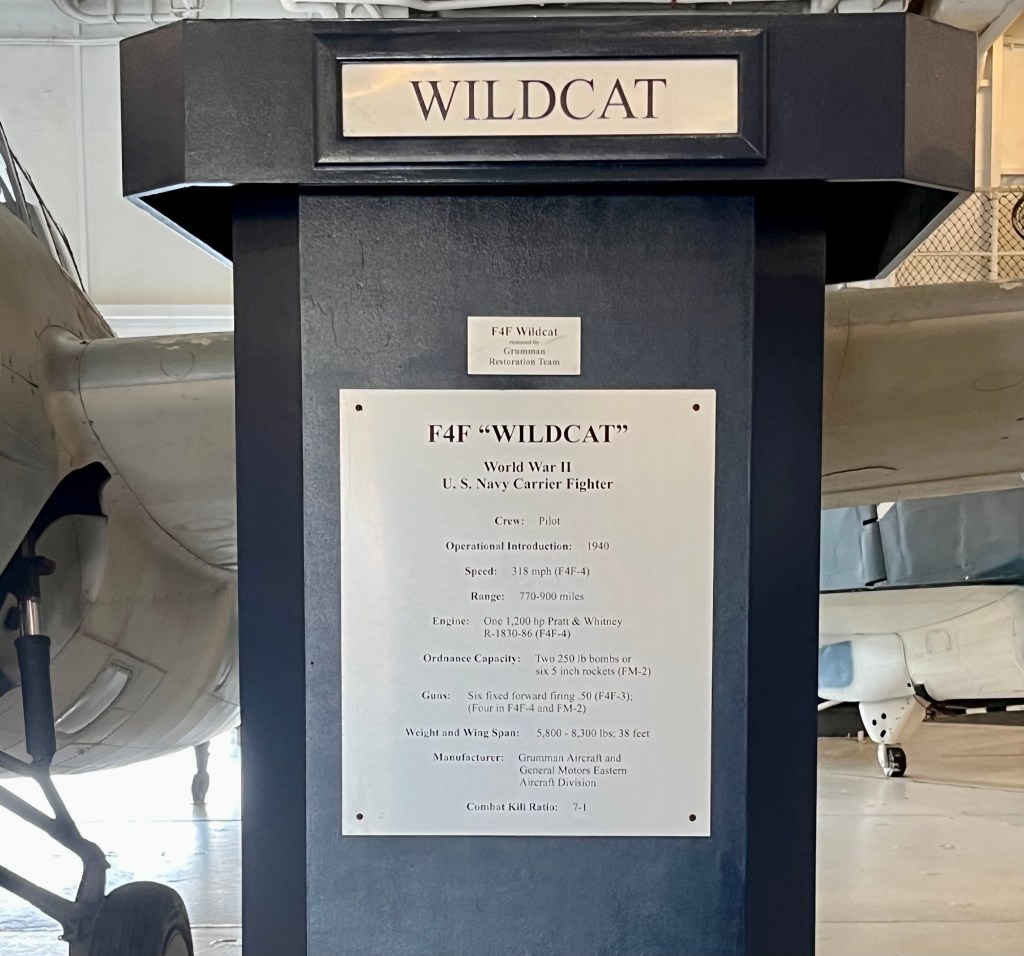
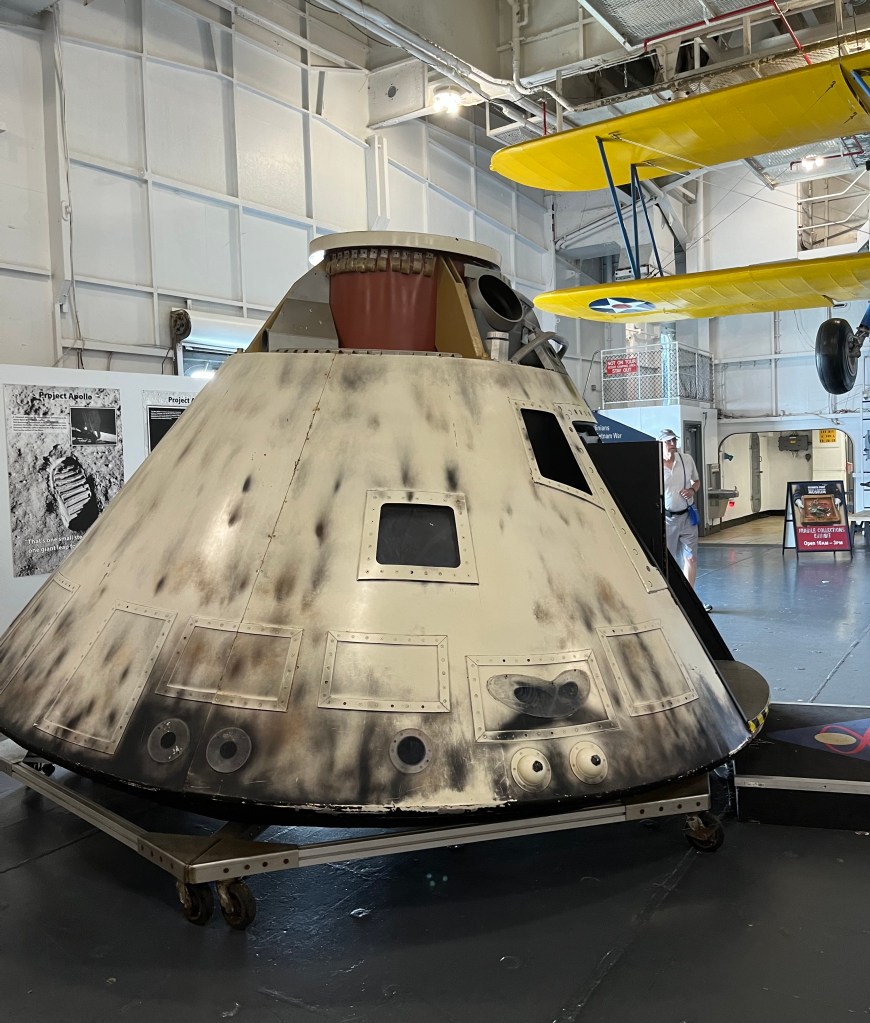
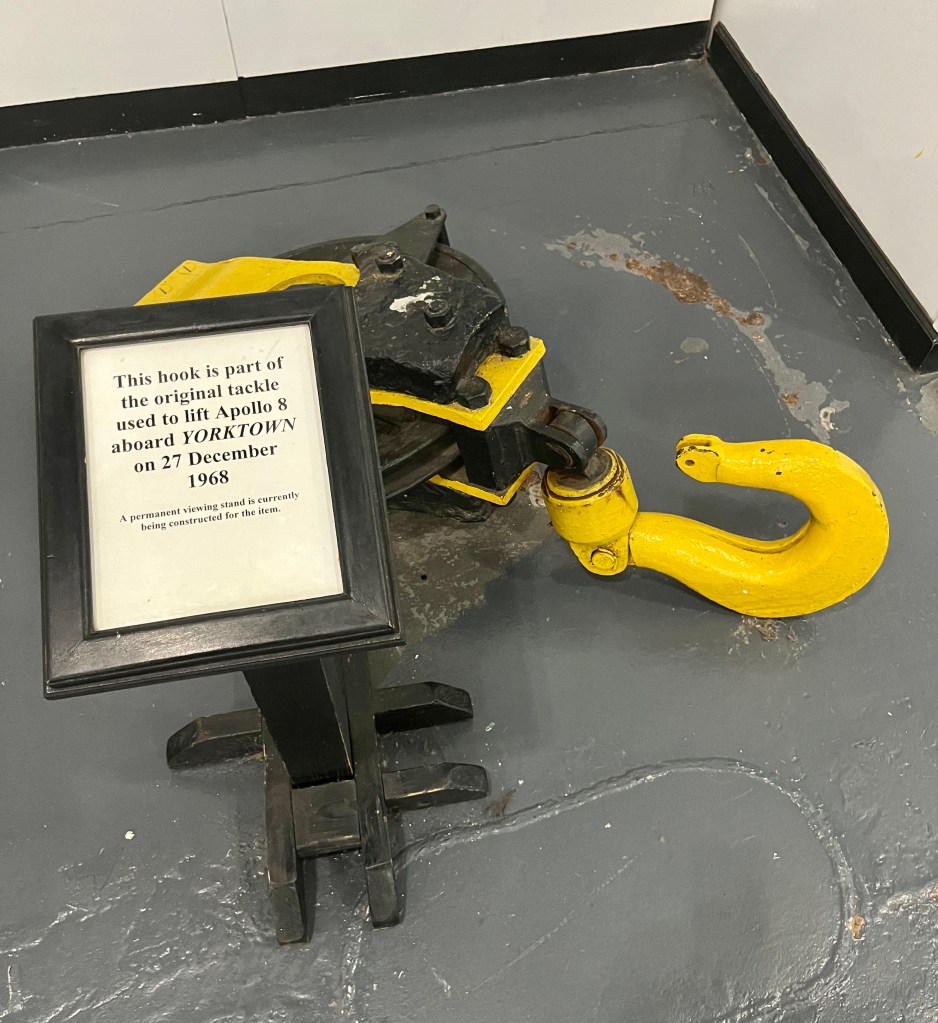
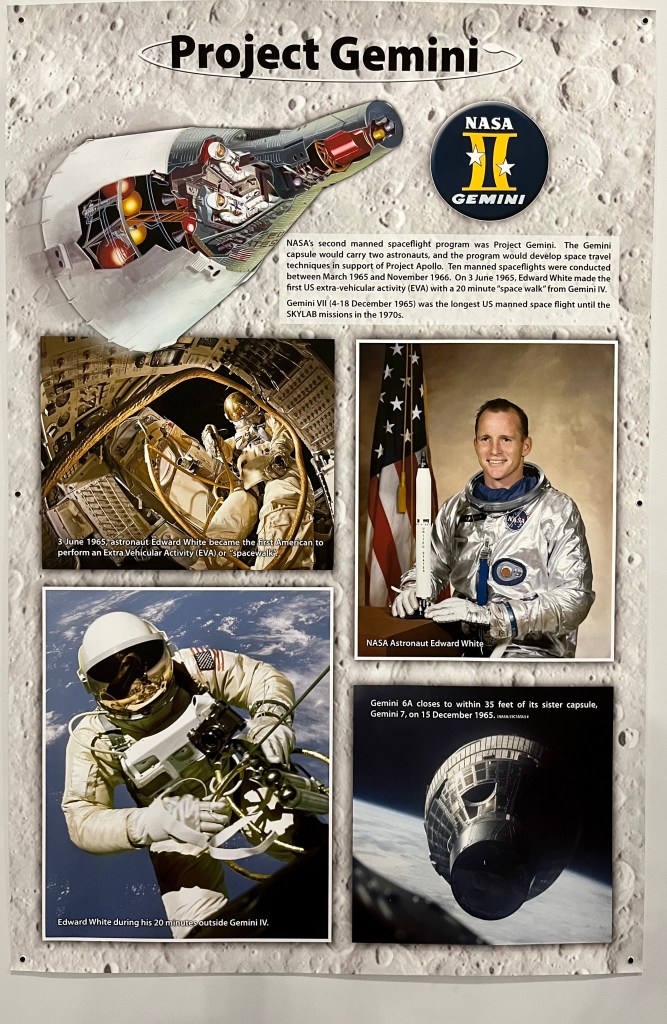
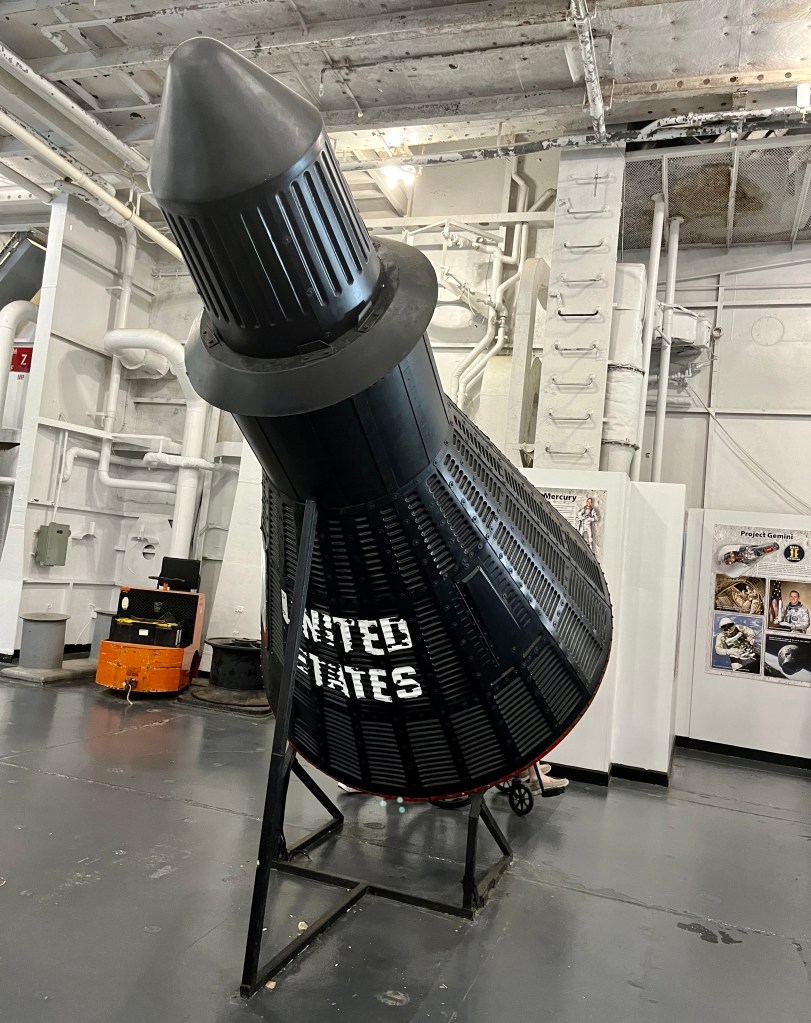
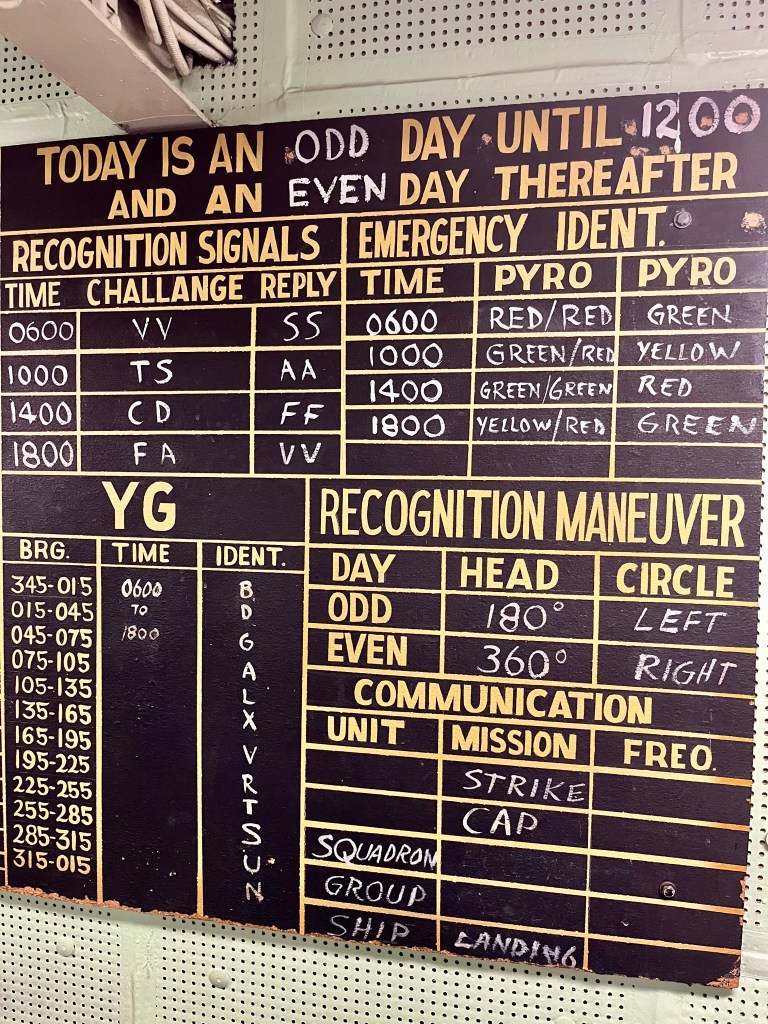
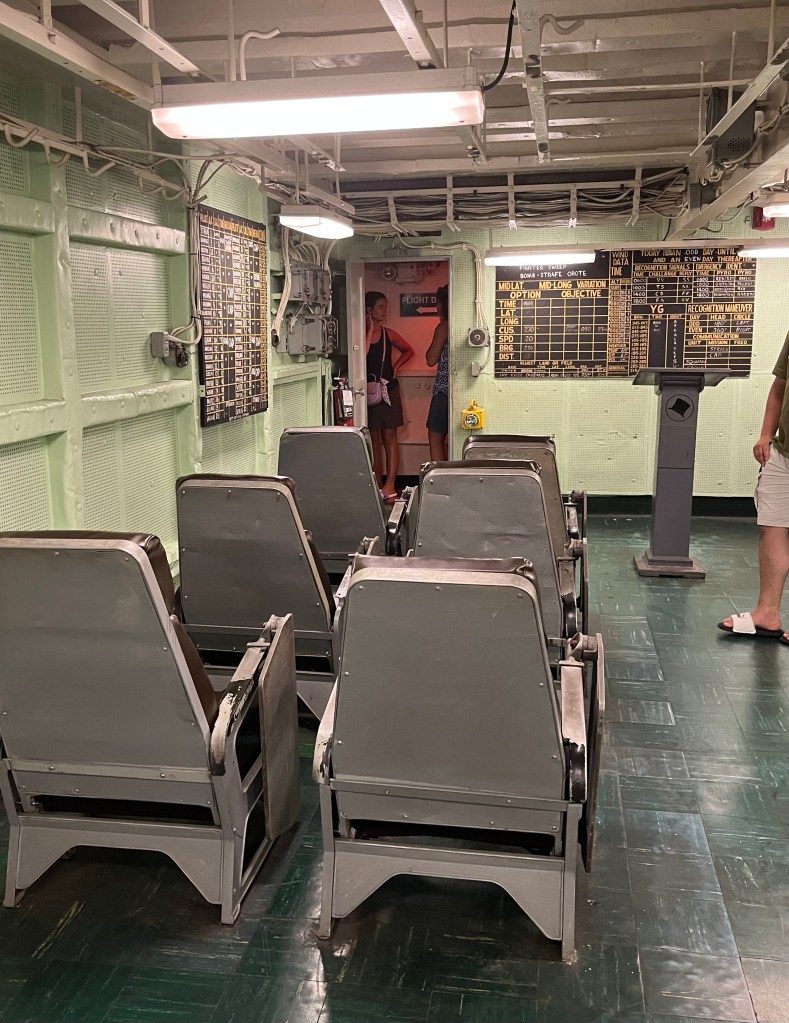
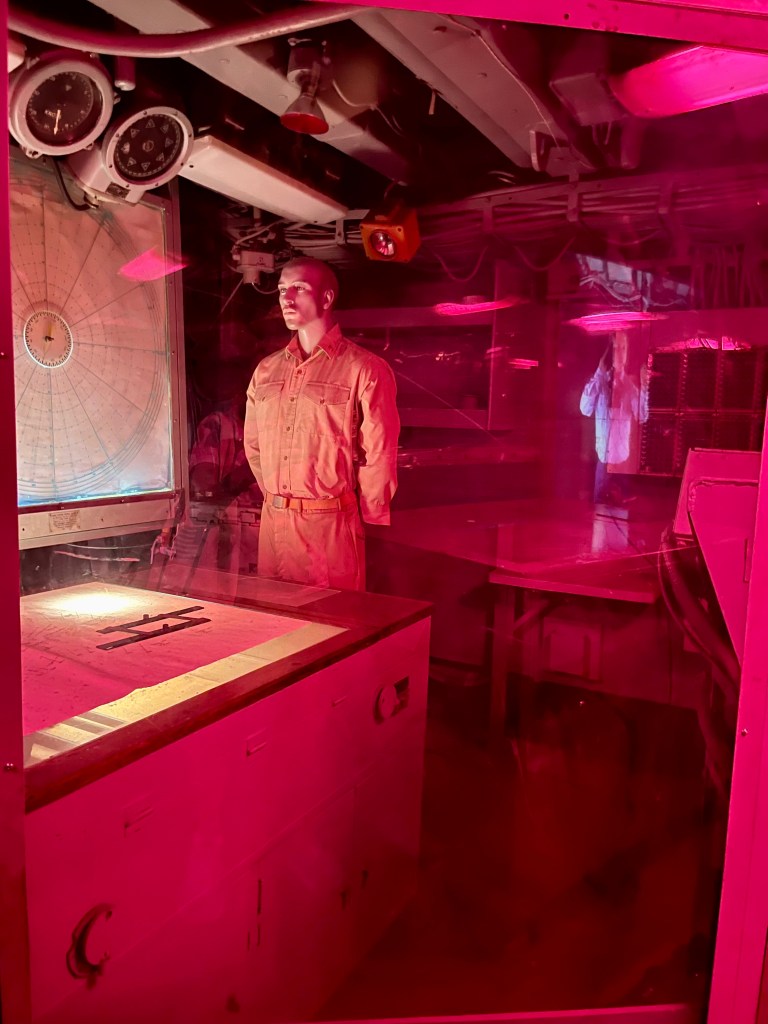
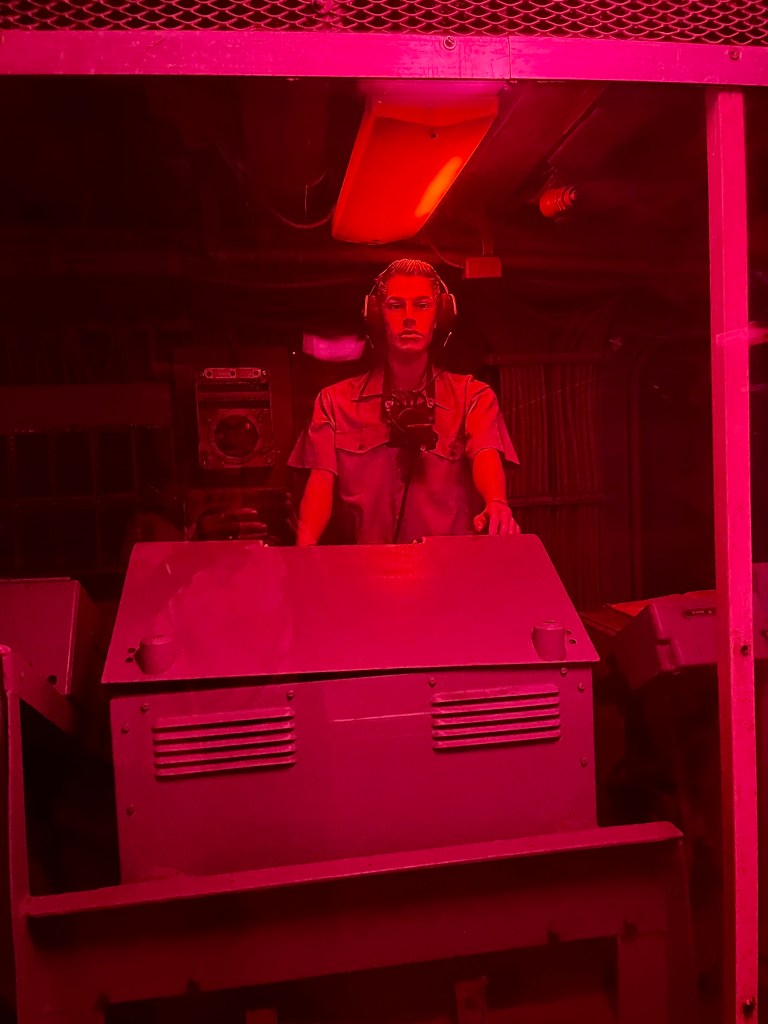
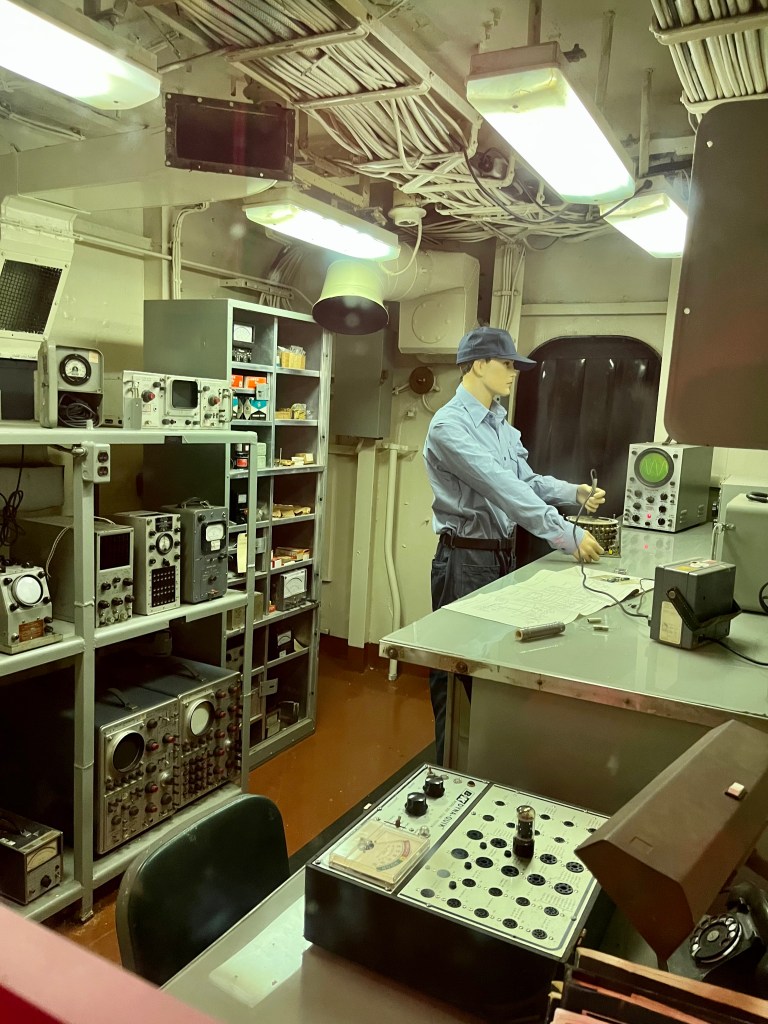
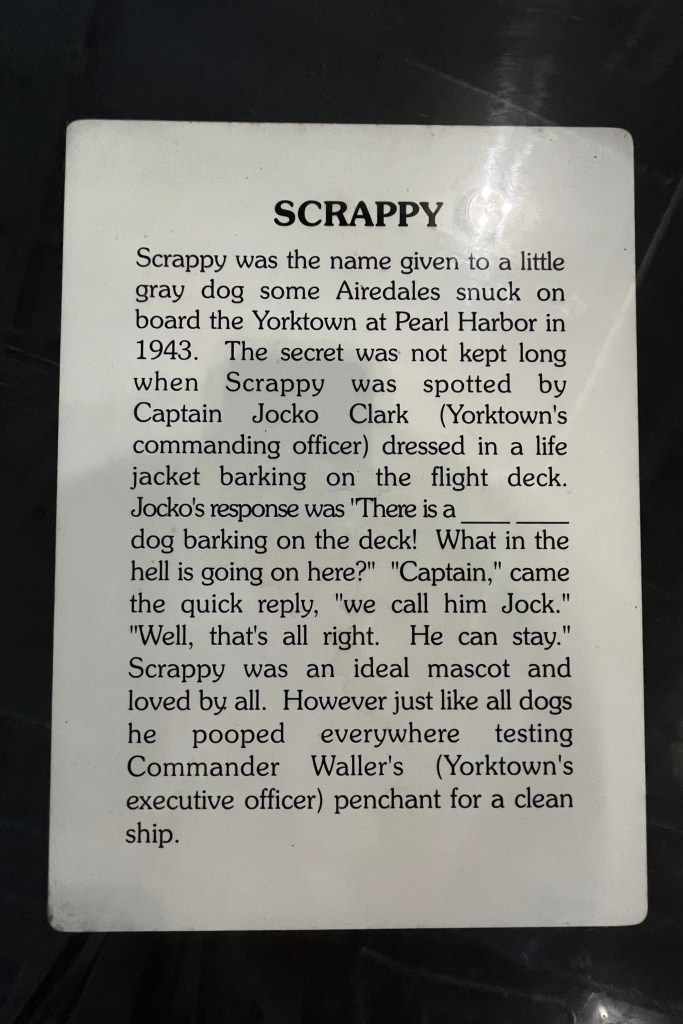
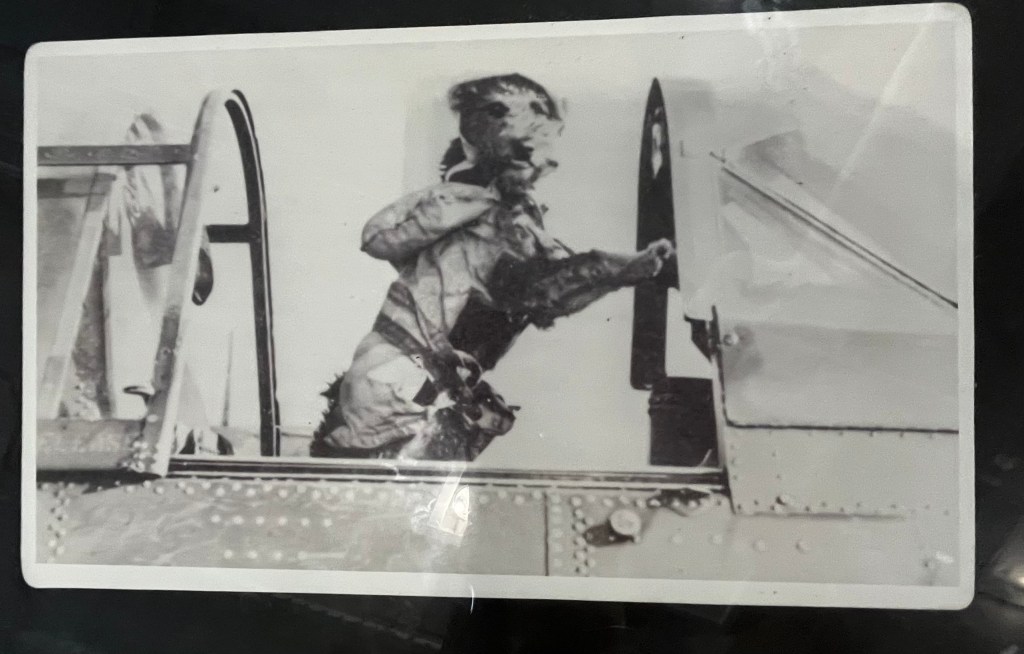
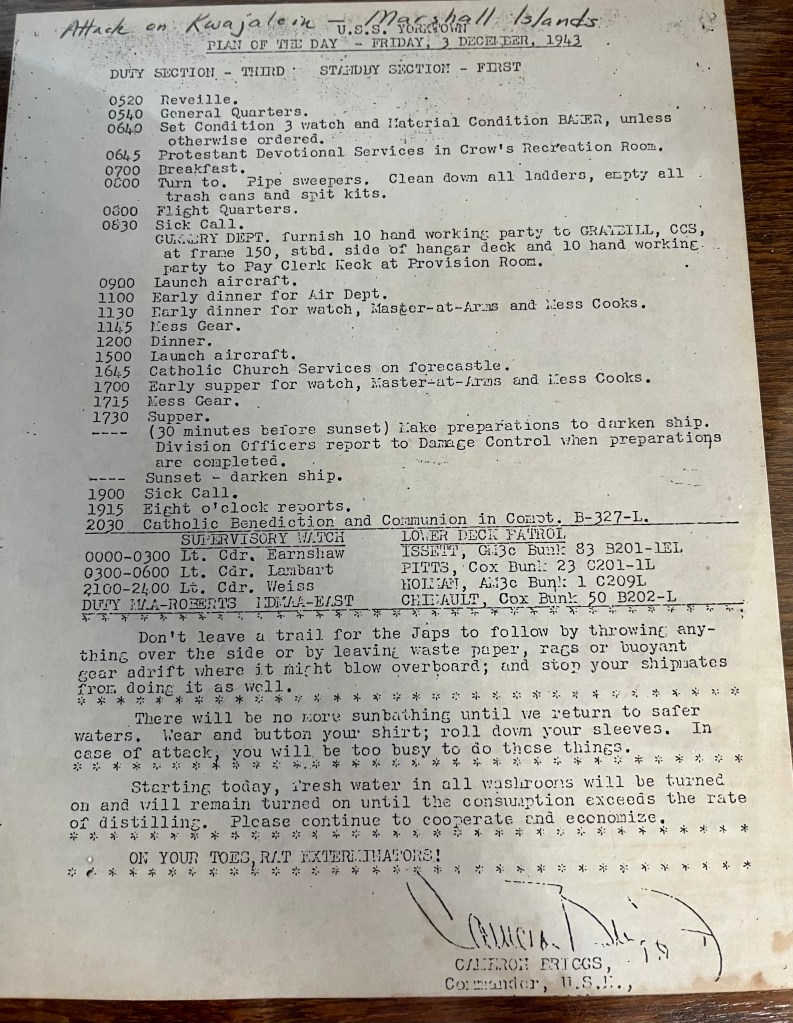
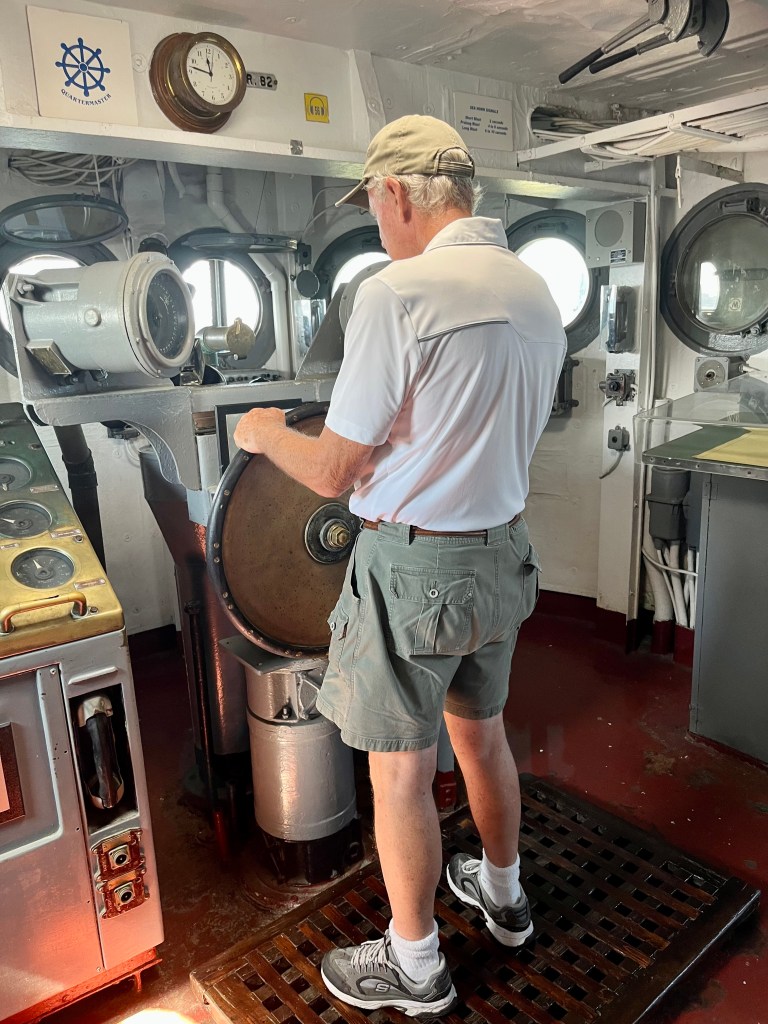
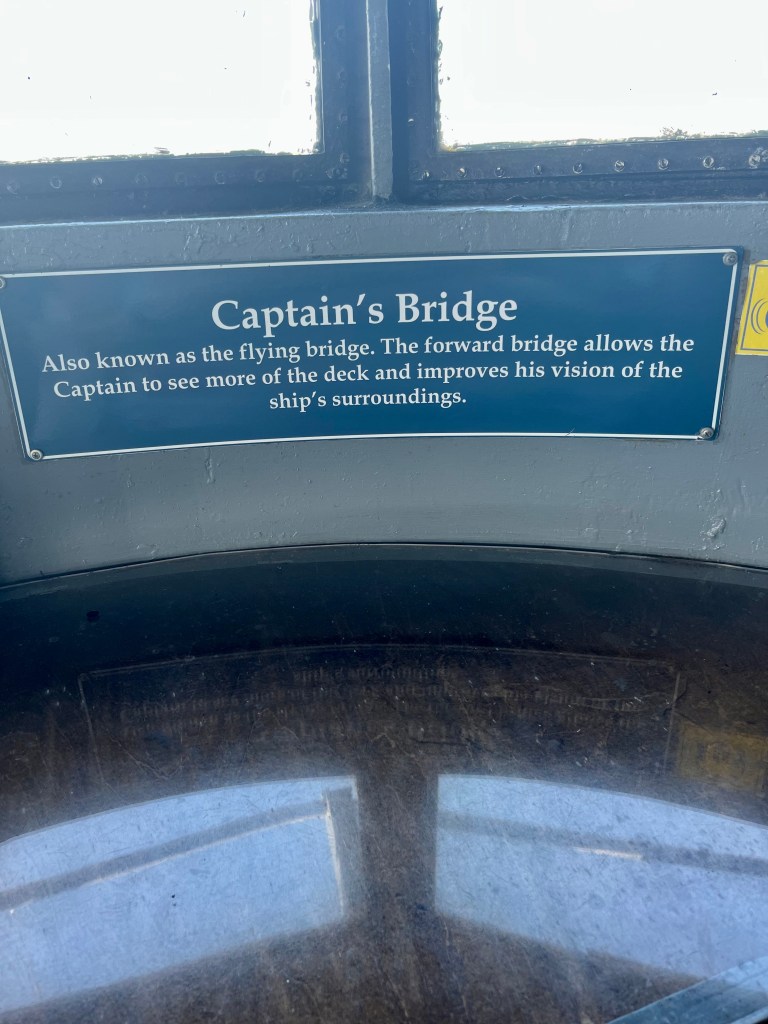
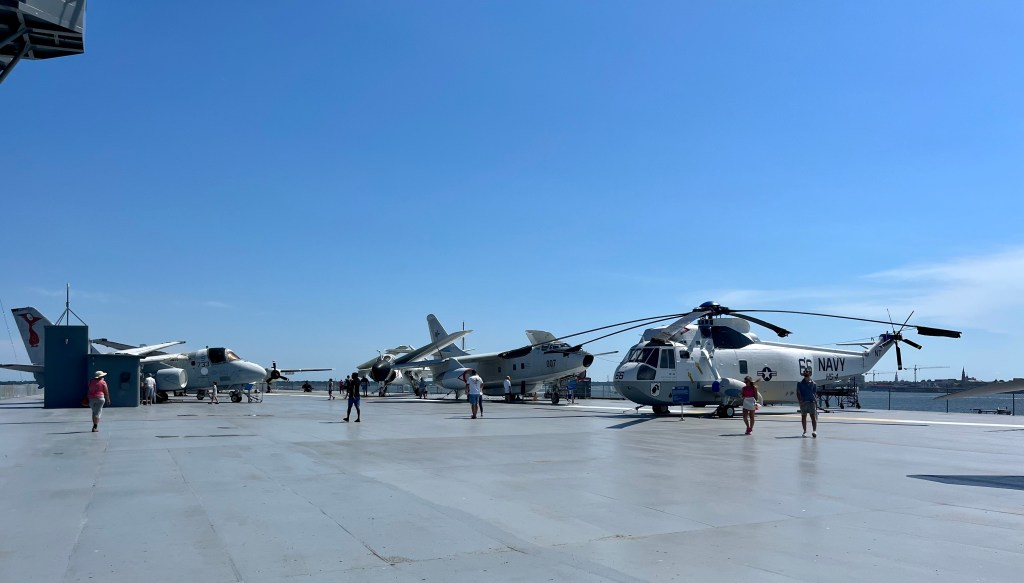
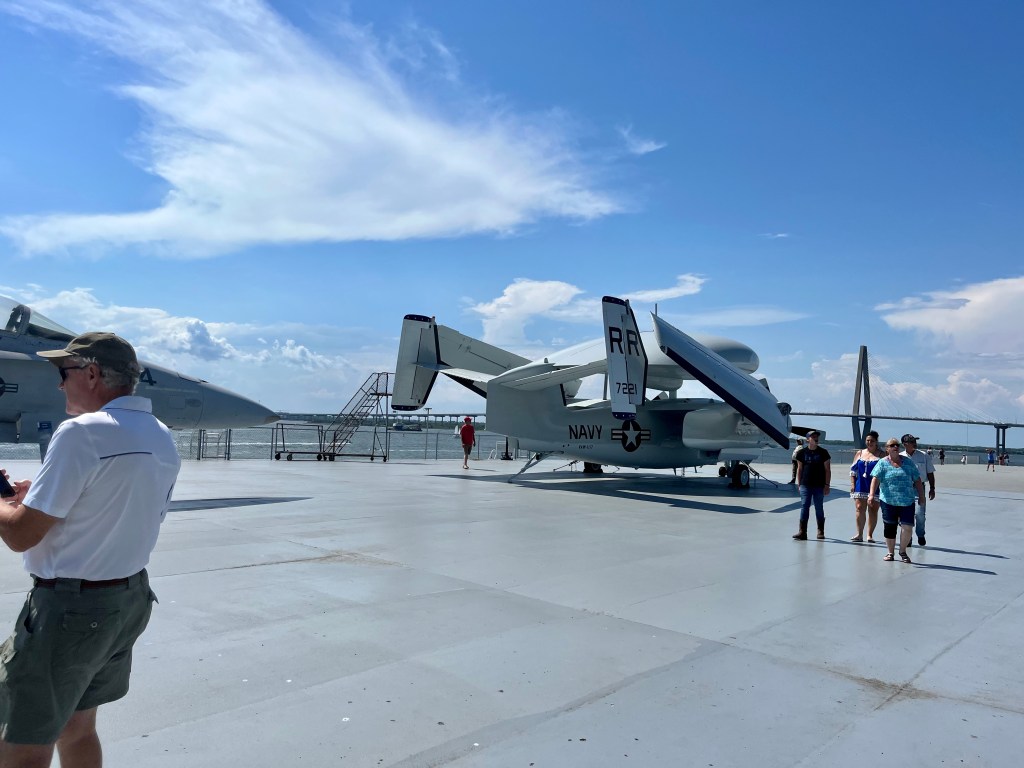
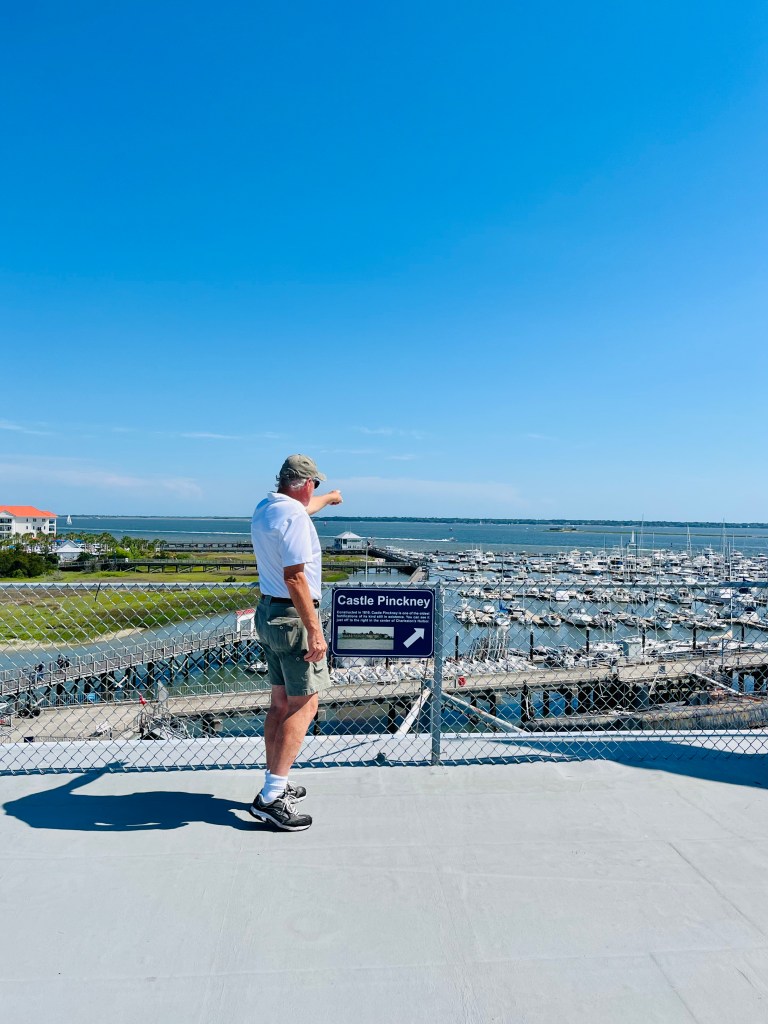
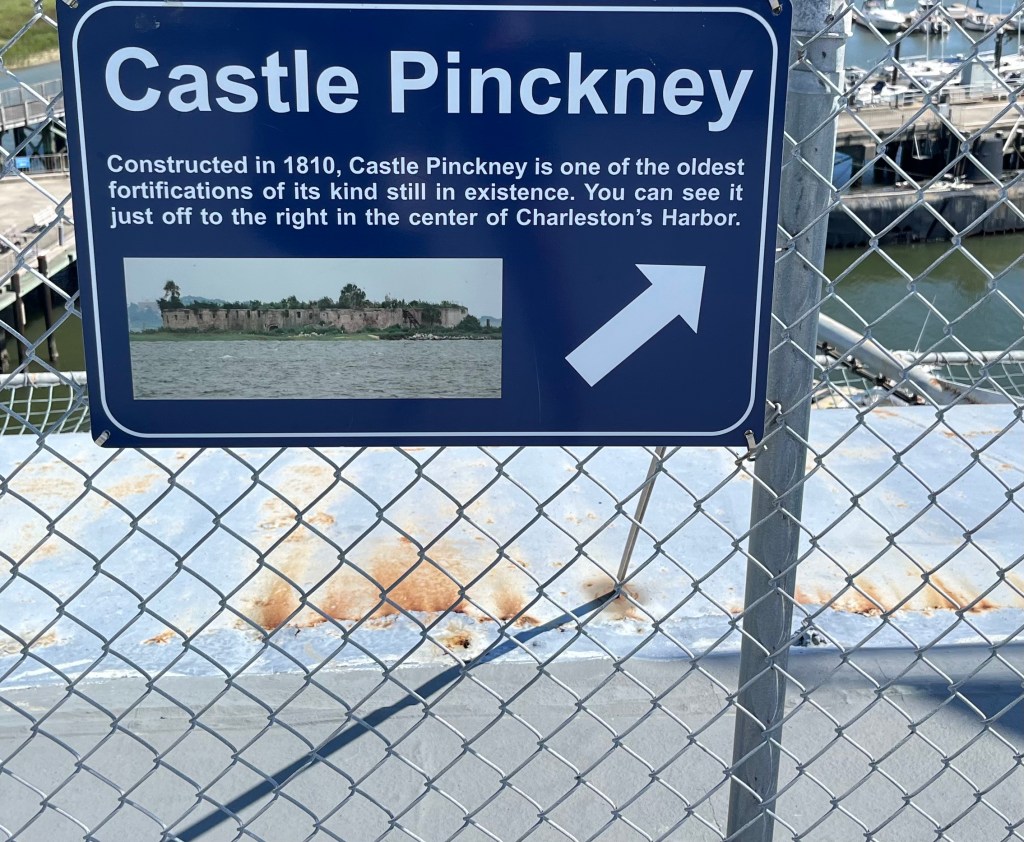
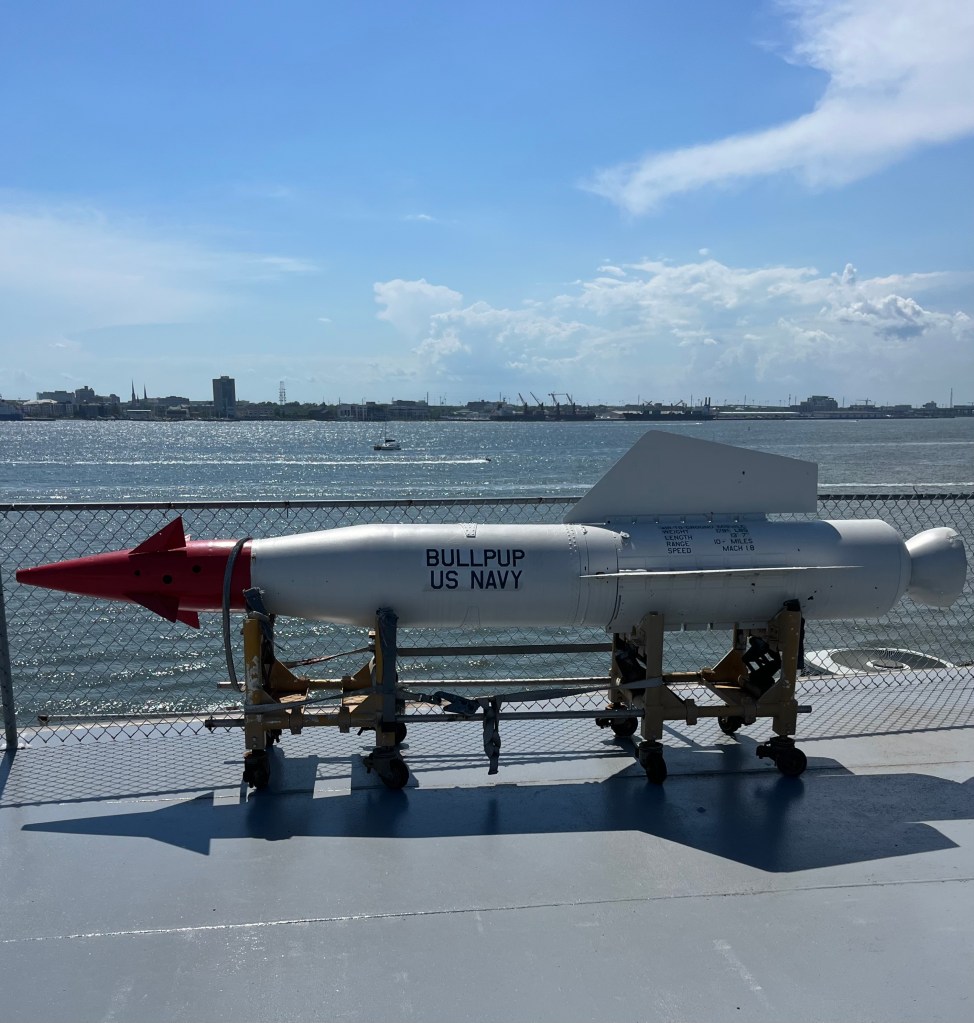
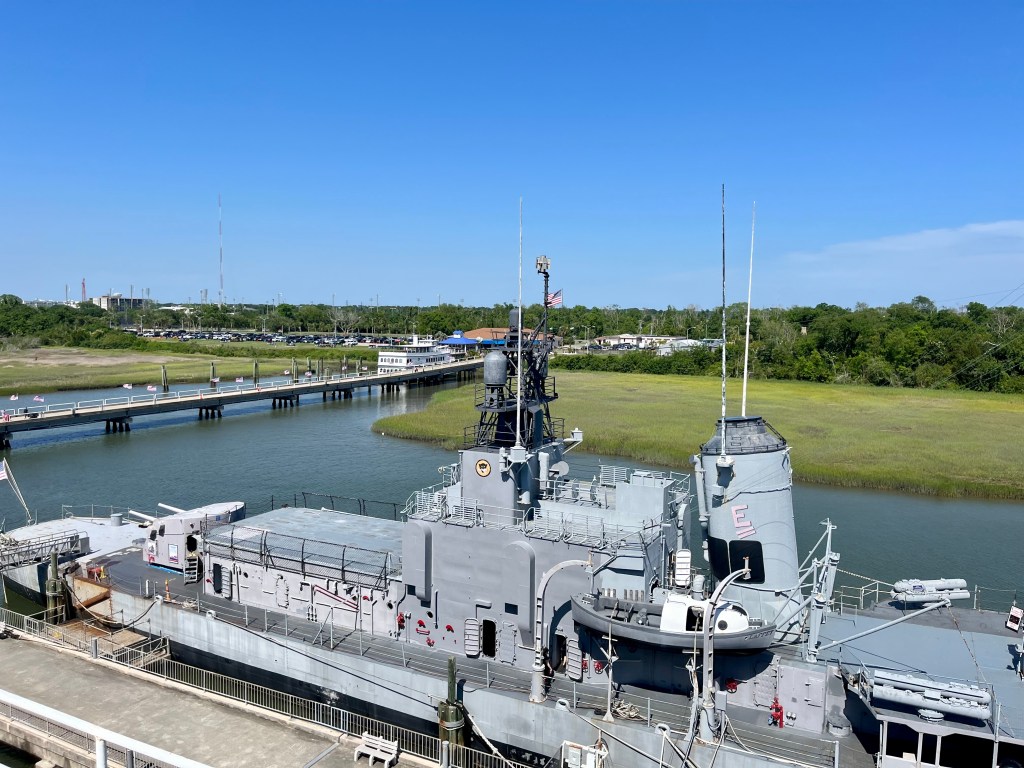
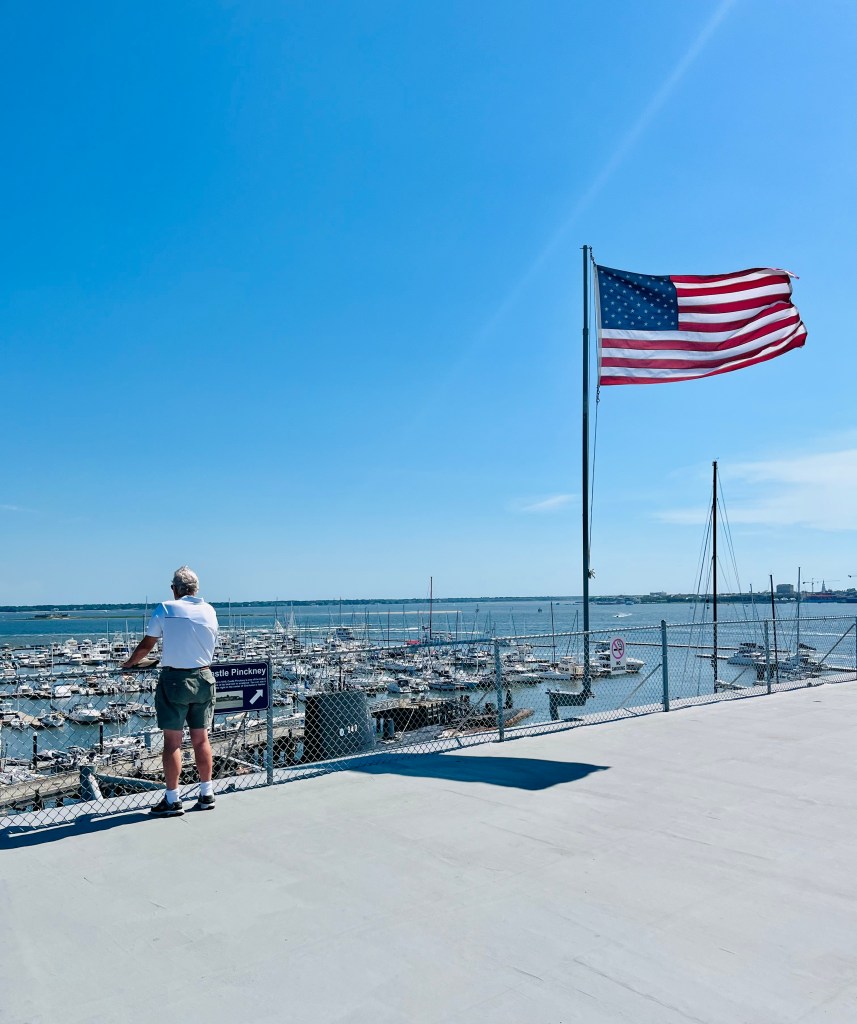
Patrick about to board USS YorktownDestroyer Squadron 60 – docked beside the YorktownPerfect shot for Memorial DayTribute to sailors, marines, aircrew, and all on deckFlight Simulator used in trainingKorean War and Vietnam War Attack BomberSkyraiderHad to get this picture – In honor of our favorite veteran – Uncle Bill Raney!“Wildcat”Apollo SpacecraftTackle that lifted Apollo 8 aboard Yorktown – December 27, 1968The museum has many tributes to the Space ProgramGeminiTributes to the Battle of MidwayInside the training roomThere are eerie simulations of servicemen at their stations Scrappy – the mascot!“There will be no more sunbathing until we return to safer waters.”Captain Pat at the helm!On the deck – so many aircraftCastle Pinckney in the distanceYikes! A missile.View of Destroyer from deckWhat a Memorial Day!
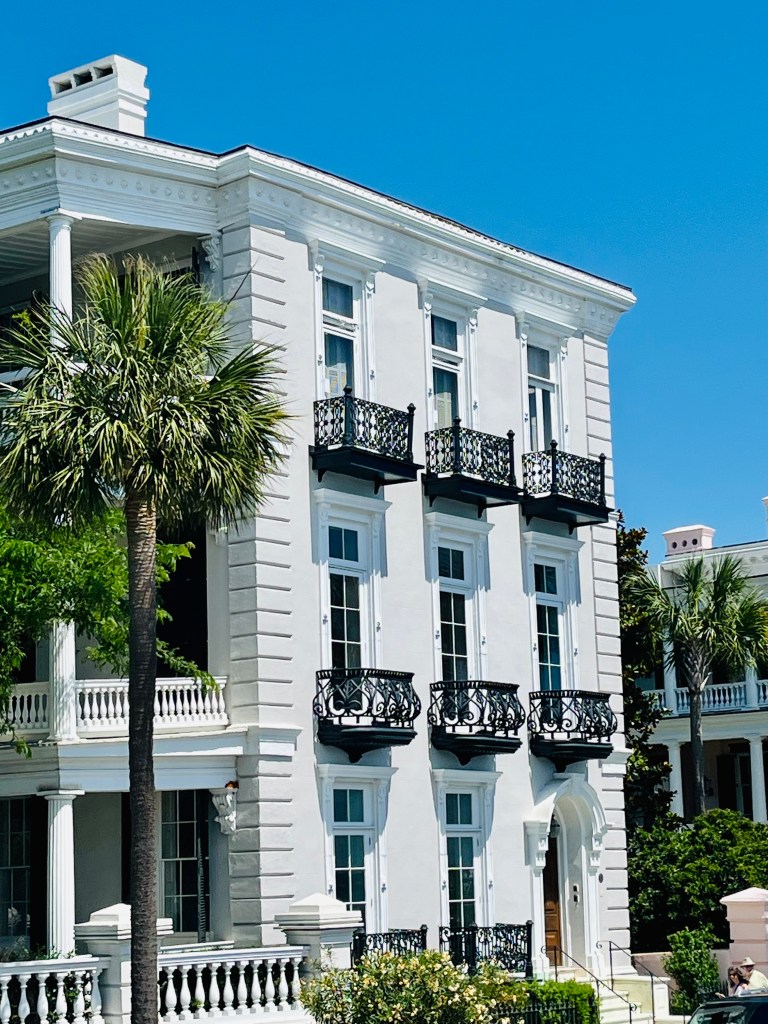
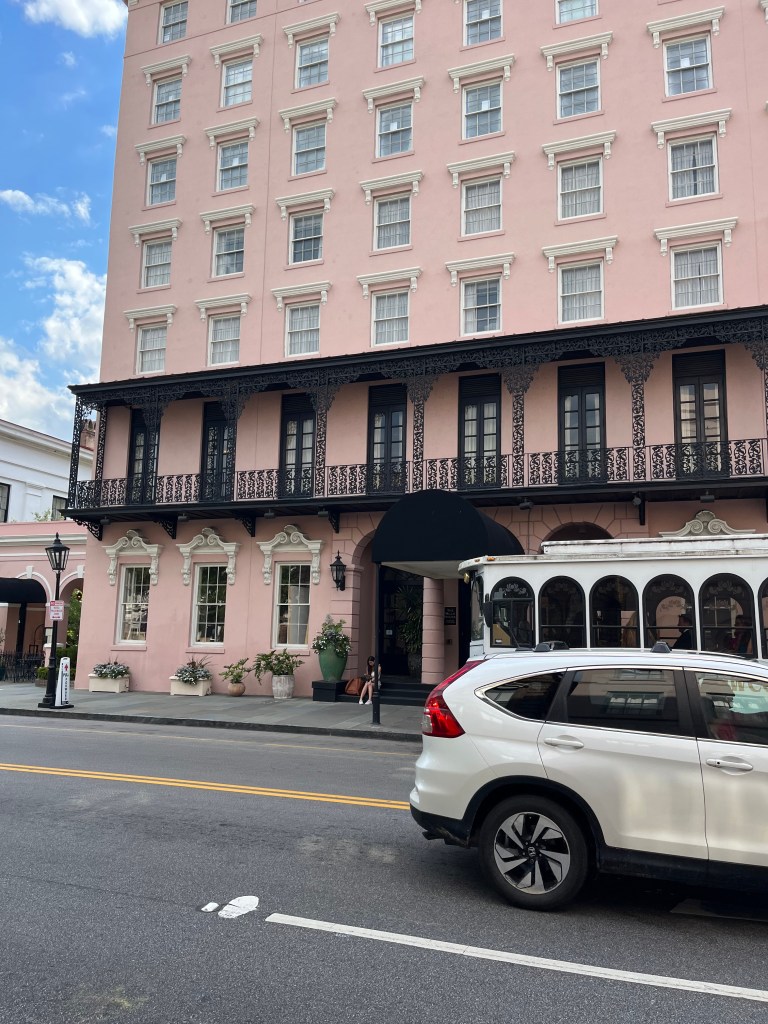
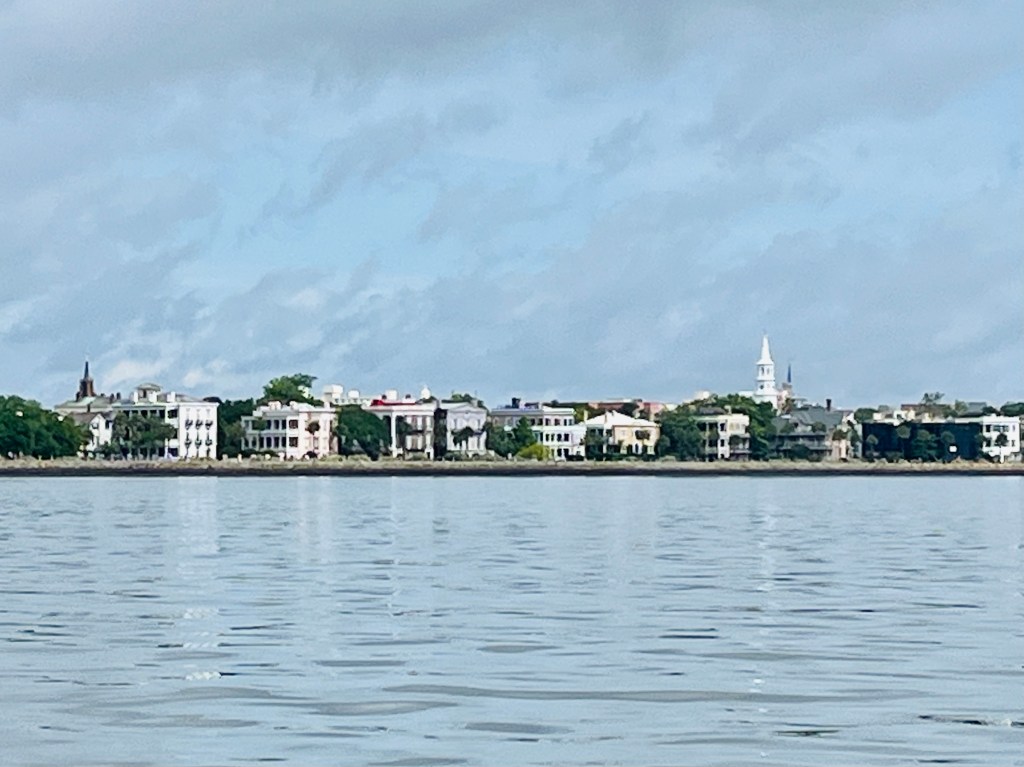
Charleston was a delight to visit. City leaders long ago implemented preservation efforts to ensure Charleston’s history and southern charm remains intact. There are no skyscrapers. Church steeples peek out along the skyline as they are the highest structures here.
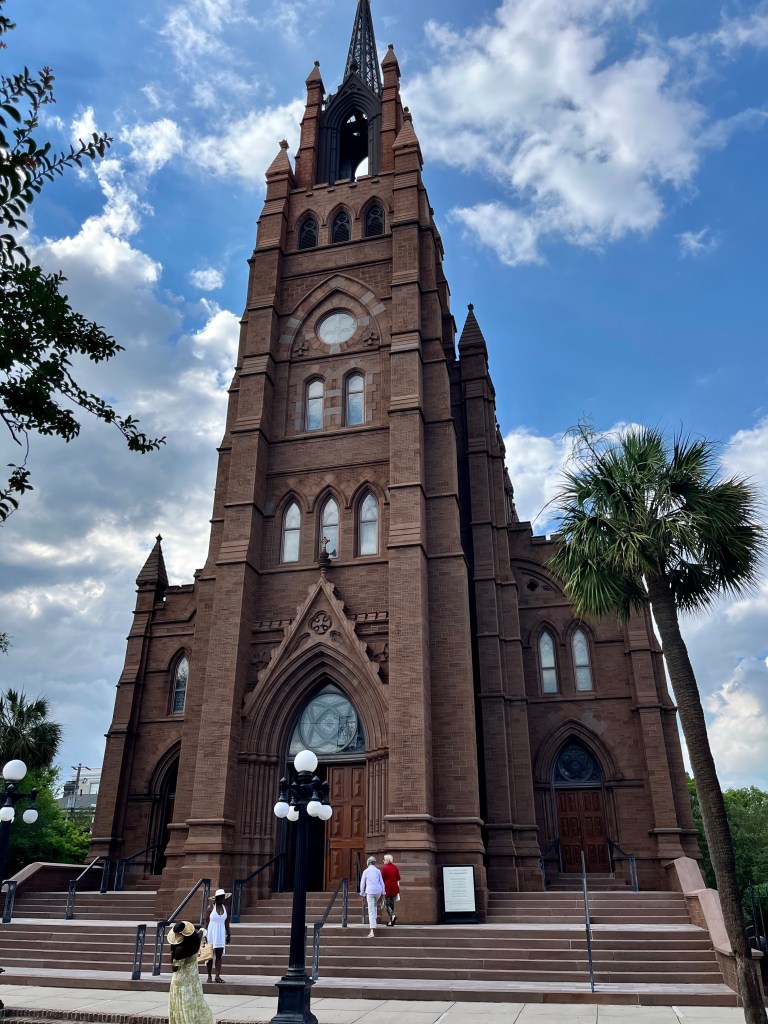
Charleston – nicknamed “the Holy City” – has been known for its religious tolerance since the 1700s. People from all over the world flocked to Charleston for religious freedom, so you’ll find several different Protestant denominations in addition to historic synagogues and Roman Catholic churches.
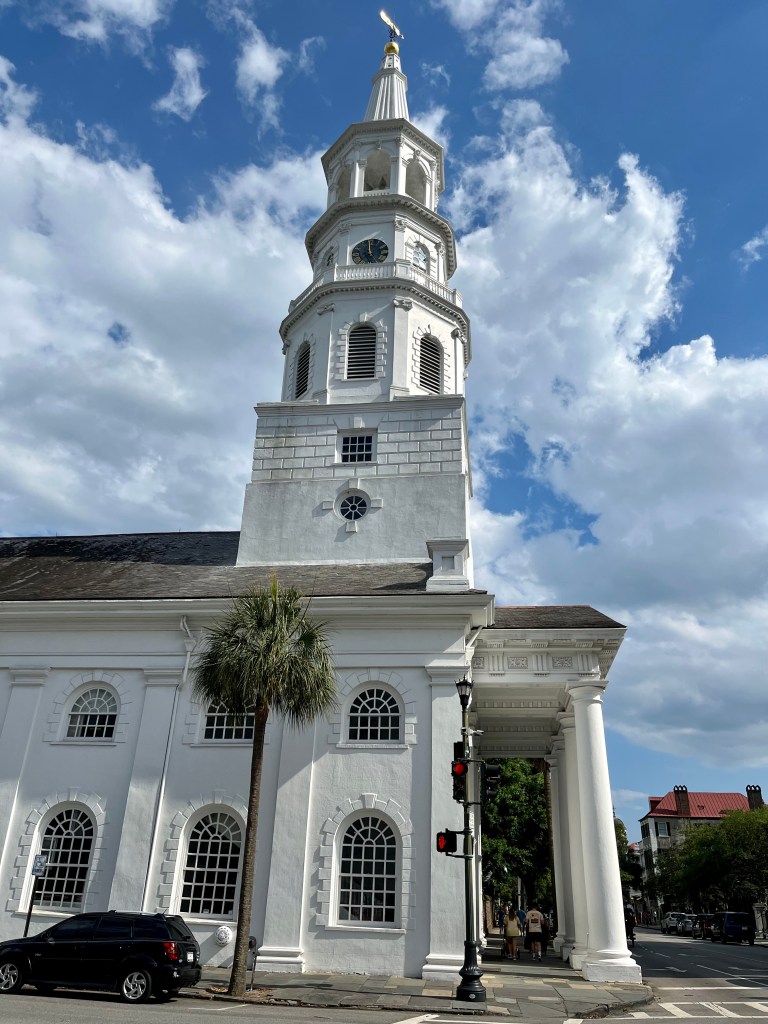
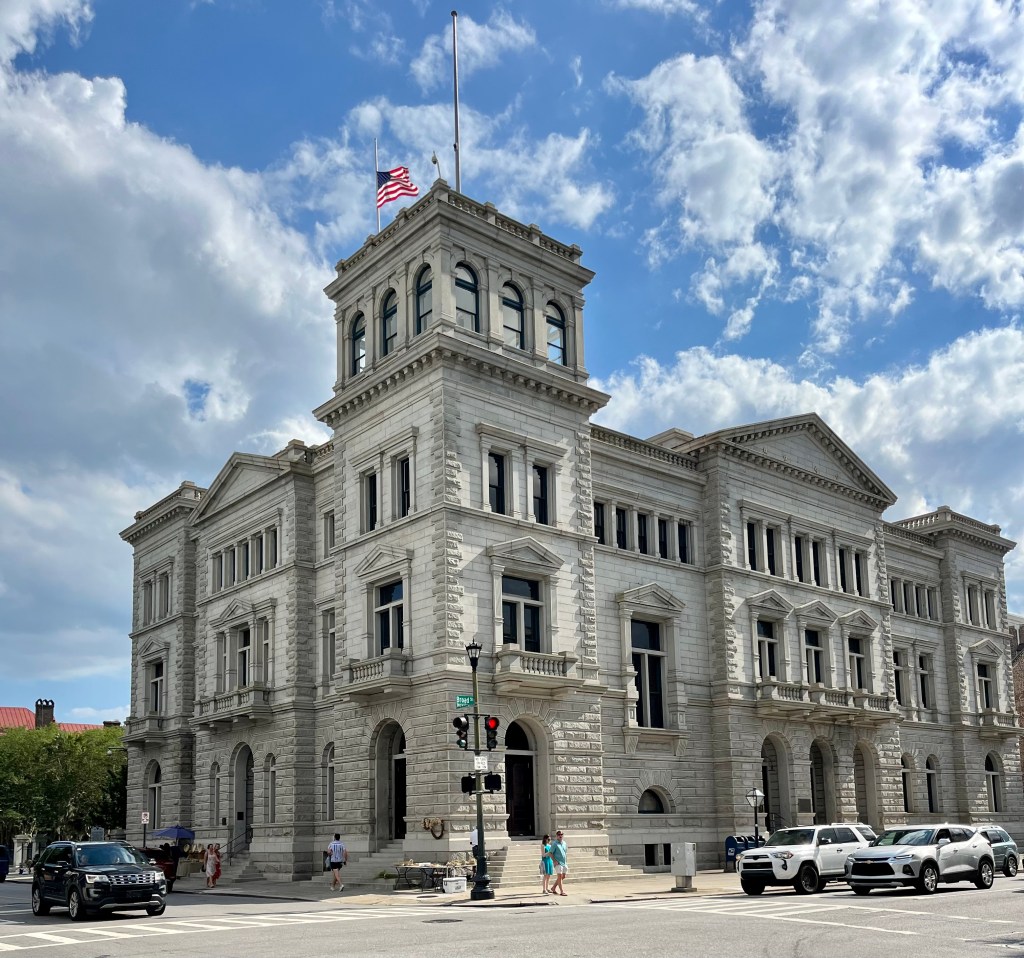
St. Michael’s is the oldest surviving religious building. The current church was build in the 1750s. It sits on the corners of Meeting and Broad Street. This intersection is often referred to as the “Four Corners of Law” as on each corner there is a building that represents federal, state, local and religious law: the U.S. Post office, the Federal Courthouse, the Charleston County Courthouse, Charleston City Hall and St. Michael’s.
St. Michael’s ChurchFederal Courthouse
We chartered a tour bus on Saturday, May 28, and learned so much about this historical city. Here are some highlights:
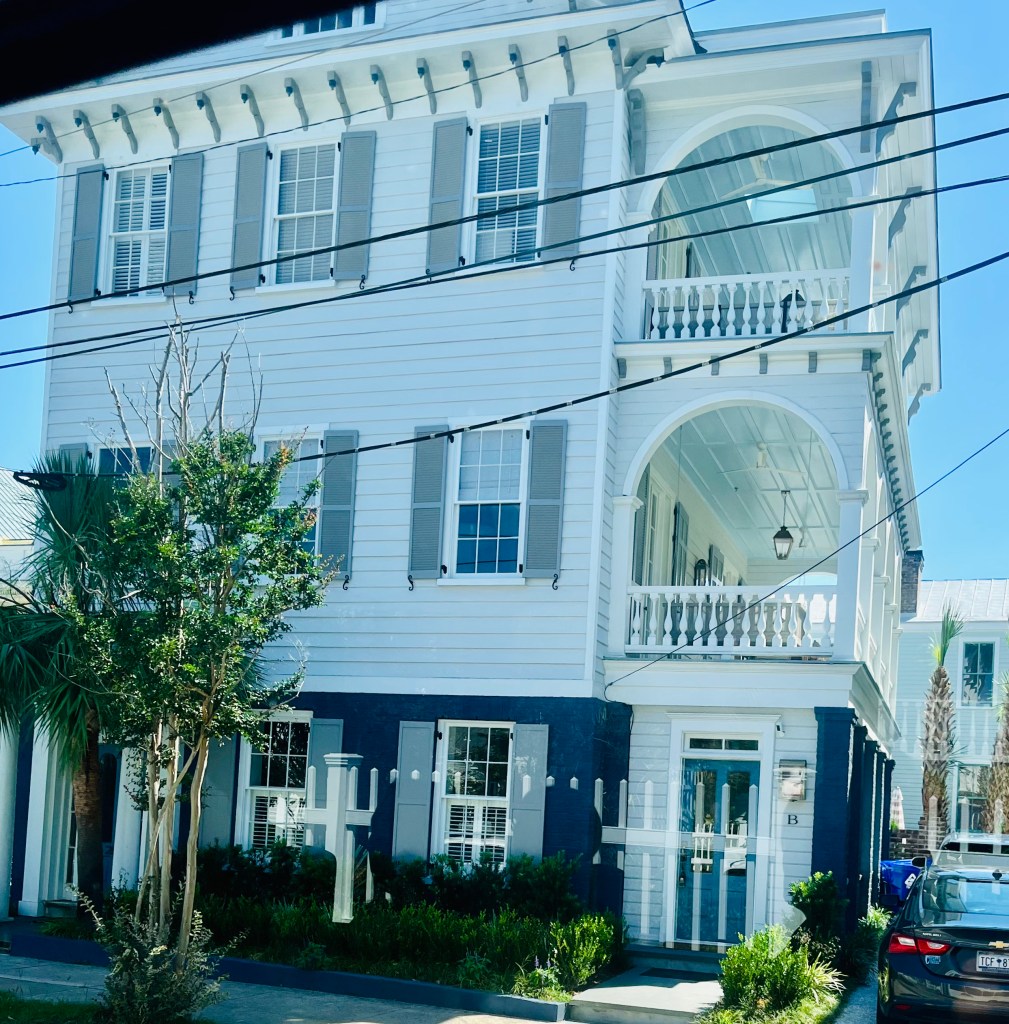
Charleston “Single” Homes
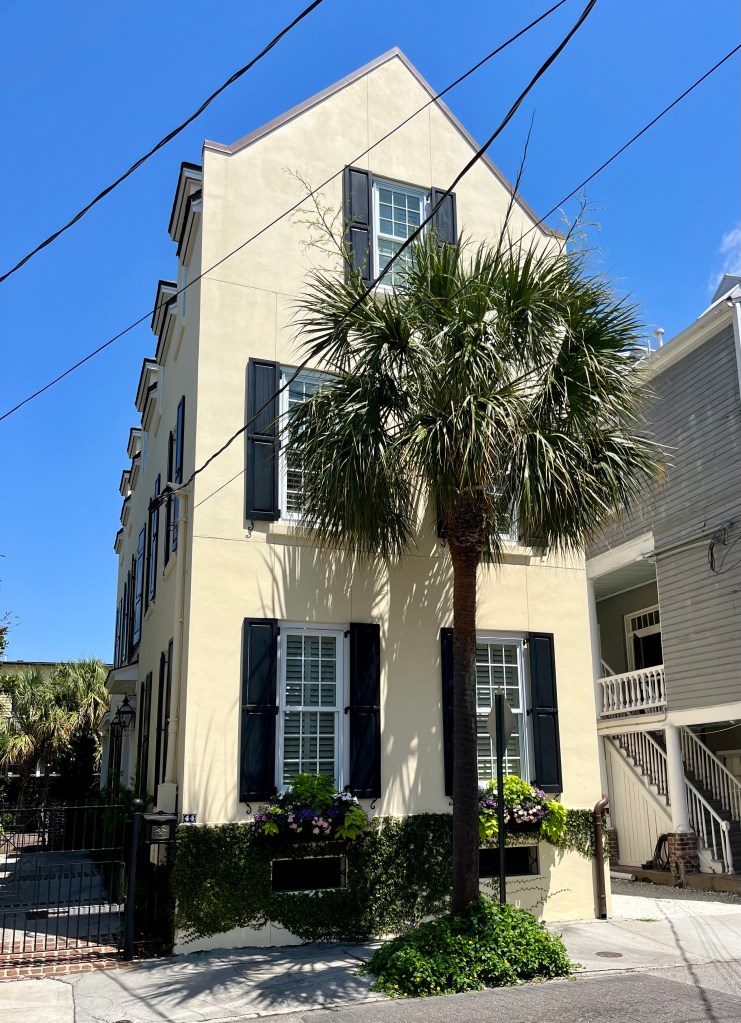
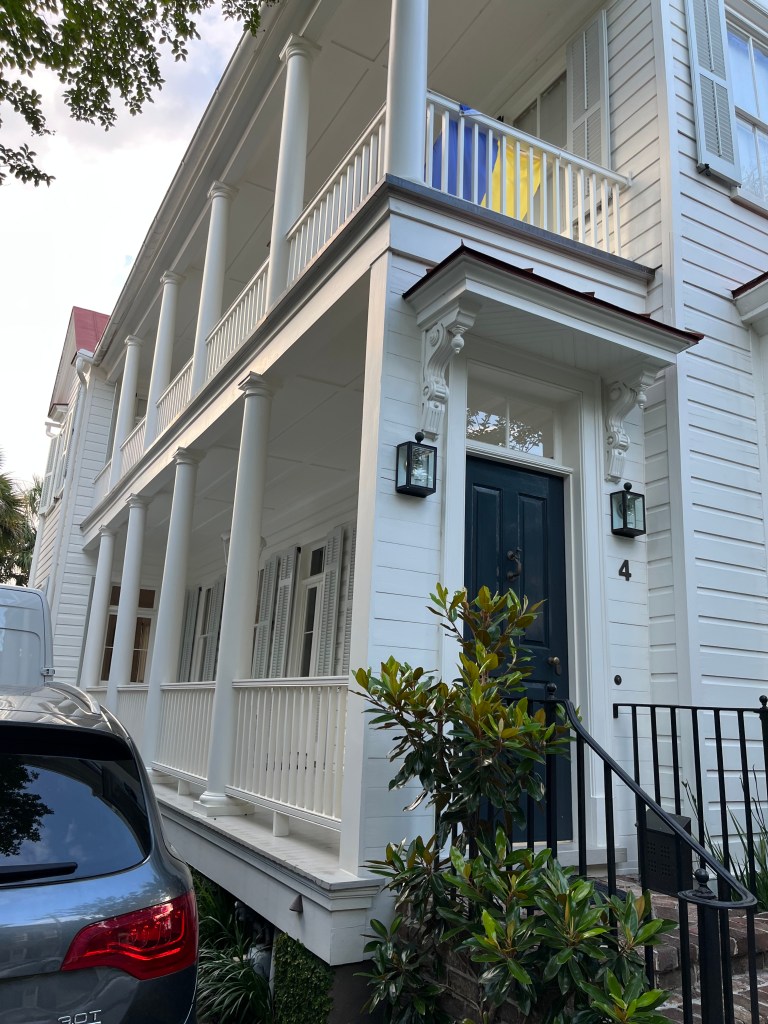
The “single” house is an architectural style exclusive to Charleston. This home plan gives the city much of its unique charm. The layout of a single house is ideally suited to the narrow street-facing lots originally laid out in the late 17th and 18th centuries. The homes are only one room wide and two rooms deep on each level with a central hall in between.
Charleston Single House – notice the front door opens to an open porch
Typically a porch, known as a piazza, runs the length of the house with a public door facing the street. Visitors must enter the home through this entrance and traverse the porch before entering the central private door into the home.
To take best advantage of prevailing breezes, piazzas always face south or west.
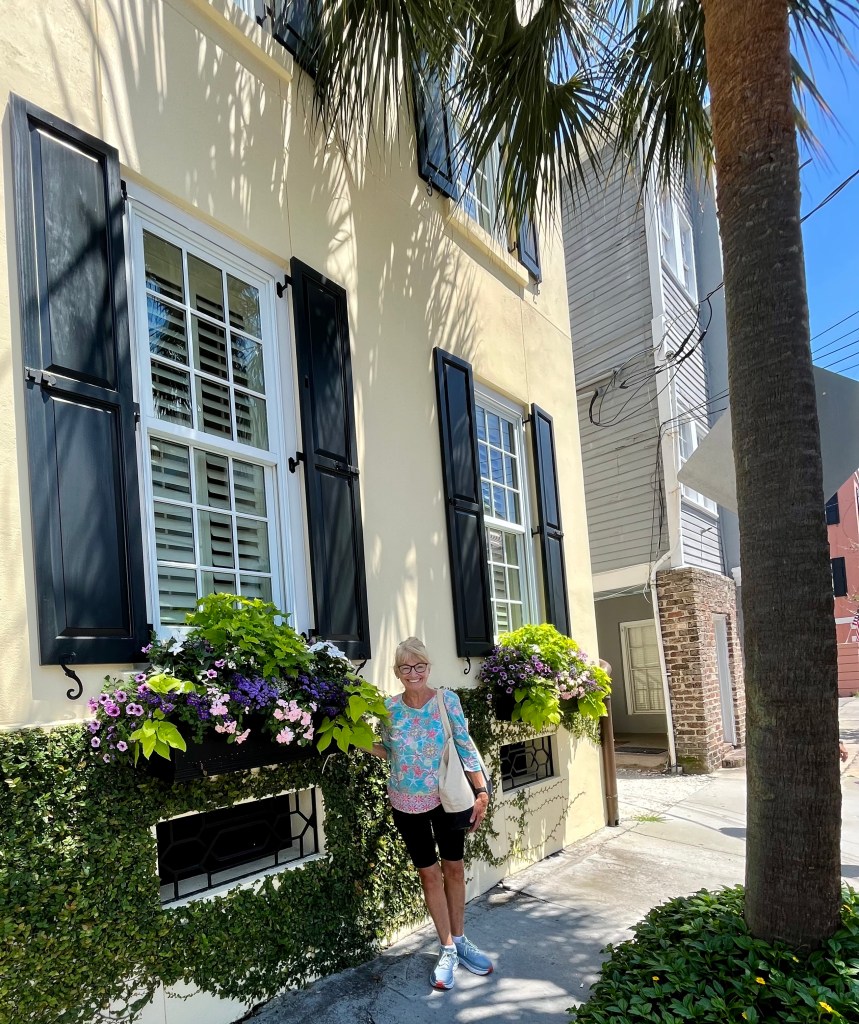
Loved the flowers in Charleston
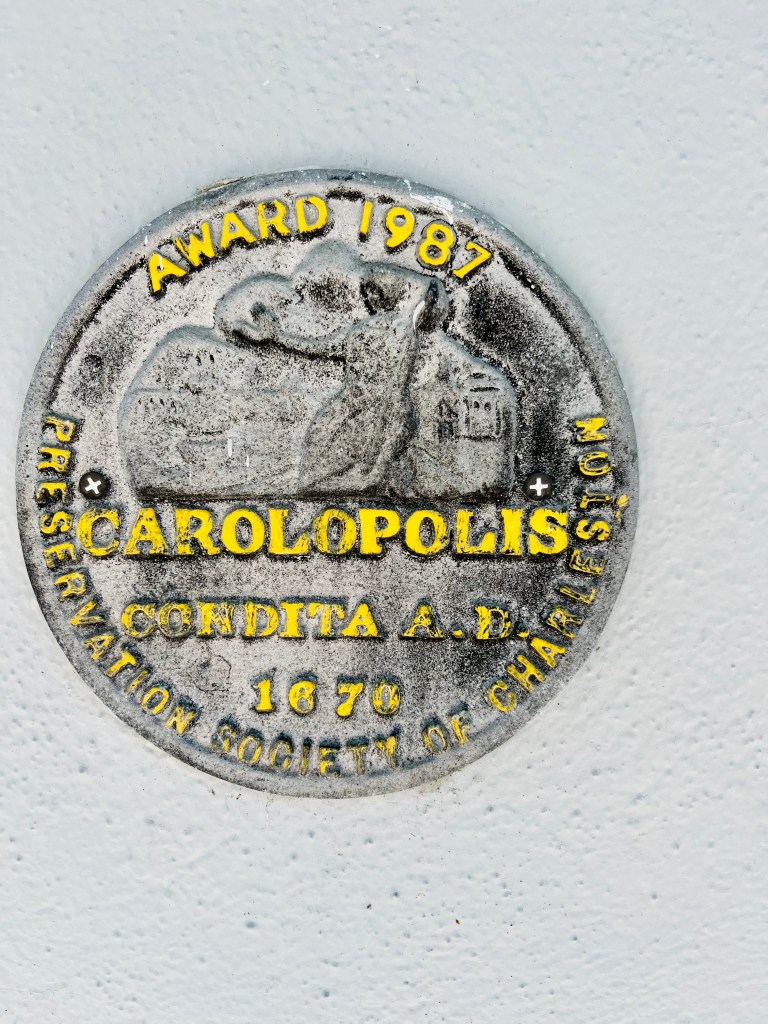
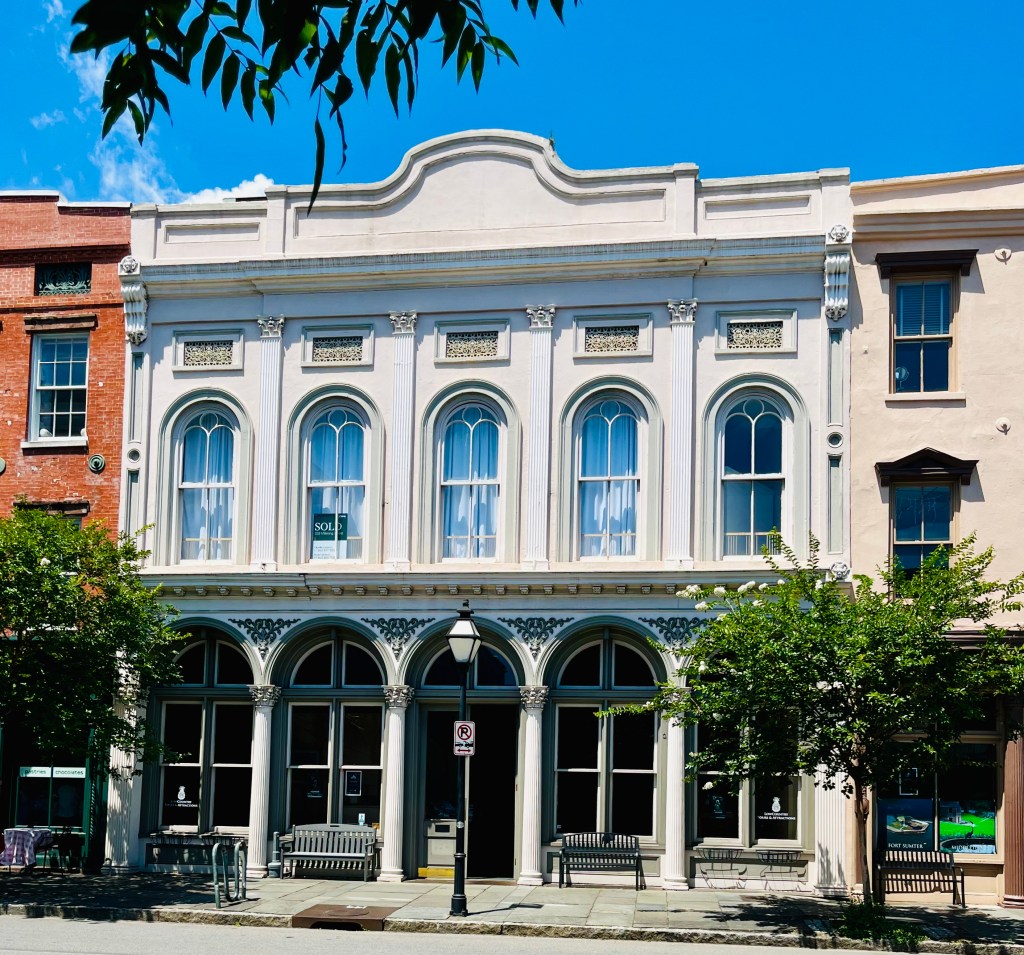
Carolopolis Awards
One way to promote the historical integrity of the buildings and homes in Charleston is the awarding of Carolopolis Awards. Building owners are recognized for restoring old structures while maintaining their original foundations.
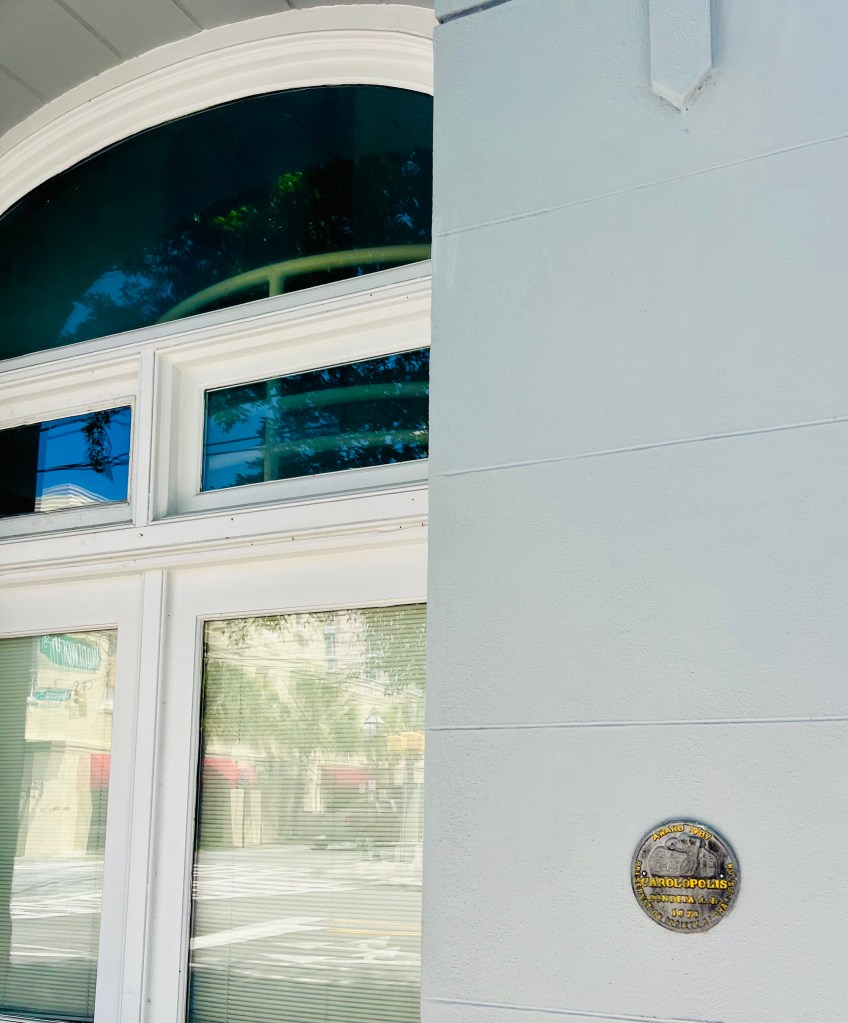
You will see the award affixed to structures throughout the Historic District, the French Quarter, and beyond. It is a circular plaque mingling English and Latin around an engraving resembling the City of Charleston seal. The image reflects the city’s motto: Aedes mores juraque curat which means “She guards her buildings, customs, and laws.” This comes form the Latin Carolus for “Charles” – that’s King Charles, for whom Carolina is named, and the Greek polis meaning city.
Bank building with Carolopolis Award
After nearly 70 years and more than 1400 awards given, this award is a major part of the fabric of the city and the buildings and structures it honors.
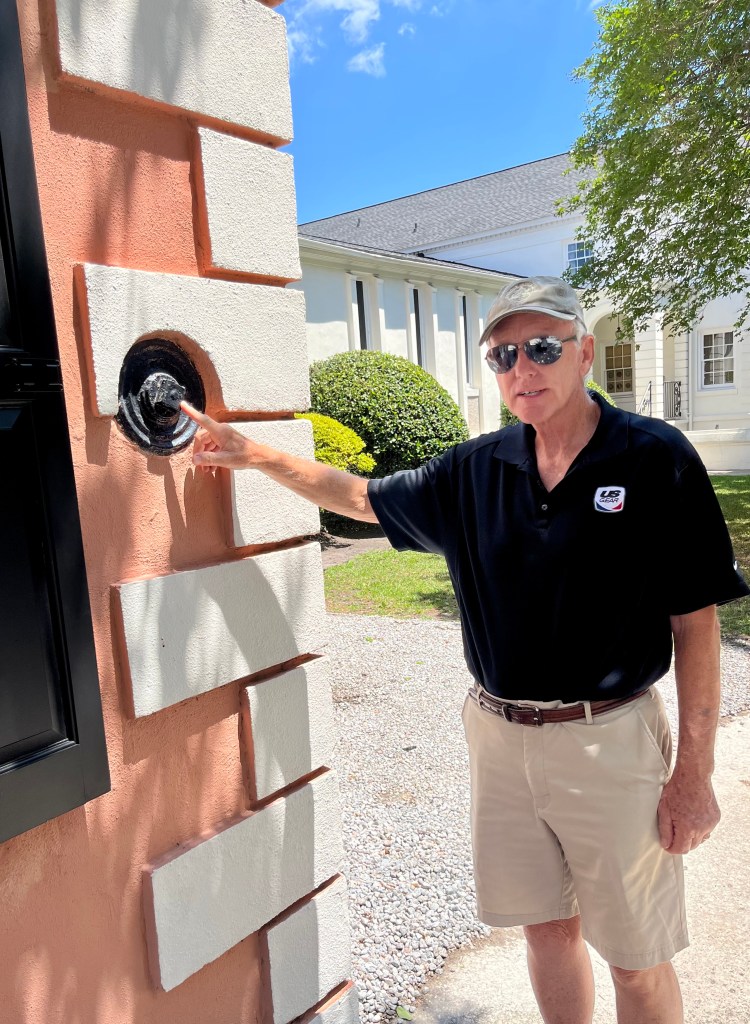
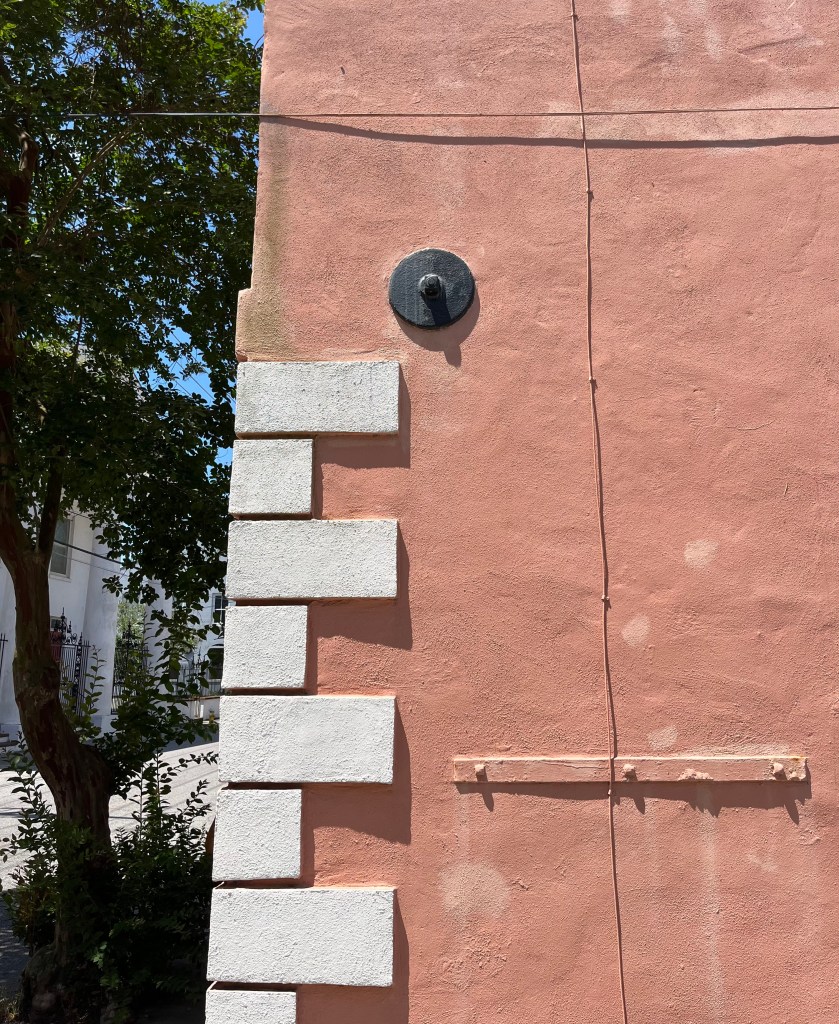
Earthquake Bolts
Charleston has endured many storms and earthquakes. “Earthquake bolts” were added to many buildings that survived or were built after the devastating quake that shook Charleston August 31, 1886. This was one of the largest earthquakes ever recorded on the Eastern seaboard, with at least 60 fatalities.
Builders then began installing reinforcement bolts to strengthen buildings. Earthquake bolts have two parts – a plate and an iron rod. The plate on the outside of the building connects to the rod that passes through the building and then bolts to the timber frame on the interior.
The plates are visible on the outside wall. Some are crafted as decorative elements, such as crosses, circular scrolls or stars.
Patrick pointing out an earthquake bolt
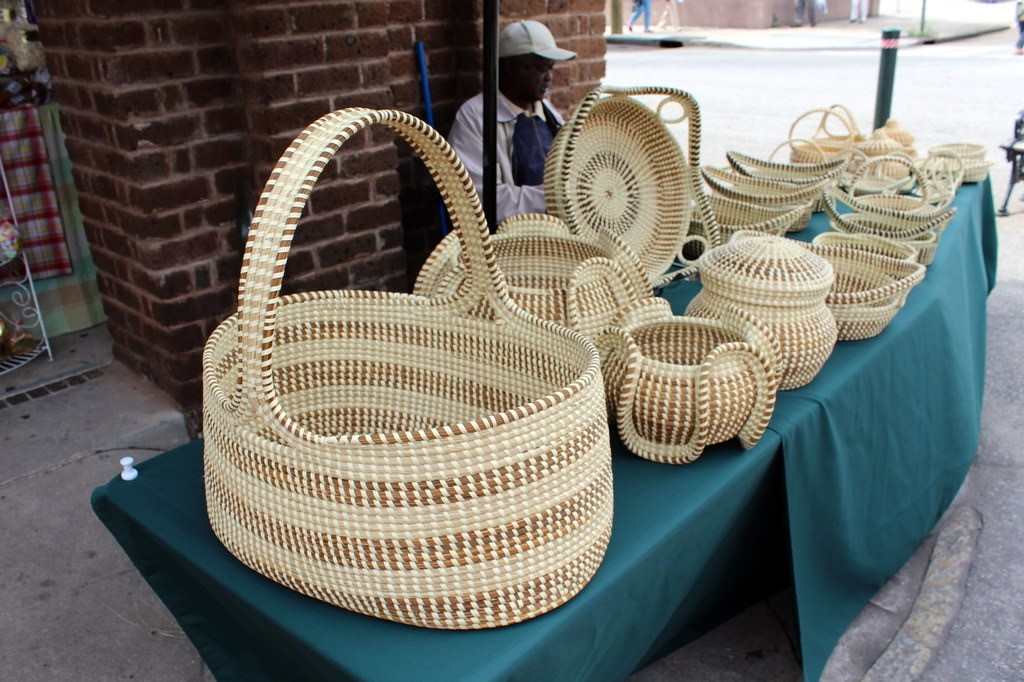
The Gullah Culture
The Gullah are African Americans who live in the Lowcountry region of the U.S. They developed a creole language, also called Gullah, and a culture with significant African influence.
They are known for creating the sweetgrass baskets – all different kinds – and selling them around Charleston.
Historically the Gullah region extended from the Cape Fear area on the North Carolina coast, south to Jacksonville, Florida.
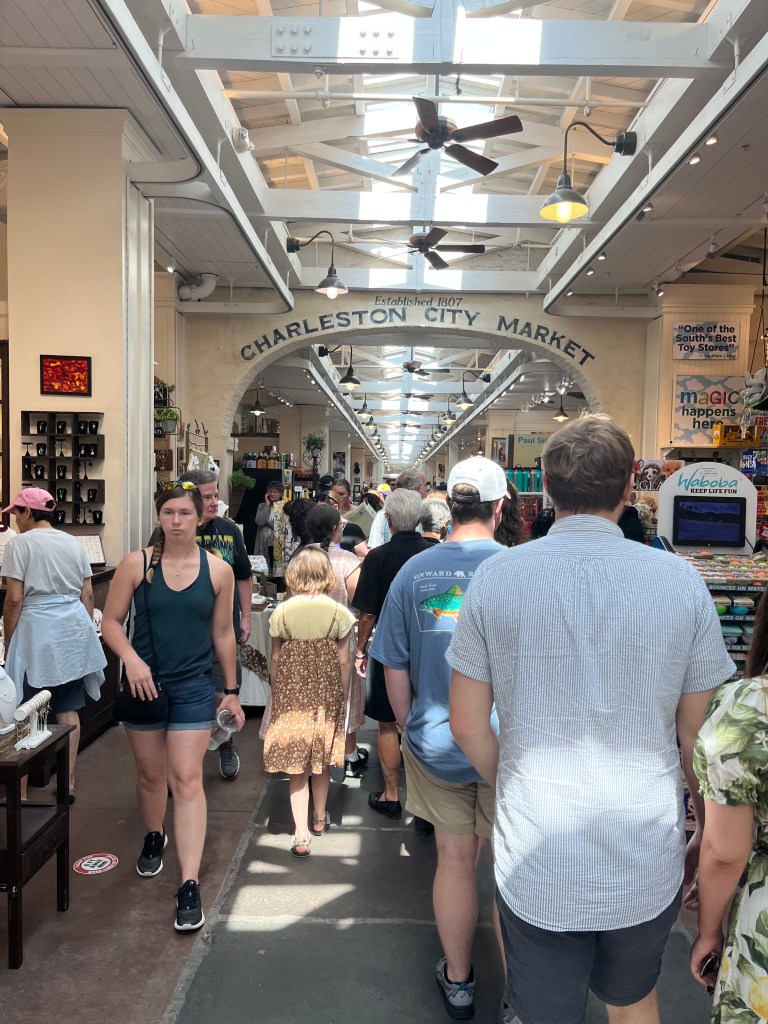
Gullah BasketsCharleston City Market. Should have bought a Gullah basked here. I’ll have to order one when I get home!
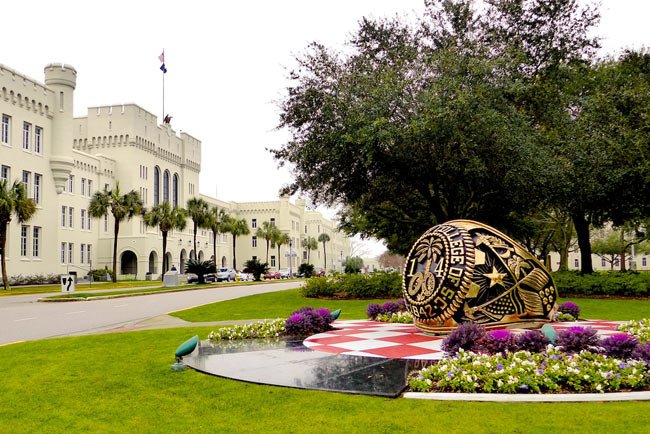
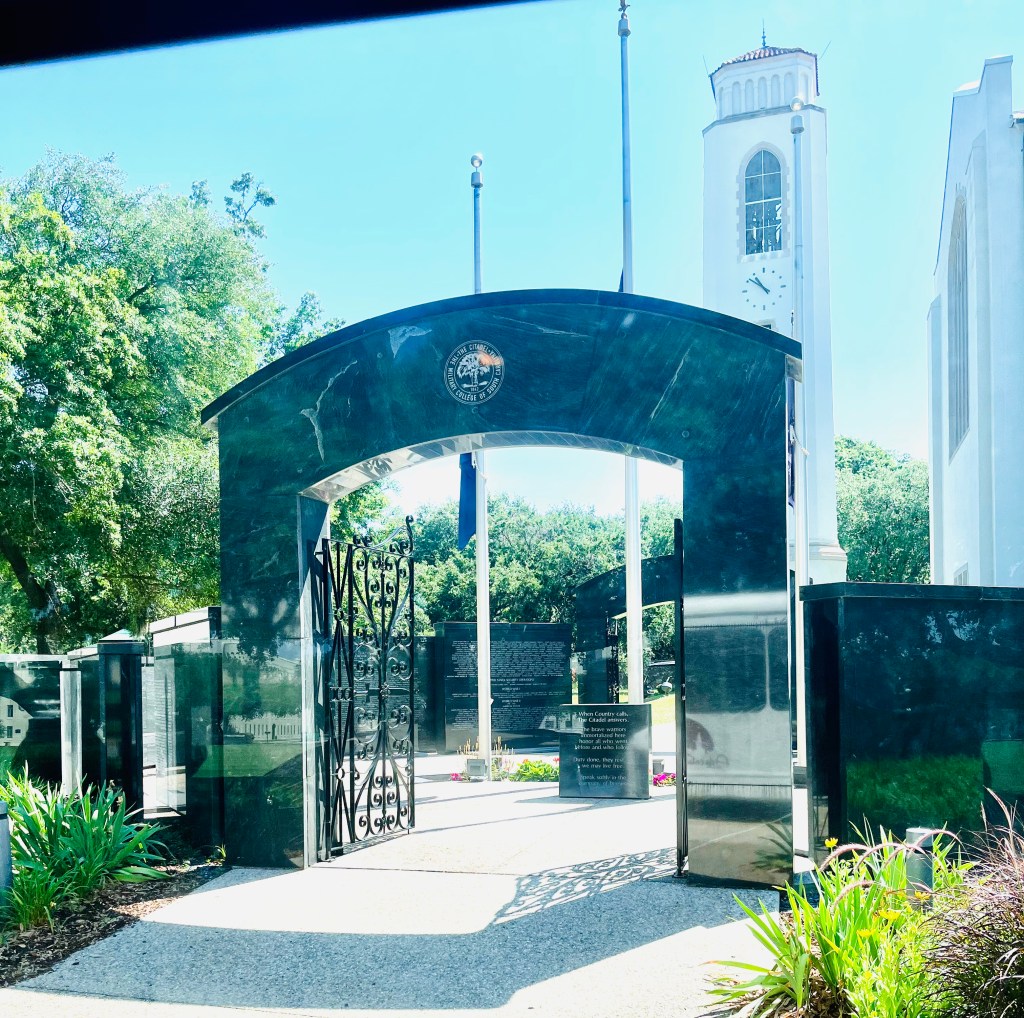
The Citadel – The Military College of South Carolina
Known simply as “the Citadel,” this institution was established in 1842 and is one of six senior military colleges in the U.S. It has 18 academic departments, divided into five schools offering 31 majors and 57 minors.
The South Carolina Corps of Cadets number 2,300 and is one of the largest uniformed bodies in the U.S. Approximately 1,350 non-cadet students are enrolled in Citadel Graduate College. Women comprise 9% of the Corps and 22% of the overall enrollment.
The sprawling campus is most impressive. Statues, memorials, and planes, helicopters, tanks and other artifacts representing all branches of the Armed Services adorn the well manicured grounds. Next time I’m in Charleston I want to take a tour of this college.
The Citadel
Wentworth Mansion
Built in 1886 as a private residence for wealthy cotton merchant Francis Silas Rodgers, it is now a popular National Historic landmark. Rodgers had a family of 13 children and he desired to create a stunning estate in the heart of Charleston. The structure is massive – four stories tall and 24,000 square feet. It sits at the intersection of Wentworth and Smith Streets.
Awe-inspiring details include Philadelphia pressed brick, Tiffany stained-glass windows and a bas-relief cornice above the dining room window depicting a cotton plant, emblematic of Rodgers’ business.
The iconic mansard roof features a large cupola that afforded unrivaled views of Charleston’s neighborhoods.
The house eventually changed hands as the family could no longer afford the upkeep. In 1997 Richard Widman – President of Charming Inns – acquired the site. It is now a posh boutique hotel.
Wentworth Mansion
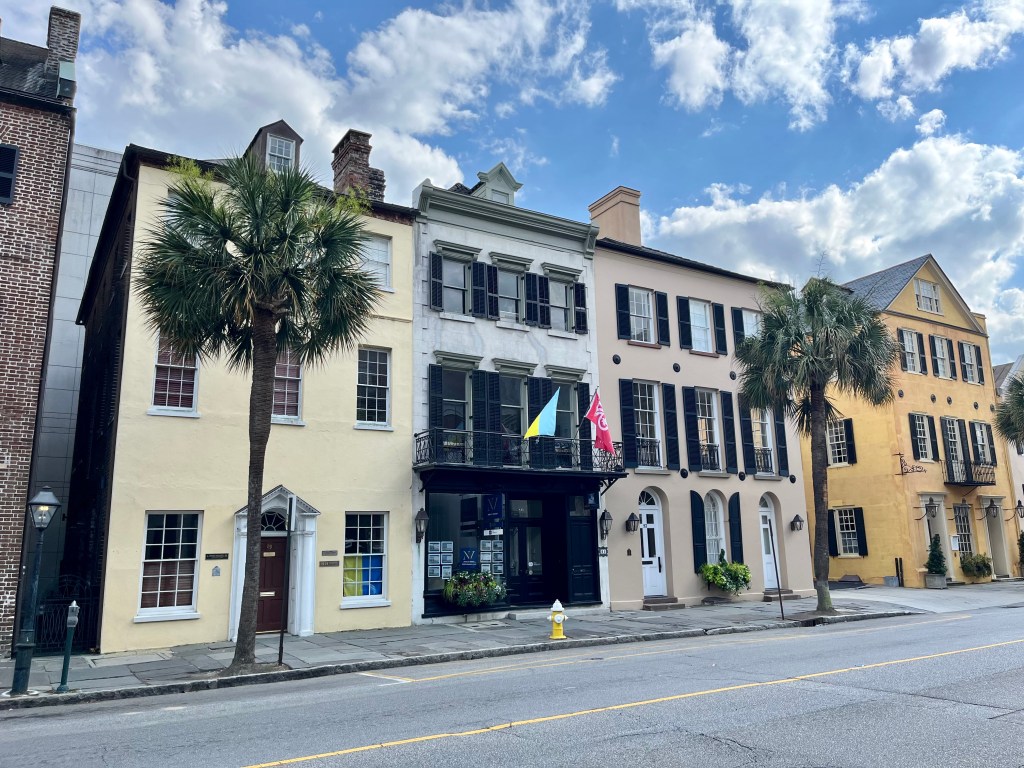
French Quarter District
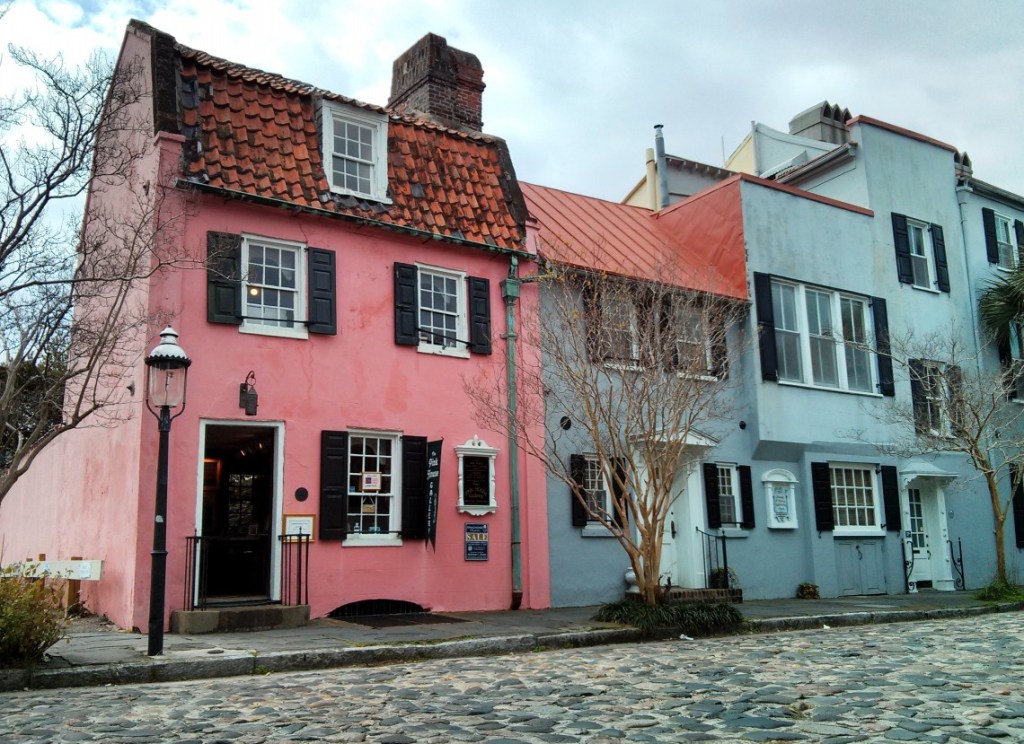
An icon located in the French Quarter District is the Pink House at 17 Chalmers Street. Some claim this is the oldest masonry residence in Charleston. It has been a tavern + brothel, a law office, a private residence, an art gallery, and most recently a place for swooning Instagrammers to capture that perfect picturesque shot.
The structure’s pink exterior, original gambrel tiled roof and cobblestone road capture several iconic staples of Charleston.
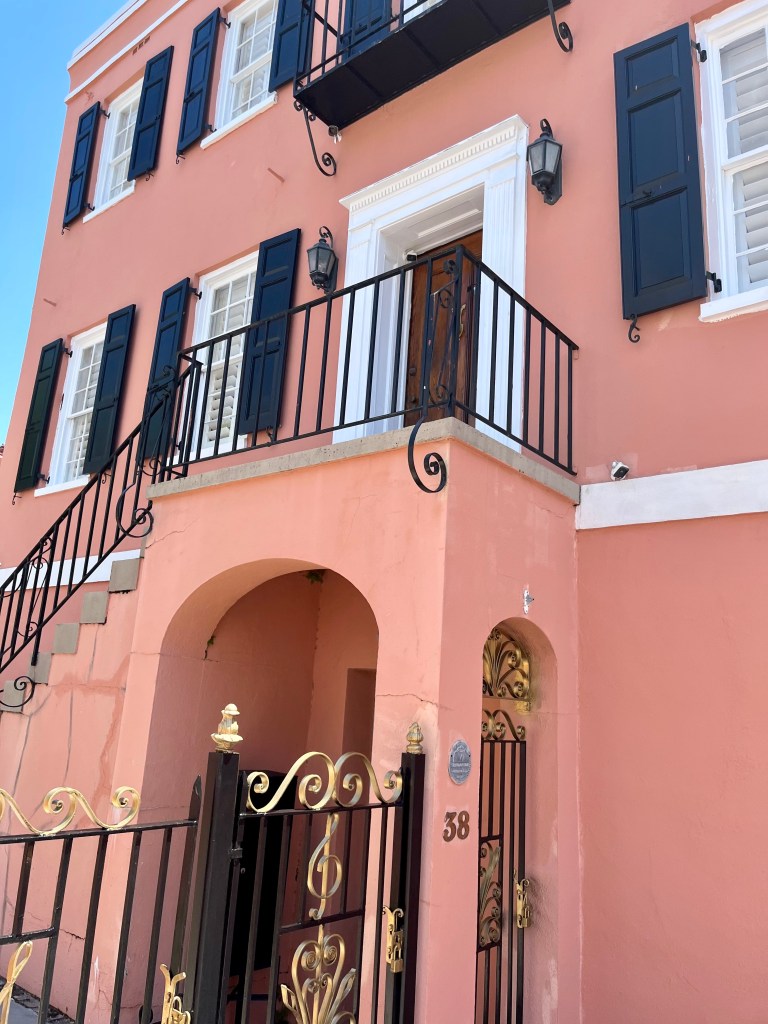
The Pink HouseBeautiful home in French QuarterStorefronts
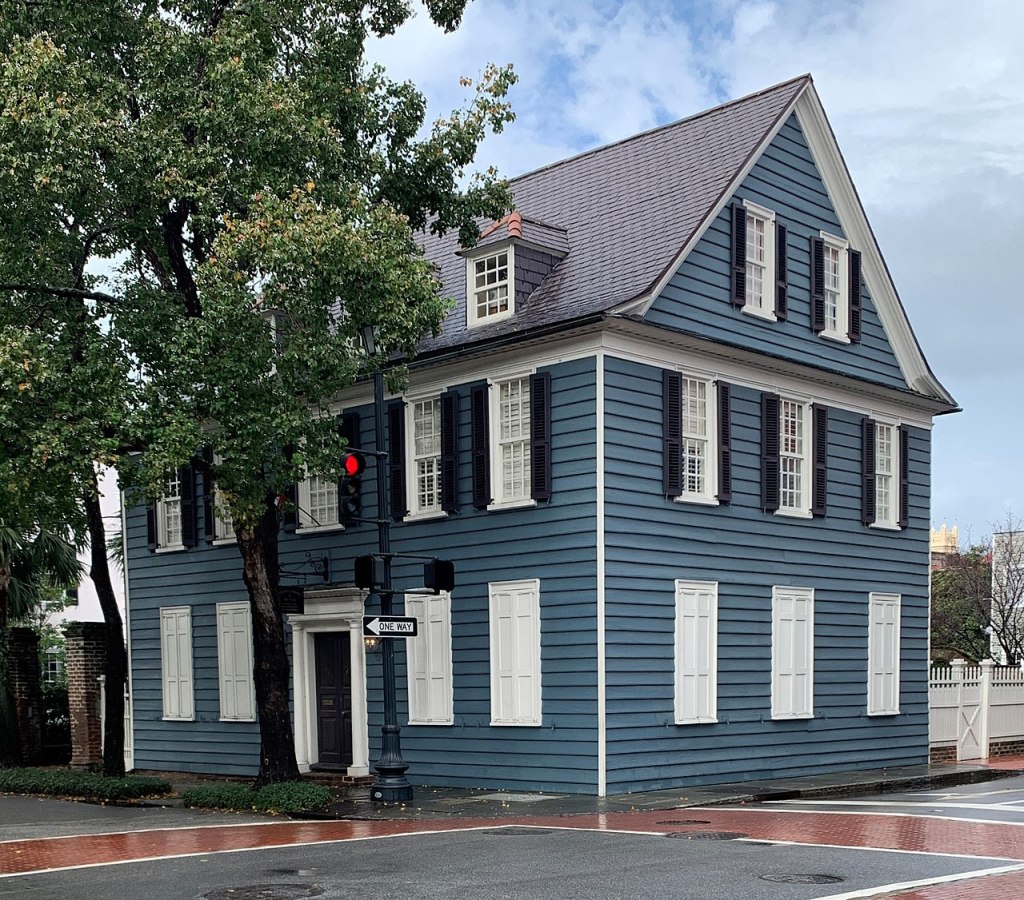
Haint Blue
I love the color blue – U.K. Blue, robin egg blue, ocean blue – and it was fun to learn there is a special blue associated with Charleston. It’s called Haint blue.
Haint blue is a collection of pale shades of blue-green that are traditionally used to paint porch ceilings in the U.S. It is also used to paint homes. The tradition originated with the Gullah. This haint blue was believed to ward off haints or ghosts, and keep them away from the home.
The tactic was to mimic the sky, tricking the ghosts to pass through, or to mimic water, which ghosts cannot cross.
The Gullah would paint not only the porch but also the doors, window frames and shutters.
See the haint blue ceilings
Here are some other sites from our day in Charleston:
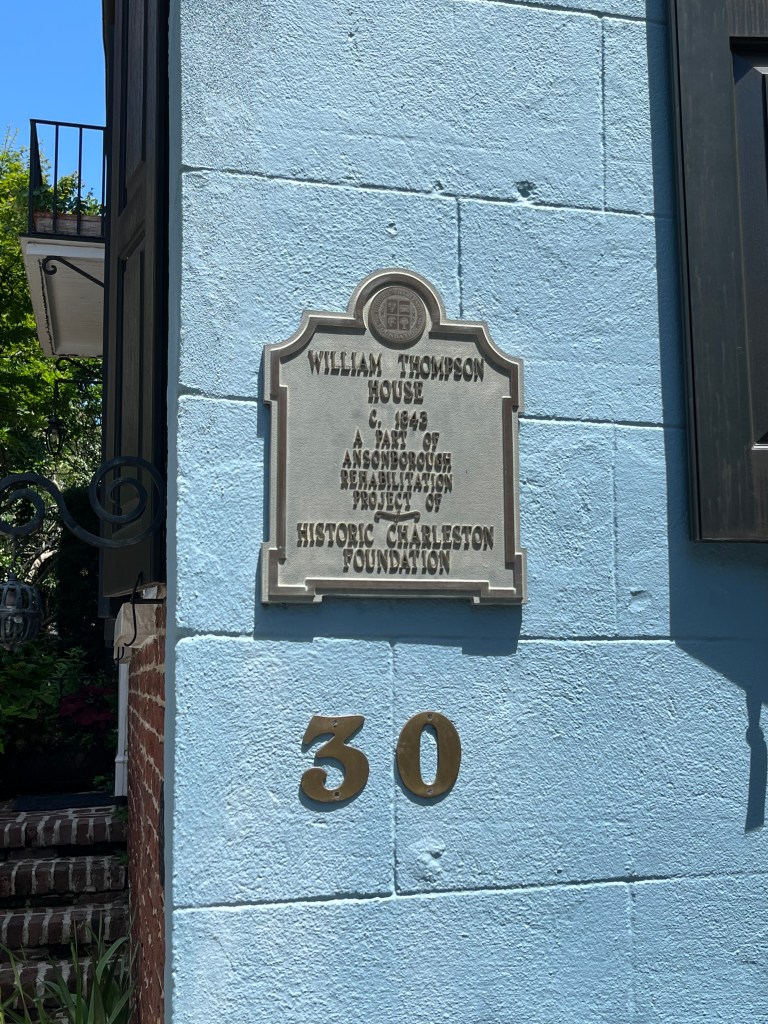
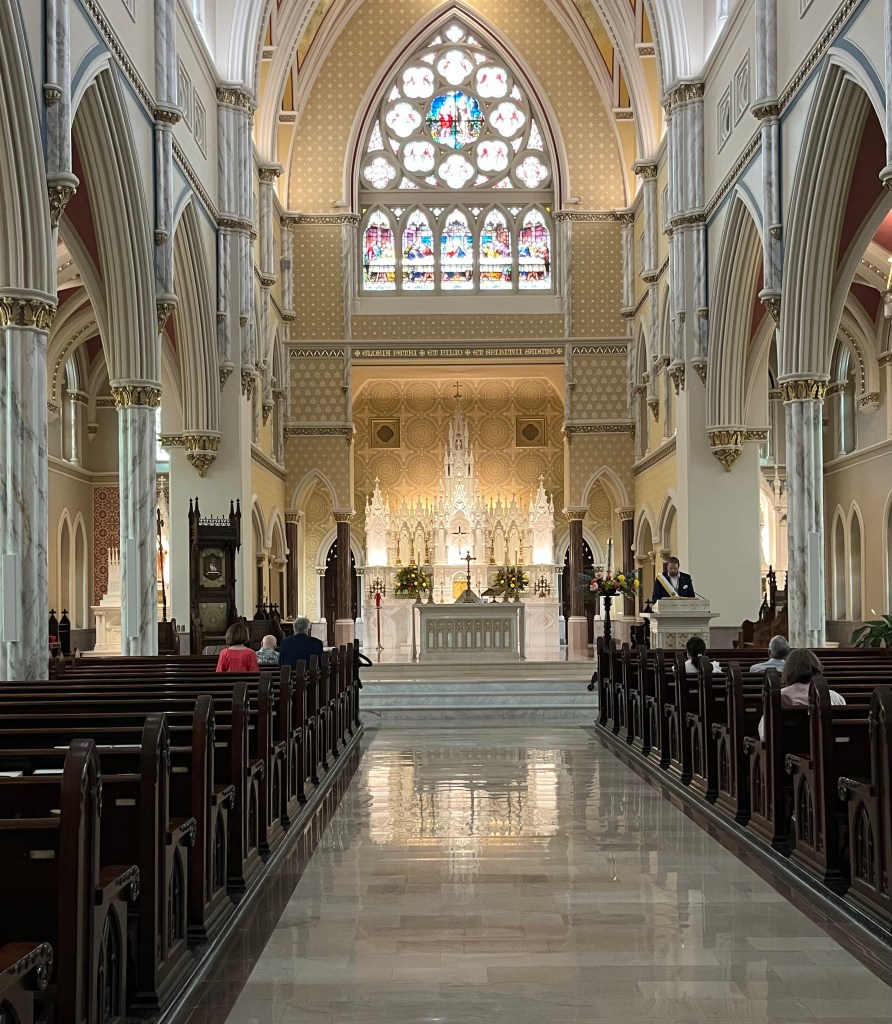
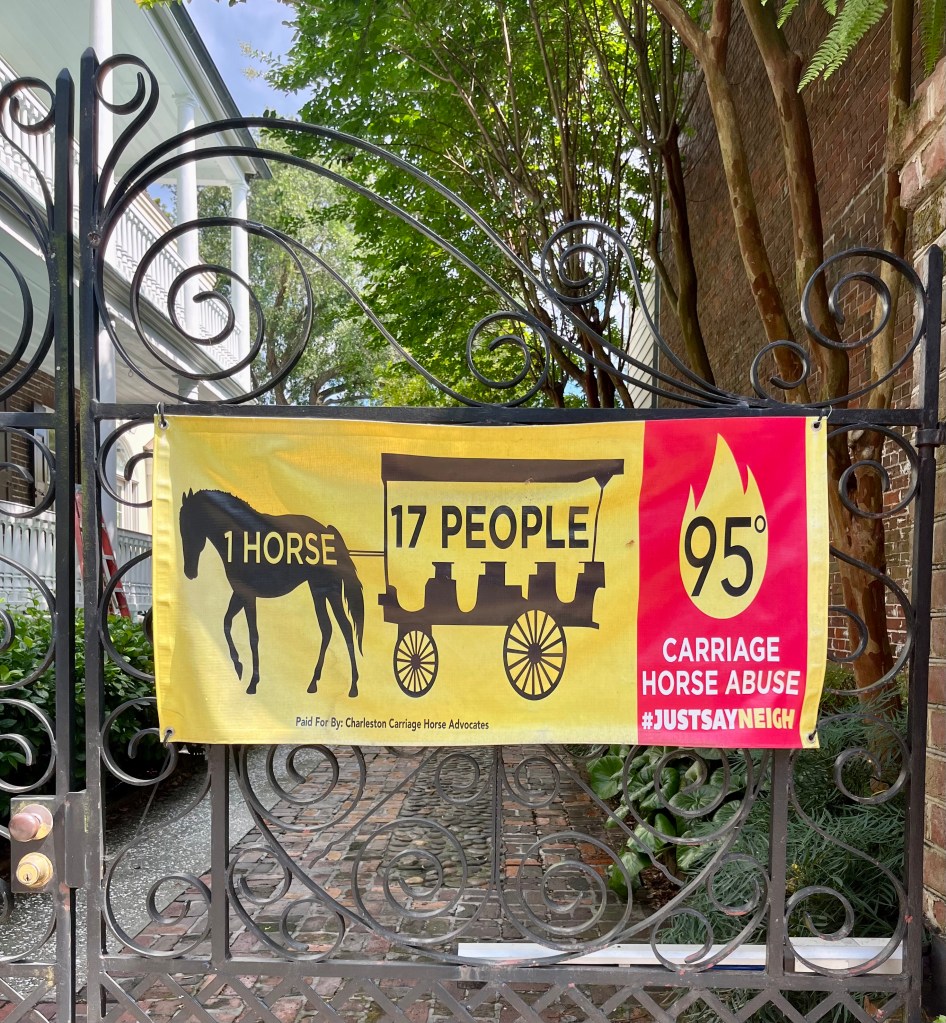
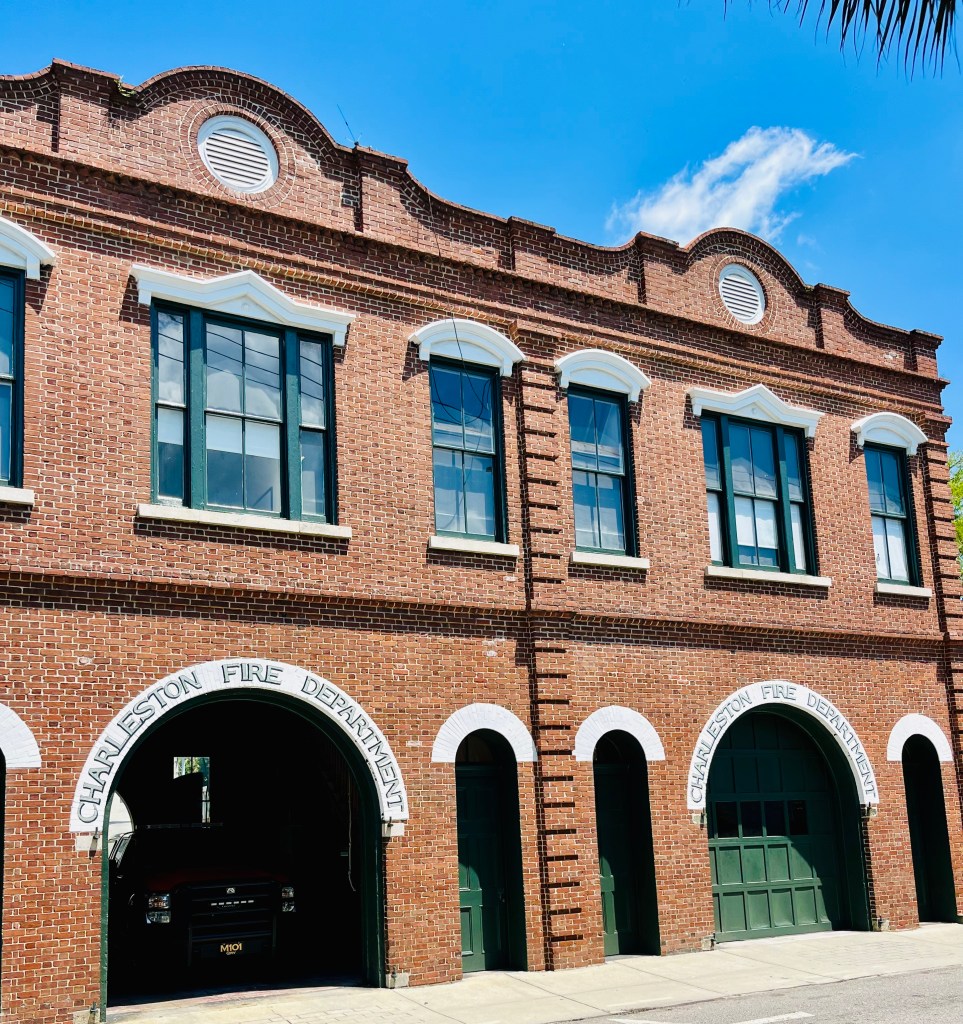
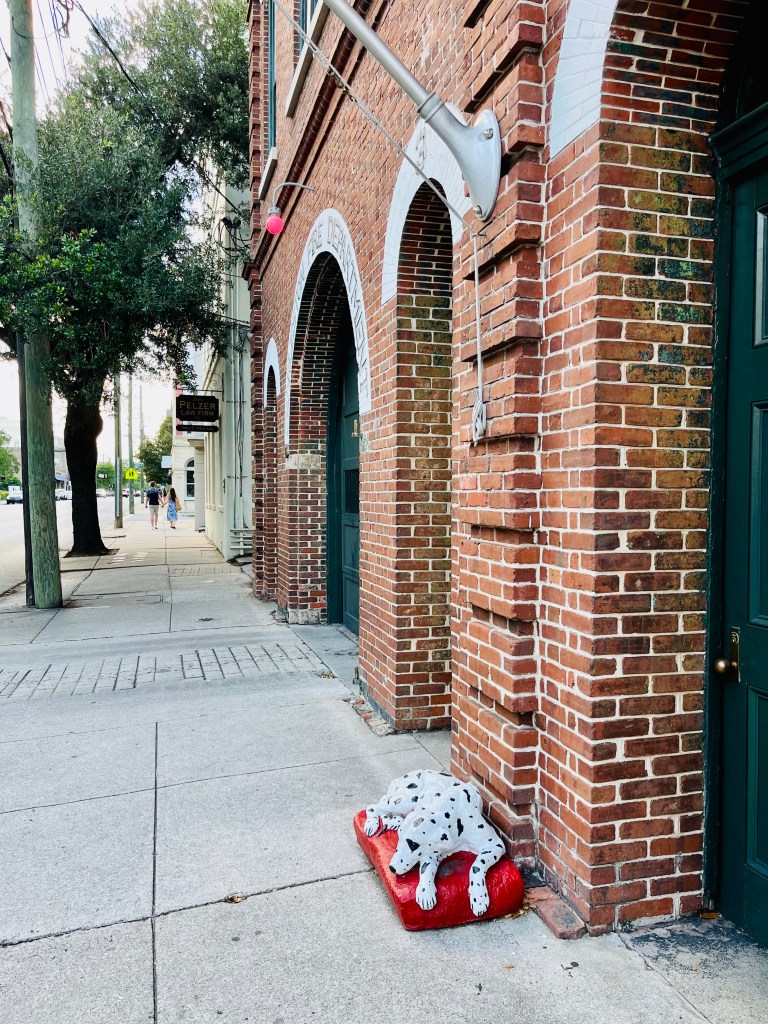
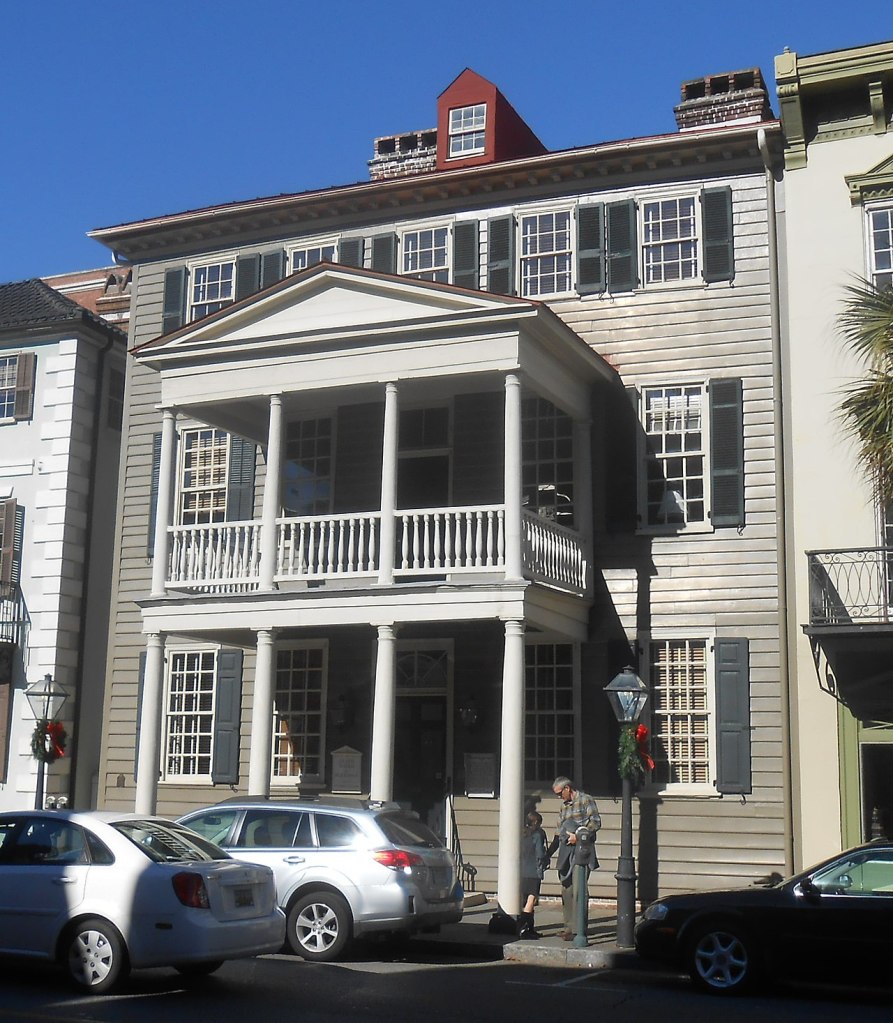
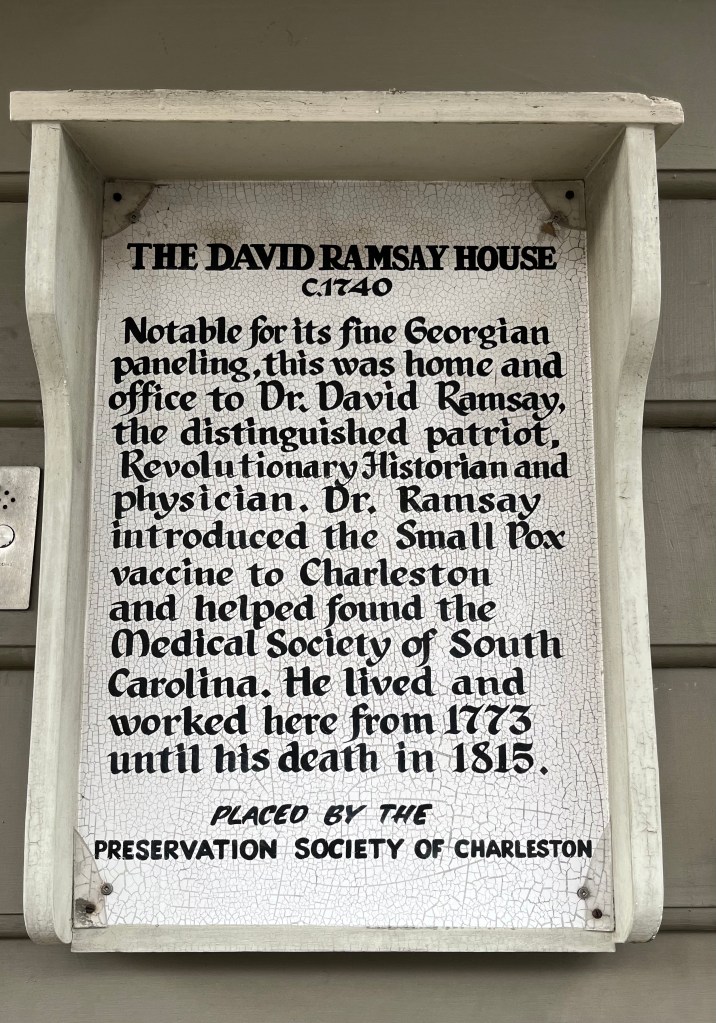
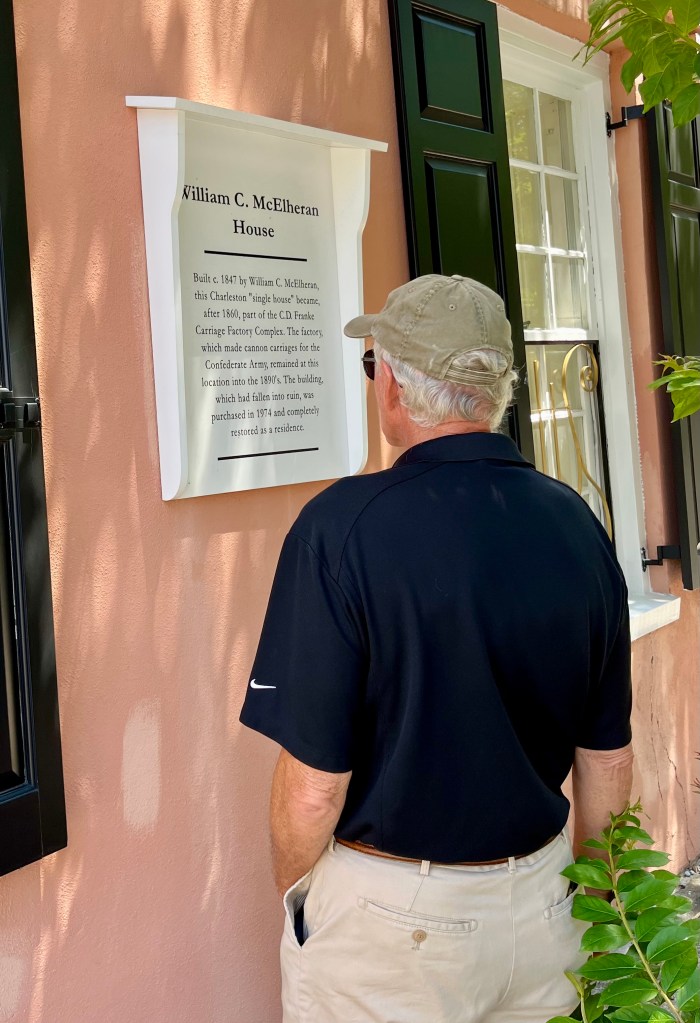
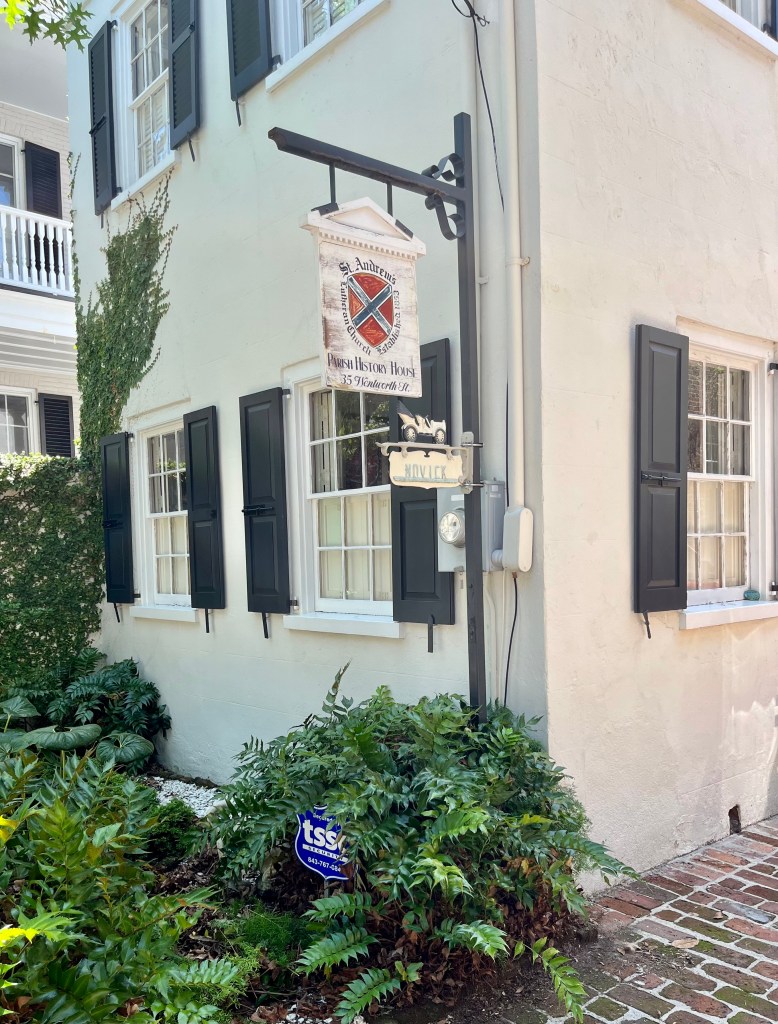
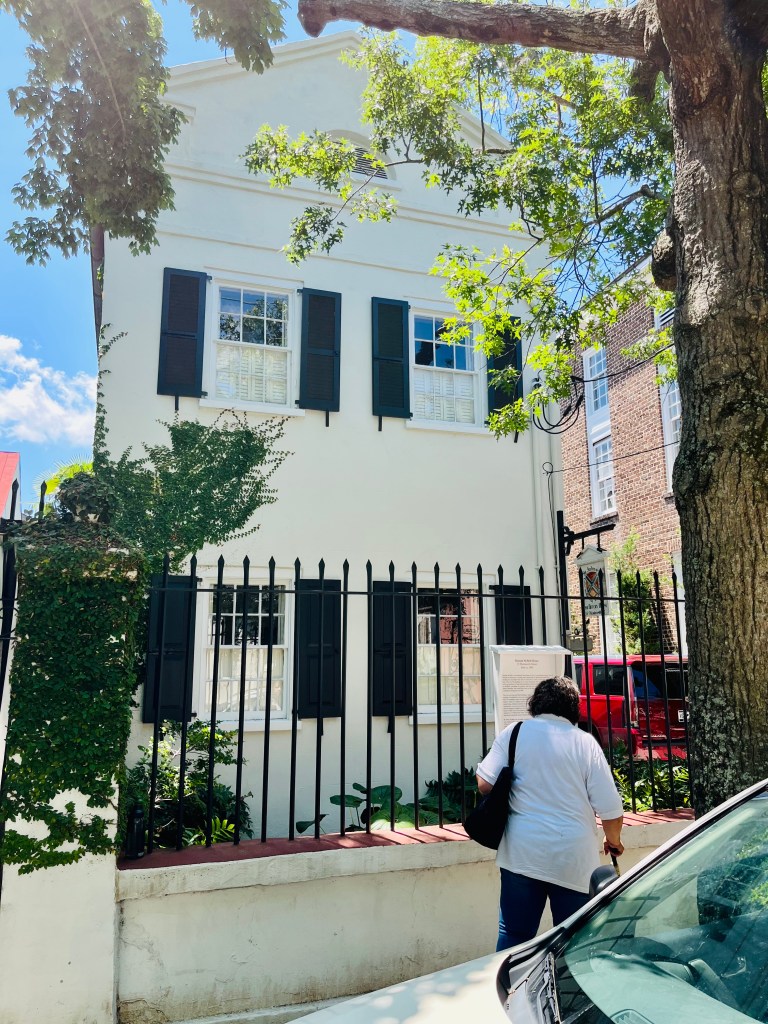
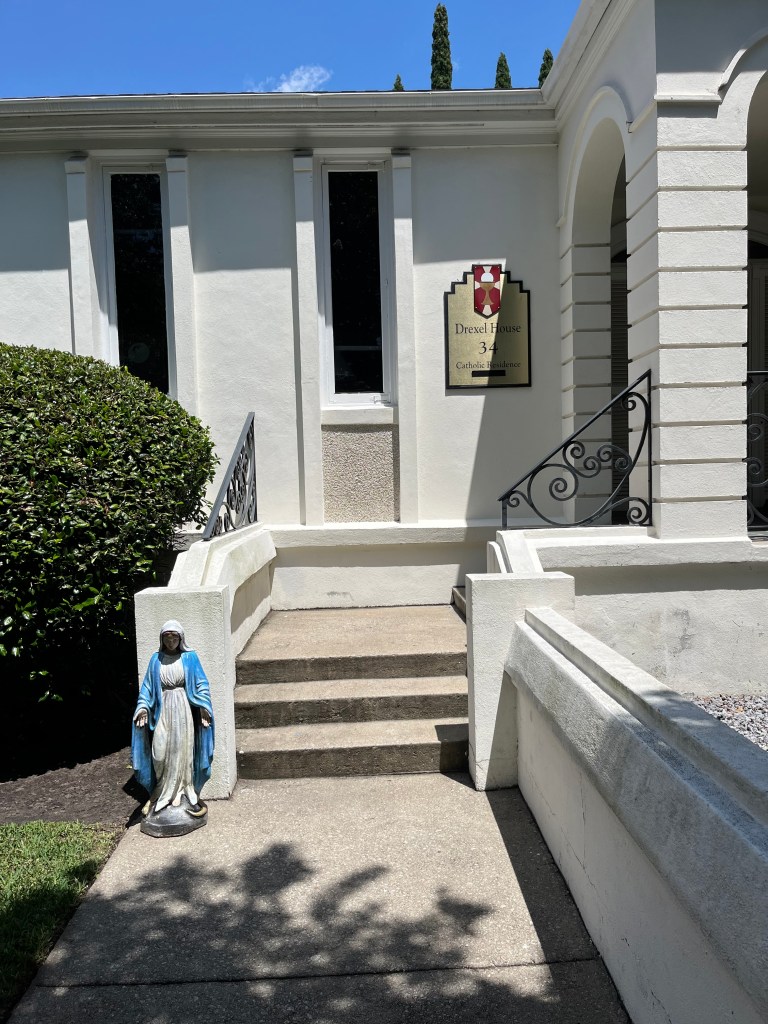
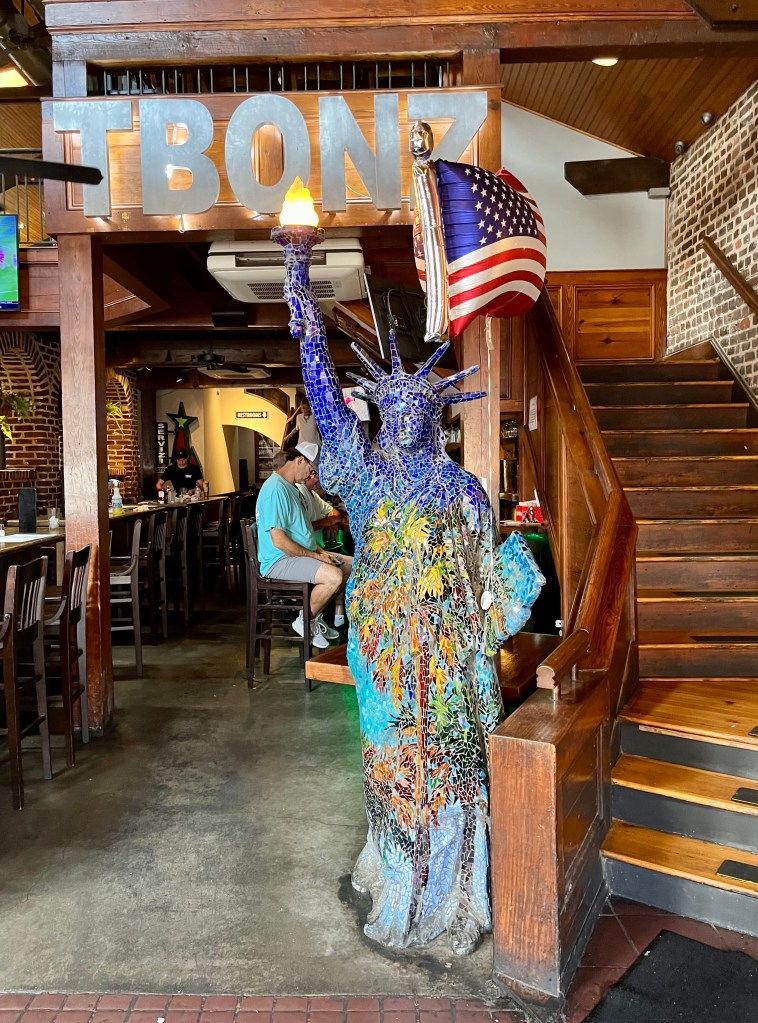
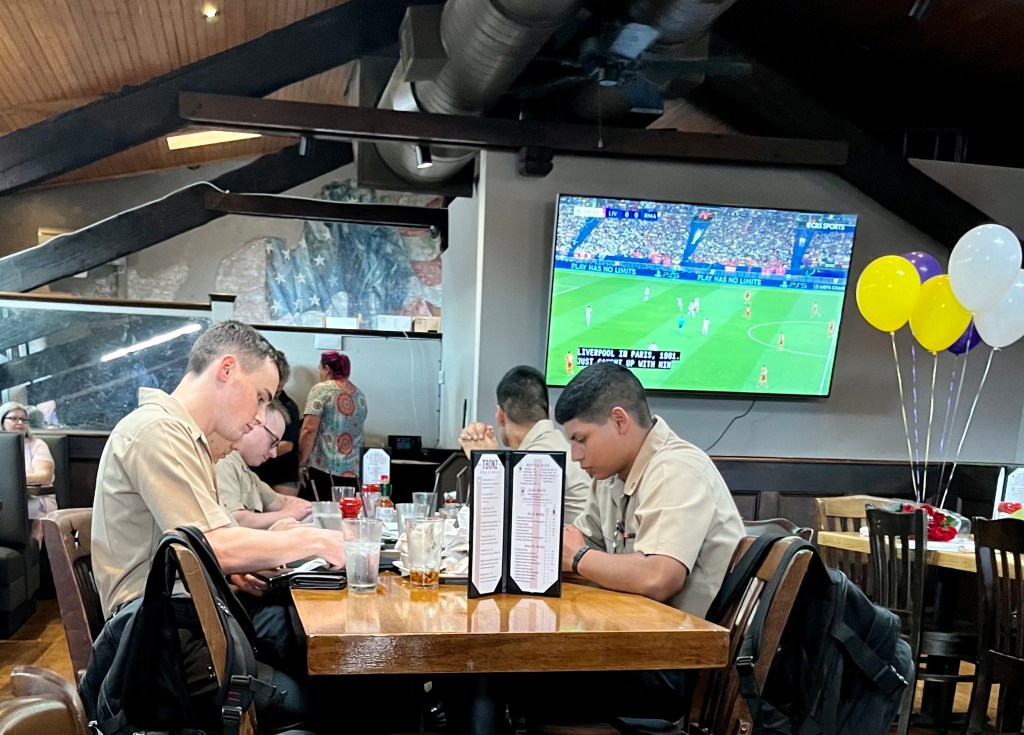
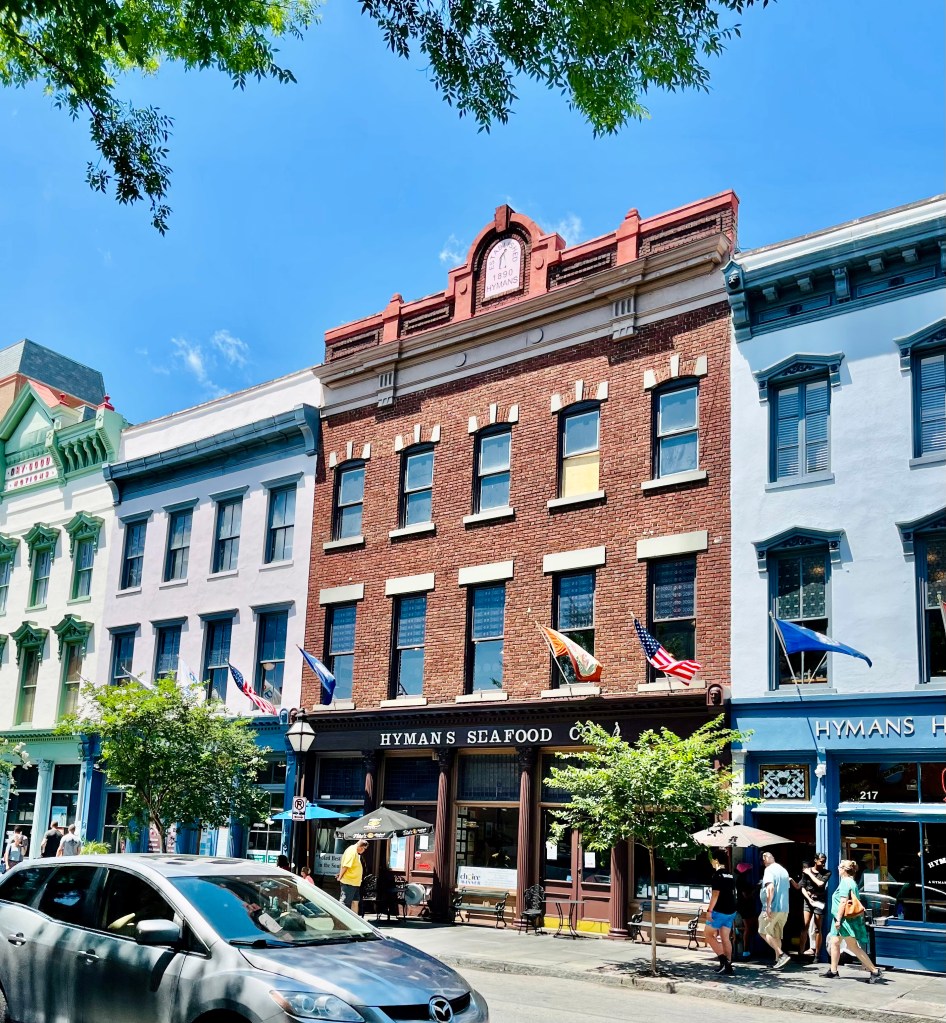
We attended Saturday vigil Mass at St. John the Baptist Catholic ChurchHorse carriage rides are a popular mode of tourist transportation. Animal lovers have begun a campaign for the care of the horses. Dr. John Lining HouseCobblestone streetsCharleston Fire StationWith a dalmation! (statue -:) )Dr. David Ramsey HouseSt. Andrew’sHannah McBeth HouseSite of first Catholic churchHad a great dinner at Tbonz! Highly recommend.Citadel cadets dining at Tbonz next to us Famous Charleston Restaurant – Hymans Seafood. They give away free hush puppies to people walking by. My favorite!
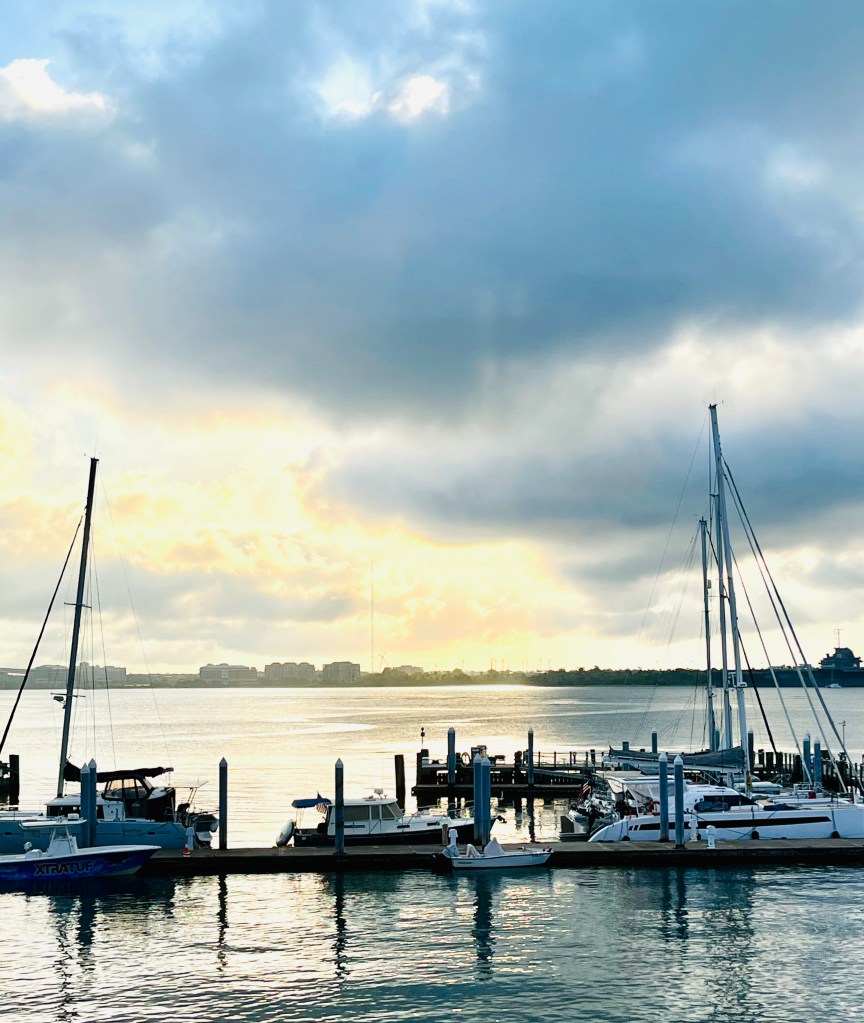
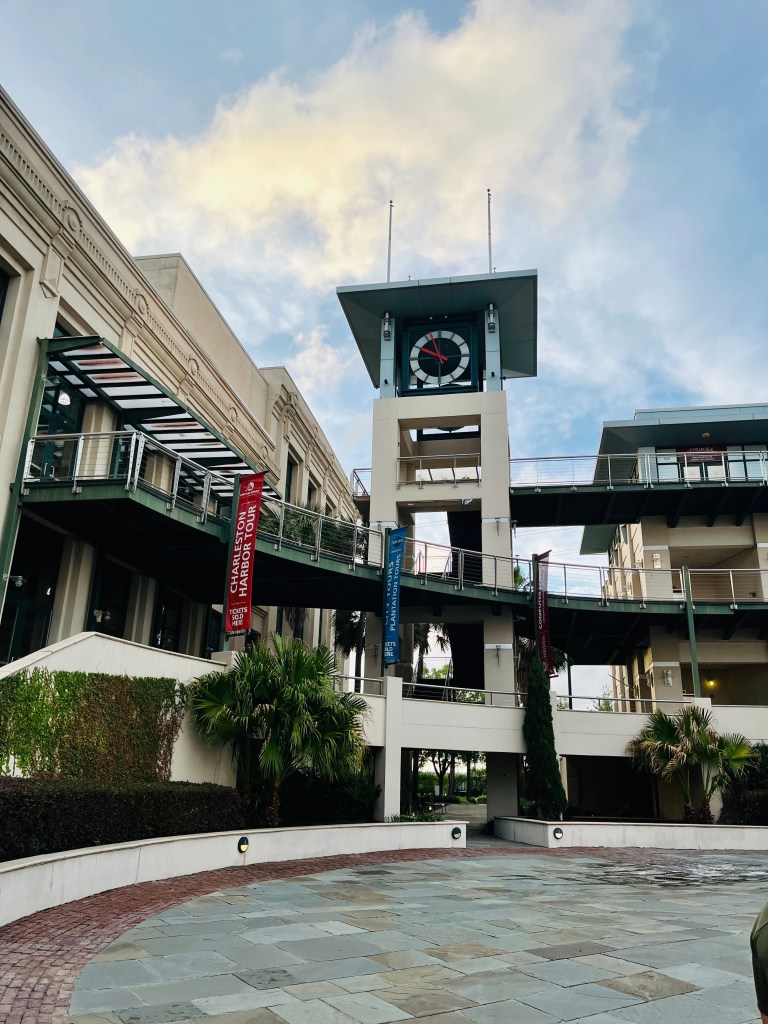
Friday, May 27, we docked at Charleston Maritime Center for the weekend. There are many docks to choose from in Charleston. We were glad we chose this one – the staff was so helpful. We were soon on a first-name basis with Peter, Christian and Logan. The USS Yorktown aircraft carrier was just across the waterway. We were steps away from the Ft. Sumter Museum, the Aquarium, and the water taxi. There was a Harris Teeter grocery store I walked to daily. And the laundry facility was free! Score again.
I do not like docking the boat – ever. We were warned about the strong current getting into this marina. We did fine – but did witness a boat crash into a sailboat at the fuel dock!
Here are some pics from our first night in Charleston:
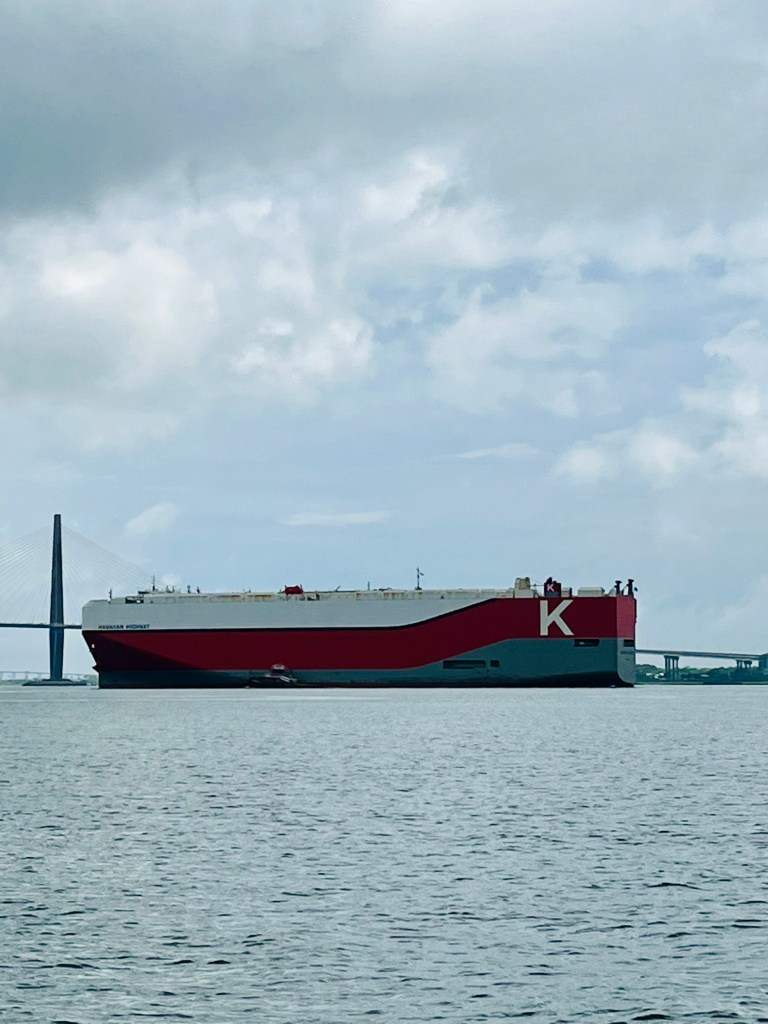
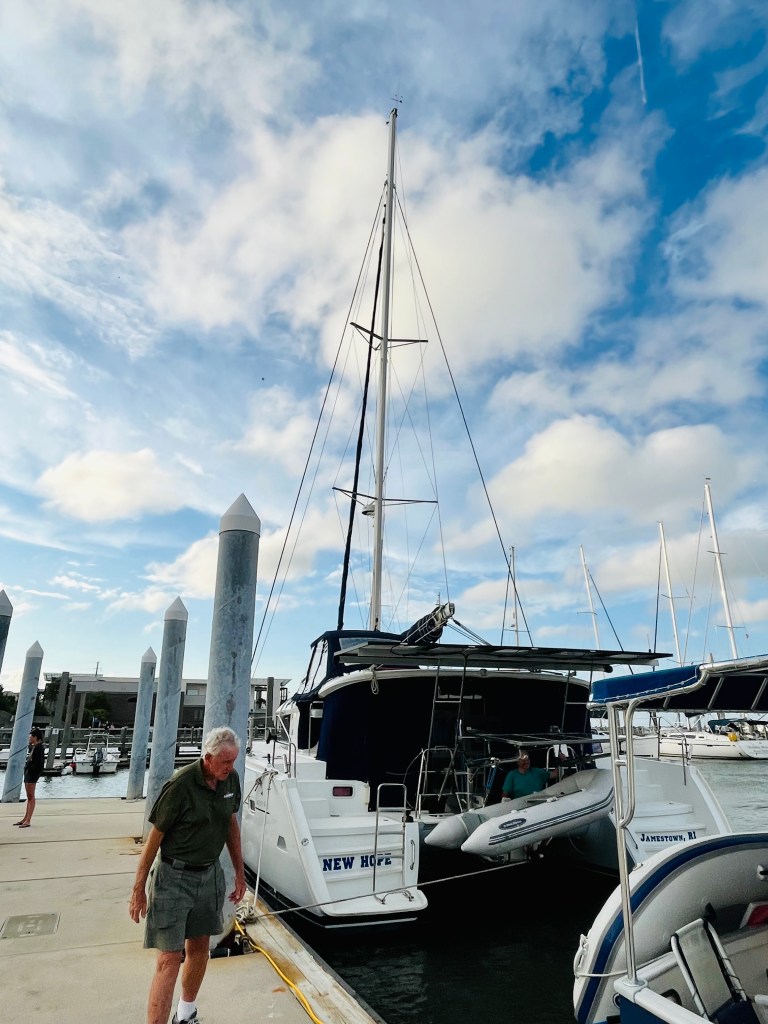
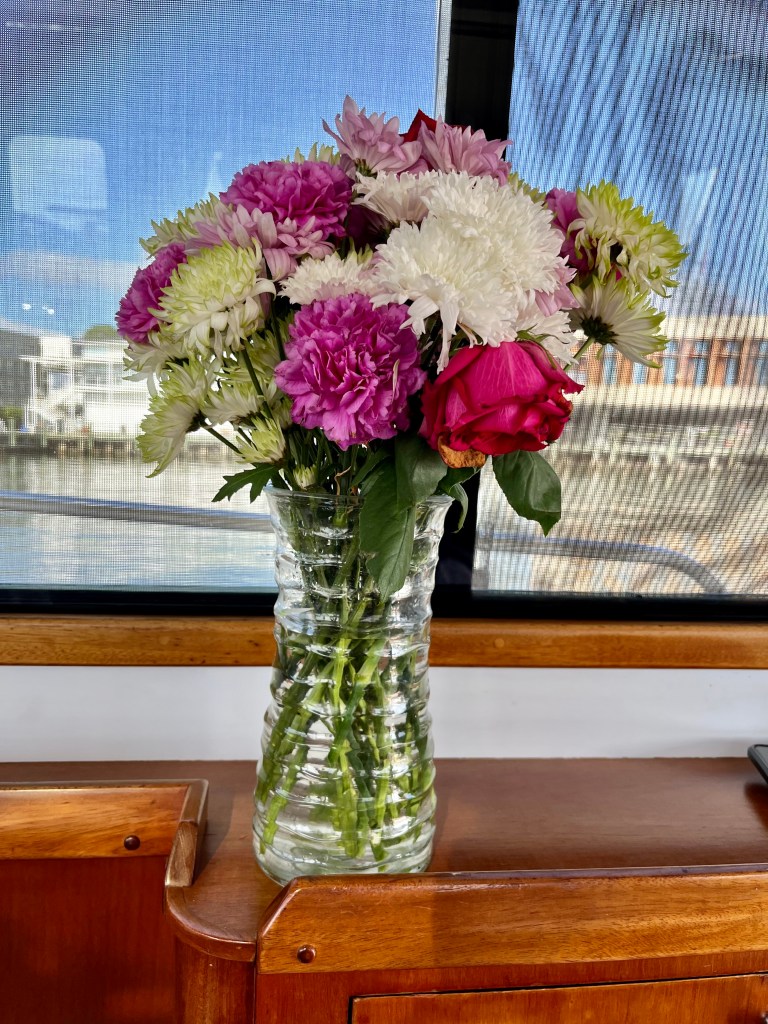
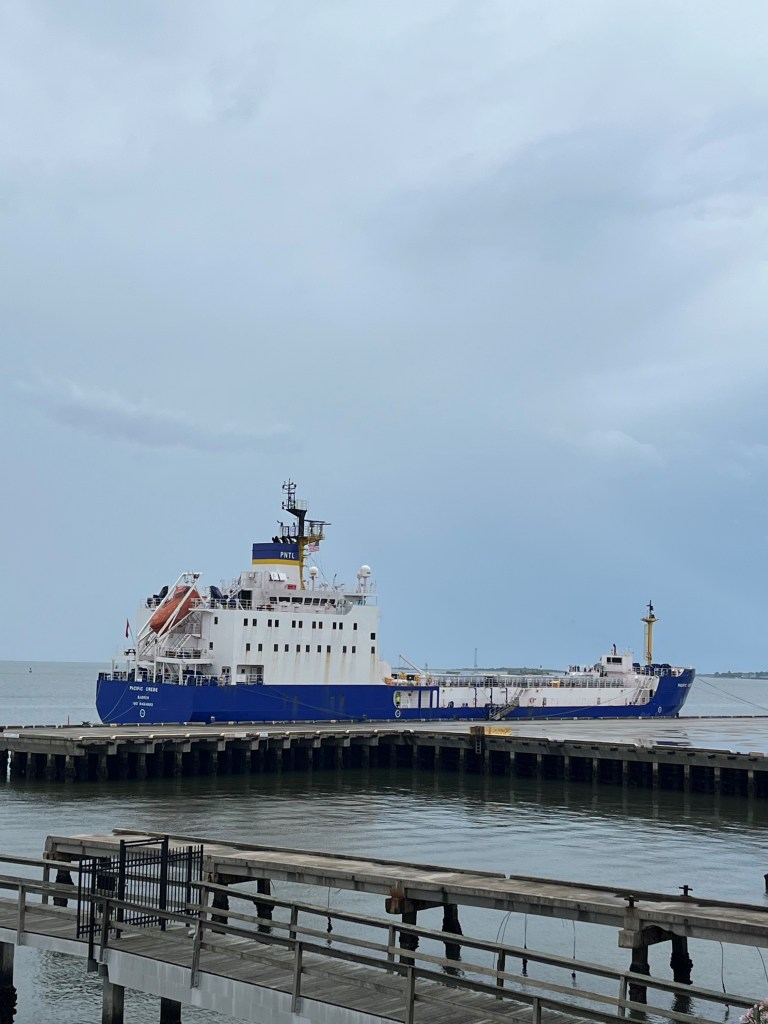
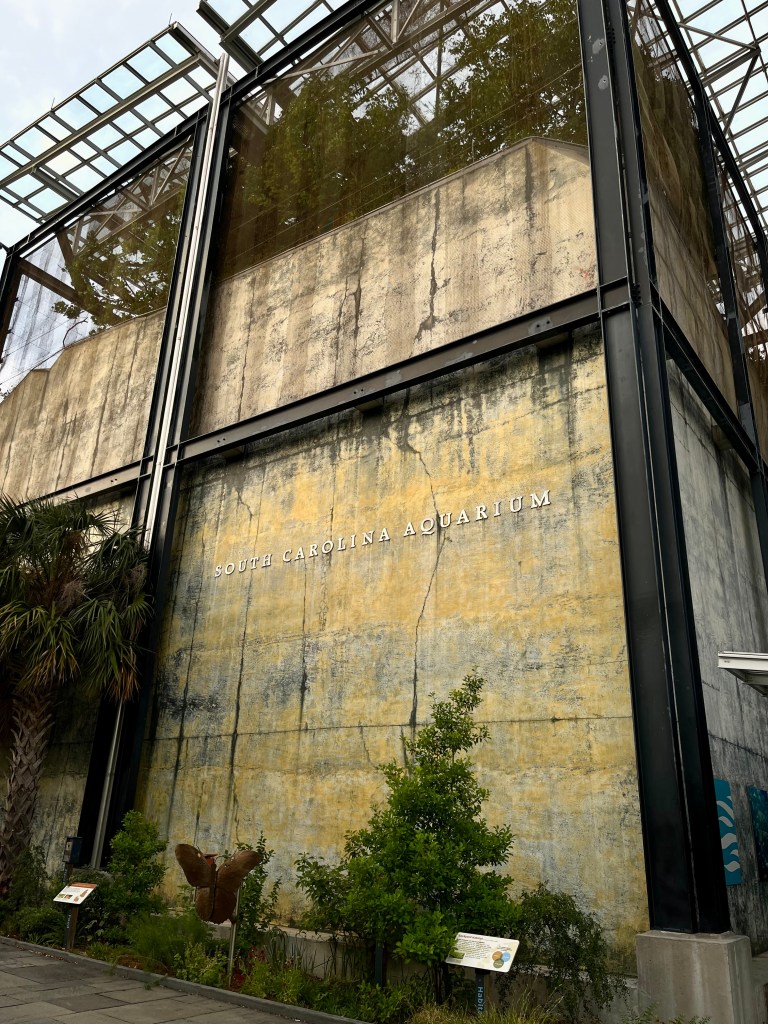
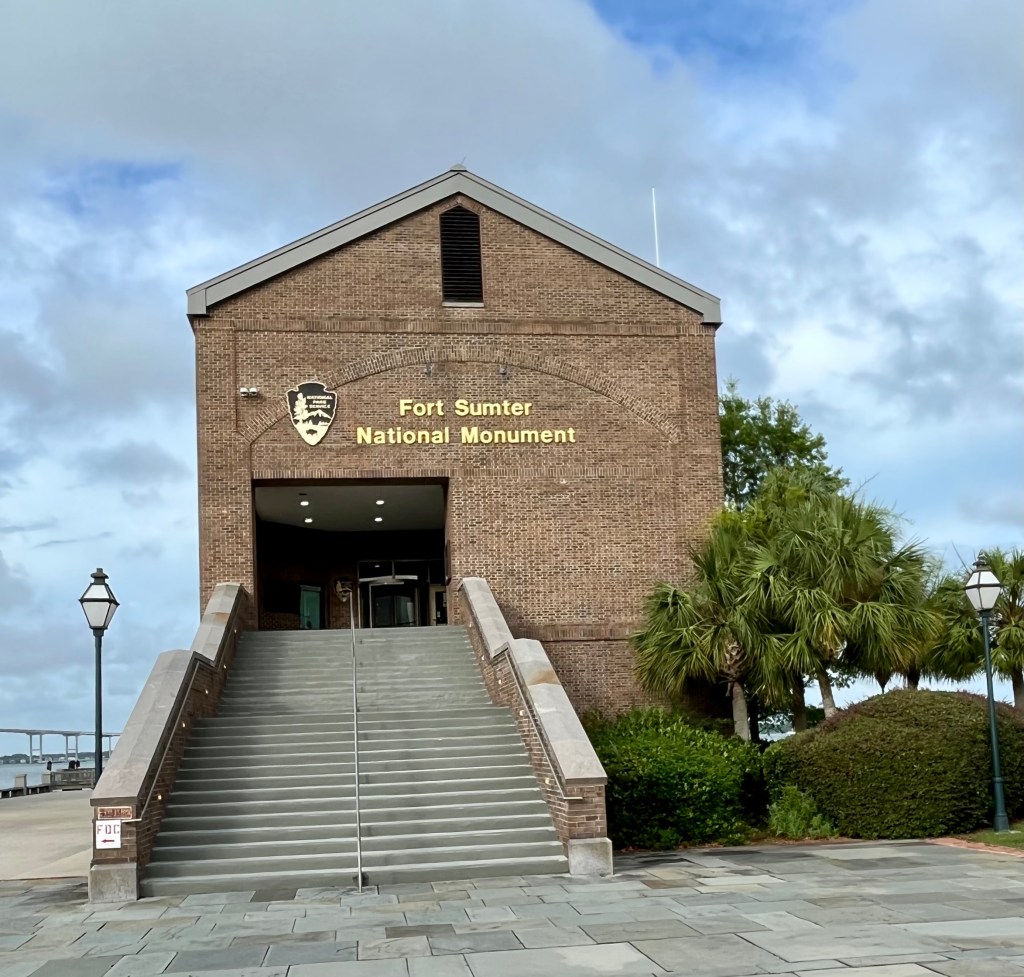
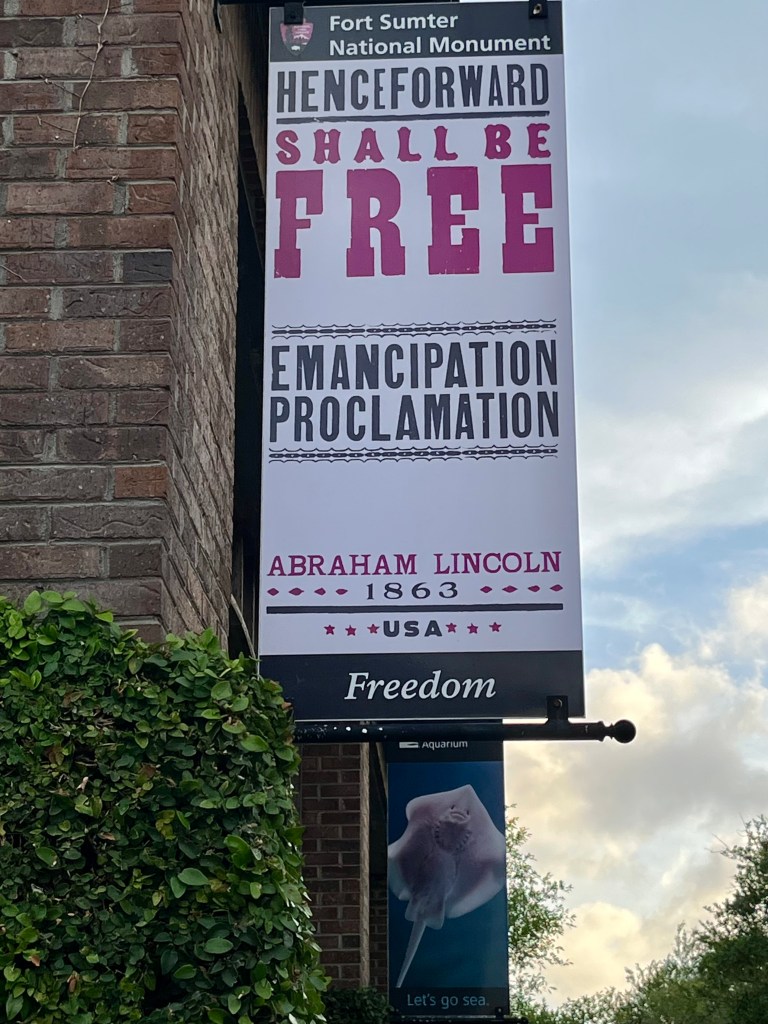
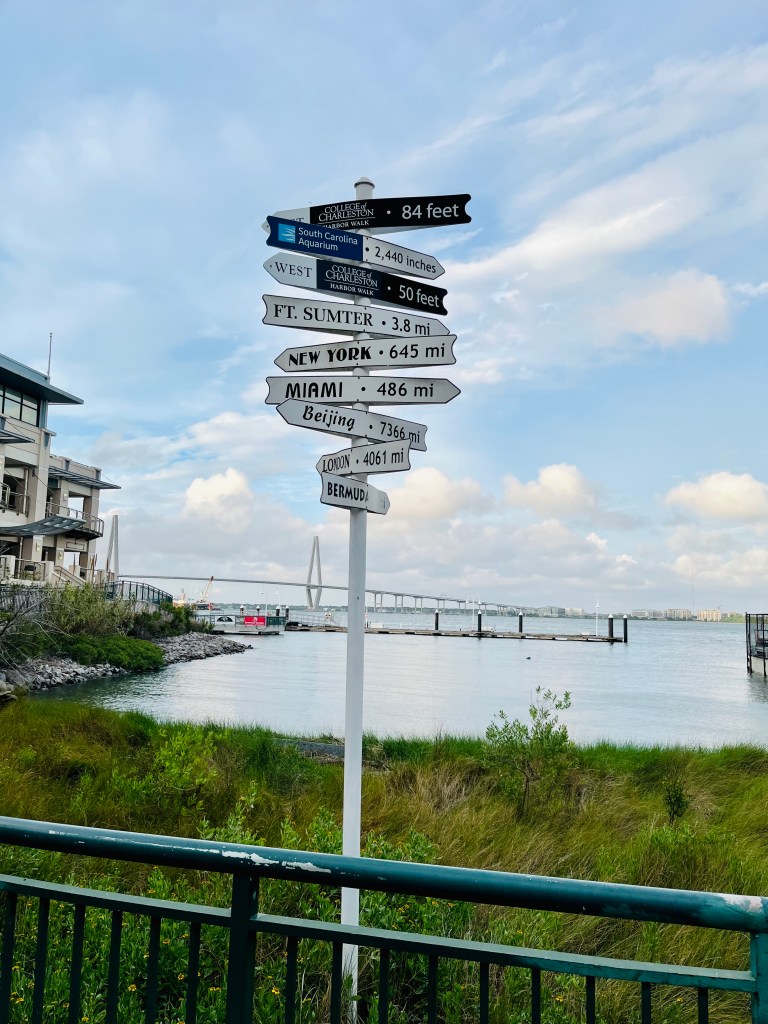
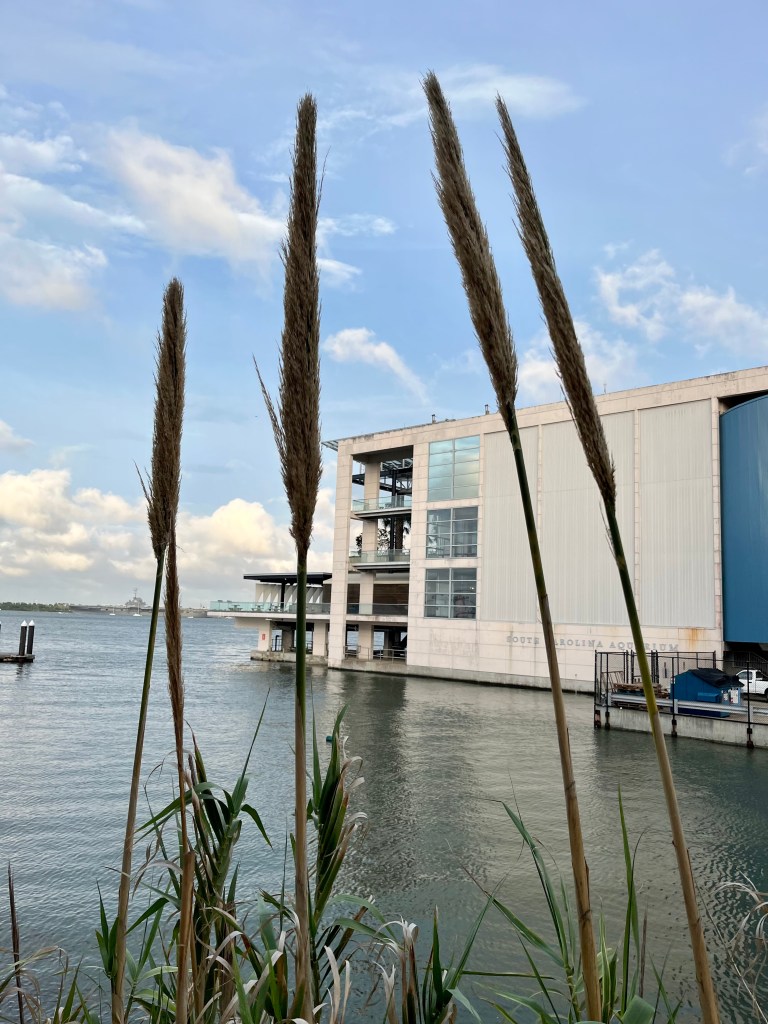
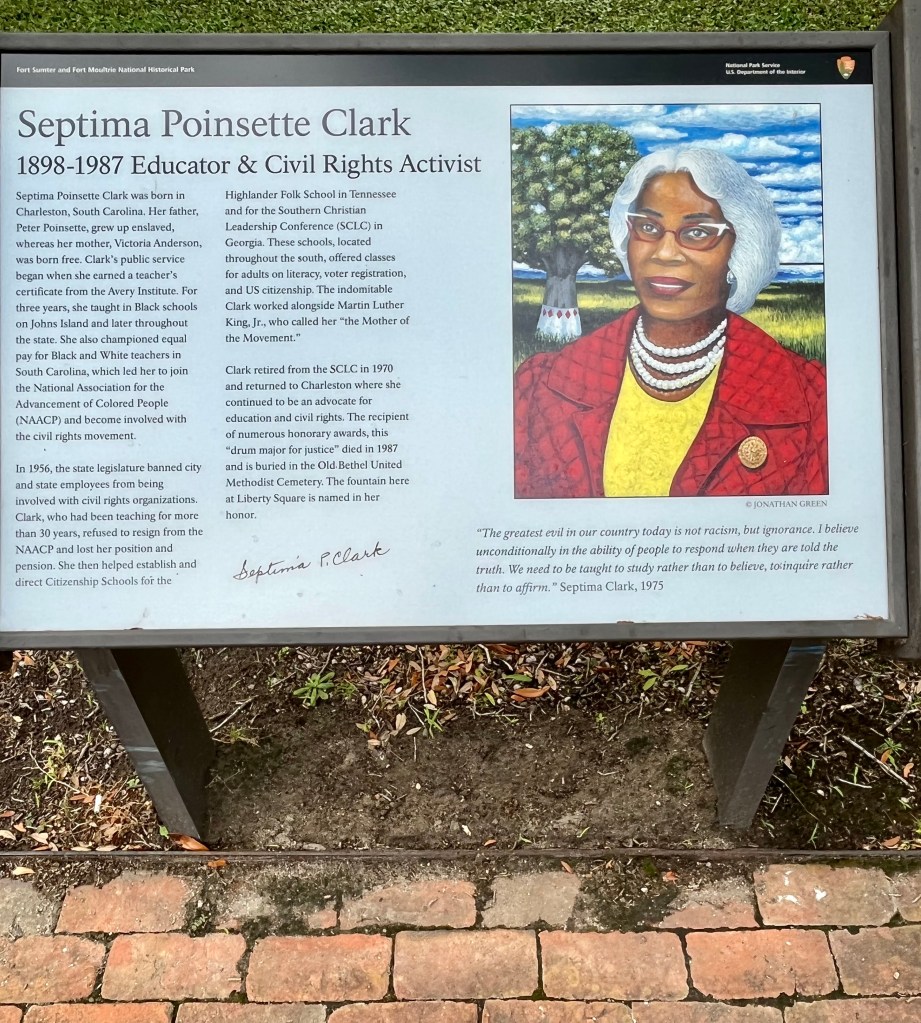
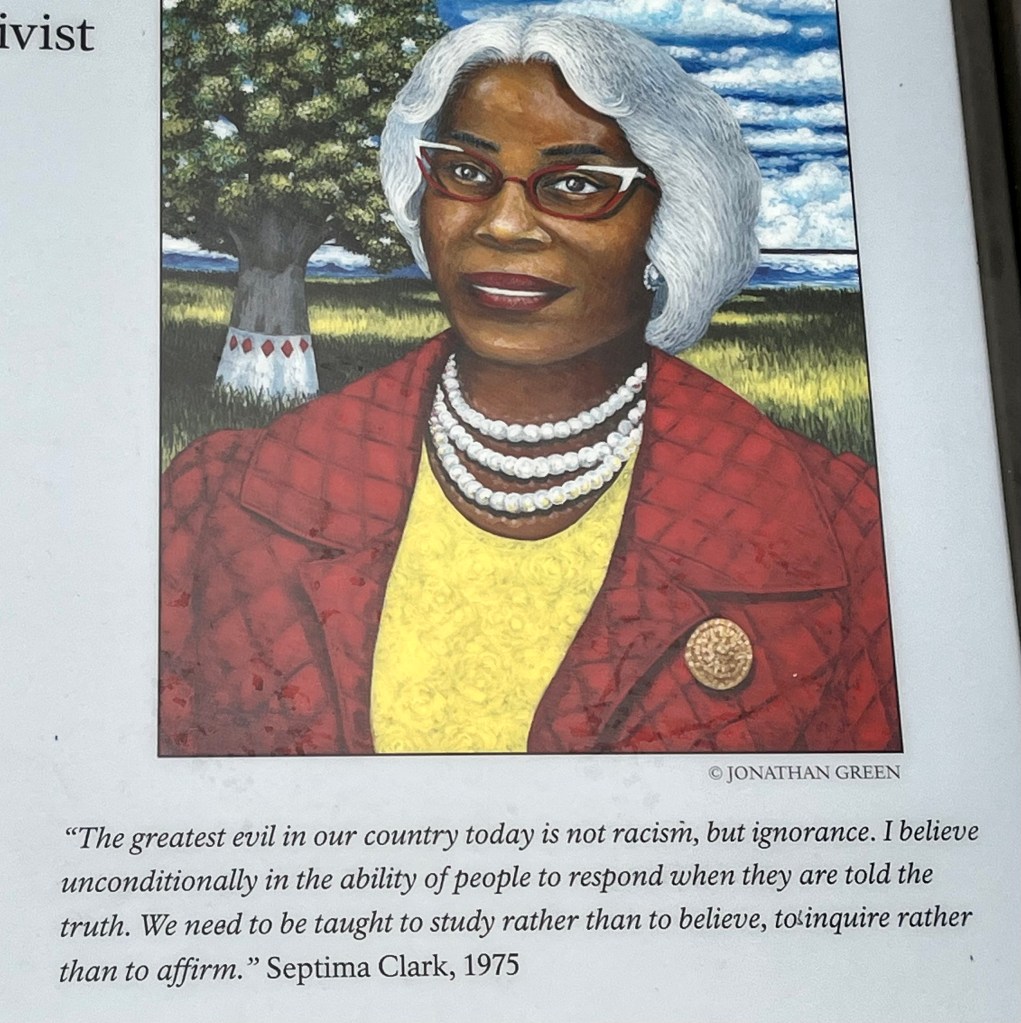
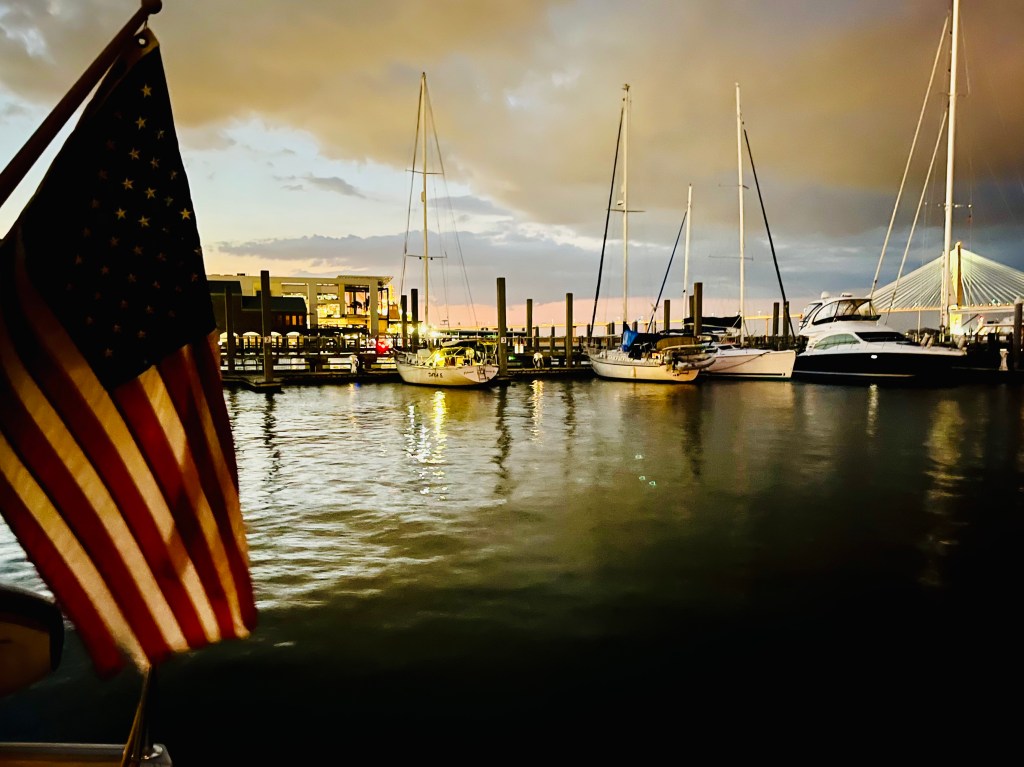
Approaching CharlestonWe communicated with this freighter, who was also docking at the Maritime Center. The guide boat radioed Patrick to ask what kind of boat we have. Patrick loves it when people comment on the Legacy. -:)Strong current indeed! Grateful for Peter, Christian and Logan, and fellow boaters.Sunshine docked at Charleston Maritime Marina – she’s in the middlePatrick was so intrigued by this completely self-sufficient 40 foot catamaran – did not require AC power. The boat had 600 amps of solar power, with lithium storage batteries. Patrick commented “that couple seems elderly to be driving that boat.” They were returning to their home in Rhode Island, and would be on the ocean for two days straight. Turns out they were our age. -:)My first flowers on Sunshine! This cute young couple on the sailboat in front of us had to return home in Virginia. The girl was nice enough to ask Patrick if he’d like them. He brings them to me and says “Look what I got for you!” I had seen them on their deck. -:) I knew his game.The USS Yorktown aircraft carrier, seen from our boat. We toured it Sunday – fascinating.This beautiful blue freighter became my “landmark.” I could see it from anywhere and know I was near the marina.The South Carolina Aquarium, just steps from our boat.Patrick was elated to find “Freddie” the Frog! Family members know Patrick befriended a frog at the Lake last year. It gets lonely on the Island.Ft. Sumter National Monument Park, steps from our boat. Fort Sumter was the site of the first shots of the Civil War. April 12, 1861, forces from Confederate States of America attacked the U.S. military garrison at Fort Sumter, South Carolina. Two days later the fort surrendered. No one was killed. The battle, however, started the Civil war, the bloodiest conflict in American history.The American flag – always a beautiful siteAbraham Lincoln – best Kentuckian everMore images from the Ft. Sumter ParkGreat tribute to Septima ClarkLove this quote. Good night from Sunshine!
Thursday, May 26 we departed Beaufort and headed to Charleston. We knew we would have to anchor out one night. We ended up at Johns Island.
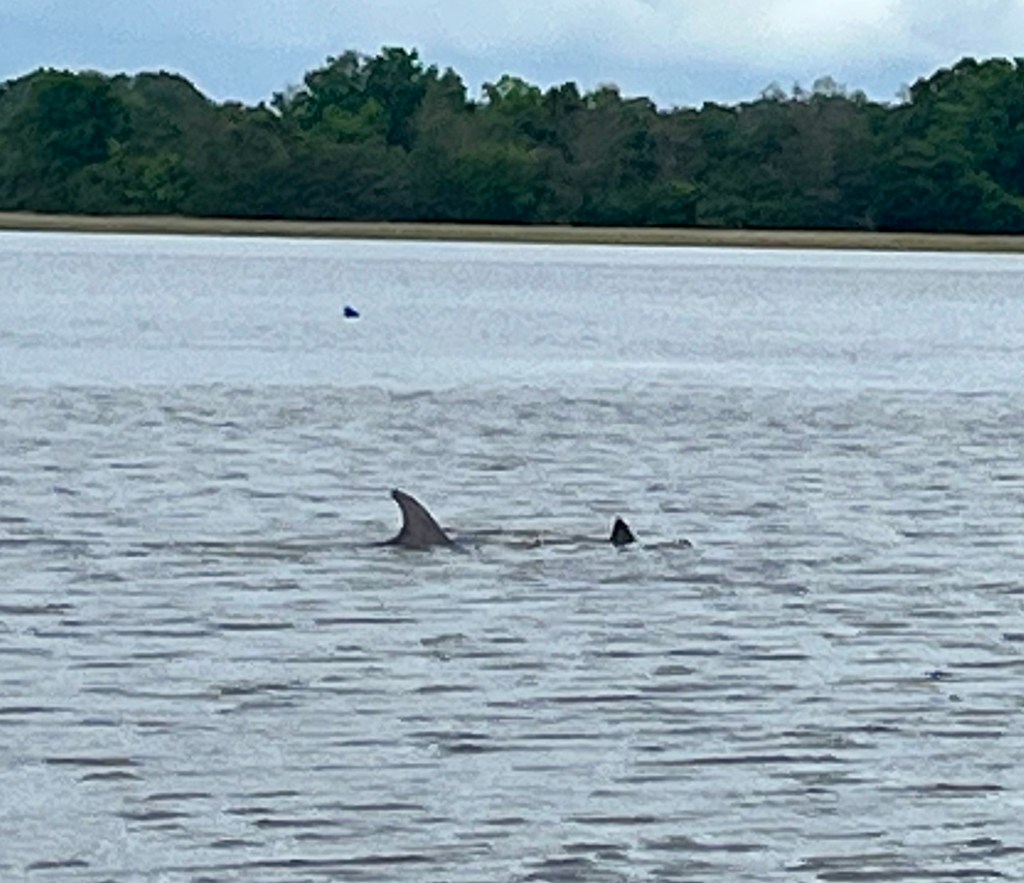
Again, we passed so many dolphins. They are so elusive – I can never get a decent photo. Here are my meager attempts to capture a shot of the rascals.
Terrible pics but proof of dolphin sightings. Love to see them play.
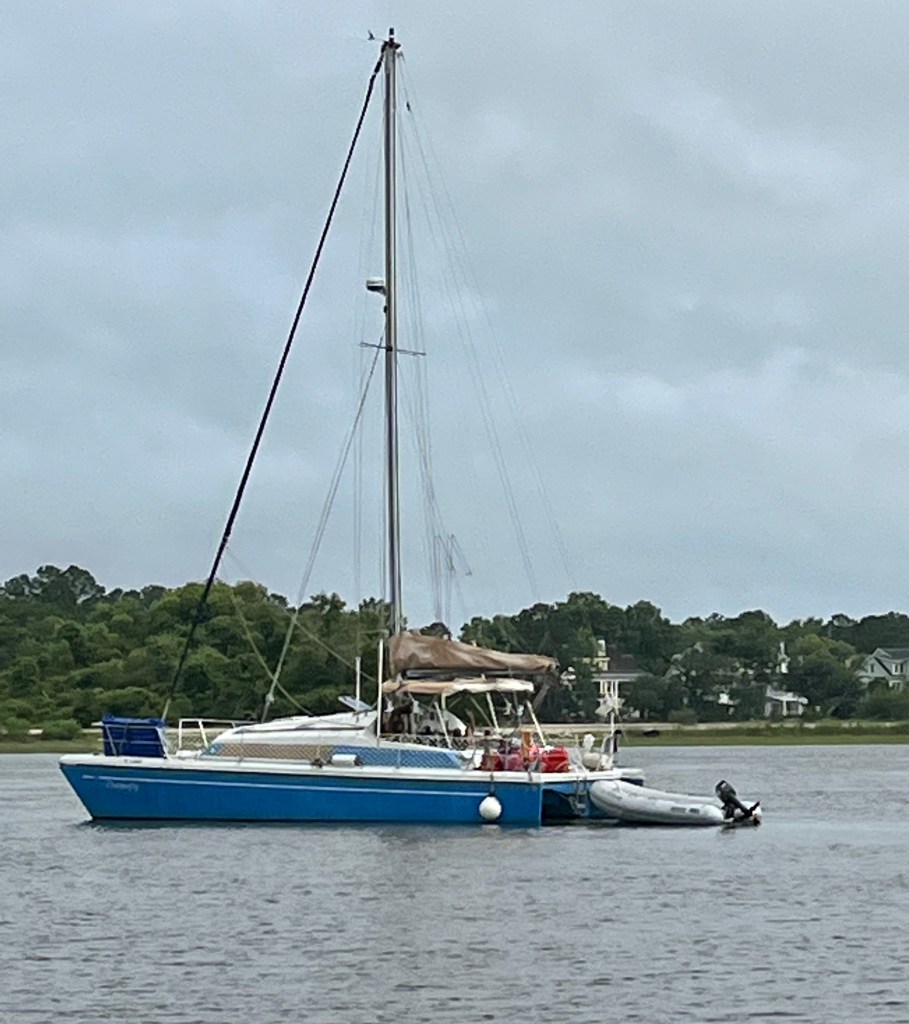
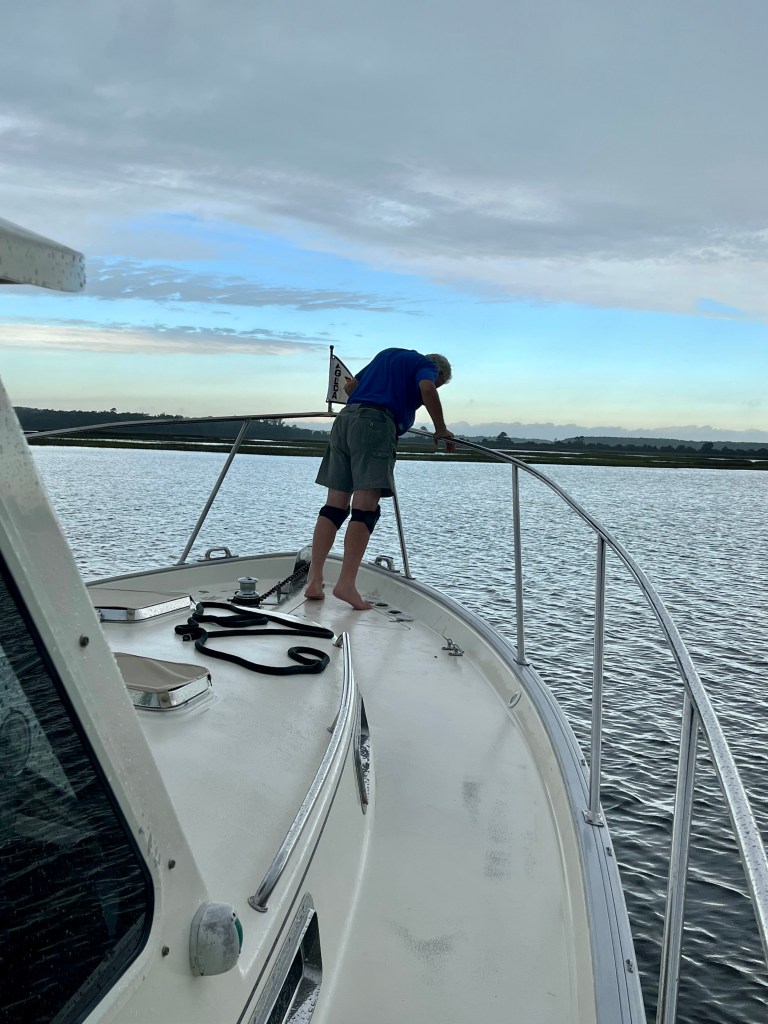
This was an exhausting drive, through winding waters, cognizant of the depths – Beaufort River, Brickyard Creek, Rock Creek, and Stono River. We anchored at Johns Island in the Stono River, next to this beautiful blue sailboat that we see often. Captain Pat didn’t sleep well, knowing a storm was brewing.
Doberman on board guarding the boat!Captain Pat setting the anchor
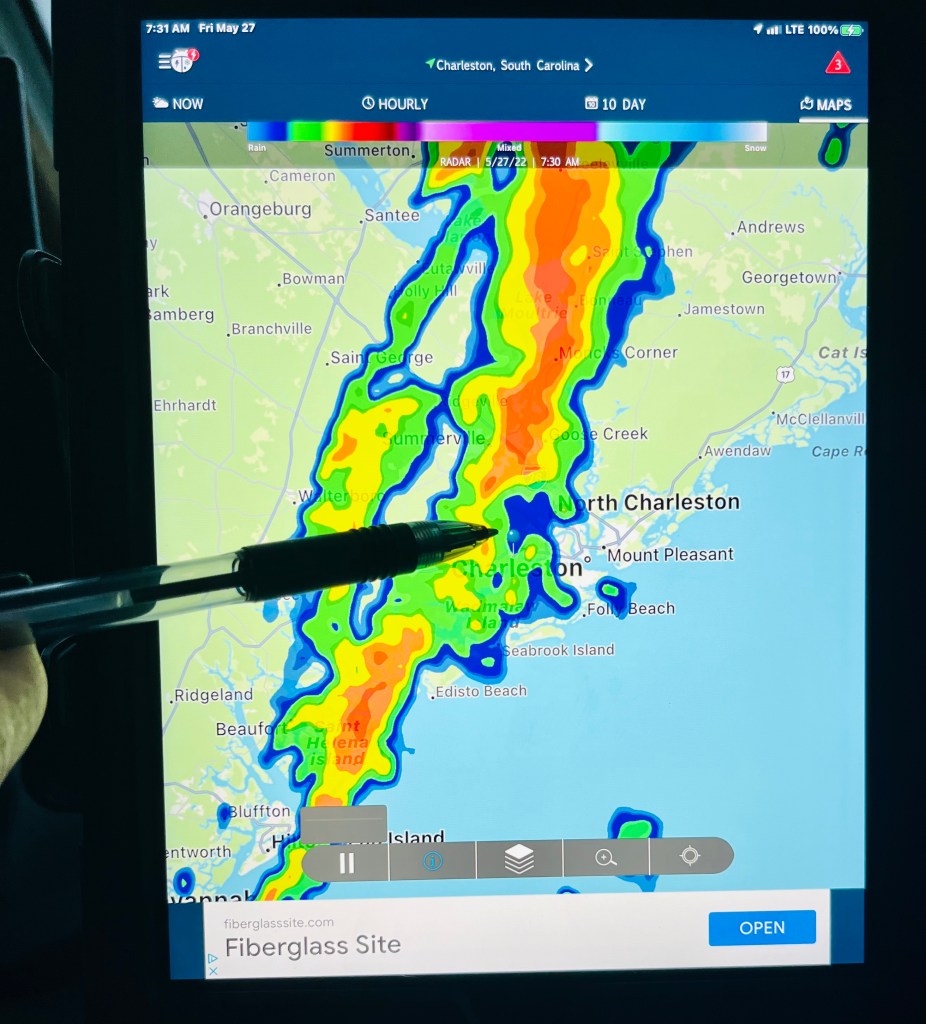
We woke up to torrential rains. Checked the weather to see when we could leave for Charleston. Captain Pat is good at checking the weather and keeping us safe. We didn’t have to wait too long to depart.
Checking the weather on the charts
Friday, May 27, we made it to Charleston for the Memorial Day Weekend. We pulled into the Charleston Maritime Center around 11:30 a.m., just in time for low tide to evade the current.
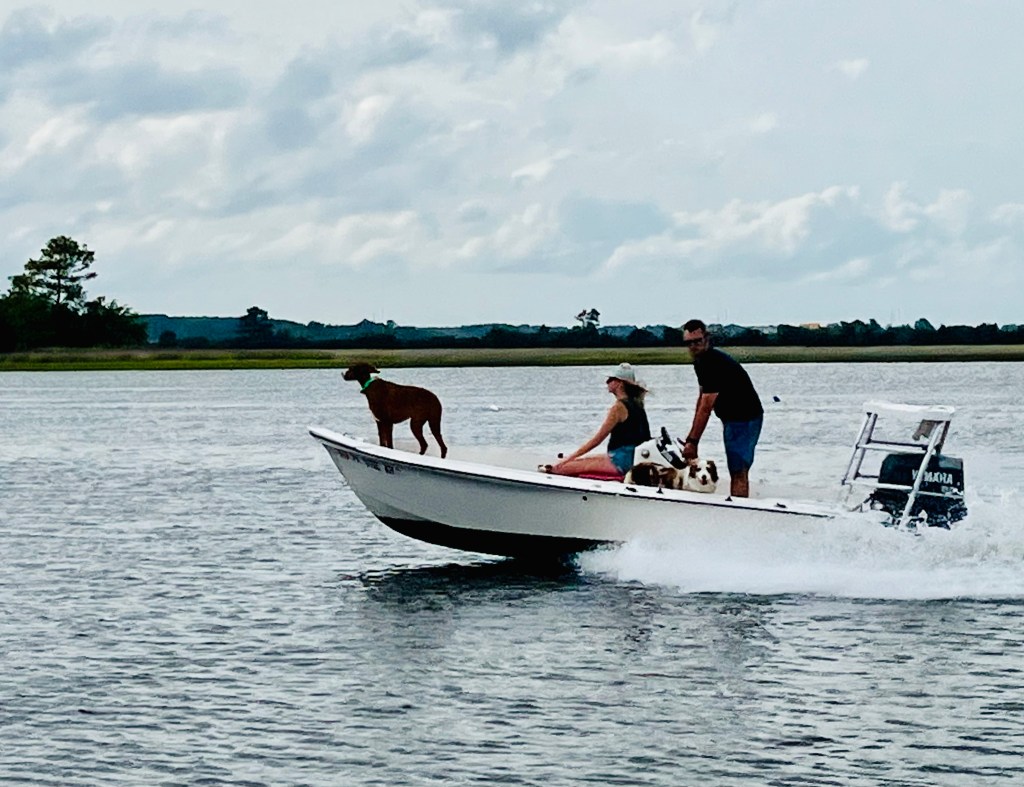
Love seeing doggies enjoying their boat rides!
Nebo Stats:
Thursday, May 26: 7 hours travel; 48.5 kmiles; 6.8 knots average speed
Friday, May 27: 2 hours travel; 12.9 kmiles; 6 knots average speed
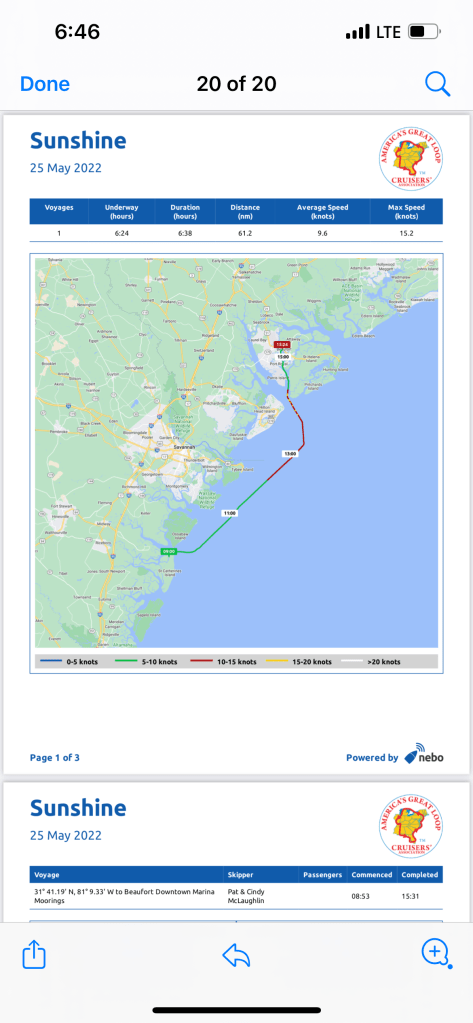
Wednesday, May 25, we departed St. Catherine’s Island, Georgia, with the intent of making it to South Carolina – not sure where. Captain Pat decided to go “outside” which means travelling on the ocean not the ICW (Intracoastal Waterway). This was our first attempt at an ocean voyage (on the Loop.) Leaving at 10 a.m. we would be in South Carolina by 2 p.m. and make up a lot of time, and bypass all the twists and turns of the Georgia rivers.
Here’s our route for May 25
We started out with 1 to 2 foot waves – no problem. However, they quickly grew to 3 to 4 and maybe more. It wasn’t the smoothest four hours – but not the worst either.
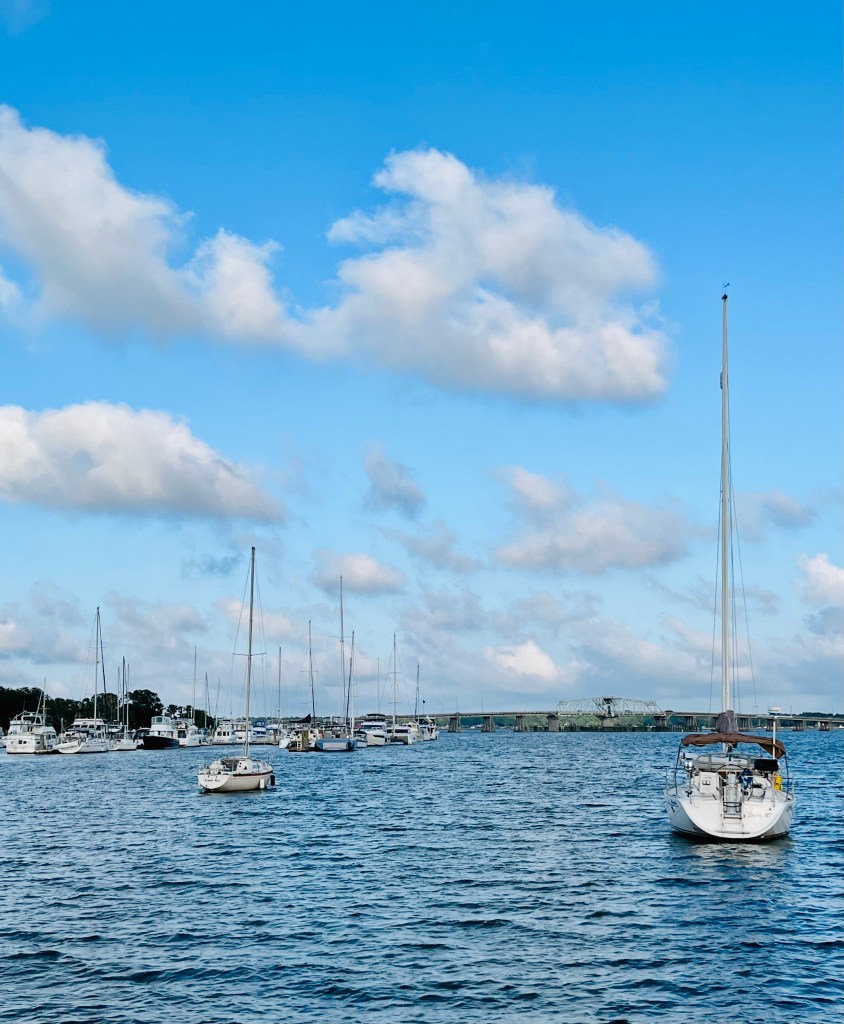
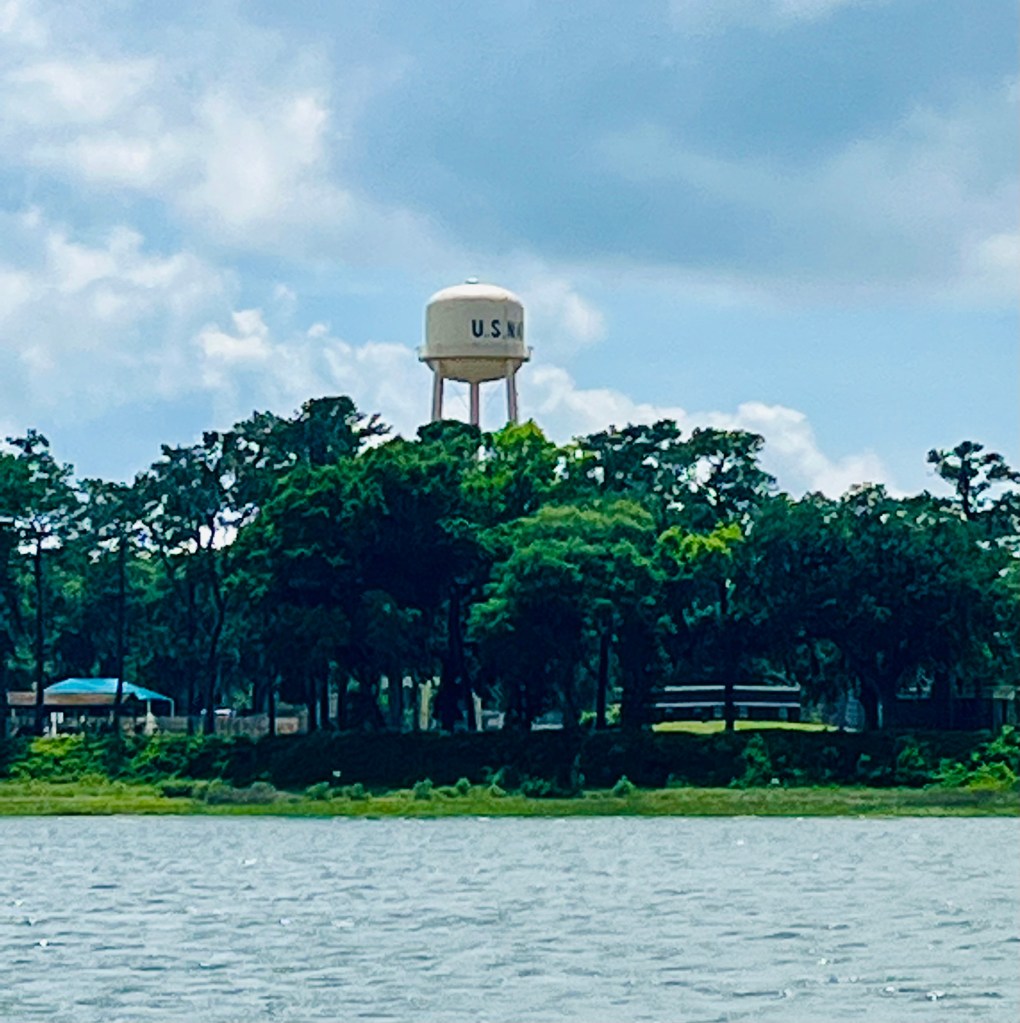
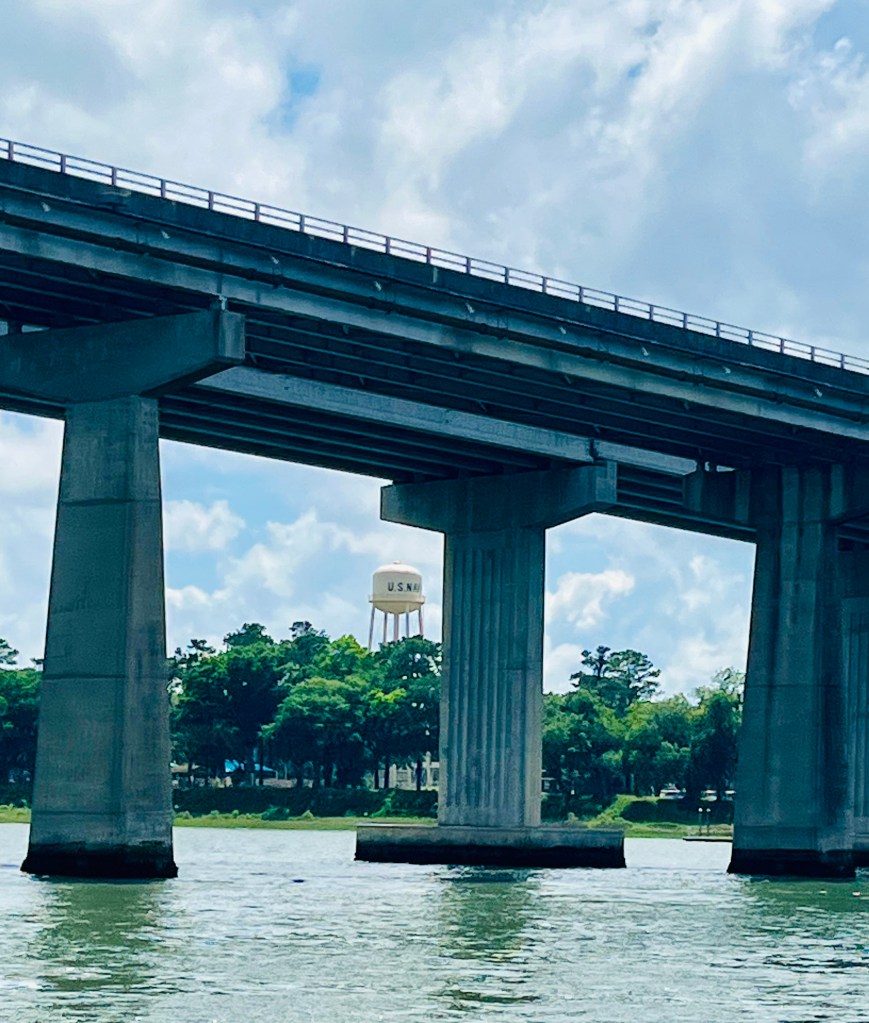
Coming into the coast I spotted the Beaufort Naval Hospital, and its water tower. I said to Patrick, this is Beaufort! We quickly decided to find a place to anchor. We ended up at the City Marina now owned by a corporation – Safe Harbor.
We know from a recent visit with relatives that Beaufort is an idyllic Southern town. You can remember its pronunciation by equating “beautiful” with the city of “Beaufort.”
Beaufort Naval HospitalUS Navy TowerEntering Beaufort
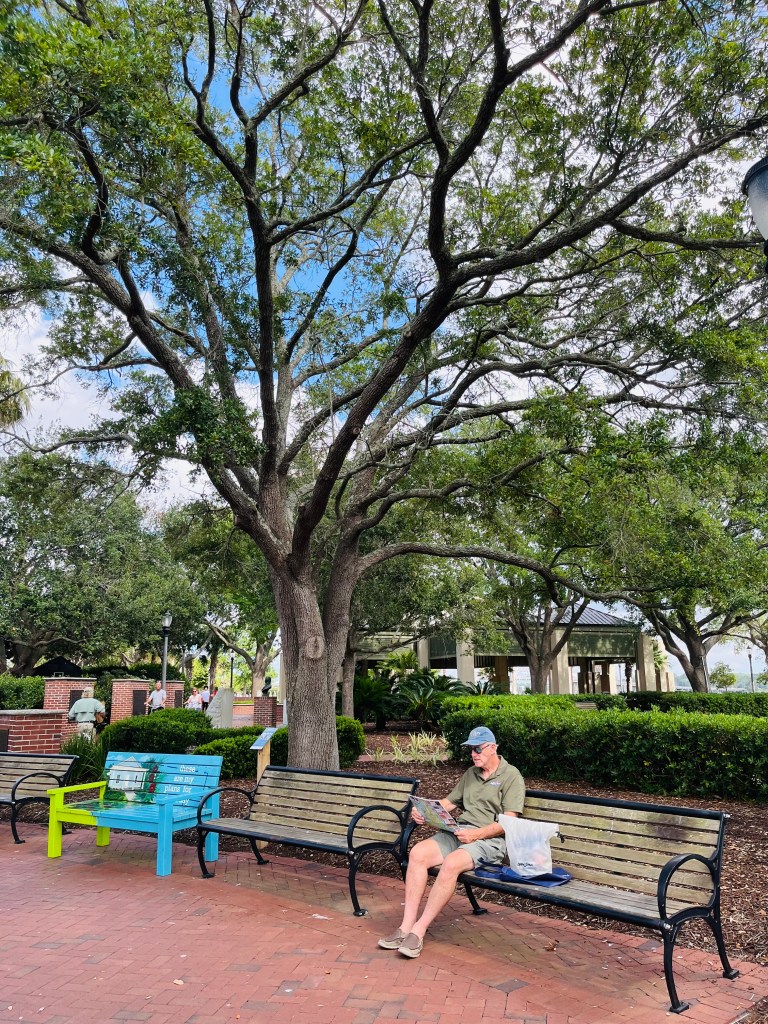
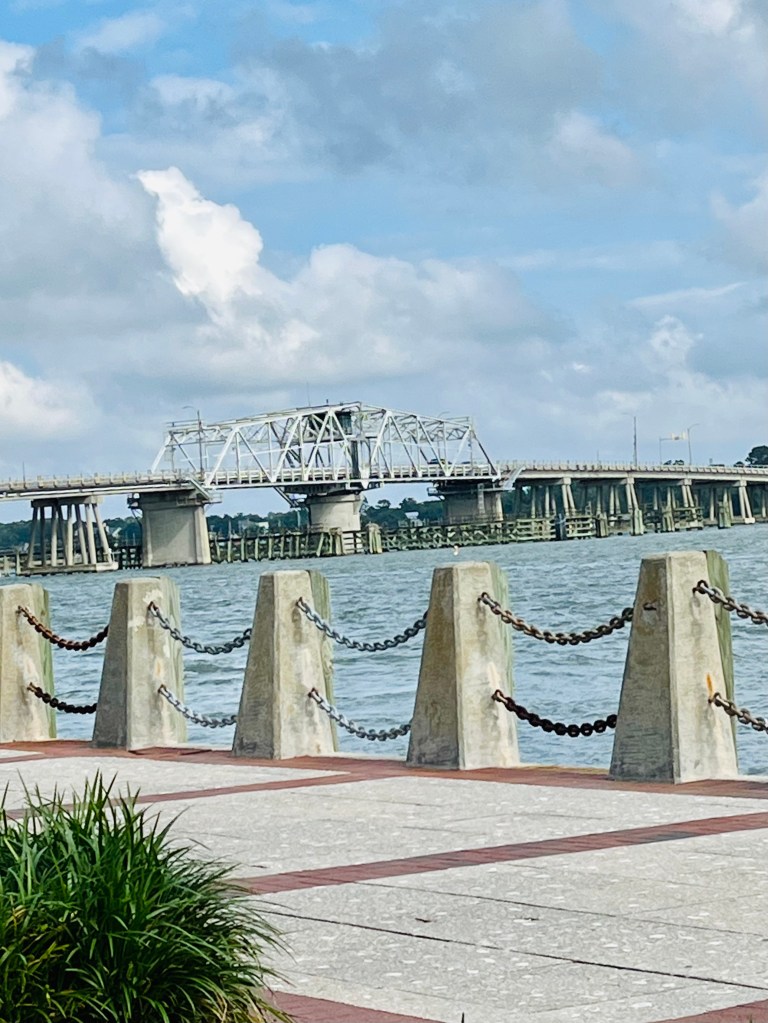
The Beaufort waterfront is one of the prettiest in the United States, with flowers, historical monuments, restaurants, swings, and the harbor.
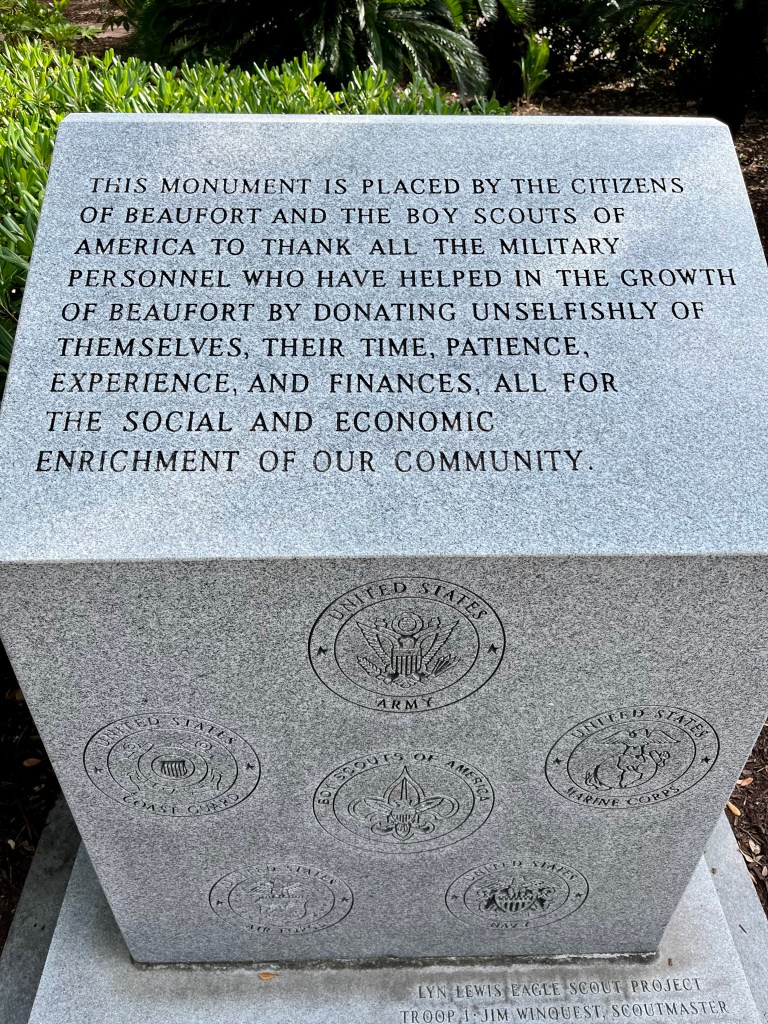
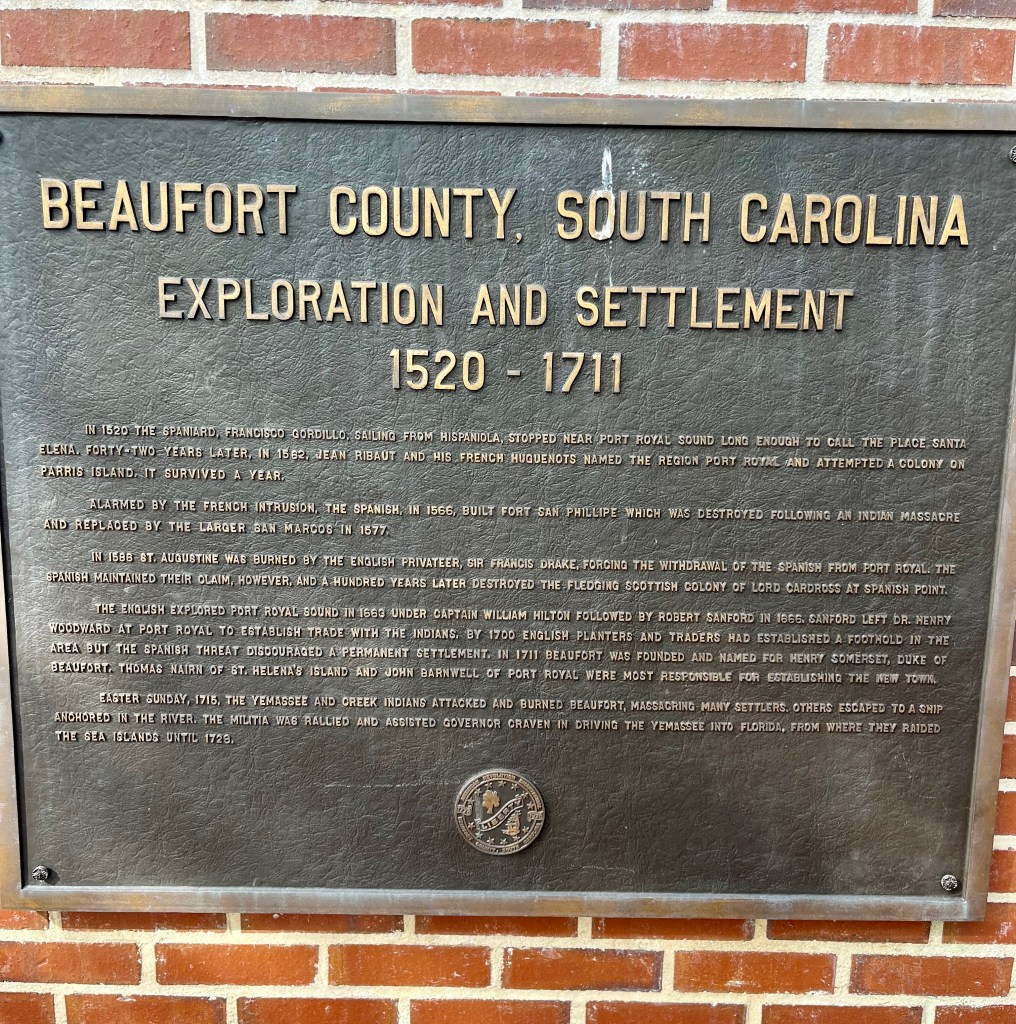
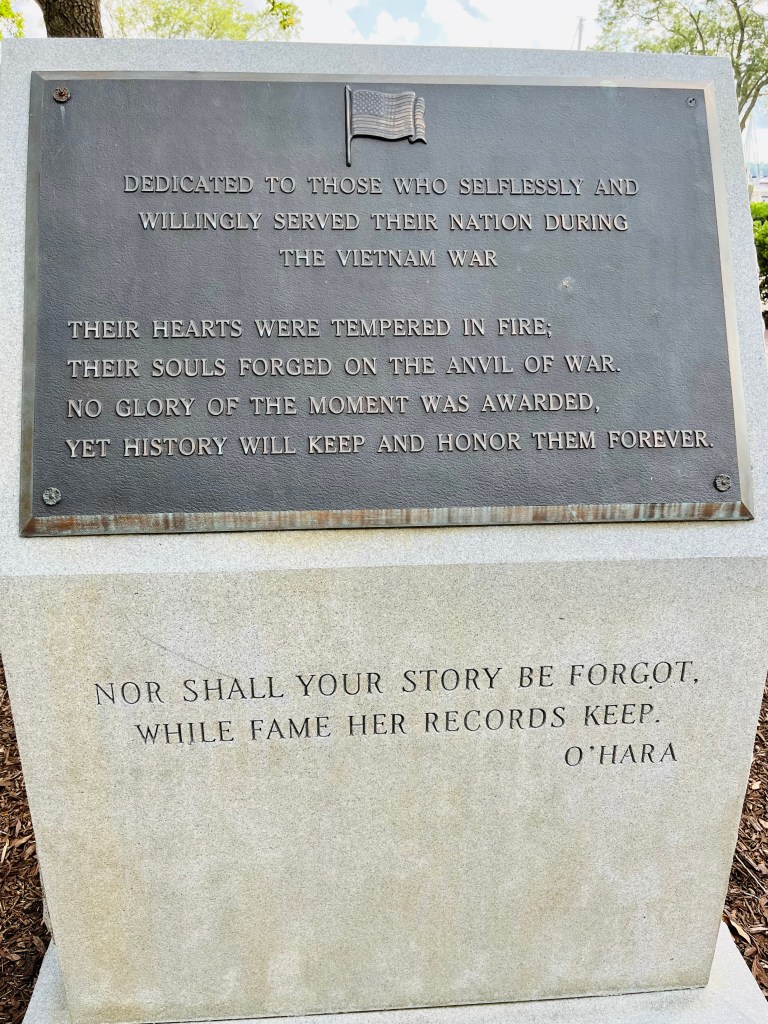
Pat enjoying Beaufort waterfront parkThere are many beautiful monuments at the park honoring our armed servicesAlso plaques explaining the city’s history Tribute to those who fought in the Vietnam War
We walked around Beaufort in search of ice cream and stumbled upon Kilwin’s. Then Pat worked in the engine room and we took showers. By that time it was 8:30 p.m. – the latest ever for us to have dinner! The smell of barbecue had been tempting us since we arrived, so we dined at the Q located on the waterfront. Took the dinghy back to the boat and ended the night.
Nebo Stats for Wednesday, May 28: 6.5 hours travel; 61.0 kmiles; 9.6 knots average speed – fast one for Captain Patrick!
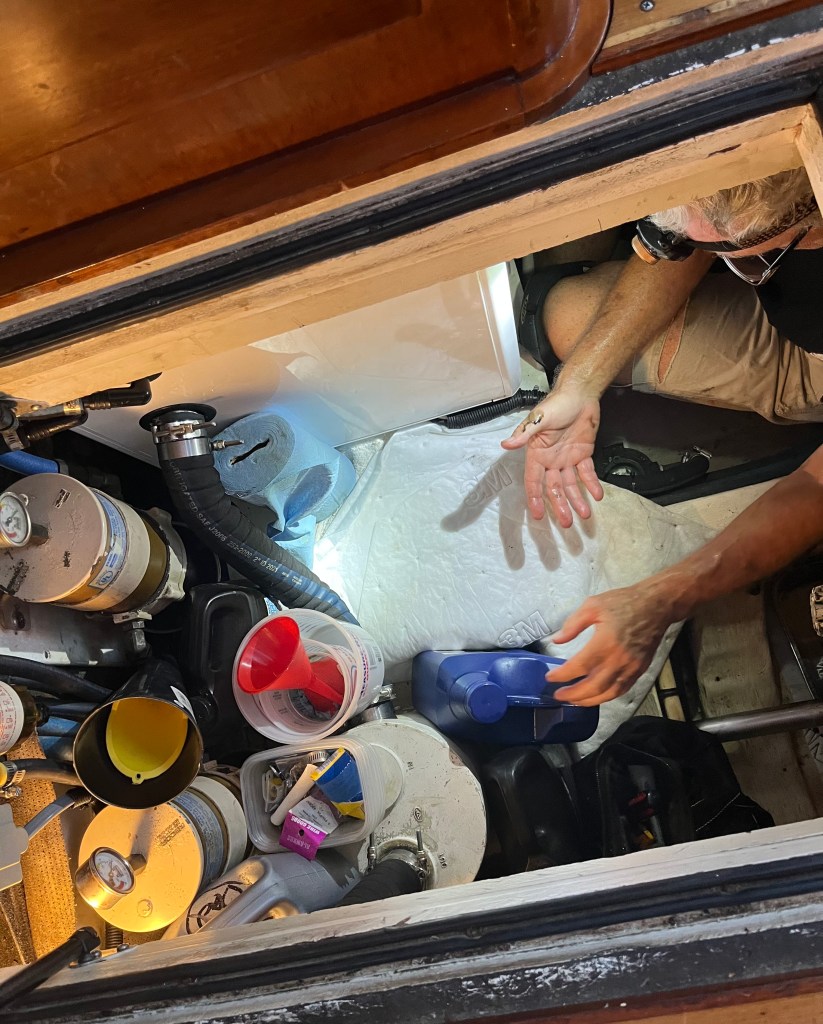
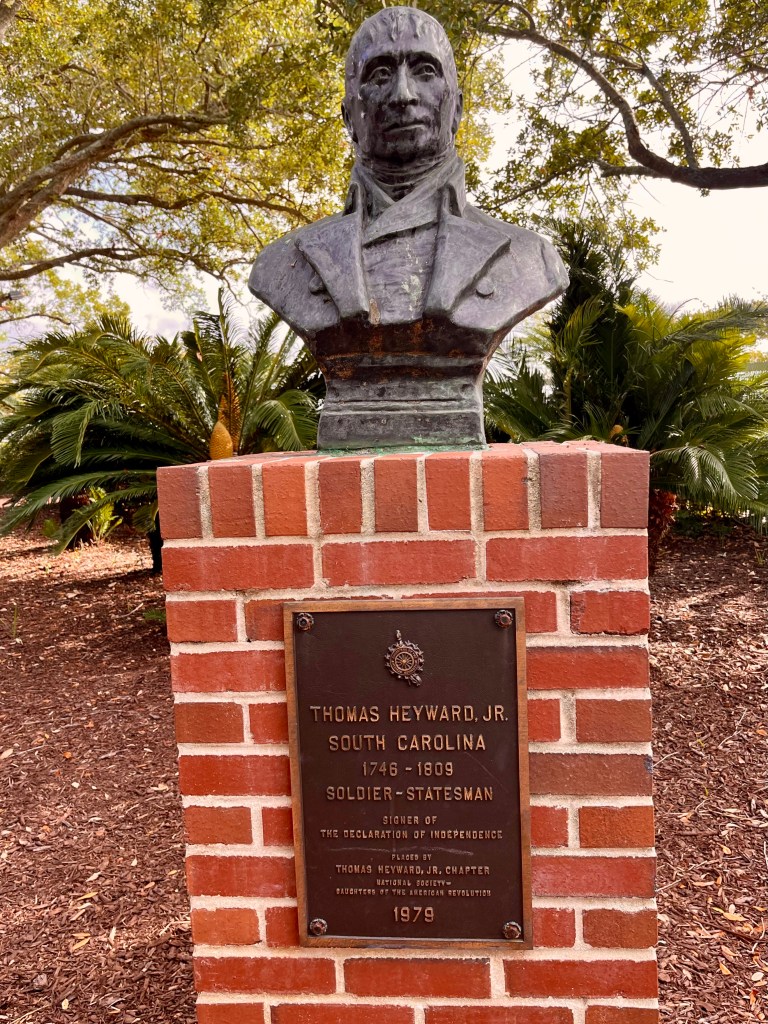
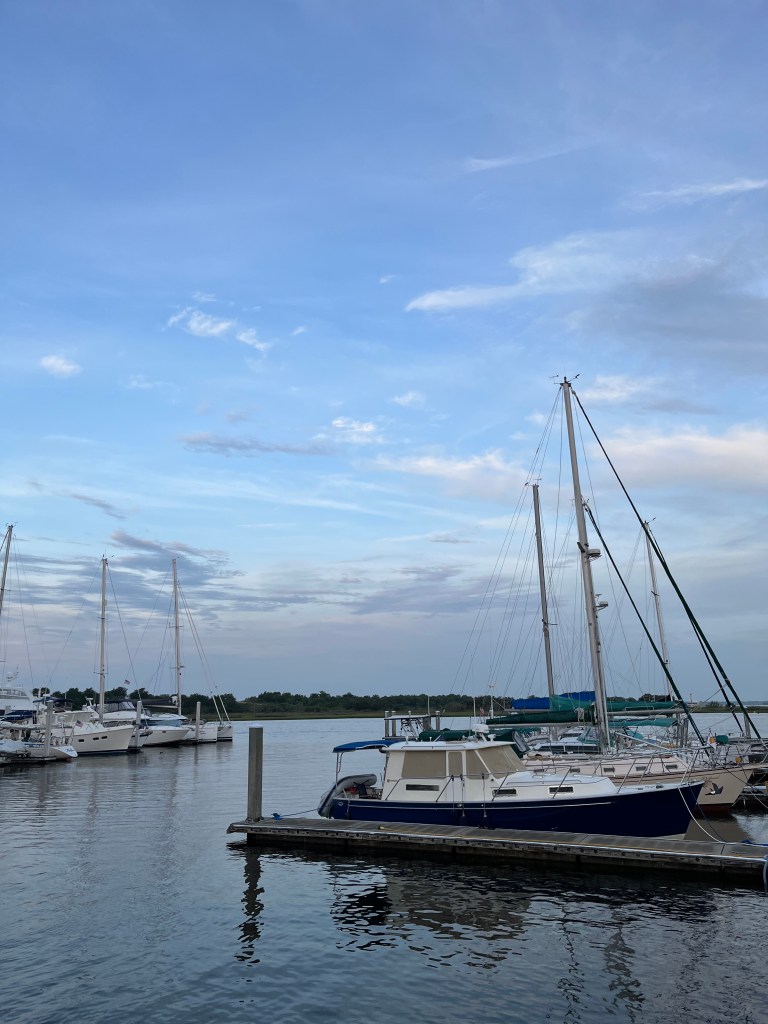
The engine room – Captain Pat’s favorite placeAt the Q – our barbecue dinner spot in BeaufortOur first mooring for the LoopThomas Heyward, Jr.
Monday, May 23, we departed Fernandina Beach and headed to Brunswick Landing Marina where we had reservations for the evening. Brunswick, founded in 1771, is the second largest city on the Georgia coast. The marina was most friendly and offered many social events, such as happy hours, movie nights, etc.
This was a functional stop – fuel fill-up; pumpout; and laundry. The Great Loop blog informs you to bring $1 and $5 bills (tips for the marine hands who help you dock, etc.) and quarters for the laundry facility. I was prepared with both. However, we were pleasantly surprised there was no charge for our first laundry visit! Score! Probably won’t see that again.
Nebo Stats for Monday, May 23: 5 hours travel; 36.1 kmiles; and 7.2 knots average speed
Sunshine docked at Brunswick Landing MarinaBrunswick Landing MarinaBrunswick Sunrise
Tuesday, May 24, we departed Brunswick with the intent to make it up the Georgia rivers as far as we can to be in South Carolina Wednesday. We travelled through Brunswick, Turtle, North, and Medway Rivers and passed Jekyll and Simon Islands. We stopped that evening and anchored at St. Catherine’s Island on Walburg Creek. Our handy Looper Companion Guide helped us find the anchorage. We saw another Looper boat there – Indigo – and touched base with them.
Nebo Stats for Tuesday, May 24: 8 hours 15 minutes travel; 58 kmiles; and 7.0 knots average speed – another long day for Captain Pat!
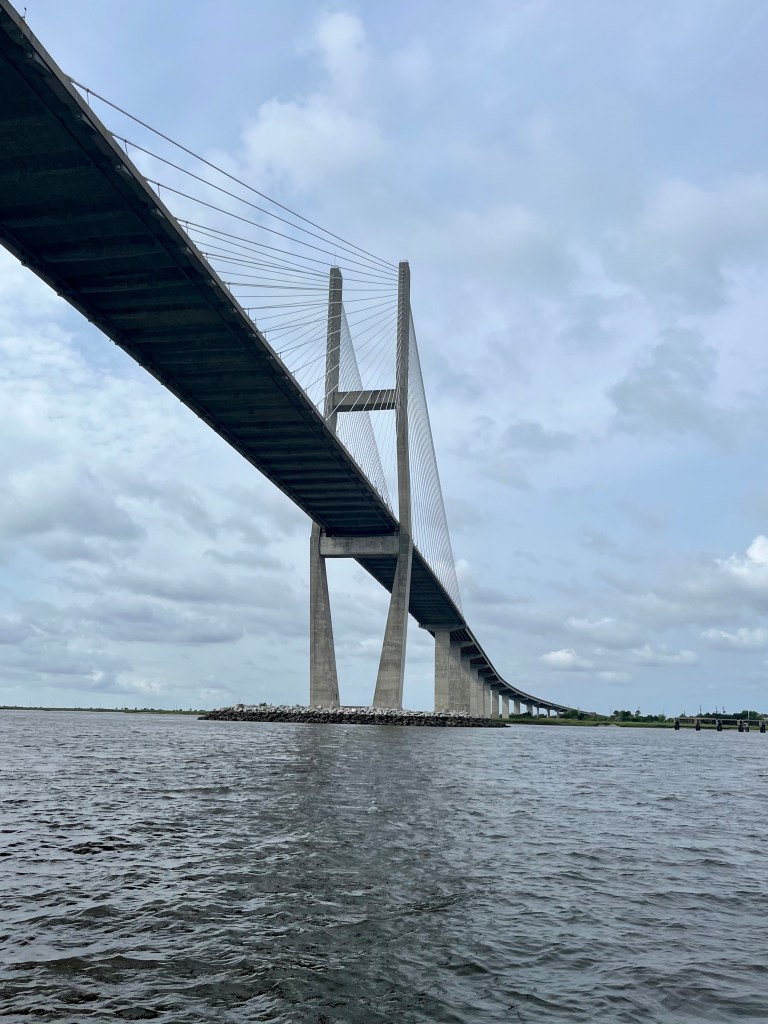
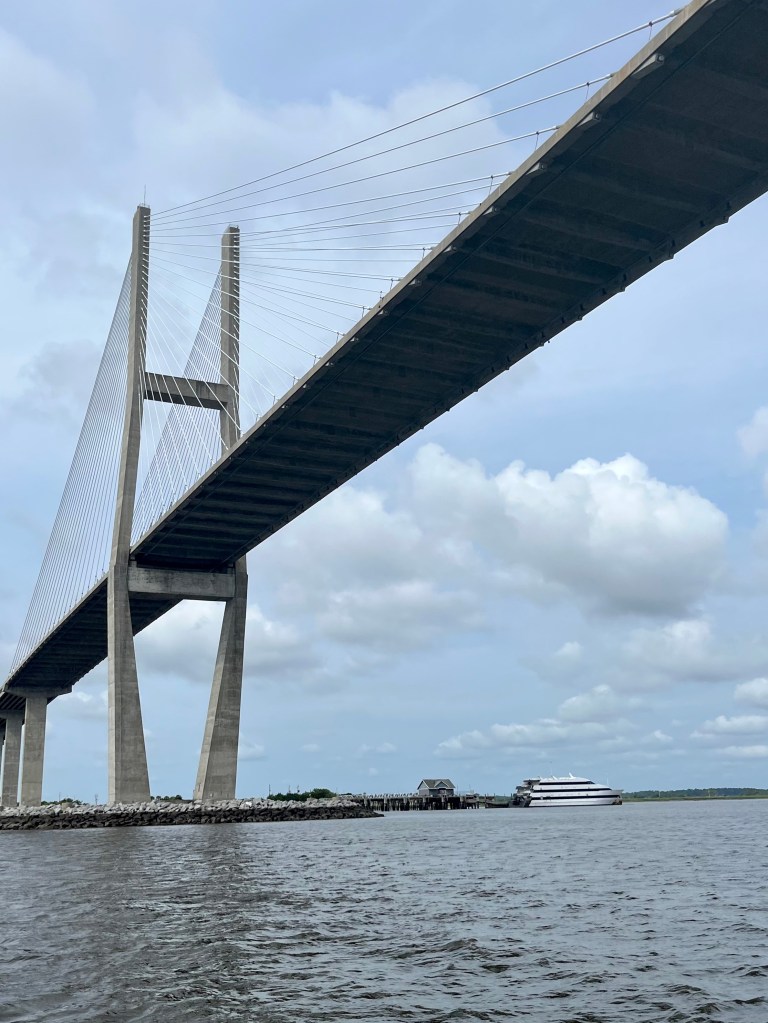
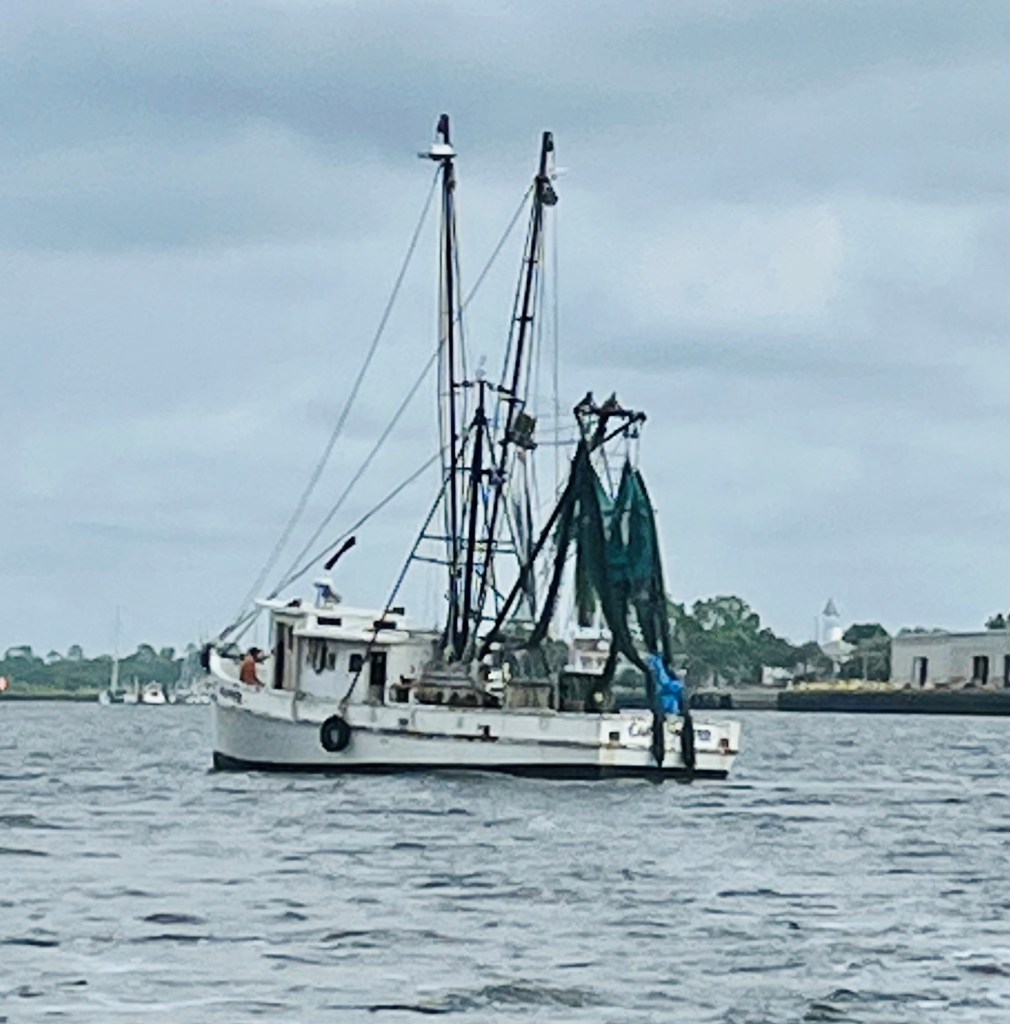
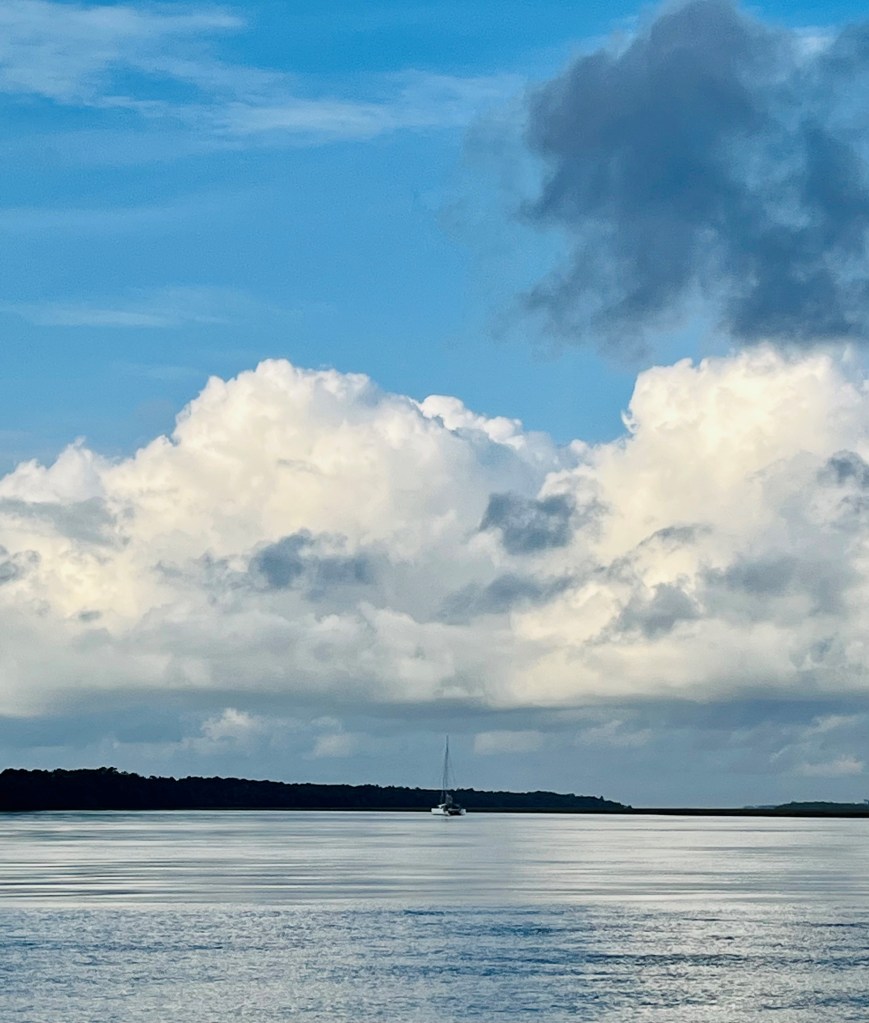
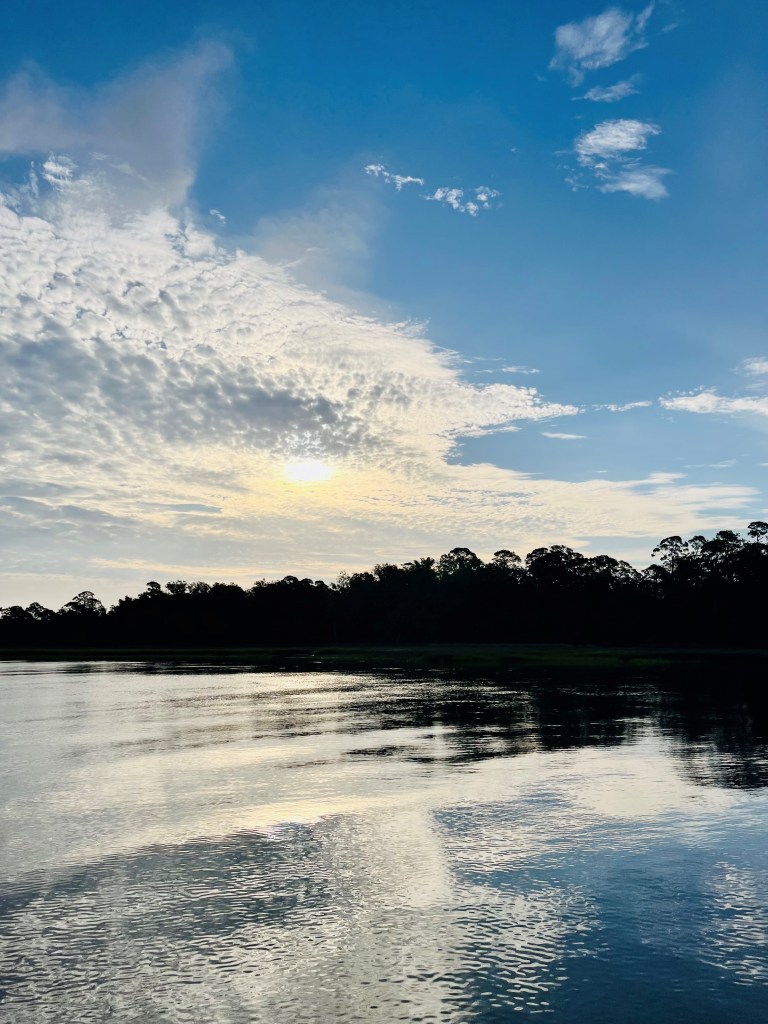
Sidney Lanier Bridge on the Turtle River- Sidney Lanier was an American musician, poet, and author who served in the Confederate States Army as a private. He became a professor of literature at John Hopkins University in Baltimore and is hailed in the South as the “poet of the Confederacy.”Unique design for a bridgeLeaving Brunswick we saw the ‘Salty Captain’ – a shrimping boatIn Oglethorpe Bay we spotted this freight liner. Love the name.Jekyll IslandEvening view – St. Catherine’s IslandSunrise – St. Catherine’s Island






























 Pat and Cindy's Great Loop Adventure