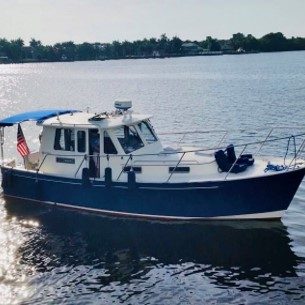
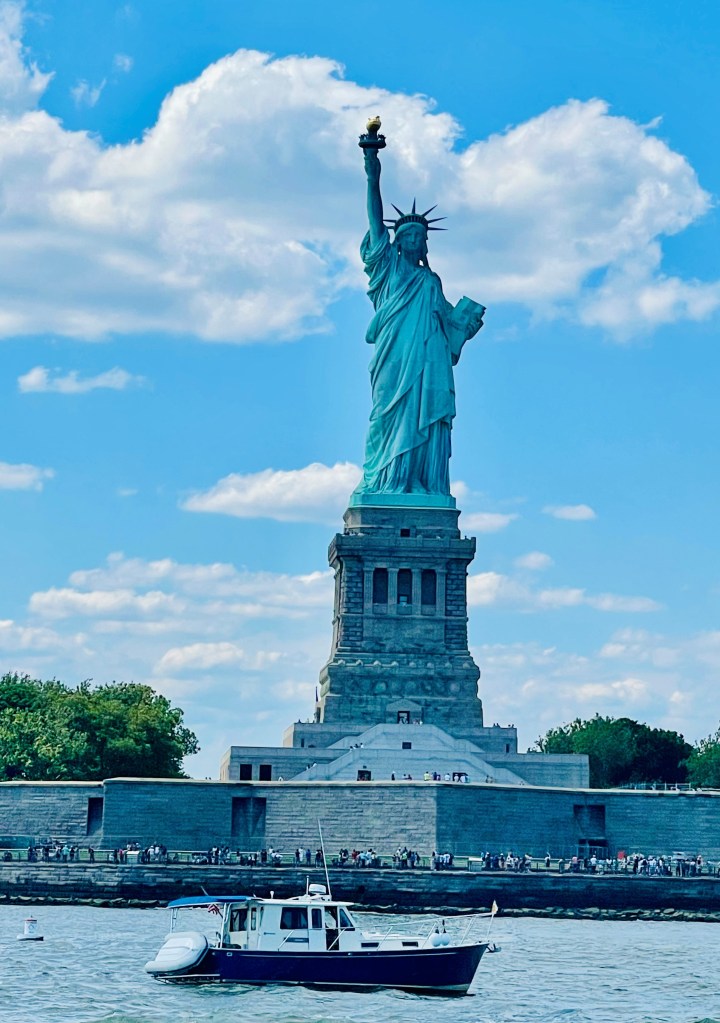
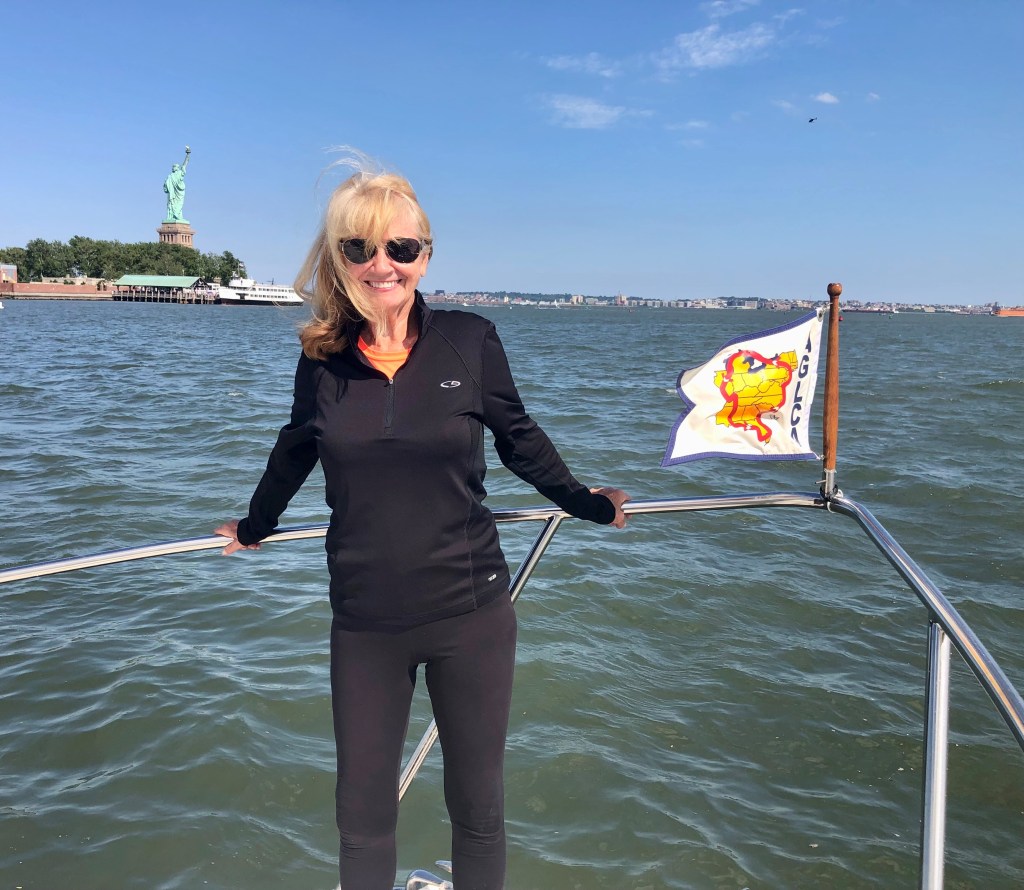
Our boat Sunshine in front of the Statue of Liberty
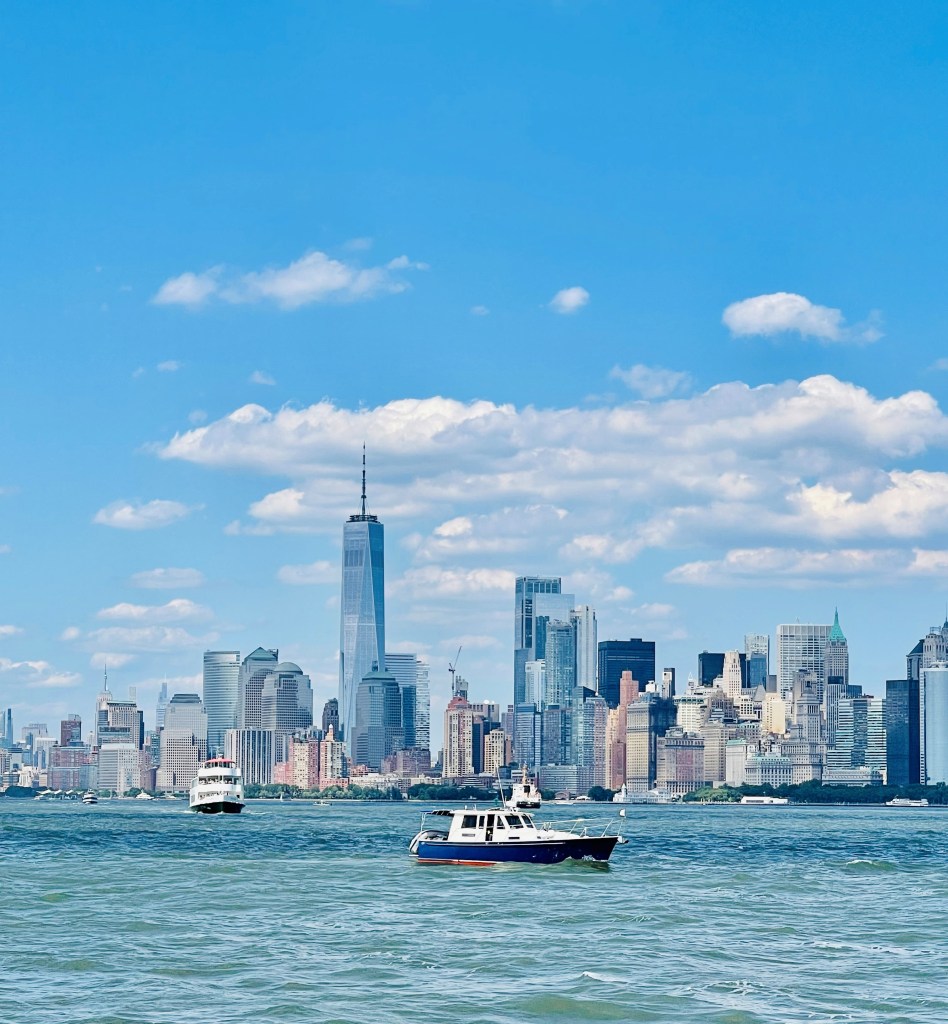
We made it to New York City! Every Great Looper dreams of taking that photo of their vessel in front of the Statue of Liberty. We’ve seen so many on the Facebook blog. We were so blessed to have the Wrights aboard The Wright Choice agree to take our photos, and we reciprocated for them. How awesome that cell phone technology allows us to take great photos and text them to others. It was a tad bit difficult, standing on the bow in the rocking water. And we almost hit two ferry boats and a police boat. Captain Pat was lamenting about the inefficient use of fuel, as we were going fast to keep up with The Wright Choice. But – we did it!
Sunshine entering Statue of Liberty harborCaptain Pat and Admiral Cindy aboard SunshineCaptain Pat took this medicine.
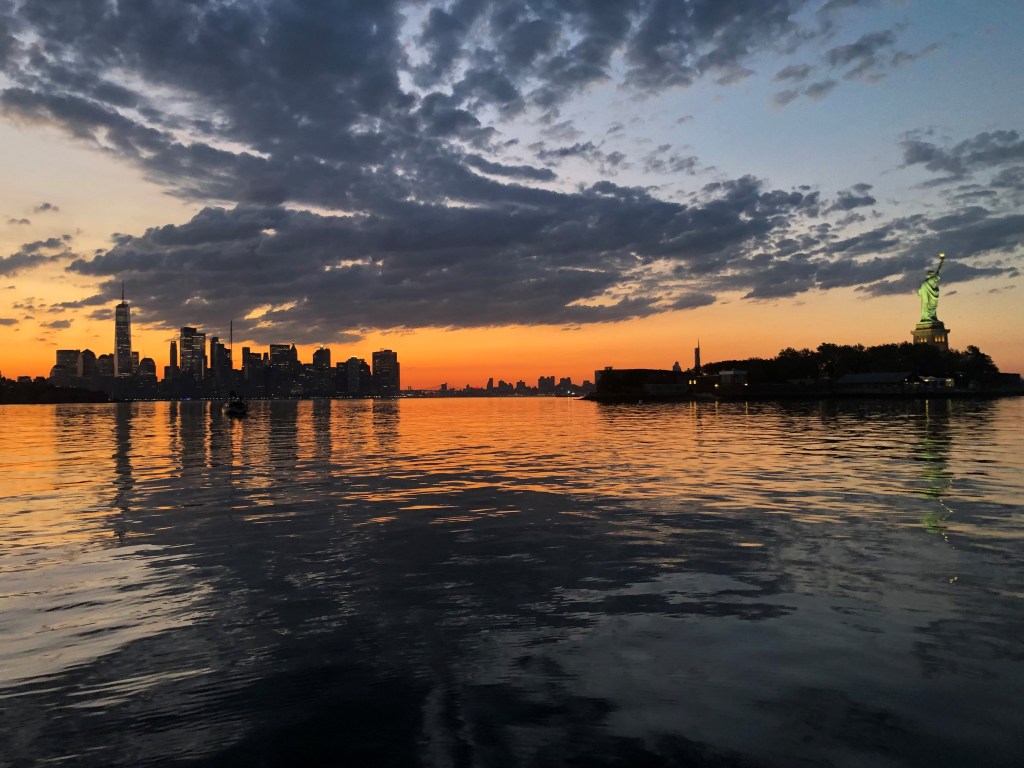
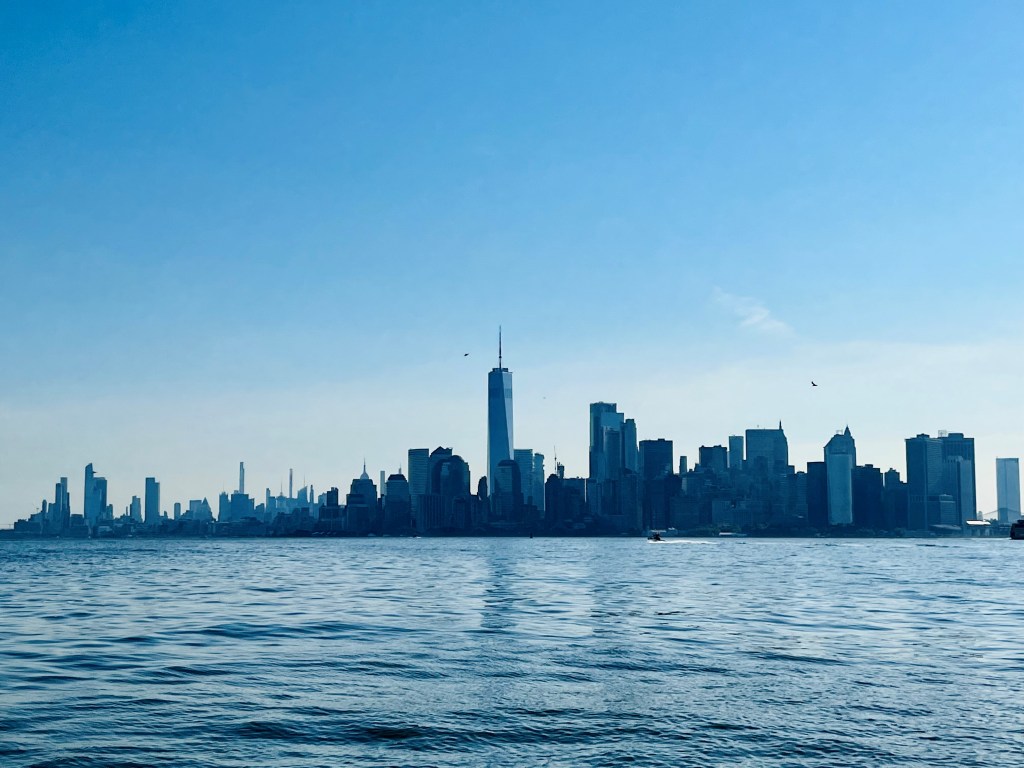
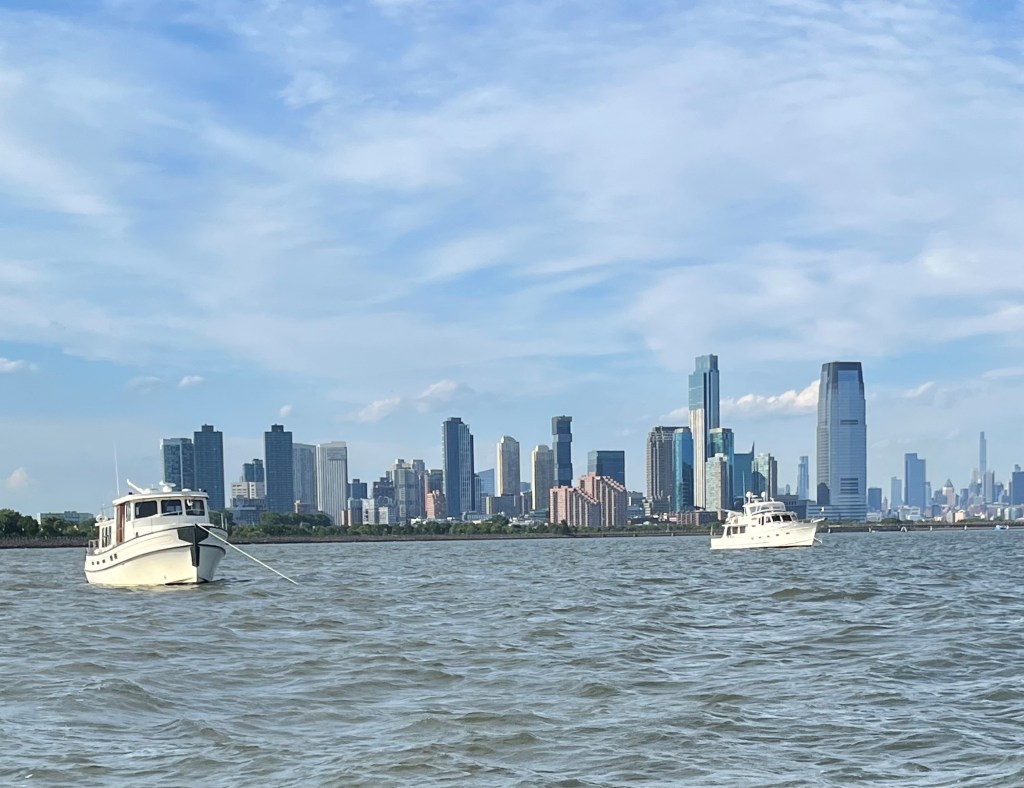
Seeing New York City from the water is unbelievable. And being right up front with the Statue of Liberty was amazing. We can’t begin to put into words how inspirational it was to see her that close. We anchored out that evening near her and the city lights made her even more beautiful. What a day, and what a night.
June 27 we left Chesapeake City early – as in 6:00 a.m. We travelled with our two Looper friends, Tom on Dancing Bears and Anne and Mitch on No Rush to Delaware City, Delaware. The current is difficult there, requiring two dock hands to spin our boat around. We docked starboard side but they turned us to a port tie-in. That way we were facing in the right direction to head out the next morning. A fellow Looper boat was there as well – The Wright Choice. Amy Wright was the first Looper I met, in St. Augustine. She is super sweet and helpful, as are her husband Dave and son Max.
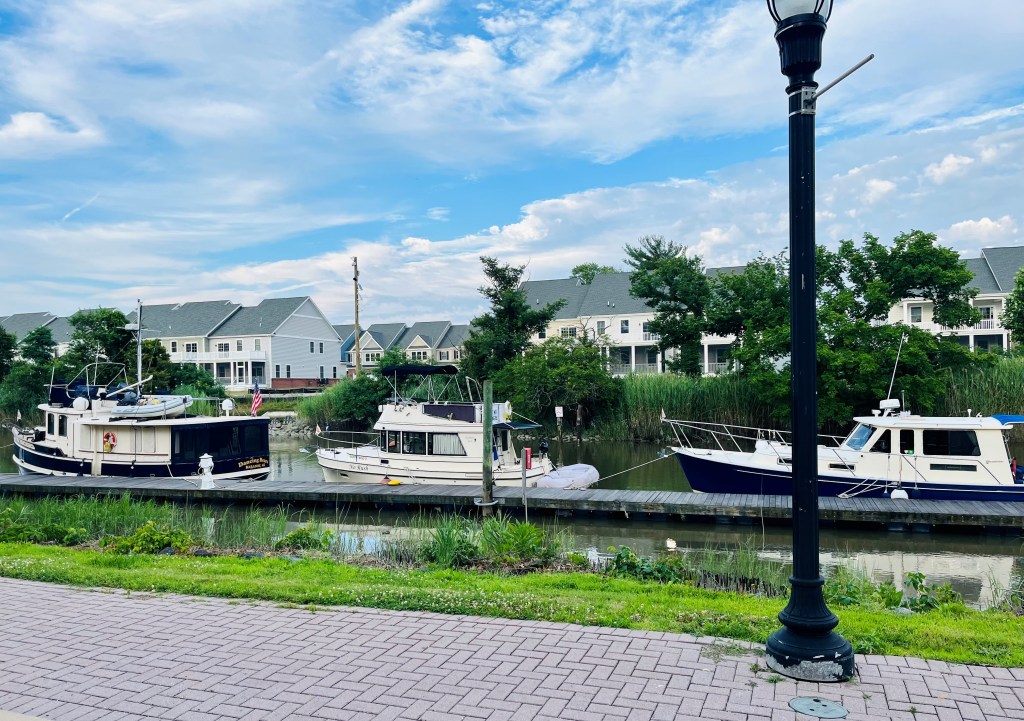
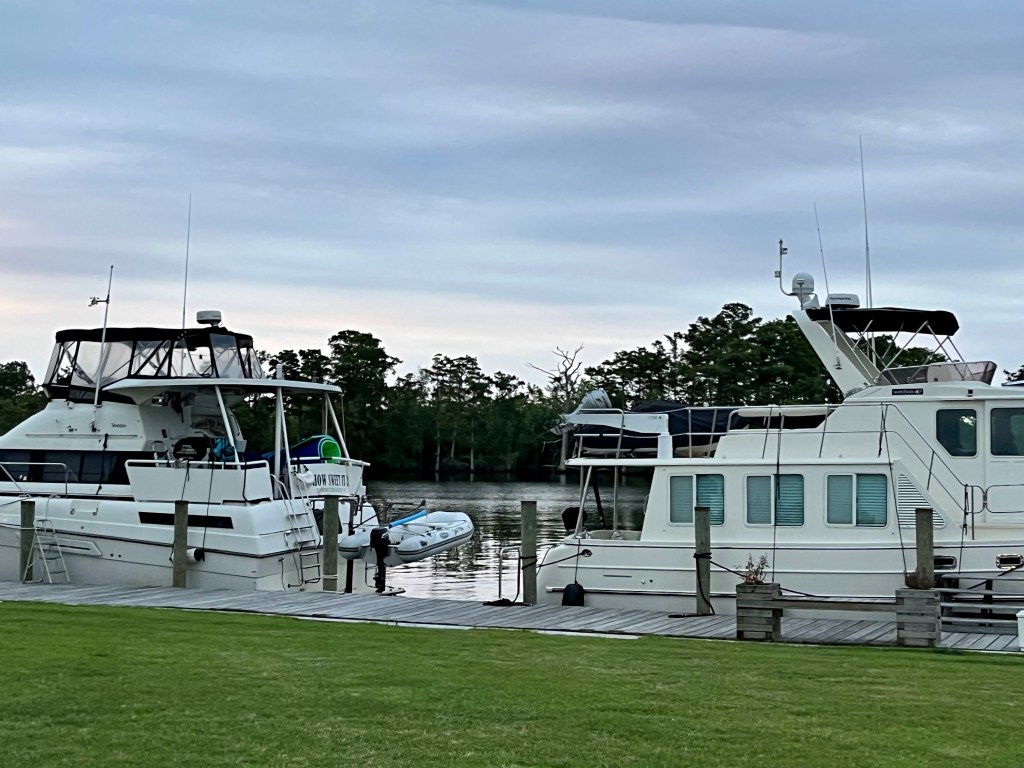
Here’s three of the four Looper boats at the Delaware City Marina- Dancing Bears, No Rush and Sunshine.The fourth boat at Delaware City Marina – The Wright Choice
Going south from Delaware City to Cape May or Atlantic City can be tricky. Tim, a dockmaster at the marina, gives a 4:00 p.m. briefing each day on next day travel conditions. He references special software and shows a big map to explain what we can expect regarding tide, current, and weather. And most importantly, he explained the difference between current and tide, and that they are not always in the same direction. He was adamant for us to know that there would be no one out there to help us, should something go wrong, and we would have limited cell service. He told us on a scale of 1 – 10, he’d rate it a 7 as far as safety and timing for us to leave tomorrow. We all decided we would depart the marina early morning.
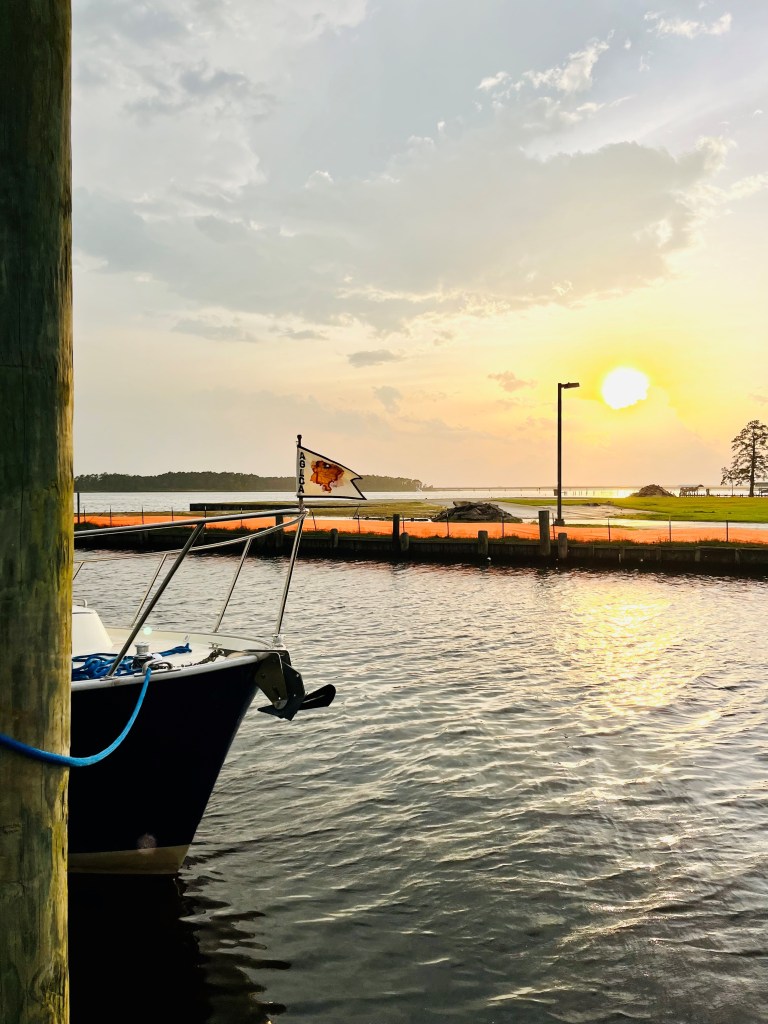
Following the briefing, everyone walked to a local seafood restaurant for dinner – a total of seven people, our largest Looper gathering. It was fun. The Delaware City AGCLA “Harbor Host” – Foster Schucker – met us at the briefing, and joined us for dinner. AGLCA (America’s Great Loop Cruisers’ Association) has Harbor Hosts in many cities. They are volunteers who help out in any way they can.
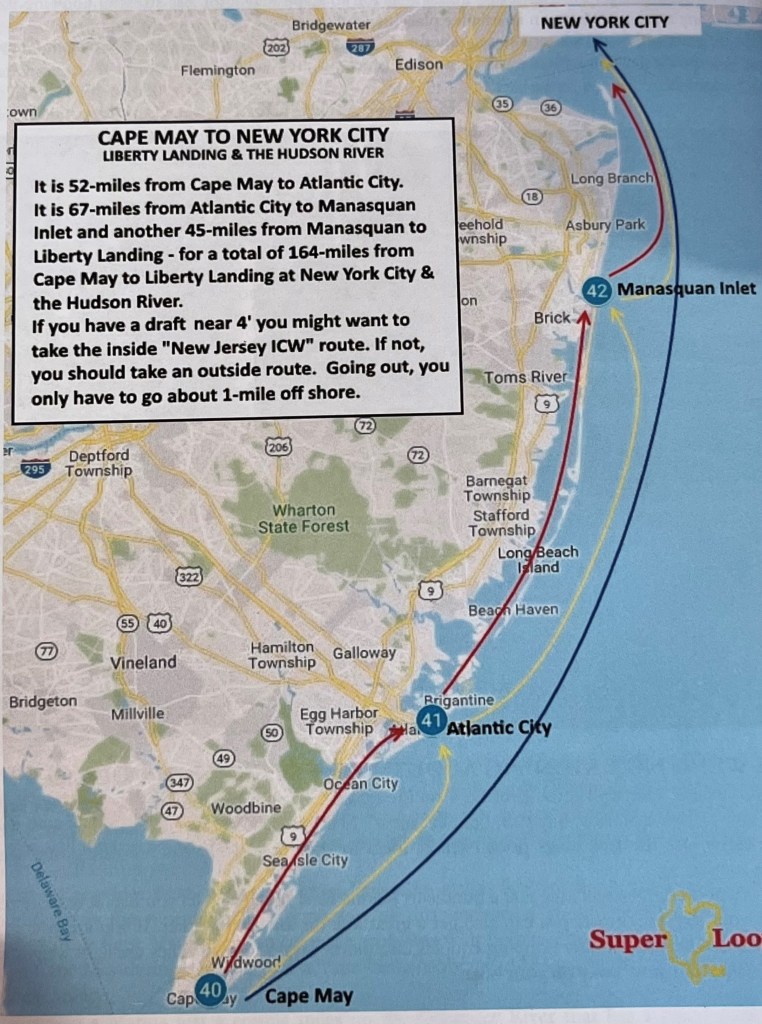
The next morning, June 28, was another early one for us – 6:00 a.m. departure. Tom, Mitch and Anne headed to Cape May – their boats go a little slower. Patrick was hell bent on getting to Atlantic City, so we could make New York City on Thursday, June 29. Reference the map below – Delaware City is northwest of Cape May.
Map to New York City
For this trip, you have two travel options – the ocean, or the New Jersey Intracoastal Waterway (NJICW).The NJICW is 117 miles from Delaware Bay to Manasquan Inlet. Maximum distance between fuel stops is 67 miles. The lowest bridge height restriction is 35 feet.
Maximum draft is 4.6″ or less with serious condition. Boat draft is the distance between the waterline and the deepest point of the boat. Also explained as the minimum amount of water required to float a boat without touching the bottom. Sunshine has a draft of 3.5″. The NJICW has many shallow spots and is a slower ride. Weather conditions play into your decision as well.
Dancing Bears and No Rush took the NJICW to Cape May and then travelled a bit on the ocean up to New York City. The Wright Choice and Sunshine took the ocean the entire way to New York City.
Lighthouse as we departed Delaware CityMile Marker 1 – and an osprey nest
We made it to Atlantic City! Captain Pat was beat – long day, as we travelled around 90 miles. We anchored for the night.
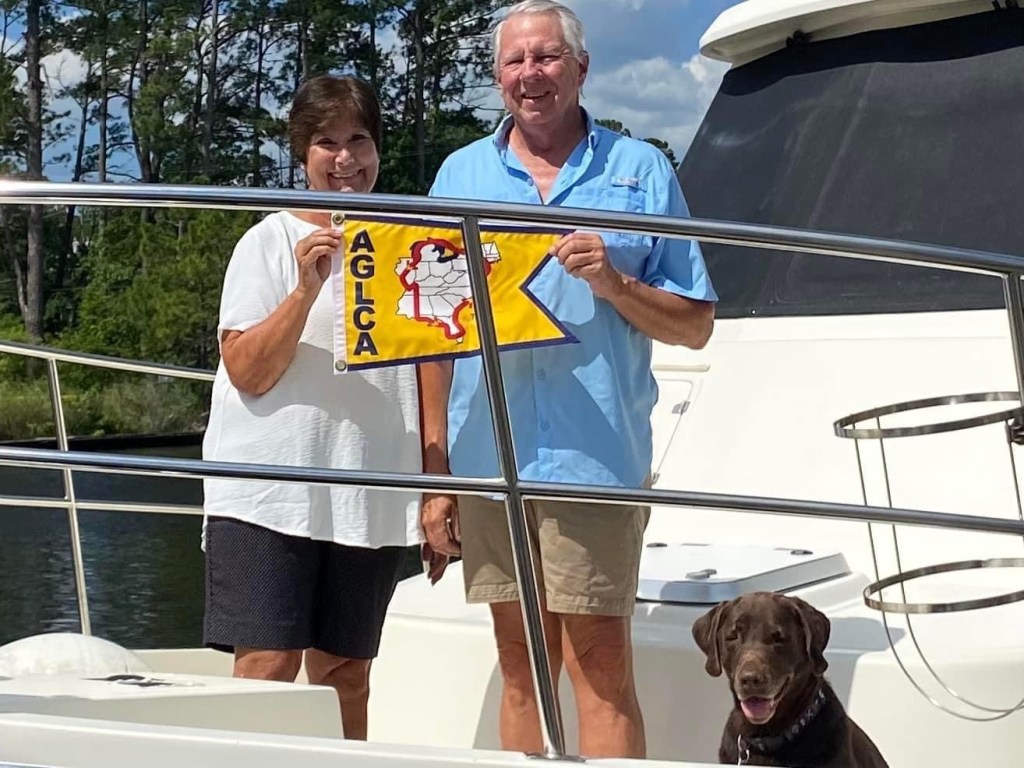
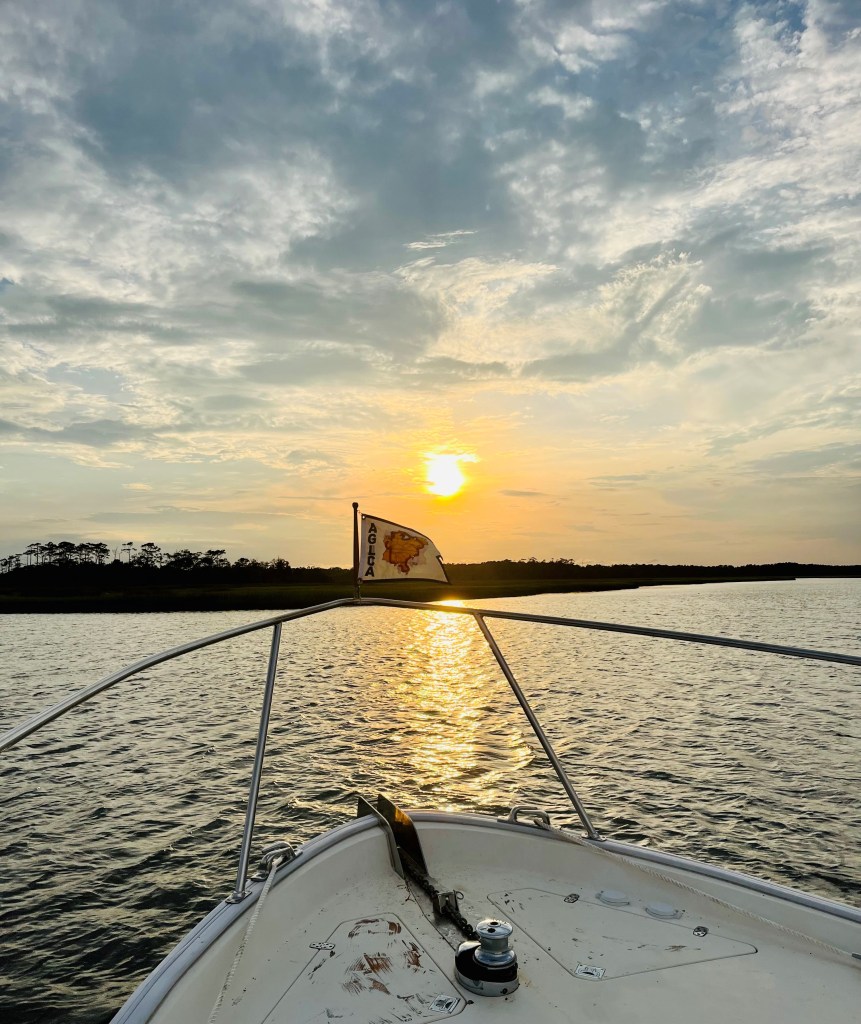
A man and woman on a dinghy pulled up beside our boat. They introduced themselves – Judy and Don Durant, from San Francisco – and said they spotted our AGLCA flag. Their boat is a beautiful 55′ Fleming named Brarissima. We have seen them since several times.
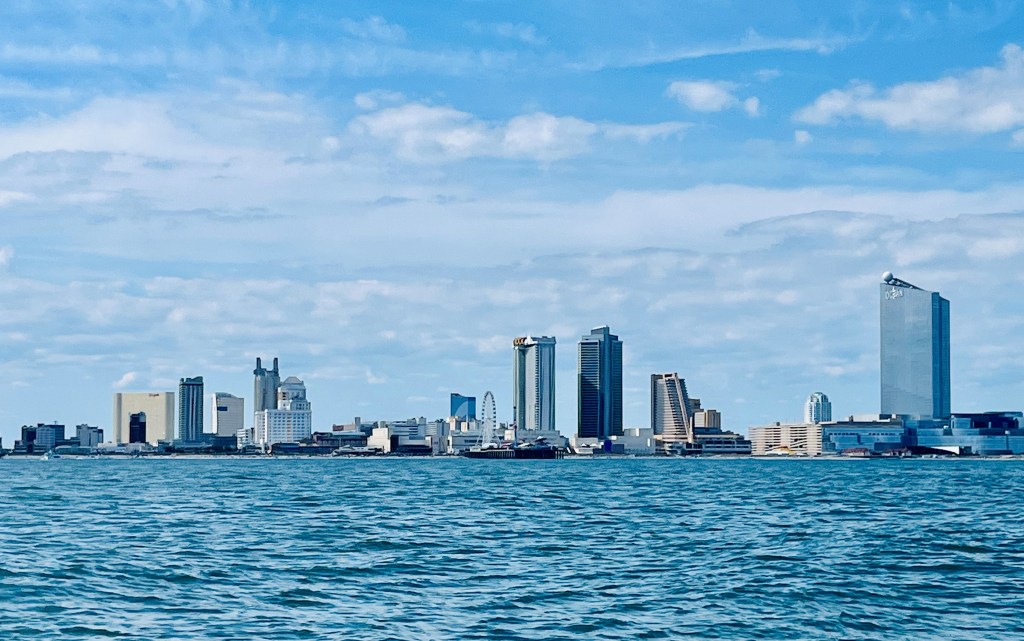
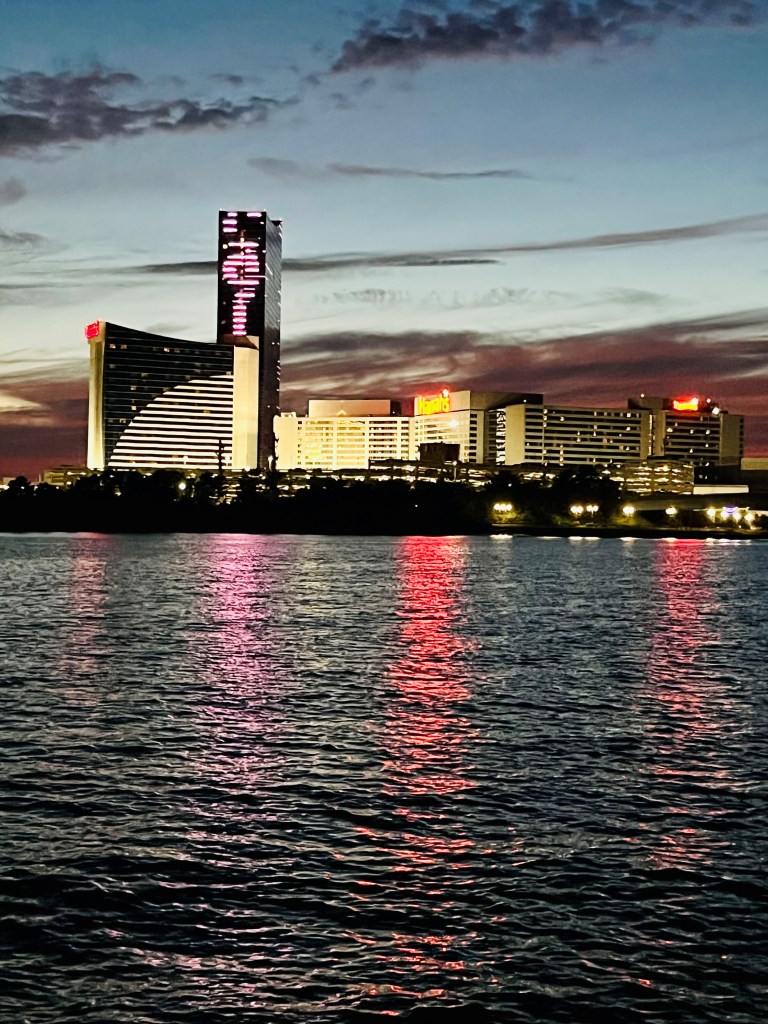
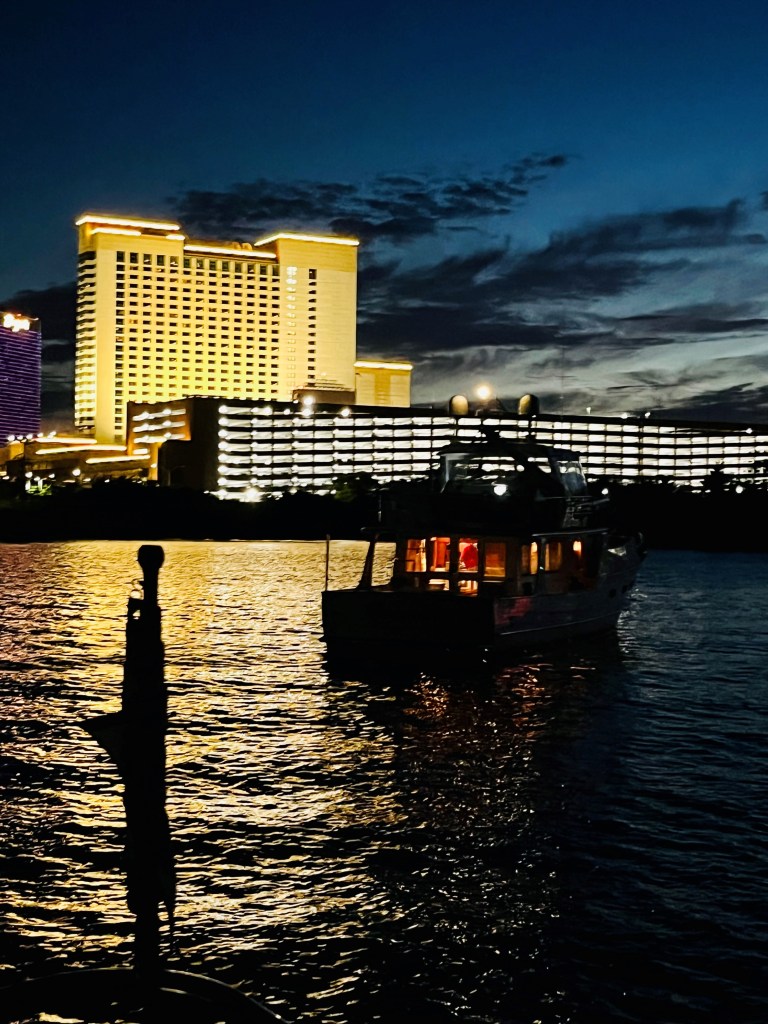
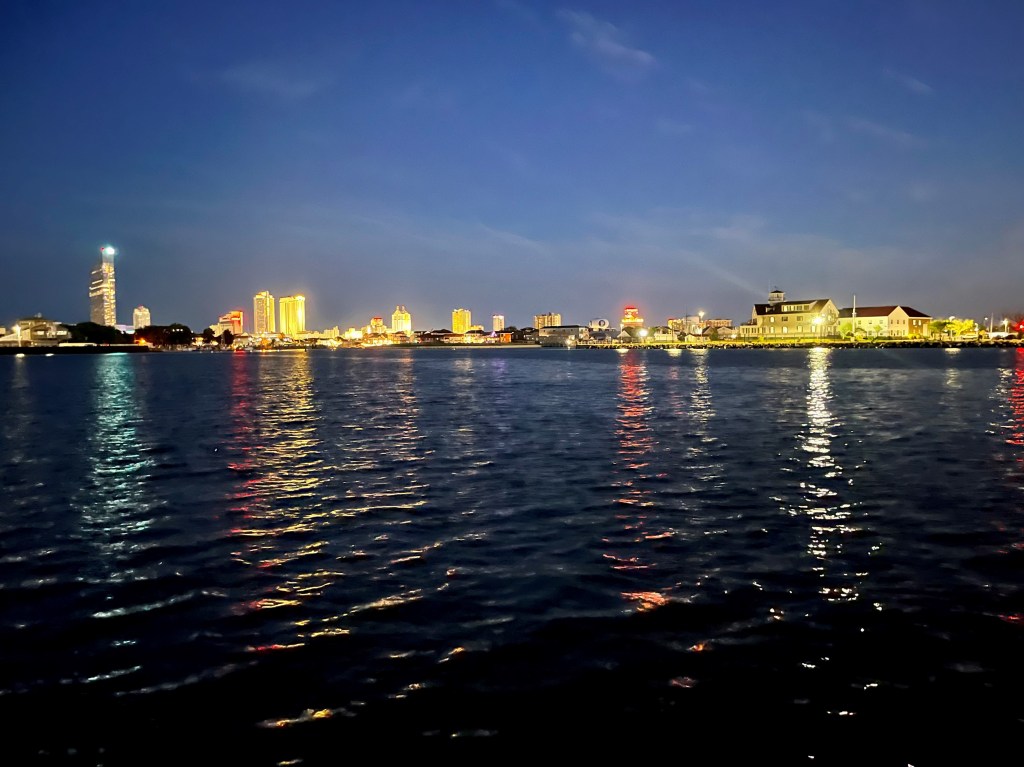
Next stop – New York City! Here are some photos from our overnight stay at Atlantic City.
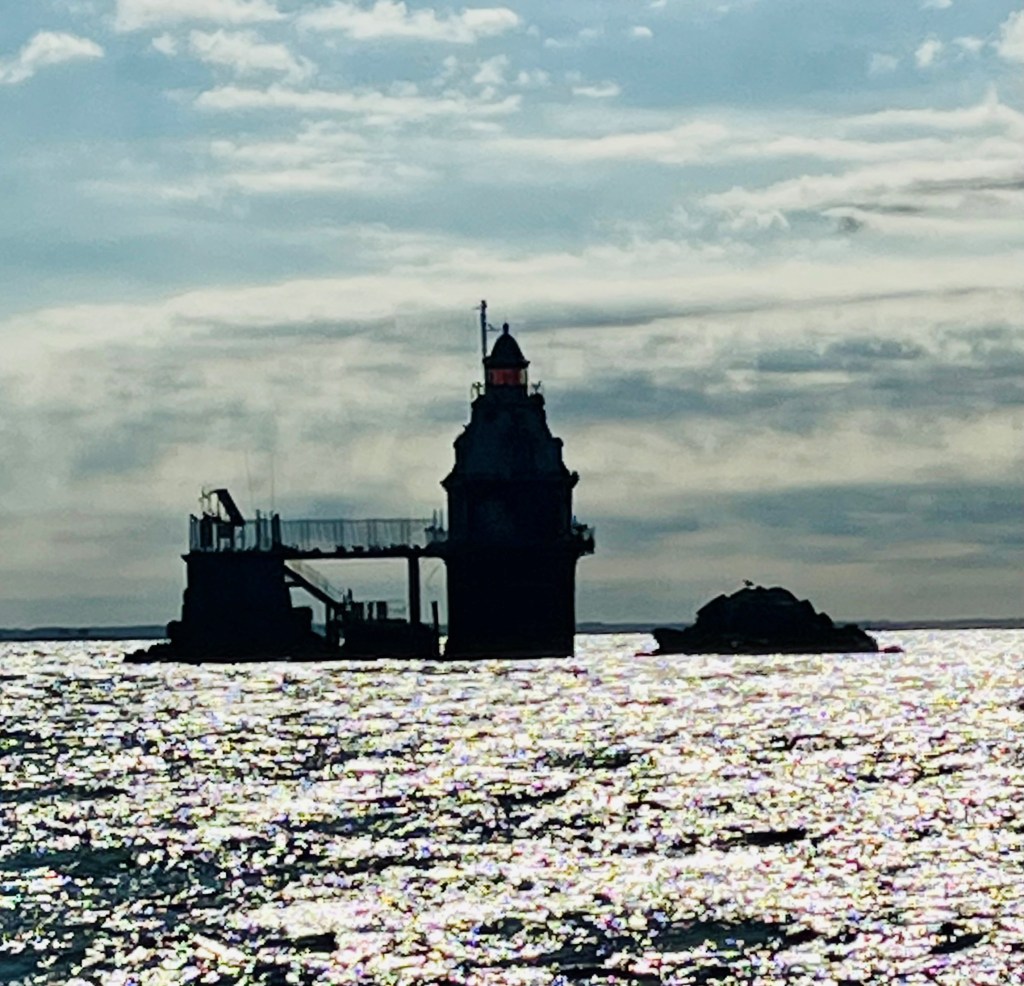
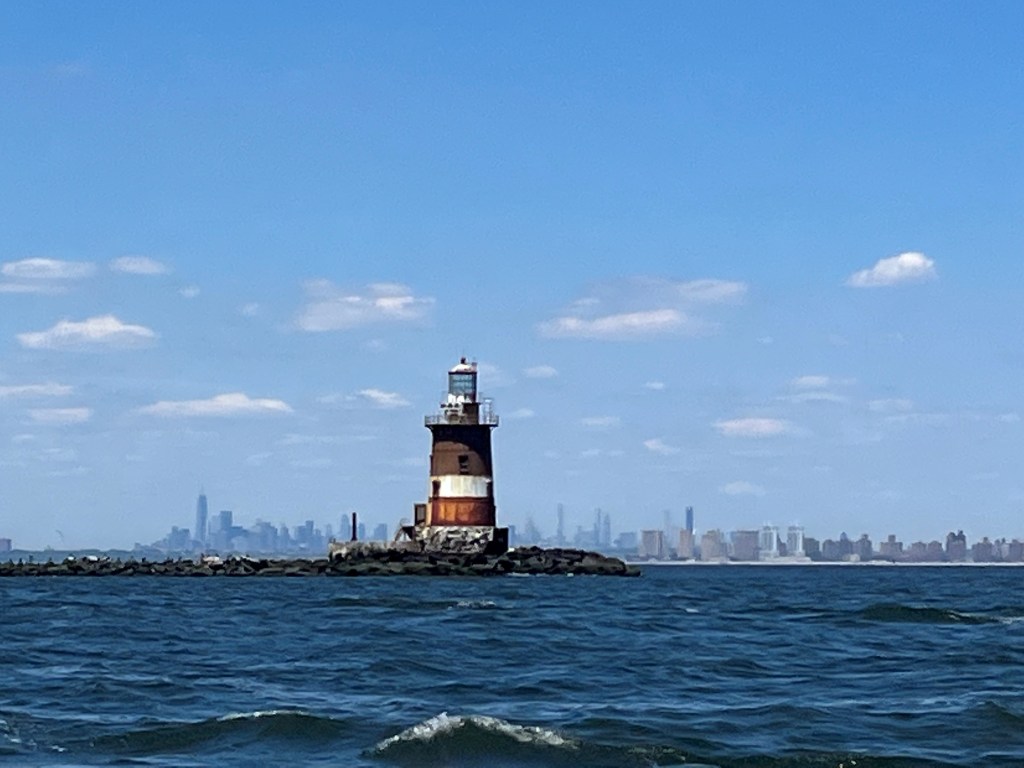
Romer Shoal Lighthouse – in Monmouth County, New JerseyThe Wright Choice anchored at Atlantic CityAtlantic City ShorelineStunning night lightsBrarissima – Judy and Don Durant – Fleming 55
Chesapeake City – historic town along the Chesapeake and Delaware Canal
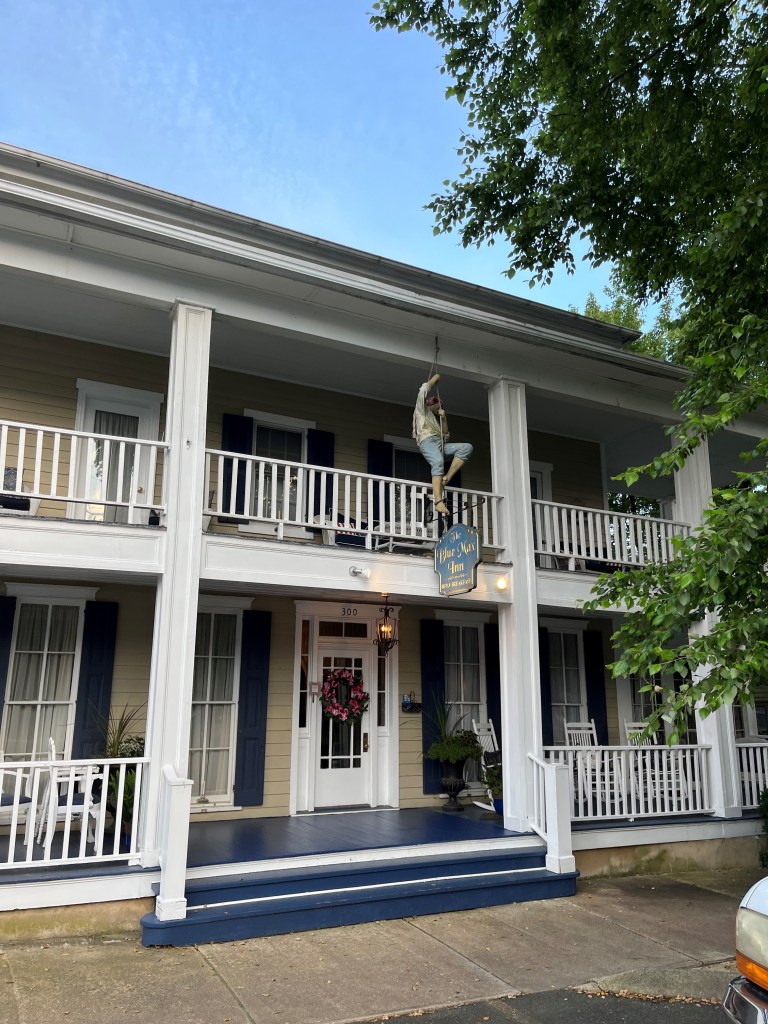
Chesapeake City was originally named by Bohemian colonist Augustine Herman the Village of Bohemia – or Bohemia Manor – but the name was changed in 1839 after the Chesapeake and Delaware Canal (C&D Canal) was build in 1829. Today, the town contains numerous old homes from that era that have been converted into bed and breakfasts, restaurants and the local historical museum.
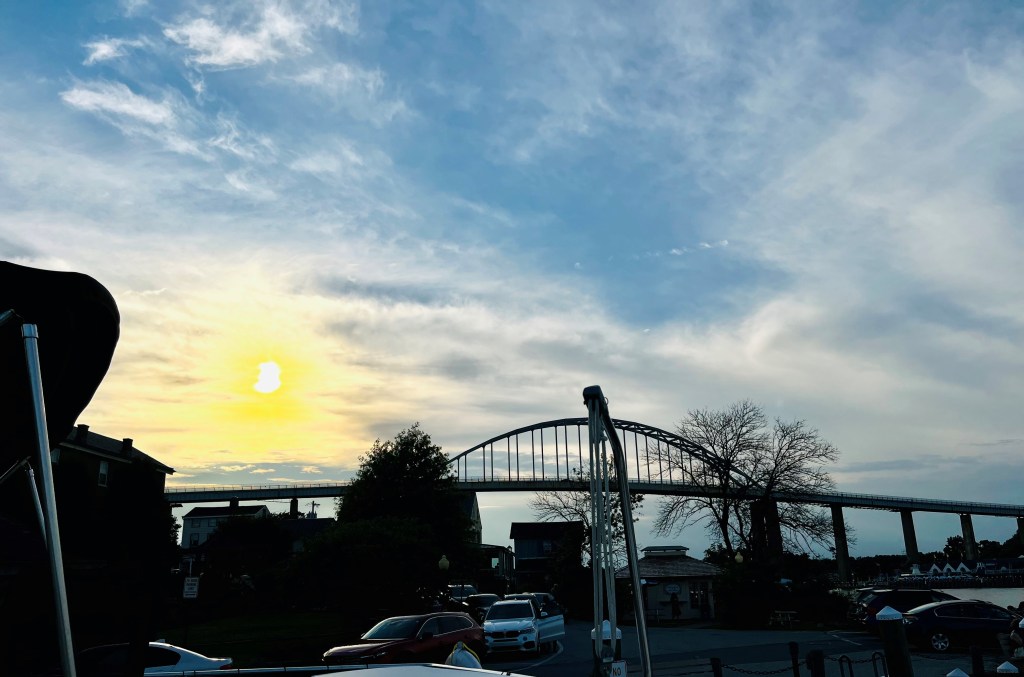
Chesapeake City Bridge – view from our boat. Uncle Bill installed electrical cable and conduit on this bridge.
The town was separated into north and south sections when the C&D Canal was built through the center of the town. The two were connected by a drawbridge until 1942 when that was destroyed by a freighter that struck it. The current bridge opened in 1949.
The new bridge had to be tall enough to allow supertankers to pass beneath it, resulting in a structure so high and long that cars no longer went into the city to cross the canal. Business declined for decades thereafter.
Our brother-in-law, Bill Raney (affectionally known as Uncle Bill) worked on this bridge when he was an electrical contractor. He installed conduit and cable the entire length of the bridge. He said it sure was scary being that high up! He worked on the bridge for nine months and so is very familiar with Chesapeake City.
In the late 20th century, Chesapeake City was the home of one of the world’s most important thoroughbred stud farms, Windfields Farm, which closed in 1988.
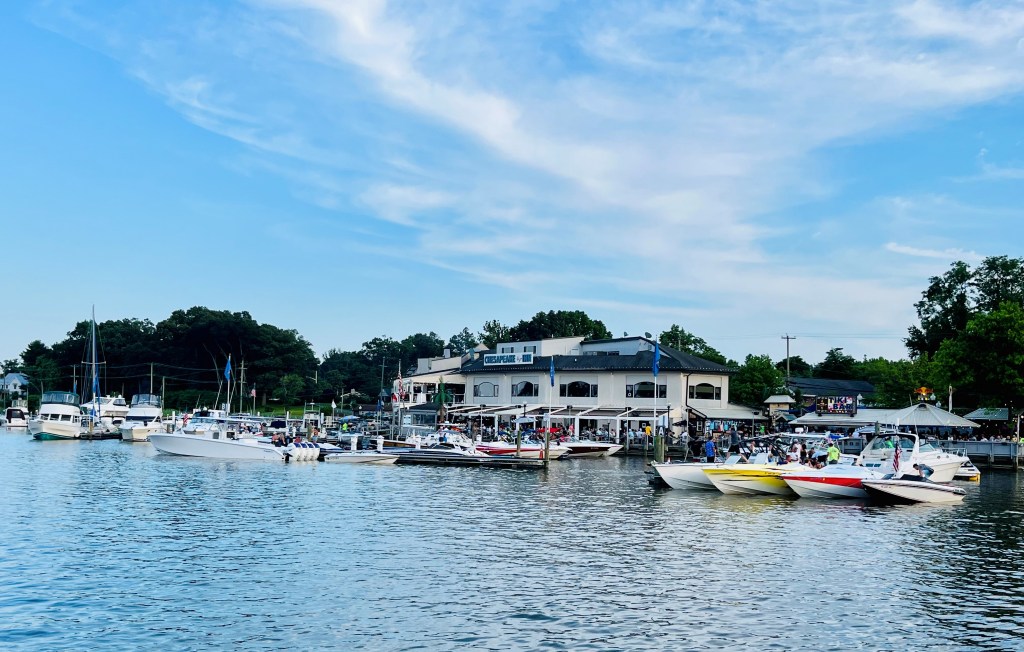
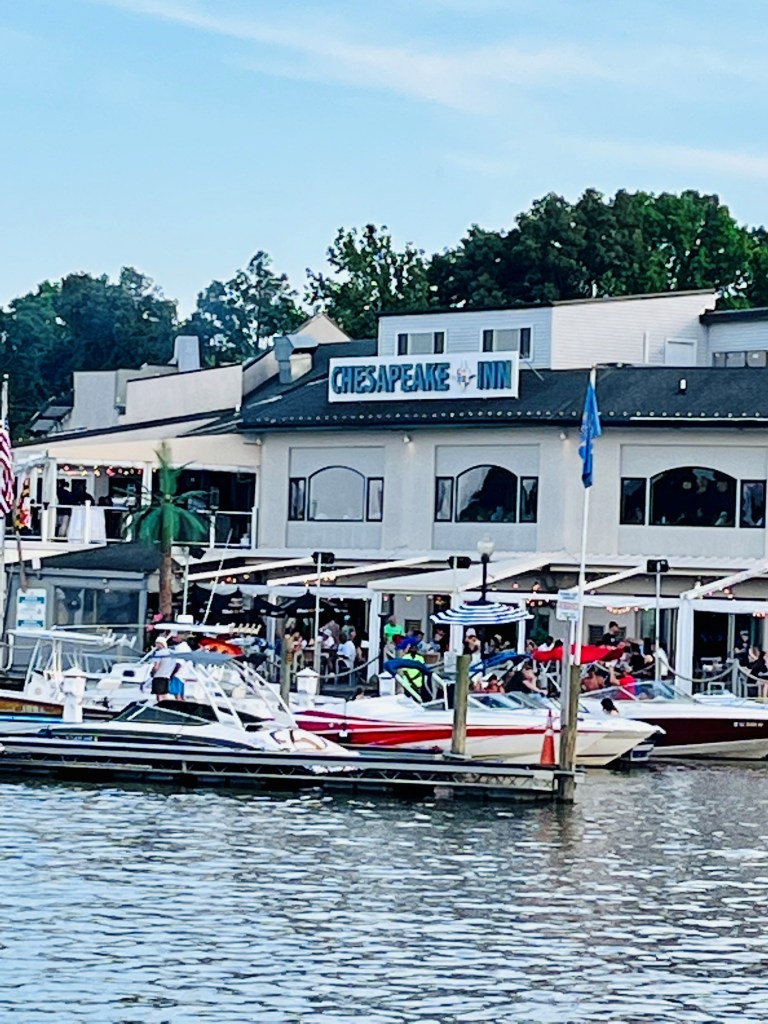
Chesapeake Inn – steps from the boat dock
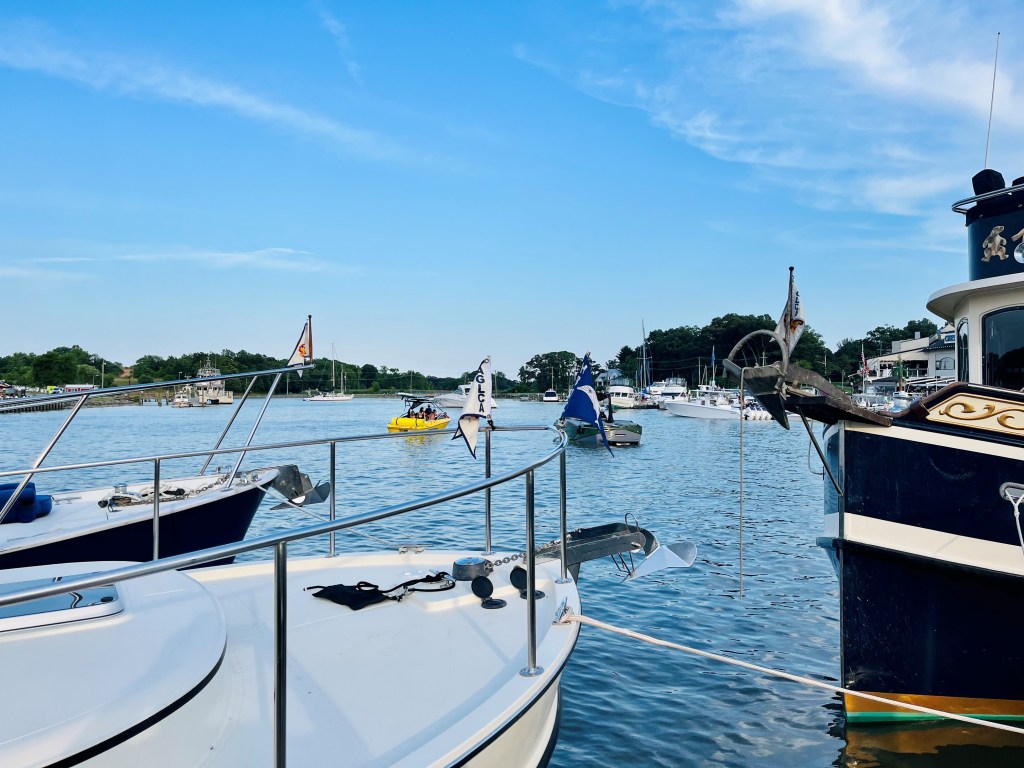
There is free 24-hour docking at the Chesapeake City Dock – with limited capacity. Our Looper friends Anne and Mitch were already at the dock. As no dock space was available, they let us raft up next to them for the night.
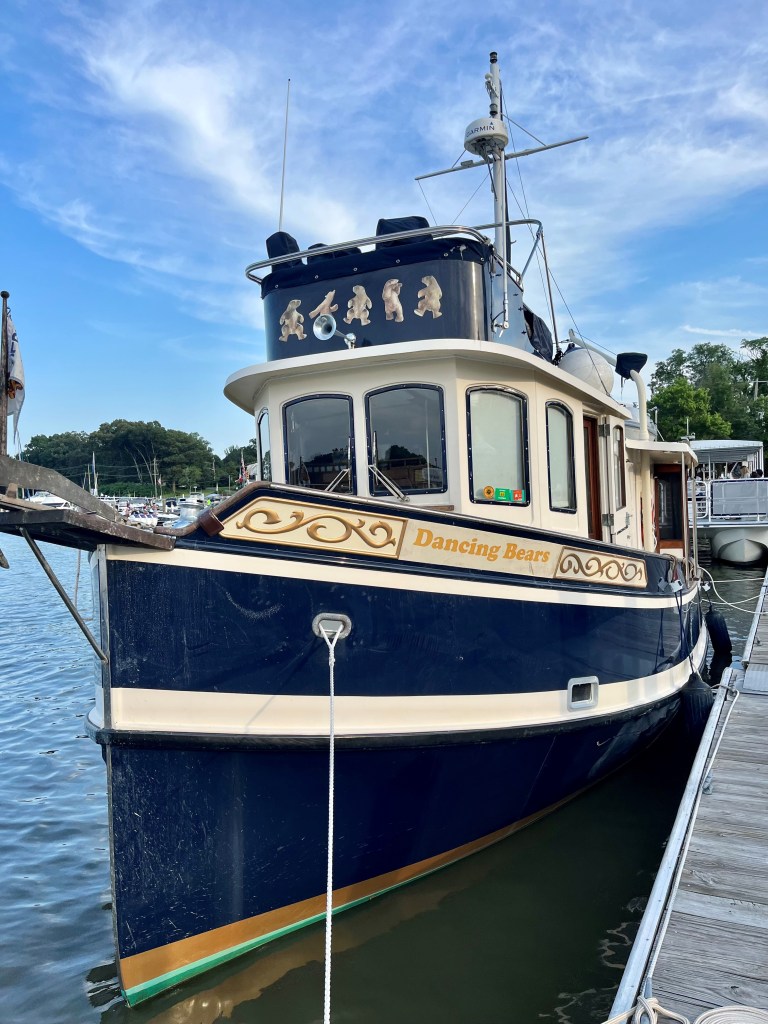
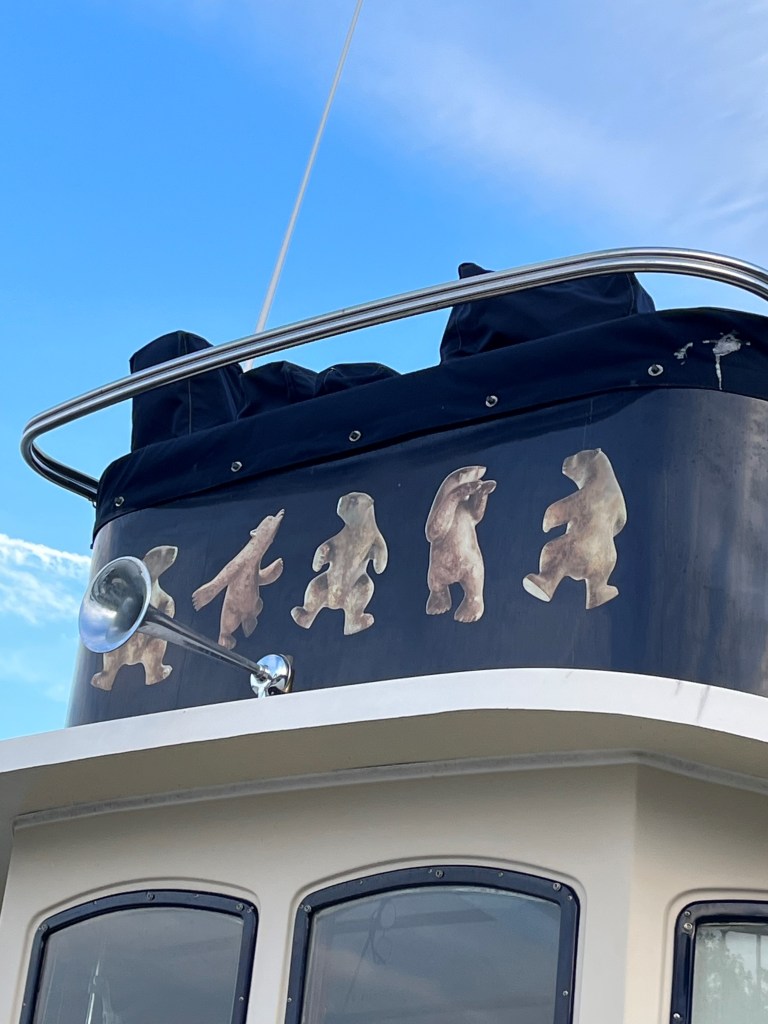
We also met Looper friend Tom and his dog Ripple, who live aboard the boat Dancing Bears. Anne and Mitch were travelling with Tom. What an amazing boat Tom has! You can’t miss it.
Dancing Bears- what a boat
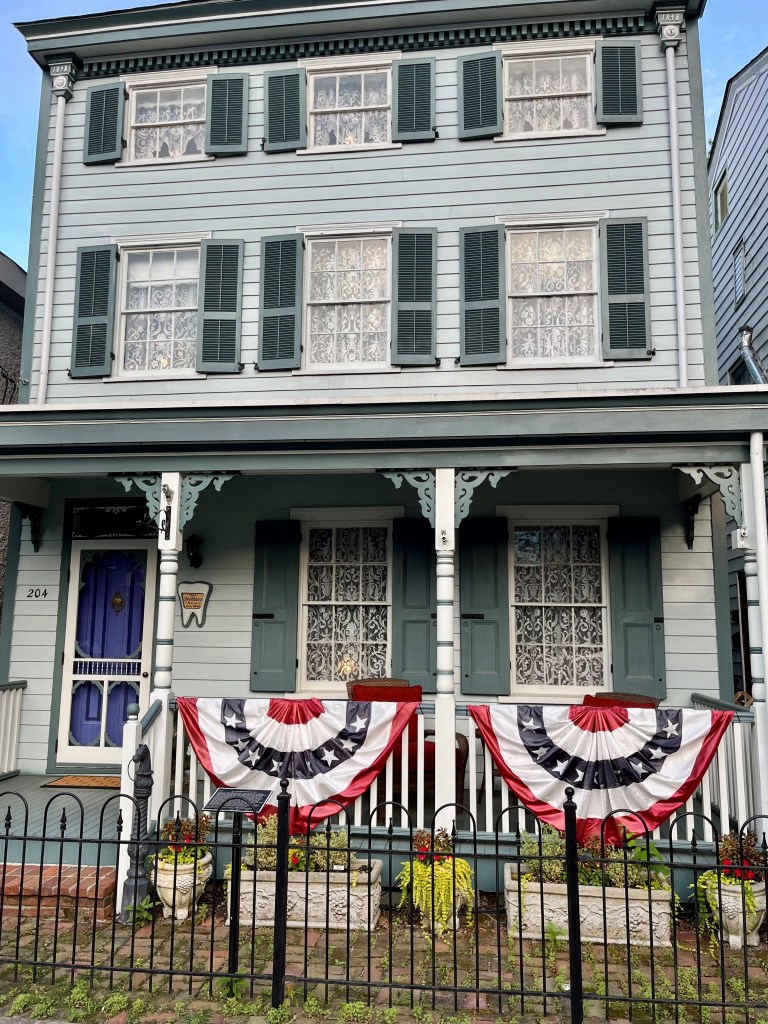
We were expecting Chesapeake to be a podunk little town. Were we surprised! It was bustling. The waterfront inn and tiki bar were packed, and lots of music playing. I loved walking around downtown and seeing the beautiful old homes, all decorated for July 4. Here are some photos from our visit to Chesapeake City.
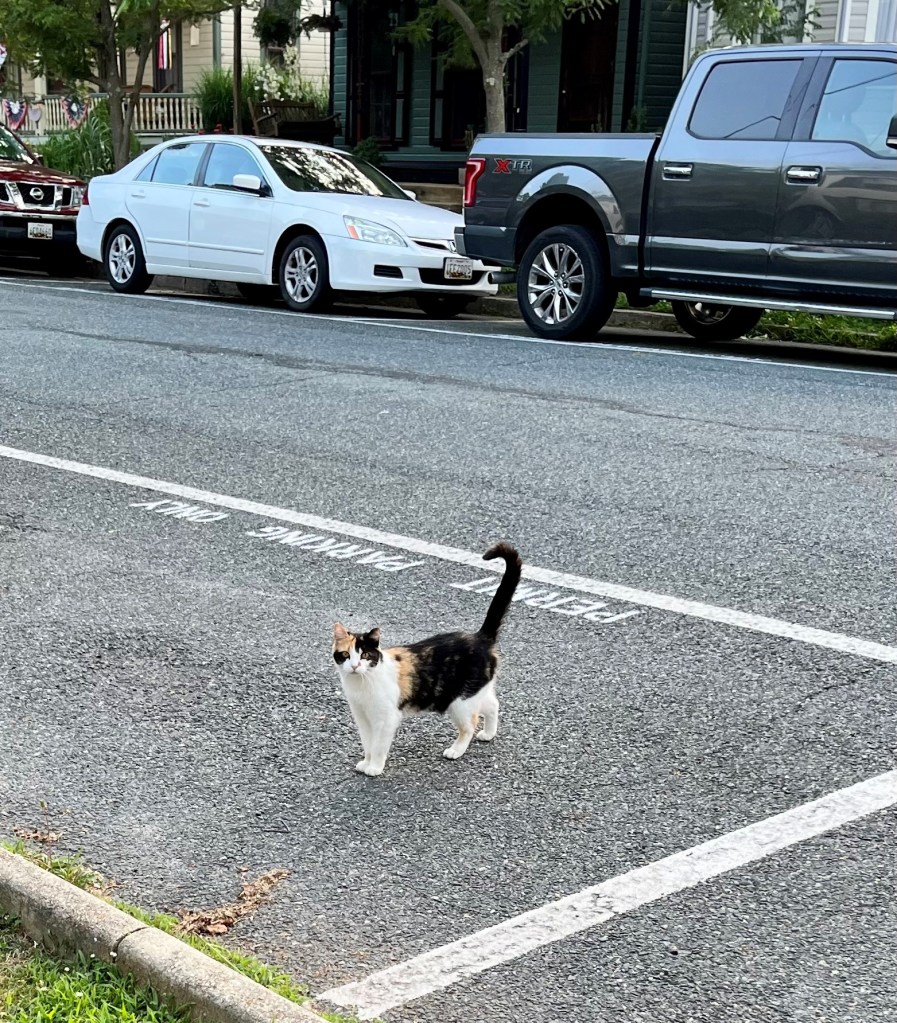
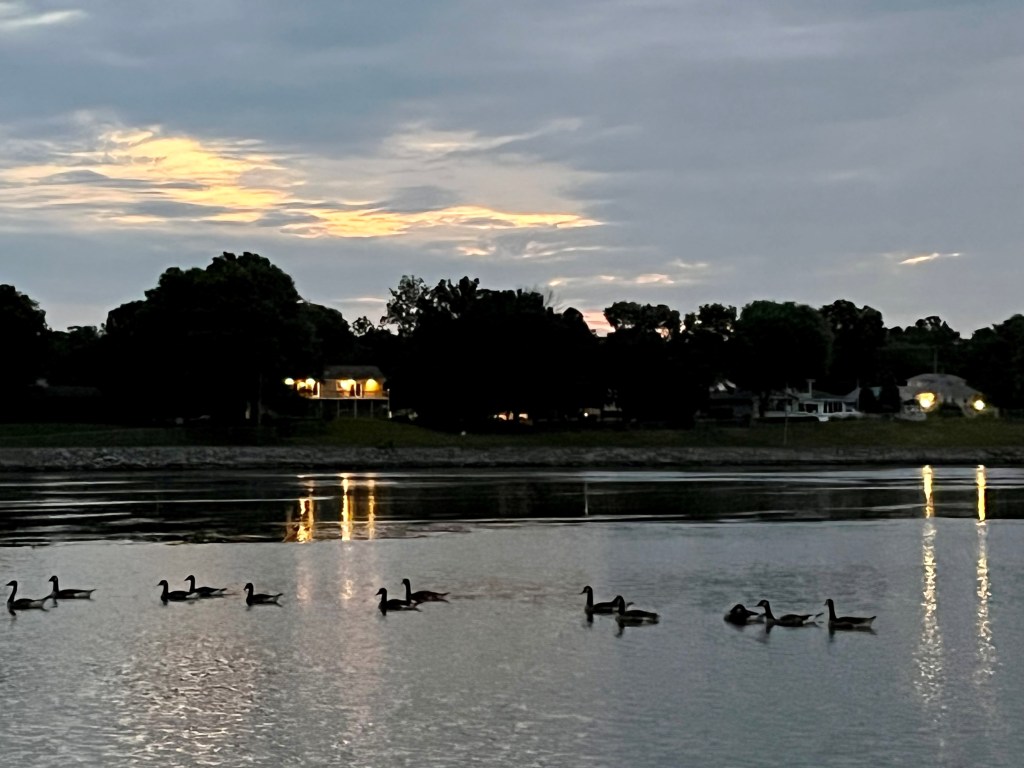
We had three Looper boats at the dock – No Rush, Sunshine, and Dancing BearsTiki Bar was a happening placeLoved the historic downtown homesCheck out the pirate at this B & BKitties running aroundPretty city at night“No Rush” is first to leave in the morning. Followed by “Dancing Bears” and “Sunshine.” We all departed by 6 am to beat the current.Early morning – we saw and heard Canadian geese up and aboutWe counted over twenty geeseOne of many boats we passed on our way to Chesapeake CityChesapeake Corp of EngineersMorning departure from Chesapeake City
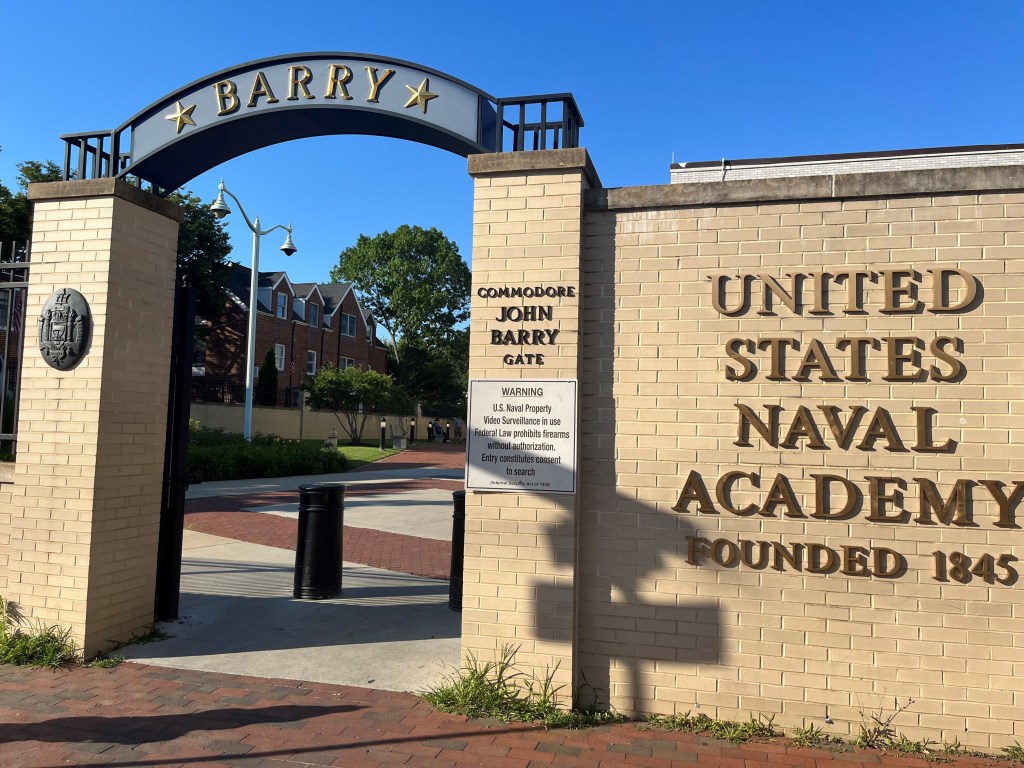
June 26 we travelled to Annapolis, Maryland, home of the United States Naval Academy. The Academy is a four-year coeducational federal service academy and just a few blocks north of the city Marina. It is home to over 4,000 cadets who are in training to be officers in the U.S. Navy and Marines. Highlights of the Naval Academy tour are the noon formation, where the cadets line up in formation in front of Bancroft Hall for lunch, and the Naval Academy Chapel, featuring the dome, stained-glass windows and the tomb of John Paul Jones in the basement.
In the morning at 8 a.m. we heard the Star Spangled Banner being played. So amazing to see people out on their boats listening. This trip has sure made us appreciate the many armed branches of the United States. Thanks to all of you who are serving or who have served for this incredible country where we are privileged to call home.
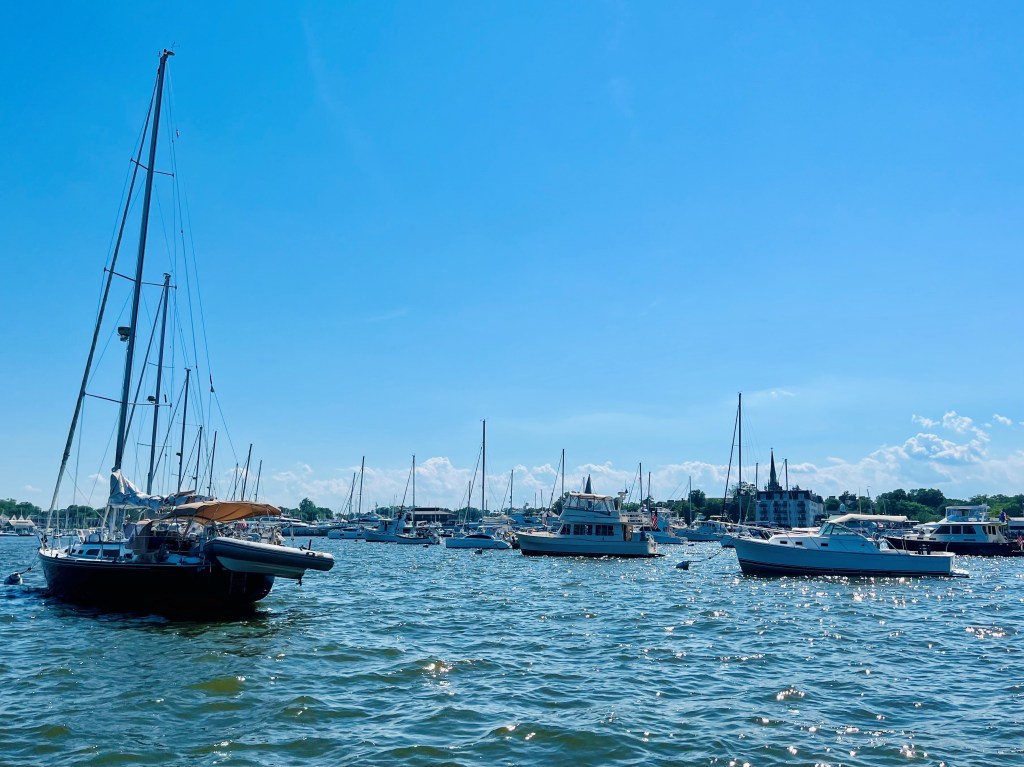
We anchored on a mooring ball just across from the Academy. Once again, we were blessed. We arrived around 3:30. There are 40 mooring balls. We took number 39! I’m getting better -debatable! – at helping Captain Patrick hook the mooring ball. You have to get your boat close to the ball, and grab the chain attached to the ball with a boat hook, then secure that chain on the boat with a rope. We discovered we couldn’t use the snubber on this one – the hook didn’t fit. The mooring ball costs $30 for the night. We then took the boat ferry in closer to the city dock to explore.
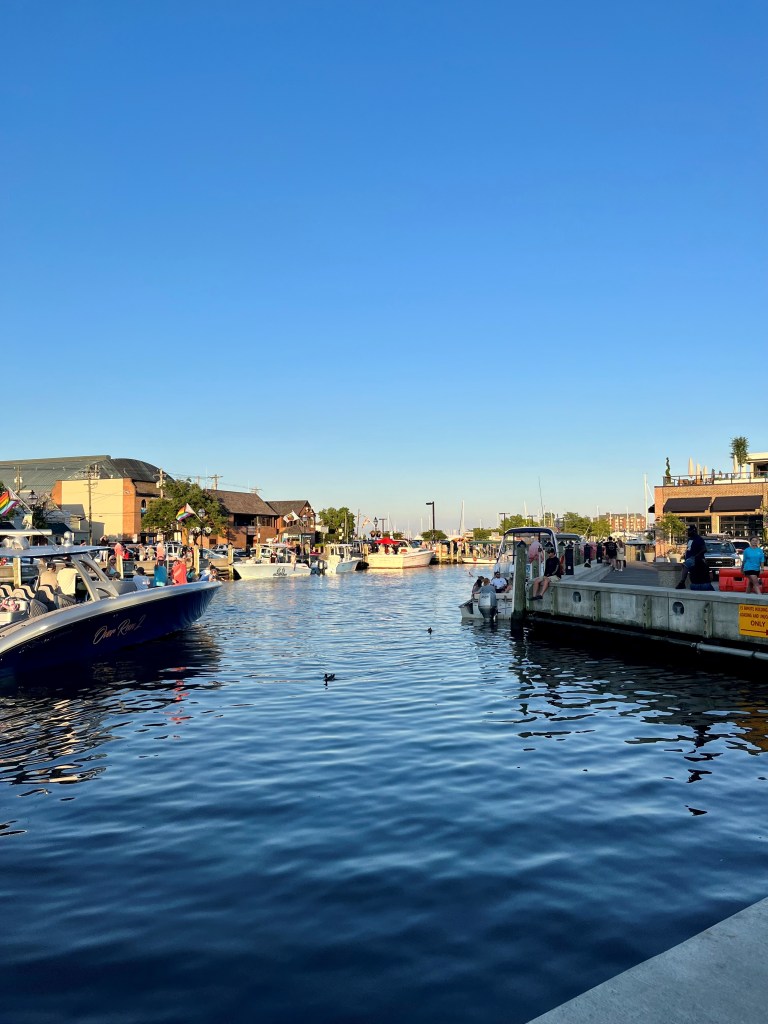
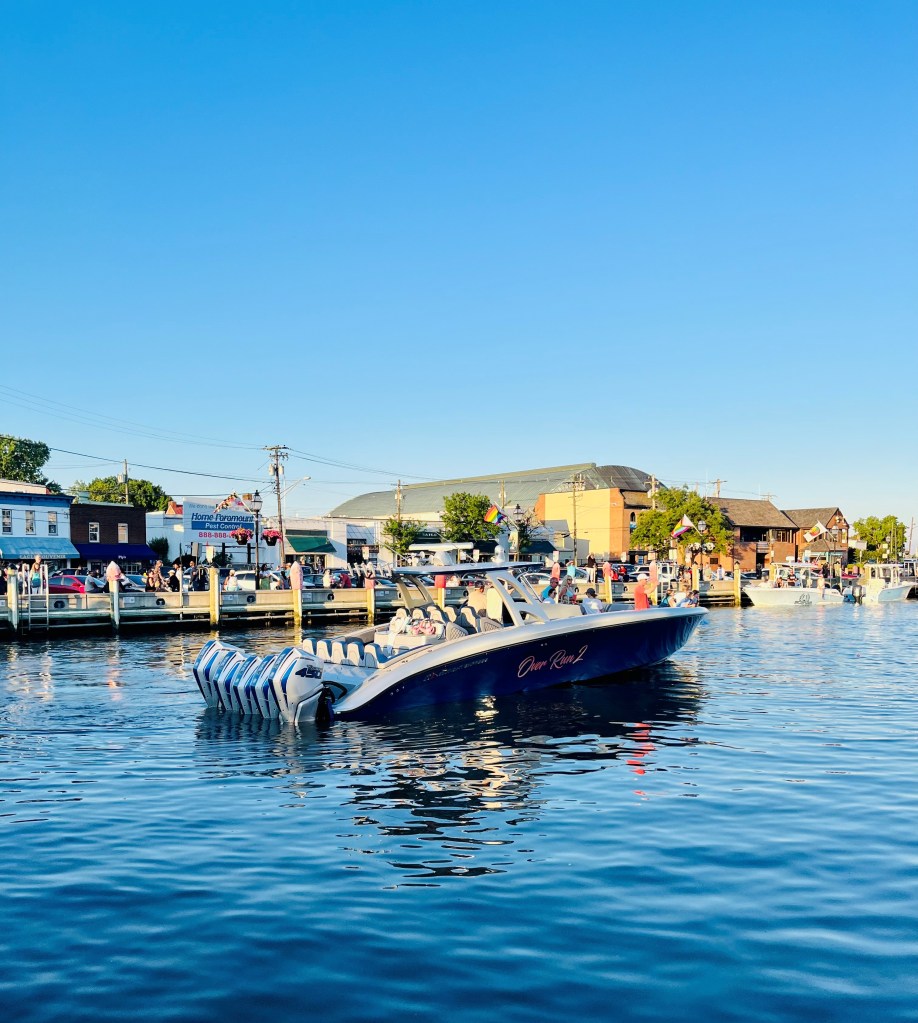
The Annapolis City Dock is located along a finger of water at the foot of downtown known as “Ego Alley,” aptly named because many boats both large and small cruise up and down this waterway in the middle of town to see and be seen. There is a parade of boats all day long and into the evening. Annapolis is a large boating center and is self-declared as the “Sailing Capital of the World.” Annapolis was first settled in the mid 1600’s and is now Maryland’s State Capital.
Here are photos from our visit to Annapolis.
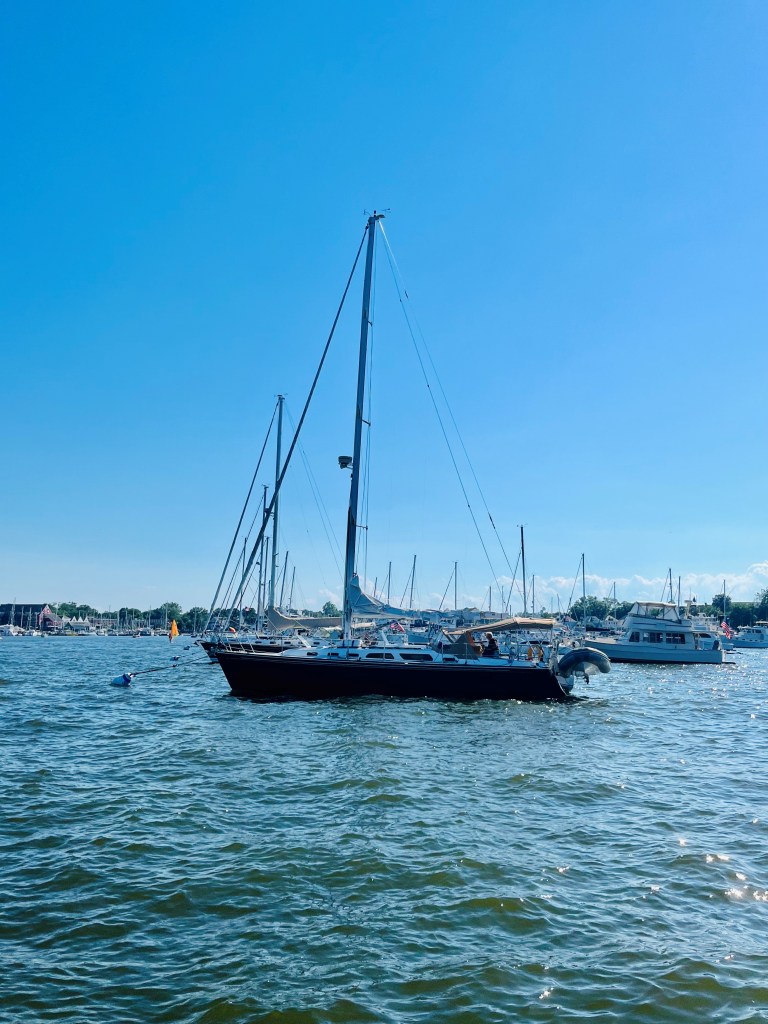
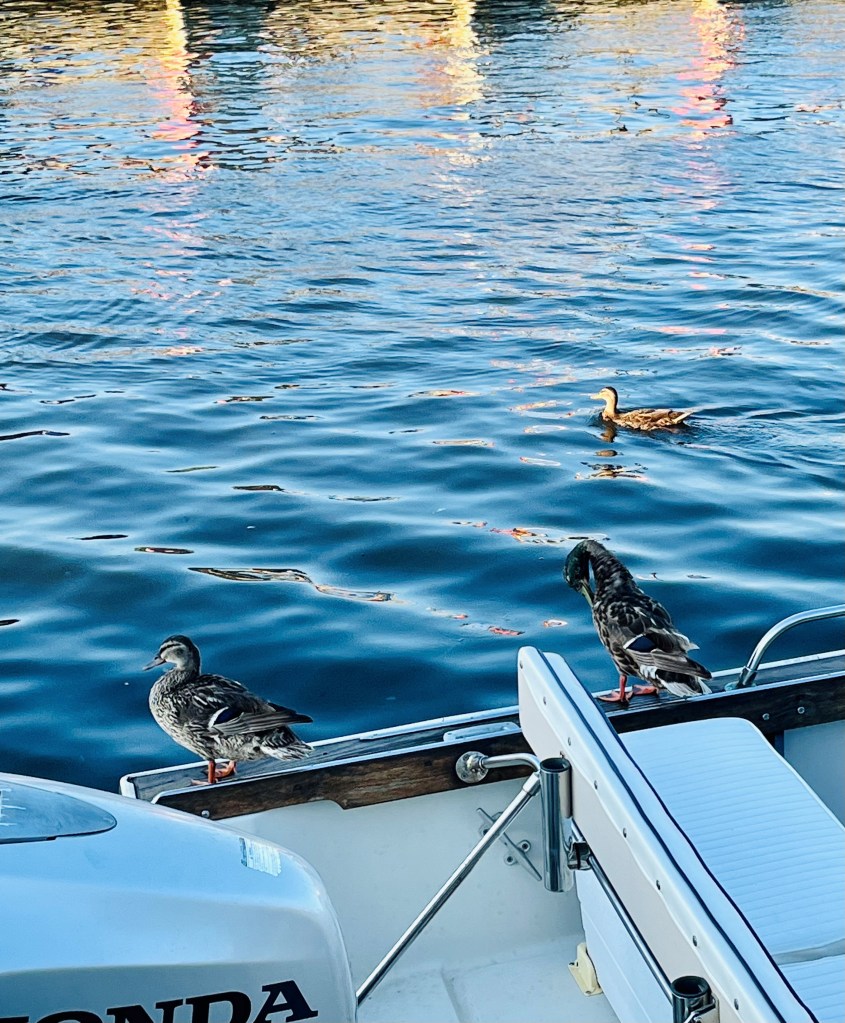
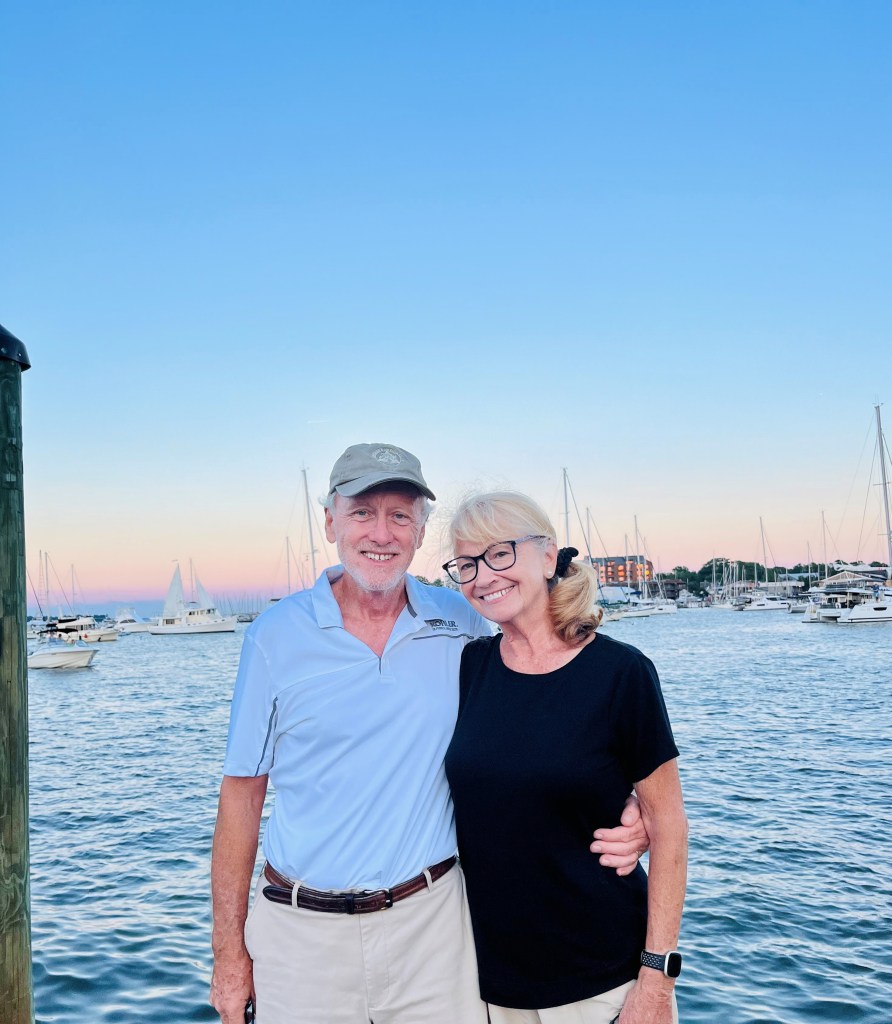
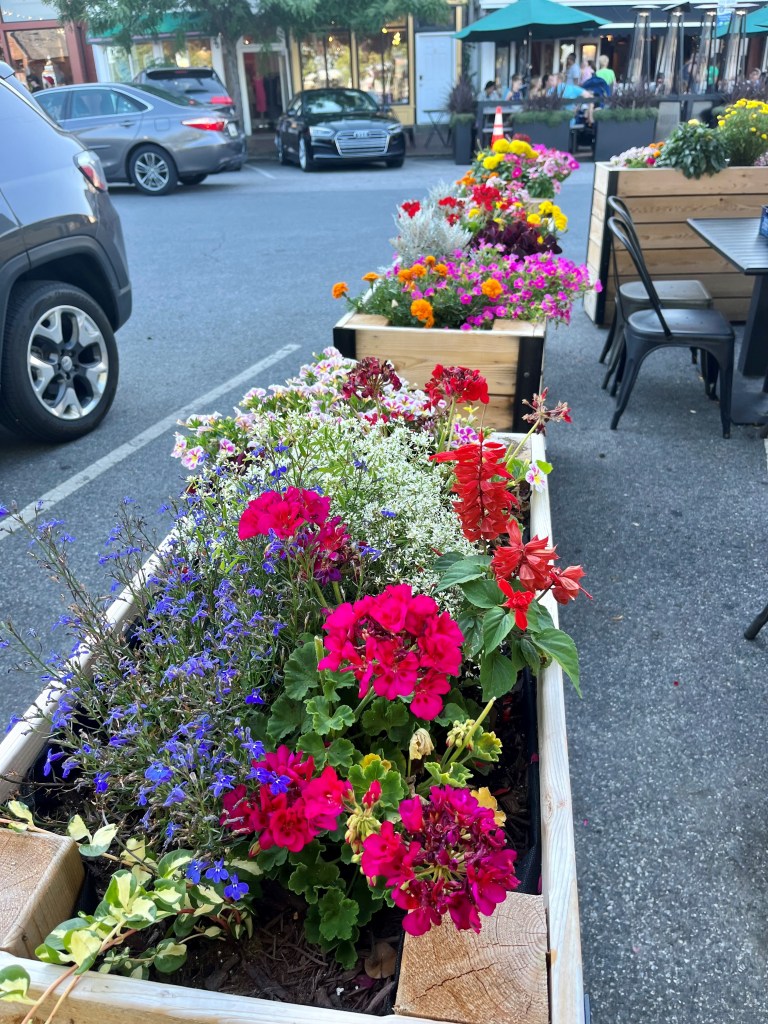
U.S. Naval Academy across from our anchorageEntry to the AcademyTribute to Commodore John BarryBoats anchored to the mooring balls.This boat got the last mooring ball – number 40Beautiful sailboat anchored beside us“Ego Alley” – great place to walk around, with shops, restaurants and ice cream! Now here’s an ego boat!Lots of ducks on the boats – bet the owners don’t like that!Here we are in AnnapolisTribute to author Alex Haley, author of 1976 book “Roots”These summer flower boxes are all over the cityThere’s Sunshine! We are returning to the boat on the water ferry.
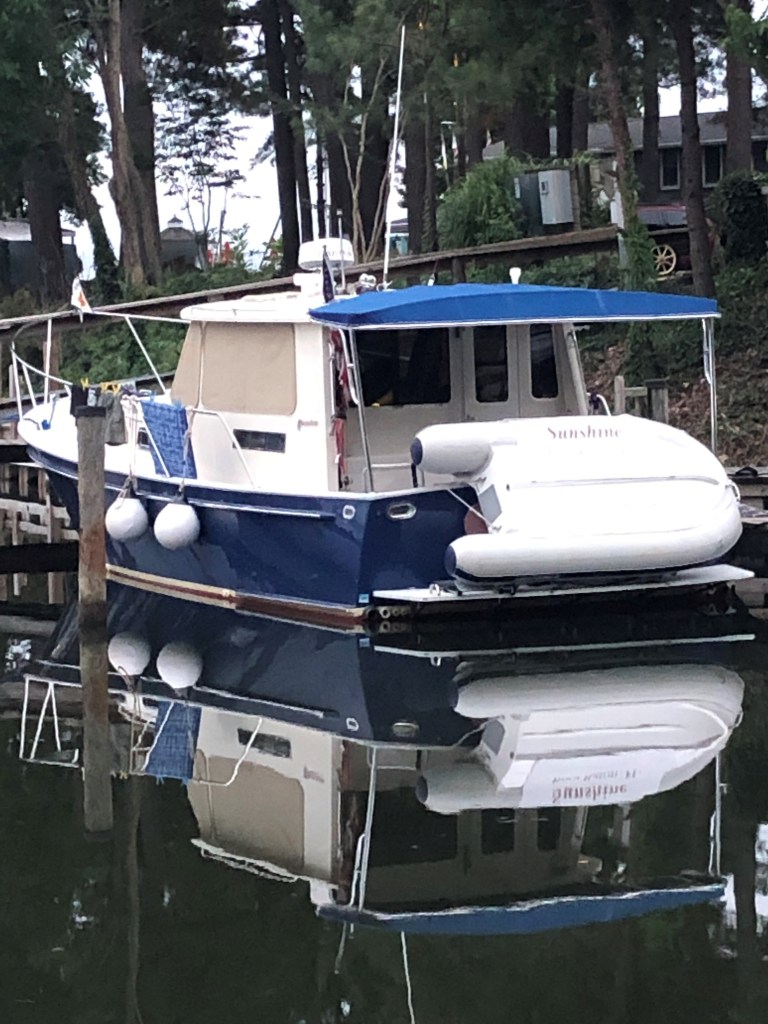
Sunshine docked at Spring Cove Marina – photo credit to Captain Pat
June 22 we arrived at Solomons, Maryland. As with every state, there are so many places to visit. We knew we wanted to stop at Solomons to visit our niece Colleen Raney and her family – Harold and son Lucas. I posted a request on Facebook Great Loop site asking what’s a good marina in Solomons. Turns out there are at least nine marina options there.
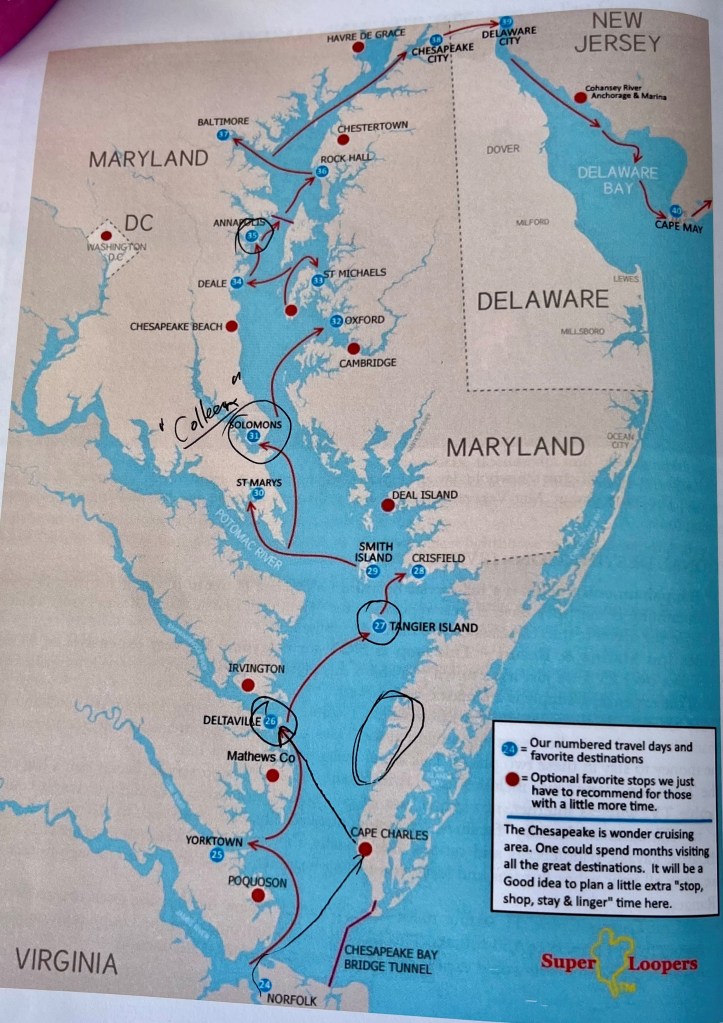
Map from our Looper Companion Guide
Fellow loopers confirmed what our books referenced – stay at Spring Cove Marina. Soon after we arrived, Darin from the boat next door came over. He was one of the Facebook followers who recommended Spring Cove! So we befriended another Looper couple – Darin and Susan and their cute dog. Their boat is Sea Gem – a beautiful Cruisers Yacht 415. They hail from Kennewick, Washington!
Solomons includes Solomons Island and the mainland on the north side of the mouth of the Patuxent River, where it meets the Chesapeake Bay. It is just across from the U.S. Naval Air Station Patuxent River – where Colleen and Harold work! Originally called Bourne’s Island (1680), then Somervells Island (1740), Solomons takes its name from 19th century Baltimore businessman Isaac Solomon, who established a cannery there shortly after the Civil War. Solomon’s home still stands an the front of the island.
Solomons Island was once famous for its wooden sloops, schooners, and bugeyes (forerunner of the skipjack) built for the island’s fishing fleet. Solomons is home to the Calvert Marine Museum and the restored Drum Point screw pile lighthouse exhibit. Main street is very walkable, with great views of the Patuxent River waterfront. It’s famous for the Tiki Bar – interesting place for serious people watching right at the harbor.
Visit with Colleen, Harold and Lucas
The highlight of our trip to Solomons was visiting with Colleen, Harold, and Lucas. They stopped by Thursday early evening and treated us to a wonderful waterfront dinner.
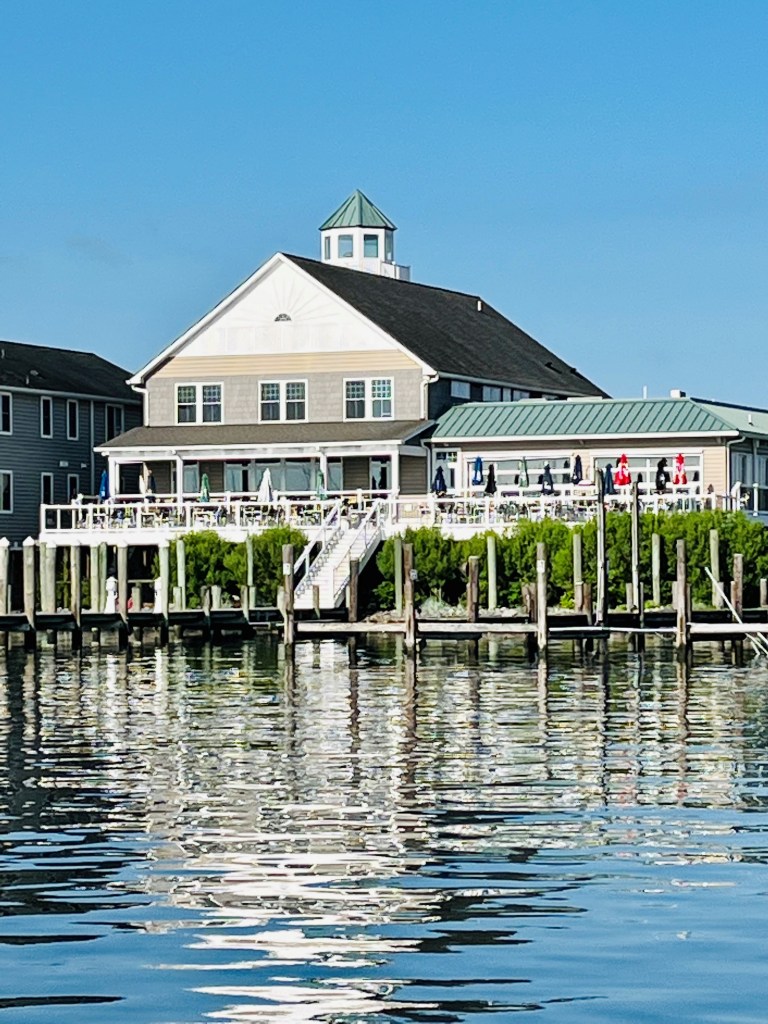
Our dinner spot
The next morning Colleen brought breakfast for our cruise on Sunshine. So much fun to have family on the boat!
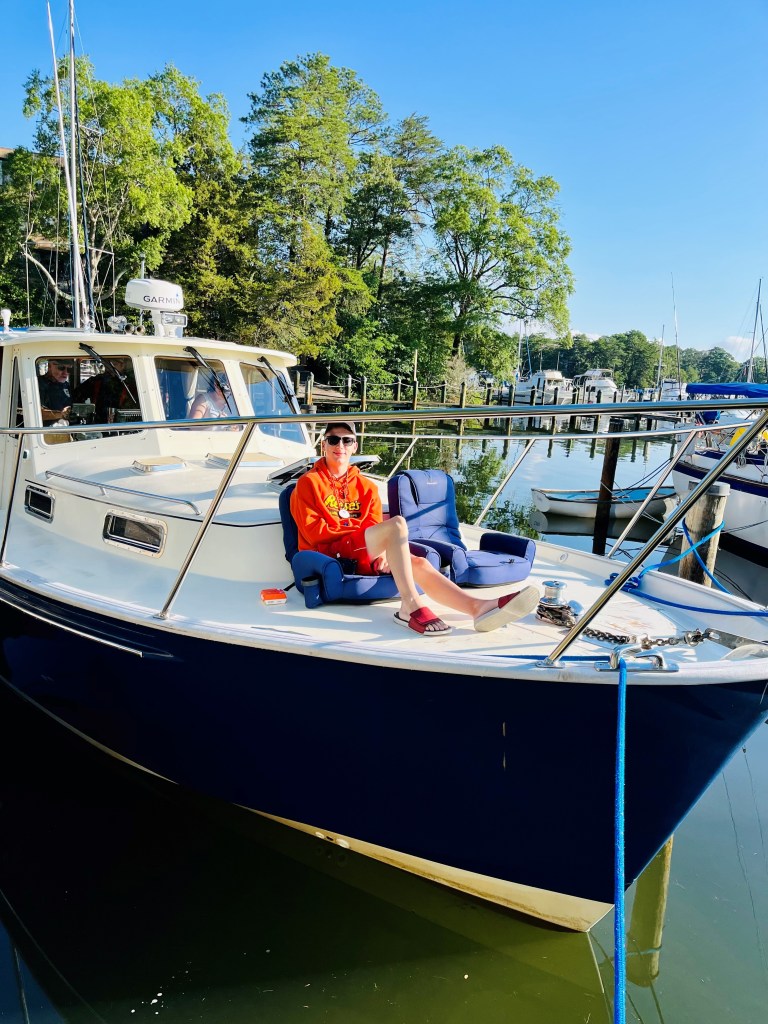
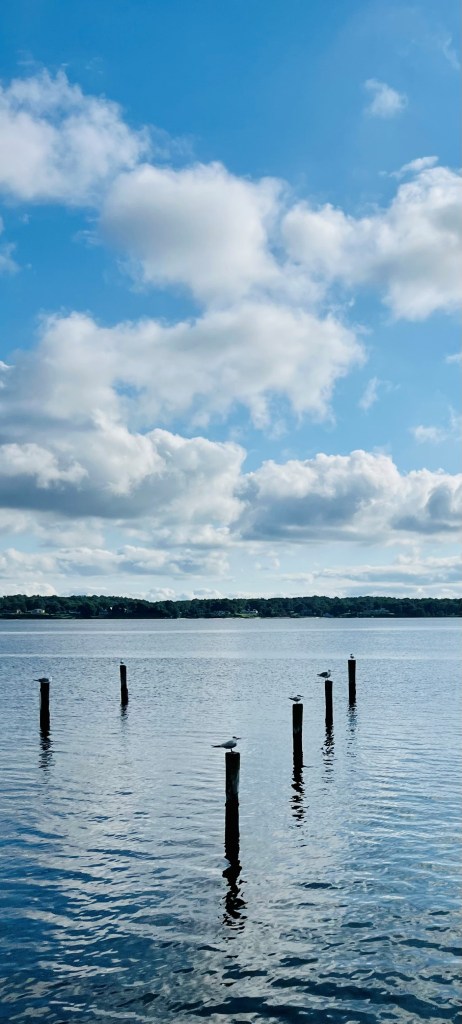
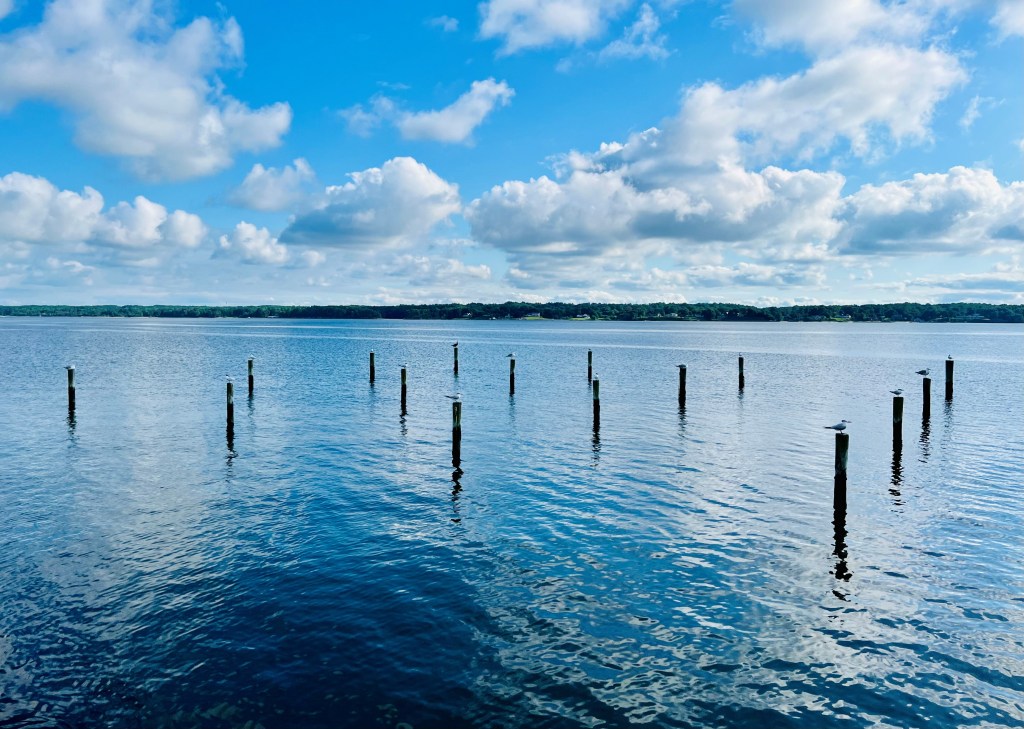
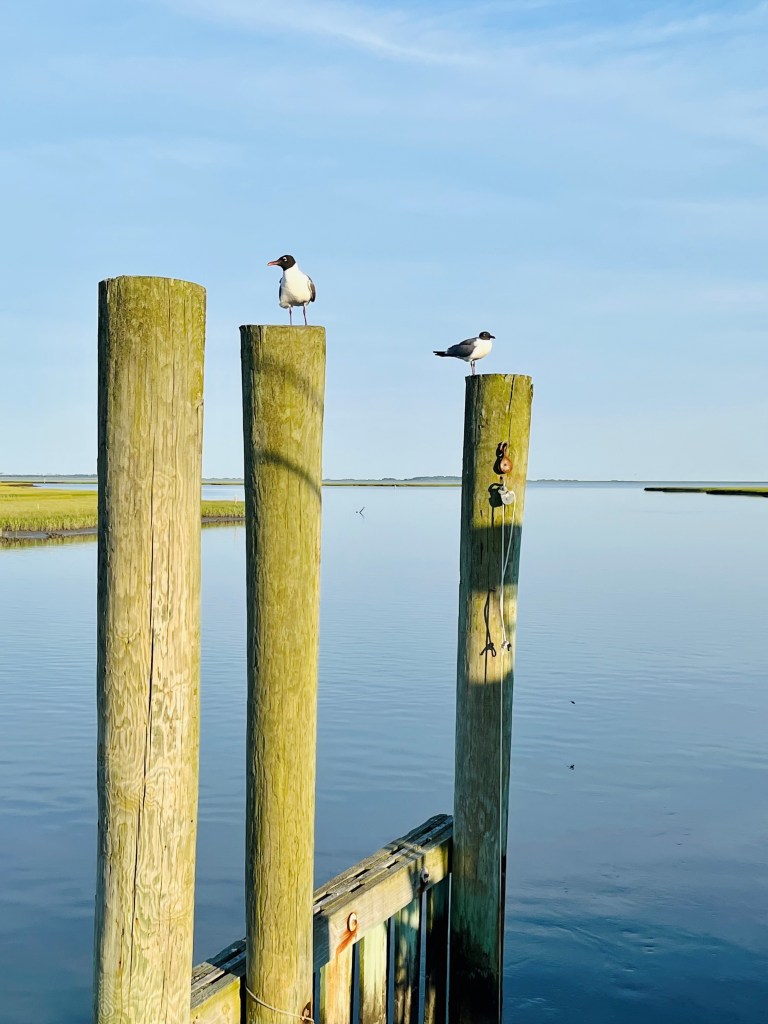
Lucas on the bowSo happy to have family aboard Sunshine!Harold helping Uncle Pat navigateBeautiful boats and waterfront homesSolomons Yacht ClubColleen and Lucas enjoying the viewsSeagulls!There is a seagull on each pole!
After our boat ride, Colleen took us through the Naval Air base where she and Harold work. This is a testing center that helps planes land and take off on aircraft carriers. I was so surprised at how expansive the grounds were. We saw the osprey airplane and many fighter jets.
We went for provisions at the local WalMart (our favorite place!) and made a stop at the bank and West Marine. The best was seeing Colleen’s home in Lexington Park and meeting her two greyhounds! And we left with fresh lettuce from her garden. Special thanks to Colleen, Harold and Lucas for letting us visit and helping us out!
Spring Cove Marina
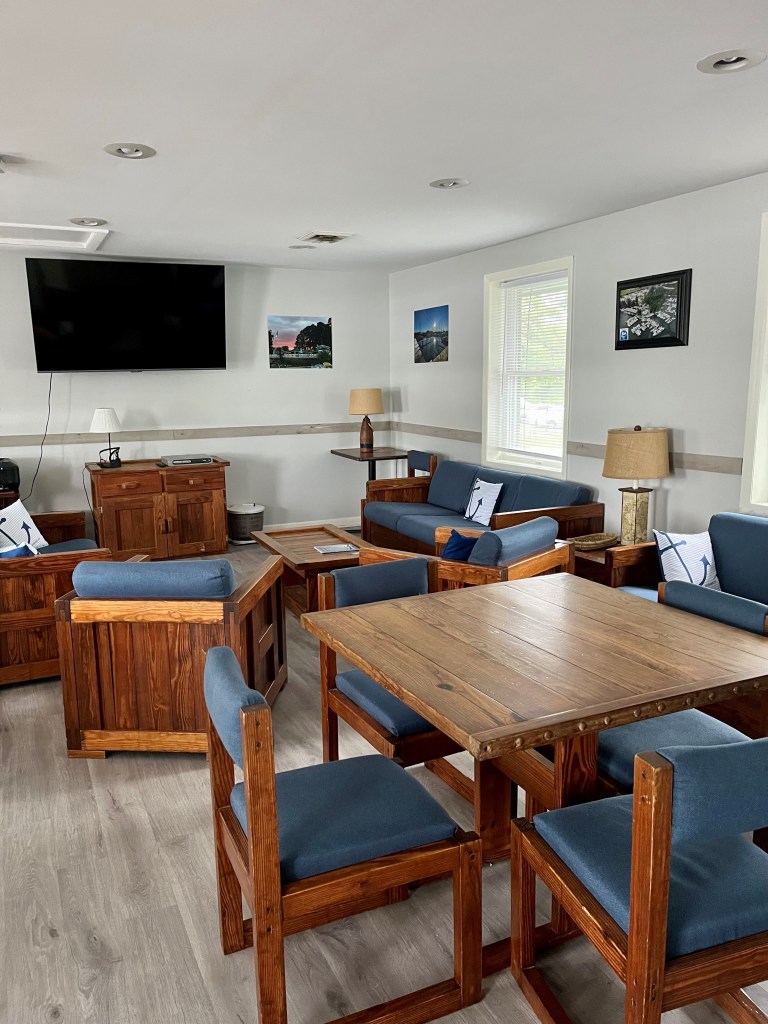
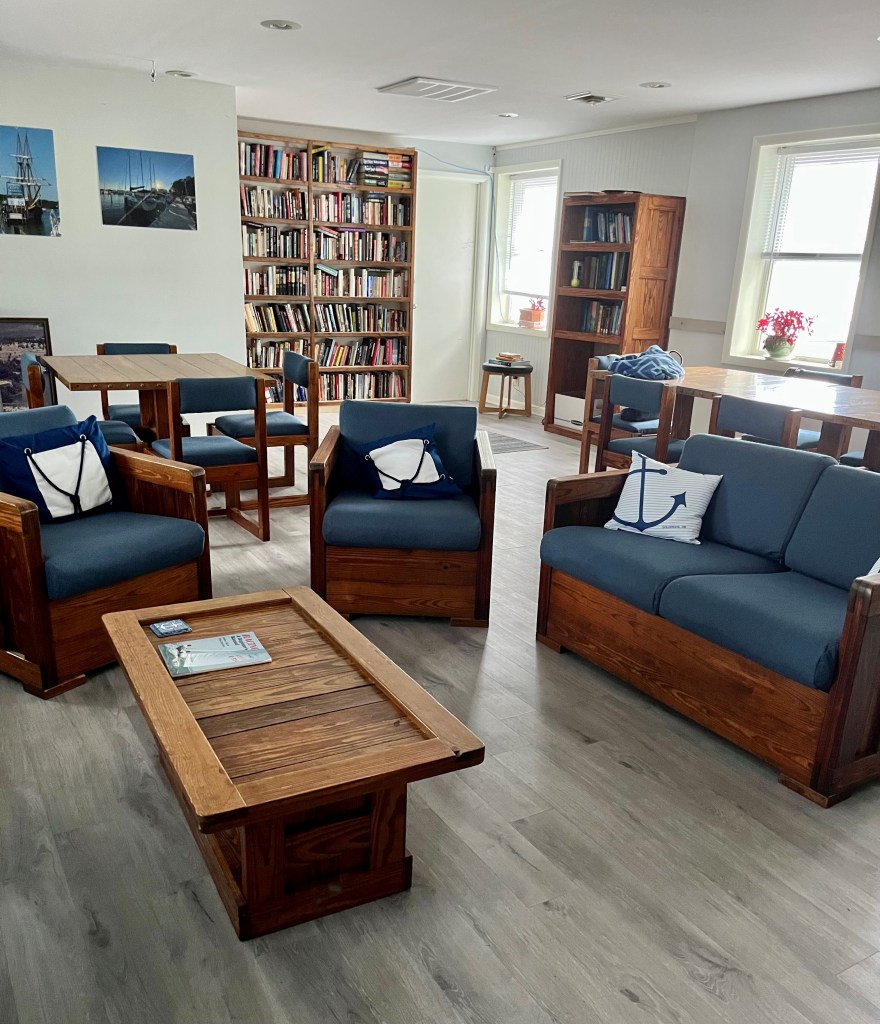
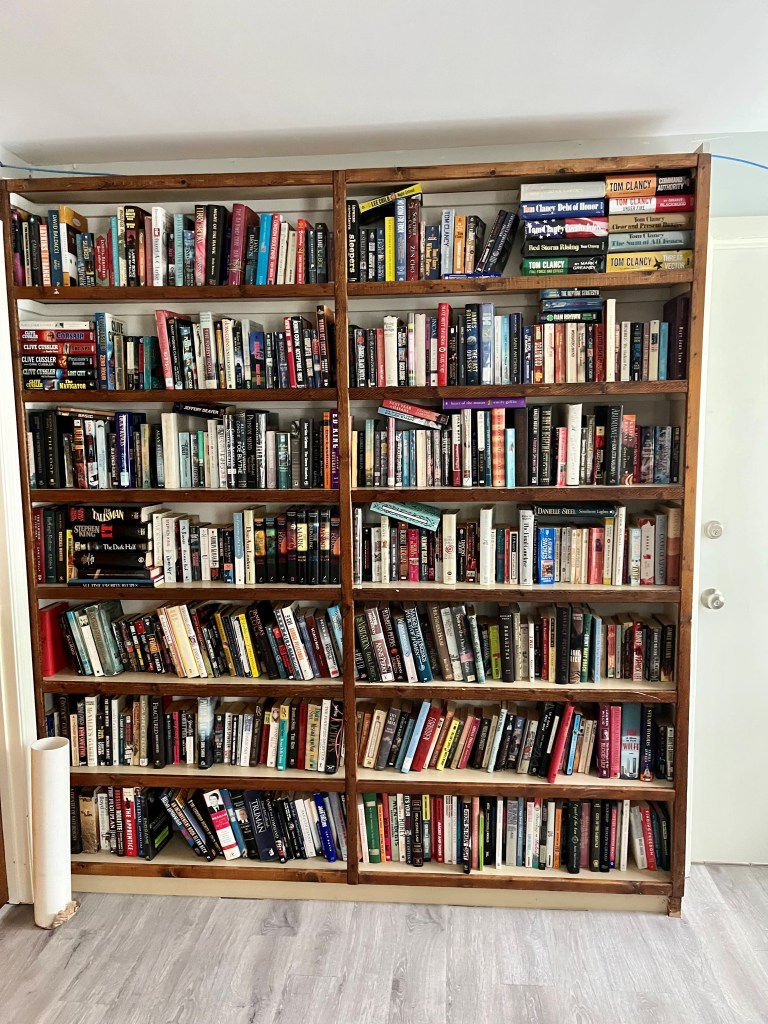
What a delightful place the Spring Cove Marina turned out to be! It reminded us of the lake in New Hampshire. Manicured grounds with lots of pine trees, picnic tables, and flowers. The lounge was nice with tons of books. When packing for the Loop, no need to bring novels to read. Every marina has a book exchange with lots of novels to choose from.
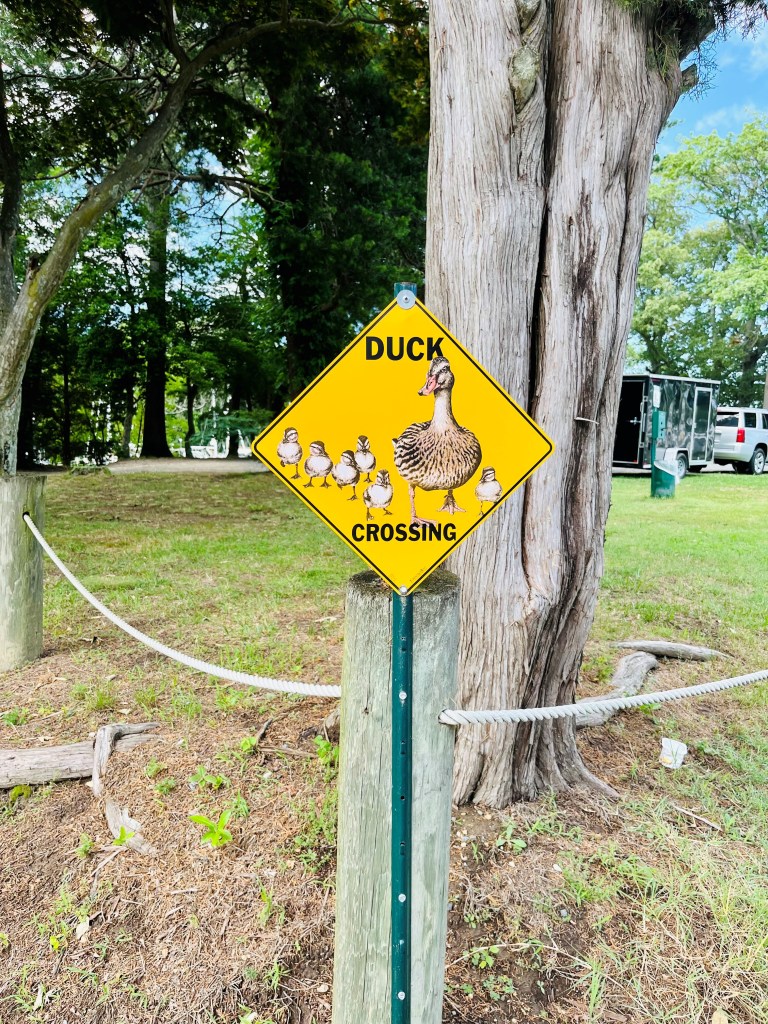
Saw a few ducks
Loved the comfortable loungeBiggest book exchange ever!
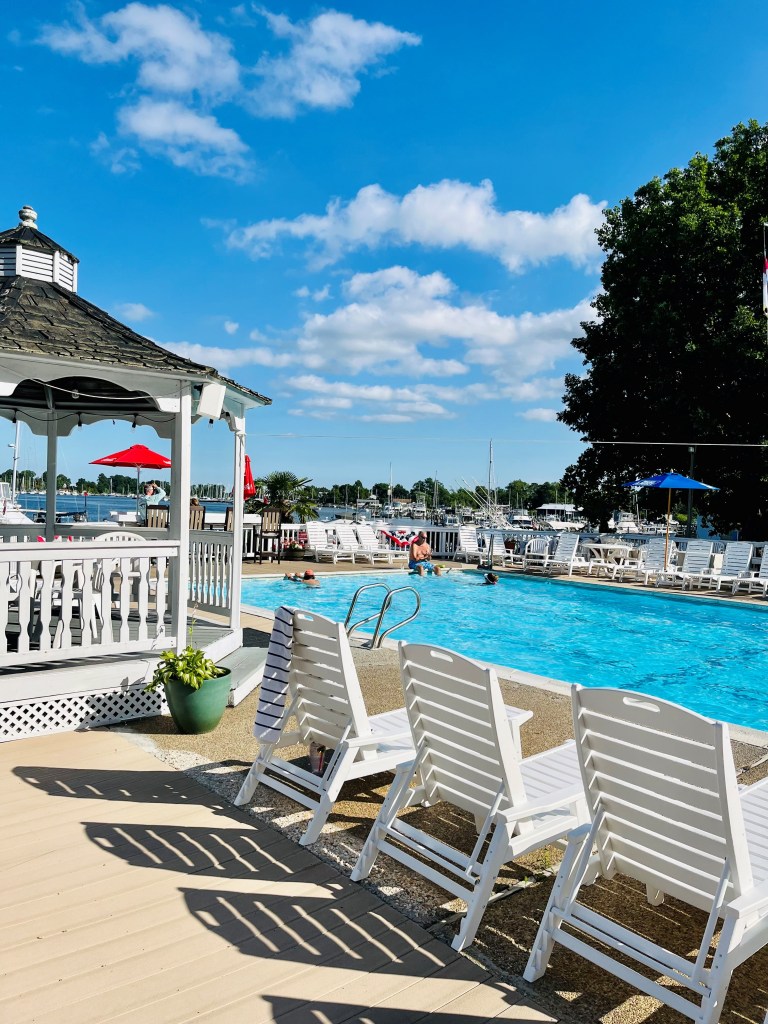
And for once – we actually enjoyed the pool. Even Patrick!
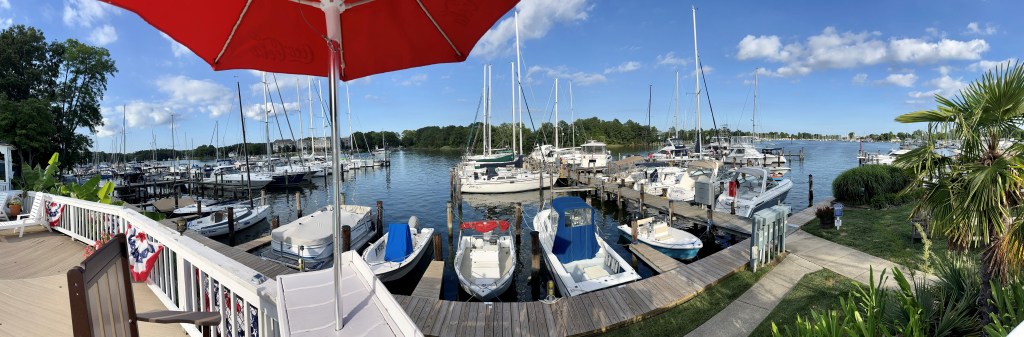
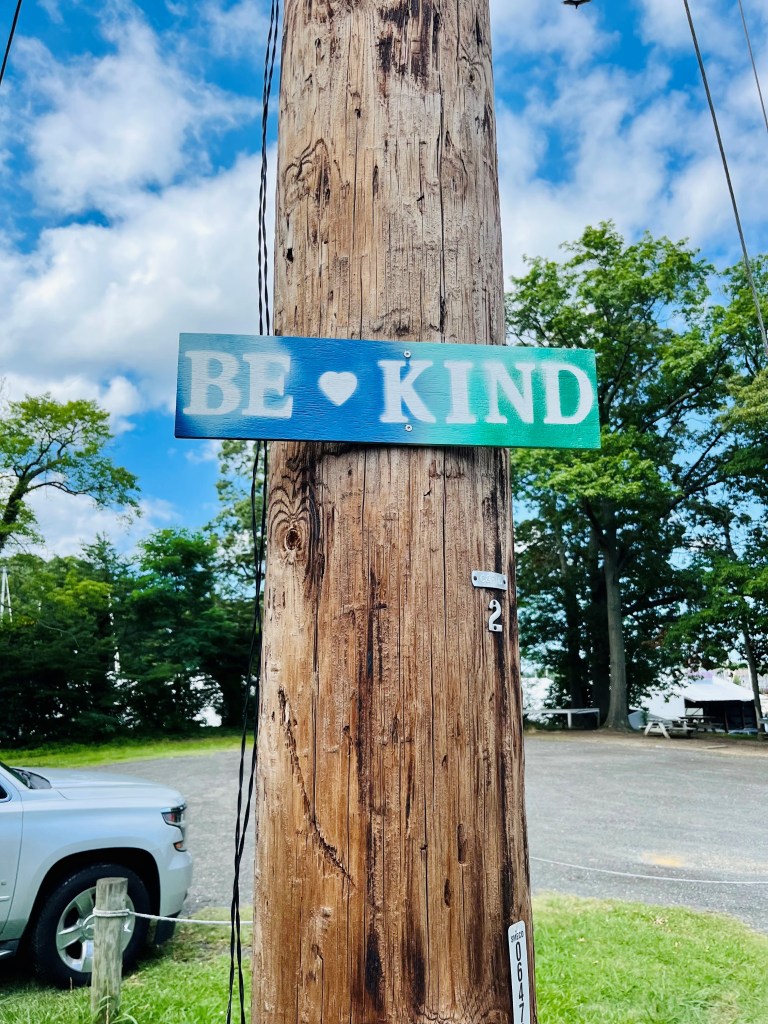
View from pool rooftopPat enjoying the poolPanoramic view – courtesy of PatrickSo quiet at this marinaOur neighbor boat – his son is a professor at Florida Atlantic University!Remember to always be kind!
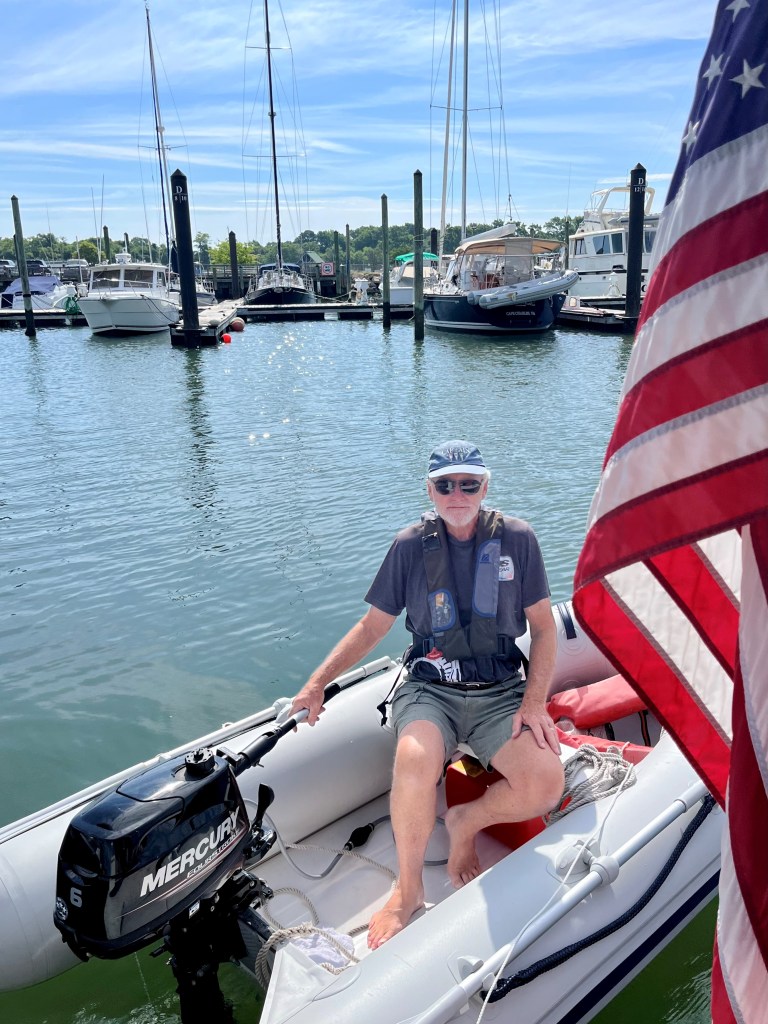
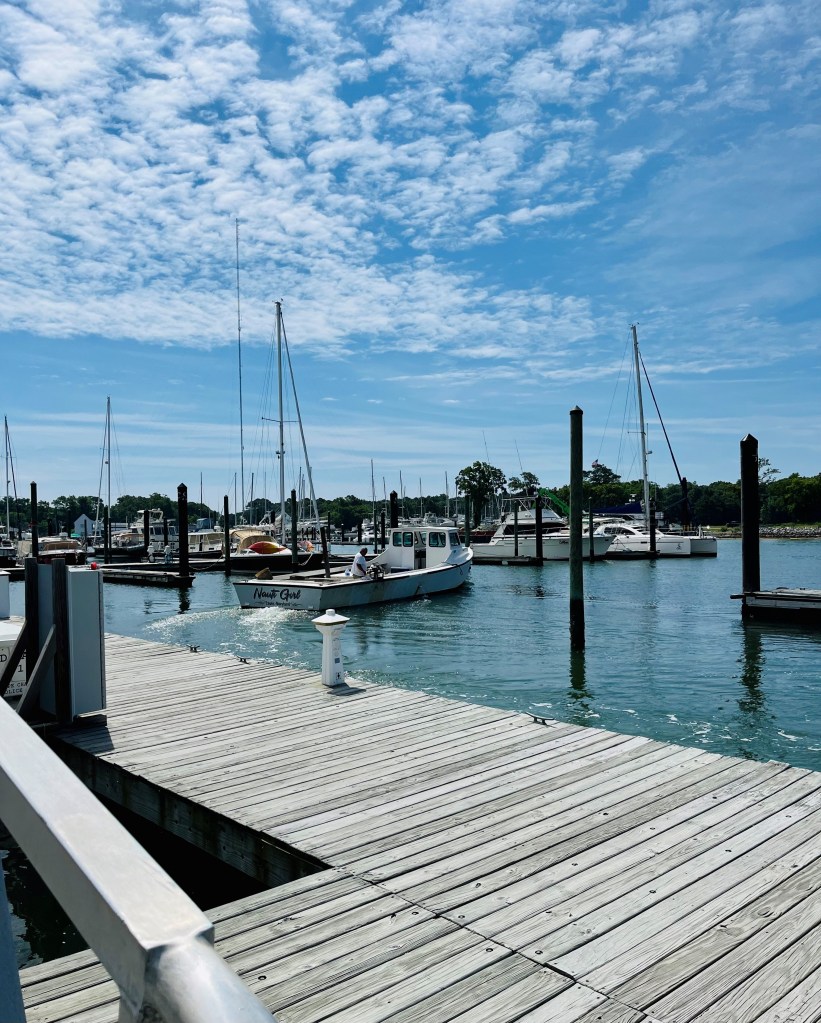
Captain Pat taking dinghy for a ride around Cape Charles Town Marina
The Chesapeake Bay of Virginia offers many wonderful places for Great Loopers to visit – Norfolk, Yorktown, Deltaville, Onancock, Smith Island – to name a few. It’s difficult to select which ones to see. Thanks to our good friends, Bob and Pat James, who reside in Cape Charles, our next stop after Portsmouth was Cape Charles, to visit them. We phoned Bob when we arrived at the Cape Charles Town Marina. Bob wasn’t kidding when he said he lived near the marina. He and his dog Wilson arrived in minutes – on their golf cart!
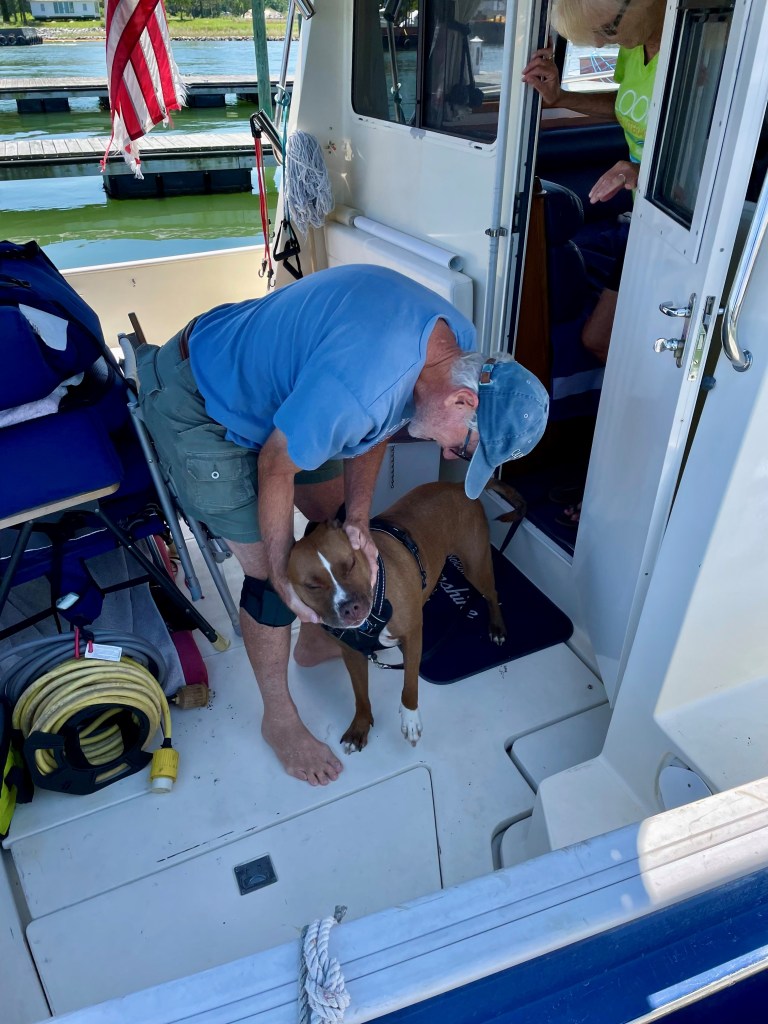
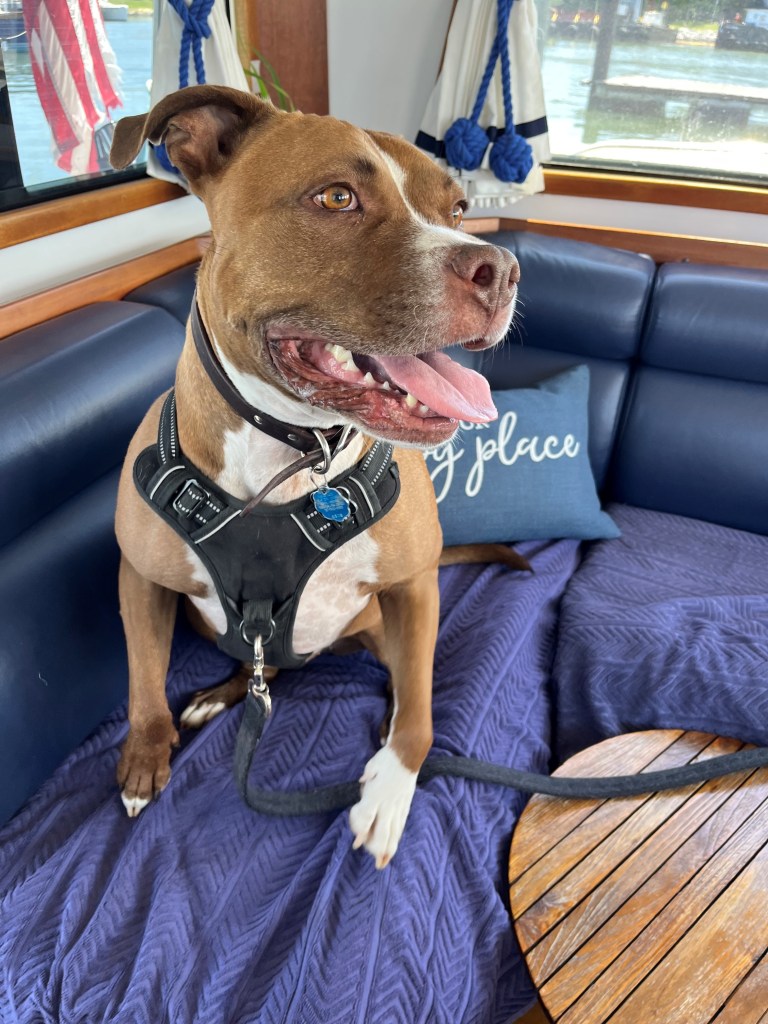
Captain Pat and WilsonWilson, the Wonder Dog, aboard SunshineCape Charles Town Marina
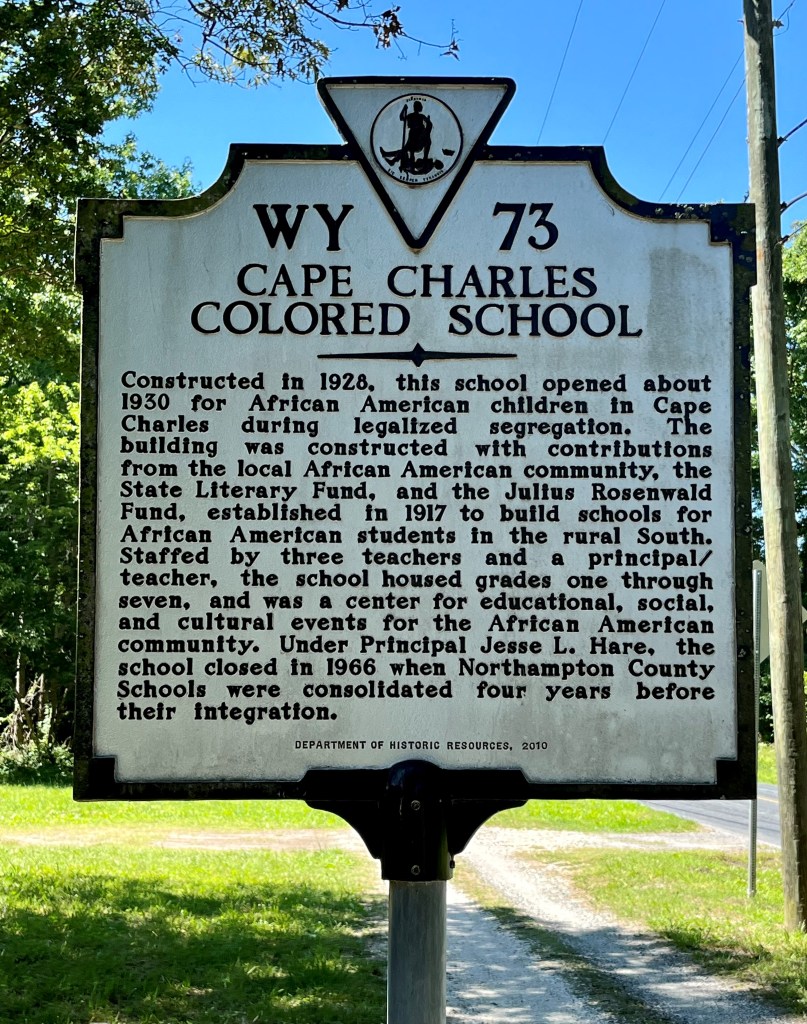
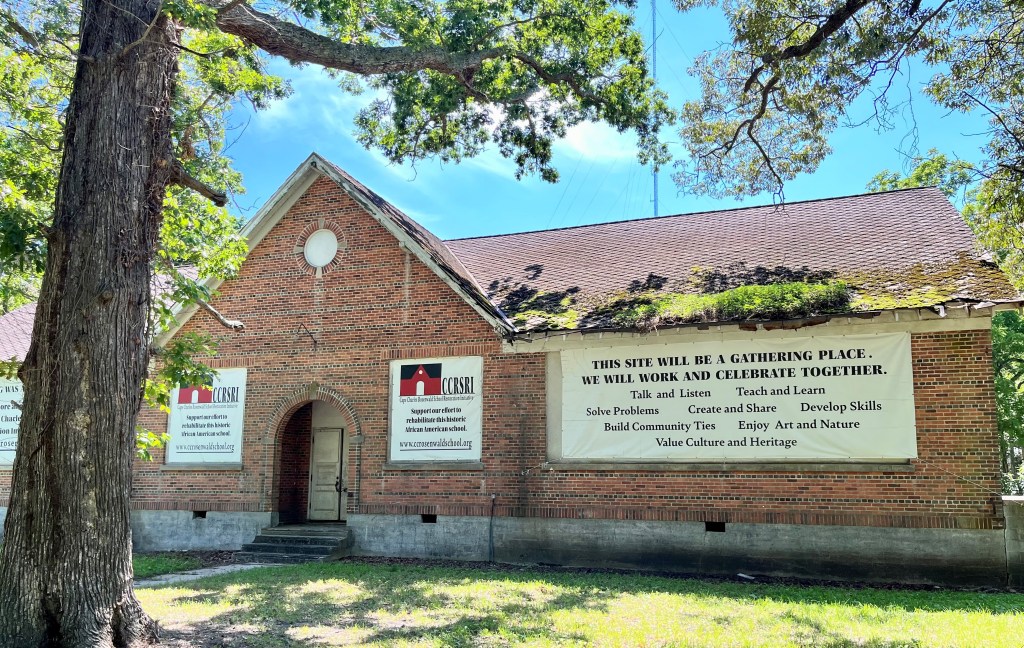
Bob helped Pat clean the boat (thank you, Bob!) and then played tour guide in his golf cart as he showed us some of the sites. The first was this memorial being built to honor those who built and attended the Cape Charles Colored School.
History of the Cape Charles Colored SchoolThe town is refurbishing the school building, to build a community “gathering place.”
Cape Charles is located close to the mouth of the Chesapeake bay on the eastern shore. The town has a population of about 1,000. The town was founded in 1884 by William Scott as a planned community of railroad and ferry interest. The railroad connected the towns on the eastern shores of Maryland to facilitate the transport of goods and produce to markets further south including Norfolk.
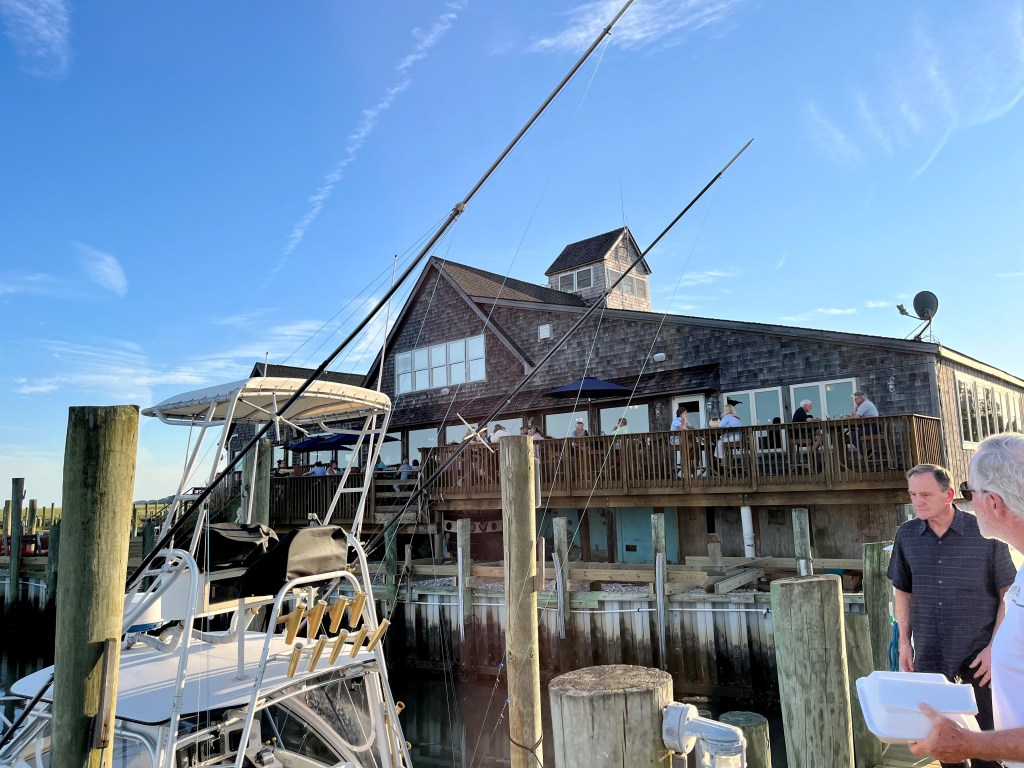
Our first night Bob and Pat treated us to dinner at the Island House in Wachapreague, Virginia. The restaurant had great seafood and spectacular waterfront views.
The Island House Restaurant and MarinaPat and Bob – good friends, great hostsMarshland and birds and shells and lots of boatsAdmiral and Captain
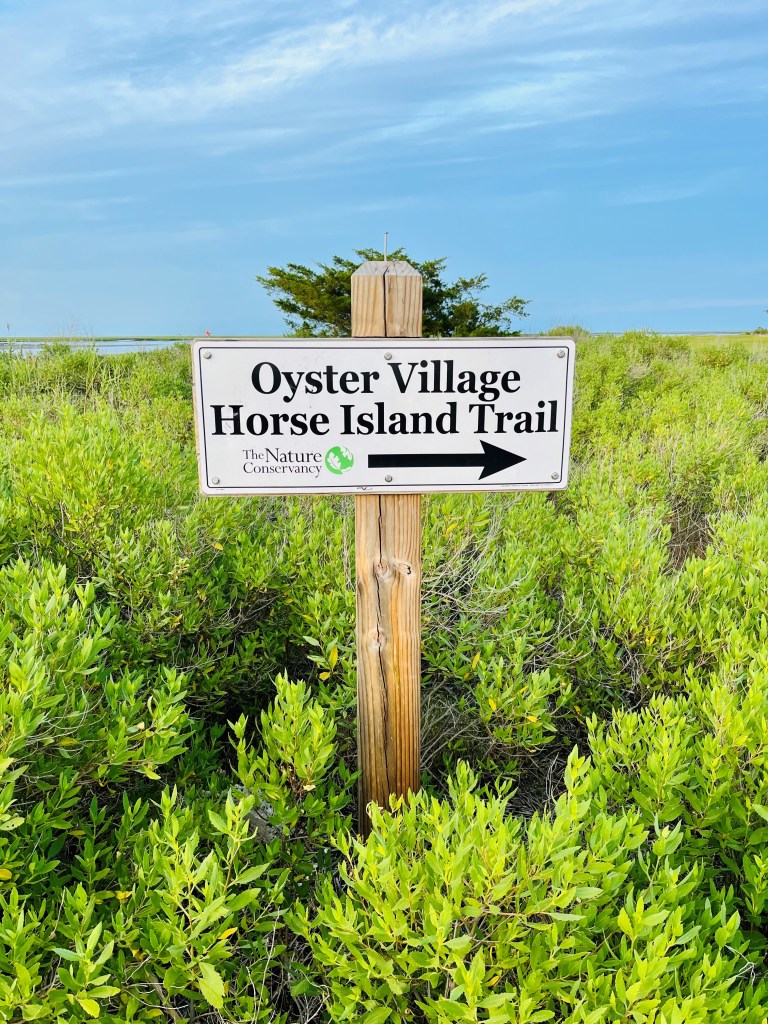
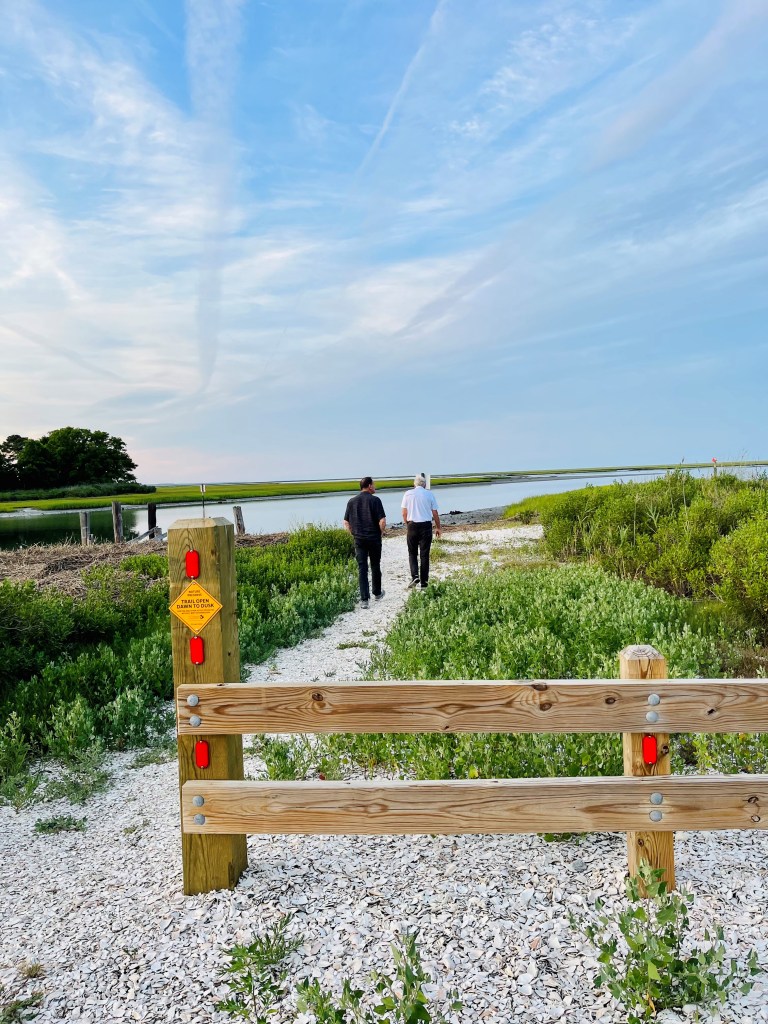
Following dinner we drove to Oyster, a small unincorporated community not far from Cape Charles. It is at an elevation of three feet above sea level.
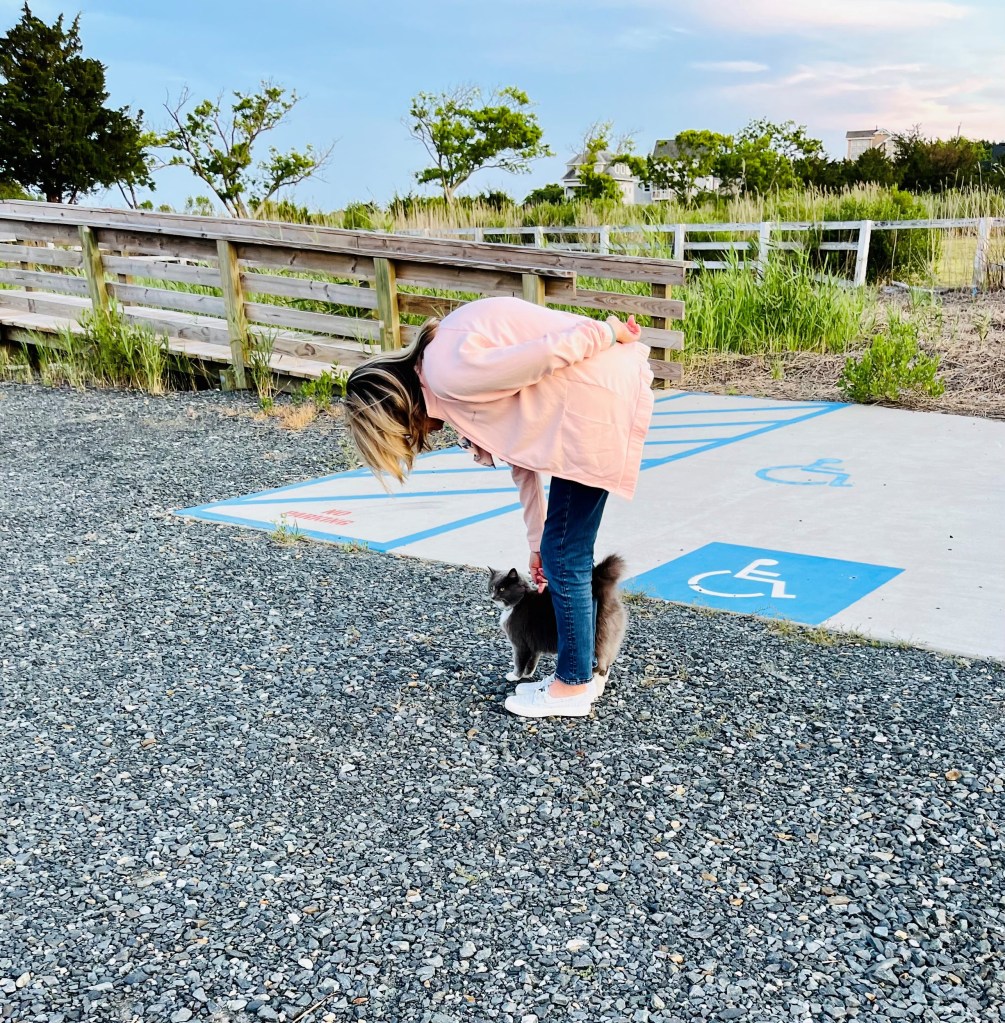
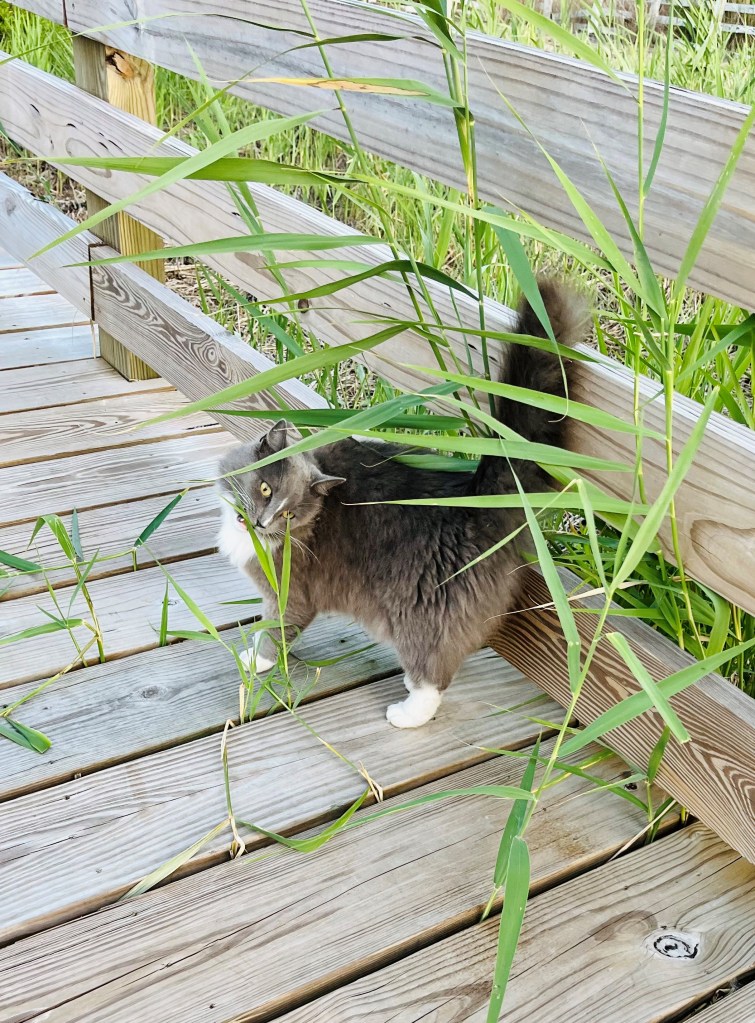
The drive to the restaurant and to Oyster was so scenic. We even saw in a field at least 20 deer just grazing. Here are some photos from our visit to Oyster.
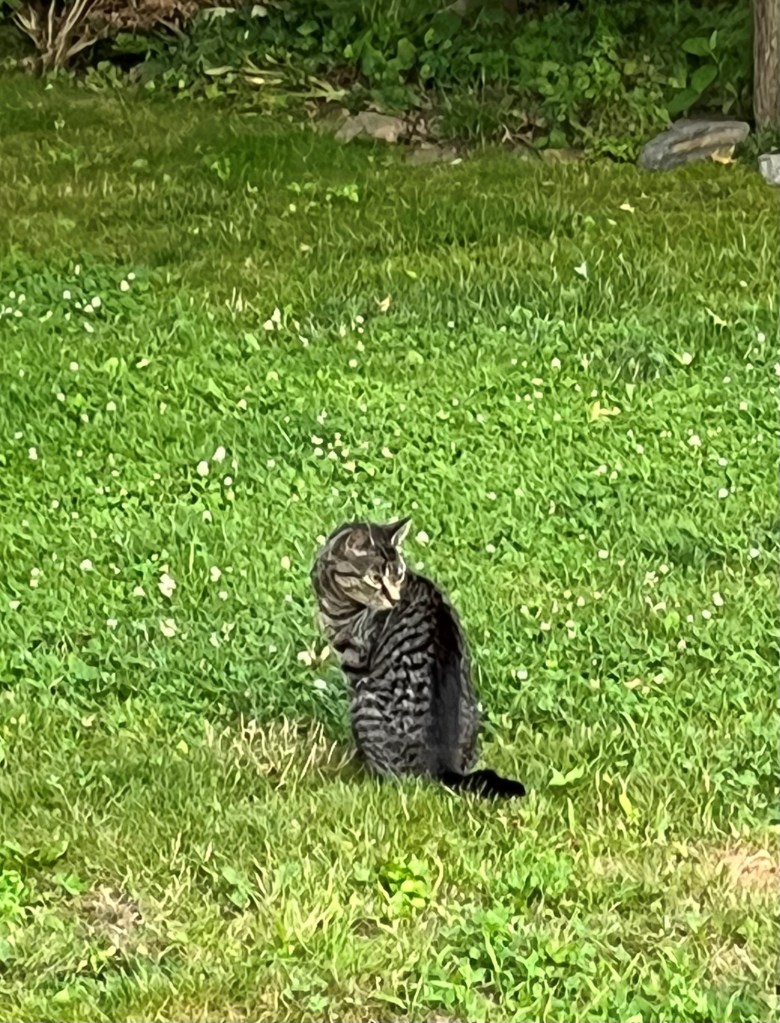
Boardwalk in OysterBob and Pat taking a walkPat made a new friend!Pretty KittyTranquil and peaceful
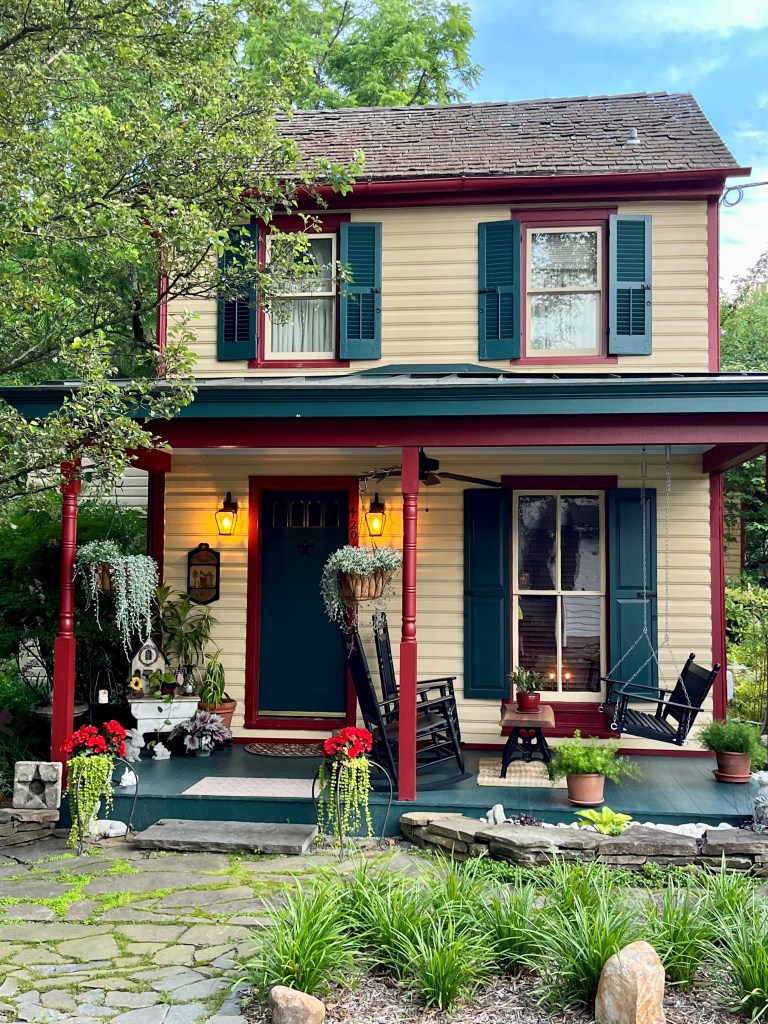
The next day Captain Pat had the boat engines serviced. We found a mechanic via the AGLCA Facebook page. I took the opportunity to walk downtown and to the beach – both just minutes from our marina. I fell in love with this little town. There are a number of historic homes featuring different architectural styles, including Victorian, Colonial Revival, and craftsman.
Patrick described this town as “stepping back into the ’50s.” Neighbors sit on their front porches enjoying the sunsets and their swings and rocking chairs. You can walk anywhere – or take your golf cart. It’s small town living with a beautiful beach and wonderful restaurants and shops. I definitely want to come back! Here are photos from our visit to Cape Charles.
Marina walkway to downtown Cape Charles
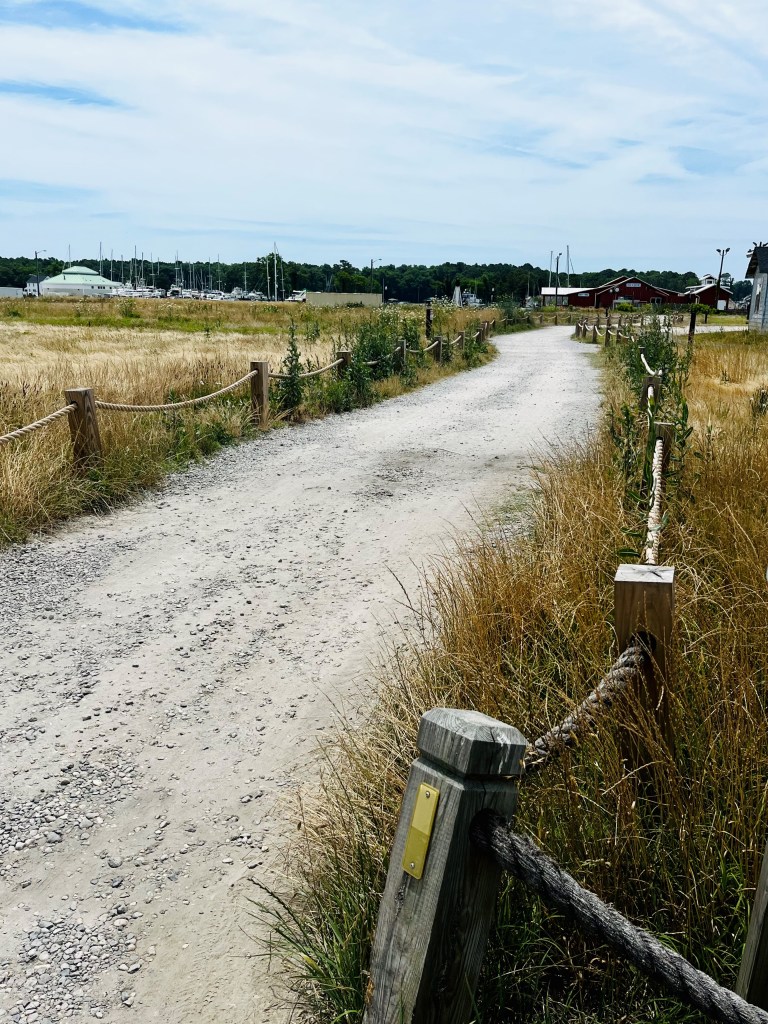
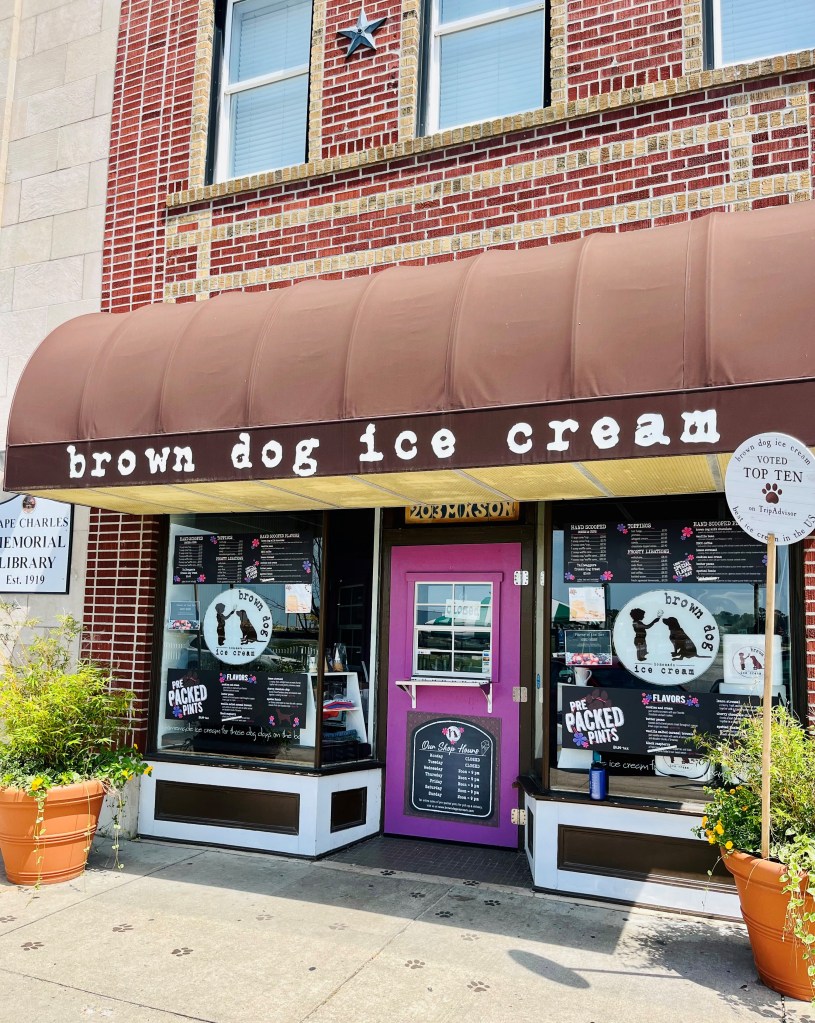
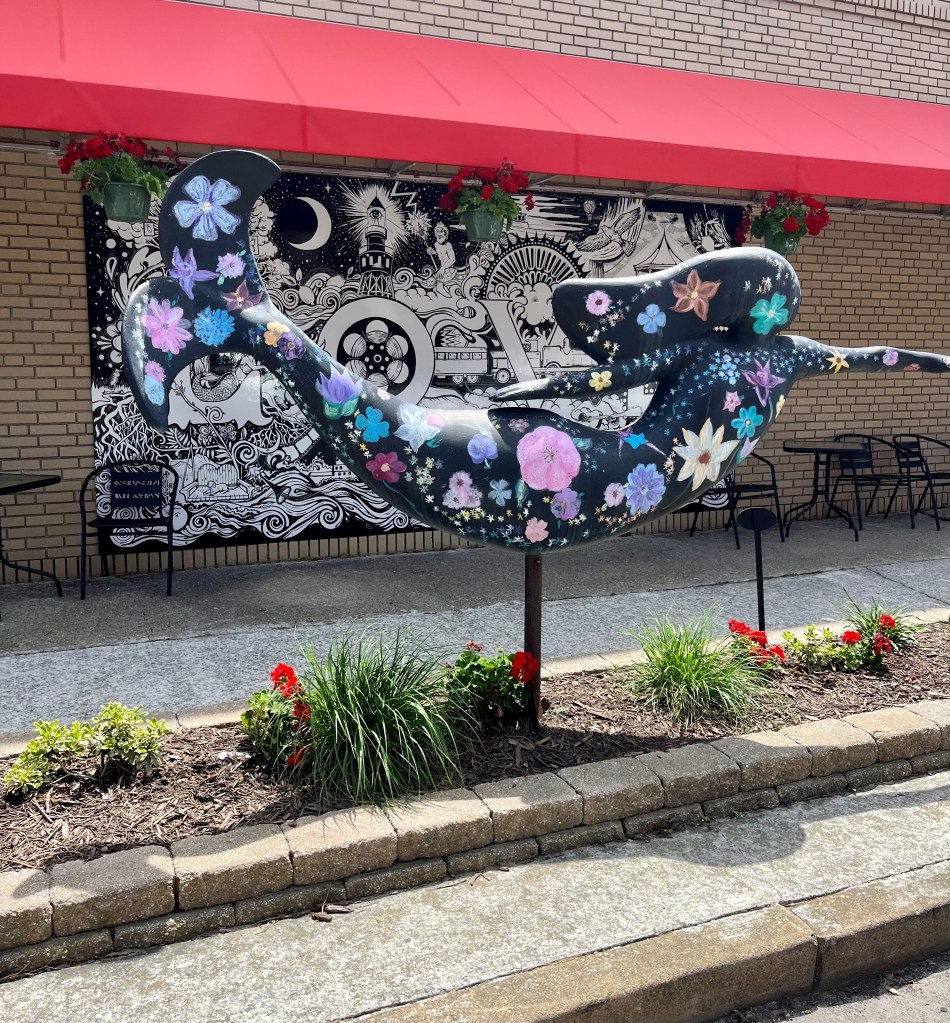
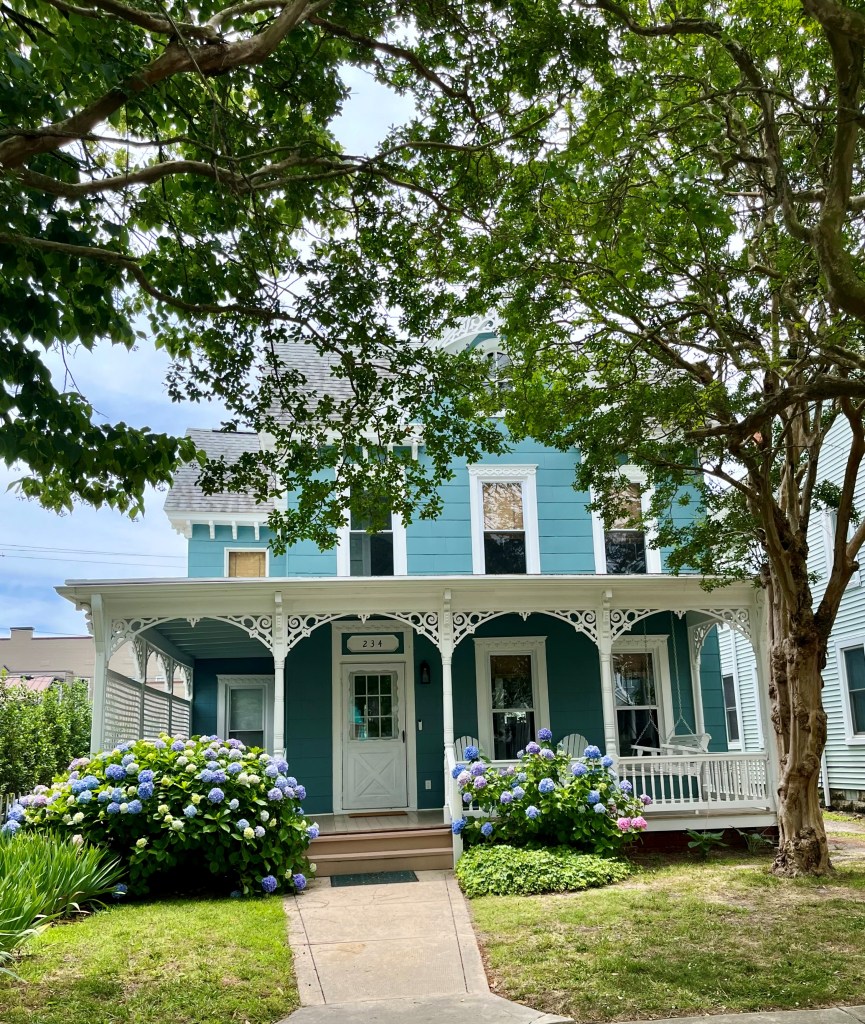
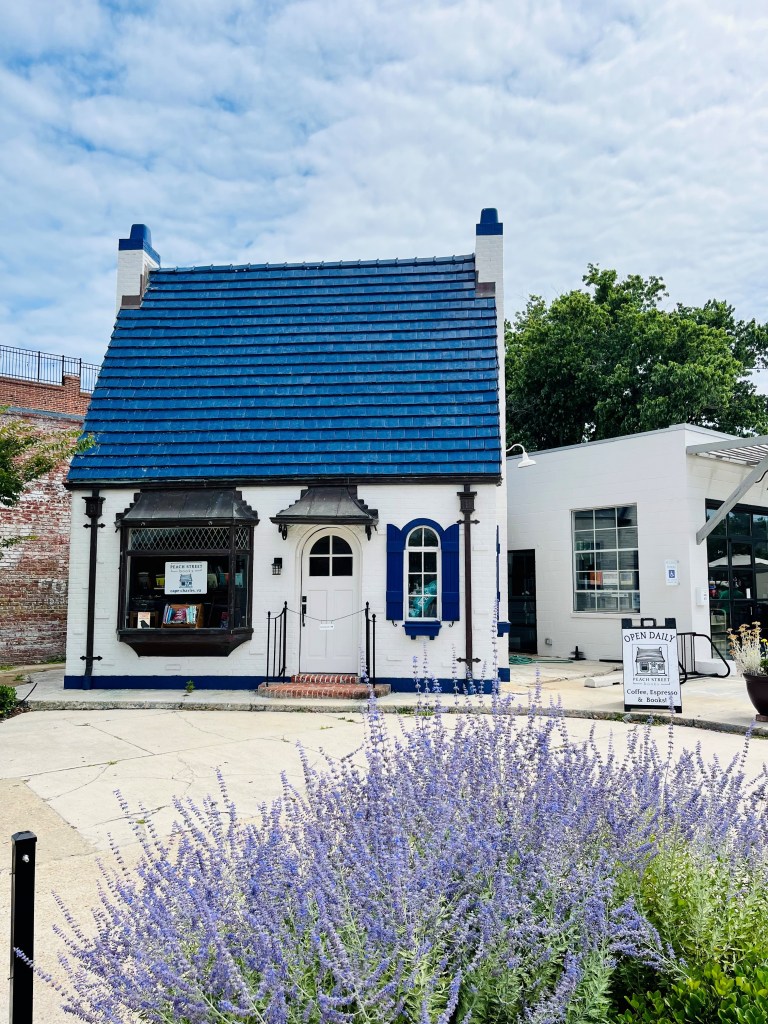
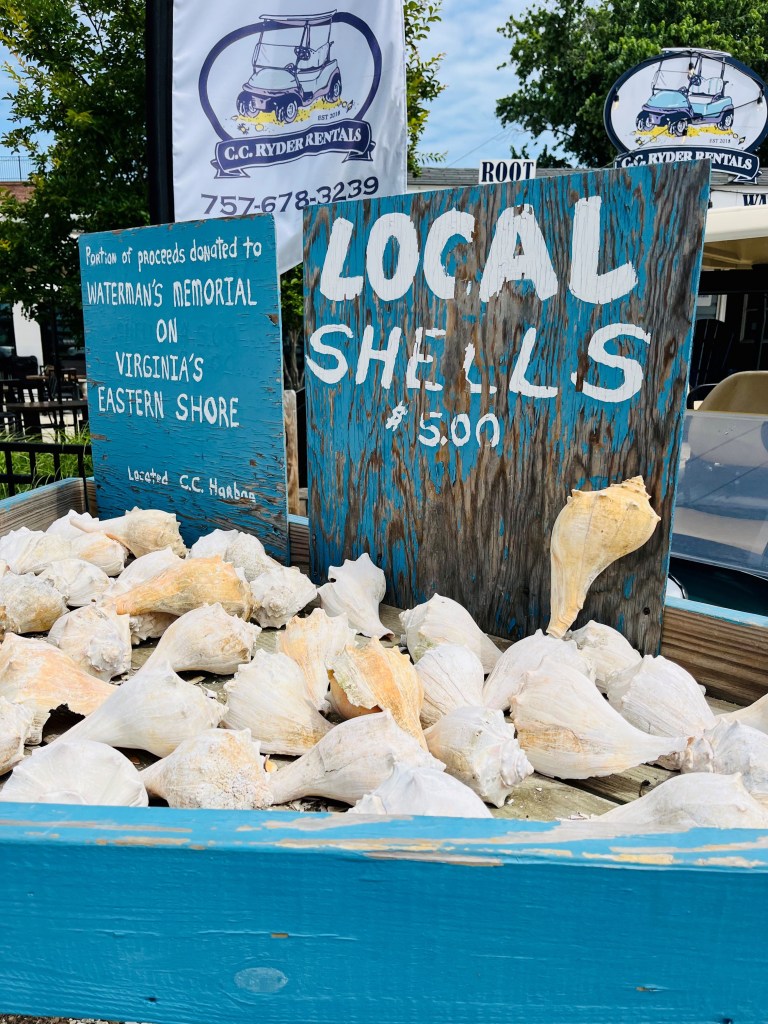
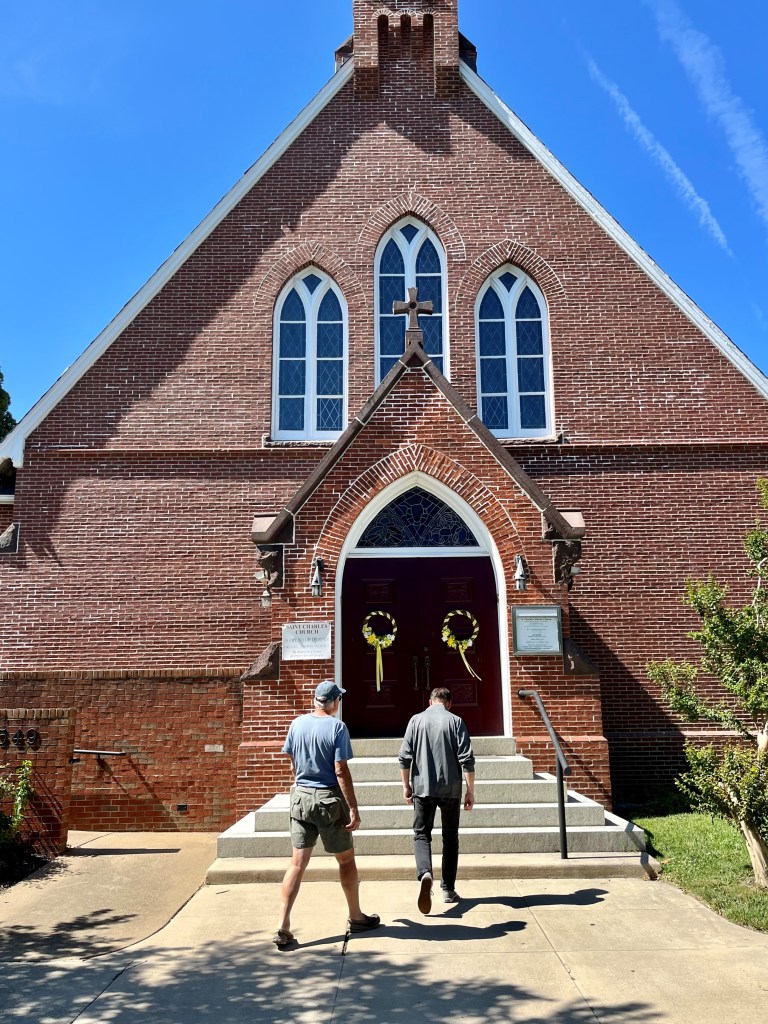
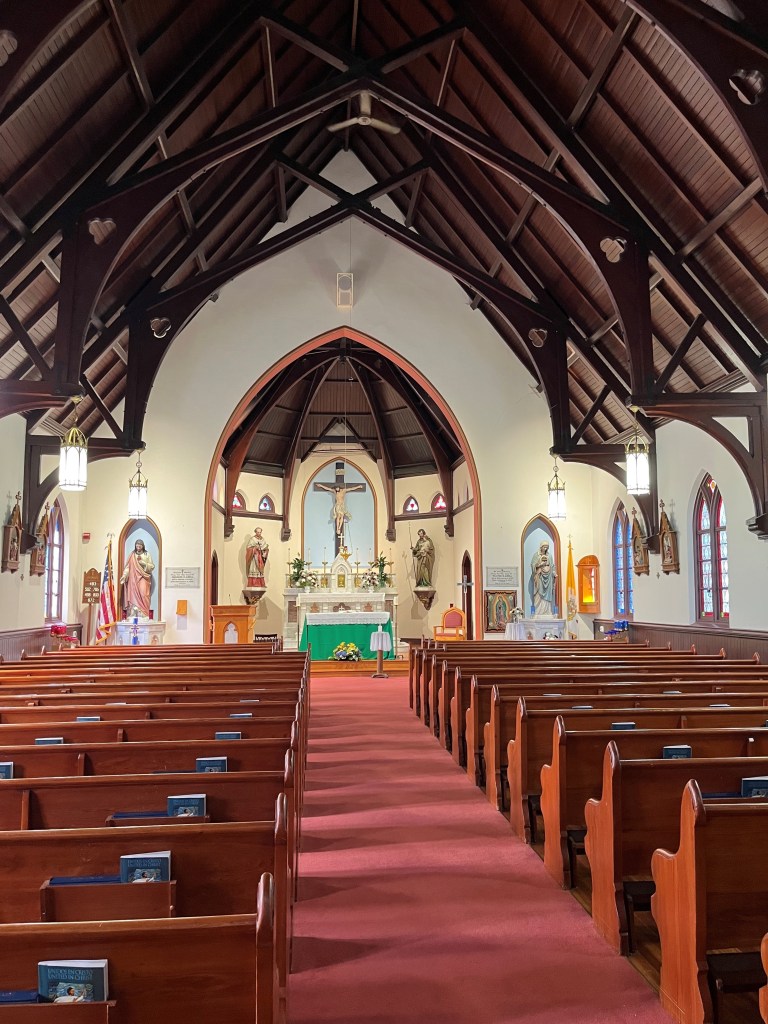
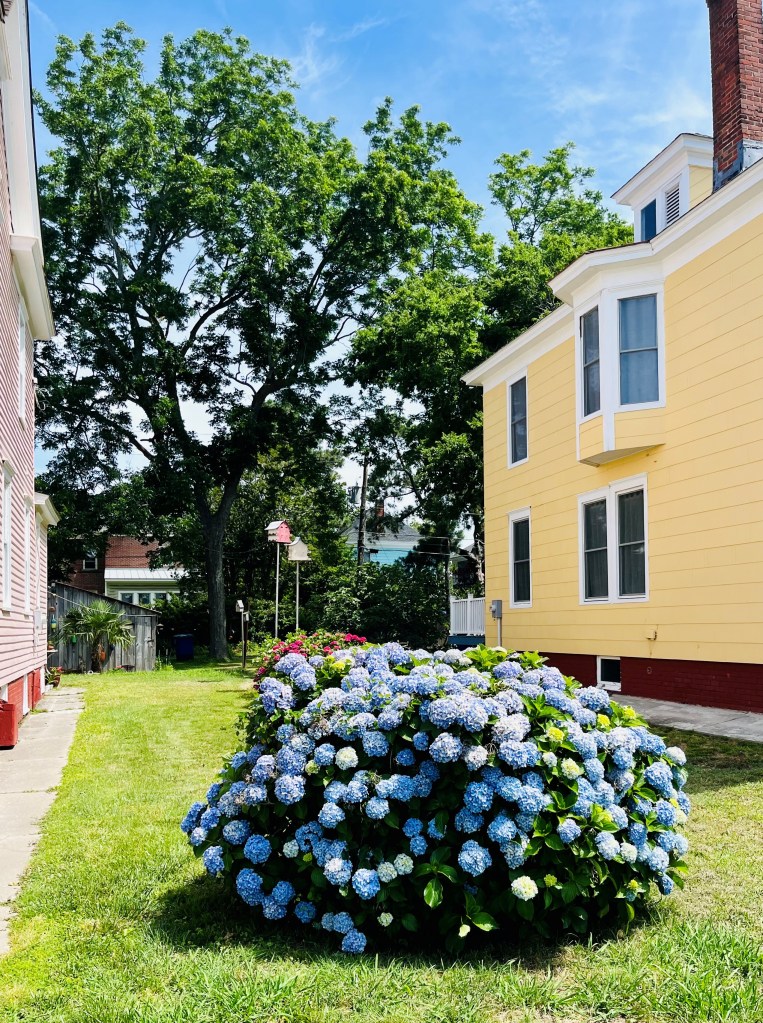
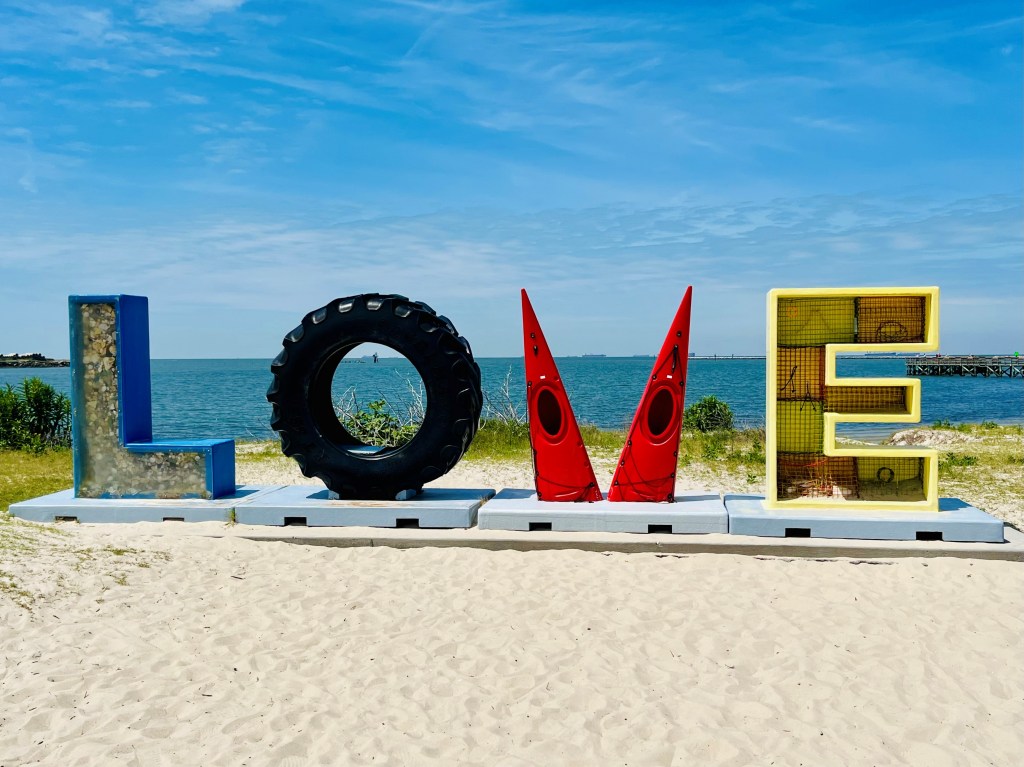
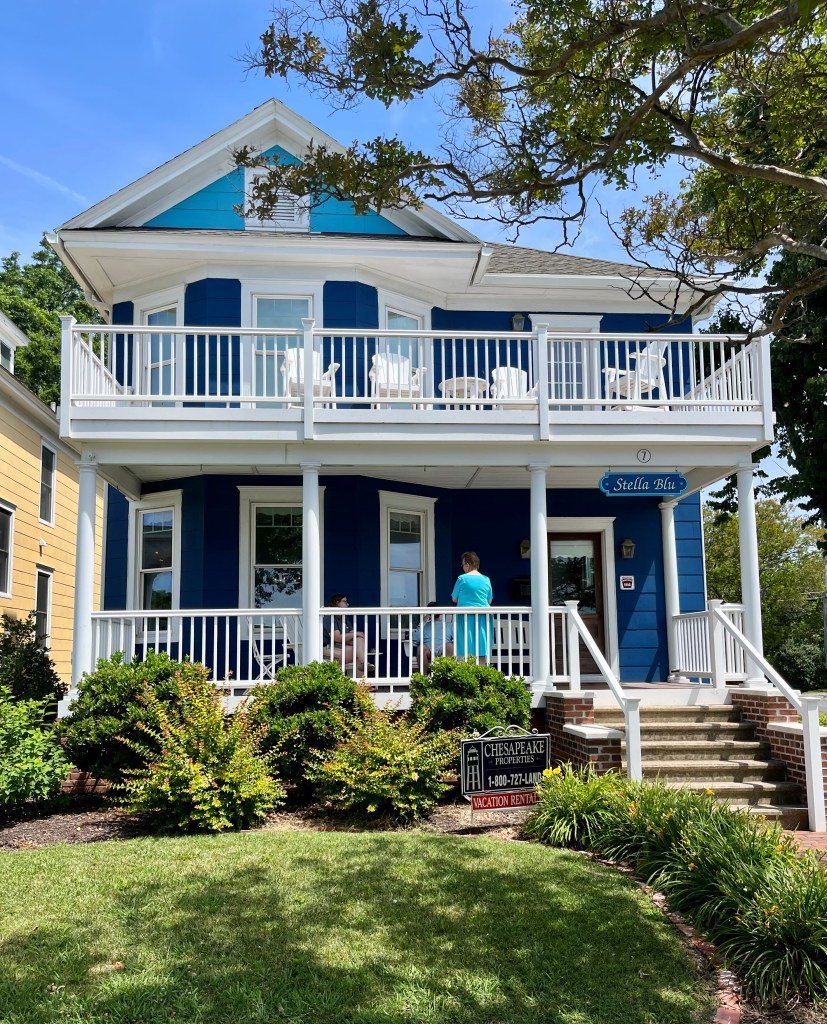
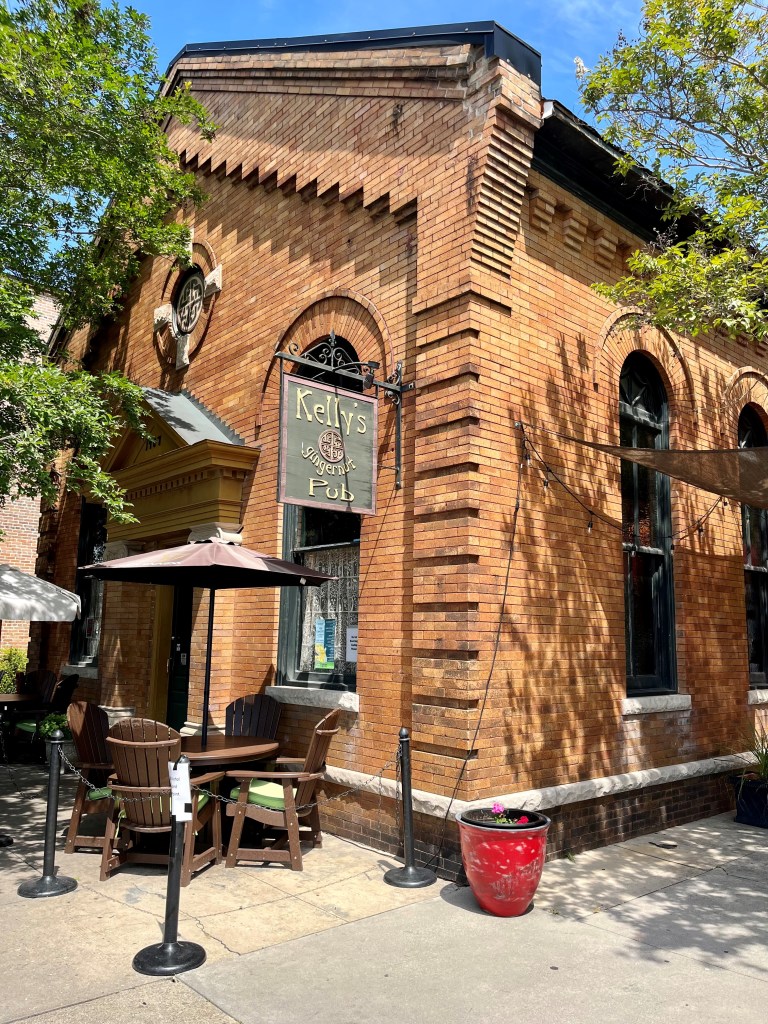
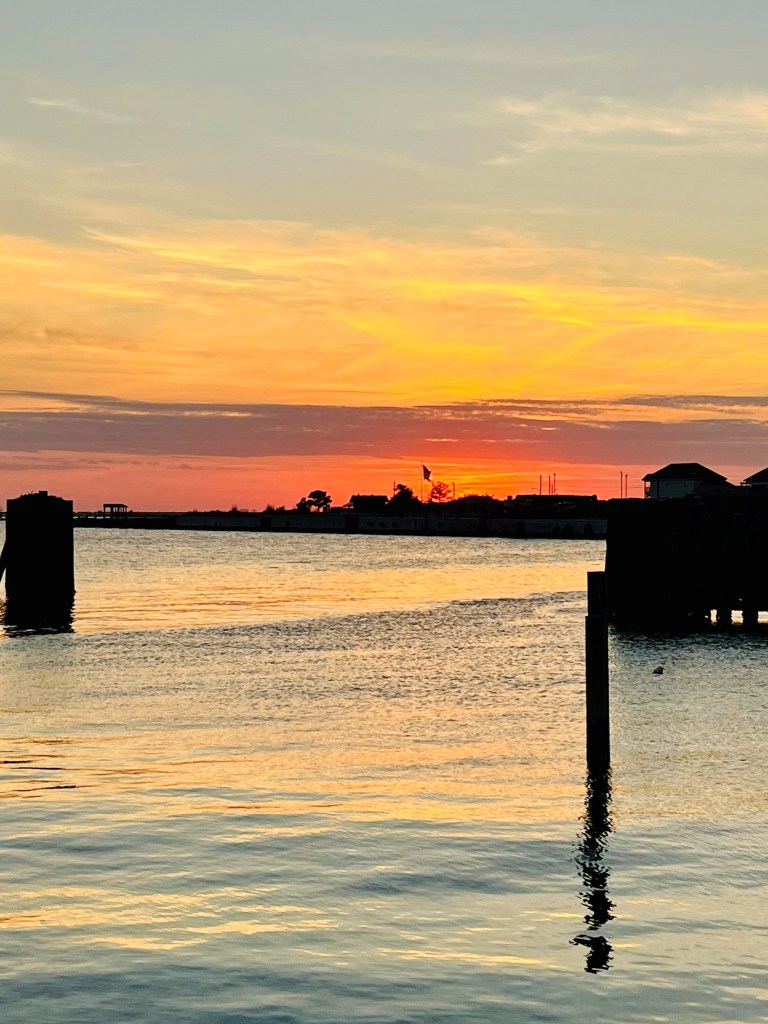
Loved the fields along the walkwayThe town’s favorite ice cream shop. And we know some brown dogs we love!Many sites downtownMermaid of Cape CharlesHere is just one of the beautiful homes in Cape Charles. And those flowers!Another pretty houseLoved this bookstore.Wanted to get a shell. These always remind me of the ocean.St. Charles Catholic ChurchBob and Pat can walk to church – that’s a bessing.These beautiful hydrangeas are everywhere.The beach – minutes from downtown“Virginia – the state for lovers”Many rental homes by the beachKelly’s Gingernut Pub. This was an old bank. You can eat in the vault if you wish. We had dinner there.Sunset over the marina
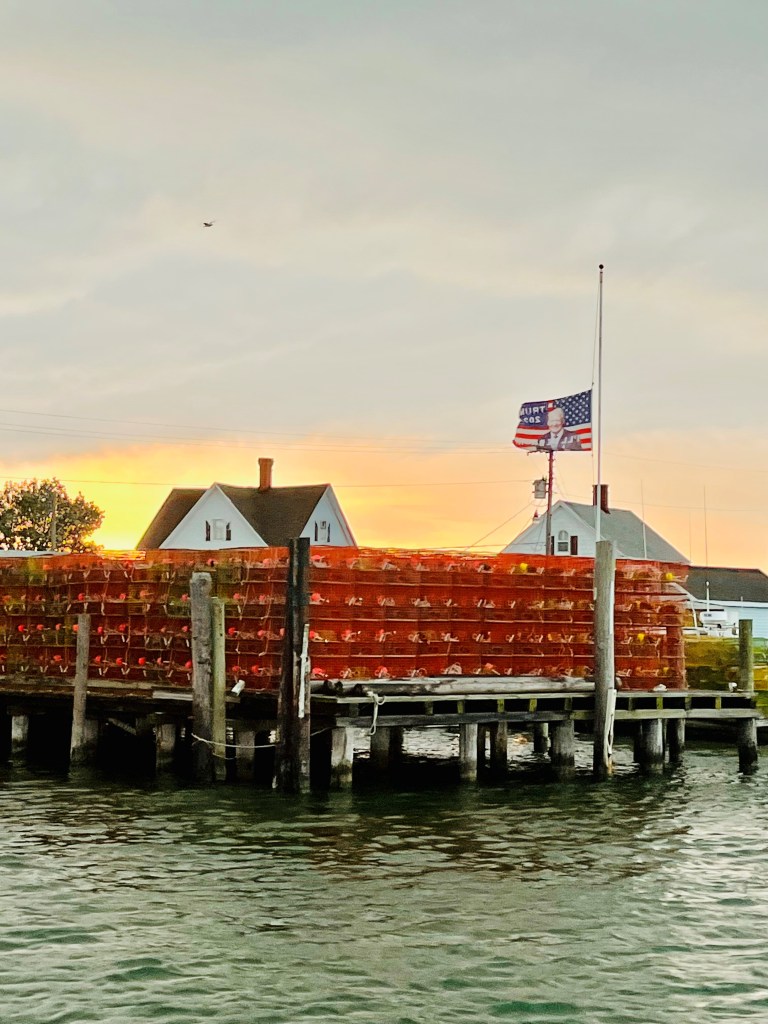
We left Cape Charles and anchored overnight on Tangier Island. The weather was rainy and wet, and continued most of the night.
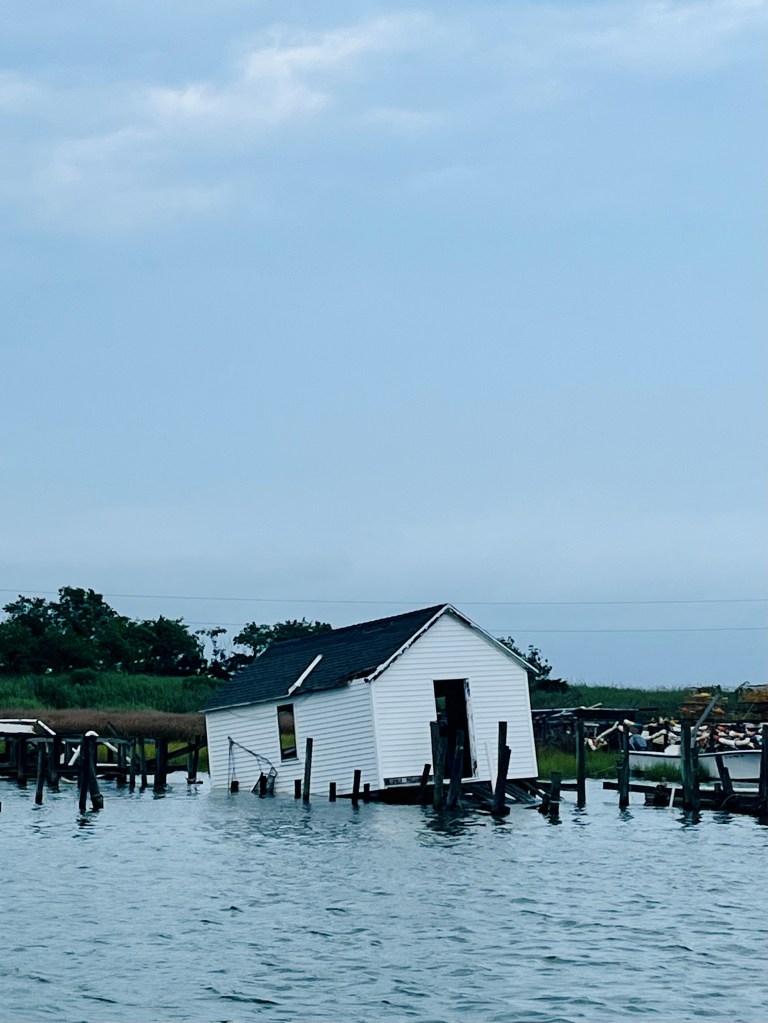
Tangier Island has a population of about 700 people. Since 1850, the land mass has been reduced by 67%. Under the mid-range sea level rise scenario, much of the remaining landmass is expected to be lost in the next 50 years and the town will likely be abandoned.
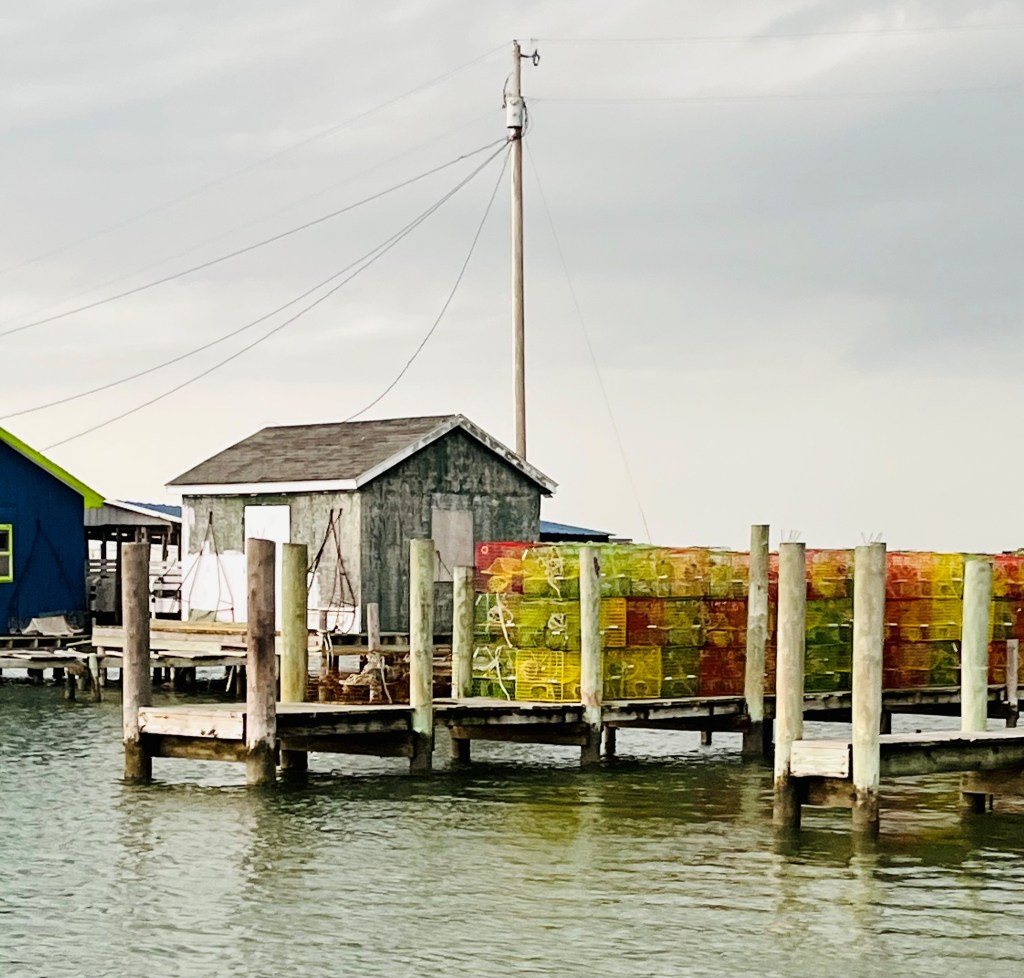
Initial settlers in the 1770’s were farmers. In the late 19th century, the islanders began to become more dependent on harvesting crabs and oysters from the Chesapeake Bay. As the waterman livelihood became more important and lucrative, there were often conflicts among the oyster dredgers and oyster tongers in the bay, and between those living in Maryland and those living in Virginia.
Many people who live on Tangier speak a distinctive dialect of American-English. Scholars have disputed how much of the dialect is derived from British-English lexicon and phonetics. The persistence of this dialectal variety is often attributed to the geographic isolation of the population from the mainland. Tangier Island is listed on the National Register of Historic Places.
Tangier today is a quiet village and place to explore and observe the Chesapeake Bay waterman’s lifestyle. characterized by fishermen who go out daily to in search of crabs and oysters. Tangier has the feel of a small British town somewhere in the Caribbean or the Bahamas.
Here are some photos from our visit to Tangier Island.
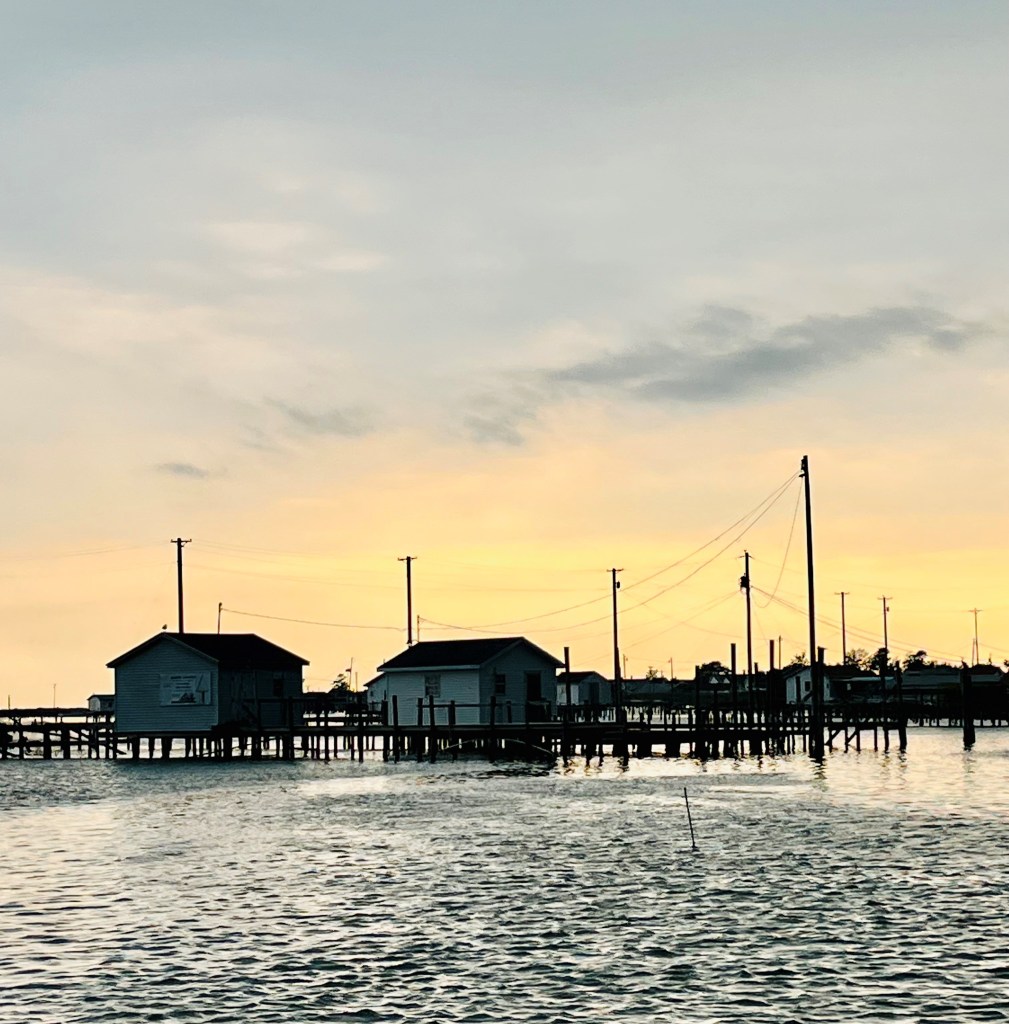
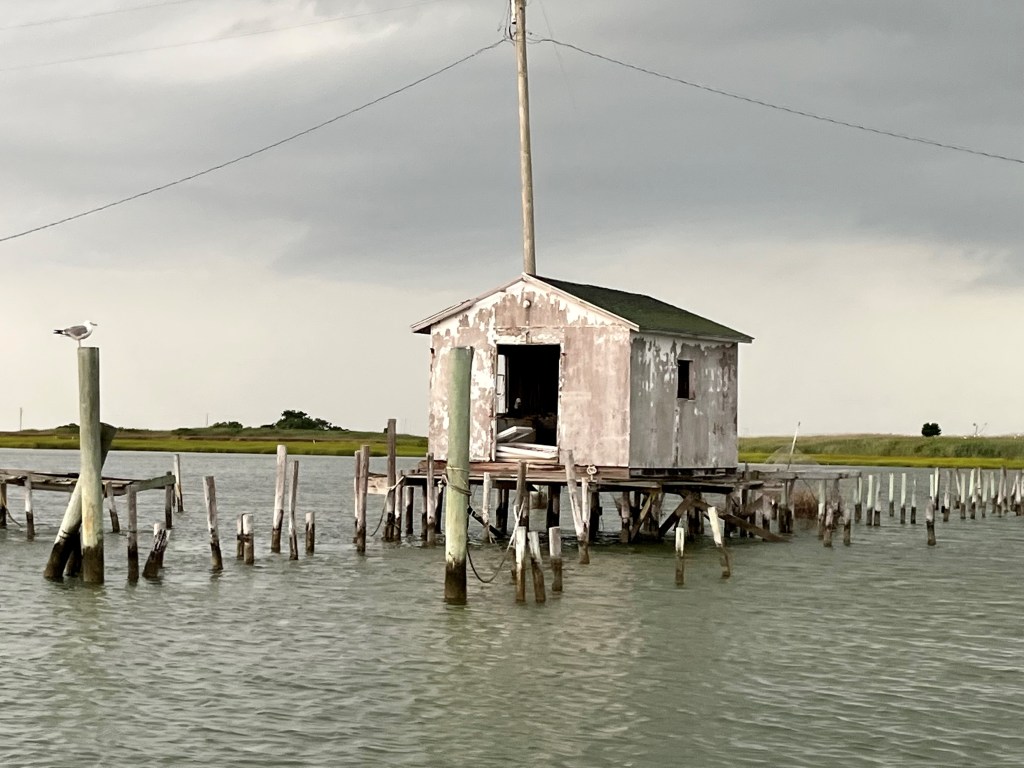
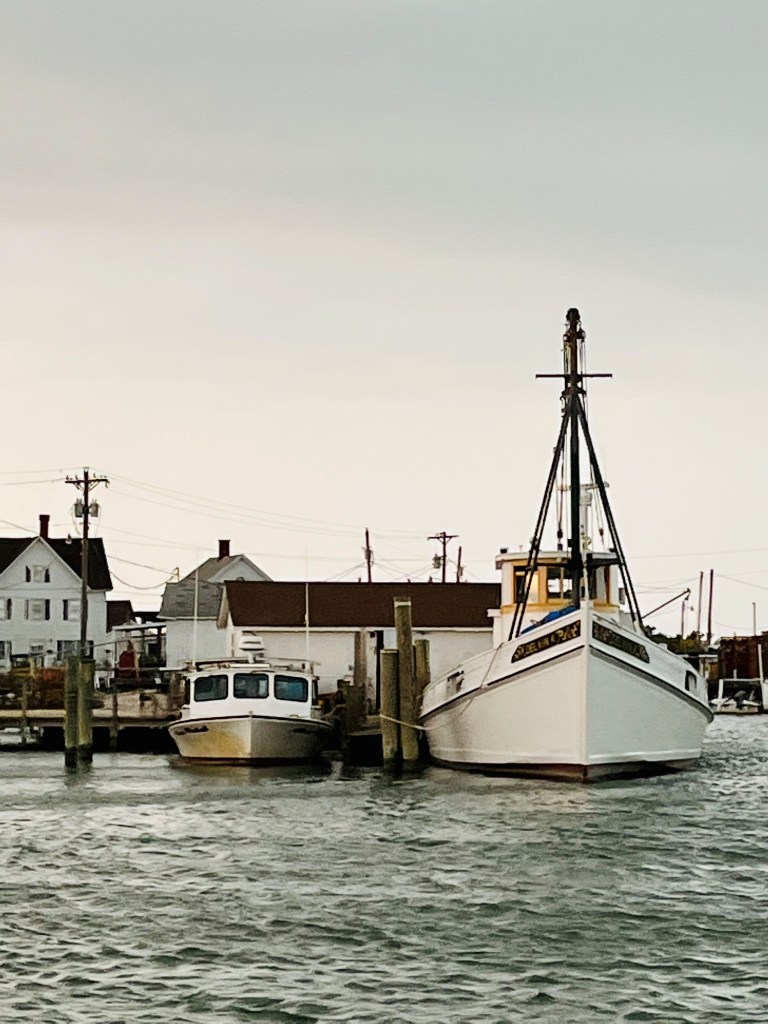
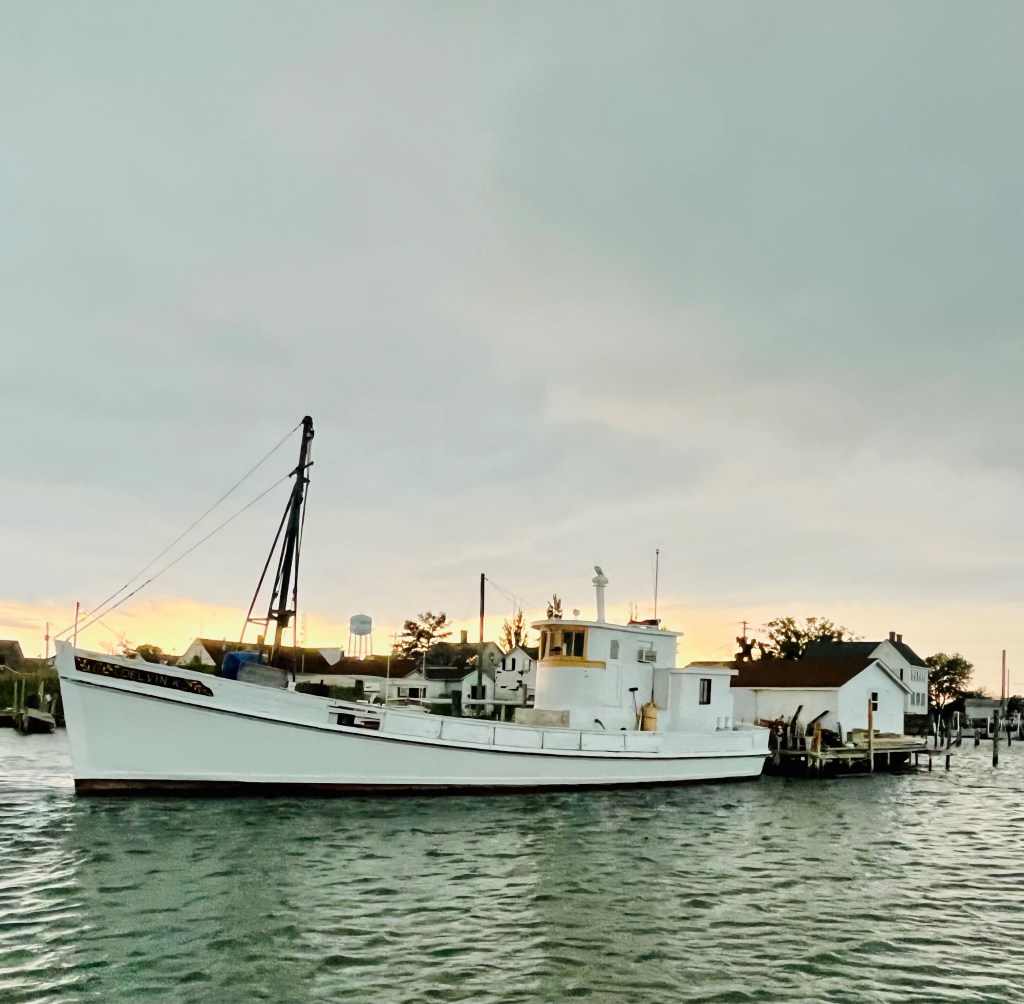
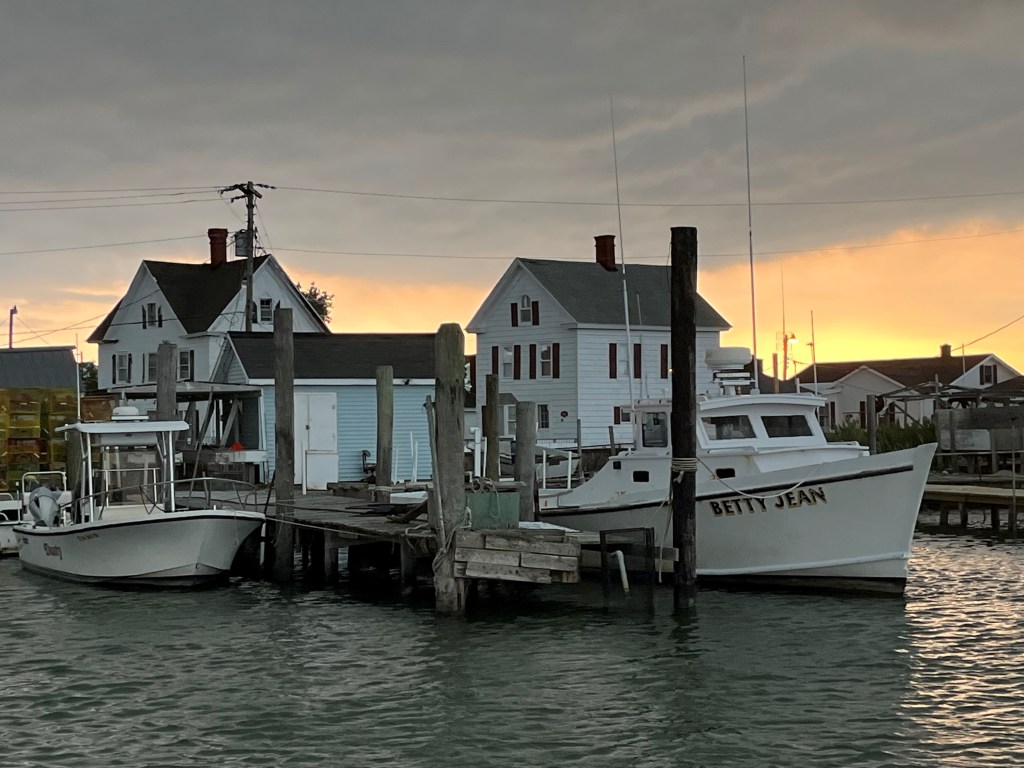
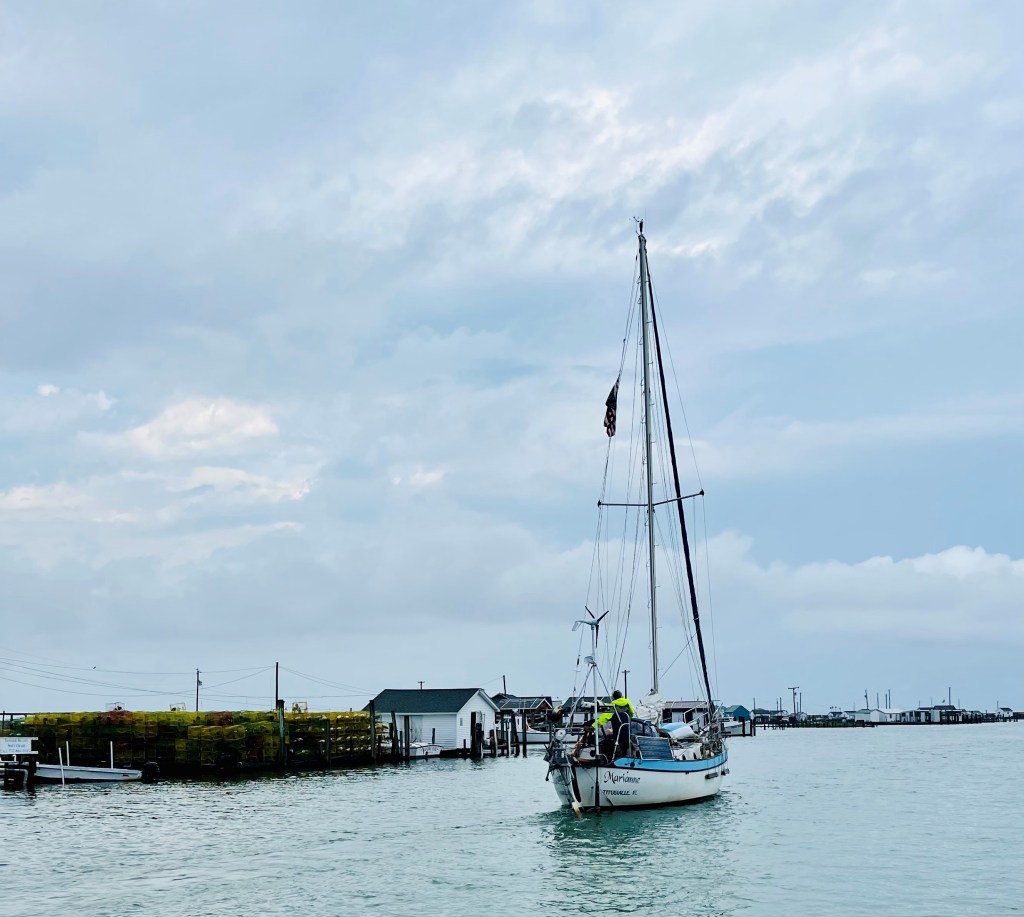
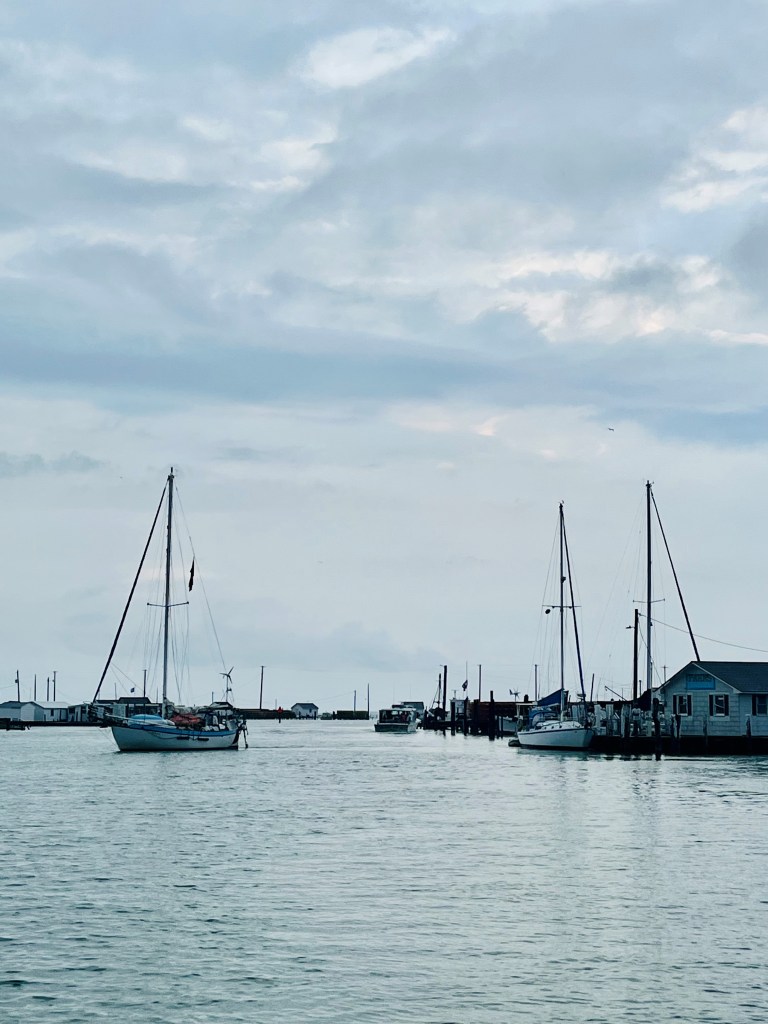
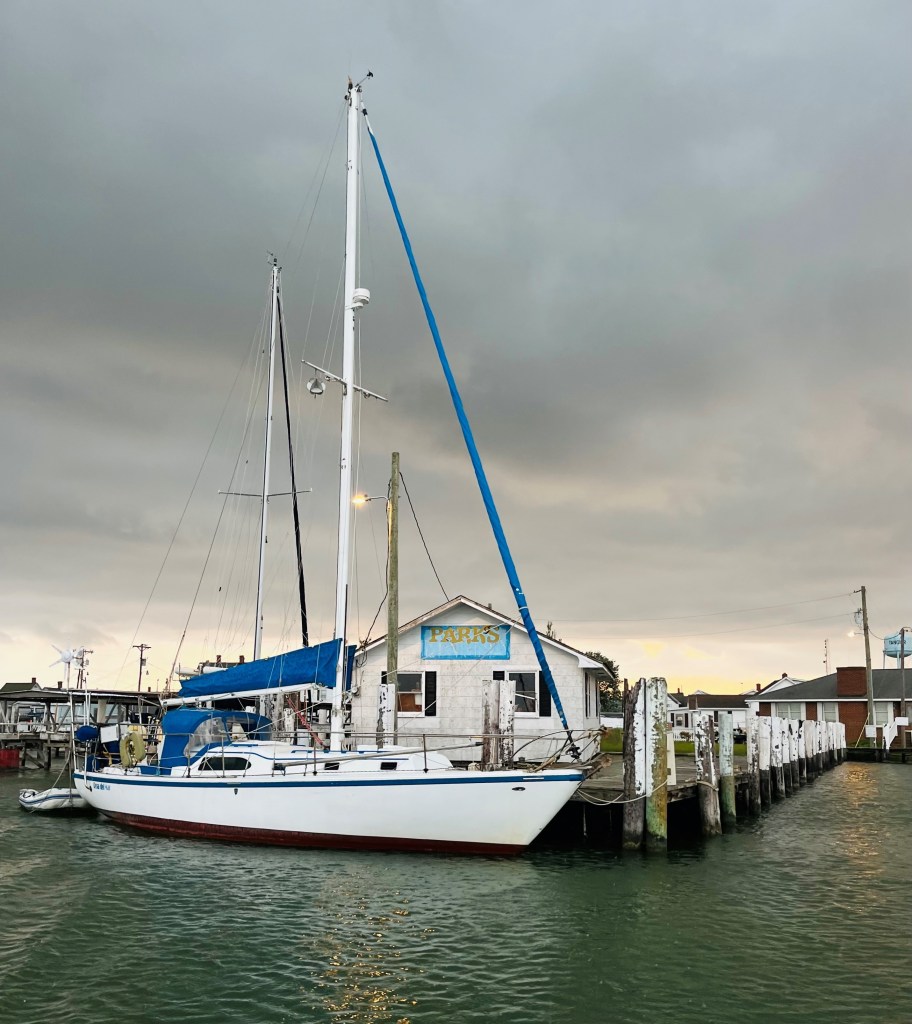
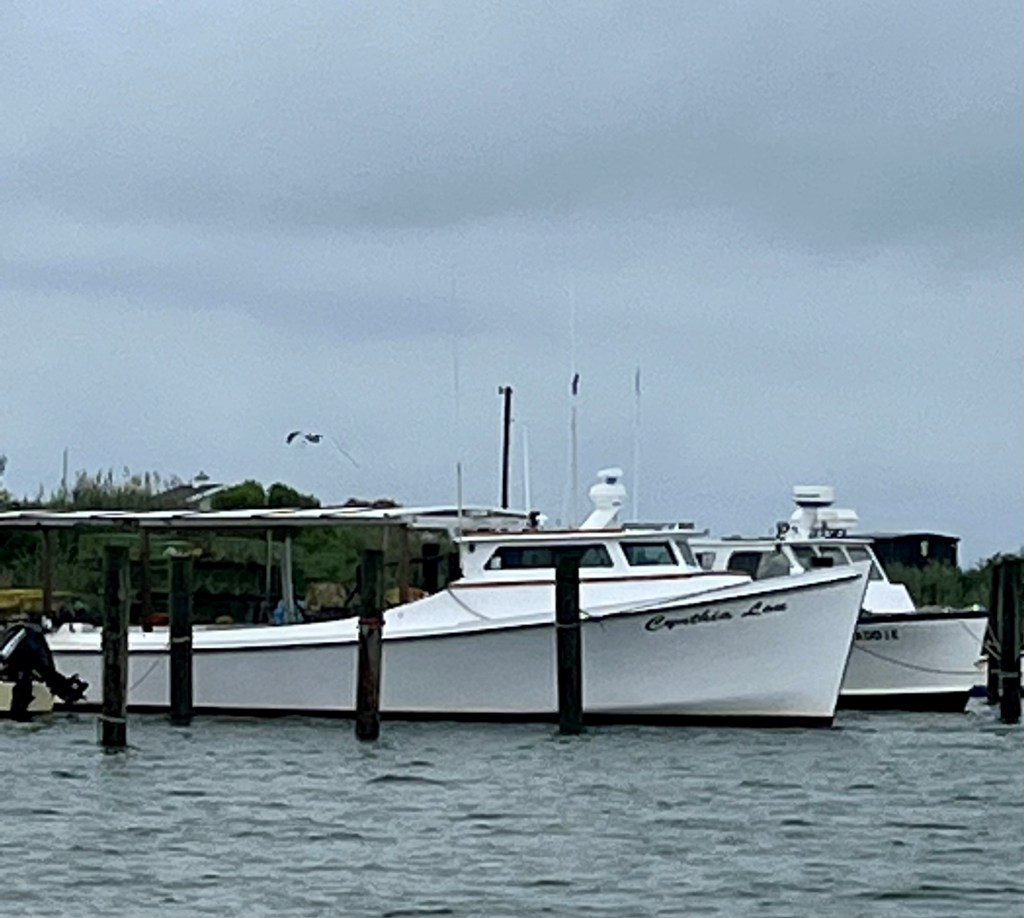
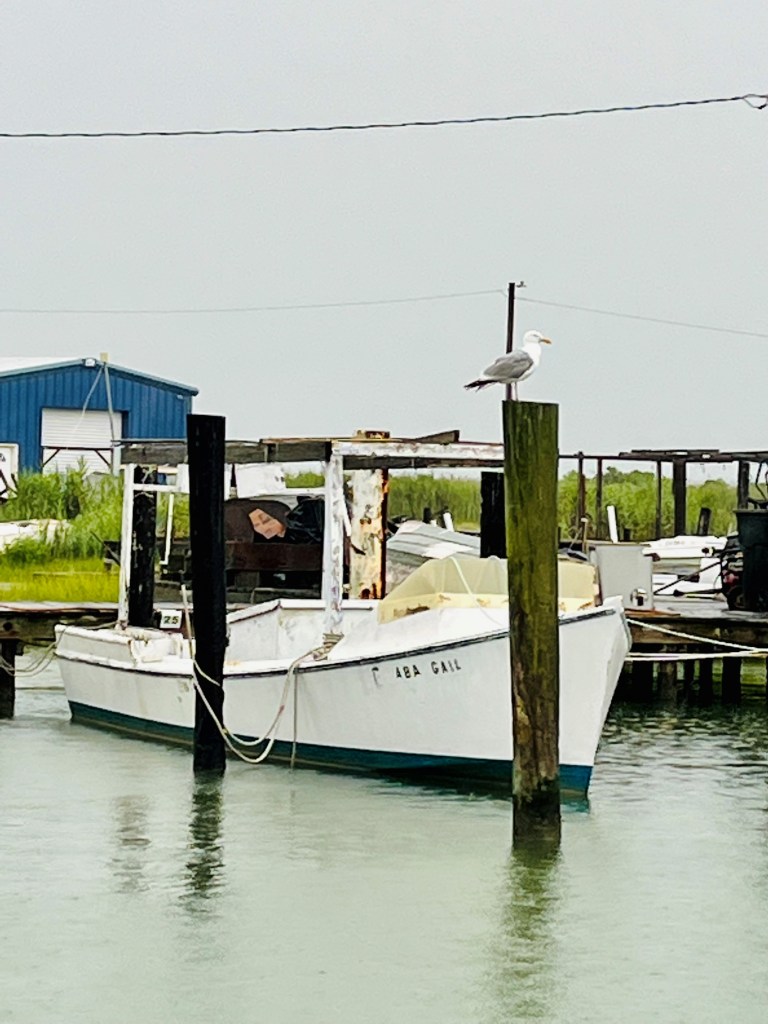
Entering the town of TangierOne of the homes on stiltsThe crab/oyster boatsCheck out the Biden flag!All the houses have crab/oyster trapsThe homes are pretty desolateSailboat making its way throughWe anchored here. Patrick didn’t get much sleep that night.The weather was so ominousThere was a boat named Cynthia Lou!One lone seagullStormy night, but woke up to a beautiful sunrise
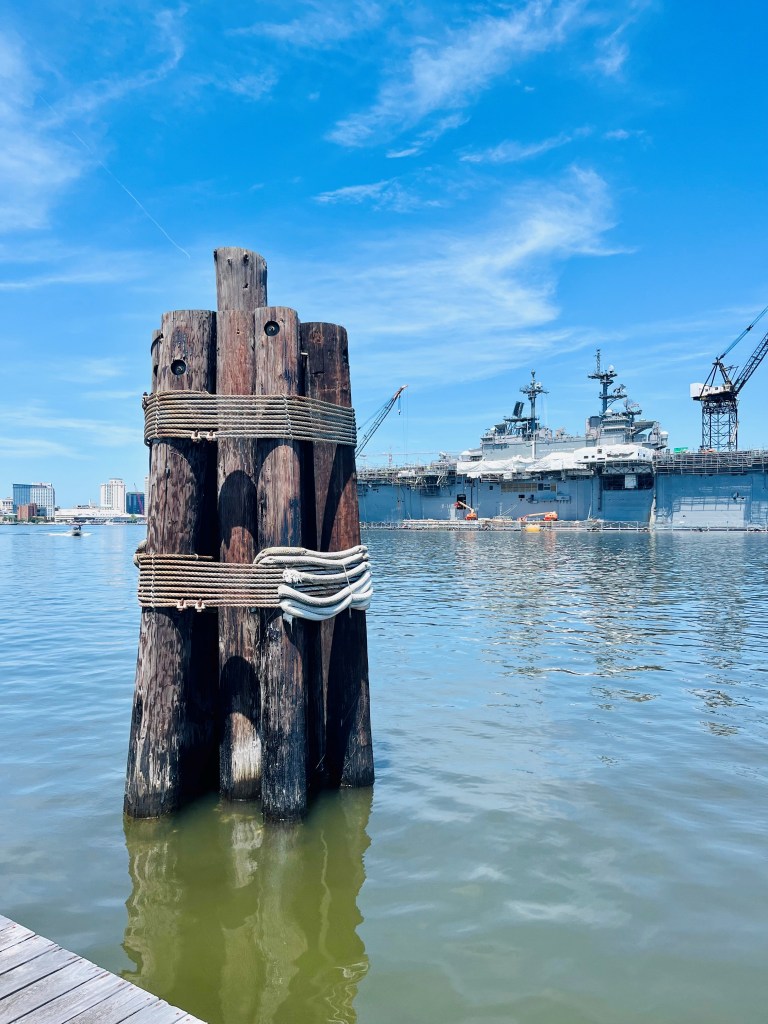
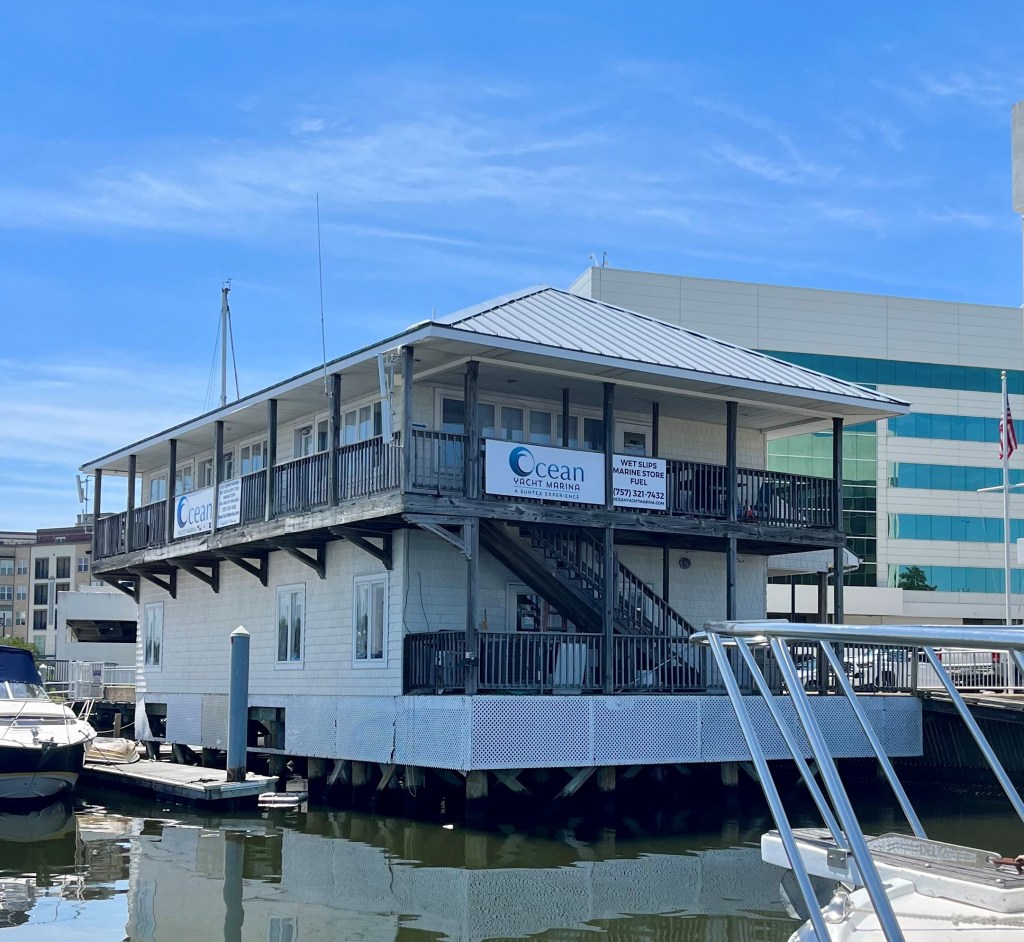
Ocean Yacht Marina – Naval aircraft carrier across bay
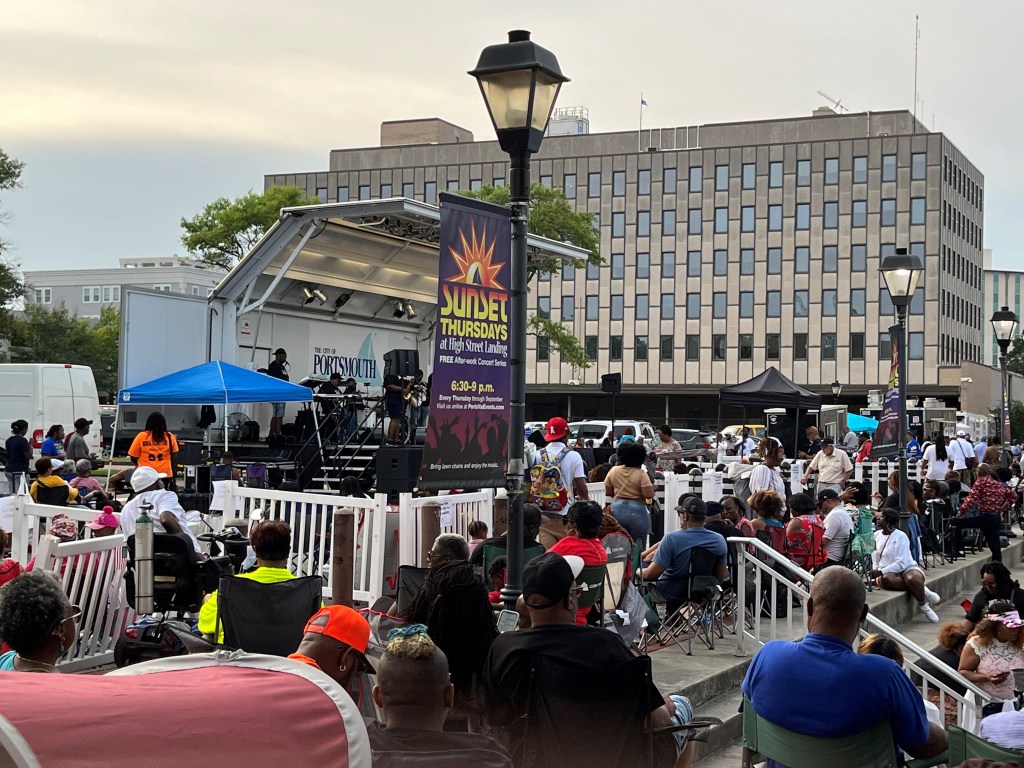
Portsmouth, Virginia, was our next stop after the Dismal Swamp. We stayed at Ocean Yacht Marina June 16 through June 19. The first night we discovered there was a concert just five minutes from where we docked, at the downtown arena. “Sunsconcerts” every Thursday evening. Sunday there was a Juneteenth celebration at the same venue.
Concerts on Thursday evenings during the summer
Portsmouth is located in southwest Virginia across the Elizabeth River from Norfolk. As of 2020 the population was 97,915. As we entered Portsmouth, we noticed many ships and industrial marina sites.
Boats on Elizabeth River entering Portsmouth
In 1620, the future site of Portsmouth was recognized as a ship building location by John Wood, a shipbuilder who petitioned King James I of England for a land grant. The surrounding area was soon settled as a plantation community.
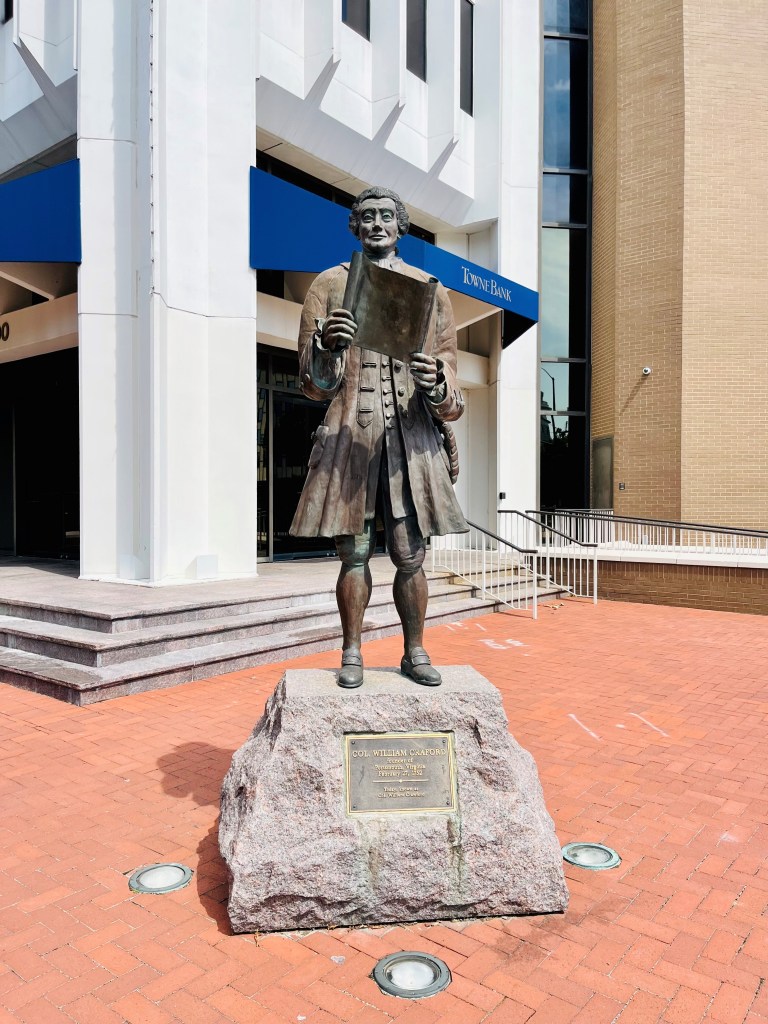
Colonial William Crawford, founder of Portsmouth
Portsmouth was founded by Colonel William Crawford, a member of the Virginia House of Burgesses. It was established as a town in 1752 by the Virginia General Assembly and was named for Portsmouth, England.
The Norfolk Naval Shipyard and Naval Medical Center Portsmouth are historic and active U.S. Navy facilities in Portsmouth. I discovered my oldest nephew, Dr. Adam Thompson, was born at the Naval Medical Center Portsmouth, as Gary and Candy lived in Virginia Beach.
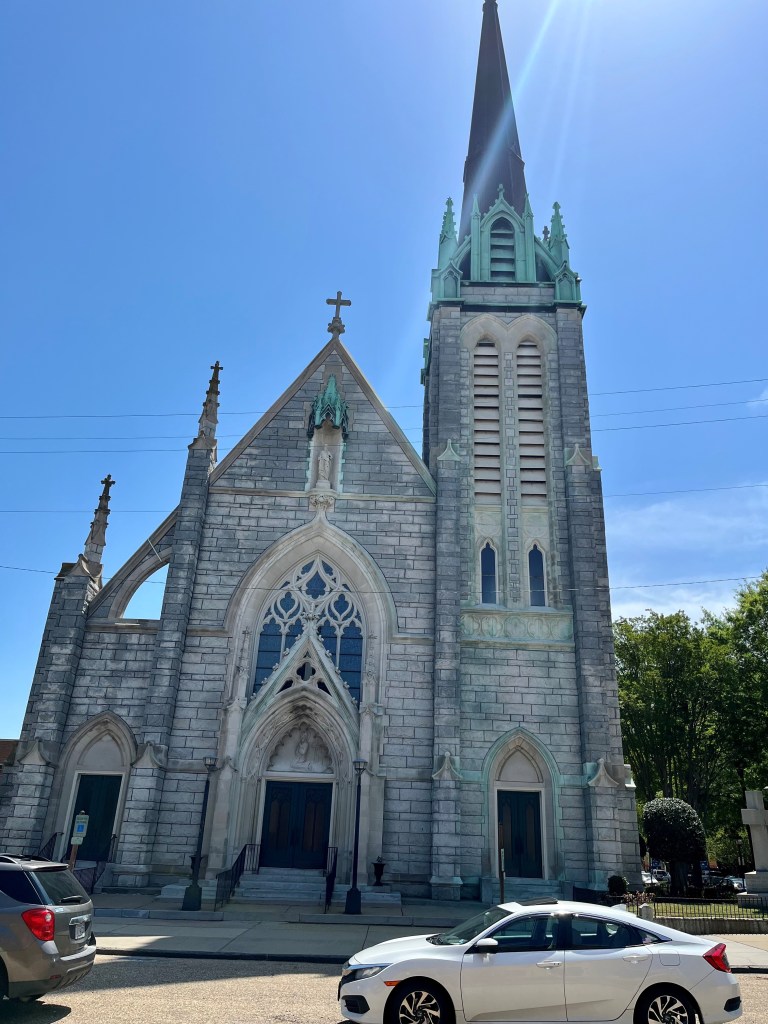
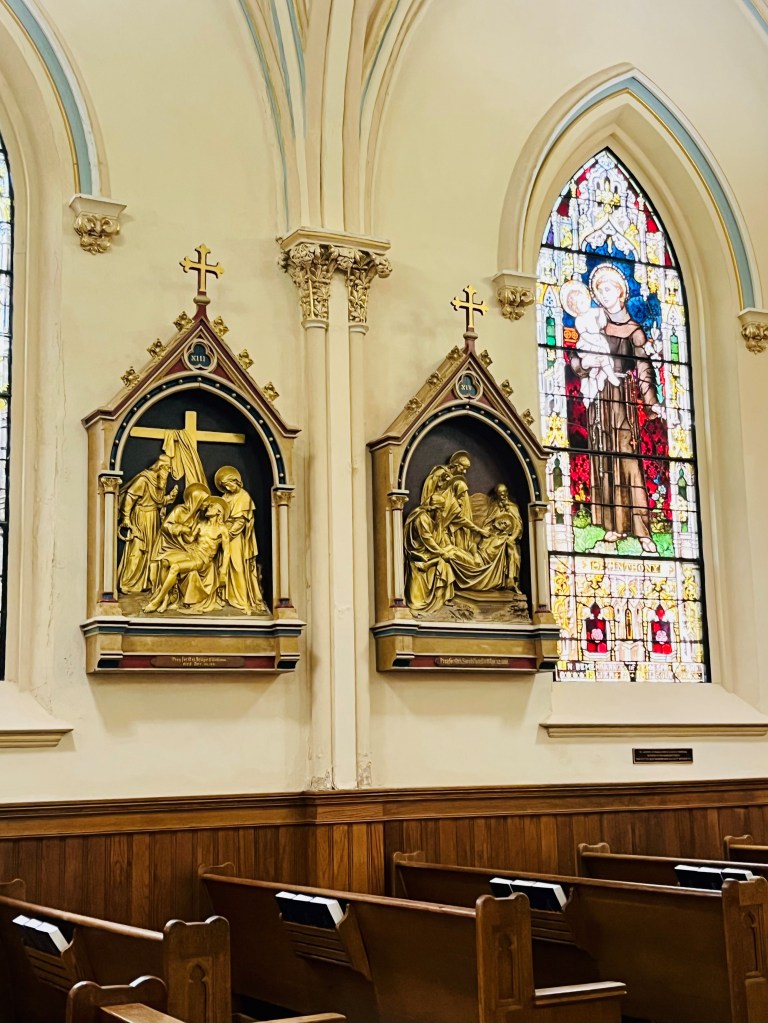
Every morning we heard the Star Spangled Banner played, as this is a regular occurrence at Naval bases. And we heard church bells – there are are many churches in downtown Portsmouth. We attended Mass Saturday at St. Paul’s.
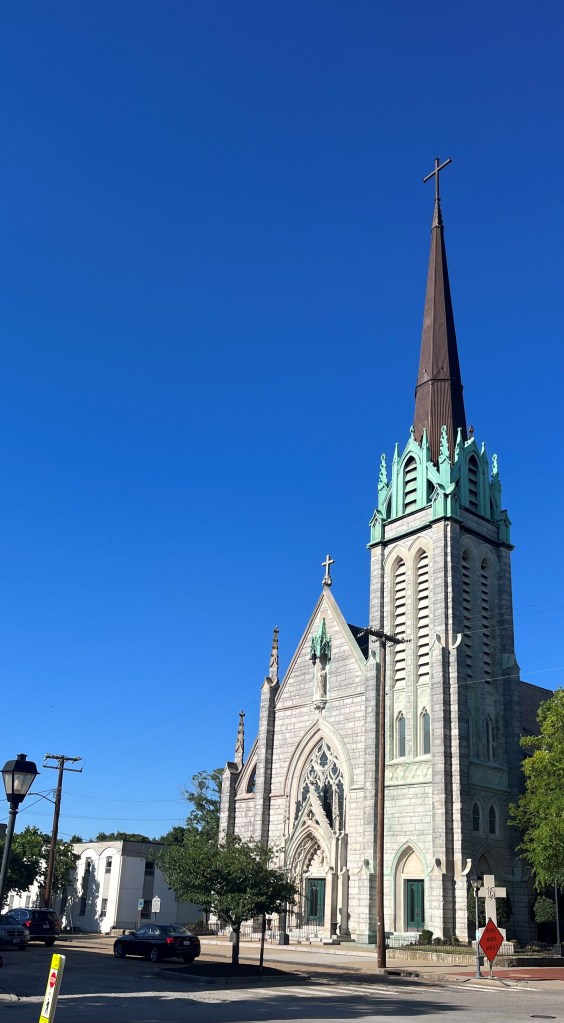
St. Paul’s Catholic Church – downtown PortsmouthThe church interior was beautiful, especially the Stations of the Cross and stained glass windows.Ocean Yacht Marina in Portsmouth
Marinas always have some interesting characters – and this one did not disappoint. The dock hands and office assistants were very helpful. They even arranged for a car service on Friday so we could get provisions at where else – WalMart! Our driver Johnny was quite entertaining.
Patrick wanted someone to look at one of our air conditioners. The office assistant said no problem, we have a guy named Tiny who lives on a sailboat and works on air conditioners. Turns out Tiny was not so tiny and no way was he going to fit where the air conditioner is located. Tiny said his financee could do the job under his supervision. (First indication he was probably not going to work out.)
Saturday morning we walked down to a green market and bought fresh tomatoes, etc. The day came and went and no sign of Tiny or return phone call. But the office sent another guy who was excellent and fixed the problem. Tiny and fiancee sauntered over to our boat with their equipment Sunday afternoon, but they were too late. Things always work out – just have to be patient.
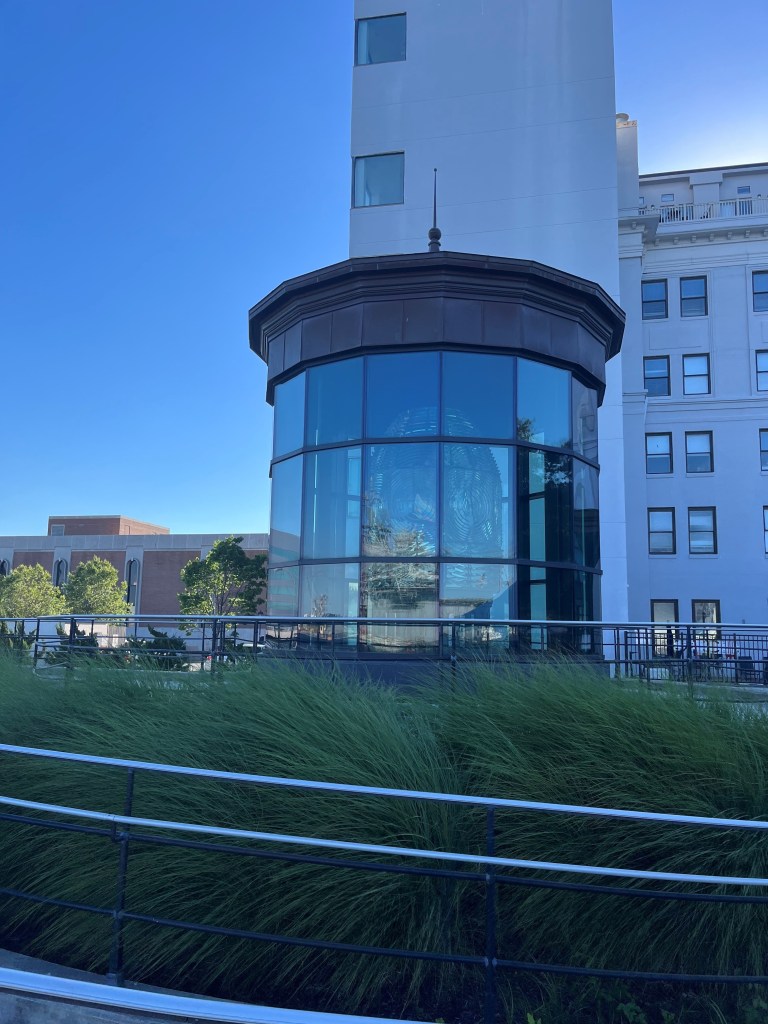
First Order Fresnel Lens
Two sites we saw downtown were very interesting. The first was the “First Order Fresnel Lens” from the Hog Island Lighthouse. The fresnel lens was named after Augustin Fresnel – the French physicist who devised this lens optical system around 1822.
At about 10 feet high and 2500 pounds, this lens is among the largest and brightest of its kind. Only the lens at Makapu’u Point Light, Hawaii, is larger.
History of First Order Fresnel Lens
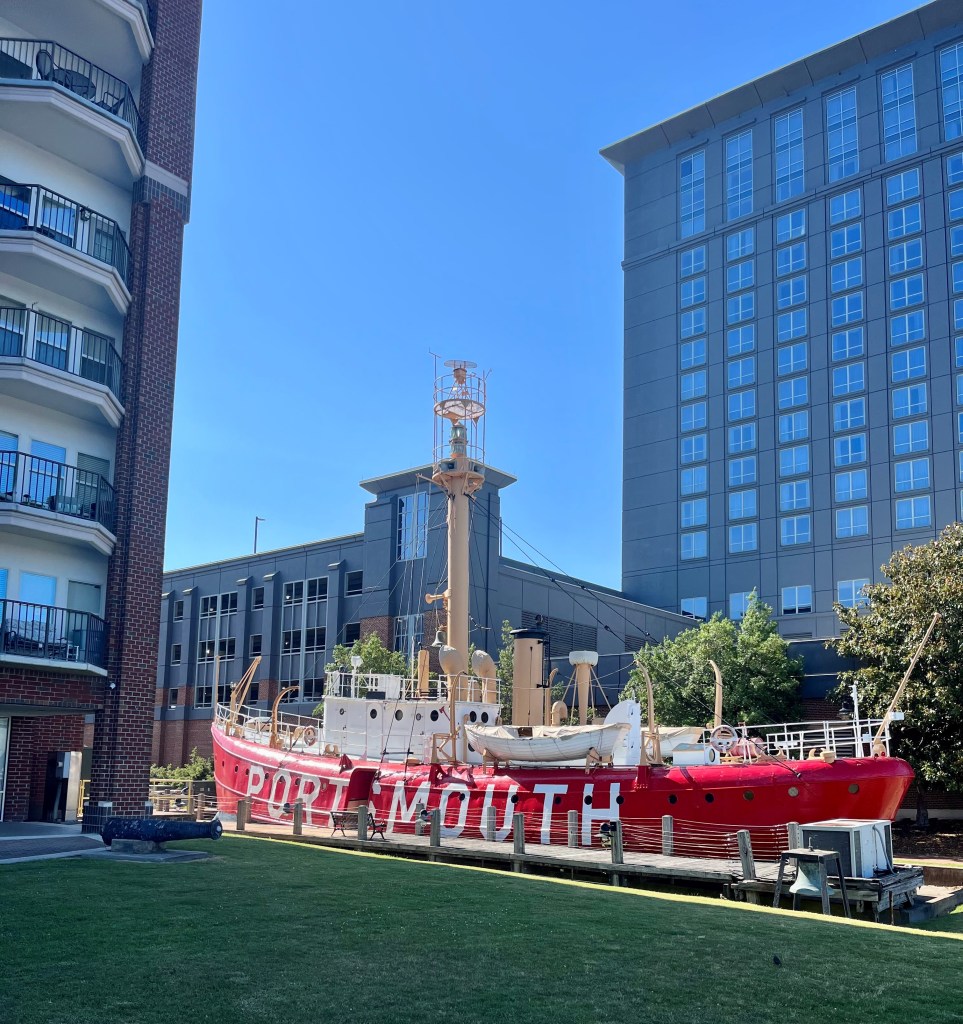
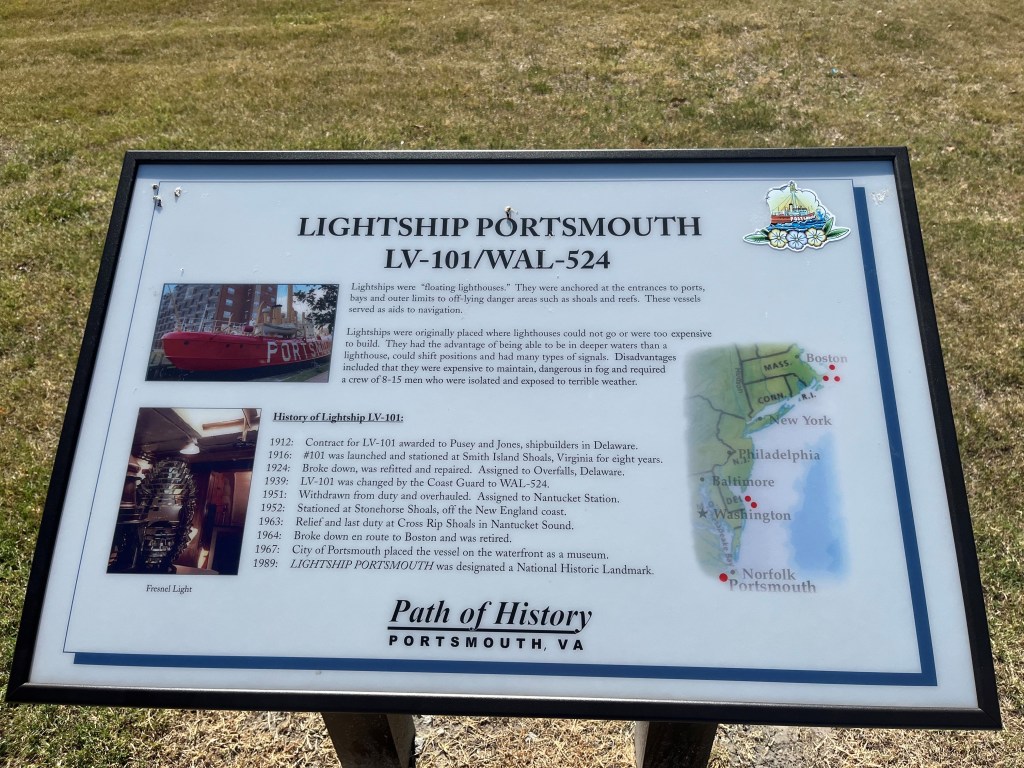
Another interesting site was the “Lightship Portsmouth.” Lightships were floating lighthouses. They were anchored at the entrance of ports, bays and outer limits to off-lying danger areas such as shoals and reefs. These vessels served as aids to navigation.
The Lightship Portsmouth is on the waterfront as a museum and is a National Historic Landmark.
Lightship Portsmouth
Here are some more photos from our stay in Portsmouth.
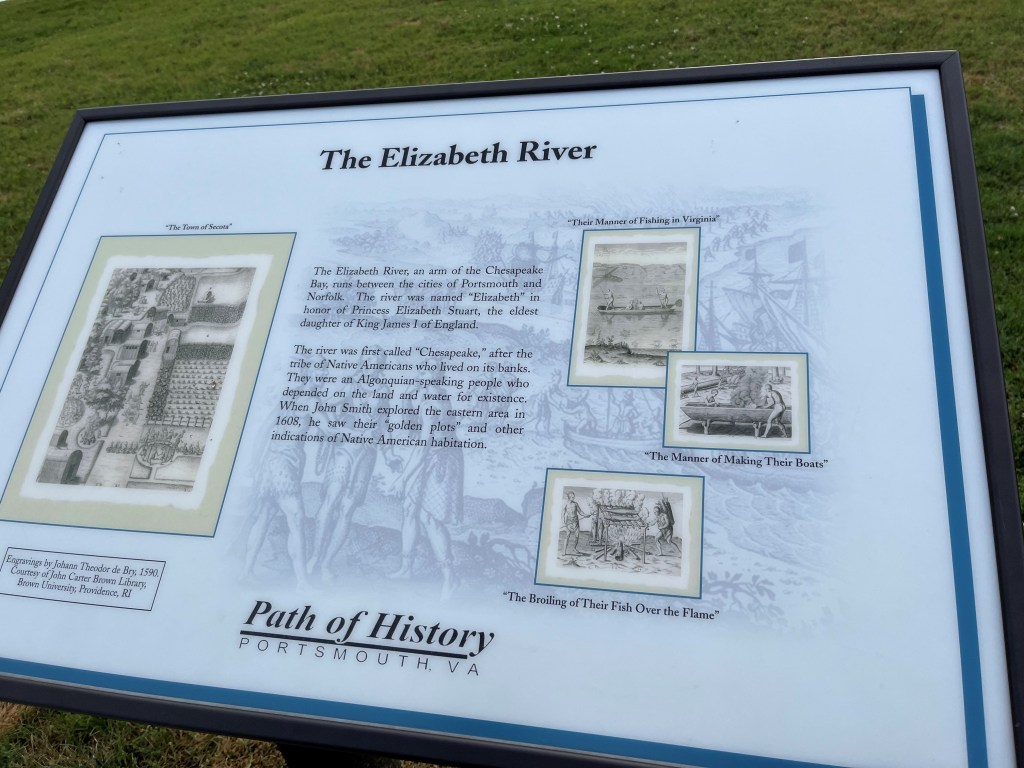
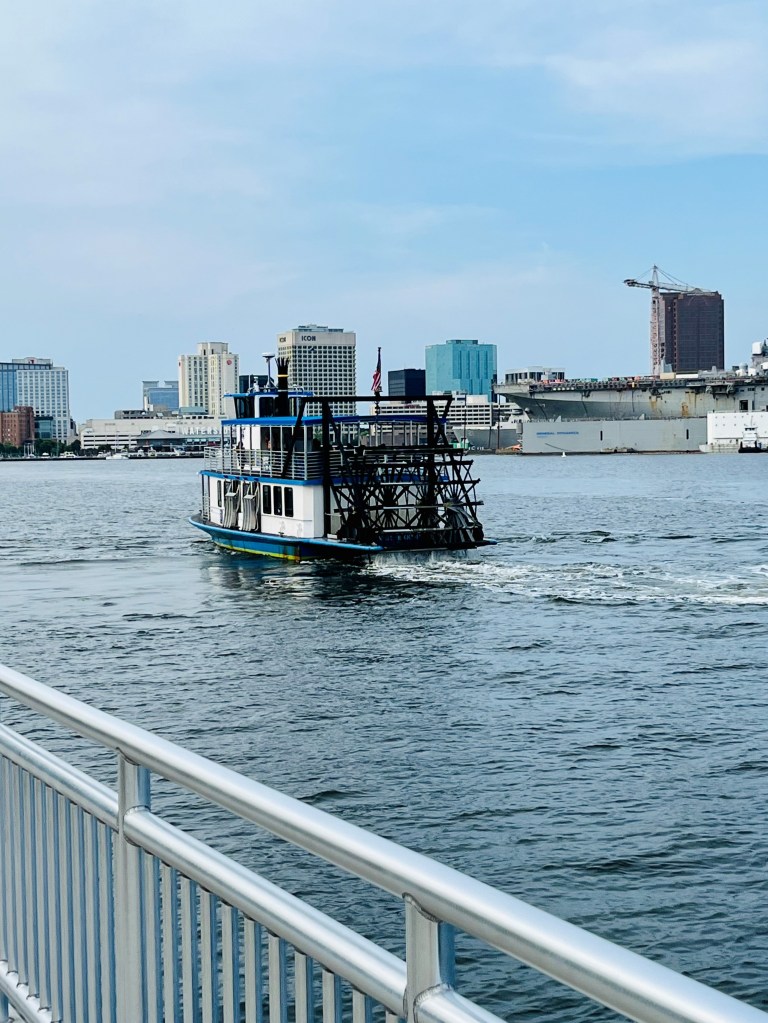
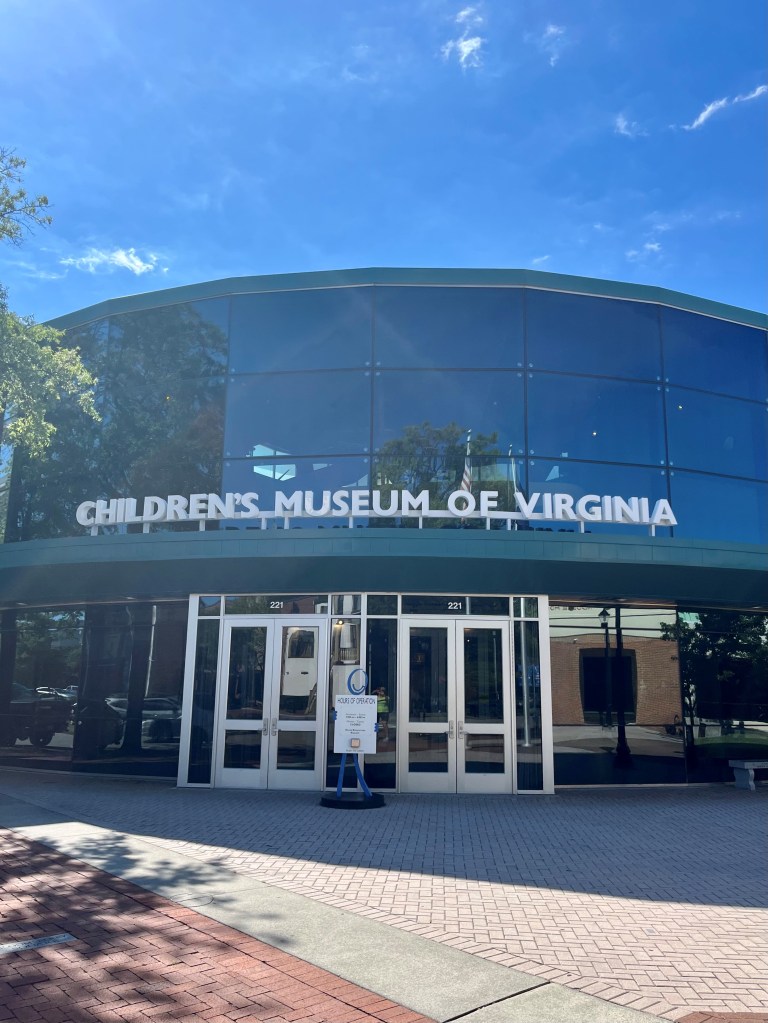
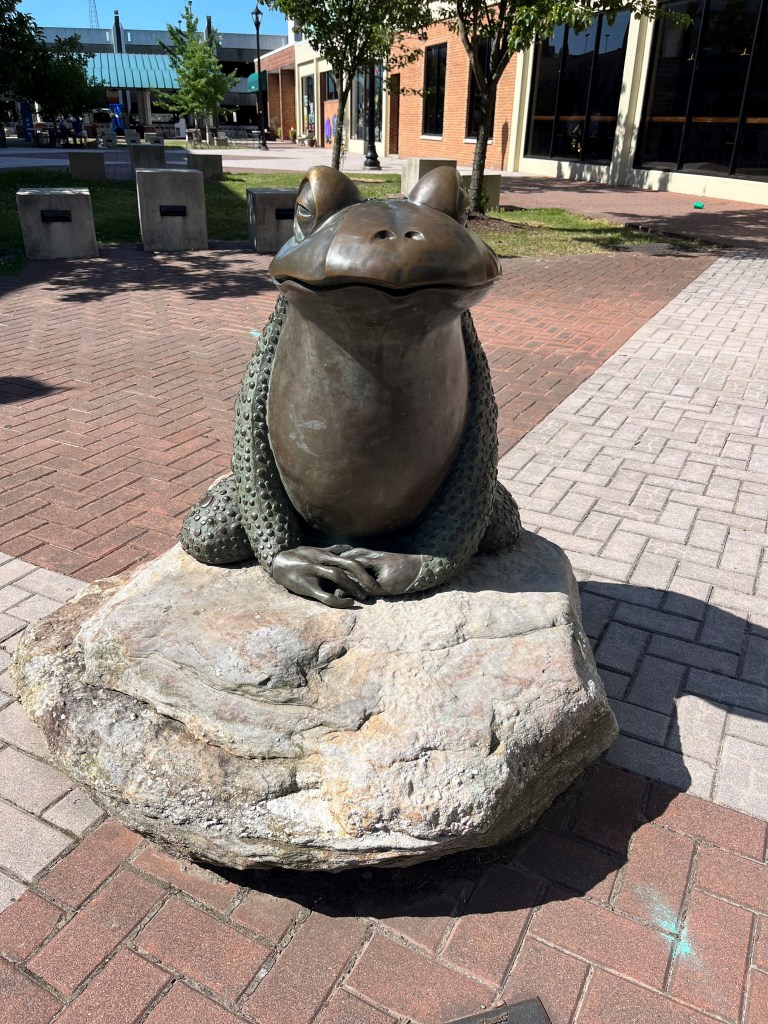
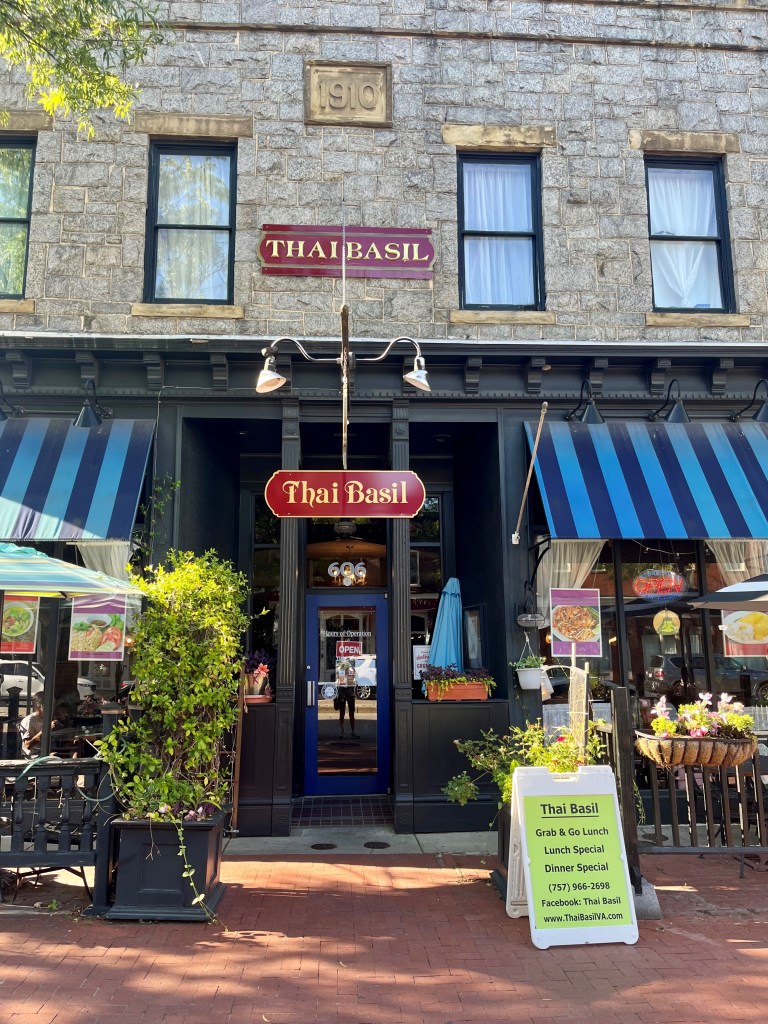
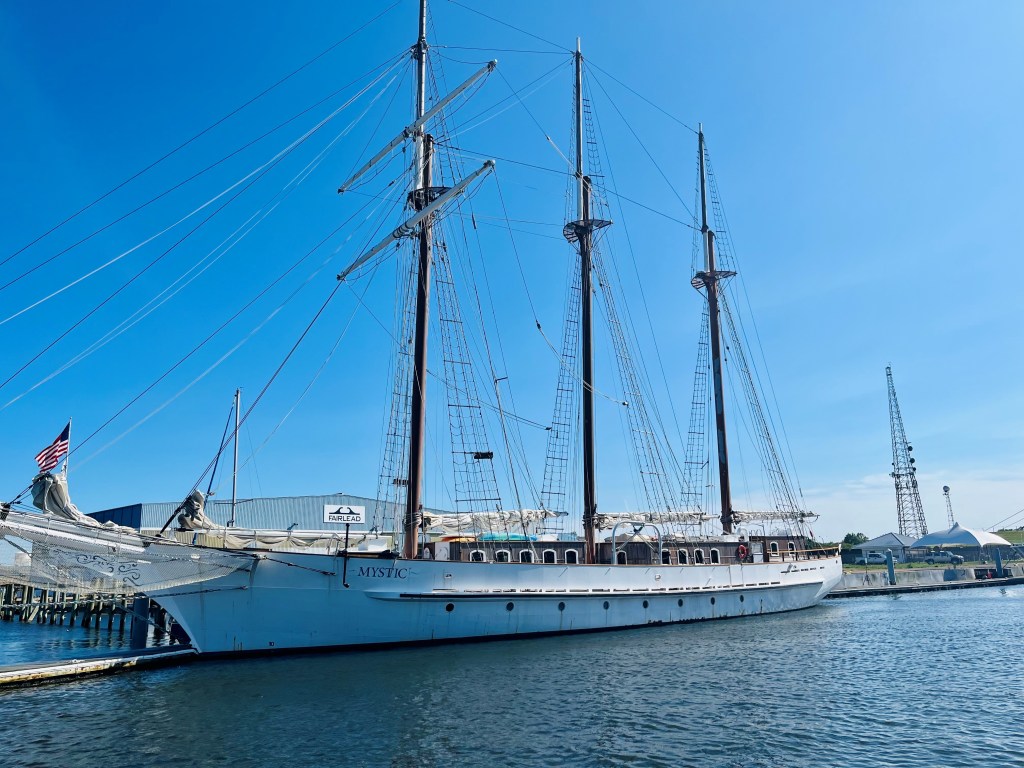
History of St. Elizabeth RiverPaddleboat Ferry to WatersideChildren’s MuseumPatrick found another Teddy the Toad, outside the Children’s MuseumWe found another boat named Sunshine! We saw this boat at Elizabeth City, too.We like to find a coffee shop if we can. This was a cool one, just five minutes from our marina.Loved this restaurant – Saturday night dinner“Mystic” – docked at our marina
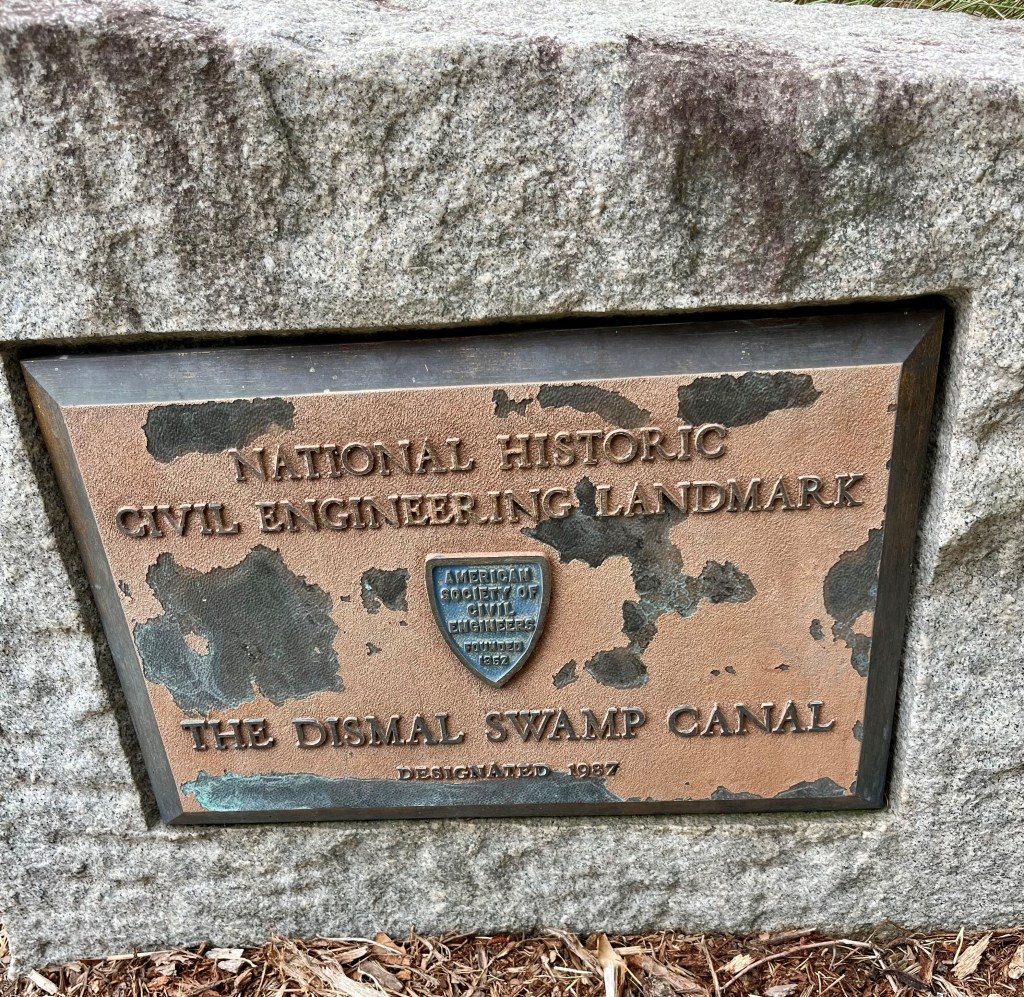
June 16 we left Elizabeth City around 6 a.m. in order to reach the 8:30 a.m. lock of the Dismal Swamp. The Dismal Swamp is a large swamp in the Coastal Region of southeastern Virginia and northeastern North Carolina, between Norfolk, Virginia and Elizabeth City, North Carolina. The current size of the Swamp is around 750 square miles. The canal is 22 miles long, and was completed in 1805 to provide a pathway for trade between Chesapeake Bay, Virginia, and the Albemarle Sound in North Carolina. Here’s a link to learn more about the Dismal Swamp.
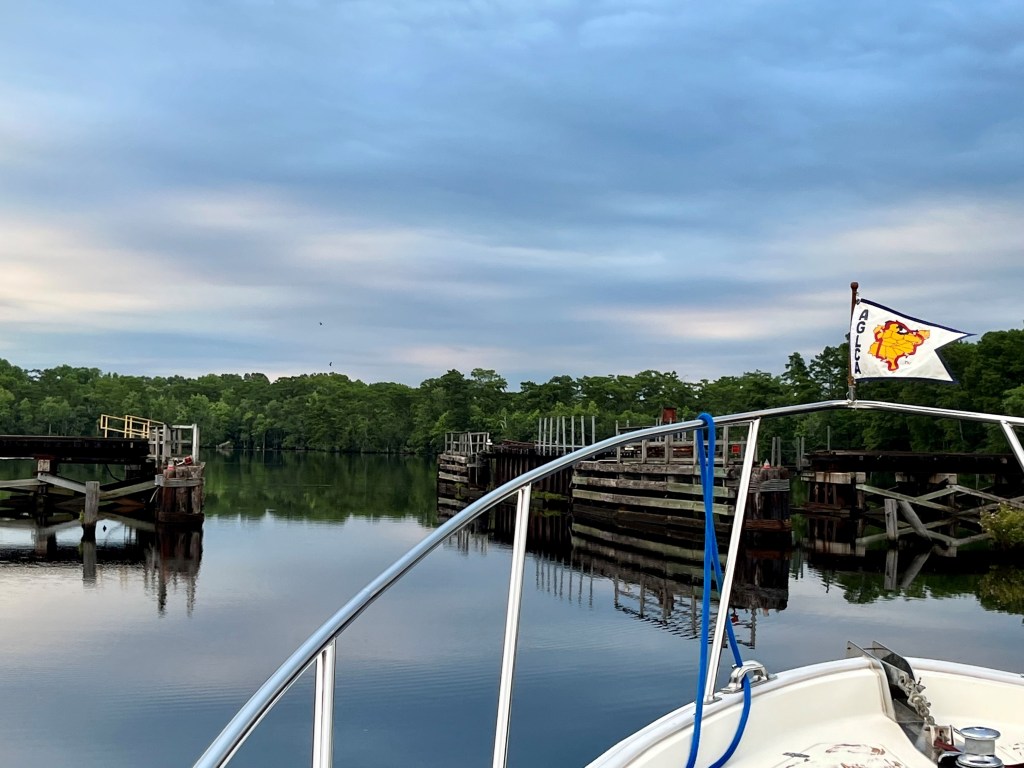
There are two locks on the Dismal Swamp. We had experienced locks before, when we travelled the “Little Loop” (across the Okeechobee River to the West coast of Florida and around the tip to the Keys.) But there is always some anticipation.
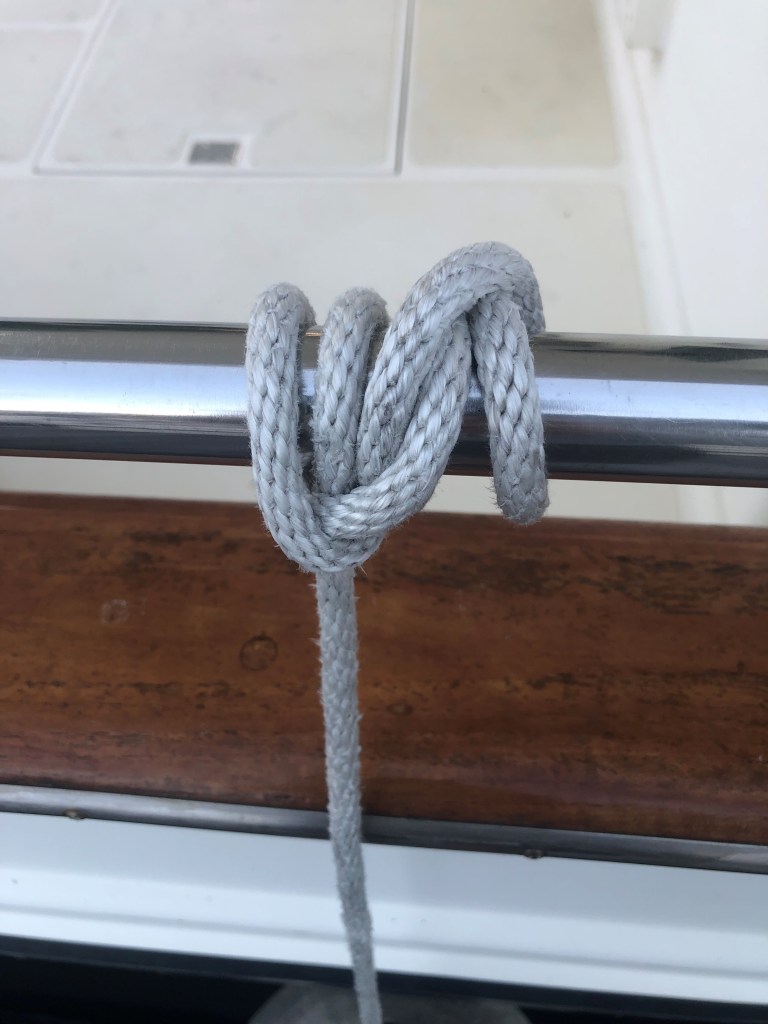
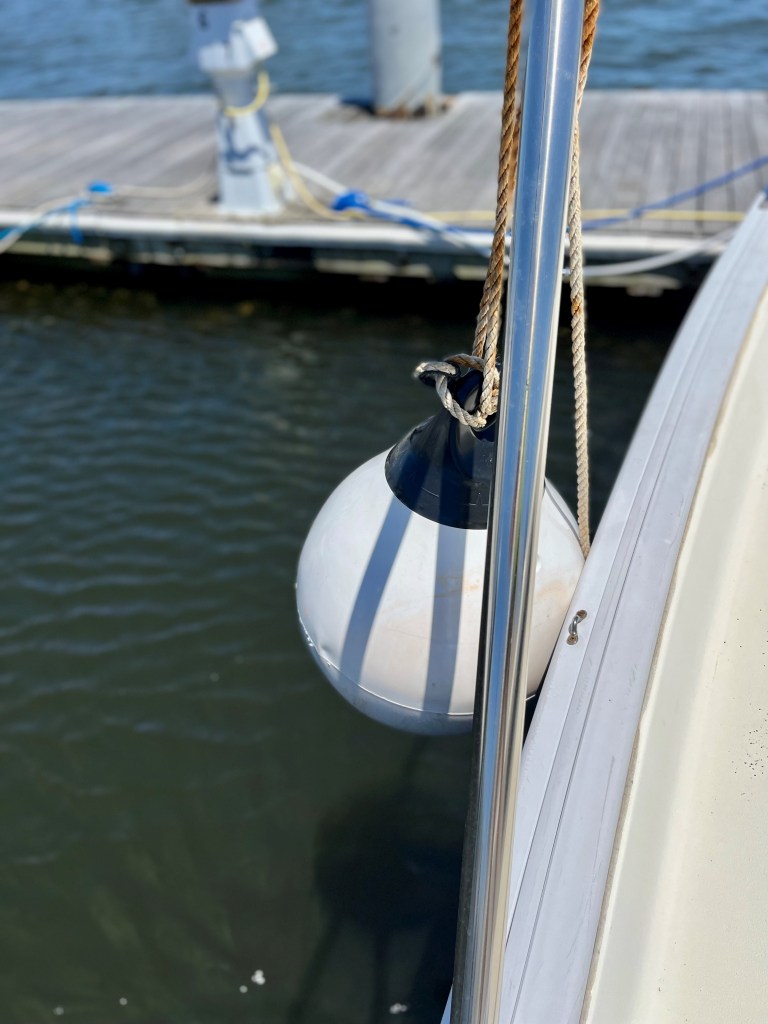
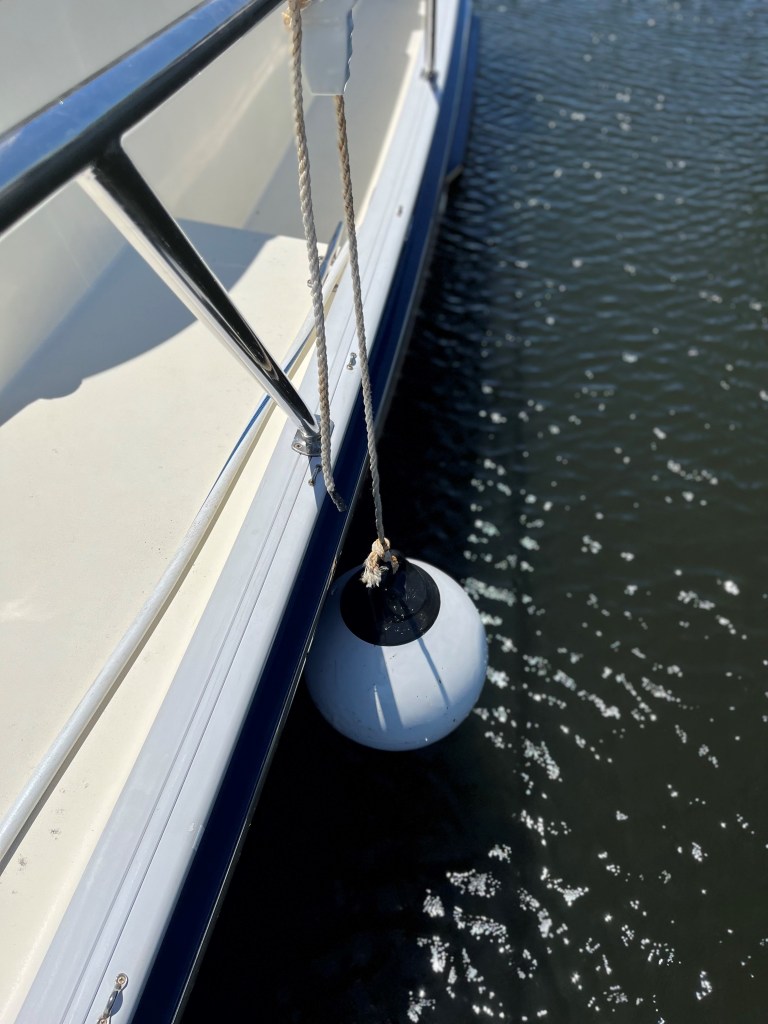
We had our “bumper balls” ready to place on the sides of the boat, so the boat would not scrape on the lock wall. Thank you to Ron Gueterman who gave us these before we left. Patrick researched how to tie the knots so we secured them to the boat rails correctly.
The knot Captain Patrick used for the bumper ballsBumper ballWe have two bumper balls. They are inflatable which helps for storage.
There was one boat behind us in the lock. We both tied up on the port side. I was on the bow, Patrick on the stern. We both handed our lines up to the lockmaster who hooked them to the cleat at the top of the lock wall. Then we just waited for the water to fill up to the top. It took maybe 10 minutes.
About half way through Patrick yelled “hey, what happened to the bumper ball on the front?” It had come undone – the line had broken. Not because of how the knot was tied. The ball was too close to the wall and the line broke. The lockmaster was nice enough to locate it, hook it, and we placed back on our boat.
That was the most exciting thing about the locks.
We debated whether or not to travel the Dismal Swamp, as we heard mixed reviews. One guy in Elizabeth City said “it’s like watching paint dry.” It is a slow ride – you have to maintain a minimum speed and no wake. If you want a faster route, you take the Coinjock one.
We opted for the Dismal Swamp. It was pretty, with lots of wild roses and foliage. It just isn’t “dismal.” That’s a good thing, I guess. The only “dismal” thing about it was dodging the logs. Captain Pat was worried we would hit one and damage our props. Or something else.
We did enjoy the Visitor’s Center. We only encountered one other boat along our journey, also from Florida. They went through the second lock with us at 3:30 p.m.
Then we journeyed on to Portsmouth, Virginia.
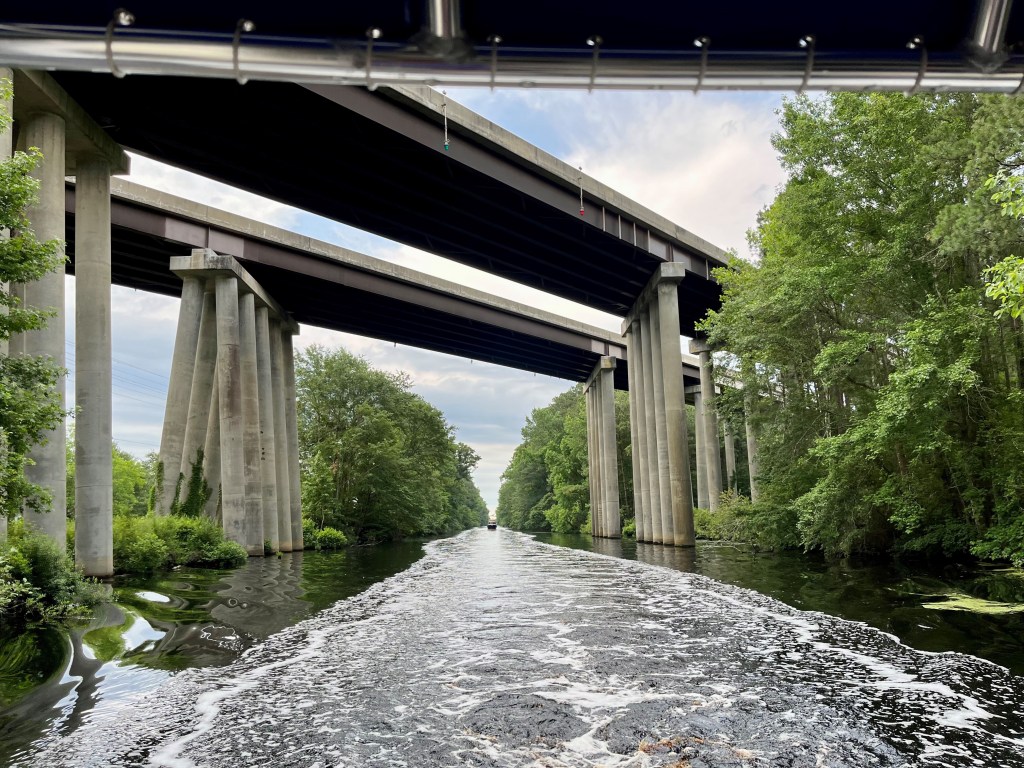
Here are some photos from our Dismal Swamp journey.
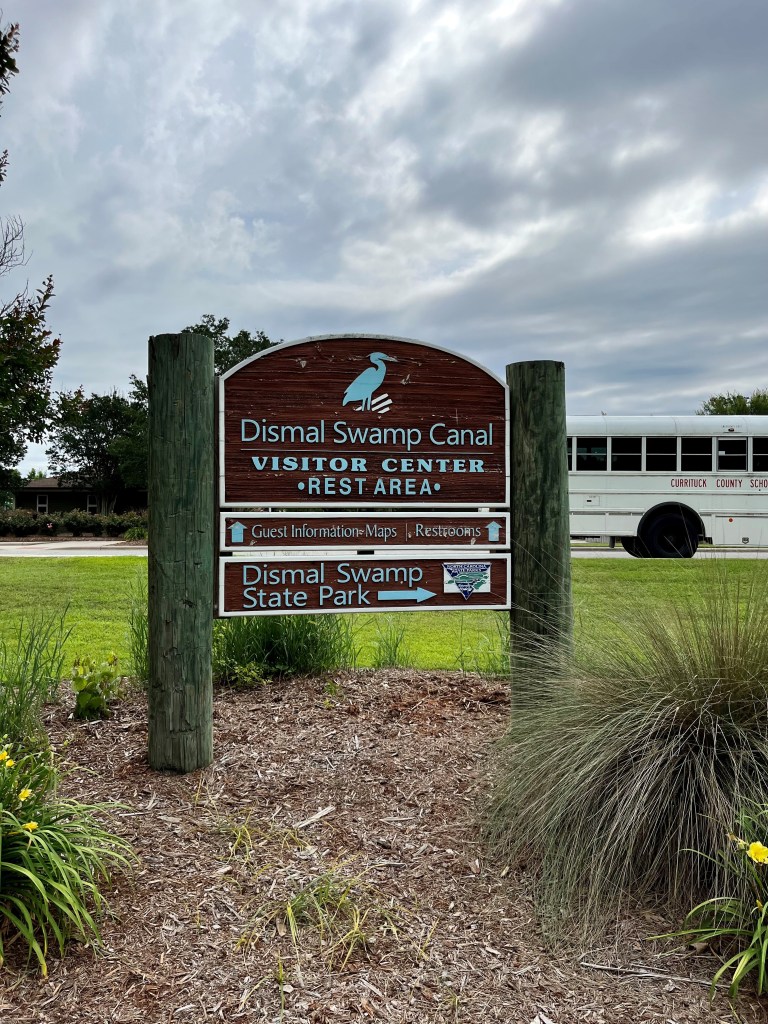
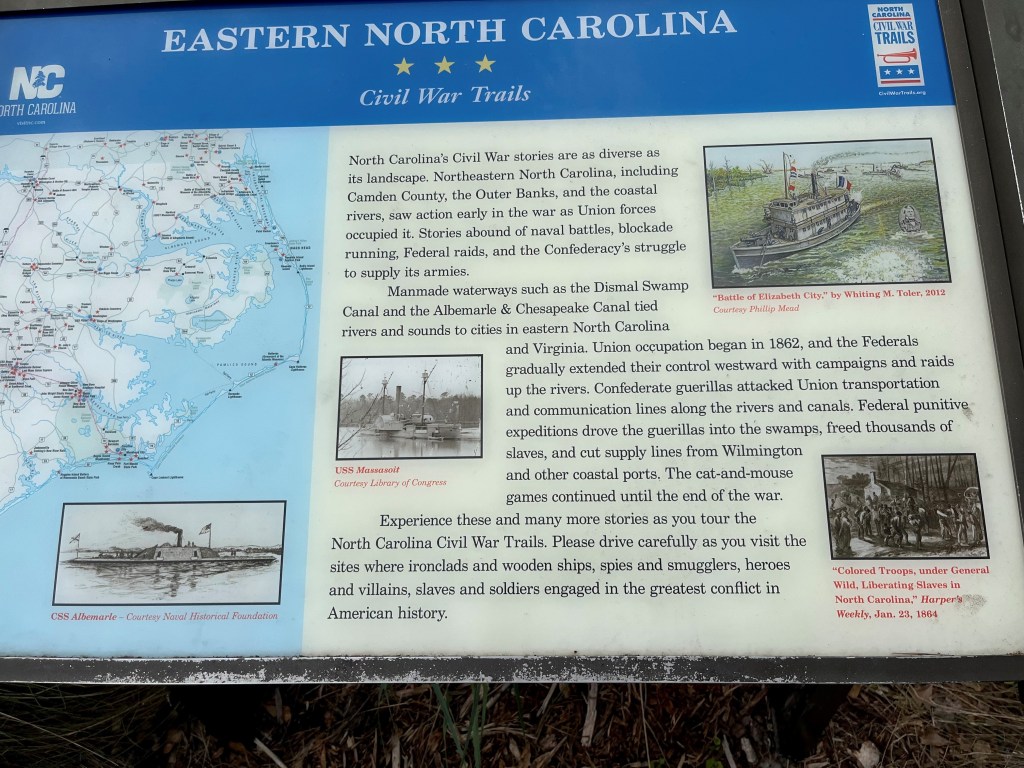
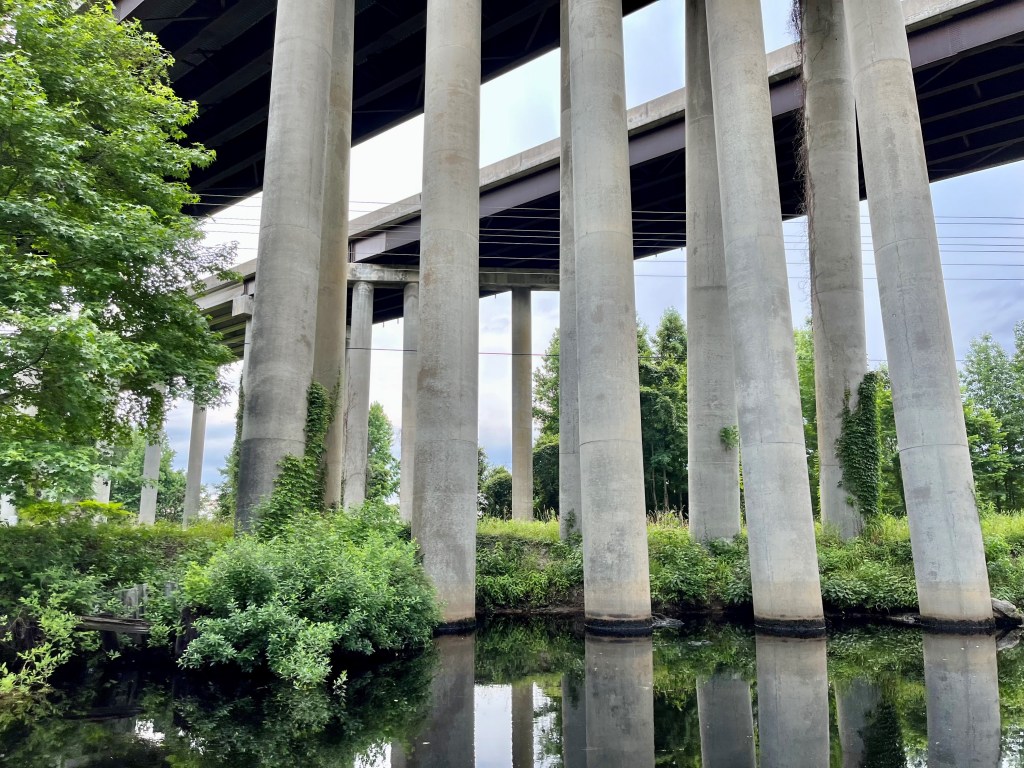
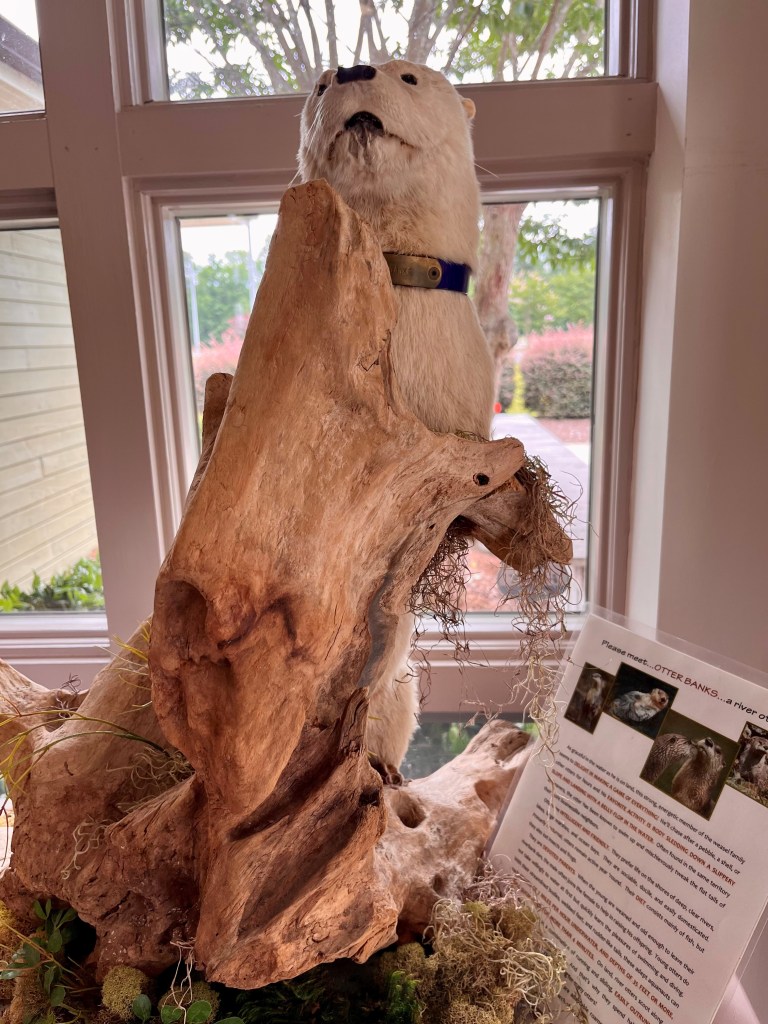
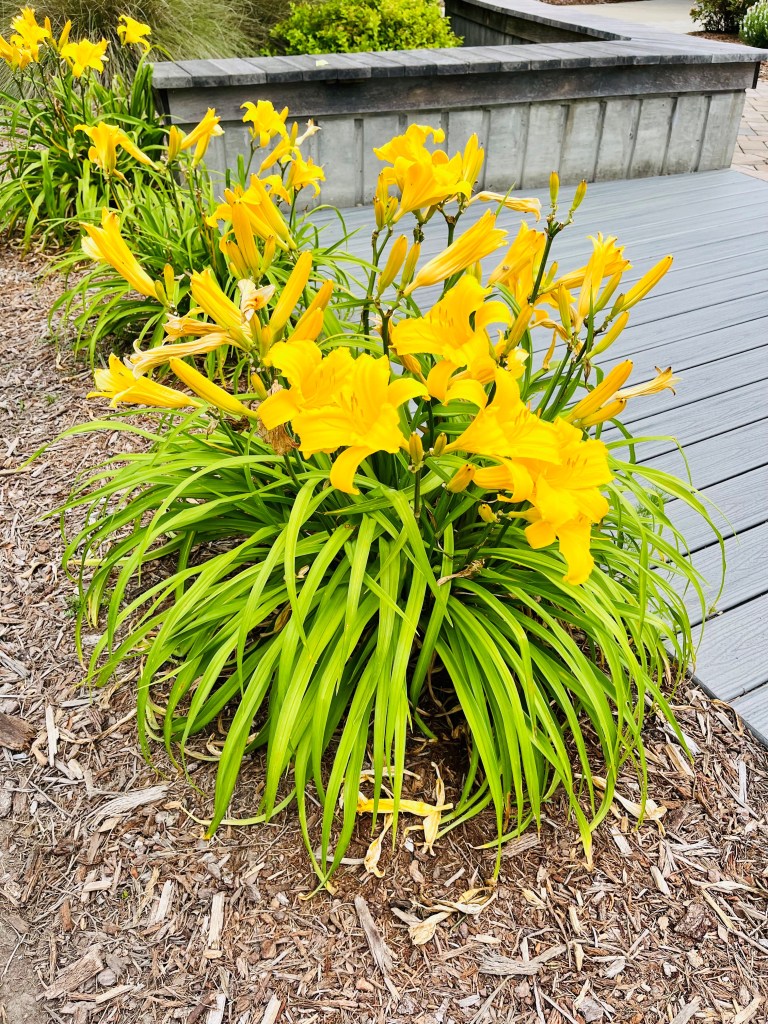
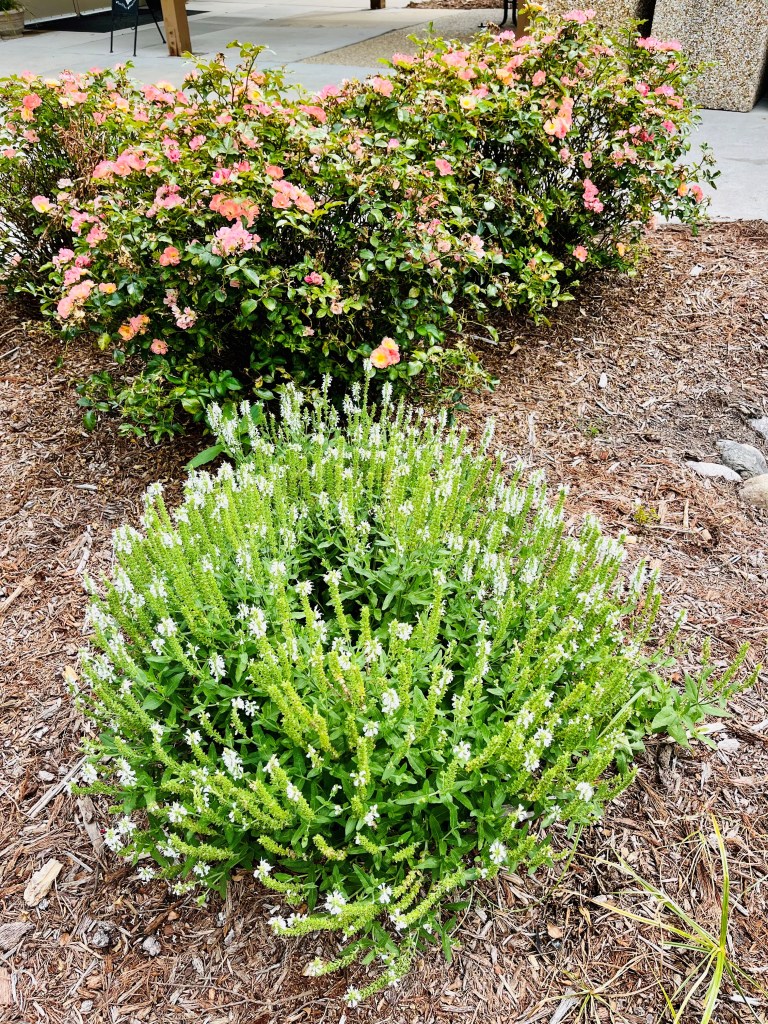
There is a wonderful visitor centerThe Dismal Swamp served as a Civil War manmade waterwayA bridge as we approached the Dismal SwampBeautiful Bridge OverpassRiver Otter taxidermy in the Visitor Center. There were also other mounted animals. We saw live river otters on the docks early in the morning when we stayed in Charleston.So many spring flowers everywhere
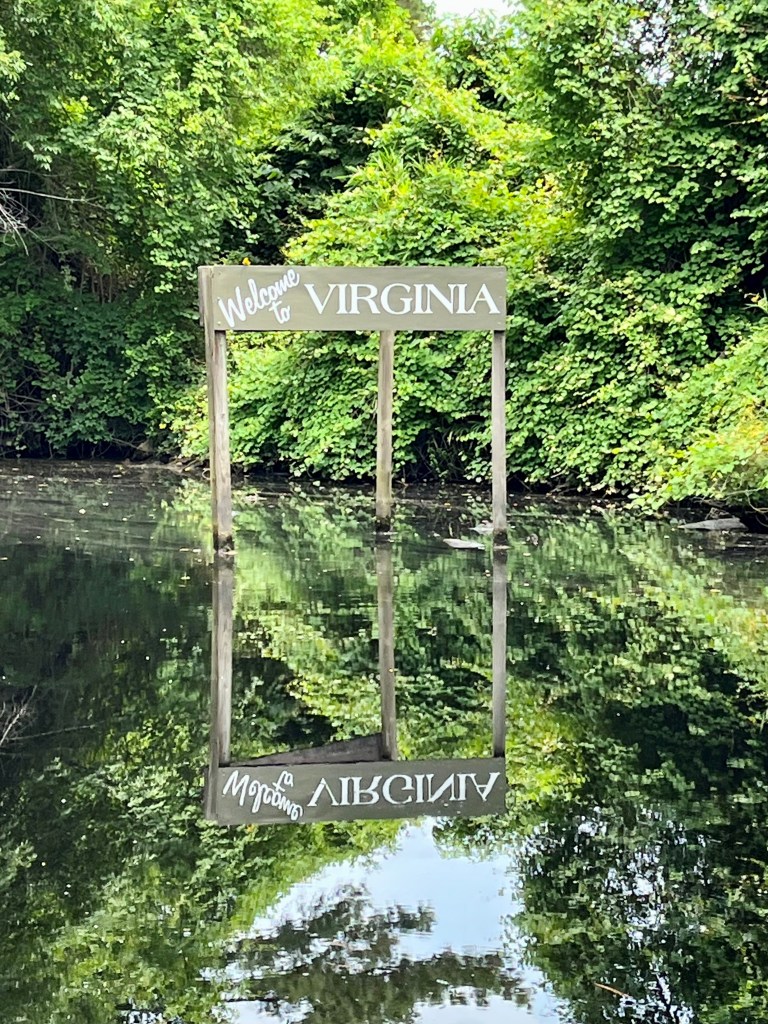
Welcome Sign on Dismal Swamp as we crossed into Virginia
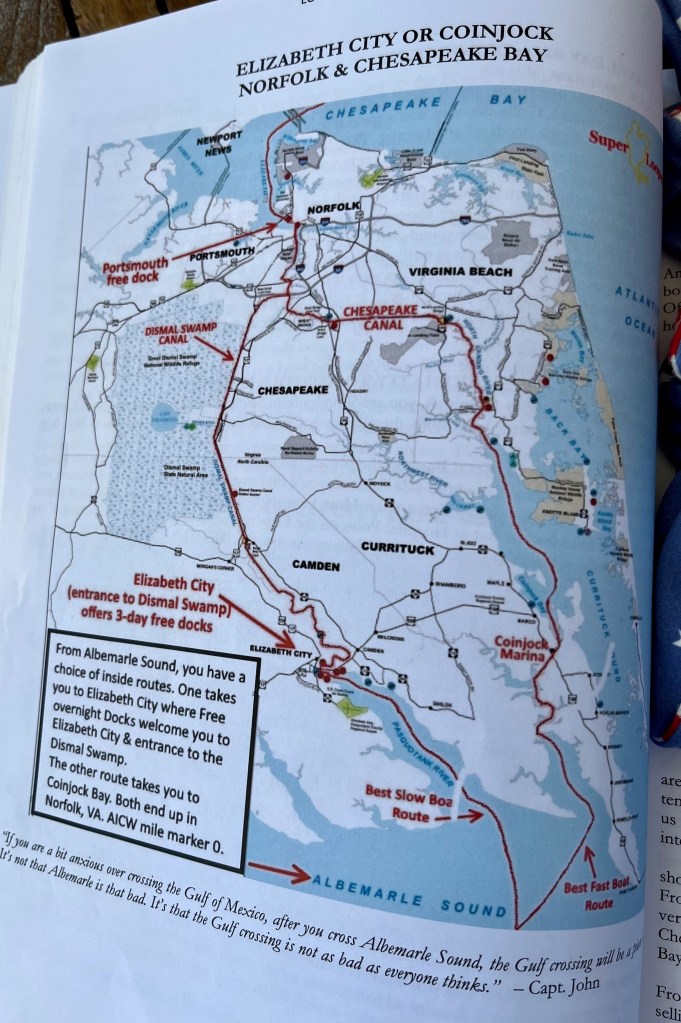
Tuesday, June 14, we left Belhaven with the intent of reaching Elizabeth City by the evening. That was a stretch goal – one we didn’t complete. There are two route options into Virginia:
1 – follow the ICW across Albemarle Sound to Elizabeth City and Dismal Swamp
2 – follow the ICW across Albemarle Sound to Coinjock and North Carolina Cut
We chose number one. However, crossing the Albemarle Sound wasn’t as easy as we initially thought.
The quote from Captain John here proved appropriate for us. “If you are a bit anxious over crossing the Gulf of Mexico, after you cross Albemarle Sound, the Gulf crossing will be a piece of cake.” We won’t be crossing the Gulf until next year. So by that time we will have forgotten the rough seas we encountered.
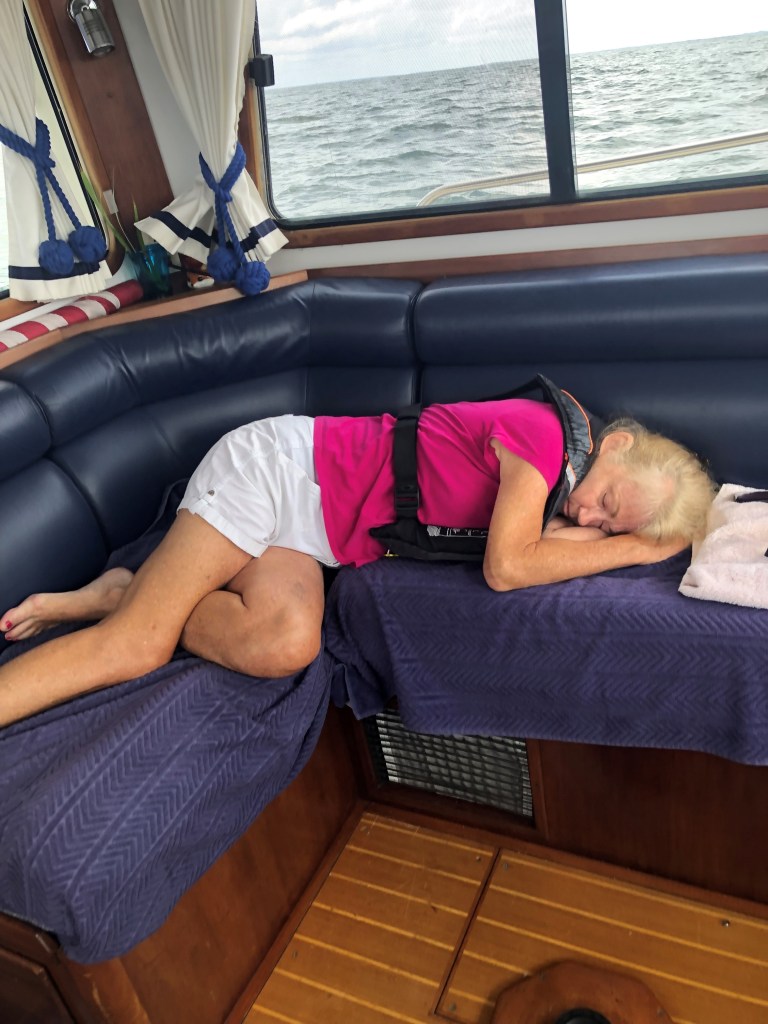
You know you’re in for a rough ride when the Captain says “we should probably put on our life jackets, even though we are inside the cabin.” The boat was really rocking. We ended up anchoring in a cove for the night and getting up early the next morning, hoping the waves would have subsided. That night was a restless one – I’d never felt the boat rock and roll all through the night like that.
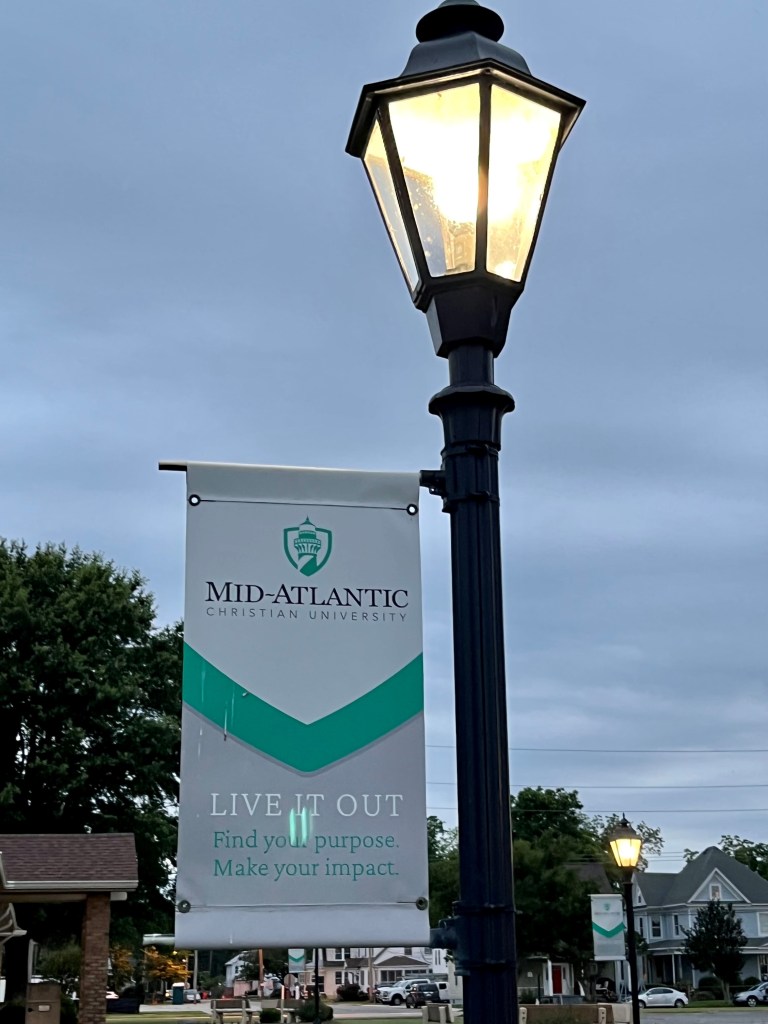
The next morning was not bad at all. We arrived Elizabeth City and found a great docking space – free! – at the Mid-Atlantic Christian University. This was not in our resources or books – our friends Mitch and Anne told us about it. Always good to have word of mouth references.
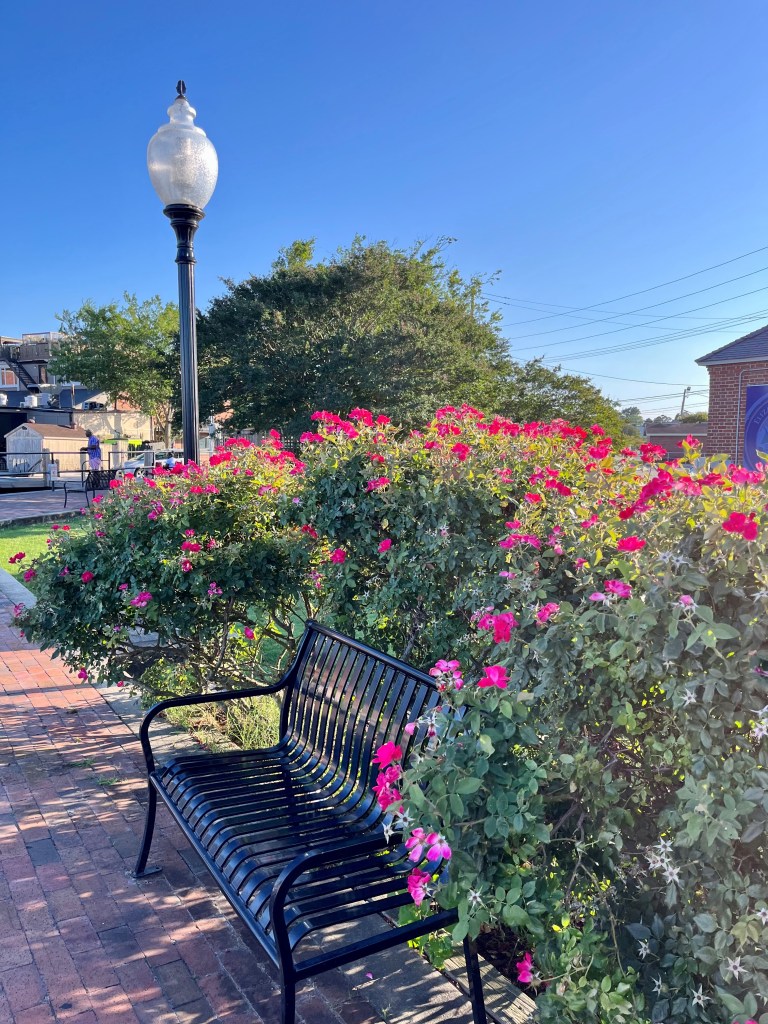
Elizabeth City is known for its hospitality to the Loopers. Two gentlemen, Fred Fearing and Joseph Kramer, in 1983 decided to host a hospitality greeting for mariners who visited Elizabeth City. Joe clipped roses from his garden to give to the visitors and Fred provided refreshments. That first reception welcomed 17 boats and their crews. The “Legend of the Rosebuddies” was born, as they welcomed mariners up and down the Intracoastal Waterway and beyond.
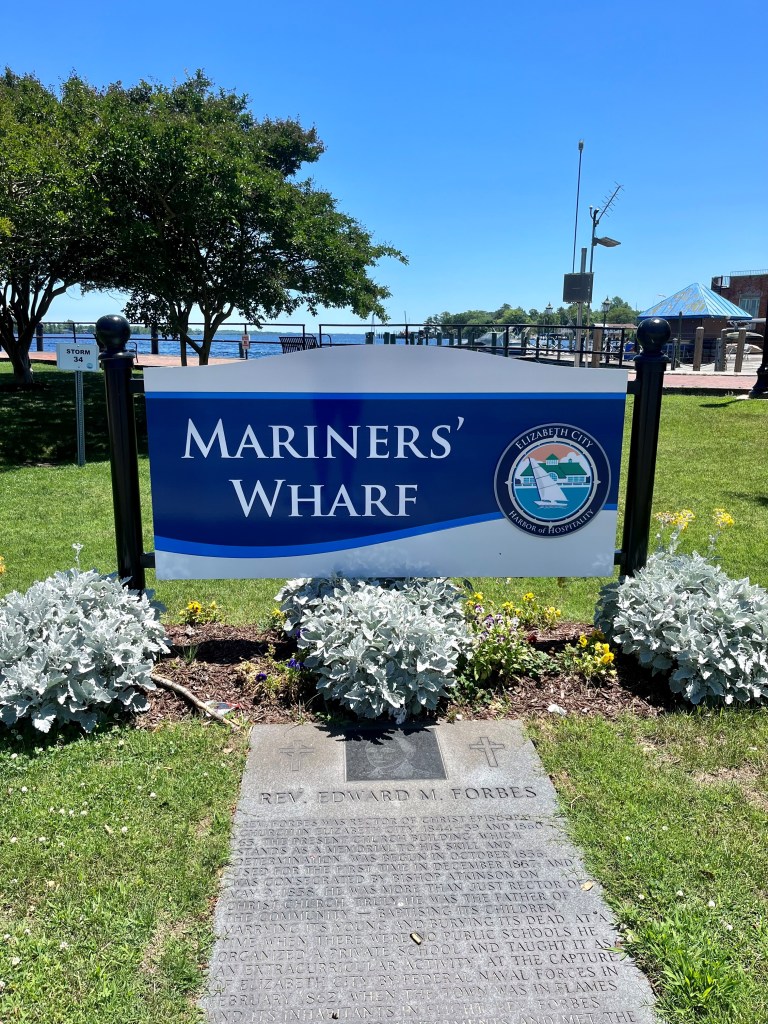
When Joe died in 1987, his rose bushes were transplanted to Mariners Wharf River. They continue to bloom and welcome visitors who stop by the City docks.
Here are more stories and photos from our one night at Elizabeth City. Next blog – the Dismal Swamp.
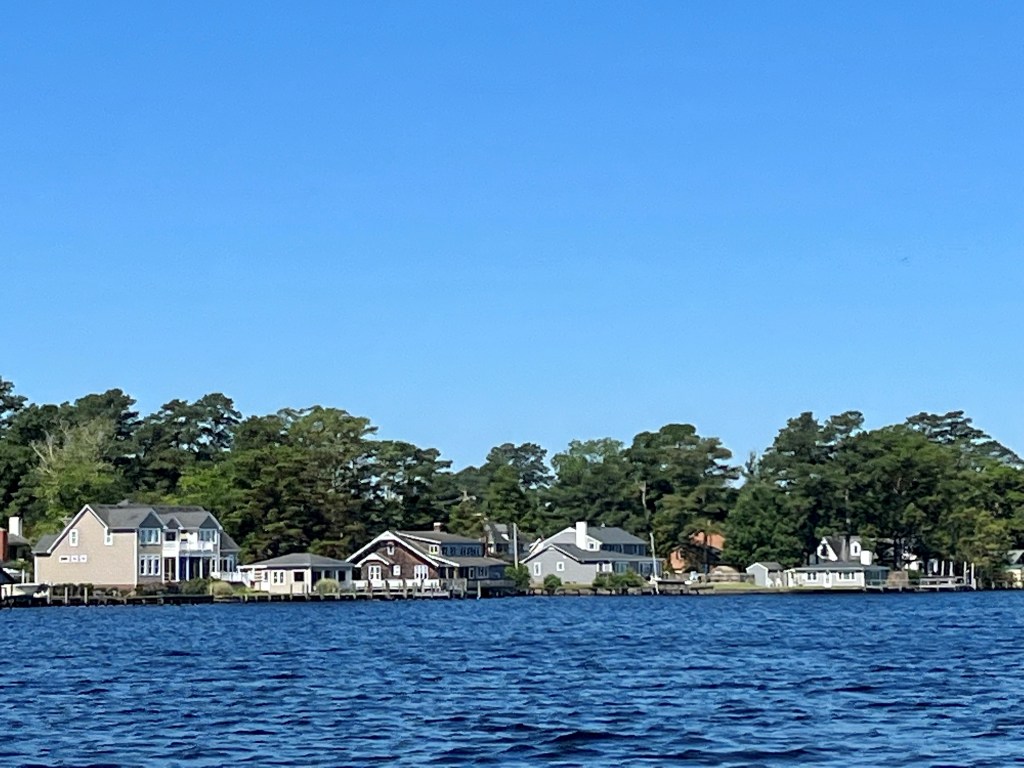
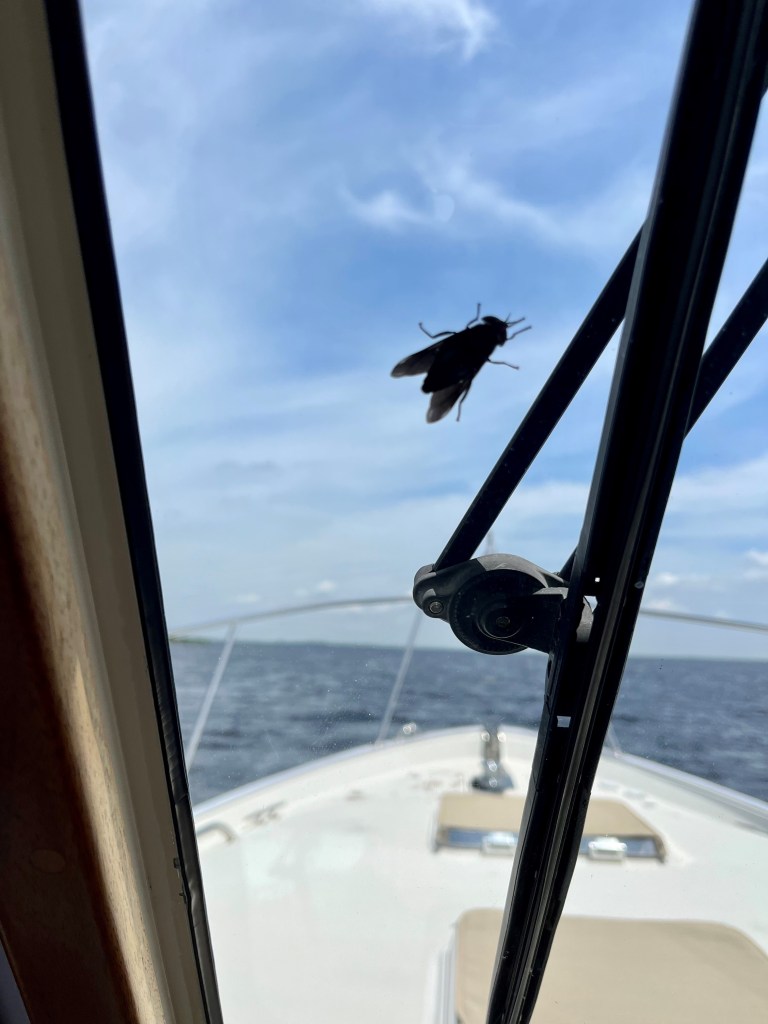
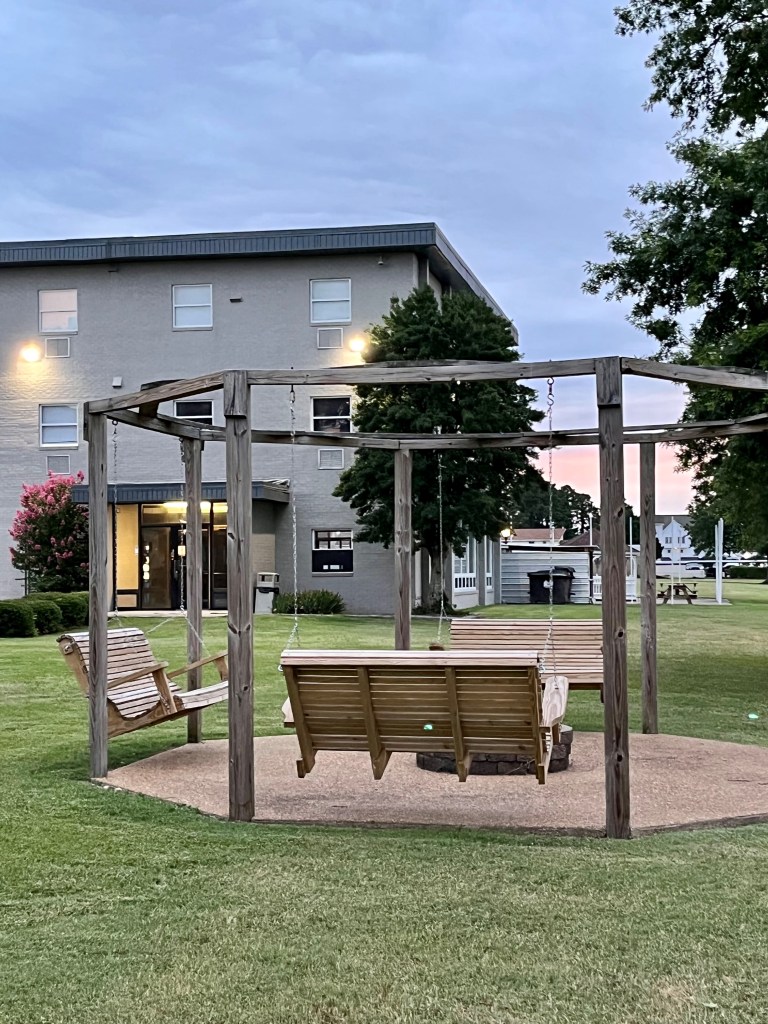
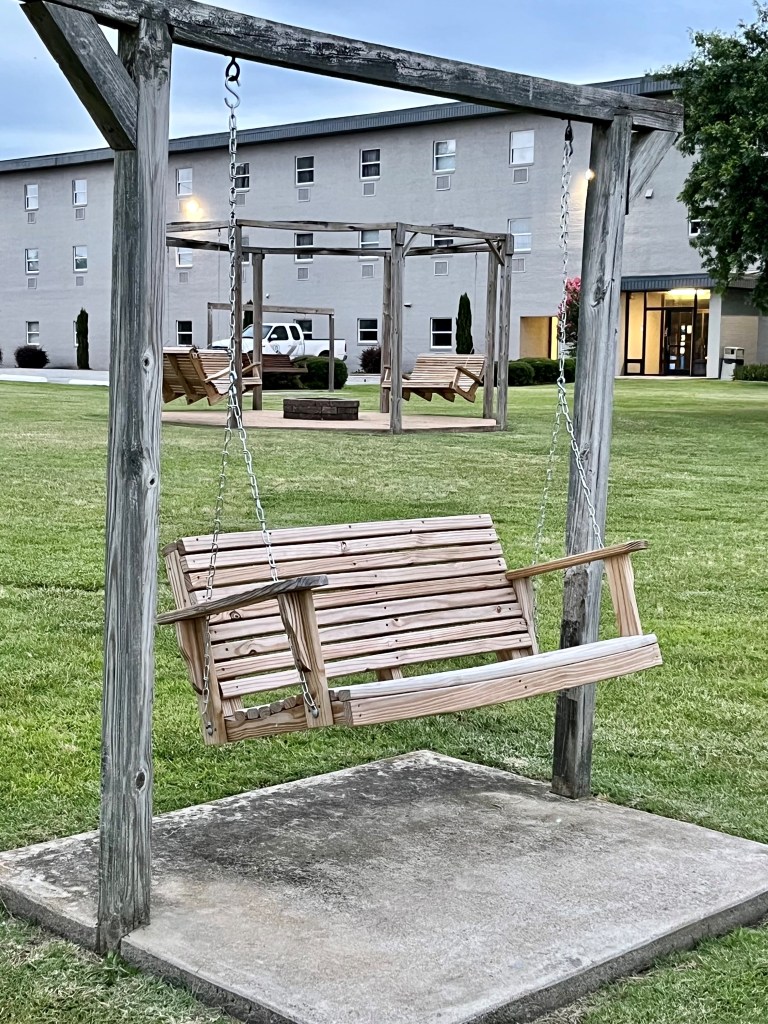
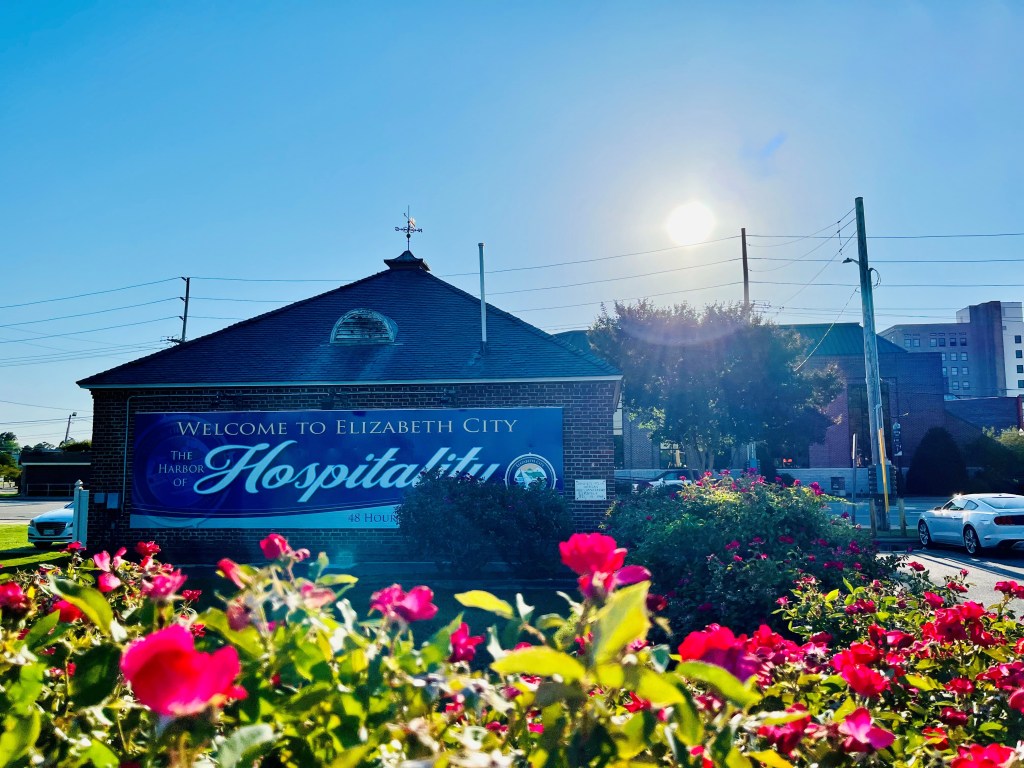
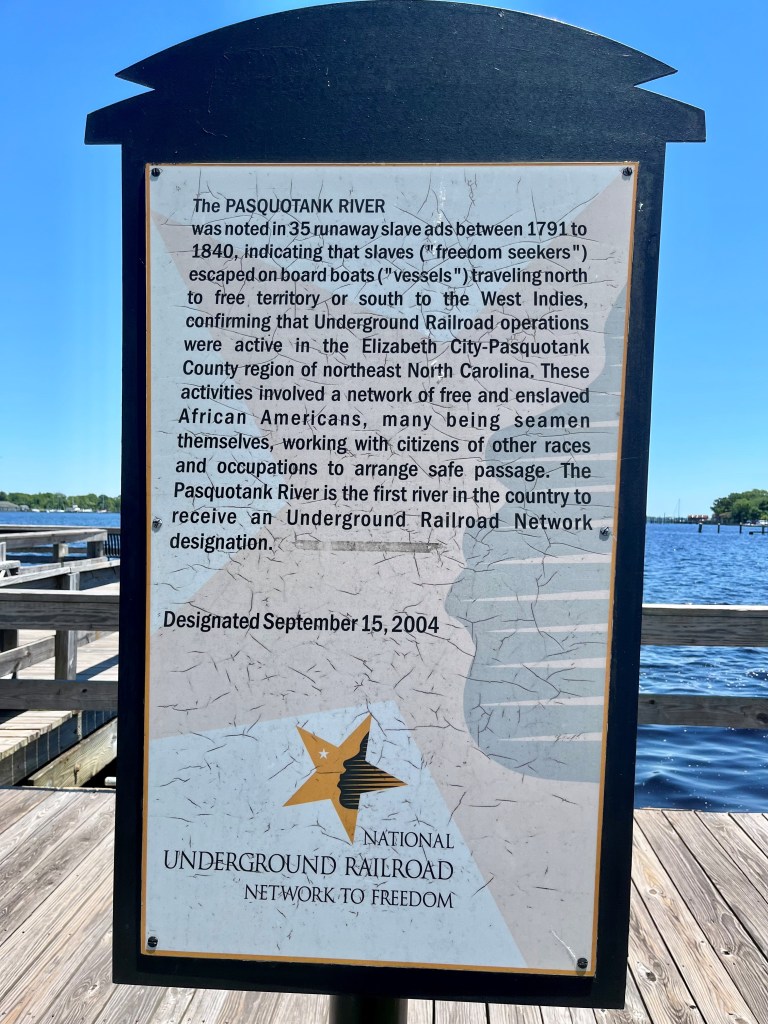
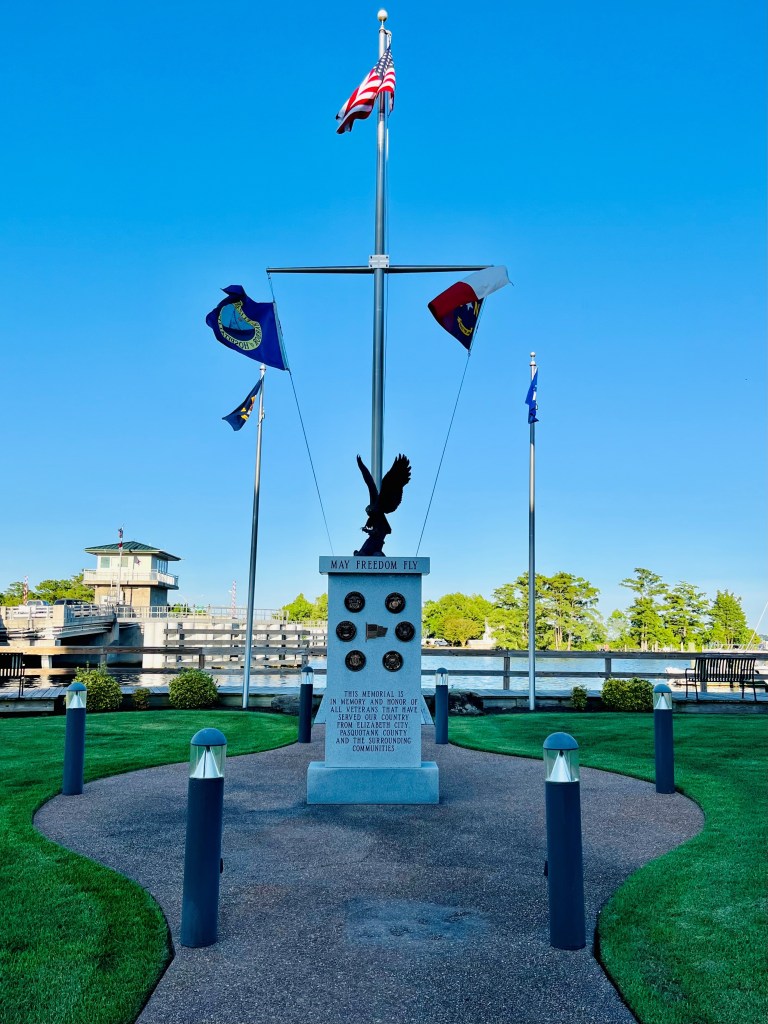
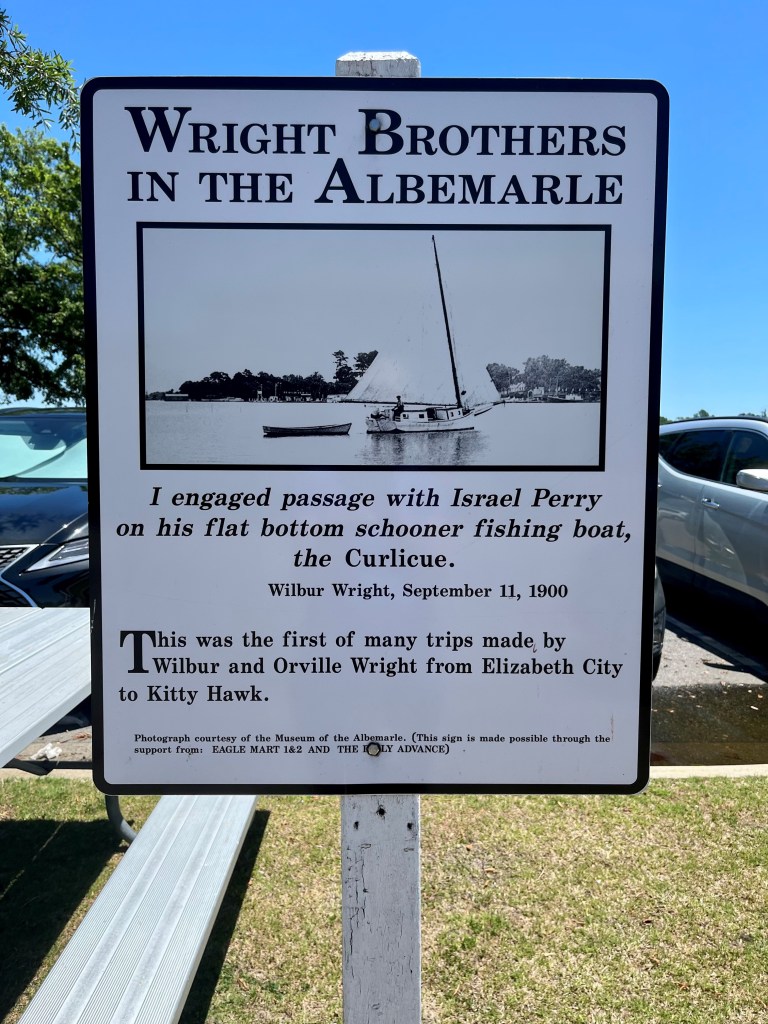
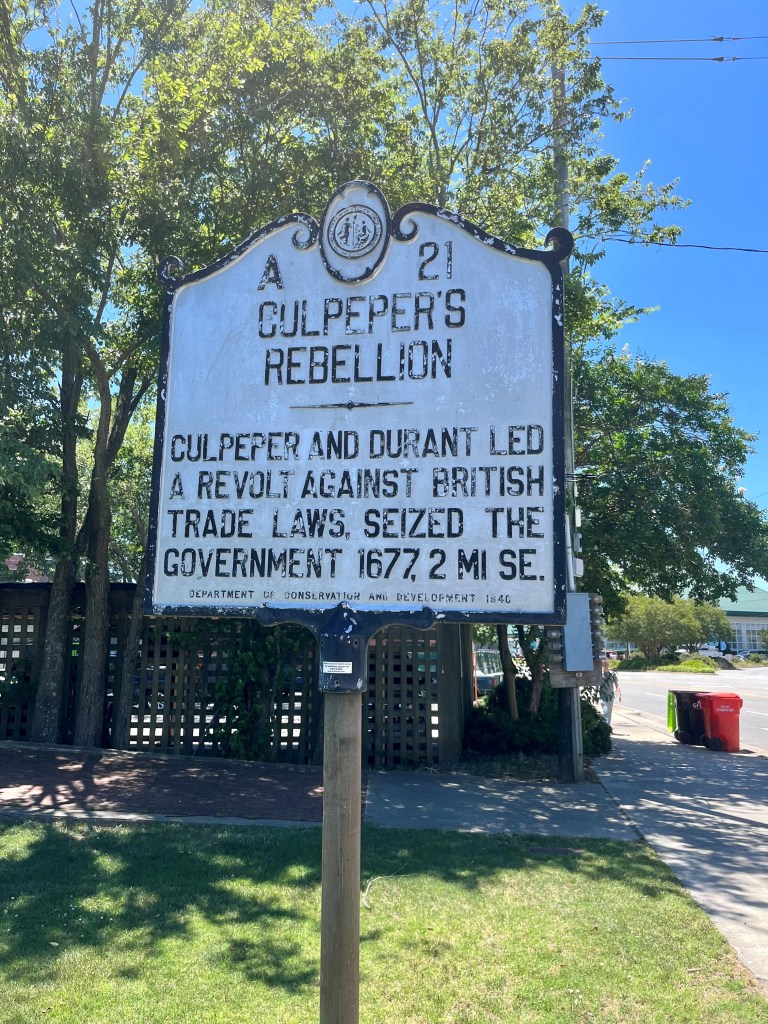
We docked at the Mid-Atlantic Christian University waterfront campusWe saw beautiful homes as we approached Elizabeth CityThank goodness we can travel under cover – the horse flies are hugeMy position as we crossed the Albemarle SoundThese boats docked behind us in Elizabeth City. The one on the right is Orion. The owners, Tom and Sarah, had the cutest chocolate lab – Madison – and a big orange cat named Deucy!Tom and Sarah, on Orion, crossed their wake in Virginia Beach, a couple of days after we saw them in Elizabeth City!Madison!We chilled out in the evenings on these swingsWelcome to Elizabeth CityHistory of the Pasquotank RiverLegend of Rose BuddiesRoses planted at welcome wharfIt’s so nice most of these small towns have a Veterans MemorialWilbur and Orville Wright travelled frequently from Elizabeth City to Kitty Hawk1677 Rebellion
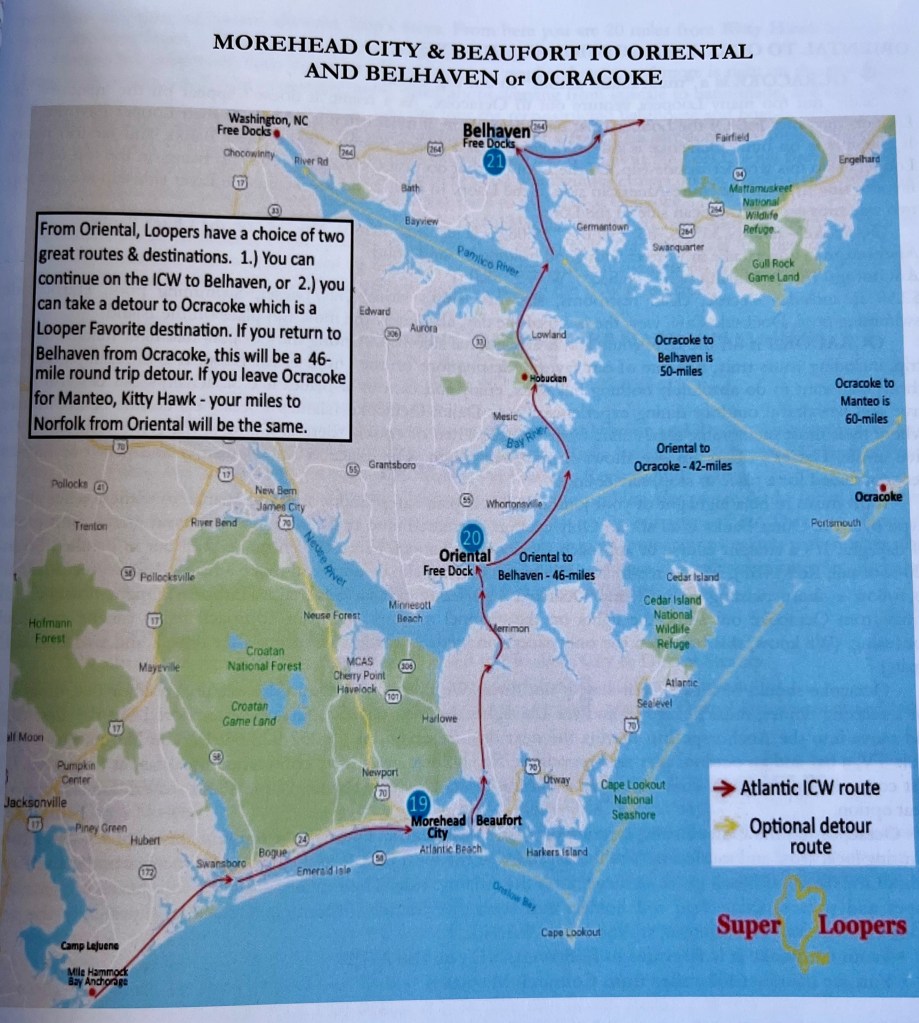
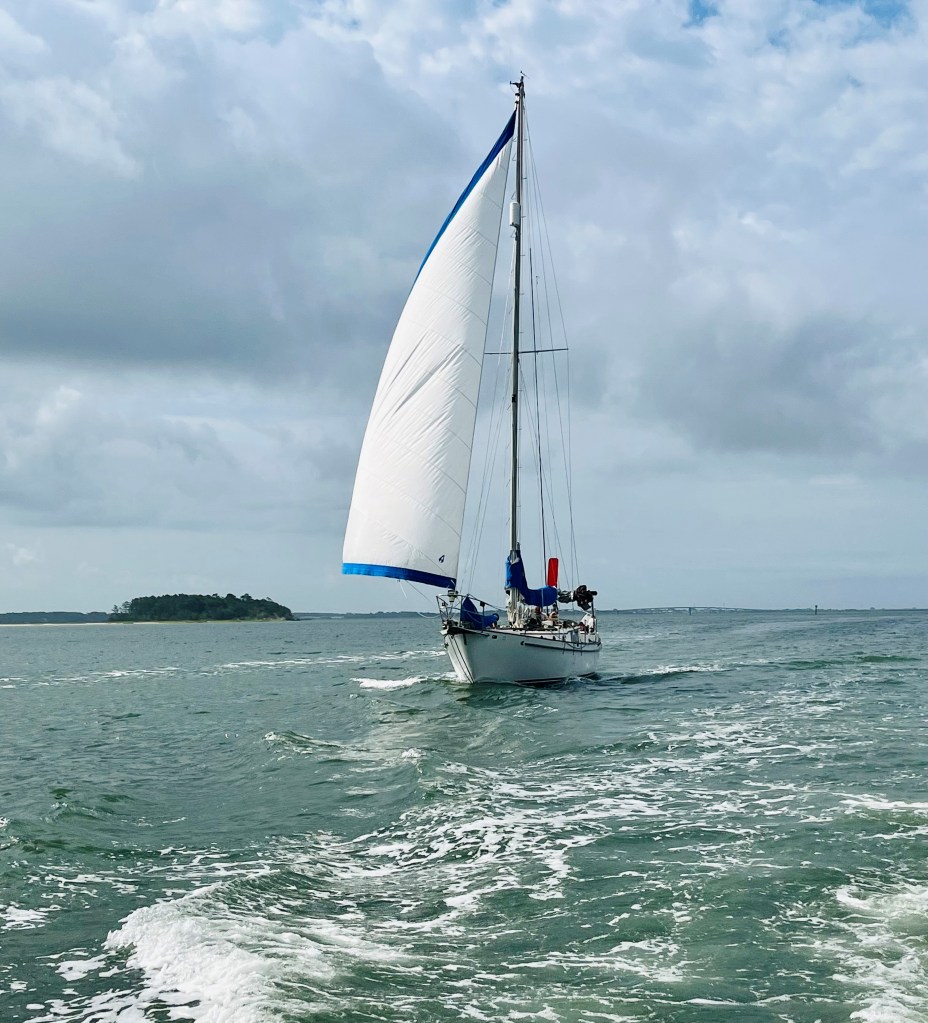
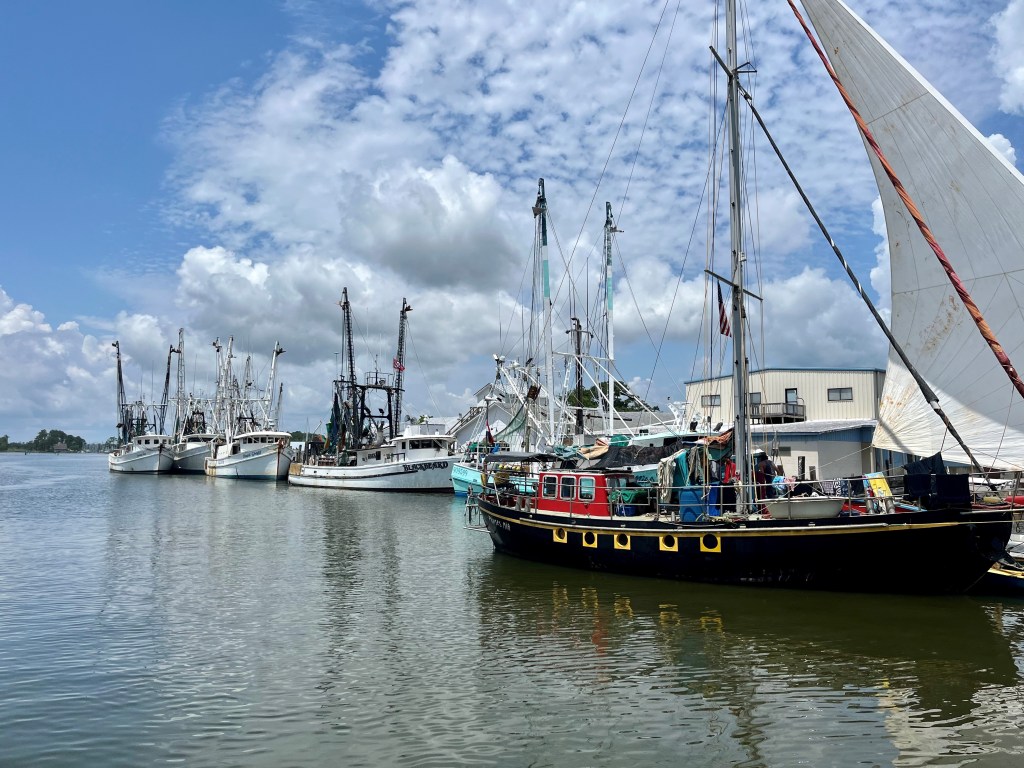
Saturday, June 11, we traveled to Morehead City and anchored for the night. Morehead City is a port town in Carteret County, North Carolina. It forms part of the Crystal Coast – Southern Outer Banks – and the economy here revolves around fishing. It has early ties to the commercial fishing industry and boasts a modern day reputation as home to one of the biggest fishing tournaments on the Eastern seaboard. We saw many fishing boats headed to a tournament on Sunday.
Cape Fear River – Carteret County – Morehead CityAnchored overnight outside of Morehead City
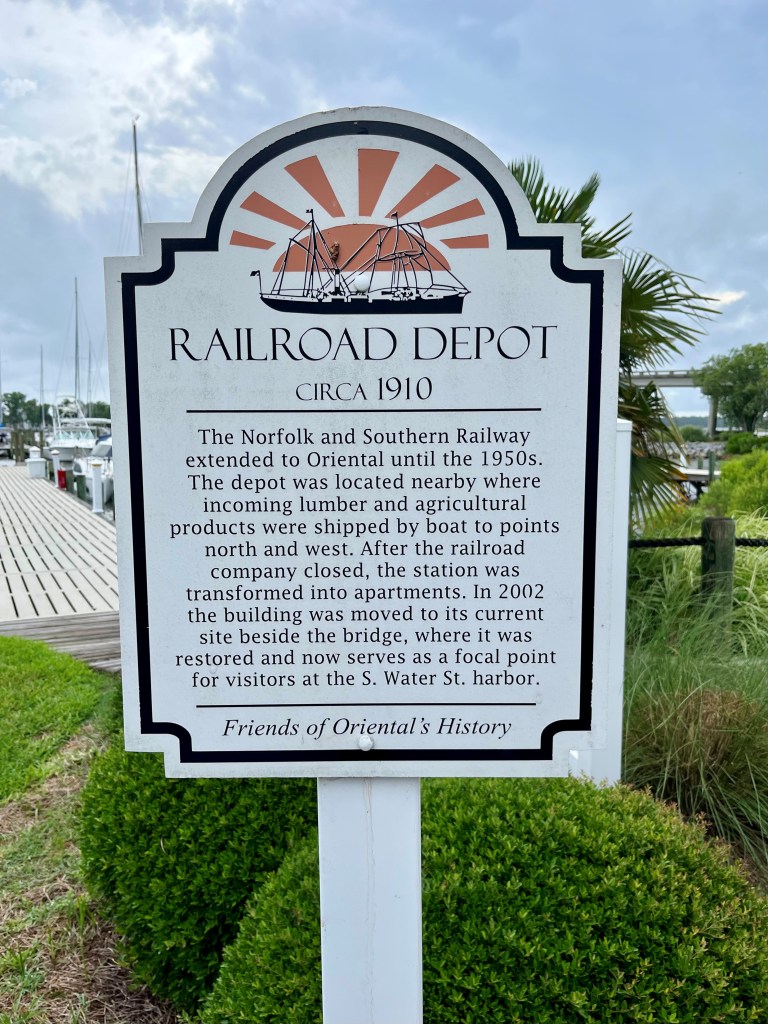
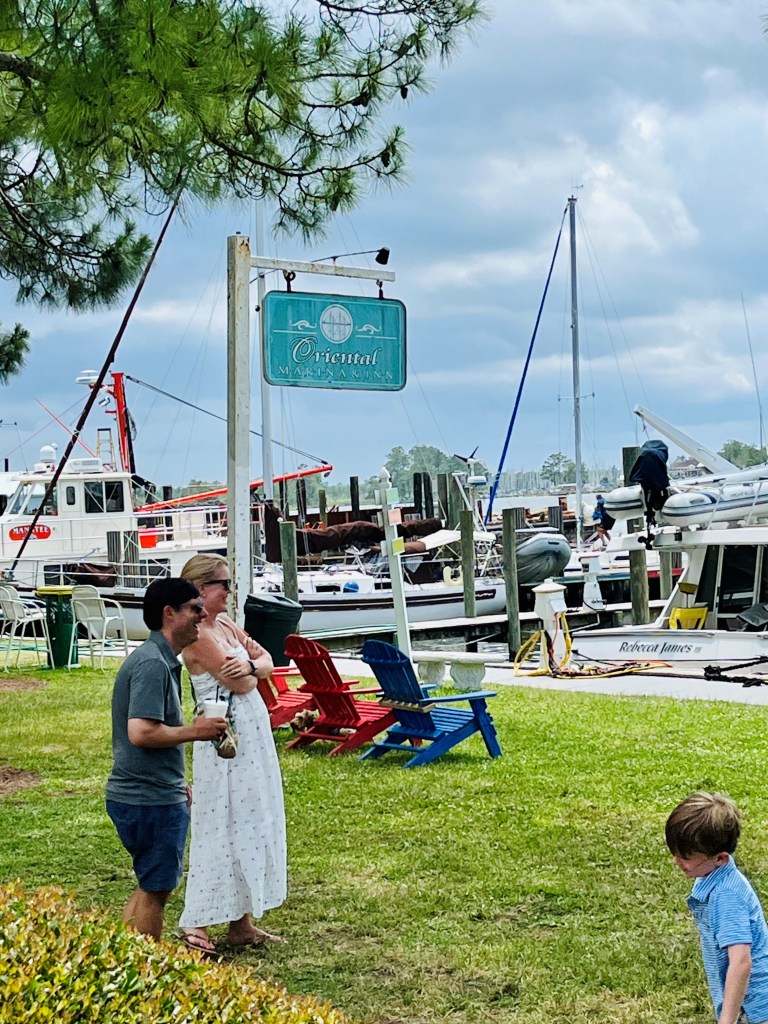
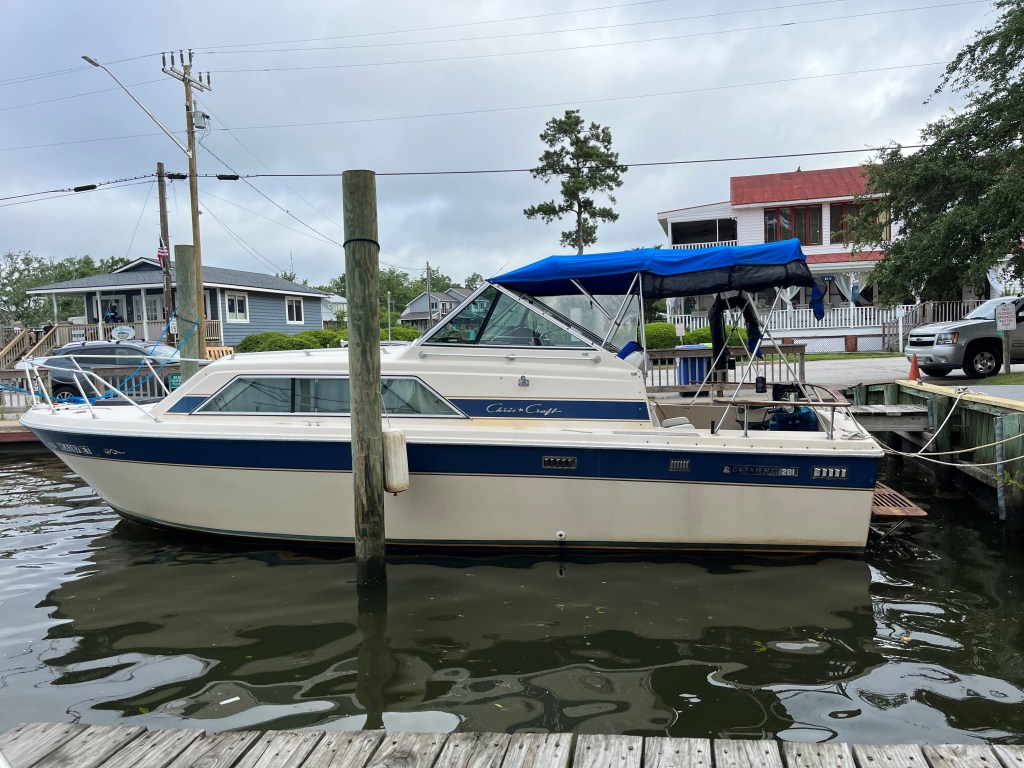
Sunday, June 12, we stayed overnight at the Oriental Marina and Inn. What a charming spot. Many people milling around the grounds of the Inn. Docked next to us were two great guys – Dan and Ted. Dan lost his wife a couple of years ago and lives on his Chris Craft and often has friends visit him. He gave us great suggestions for our visit in Oriental. Would definitely recommend this place.
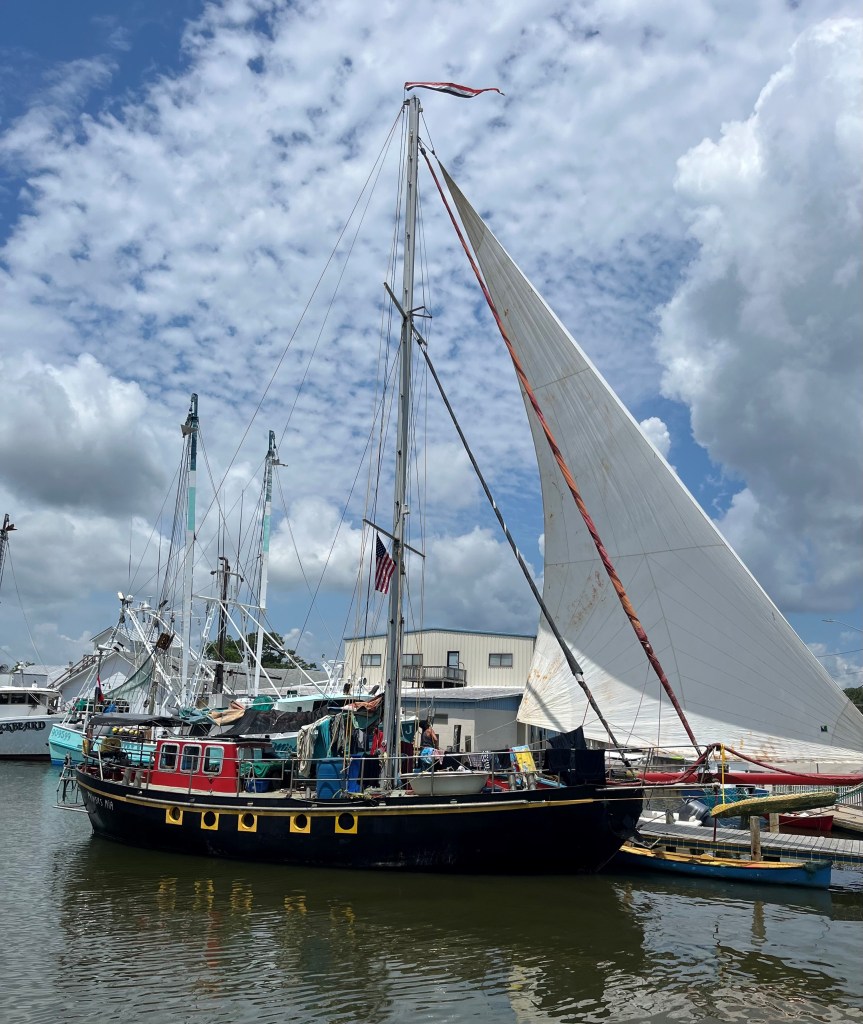
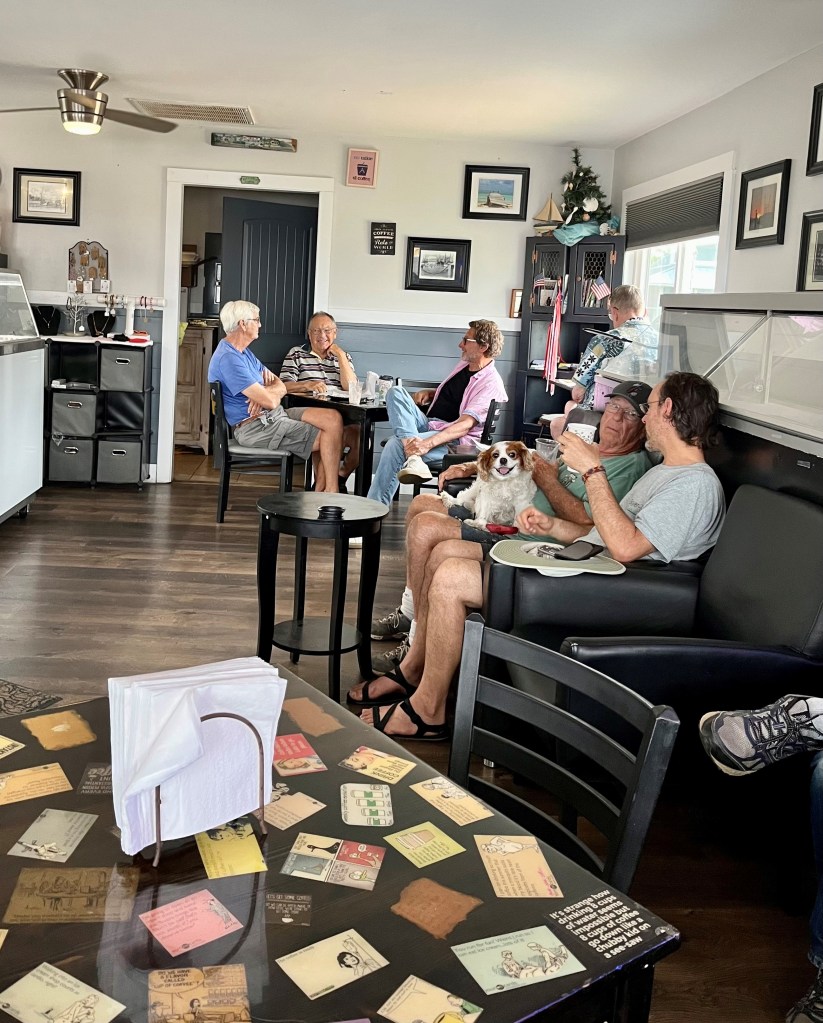
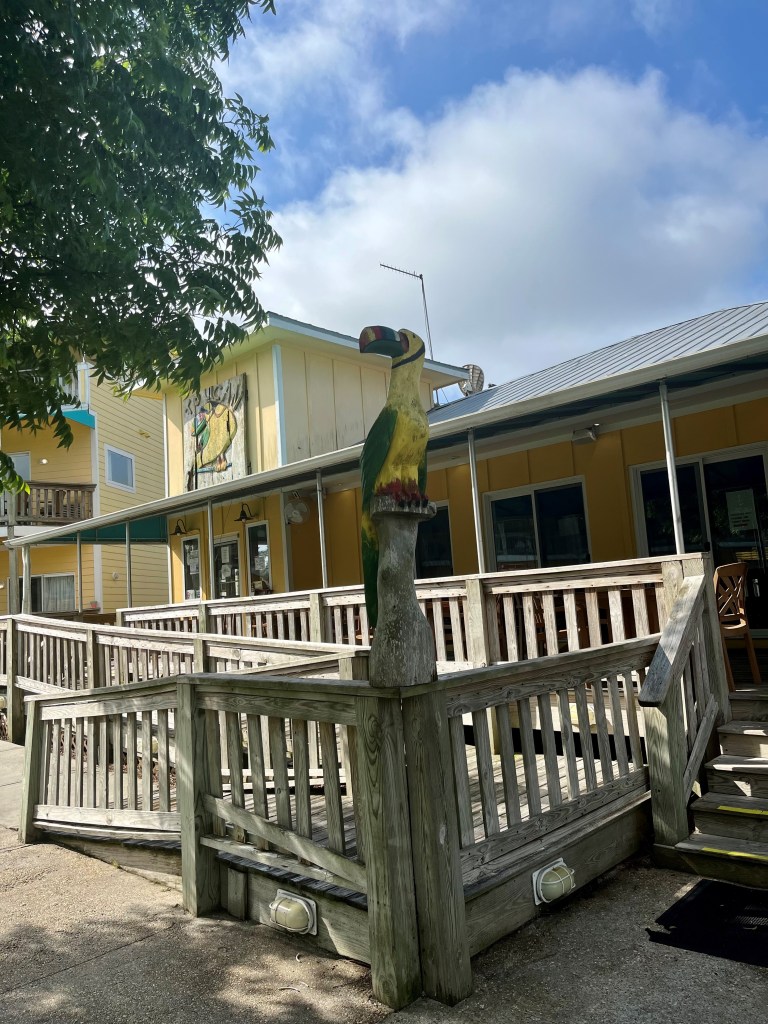
History of Oriental, North CarolinaWe overlooked this “pirate” ship from our boat. The owner sure resembled Jack Sparrow.Oriental Marina and InnDan’s Live Aboard – Chris CraftQuaint Coffee House – “The Bean” – across the street from the MarinaToucan Grill – restaurant onsite
Monday, June 13, we docked at the city dock in Belhaven. As charming as Oriental was – Belhaven turned out to be a ghost town. Really scary that there was little traffic and no one around. We asked the dockmaster – is there an Uber nearby? Nope, he replied. Car service? Nope again. And he didn’t offer us a ride in his jaguar. Not exactly the friendliest guy we’ve met along the Loop.
Stayed one night, left next morning for Elizabeth City.
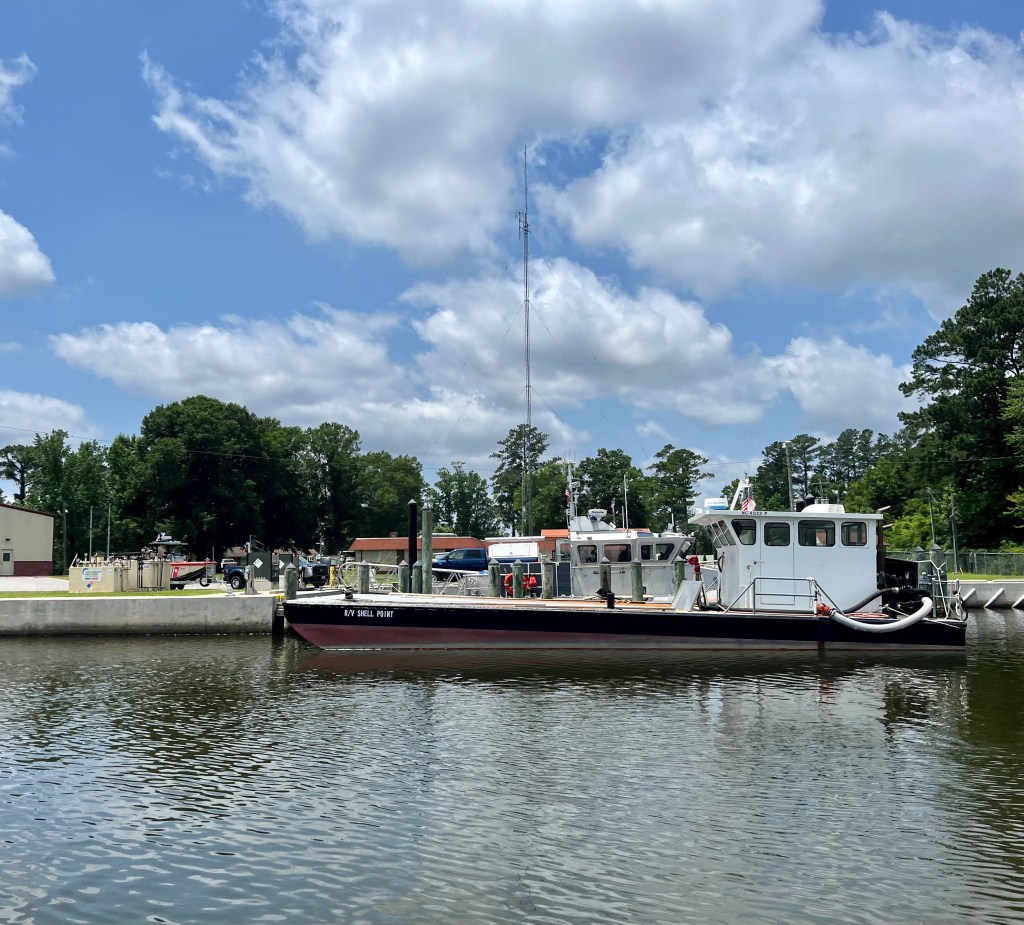
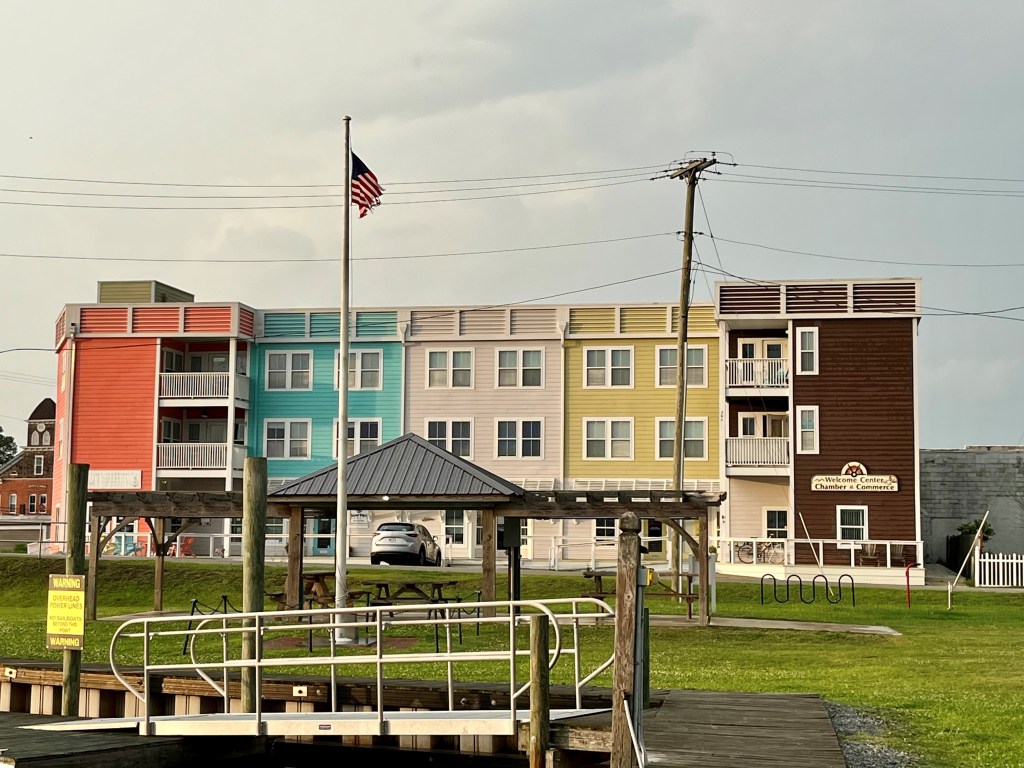
Birds along Pantego CreekCoast Guard Station – Gale CreekTown of BelhavenDocked in Belhaven
























 Pat and Cindy's Great Loop Adventure